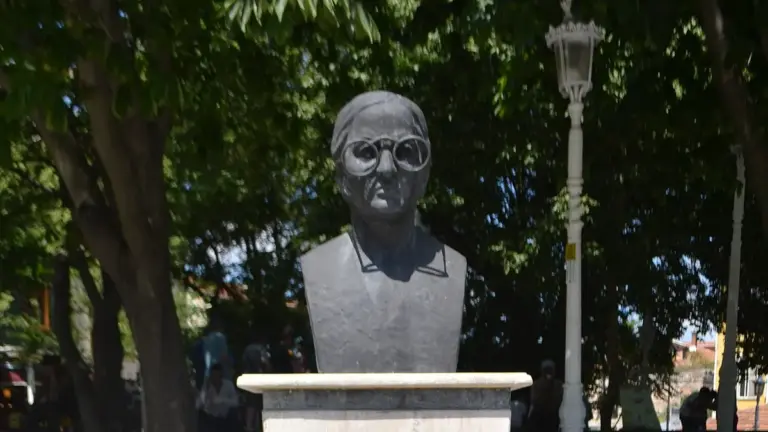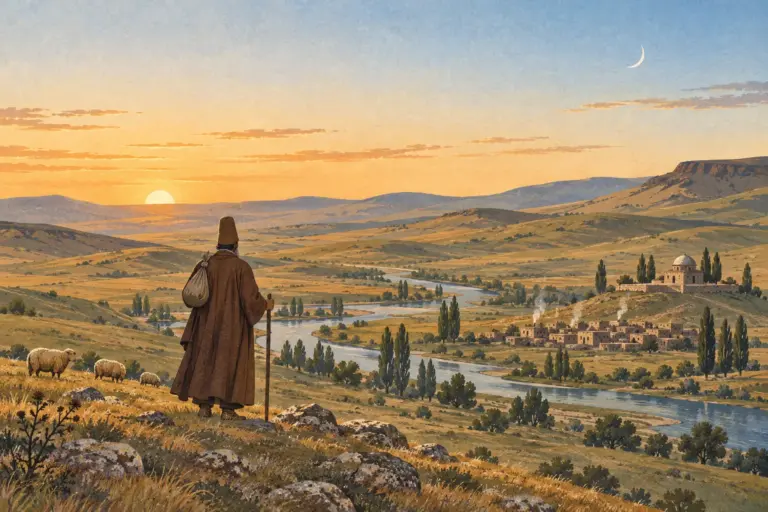
Rumi (Mevlânâ): Life, Works, the Sema and Konya
Rumi, or Mevlânâ Celâleddîn-i Rûmî: his life in dated steps, what he wrote, the Mevlevi order, the sema and the Mevlana Museum in Konya.
Table of Contents
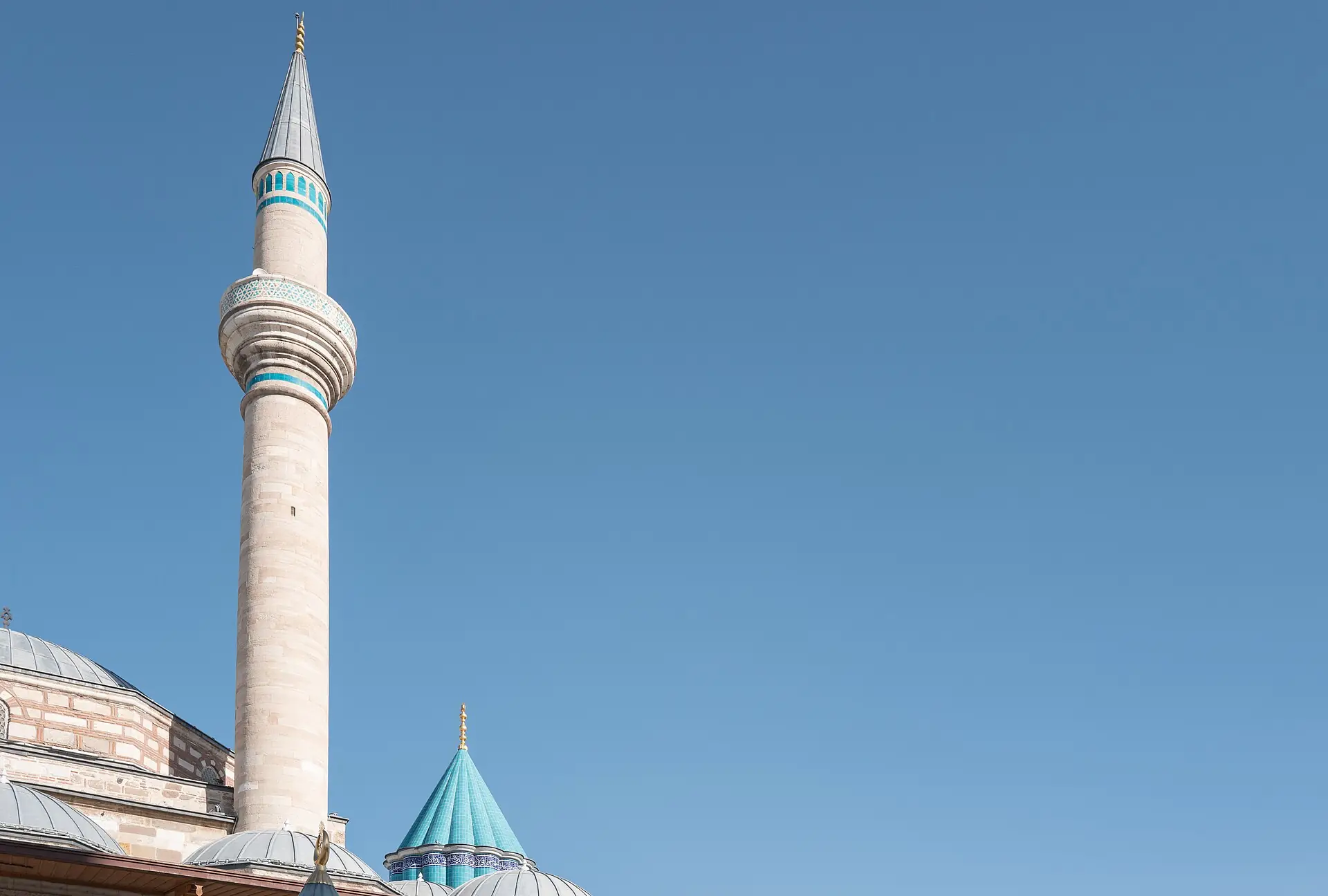
Rumi is the usual English name of Mevlânâ Celâleddîn-i Rûmî, a poet and teacher born in Balkh (today in Afghanistan) in 1207, who lived in Konya and died there in 1273. He wrote mostly in Persian, chiefly the Mesnevî and the Dîvân-ı Kebîr, and the Mevlevi order grew up round his name. His tomb in Konya is now the Mevlana Museum, and the Mevlevi sema ceremony is on the UNESCO Representative List of the Intangible Cultural Heritage of Humanity.
In short · checked 30.10.2026
A poet of the 13th century, his tomb in Konya and the sema of the order named after him.
- Who: Mevlânâ Celâleddîn-i Rûmî, born 30.09.1207 in Balkh, died 17.12.1273 in Konya, aged 66 (Konya municipality and the Ministry of Culture and Tourism’s Culture Portal).
- Works: The Mesnevî (six books, about 25,700 couplets) and the Dîvân-ı Kebîr, with the prose of Fîhi mâ fîh, Mecâlis-i Seb’a and Mektûbât (TDV Encyclopaedia of Islam).
- Museum: The Mevlana Museum in Konya is open every day, 09:00–17:00; the ticket office closes at 16:30; free (muze.gov.tr, checked 30.10.2026).
- Şeb-i Arûs 2026: The 753rd anniversary commemorations run 07–17.12.2026 in Konya; tickets for the sema are sold online (Konya Directorate of Culture and Tourism).
- Accounts differ: when and how the family left Balkh, how Mevlânâ met Şems, and what became of Şems. Each is attributed to its teller.
The sema, step by step
Nine stops, from the call to the closing.
A plan of the hall seen from overhead. Press a stop to light its marks and read what happens there; each stop has a Turkish name to copy.
Call and entry 1/9
- Call: The meydancı dede, an elder, raises the call «Buyurun yâ hû!» and the dervishes turn to the hall. TDV
- Entry: In their dress they come in with the right foot, without stepping on the threshold, and stand with arms crossed on the shoulders. TDV
- The sheikh: He enters with the meydancı behind him and goes to his post, the red sheepskin. The prayer, a Mesnevî reading, a Qur’an recitation and the sheikh’s post prayer follow. TDV
Na’t and ney 2/9
- Na’t: A Persian song of praise for the Prophet opens the sema. The words are attributed to Mevlânâ; the setting is by Itrî, in the rast makam, sung standing. TDVCulture Portal
- Kudüm: The head kudüm player strikes a few beats. TDV
- Ney: The head ney player then plays a long solo, a taksim (an improvisation), in the makam of the âyin that follows. TDV
Kudüm and the first walk 3/9
- First beat: The kudüm’s first beat starts the peşrev, the opening piece for the instruments. The sheikh and the semazens strike their hands on the floor, say «Allah» softly and rise. TDV
- The walk: The semazens step toward the right; the sheikh greets before the post, turns right and walks in the rhythm of the peşrev. TDV
- The line: Only the sheikh steps on the hatt-ı istivâ, the line thought to run from the post to the door; the others step over it. TDV
Greeting and three circuits 4/9
- Greeting: Face to face, the semazens greet each other in turn, a right hand on the heart under the robe. This is the cemâl seyri. TDV
- Circuits: The hall is then circled three times while the peşrev goes on. TDV
- The turn: When the sheikh is back at his post, a few kudüm beats cut the peşrev, a short ney solo follows and the singers begin the âyin. TDV
First selâm 5/9
- Cloaks off: The semazens take off their hırka (cloak), all but the head semazen, who leads the turning. TDV
- Permission: He kisses the sheikh’s right hand and the sheikh kisses his sikke (felt cap); the others follow. This is the ruhsat, the leave to turn. TDV
- Turning: The right hand is raised and the left lowered. They turn on their own axis and round the hall, saying the name of God inside with each turn. TDV
- Meaning: Insight into servanthood. TDVCulture Portal
Second selâm 6/9
- Change: A change of rhythm ends the first selâm. The turners stop, face the centre and bow; they lean on each other in twos and threes. TDV
- The sheikh: He steps three paces forward and bows, and all bow. He prays silently, steps back and nods: the second selâm may begin. It starts without the kisses. TDV
- Meaning: Awe at God’s power. TDVCulture Portal
Third selâm 7/9
- Change: A new change of rhythm leads from the second selâm to the third. TDV
- Meaning: The awe turns to love: full surrender to God, called vuslat (reaching). TDVCulture Portal
Fourth selâm 8/9
- At the edge: When the last semazen has joined, all go on turning at the edge. The head semazen bows to the sheikh, steps to his left and stops circling. TDV
- The sheikh turns: He steps before the post, bows and enters the sema in the middle of the hall, slowly, holding his cloak at the waist and the collar. This is the post semâı. TDV
- Meaning: The person who has finished the inner journey returns to servanthood. TDVCulture Portal
Closing 9/9
- Last pieces: The sung part ends. The instruments play a last peşrev and a fast closing piece, the yürük semâı. A last taksim goes on until the sheikh, still turning, reaches his post. TDV
- Recitation: A singer recites a passage of the Qur’an, usually from Sura 2, verse 115; all bow and sit. A Persian prayer (gülbank), the Fâtiha and the sheikh’s own gülbank follow. TDV
- Leaving: The sheikh greets, goes to the door and leaves; everyone greets the post and goes. TDV
His names and his birth year
The full name is Muhammed b. Muhammed b. Hüseyin el-Belhî (TDV). The names used for him are plain words with a meaning each.
- Mevlânâ
- «Our master», the title the Mevlevi order uses for him.
- Rûmî (Rumi)
- «Of Rûm»: Rûm was the name for Anatolia in his time.
- Celâleddîn
- His epithet.
- el-Belhî
- «Of Balkh», the city of his birth.
- Molla Hünkâr
- Another name used for him.
- Mevlevî, Mevleviyye
- The order named after Mevlânâ, and its members.
Born in Balkh
30.09.1207, in what is now Afghanistan
- 30.09.1207
- The date of the Konya municipality (6 Rebîülevvel 604). The sources agree on the year 1207 (TDV).
- 1184 (580)
- Gölpınarlı, the Turkish translator of the Dîvân, argued for this year from a line of the Dîvân (TDV).
His life in dated steps
From Balkh to Konya, in nine steps.
- 30.09.1207. Born in Balkh (Konya municipality). His father is Bahâeddin Veled (1151–1231), a preacher and teacher with the title sultânü’l-ulemâ, «sultan of the scholars» (TDV).
- 1212–13, or by 1220. The family leaves Balkh. Eflâkî, an early biographer of the order, puts the departure in 1212–13, when Mevlânâ was five. Sultan Veled, his son, tells that his grandfather set out for the Hijaz and that Balkh was invaded while he was on the road. The Mongols took the cities of Khorasan in 1220 (TDV).
- c. 1217–1222. The road west. Eflâkî names Baghdad, Malatya (1217), Sivas (1219), Akşehir and Larende (today Karaman), then Konya, on the invitation of the Seljuk sultan Alâeddin Keykubad. TDV notes that these dates do not fit Baghdad in 1220 (TDV). In the Culture Portal the family reaches Larende in 1222 (museum page).
- 1225–1226. In Karaman he marries Gevher Hatun in 1225 (Culture Portal, Konya municipality). Their son Sultan Veled is born in Larende on 25.04.1226 (TDV).
- 23.02.1231. His father dies in Konya. Mevlânâ, 24, takes over his teaching (TDV).
- From 1232. Seyyid Burhâneddin Muhakkık-ı Tirmizî, a pupil of his father, comes to Konya and guides him for nine years. About 1233 he studies in Aleppo and Damascus (TDV).
- 29.11.1244. Şems-i Tebrîzî arrives in Konya. Mevlânâ leaves his lessons and sermons to be with him (TDV).
- 1247–1273. After Şems, Selâhaddîn-i Zerkûb and then Hüsâmeddin Çelebi lead his circle. At Hüsâmeddin’s urging the Mesnevî is composed: Book I is begun in 1258–61 and finished in 1263/64 (TDV).
- 17.12.1273. He dies in Konya on a Sunday, at sunset, aged 66 (Konya municipality, Culture Portal). The Mevlevis call that night Şeb-i Arûs, «wedding night».
At his funeral
The time of meeting
In a passage quoted by the Konya municipality he asks that no one cry: «Cenazemi görünce ayrılık ayrılık deme. O vakit benim buluşma ve görüşme zamanımdır.» That is: «When you see my funeral, do not say “parting, parting”. That is the time of my meeting and union.» (Konya municipality)
- The crowd
- Sultan Veled tells of a very large crowd of every faith and school at the funeral (TDV).
- The prayer
- Kadı Sirâceddin led the funeral prayer, after Şeyh Sadreddin fainted (Konya municipality).
Şems-i Tebrîzî and the years of the Dîvân
Şems-i Tebrîzî («Shams of Tabriz») came to Konya on 29.11.1244, 26 Cemâziyelâhir 642 (Eflâkî and Sultan Veled; TDV). Mevlânâ left his lessons and sermons to be with him. The tellings of how they met, and of how it ended, differ.
Which telling?
One line per teller (TDV).
- Eflâkî
- In Konya, Şems stopped Mevlânâ in the street with a question, and the two went on together to the madrasa. In another place Eflâkî has an earlier meeting in Damascus, where Şems kissed his hand and was lost in the crowd.
- Sipehsâlâr
- Şems sat on a bench at an inn; Mevlânâ passed, their eyes met, and they sat for a long time without speaking.
- Câmî
- Şems threw Mevlânâ’s books into a pool and took them out unharmed.
- Kureşî
- The meeting was in Mevlânâ’s house; a fire appeared among the books.
- Midhat Bahârî
- A Mevlevi writer of the 20th century, he rejects the pool story and most other early tellings of the meeting.
- 1245–46
- Şems leaves for Damascus; the first letter to him there is dated 11.03.1246. He returns, marries Kimyâ Hatun and disappears a second time.
- Sultan Veled
- Şems left on 08.12.1247 (8 Şâban 645), and no trace of him was found.
- Eflâkî
- Dates it to December 1246 (Şâban 644). Şems was called out, a knife struck him, he cried out and vanished, leaving a few drops of blood. A second telling of his, from Ulu Ârif Çelebi and his mother Fatma Hatun: Şems was killed, thrown into a well and buried near Emîr Bedreddin at Mevlânâ’s madrasa.
- Sipehsâlâr
- No killing is mentioned.
- Eflâkî and Câmî
- A grave beside Bahâeddin Veled.
- Sahih Ahmed Dede
- Şems died naturally in 1247 and was buried near Emîr Bedreddin.
- Devletşah
- A rumour of a killing is «certainly not true».
- Kureşî, Fürûzanfer, Midhat Bahârî
- Kureşî doubts a killing; Fürûzanfer and Midhat Bahârî read it as a disappearance.
After Şems
- The sema gatherings. Eflâkî: Mevlânâ began them after Şems left. Sipehsâlâr: Şems urged him to take up the sema (TDV).
- The poems. Most poems of the Dîvân date from the years with Şems; the Mesnevî followed (TDV).
- The circle. Selâhaddîn-i Zerkûb, then Hüsâmeddin Çelebi, at whose urging the Mesnevî arose; then Sultan Veled (TDV).
What he wrote and where to find it in Turkish
Two works of verse, the Mesnevî and the Dîvân-ı Kebîr, and three of prose. Each tab has its facts and a Turkish line to ask for it in a bookshop.
Which work?
Figures are TDV’s; copies differ.
Mesnevî: a poem in six books
- Size
- About 25,700 couplets; copies run from 25,585 to 26,660, and the Veledî copy has 25,668 (TDV).
- Per book
- In Nicholson’s edition: I 4,003; II 3,810; III 4,810; IV 3,855; V 4,238; VI 4,916.
- Made
- Hüsâmeddin Çelebi asked him to write it. Book I was begun in 1258–61 and finished in 1263/64; the whole took 8 to 10 years and ended in 1268.
- First line
- Bişnev ez ney çün hikâyet mîkuned: bişnev means «listen», and the ney is the reed flute.
- Oldest copy
- The Veledî copy, no. 51 in the Mevlana Museum Library, was completed in Konya in 1278, five years after his death.
- In Turkish
- Veled Çelebi İzbudak, revised by Gölpınarlı (1942–46). The first critical edition is Nicholson’s (London, 1925–40).
- Mesnevî’nin Türkçe çevirisi var mı?Is there a Turkish translation of the Mesnevî?
Dîvân-ı Kebîr: the collected lyric poems
- Size
- Copies hold 30,000 to 50,000 couplets, and the most reliable exceed 43,000. Furûzânfer’s edition has 3,229 gazel (lyric poems) and terkîb-bend poems and 1,765 rubâî (quatrains) (TDV).
- Languages
- Persian of Khorasan with Arabic parts, and poems in Greek (Rumca).
- Other name
- Dîvân-ı Şems, because the ghazals use the pen name Şems.
- In Turkish
- Gölpınarlı, seven volumes (1957–74). A selection, Divan-ı Kebir’den Seçme Şiirler, is by Midhat Bahârî Beytur.
- Dîvân-ı Kebîr’den seçmeler var mı?Are there selections from the Dîvân-ı Kebîr?
Fîhi mâ fîh: his talks
- What
- Talks noted down in his lifetime by Sultan Veled or another disciple and put together after his death (TDV).
- Size
- About 75 sections, six in Arabic and the rest in Persian.
- Name
- It means roughly «what is in it is in it».
- In Turkish
- Anbarcıoğlu (1958) and Gölpınarlı (1959).
- Fîhi mâ fîh’in Türkçe çevirisi var mı?Is there a Turkish translation of Fîhi mâ fîh?
Mecâlis-i Seb’a: seven sermons
- What
- Seven sermons (TDV).
- Oldest copy
- Dated 753 (1352), in the Konya museum.
- In Turkish
- Gölpınarlı (1965).
- Mecâlis-i Seb’a’nın Türkçe çevirisi var mı?Is there a Turkish translation of Mecâlis-i Seb’a?
Mektûbât: his letters
- What
- Letters, mostly to officials on behalf of people in need (TDV).
- In Turkish
- Gölpınarlı (1963).
- Mektûbât’ın Türkçe çevirisi var mı?Is there a Turkish translation of the Mektûbât?
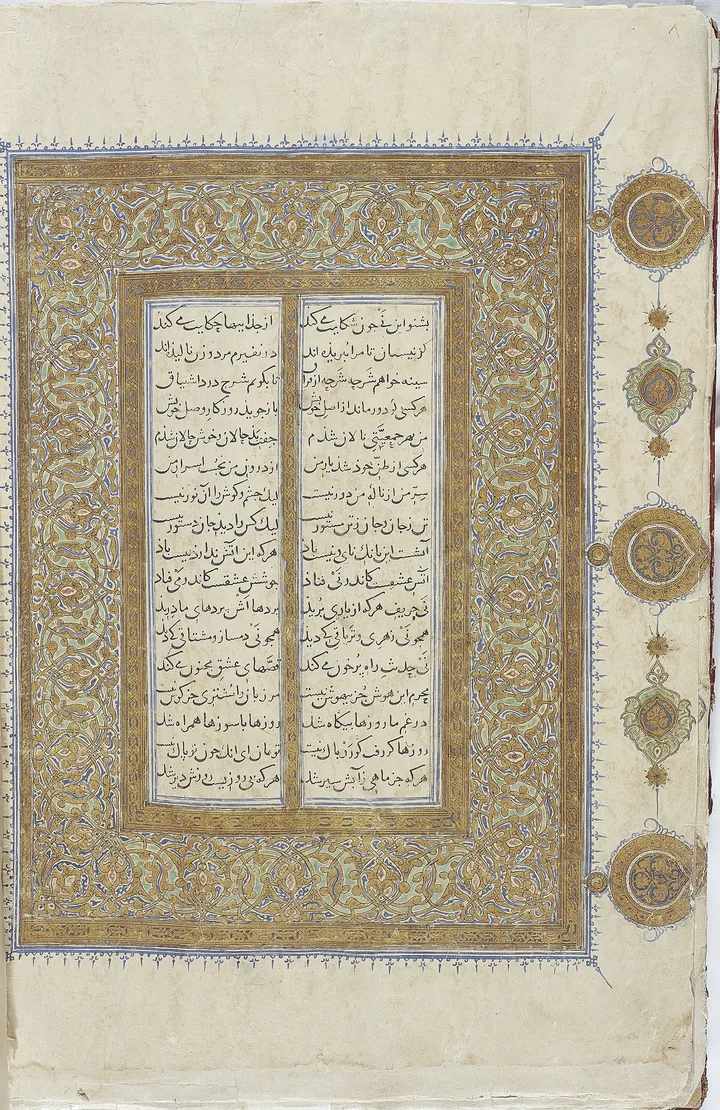
What he taught, in TDV’s account
Three points, each attributed to the TDV Encyclopaedia of Islam entry on him.
The Qur’an and the Sunnah
His source is the Qur’an and the Sunnah, the way of the Prophet. One couplet: «As long as there is life in my body I am the slave of the Qur’an. I am the dust of the chosen Muhammad’s path.»
Another line: «I am like a compass: with one foot I stand firm on the sharia, with the other I travel among the seventy-two nations.»
Reason and love
Reason is useful in worldly matters but can be a hindrance to divine truths. The traveller on the spiritual path needs divine love, aşk.
Vahdet-i vücûd
The unity of being, or of existence: unity in being is basic despite apparent separation.
TDV adds that it is not a merging with God or an entering into God, but a passing beyond one’s own relative being.
The Mevlevi order after him
The order took shape round his family and followers, and had 129 small lodges (zâviye). TDV names the Şems tomb-lodge in Konya and the Karaman lodge, where Mevlânâ’s mother is buried, as the most important (TDV).
- After 1273. A tomb is built over his grave in Hüsâmeddin Çelebi’s time, on Sultan Veled’s urging, with funds from Muînüddin Süleyman Pervâne and his wife Gürcü Hatun (TDV).
- 1292–1312. Sultan Veled takes the leader’s post in 1292 and dies in 1312 (TDV).
- 1421–1460. The rules of the order are fixed in the time of Pîr Âdil Çelebi (TDV).
- 1426 and 1491. The first Ottoman lodge opens in Edirne in 1426; the Galata lodge (Kulekapı) in Istanbul in 1491 (TDV).
- 1666–1684. The sema is banned in 1666 and the ban is lifted in 1684 (TDV).
- 1925–26. The lodges are closed by law in 1925; in 1926 the tombs of Mevlânâ and Hacı Bektâş are opened as museums under a new law (TDV).
- 1946 and 1954. Şeb-i Arûs commemorations begin as small sema shows in Konya (TDV).
Ranks and roles (TDV)
- şeyh, postnişin
- The head of a lodge. At the Konya lodge the heads were Mevlânâ’s descendants (muze.gov.tr).
- muhib
- A follower who did not have to live at the lodge and could come only for the sema; wearing the cloak and cap was his choice.
- çilekeş can
- A trainee in the kitchen, matbah-ı şerif. The çile («trial») begins there, with 18 kinds of service from shopping to washing up, and lasts 1,001 days.
- dede
- An elder; after the 1,001 days a dervish has a cell of his own at the lodge and is called dede.
- mesnevîhan
- The reader of the Mesnevî at the ceremony.
- neyzenbaşı, kudümzenbaşı
- The head ney player and the head kudüm player, who lead the musicians.
The sema and its dress
The Mevlevi âyin, or sema for short, is a gathering for remembrance of God (zikir) that took its form after Mevlânâ, from the turns he made at religious gatherings (TDV).
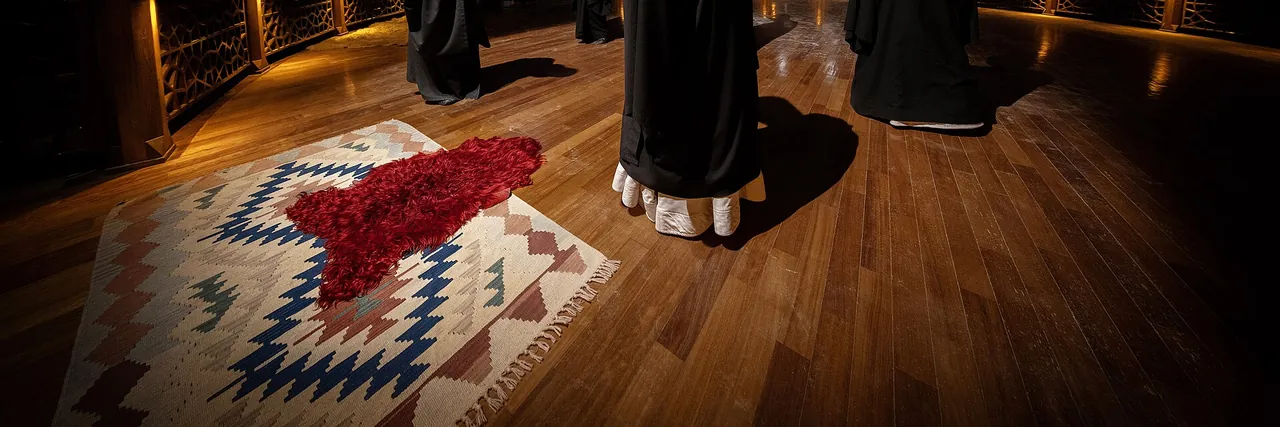
The dress
- sikke
- The tall felt cap (Culture Portal).
- hırka
- The cloak, taken off at the first selâm.
- tennûre
- The skirt.
- The sikke maker
- The Culture Portal calls Mehmet Girgiç one of the few makers of the sikke; the sikkes in the Mevlana Museum are his. The Ministry named him a «Living Human Treasure» in 2010 (Culture Portal).
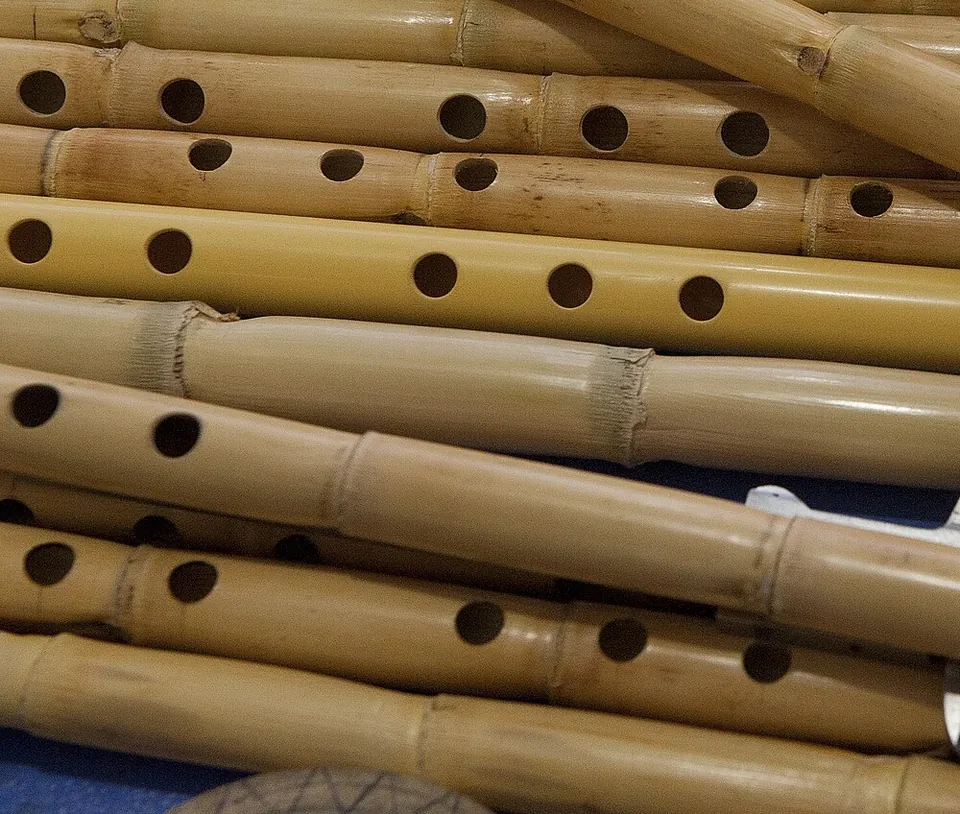
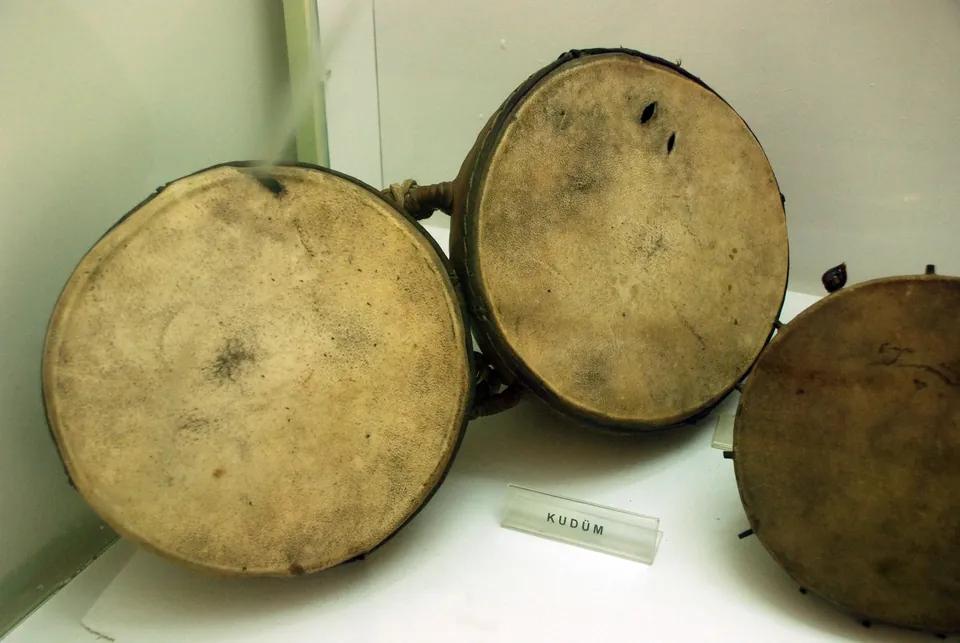
The instruments are the ney (reed flute), the kudüm (small drums) and the ud (a lute) (Culture Portal).
Where it comes from
From his turns to a fixed order
- Mevlânâ’s time
- He turned at gatherings, with no fixed rule (TDV).
- Sultan Veled
- The order begins to take shape under his son (TDV); a disciplined form from the time of Sultan Veled and Ulu Ârif Çelebi (Culture Portal).
- 15th century
- The ceremony follows fixed manners in the time of Pîr Âdil Çelebi; the last arrangements are by Pîr Hüseyin Çelebi in the 17th century (TDV).
Other forms
- âyîn-i cem‘. A short form in the meeting room, without the three circuits.
- garipler semâı. After the lights go out, without music, in the post semâı style: 18 turns.
- mübtedî mukabelesi. For a new dervish who has finished his sema training; the cook-elder leads it, not the sheikh. (TDV)
What the movements stand for
Two readings, as their sources word them
- TDV
- The ceremony depicts the Day of Resurrection: the sikke is a tombstone, the tennûre a shroud and the hırka a grave. The ney is the «perfect human», and the kudüm’s first beat is the command «kün» («be»). The three circuits point to three degrees of certainty: ilme’l-yakîn, ayne’l-yakîn and hakka’l-yakîn.
- Culture Portal
- The round floor is the world, the sheikh the sun, the head semazen the moon and the semazens the planets. The right hand takes from God and the left gives.
The Mevlana Museum in Konya
The museum is the former Mevlevi lodge built round his tomb. Its address is Aziziye Mahallesi, Müze Alanı Caddesi No:1, Konya (muze.gov.tr).
Mevlana Museum
Hours and fee, checked 30.10.2026
- Open
- 09:00–17:00 every day. The ticket office (gişe) closes at 16:30. On Mondays the ticket office opens at 10:00 (muze.gov.tr).
- Fee
- Free (ücretsiz).
- Audio guide
- An audio guide (sesli rehber) is available.
- 1274. The core is the tomb, built in 1274 (muze.gov.tr). The Green Dome, Kubbe-i Hadrâ, rests on four «elephant feet» and is attributed to the architect Tebrizli Bedreddin (Culture Portal).
- 16th century. The semahane (the hall of the sema), the masjid, the dedegân cells, the kitchen and the şadırvan (a covered fountain) (muze.gov.tr). The covered şadırvan is by Yavuz Selim, 1512 (Culture Portal).
- 1565. The marble sarcophagi of Mevlânâ and Sultan Veled (TDV).
- 1854. The library is founded (Culture Portal).
- 1925. The lodge is closed (muze.gov.tr); a law closes all the lodges (TDV).
- 1926 or 1927. Opened in 1926 as the Konya Ancient Monuments Museum, Asar-ı Atika (muze.gov.tr). TDV has the decision on 01.09.1926 and the opening on 02.03.1927 (TDV).
- 1954. It is renamed the Mevlana Museum (muze.gov.tr).
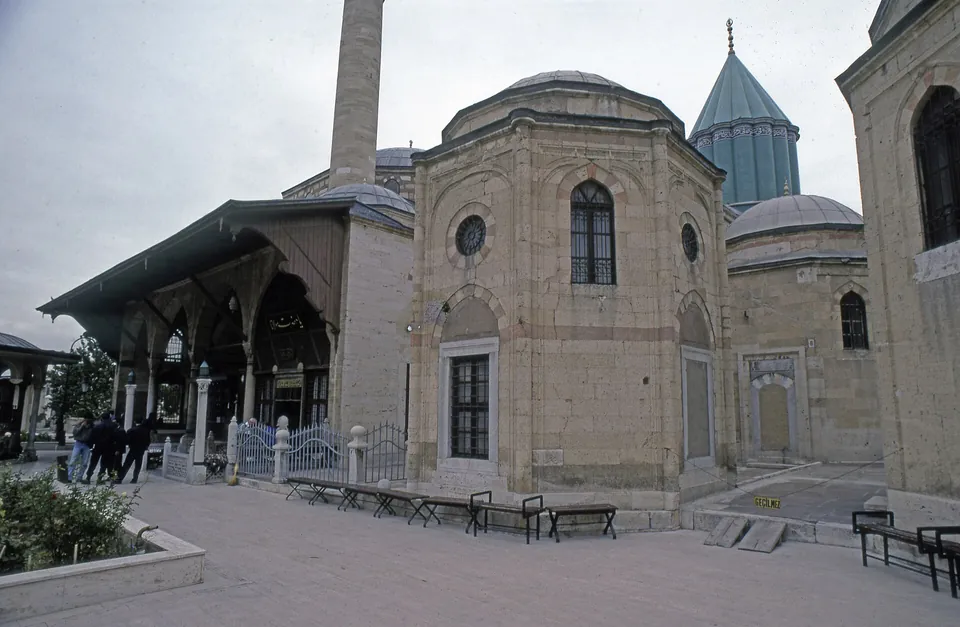
A walk round the courtyard
- Gate. The courtyard is entered by the Dervişân Gate, the Gate of the Dervishes.
- North and west. The dede cells.
- South. The kitchen and the tomb of Hürrem Paşa; this side ends at the Hâmûşân Gate (Susmuşlar), «the silent ones».
- East. The main building: the semahane, the mosque and the tombs.
- In the courtyard. The covered şadırvan and the Şeb-i Arûs pool. (Culture Portal)
The tombs
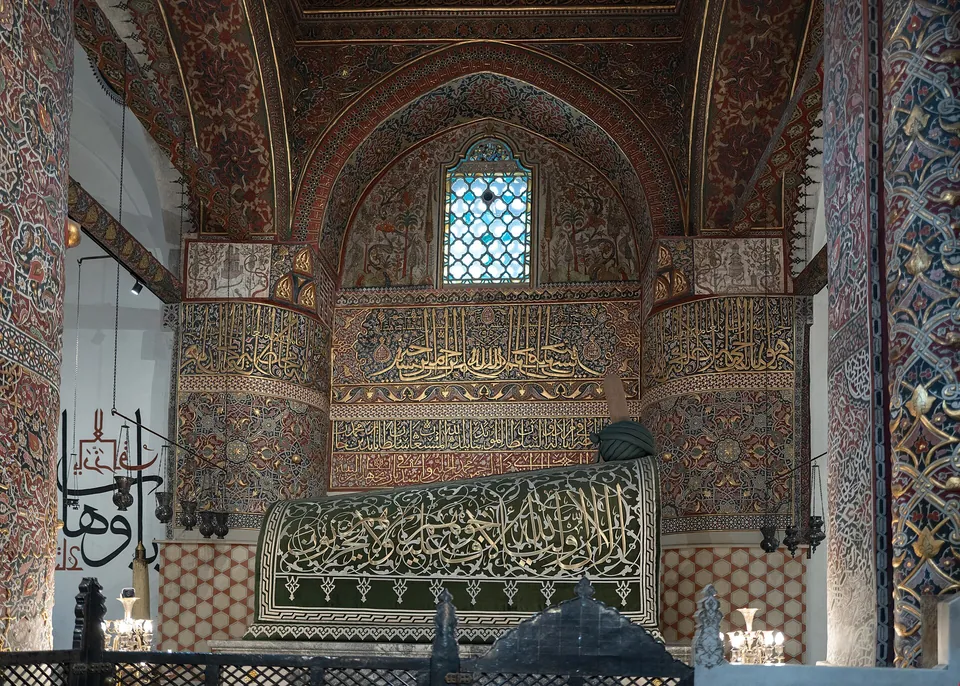
Marble sarcophagi of Mevlânâ and Sultan Veled, 1565, under cloth covers from the 1890s. TDV adds that Mevlânâ refused a tomb and his son accepted one (TDV).
The semahane
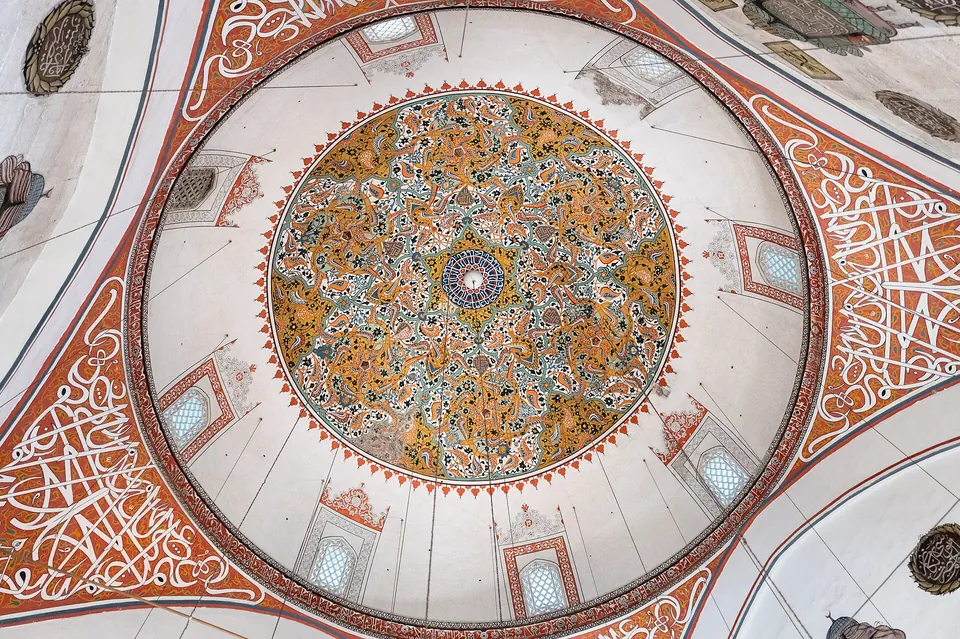
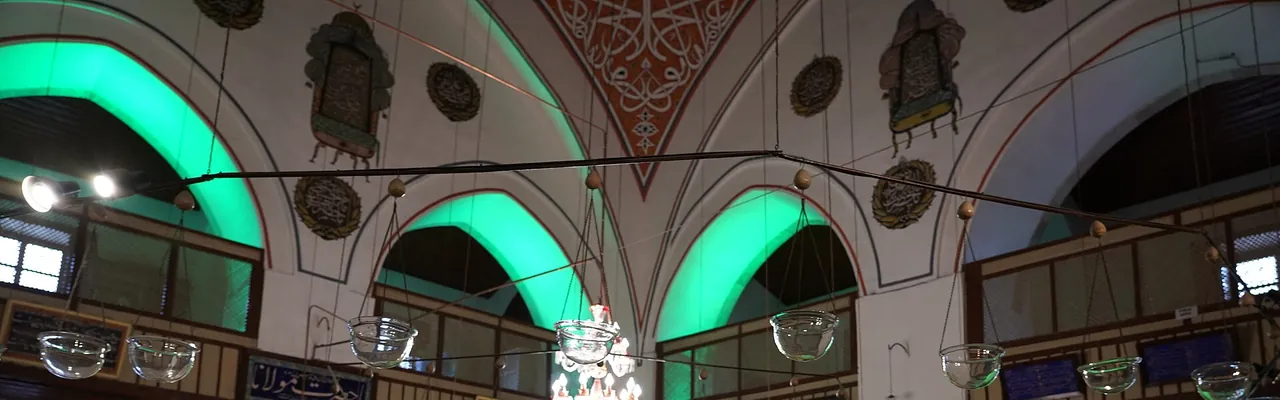
Today an exhibition hall for costumes, instruments and manuscripts, with galleries, among them a musicians’ gallery (TDV).
The library
Founded in 1854: 2,756 volumes and more than 4,000 manuscripts. A copy of the Mesnevî of 1278 is kept there (Culture Portal).
The Nisan bowl
A bronze bowl inlaid with silver and gold, made for the Ilkhanid (Mongol) ruler Ebû Said Bahadır Han: 1327 (Culture Portal), or given in 1333 (TDV).
Şeb-i Arûs and the sema today
Şeb-i Arûs means «wedding night». It is the Mevlevi name for the night of his death, 17 December. The name goes back to his wish that no one cry at his funeral and to his calling the day of his death a time of meeting (TDV). Anniversary commemorations are held in Konya.
Şeb-i Arûs 2026
The 753rd Vuslat anniversary, checked 30.10.2026
- Dates
- 07–17.12.2026.
- Place
- Konya Mevlâna Cultural Centre, Sema Hall.
- Tickets
- The tickets for the sema are sold online.
- Other events
- Other cultural events in Konya’s halls during Şeb-i Arûs are free (Konya Directorate of Culture and Tourism).
- In summer. The sema is performed at least twice a week in Konya and Istanbul (Culture Portal, checked 30.10.2026).
- UNESCO. The Mevlevi Sema Ceremony was proclaimed a Masterpiece in 2005 and inscribed on the Representative List of the Intangible Cultural Heritage in 2008, on Türkiye’s behalf. 2007, the 800th anniversary of his birth, was on UNESCO’s list of anniversaries (Culture Portal).
- Istanbul. The Galata and Yenikapı lodges were restored around 2010 as centres where semazens train (Culture Portal).
Turkish words and lines
Press Copy to put a Turkish line on the clipboard, ready to show or paste.
- Mevlana Müzesi nerede?Where is the Mevlana Museum?
- Müze her gün açık mı?Is the museum open every day?
- Son giriş saat kaçta?What time is the last entry?
- Sesli rehber var mı?Is there an audio guide?
- Sema töreni ne zaman?When is the sema ceremony?
- Sema töreni için bilet nereden alınır?Where do I buy a ticket for the sema ceremony?
The ticket office closes at 16:30 (muze.gov.tr, checked 30.10.2026).
- gişe
- Ticket office.
- bilet
- Ticket.
- ücretsiz
- Free of charge.
- sesli rehber
- Audio guide.
- semahane
- The hall of the sema.
- tören
- Ceremony.
Sources and where next
Facts, dates and numbers come from these pages of the TDV Encyclopaedia of Islam, the Ministry of Culture and Tourism, the Konya Provincial Directorate of Culture and Tourism and the Konya Metropolitan Municipality.
- Mevlânâ Celâleddîn-i Rûmî — TDV İslâm Ansiklopedisi, Reşat Öngören, print 2004, checked 30.10.2026
- Mevleviyye — TDV İslâm Ansiklopedisi, Ş. Barihüda Tanrıkorur, print 2004, checked 30.10.2026
- Mevlevî âyini — TDV İslâm Ansiklopedisi, Nuri Özcan, print 2004, checked 30.10.2026
- Mesnevî (Mevlânâ) — TDV İslâm Ansiklopedisi, Semih Ceyhan, print 2004, checked 30.10.2026
- Dîvân-ı Kebîr — TDV İslâm Ansiklopedisi, Tahsin Yazıcı, print 1994, checked 30.10.2026
- Şems-i Tebrîzî — TDV İslâm Ansiklopedisi, Semih Ceyhan, print 2010, checked 30.10.2026
- Sultan Veled — TDV İslâm Ansiklopedisi, Veyis Değirmençay, print 2009, checked 30.10.2026
- Fîhi mâ fîh — TDV İslâm Ansiklopedisi, Mehmet Demirci, print 1996, checked 30.10.2026
- Mevlânâ Müzesi — TDV İslâm Ansiklopedisi, Haşim Karpuz, print 2004, checked 30.10.2026
- Bahâeddin Veled — TDV İslâm Ansiklopedisi, M. Nazif Şahinoğlu, print 1991, checked 30.10.2026
- Mevlana Museum — Ministry of Culture and Tourism, muze.gov.tr, checked 30.10.2026
- Mevlâna Müzesi — Ministry of Culture and Tourism, Culture Portal, checked 30.10.2026
- Mevlevî Semâ Töreni — Ministry of Culture and Tourism, Culture Portal, checked 30.10.2026
- 753. Şeb-i Arûs Tören Programı — Konya Provincial Directorate of Culture and Tourism, checked 30.10.2026
- Mevlânâ Hayatı — Konya Metropolitan Municipality, checked 30.10.2026
Hours are checked 30.10.2026 and can change; the museum page of the Ministry is the first place to look before a visit.
Elsewhere on the site: Yunus Emre and shopping in Konya.