Kütahya: History, Old Houses, Aizanoi and Dumlupınar
A city in western Türkiye: its Germiyan past, timber houses, museums, Aizanoi, the 1922 battlefield, how to get there and what to eat.
Table of Contents
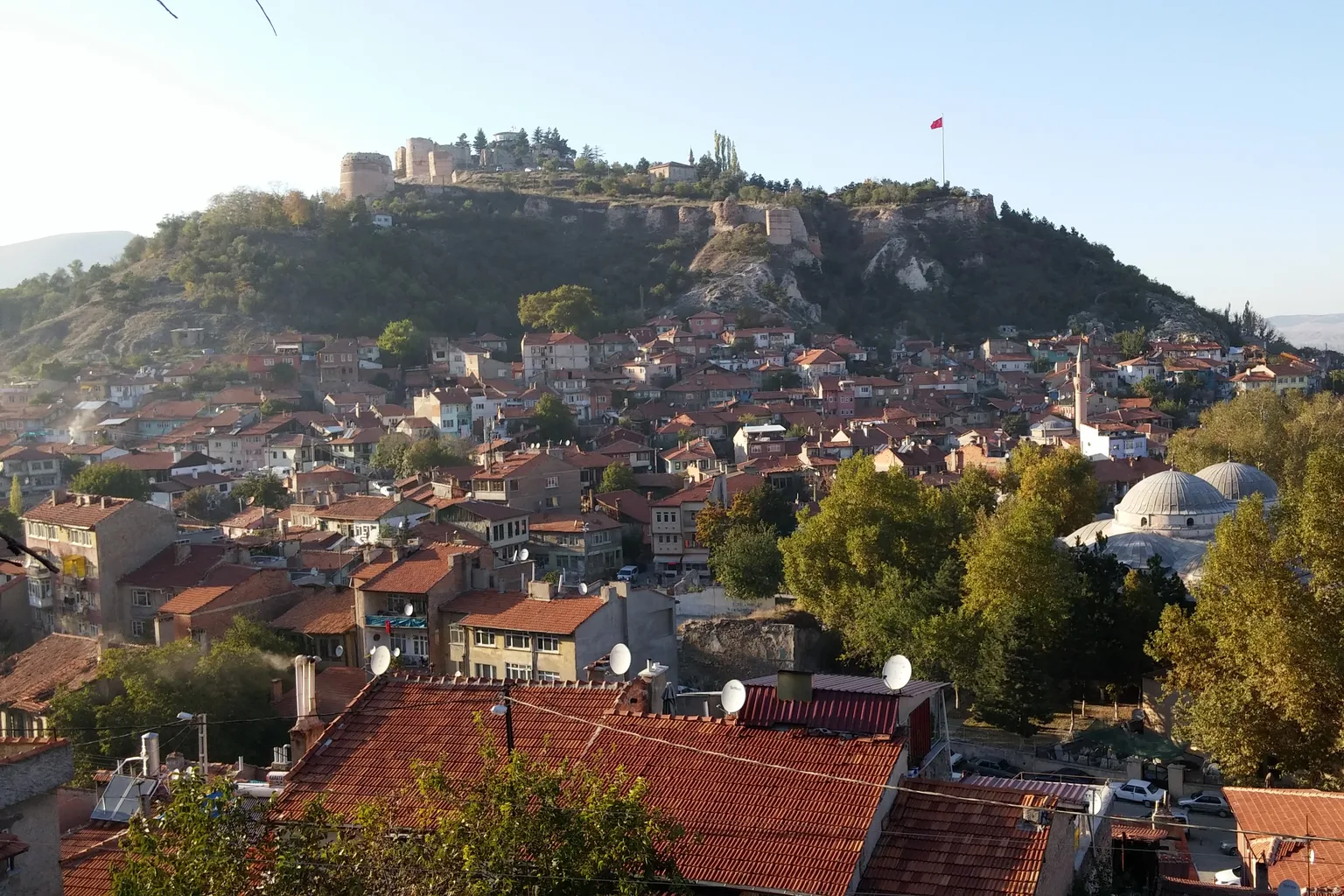
Kütahya (kew-TAH-yah) is a city and a province in western Türkiye, on a plain below a castle hill. Its old town has timber houses, a tile museum and a Great Mosque, and the province holds the Roman city of Aizanoi and the 1922 battlefield of Dumlupınar. By road it is 311 km from Ankara, 360 km from Istanbul and 334 km from İzmir.
In short · checked 26.10.2026
A city of timber houses and tile museums, with a Roman site and a battlefield in its province.
- What to see in the city: the castle, the Great Mosque, the Çini (tile) Museum, the Archaeological Museum and the Kossuth House, a museum in an old timber house.
- In the province: Aizanoi, a Roman temple city in Çavdarhisar district, and the Dumlupınar monuments of the 1922 battle.
- Museum fees: the Çini Museum and the Kossuth House are free. At the Kütahya Museum and Aizanoi, Turkish citizens enter with MüzeKart and foreign visitors pay € 3.
- Aizanoi is not a World Heritage site. It is on Türkiye’s Tentative List, entered in 2012.
Tool · house parts as the directorate names them, checked 26.10.2026
The Kütahya house, part by part
The old houses of Kütahya share one plan: a stone ground floor, a timber frame above it and rooms that open onto one hall. Switch between the street view and the cutaway, press a number and read the part. Add the parts you want to find to the walk card; Copy gives you the list and two Turkish questions to ask.
- Taşlık stone ground floor The ground floor is built of masonry. It held the horse stable, the store for farm tools, the cellar, the coal shed and the hearth. It has few, small windows.
- Sokak kapısı street door A house is usually entered through a street door that leads on to the garden. These doors are the only decoration of the street front: two leaves held by timber bands, with forged nails. A second door opens to the back garden.
- Çatkı ve kerpiç dolgu timber frame with mud-brick fill Above the stone floor stands a timber frame whose gaps are filled with mud brick (kerpiç) and plastered. The plaster is painted white, off-yellow, ochre or indigo; the beams, window frames and lattices keep the colour of the wood.
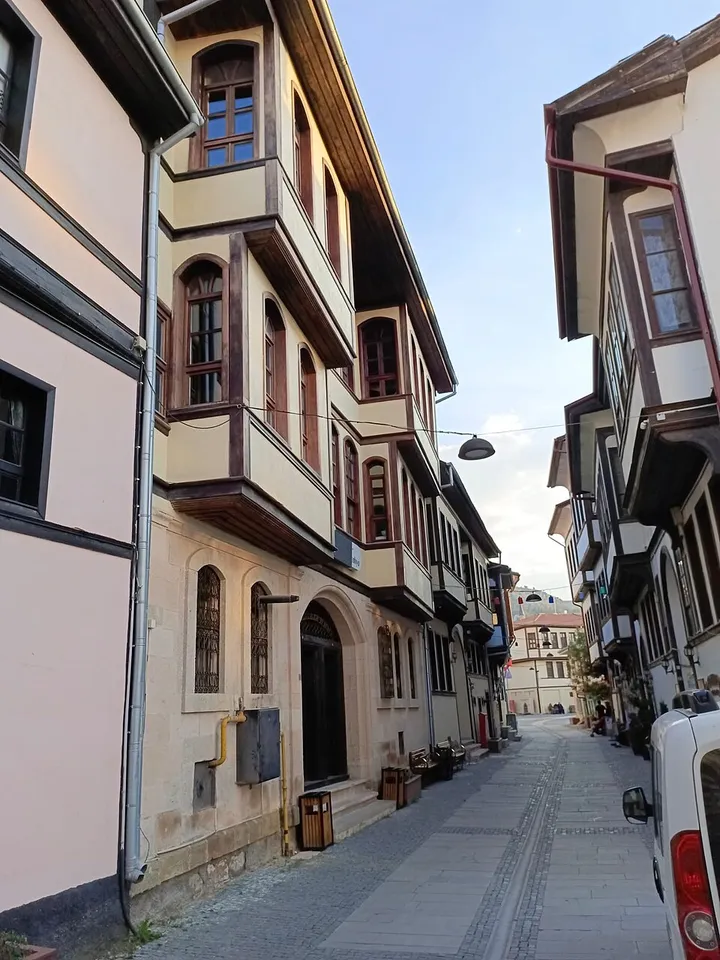
- Çıkma bay on timber brackets The directorate calls the bay on timber brackets (payanda) the most important feature of the style. Upper floors reach out over the street, and on three-floor houses the bays step out one above the other. A bay is also called cumba.
- Kafes timber lattice A lattice of thin timber strips fills a window or a bay. In houses of the 19th and early 20th centuries the decoration moves outward, to the window frames, the eaves, the lattices and the bay brackets.
- Saçak eaves The roof has either four slopes or two and is covered with curved tiles. The eaves reach out far, and chimneys rise a little above the ridge under a small roof of their own. In the 19th and early 20th centuries the eaves carry decoration.
- Çeşme street fountain Nearly every street has a fountain, so for a long time houses had no water supply. A fountain stands at a neighbour’s door or in the garden wall on the street side; some courtyards have a well.
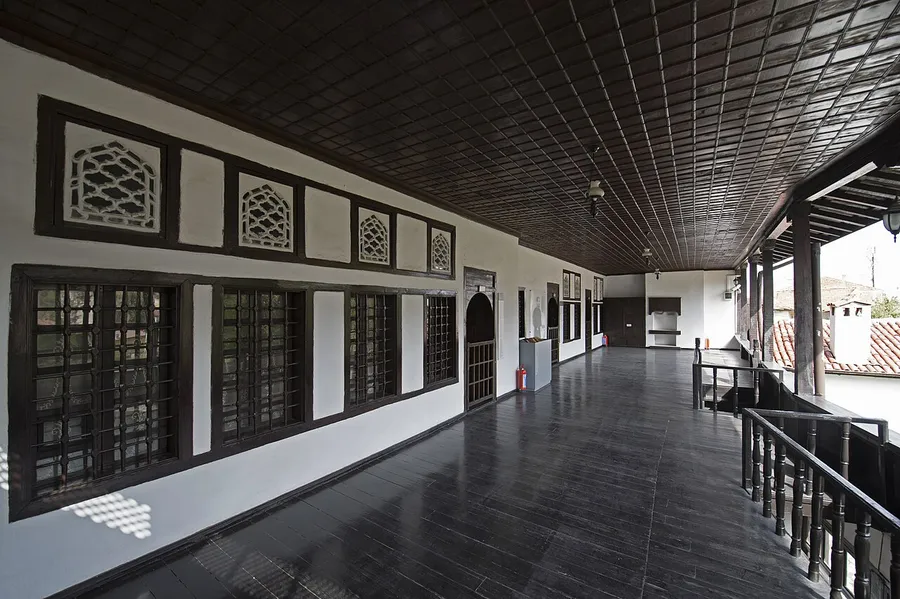
- Hayat the hall The hall is called hayat in Kütahya. It is roofed, and in older houses its sides are open; two sides are closed against cold wind and rain. All the room doors open onto it. On one side there is a small coffee hearth, on the other a place for washing before prayer.
- Köşk raised seat in the hall Where all the doors open onto the hall, the floor is raised for a sitting and resting corner called seki or köşk. An upper floor may also have a köşk that juts out of the house, a cihannüma, a lookout over the town.
- Baş oda head room The main room has seats all round the walls and a hearth. Its ceiling, hearth hood, cupboard doors and doors are carved in many pieces. When guests come, the meal is laid in it for the men; the household eats in the day room.
- Çarkıfelek ceiling boss Laths nailed over the ceiling boards make shapes, with a boss in the middle and a quarter of it at each side. The middle boss is the çarkıfelek. Some head rooms have a tile plate set in the centre.
- Yüklük, kavukluk, şerbetlik built-in cupboards and niches There are no bedrooms, so quilts and beds are put away every morning in the yüklük, the bedding cupboard. The kavukluk holds the kavuk, a man’s headgear, and the şerbetlik the sherbet, a sweet fruit syrup; in the head room these are richly decorated.
- Gusülhane washing cupboard A house has no bathroom. People went to the neighbourhood hammam at least once a week; in the room a low two-leaf door opens to a zinc-floored cupboard for washing, with no plumbing. Water is heated and brought in buckets.
Add a part with its button to see it here.
- Taşlık stone ground floor
- Çıkma bay on timber brackets
- Saçak eaves
Macar Sokak'taki Kossuth Müzesi nerede?Where is the Kossuth Museum on Macar Sokak?
Çıkmalı eski evler hangi sokaklarda?In which streets are the old houses with bays?
Nothing you press is stored or sent. To see inside one, the Kossuth House Museum is the house on the ministry’s lists: free, closed on Monday (muze.gov.tr, 26.10.2026). Old houses stand in the Sultanbağı, Kurşunlu, Gazi Kemal and Pirler neighbourhoods (chapter 3).
Where it is: a city under a castle hill
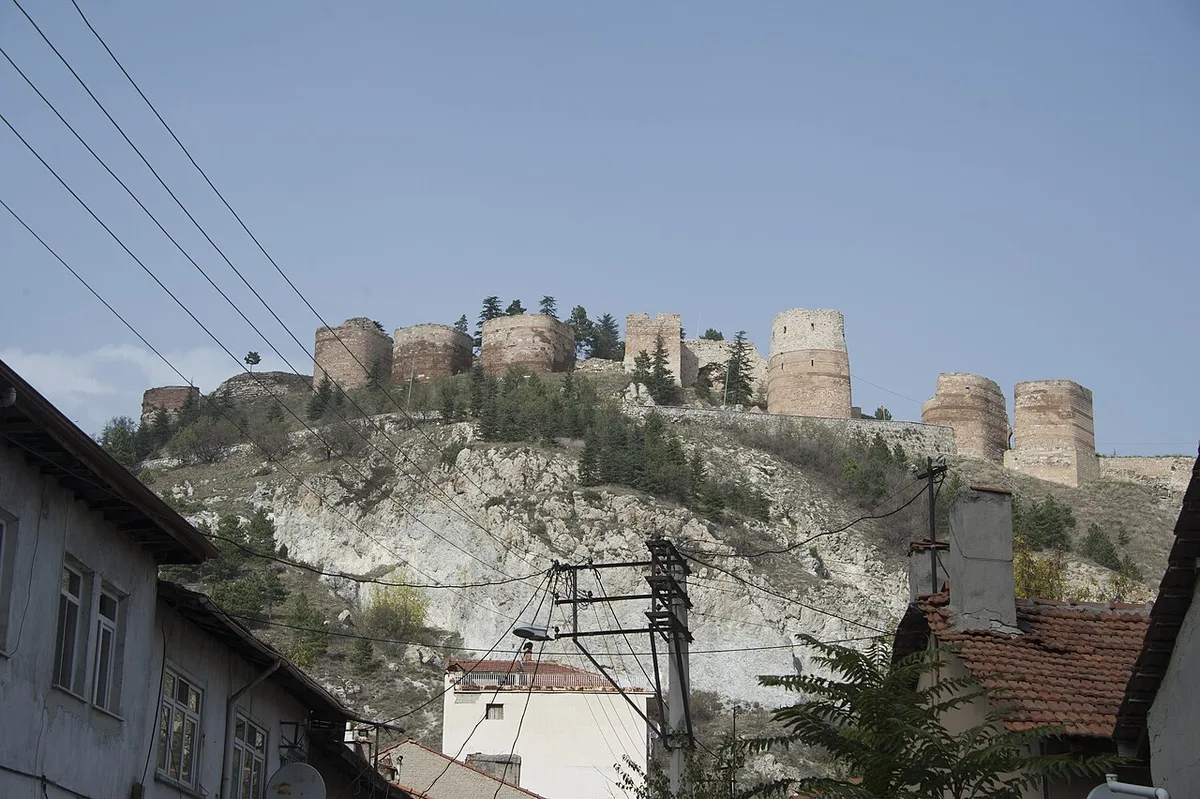
Kütahya is the name of a province (il) and of its main city. The old core lies below two hills, Hisar with the castle and Hıdırlık; a stream runs between them and divides the town from south to north. The town spreads from the foot of Hisar hill, about 1,000 m high, over the plain to the north (TDV İslâm Ansiklopedisi). The province borders seven others.
Kütahya Culture and Tourism Directorate · general information
949 m above the sea, 13 districts, seven neighbours.
The province covers 12,043 km² in the inner west of the Aegean region, where the Upper Sakarya and South Marmara areas meet. The TDV gives 11,977 km². It borders Bursa, Bilecik, Eskişehir, Afyonkarahisar, Uşak, Manisa and Balıkesir; the guide to Eskişehir covers the nearest big neighbour.
The 12 districts besides the centre are Altıntaş, Aslanapa, Çavdarhisar, Domaniç, Dumlupınar, Emet, Gediz, Hisarcık, Pazarlar, Simav, Şaphane and Tavşanlı.
Words you will meet
- İl
- province: Kütahya is one, and its main city has the same name.
- İlçe
- district: a part of a province. Kütahya has 12 besides the central one.
- Merkez
- centre: the central district, which holds the city.
- Belediye
- municipality: the elected city government.
- Valilik
- governorate: the state’s office in the province, headed by the vali (governor).
- Mahalle
- neighbourhood: the old town is described by them, such as Sultanbağı, Kurşunlu, Gazi Kemal and Pirler.
Directorate and TDV pages · checked 26.10.2026 · general information · TDV İslâm Ansiklopedisi
A short history: from Kotiaeion to 1922
The name Kütahya comes from Kotiaeion, the city’s ancient name (TDV İslâm Ansiklopedisi). The Culture Portal of the Ministry of Culture and Tourism puts the area’s history at about 7,000 years. The dates below follow the TDV where the sources differ.
- Before 1078Phrygians, Lydians and Persians rule the area, then Alexander the Great and his successors; Rome takes it in 133 BC. Under Byzantium it is a bishop’s seat, and the castle walls are Byzantine work of the 5th century.
- 1078–1233The Anatolian Seljuk state, founded in 1078, takes Kütahya. Turks hold it again from 1233, when the Seljuk sultan Alâeddin Keykubad takes it back from the Empire of Nicaea, a successor state of Byzantium. The Yoncalı Hamam, a bath house, carries an inscription of 1234.
- About 1300The Germiyanoğulları («sons of Germiyan», a Turkmen dynasty) make Kütahya the capital of their beylik, a small state ruled by a bey, a Turkish lord. Umur bin Savcı has the Vâcidiye Madrasa built in 1314.
- 1381Süleyman Şah of Germiyan marries his daughter to Bayezid, a son of the Ottoman sultan Murad I. Kütahya, Simav, Eğrigöz and Tavşanlı pass to the Ottomans as her dowry (çeyiz), and Bayezid goes to Kütahya as governor.
- 1390–1429In 1390 Bayezid, now sultan, takes all the Germiyan land. After the Ottoman defeat at Ankara in 1402 Yakub II returns to Kütahya. He has no son and tells Murad II in 1428 that his land will pass to him; when he dies in 1429, Kütahya becomes an Ottoman sancak, a district under a governor.
- 1451Kütahya becomes the seat of the Anatolian beylerbeylik, the province of the governor-general of Anatolia.
- 1833–1867The Treaty of Kütahya (1833) ends the advance of İbrahim Paşa, the son of the governor of Egypt, who had reached the town. Kütahya is the centre of Hüdavendigâr province from 1841, gets its municipality in 1857 and loses the province seat to Bursa in 1867.
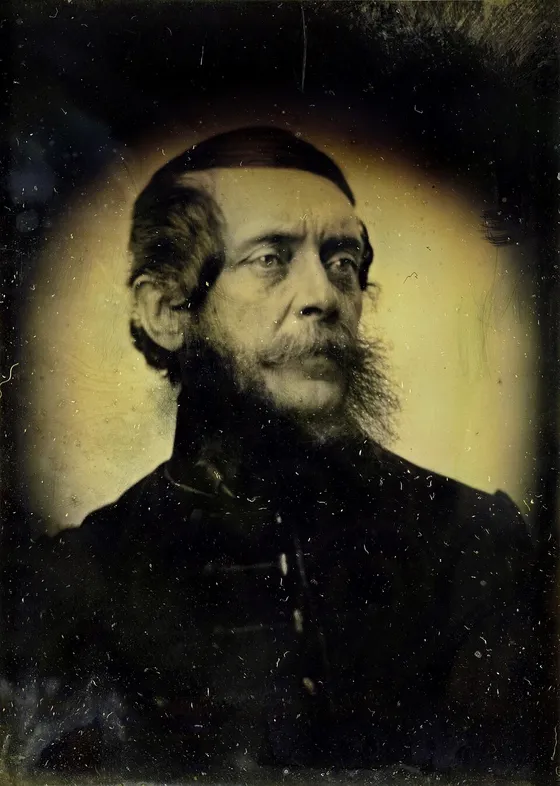
- 1850–1851After the 1848 revolutions Hungarian leaders find refuge in the Ottoman state. Lajos Kossuth is hosted in Kütahya from 1850 to 1851.
- July 1921The Greek army enters Kütahya and holds it for more than a year.
- 30 August 1922The Great Offensive begins on 26 August, and Kütahya is freed on 30 August at 18:00 (chapter 6).
Kütahya Culture Portal and TDV İslâm Ansiklopedisi · checked 26.10.2026 · Culture Portal · TDV
Lajos Kossuth in Kütahya
- Who
- One of the leaders of the Hungarian struggle for independence, 1802–1894.
- When
- Hosted in Kütahya from 1850 to 1851, with his family and other refugees.
- Where
- In a timber house in Macar Sokak, now a museum (chapter 4). The directorate says he prepared a draft constitution for Hungary there.
Kütahya Culture and Tourism Directorate · checked 26.10.2026 · museum page
The old town: castle, mosques, bazaars and houses
The roads of the old quarters widen as they run toward the Great Mosque (Ulu Cami), which the directorate calls the main centre. The big mosques, neighbourhood mosques, inns, covered markets, baths, fountains and tombs make up the rest of the old town. Nine places from the directorate’s pages:
Kütahya Castle
Lived in since ancient times. The walls are Byzantine work of the 5th century, repaired and added to by the Seljuks, the Germiyan and the Ottomans. The castle has three parts, the upper, inner and lower castle, with towers set close together: 72 by the count of the traveller Evliya Çelebi.
Ulu Cami
Begun under Bayezid I in 1381–1384 and finished in 1410; it is also called the Yıldırım Beyazıt Mosque. It measures 45 × 25 m and its big columns were brought from Aizanoi. The architect Mimar Sinan repaired it in the 16th century, and a large repair in 1893 gave it its dome.
Vâcidiye Madrasa
Built in 1314 by the Germiyan bey Umur bin Savcı, of cut stone, with an entrance in Seljuk style and nine small rooms around a domed centre. It is the home of the Archaeological Museum (chapter 4).
Mevlevihane, Dönenler Camii
Built in the 14th century as the ceremony hall of the Mevlevi order (the order of the poet Mevlana, known for its turning dance), Kütahya’s first lodge. It is now a mosque, known as Dönenler Camii, «the mosque of the turners», and the dervish cells survive.
Great and Small Bedesten
Two covered markets built in the 15th century by Gedik Ahmed Paşa; both were restored in 2008. The directorate names two rows of shops (arasta) between the Takvacılar and Saadettin mosques as the town’s trade centre.
Old Government House
Built in 1905 under the governor Fuat Paşa; in 1907 its outer face was covered with Kütahya tiles, the only building decorated so. A small mosque inside has tiled walls. Restored in 1999, it is now the courthouse (Adalet Sarayı).
Rüstem Paşa Madrasa
Rüstem Paşa, grand vizier and son-in-law of Süleyman the Magnificent, had it built in 1550. It was pulled down in the 1930s; the gate and the parts that could be traced were restored and the madrasa rebuilt as a crafts bazaar, since the original plan is unknown.
Evliya Çelebi
The 17th-century traveller wrote that his grandfather Kara Ahmed Bey is buried beside the family’s house in the Zeryen neighbourhood, now Maltepe. A culture and art house was rebuilt beside the tomb, and a monument stands at the road into the town from Eskişehir (2002).
Hıdırlık hill
South of the Great Mosque, with a small Seljuk mosque of 1243–1244: a square room under one dome. All of Kütahya can be seen from the hill.
The timber houses
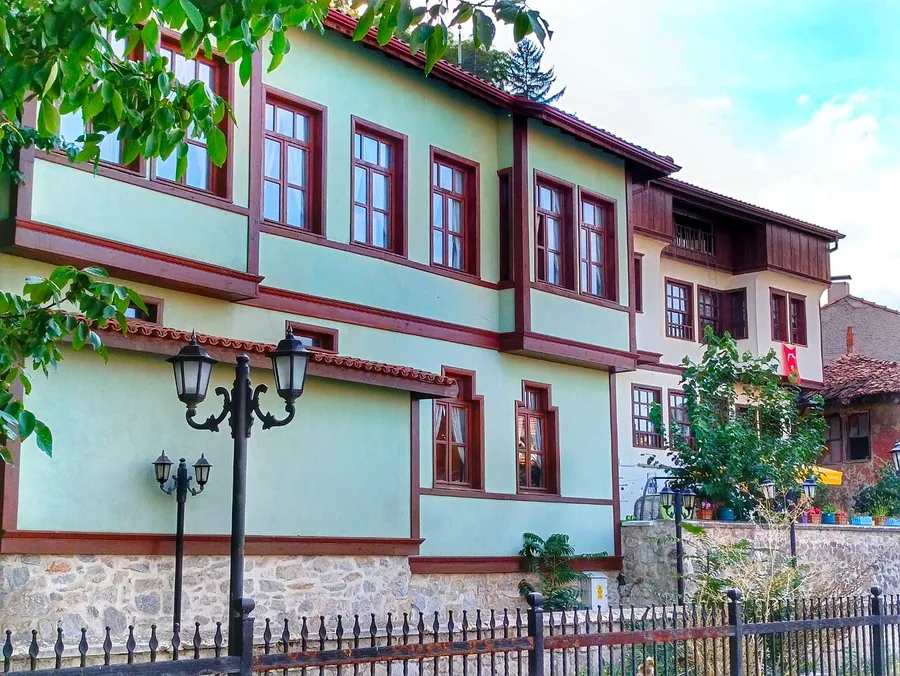
Kütahya belongs to the timber-house region of western Anatolia, on a line from Balıkesir through Uşak to Antalya. Old houses in the core neighbourhoods include:
- Defterdar Konağı, in the Sultanbağı neighbourhood.
- The Hacı İsmail Efendi house, in Kurşunlu, and the Bandımzade house in Gazi Kemal.
- Germiyan Konağı, in Pirler. A «Germiyan Beyliği Konağı» has been the governorate’s culture and art house since 15.05.2018.
A house had no bathroom: people went to the neighbourhood hammam. What a visit is like: A day at a Turkish hammam.
Directorate · checked 26.10.2026 · houses page · culture page · the parts of a house are in the tool at the top
Çini, the tile craft
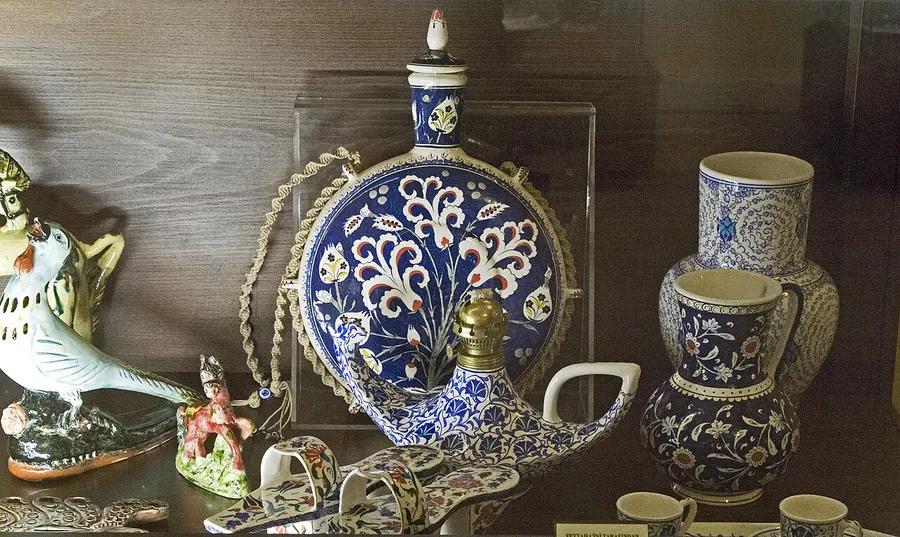
Çini (CHEE-nee) is hand-painted tile and ceramic ware, and the craft that made Kütahya known. There are nearly 500 workshops (atölye), by the directorate’s count. Blue-and-white tiles of the 15th century can be seen in the Hisarbey Mosque, dated 1487.
How çini differs from porcelain, and where the factories are, is in Kütahya porcelain and çini.
Directorate · checked 26.10.2026 · crafts page
Museums: tiles, finds and the Kossuth House
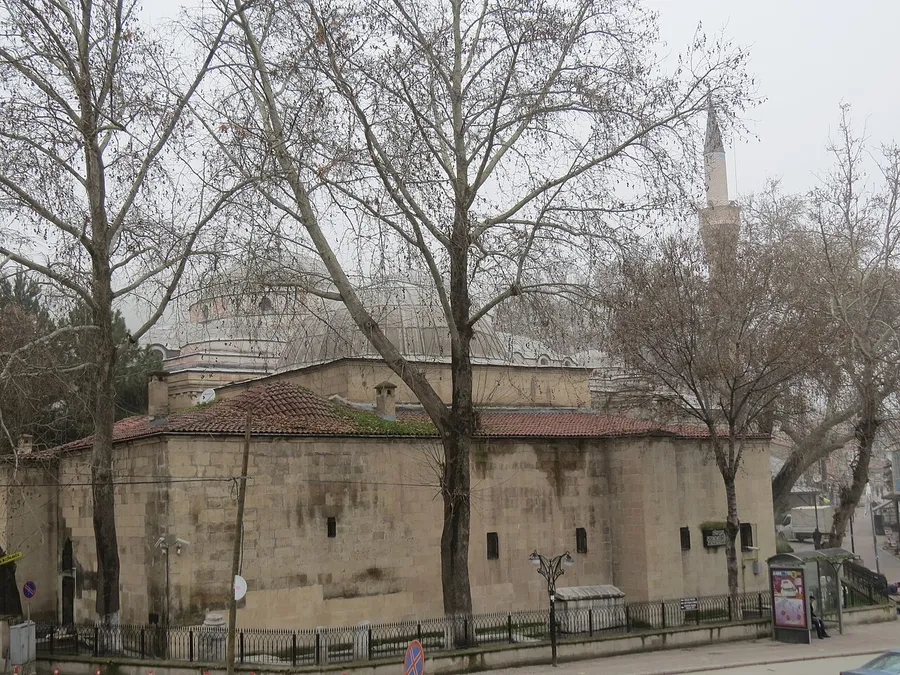
Three museums stand in the old town, two of them beside the Great Mosque. The Ministry of Culture and Tourism lists all three on its museum site, muze.gov.tr.
Kütahya Çini Museum
In the Paşamsultan neighbourhood, beside the Ulu Cami, in the complex that Yakub II had built in 1411: an imaret (a public kitchen that fed the poor), madrasa, mosque, library and hammam. The imaret and tomb section was restored as a museum in 1999. Cabinets show tiles, inscriptions, vases, plates and household things made in Kütahya and İznik from the 14th century to today, and Yakub II’s tiled tomb chest stands here. The texts of an agreement of 13 July 1766 between the cup-makers’ masters and journeymen, which the directorate calls the first collective labour agreement in history, can be read there.
Kütahya Museum
Inside the Vâcidiye Madrasa, open since 1965. Its cases run from the Palaeolithic through Phrygian, Hellenistic, Roman, Byzantine, Seljuk and Ottoman times. Among its finds is the Amazon sarcophagus, a stone coffin found in a rescue dig at Aizanoi, carved in high relief with battles between Greeks and Amazons. It was found in 1960, and the museum dates it to about AD 160.
Kossuth House Museum
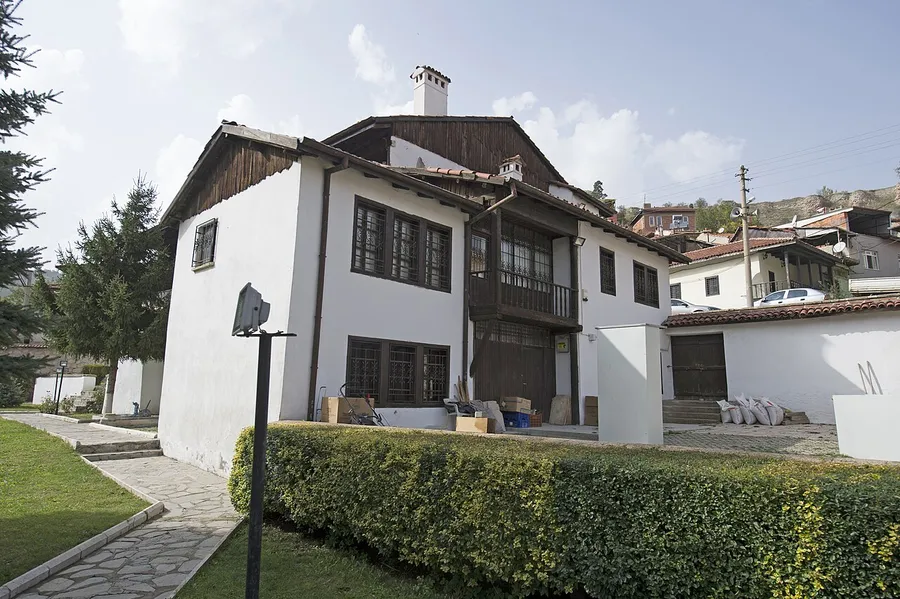
A two-floor timber house with seven rooms in a garden, in Macar Sokak, known as the Hungarian House (Macar Evi). The directorate calls it a Turkish house of the 18th century. Opened as a museum on 19 September 1982, it shows Kossuth’s belongings and ethnographic items from a classic Turkish house.
Days, hours and fees
- Çini Museum
- Closed Monday. 08:30–17:30, ticket office closes 17:00. Free.
- Kütahya Museum
- Open every day, 08:30–17:30, ticket office closes 17:00. On a Monday, check first: the provincial directorate lists it as closed that day. Turkish citizens enter with MüzeKart; foreign visitors pay € 3.
- Kossuth House
- Closed Monday. 08:30–17:30, ticket office closes 17:00. Free. In Macar Sokak, Börekçiler neighbourhood.
muze.gov.tr pages and the Ministry fee list · checked 26.10.2026 · Çini · Kütahya · Kossuth · fee list · hours and fees change: check the page before you go
What is MüzeKart?
MüzeKart is the Ministry’s museum card. At the Kütahya Museum it is valid for Turkish citizens. How the cards and passes work, and what they cost, is in Turkey museum ticket prices and the pass calculator.
Aizanoi: a Roman city in Çavdarhisar
Aizanoi (AYE-zah-noy) is an ancient city in the centre of Çavdarhisar district. It grew rich on grain and wool, had its heyday in the 2nd century AD and was a bishop’s seat in early Byzantine times. Traces of settlement around the temple go back to about 3000 BC, and about 80,000 people are thought to have lived in the Roman city.
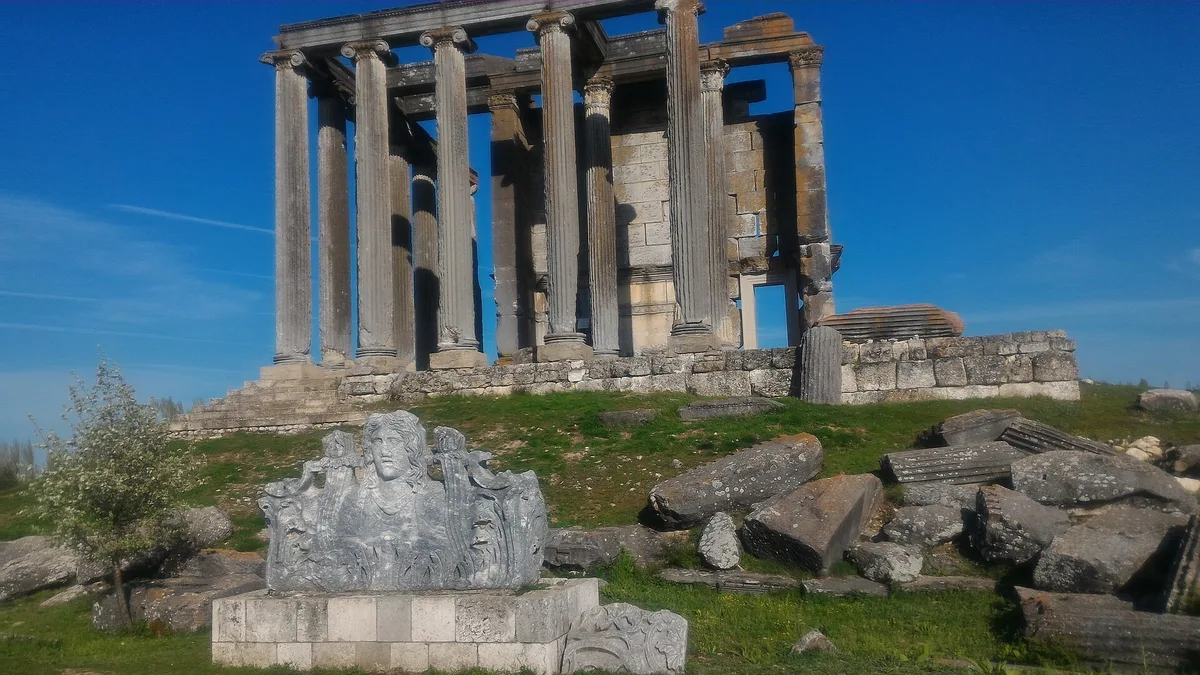
What stands
- Temple of Zeus
- Built AD 117–138 on a podium in a court of 130.5 × 112 m, with 120 Ionic and 4 Corinthian columns. The directorate calls it a well-preserved Ionic temple of Anatolia.
- Theatre and stadium
- A theatre for 15,000 and, joined to it, a stadium of 220 × 50 m for 13,500.
- Market building
- A round grain market of the 2nd century AD. Its walls carry price lists from Emperor Diocletian’s edict of AD 301 against inflation.
- Also
- Baths, a colonnaded street, two agoras and five bridges over the Kocaçay, two of them still standing.
Directorate · checked 26.10.2026 · page
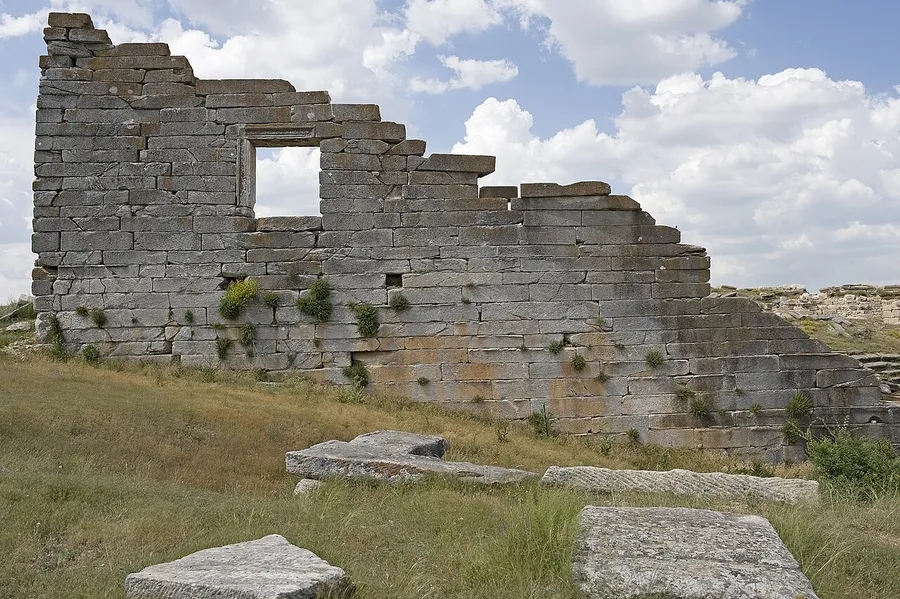
- 13th centuryThe temple platform has become a fort. The Çavdar Tatars use it as a base, and the place takes the name Çavdarhisar, «Çavdar fort».
- 1824European travellers rediscover the ruins; they are studied in the 1830s and 1840s.
- 1926The German Archaeological Institute makes the first excavation, led by M. Schede and D. Krencker.
- Since 1970Excavation goes on every year.
Directorate · checked 26.10.2026
Not a World Heritage site
Aizanoi is on Türkiye’s Tentative List, entered in 2012: the list of places a country may later propose. It is not on the World Heritage List. Fees: Turkish citizens enter with MüzeKart, foreign visitors pay € 3.
Dumlupınar: the 1922 battlefield
The Great Offensive (Büyük Taarruz) of the Turkish army against the Greek army in western Anatolia began on 26 August 1922 at Kocatepe, near Afyonkarahisar. Its field battle, the Başkomutan Meydan Muharebesi («the commander-in-chief’s field battle»), ended on 30 August on the line from Zafertepeçalköy to Dumlupınar. The sites named here lie in Altıntaş, Dumlupınar and Emet districts.
- 26 AugustThe offensive opens at Kocatepe, Afyonkarahisar.
- 29 AugustThe 3rd Regiment of the 14th Cavalry Division attacks near Zafertepeçalköy; a cemetery there records the cavalry’s dead.
- 30 AugustThe battle ends on the Zafertepeçalköy–Dumlupınar line. Kütahya is freed at 18:00.
- 31 AugustThe commander-in-chief, Mustafa Kemal Paşa, tours the field. A monument of 2007 shows the moment he assessed the situation with İsmet Paşa and Fevzi Paşa on a broken cart in a ruined yard at Çalköy.
- 1 SeptemberAt Dumlupınar he gives the armies their next order: to advance toward the Mediterranean.
Kütahya Culture and Tourism Directorate · checked 26.10.2026 · monuments page
Dumlupınar First Target Monument
Stands on the site of the headquarters where the order of 1 September was given. Building began in 1964; it was opened on 26 August 1972. A 4 m bronze statue of Atatürk stands before a 12 m concrete wall that shows lightning flashes, with a bronze relief of cavalry.
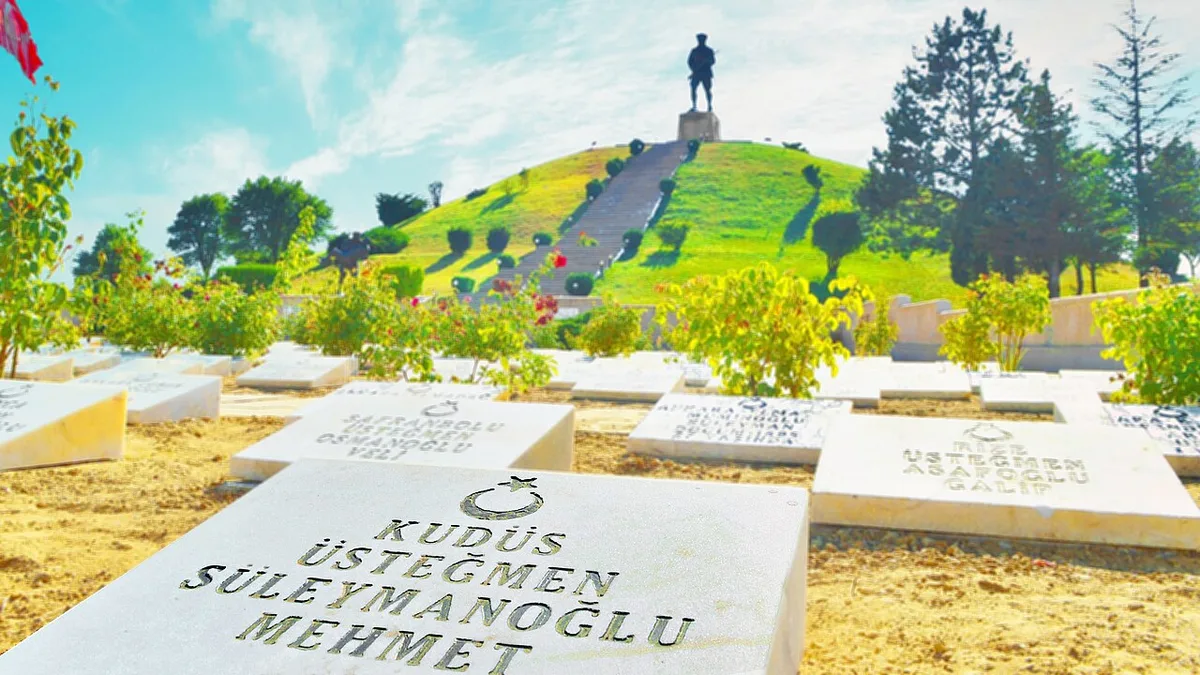
Dumlupınar Cemetery
Built by the Ministry of Culture and Tourism for those who died on every front of the War of Independence, and opened on 30 August 1992, the 70th anniversary. It holds 500 symbolic graves and monuments to the Three Commanders, the Militia (civilians who died), a Father and Son and the Mehmetçik (the ordinary soldier), with a prayer area and a fountain.
Atatürk Headquarters House
The house used as headquarters in the war was rebuilt true to the original and opened on 30 August 2003.
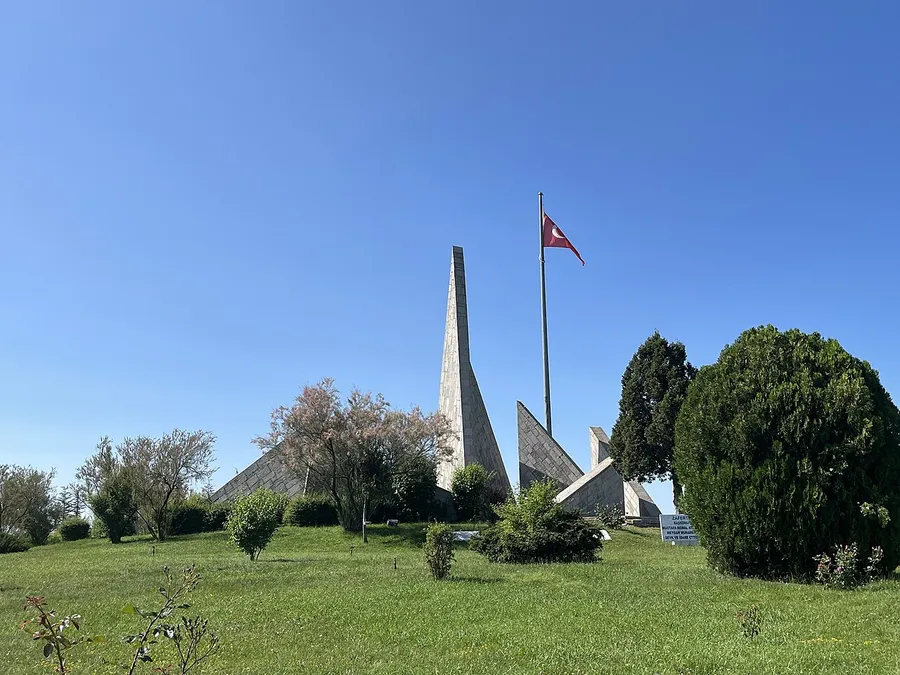
Zafertepeçalköy Victory Monument
On the hill, 1,181 m high, from which the battle was directed. Building began in 1964 and it opened in 1968. Its angled triangular blocks recall stacked rifles or a flame. The ceremonies of 30 August are held here.
Standard-Bearer Mehmetçik Monument
The foundation was laid on 30 August 1924; the monument at its present place opened on 30 August 1979. A road of 600 m leaves the Zafertepeçalköy–Dumlupınar road at its 2nd km.
Aslıhanlar and Cevizdere
The Büyük Aslıhanlar Üç Tepeler Cemetery, opened in 1995, remembers 42 soldiers who died there on 30 August 1922. The Emet Cevizdere Cemetery in Günlüce, opened in 1985, remembers those who died there on 3 September 1922.
Getting there: by air, train, bus or car
Roads and railways from inner Anatolia to the Aegean, the Marmara region and the Mediterranean meet at Kütahya. By road it is 311 km from Ankara, 360 km from Istanbul, 334 km from İzmir and 364 km from Antalya.
How do you travel?
- The airport
- Zafer Airport is in Altıntaş district, 41 km from the city centre.
- Flights
- Times and fares are on the airlines’ own sites.
- The station
- The railway station is in the city centre. City buses and dolmuş, a shared minibus that leaves when it is full, run to it.
- The lines
- The line runs north and east through Eskişehir, west through Balıkesir and south through Afyonkarahisar, and joins the Ankara–İzmir line at Dumlupınar.
- Times and fares
- The ticket site of TCDD Taşımacılık, the state railways’ passenger company: tcddtasimacilik.gov.tr.
- The station
- Intercity buses leave from the bus station (otogar) at Çinigar, and every district of the province has buses to the centre.
- Who runs them
- Bus companies of the province and of nearby provinces whose buses pass through Kütahya.
- The roads
- Kütahya has road links to every province in Türkiye; the distances above are the directorate’s.
- In town
- City buses and dolmuş run in the city. For taxis, see Taxis in Turkey.
What to eat: dough, yoghurt and wild plum
The cuisine is one of dough and meat, yoghurt and butter, shaped by long cold winters and a short spring, with wild greens gathered in season. Eight dishes:
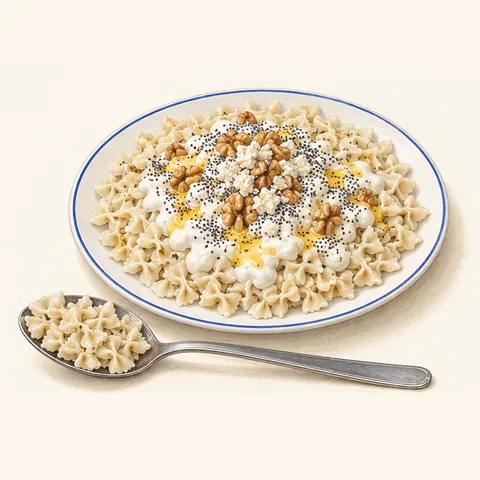
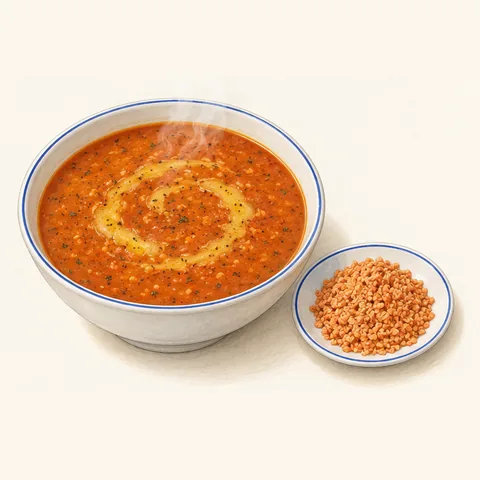
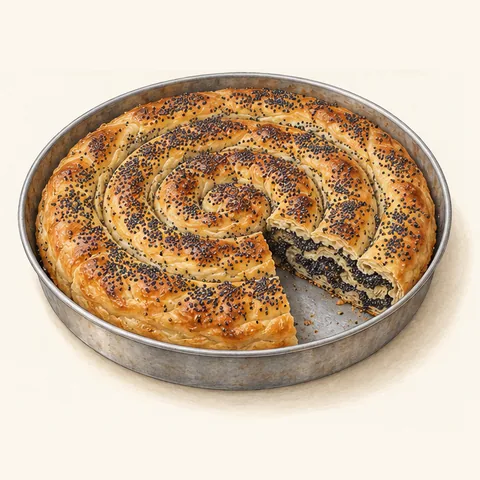
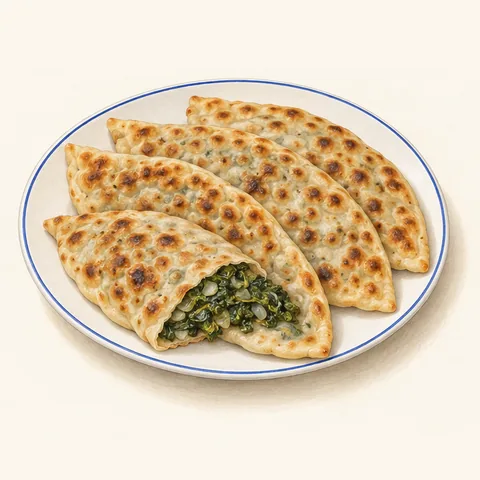
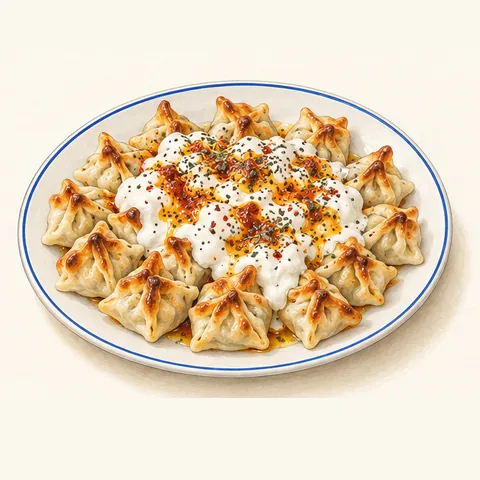
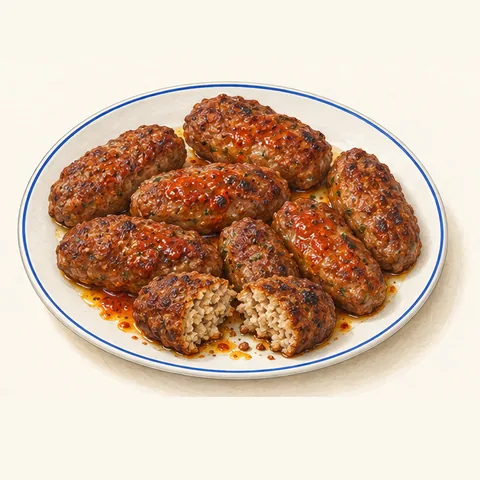
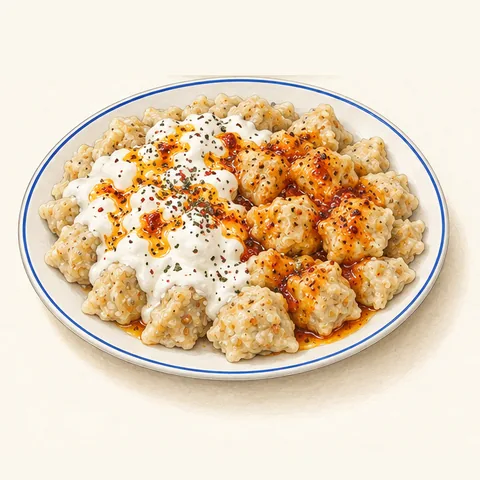
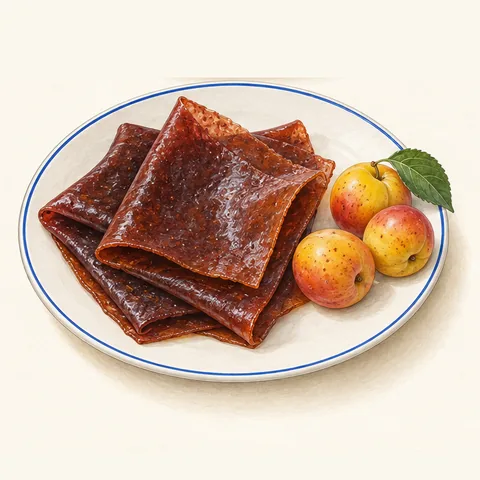
The pictures are illustrations drawn to match the directorate’s descriptions, not photographs. Recipes vary from house to house.
- Tarhana soup is made in September and October for the whole year. It is eaten at the first course of a meal, at breakfast and as a field lunch, and Gediz holds a tarhana festival every year.
- Çimcik is one of the most often made dishes of Kütahya. In hot Ramadans it is a frequent pre-dawn meal (sahur).
- Kuru köfte is served at special invitations and in Ramadan set meals, in place of stuffed leaves (etli sarma).
Kütahya Culture and Tourism Directorate · checked 26.10.2026 · cuisine page
The last dish
A Kütahya set meal (takım yemeği), served at weddings, farewells for soldiers and when guests come, ends with etli yaprak sarması, stuffed vine leaves with meat and rice, after the dessert. It is called kara haber, «black news», because it means there is no more food.
Directorate · page · more dishes of the Ottoman tradition: Ottoman dishes in Turkey and how to ask for them
To ask a host or a cook: Yöresel yemekleriniz neler?What are your local dishes?
When to go: what each season brings
The climate is a transition between the dry continental climate of inner Anatolia and the milder Aegean and Marmara climate. In the east of the province summers are hot and dry and winters cold and wet; the west has a gentler sea climate. The mean temperature is 0.5 °C in January and 21.3 °C in July.
- WinterWinters are long and cold. Gediz district has the Muratdağı thermal ski centre; for hot springs see Thermal springs in Turkey.
- SpringSpring is short. Nettle tips are gathered for şipit.
- 30 AugustThe ceremonies for the 1922 victory are held at the Zafertepeçalköy Victory Monument.
- First Sunday of SeptemberThe Hayme Ana commemoration and migration festival is held every year in Çarşamba village, Domaniç district, at the tomb of Hayme Ana, whom the directorate calls the mother of Ertuğrul Gazi.
- September and OctoberTarhana is made for the year, and wild plums are picked in autumn for pestil.
- HolidaysThe dates for the year are in Turkey public holidays 2026 and 2027.
Directorate and Culture Portal · checked 26.10.2026 · climate page · culture page · cuisine page
Quick answers in a few lines
Where is Kütahya?
In the inner west of Anatolia, 311 km from Ankara, 360 km from Istanbul and 334 km from İzmir by road. It is both a province with 13 districts and the name of its main city.
What is Germiyan?
A Turkmen dynasty, the Germiyanoğulları, who ruled a small state (beylik) from Kütahya from about 1300 until 1429, when it passed to the Ottomans.
Is the Çini Museum free?
Yes. It is free and closed on Monday. Check the page before you go.
Is Aizanoi a UNESCO World Heritage site?
No. It is on Türkiye’s Tentative List, entered in 2012, which is the list of places a country may later propose.
What happened on 30 August 1922?
The Başkomutan Meydan Muharebesi ended on the Zafertepeçalköy–Dumlupınar line, and Kütahya was freed at 18:00. The ceremonies are held at the Victory Monument each 30 August.
How do I get there?
By bus from the Çinigar bus station, by train to the station in the centre, by road, or by air to Zafer Airport in Altıntaş, 41 km from the centre.
What is çimcik?
A small bow-tie shaped dough, boiled and served with garlic yoghurt and butter, or with melted wild-plum leather and lemon. The directorate says forty should fit on a spoon.
Can I go into an old timber house?
The Kossuth House Museum is the house open as a museum on the Ministry’s lists: free, closed on Monday.
Sources and limits
Show the pages checked
- Genel Bilgiler — Kütahya Provincial Culture and Tourism Directorate, checked 26.10.2026
- Sivil Mimari Örnekleri – Konaklar — Kütahya Provincial Culture and Tourism Directorate, checked 26.10.2026
- Kültür Turizmi — Kütahya Provincial Culture and Tourism Directorate, checked 26.10.2026
- Çini Müzesi — Kütahya Provincial Culture and Tourism Directorate, checked 26.10.2026
- Arkeoloji Müzesi — Kütahya Provincial Culture and Tourism Directorate, checked 26.10.2026
- Kossuth Müzesi — Kütahya Provincial Culture and Tourism Directorate, checked 26.10.2026
- Aizanoi Antik Kenti (Ören Yeri) — Kütahya Provincial Culture and Tourism Directorate, checked 26.10.2026
- Şehitlik ve Anıtlar — Kütahya Provincial Culture and Tourism Directorate, checked 26.10.2026
- Kütahya Mutfak Kültürü — Kütahya Provincial Culture and Tourism Directorate, checked 26.10.2026
- Geleneksel Sanatlar – Zanaatlar — Kütahya Provincial Culture and Tourism Directorate, checked 26.10.2026
- Ulaşım — Kütahya Provincial Culture and Tourism Directorate, checked 26.10.2026
- İklimi — Kütahya Provincial Culture and Tourism Directorate, checked 26.10.2026
- Kütahya · Genel Bilgiler — Türkiye Kültür Portalı, Ministry of Culture and Tourism, checked 26.10.2026
- Kütahya — TDV İslâm Ansiklopedisi, checked 26.10.2026
- Kütahya Çini Müzesi — Ministry of Culture and Tourism, muze.gov.tr, checked 26.10.2026
- Kütahya Müzesi — Ministry of Culture and Tourism, muze.gov.tr, checked 26.10.2026
- Kossuth Evi Müzesi — Ministry of Culture and Tourism, muze.gov.tr, checked 26.10.2026
- Müze ve Ören Yeri Ücretleri — Ministry of Culture and Tourism, checked 26.10.2026
- Türkiye — UNESCO World Heritage Centre, states parties, checked 26.10.2026
Photos are from Wikimedia Commons, each with its author, date, licence and file page in the caption; the eight dish pictures are illustrations. Hours are from the Ministry’s museum pages.
Hours, fees and timetables change. Read the museum and ticket pages before you go.