
Hazelnut Production in Turkey: The Global “Green Gold”
Table of Contents
When you spread hazelnut cream on your toast this morning or bit into a premium truffle, you were almost certainly tasting a piece of Turkey. It is a little known fact that defines the global food industry: Turkey doesn’t just participate in the hazelnut market it is the market.
With a share of roughly 70% to 75% of global production, this single nation dictates supply, quality, and pricing. If there is a frost in the Black Sea region, chocolate prices rise in New York and London. In this analysis, we break down the phenomenon of “Green Gold,” from the steep slopes of the coast to the multi billion dollar exports fueling the economy.
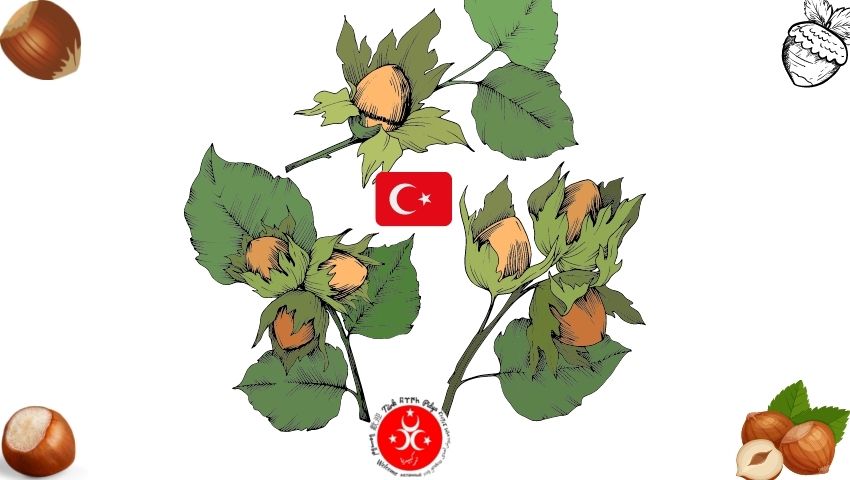
Why the Turkish Hazelnut is Unrivaled
Turkey’s dominance isn’t accidental; it is the result of a geographic lottery. Hazelnut trees are notoriously picky. They demand a mild, humid climate with stable temperatures that ideally never drop below 8°C (46°F) nor persistently exceed 30°C (86°F). The Turkish Black Sea coast offers these conditions in perfection.
The Economic Weight:
- Market Share: Turkey produces an average of 600,000 to 700,000 tons of hazelnuts annually.
- Export Volume: In the 2024/2025 season, Turkey exported approximately 309,000 tons of hazelnut kernels, generating around 2.56 billion USD.
- Global Dependency: Giants like Ferrero (the maker of Nutella and Ferrero Rocher) purchase massive quantities of the Turkish harvest. The global confectionery industry is effectively tethered to the weather patterns of northern Turkey.
Much like Turkish milk production forms the backbone of the local dairy diet, the hazelnut is the spine of agricultural exports. Because of its immense value, locals reverently refer to it as “Green Gold.”
The Regions: Where the Gold Grows
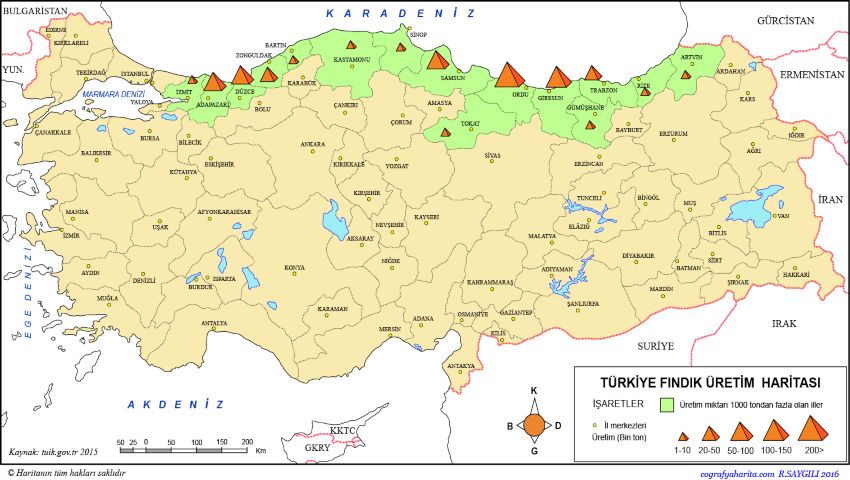
Traditionally, commercial hazelnut farming in Turkey is confined to the Black Sea (Karadeniz) coast. Production is split into two main regions, each delivering distinct quality levels:
1. The “Old” Region (Eastern Black Sea)
This is the historical heartland. The slopes here are incredibly steep, making machinery impossible to use; harvesting is grueling manual labor, often performed by seasonal workers balancing on inclines.
- Provinces: Ordu (World leader in volume), Giresun, Trabzon, Rize, Artvin.
- The Distinction: This is the home of “Giresun Quality.” These nuts are considered the best in the world; they are rounder, have a higher fat content, and are easier to blanch. They command premium prices in the market.
2. The “New” Region (Western Black Sea)
Over the last few decades, cultivation has expanded westward where the terrain is flatter, allowing for slightly more efficient farming methods.
- Provinces: Samsun, Düzce, Sakarya, Zonguldak, Kocaeli.
- The Quality: Here, the output is often referred to as “Levant Quality.” These are excellent nuts but generally have a lower fat content than the Giresun variety. They are frequently used for industrial processing (e. g., flour, paste, or oil).
Editor’s Note: While there are reports of experimental farming in southeastern cities like Şanlıurfa, they play a negligible role in the global market. Commercial power remains firmly in the hands of the Black Sea.
Key Varieties: Know Your Nut
Not all hazelnuts are created equal. Turkey registers up to 18 commercial varieties, cultivated based on their end use. For buyers, knowing the difference is crucial.
- Tombul: The Queen of hazelnuts. Thin shell, very high fat content, and perfect aroma. Ideal for snacking and high-end chocolate.
- Palaz & Foşa: Medium sized, often flatter, and popular for roasting.
- Çakıldak: A robust variety that adapts well to different altitudes.
- New Breeds: Research institutes have developed varieties like Okay 28 and Giresun Melezi to boost yields and pest resistance.
Historical Context: An Ancient Tradition
The history of the hazelnut in Anatolia spans millennia. Historical sources suggest that hazelnuts were cultivated in the Black Sea region (ancient Pontus) as early as 1500 BC. Some local traditions even date the origins back to 2838 BC.
What is certain is that from here, the hazelnut began its conquest of Greece and Italy. Today, it is an integral part of Turkish culture. For investors looking at starting a company in Turkey, understanding the agricultural supply chain is vital, as many of the country’s top food conglomerates built their empires on processing this raw material.
Exports and the Global Economy: The 2026 Outlook
A close look at Turkey’s foreign trade indices reveals a clear pattern: Europe is the hungriest customer. Germany and Italy (home of Ferrero) are traditionally the largest buyers. However, the market is shifting.
Current Export Trends:
- The Rise of China: China has emerged as one of the fastest growing importers, where nut consumption is booming as a healthy snack alternative.
- Value Addition: Turkey is increasingly moving away from exporting just raw nuts. The focus is shifting to processed products (roasted, purée, or flour) to capture higher margins.
- State Support: The Turkish Grain Board (TMO) regularly intervenes in the market, purchasing excess supply to prevent price crashes and protect farmers’ livelihoods.
Where to Buy Turkish Hazelnuts?
If you are in Turkey, the freshest nuts are found in the local bazaars of the Black Sea region or in major supermarket chains. For tourists and expats, Migros Turkey is a reliable spot to find vacuum packed quality products. A pro tip: Look specifically for the label “Giresun Kalitesi” (Giresun Quality) on the packaging if you want the finest flavor experience.
The Turkish hazelnut is more than just an ingredient; it is an economic engine and a piece of cultural history found on almost every confectionery shelf in the world.