Vakko in Turkey: From Hat Shop to Fashion Group
Vakko began in 1934 as an Istanbul hat shop. How it became a fashion house with a factory, then a group with chocolate, hotels, schools and a library.
Table of Contents
Since 1934 a hat shop in Istanbul has grown into a Turkish fashion house. It turned from hats to scarves, built a department store in Beyoğlu and a factory beside the city, and now also runs chocolate, hotels, schools, a radio and television group and a library.
In short
A hat shop of 1934 that became a fashion group.
- Who and when: Vitali Hakko opened the hat shop Şen Şapka, Turkish for merry hat, in Istanbul in 1934.
- The name: the V of Vitali and the A of his brother Albert, joined to the family name Hakko, make VAKKO. The scarf, not the hat, made the name known.
- The stores: the Beyoğlu department store opened in 1962. A factory, stores in Ankara and İzmir and the Vakkorama youth stores followed.
- Today: the group also runs L’Atelier chocolate, two hotels, a fashion school, a hospitality academy, the Power radio and television group and the Vitali Hakko Creative Industries Library.
Six hats, six parts of Vakko
Vakko began with hats, so its group is shown on a hat stand. Press a hat band: that hat lifts under its lamp and the card names the part of the group, the year it began and its own site.
What would you do with Vakko?
Fashion
Vakko
The fashion house that began as a hat shop in Istanbul. It sells women’s and men’s clothes, scarves and shawls, shoes and bags, couture, home goods and perfume.
- Began
- 1934
- Its own site
- vakko.com
Chocolate
Vakko L’Atelier
Chocolate, pastry and a bistro. Vakko began making chocolate in the 1980s, which surprised people who knew it for ready-to-wear.
- Began
- The 1980s
- Its own site
- vakkolatelier.com
Hotels
Vakko Hotel & Residence
Two hotels: Vakko Hotel & Residence Nişantaşı in the city centre, opened in 2023, and Vakko Hotel Sumahan Bosphorus on the shore at Çengelköy, on the Asian side of Istanbul.
- Began
- 2023
- Its own site
- vakkohotel.com
Schools
Vakko ESMOD
A fashion school set up with ESMOD, the French fashion school. Vakko also runs the Vakko Academy of Hospitality and Service, a vocational school for hotels and restaurants, with EHL of Lausanne.
- Began
- 2013
- Its own site
- vakkoesmod.com
Library
Vitali Hakko Creative Industries Library
A public library on fashion, art, architecture, photography and film, with about 15,000 books. It opened inside the Vakko Fashion Center at Nakkaştepe and later moved to the Atatürk Cultural Centre.
- Began
- 2011
- Its own site
- kutuphane.vakko.com.tr
Radio and TV
Power Group
Power FM began as a Vakko company in 1992. Its name now covers a group of radio stations and television channels that you can follow on the PowerApp site.
- Began
- 1992
- Its own site
- powerapp.com.tr
A hat shop in 1934
Vitali Hakko worked in the Covered Bazaar (Kapalıçarşı) in Istanbul as a teenager. He dressed the windows of the Kupidis store; other shopkeepers paid him to dress theirs after hours, and his windows won the bazaar’s yearly window contest. Atatürk’s hat reform had made hats a trade: until then only a couple of milliners worked in Beyoğlu, at high prices. The Kupidis family opened a hat department and put the window dresser, not yet twenty, in charge.
He hired Dora, a woman from the Kurtuluş district who knew hats and sold them well. At the back of the store they built a salon with three mirrors and, over it, a mezzanine that became a workshop with young women hired from Kurtuluş.
The window test
Cloth
Hats alone
15 days
some sixty kinds of hat, in velvet and felt
A few days
slow sales
40 of 55
hats on hand went into the window
6 sold
the next day
18 sold
two days later
Hats needed little capital, and Hakko wanted a business of his own. His military service stood in the way, so he used the rule that let a man pay for a shorter service and spent spring 1933 at the reserve-officer school in Harbiye. In 1934 he opened Şen Şapka in the main street of the Covered Bazaar.
Inside Şen Şapka
The shop made women’s hats. Before it, only a few society dressmakers made them.
Two windows
Main street of the Covered Bazaar.
Two curtained cabins
Alone; if no hat suited, the shop said so.
Waiting area
Mezzanine workshop
Felt master Max shaped; two young women and Hakko trimmed.
Made at night
Sold by day
The name Şen Şapka came from Hakko’s outlook. For him dress was colour, a kind of festival, and a hat could change the person who wore it. The newspapers made jokes and cartoons about a hat that could be merry, and he counted them as free advertising.
One shop, not two
A second shop, Sümer, opened 200 metres away. It closed after six months: when Hakko and his staff were in Sümer all the customers went there, and when they were in Şen Şapka everyone went to Şen Şapka. They had made a rival of themselves, and Hakko learned to put all his effort into one place.
30–40
hats a day from then on, with bags and gloves.
60–70
on Saturdays and before holidays.
75–200
kuruş for a Leza, a light summer hat of artificial straw. They sold fast.
Queues
Some Saturdays the queue outside grew so long that the shop had to ask the police for help.
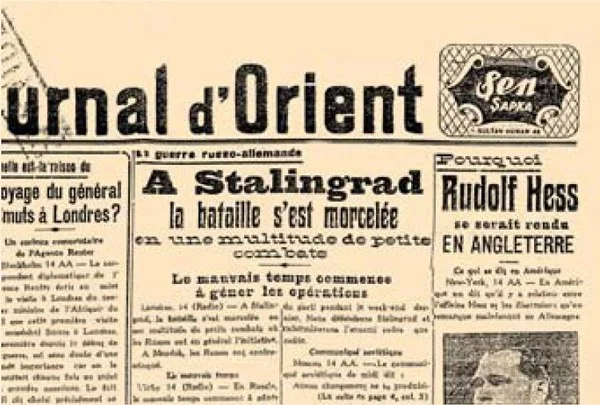
The war years changed the trade. Sales in Istanbul fell, but orders from Anatolia rose, mostly for models Hakko had invented: not quite hats and not quite head wraps, which he called hat-turbans.
- On sale or return: small general stores across Anatolia sold them, paid for what they sold and sent the rest back.
- Konya: on one of his yearly tours Hakko was met with “Şapka Ağamız geldi” (“our hat master has come”) and saw Şen Şapka hats on most of the women at the station.
Straw ribbon from Hatay
The braid stops
When Italy entered the war, the Italian straw braid that the shop used stopped coming.
Hatay
Hakko found straw of the same kind in the Hatay region and took a two-day train to Antakya.
A café table
There, standing on one, he showed villagers how to braid wheat straw into ribbon.
A month later
A railway wagon of braid reached Istanbul. The hats were farm and beach hats, not fashion hats, and sold fast.
A scarf and a name
Hakko did not plan to leave hats. An importer, Boncukçuyan, brought chests of scarves to the shop, saying that a hat shop could sell scarves too. The scarves went out through the shop and its dealers and were all gone within a week. Customers came back asking for more. Hakko drew the conclusion that the scarf would take the place of the hat and that the hat shop had run its course.
The name
V + A + Hakko = VAKKO
The V is for Vitali and the A for his brother Albert, joined to the family name. The war was on, people lived on little and tomorrow was uncertain, but Hakko decided to go on, and every product would carry the new name.
A new shop opened at Yenicami, opposite the Spice Bazaar. For a short time it still carried the name Şen Şapka, then it became Vakko. It sold bags, belts and scarves. Hakko chose the Western-style word eşarp for the new product and had scarves printed, long and square, on crêpe silk, a tightly twisted silk with a matt look.
How Vakko got its first big customer
Aleko’s suitcase
A first collection of about thirty patterns filled the suitcase of the salesman Aleko. Some Beyoğlu shops ordered six or twelve scarves.
Five dozen, without the name
Lion, a well-known department store in Beyoğlu, wanted to sell them as European goods: its customers did not trust local goods.
Vakko’s first ads
Vakko kept its name on, risking the order. Hakko ran small, steady ads in Journal d’Orient, read faithfully by Lion’s eldest owner.
Biggest customer
The owner phoned the first order. Scarves sent by mistake without the name came back: Lion’s customers wanted a Vakko scarf.
The search in Paris
On trips abroad Hakko looked for scarf designs to learn from.
The Lido arcade
On the Champs-Élysées a shop sold scarves of Paris scenes, each one different and made by a technique his own designers could not work out.
A flat on Rue du Bac
He followed the man who delivered them and found that the real maker was a woman painter.
Istanbul, a month later
She came and painted a series of Istanbul scarves: the Maiden’s Tower, the Bosphorus, the Princes’ Islands. They were worn for many years.
The honour of the brand
Until then the scarves had been printed by contract in other workshops, mostly at the İnci Emprime atelier in Nişantaşı. Vakko had no dye house or print shop of its own, so it could not promise that:
- the silk would not run
- the colour would not fade
- the cloth would not shrink in the wash
Hakko called keeping those promises the honour of the brand.
After the war
The Kurtuluş atelier
Hakko built a printing atelier on a plot in Kurtuluş, the first real Vakko production site.
120 workers
It grew to this size, and the people who later started up the Merter factory learned their trade there.
Vakko also wanted patterns of its own. Its pattern department in Kurtuluş worked with Turkish artists, but their designs were lightly restyled copies of old motifs. Hakko brought in a French designer, M. de Grandclos, who was Vakko’s guest on Büyükada and was shown the mosques, tiles and Topkapı collections. Back in Paris he drew a collection from Ottoman fabrics and kaftans in a modern way.
Hakko saw it as no imitation: the colours, patterns and spirit were Vakko’s own.
Stores, shows and a factory
Business went well. Albert ran the wholesale trade at the Yenicami shop and Vitali the printing works in Kurtuluş, and Vitali wanted more: a bigger, real store, in Beyoğlu. The seller advised a shop on the ground floor and flats on the floors over it as a safe plan, but Hakko wanted a large store like those in Europe, with ready-to-wear for women, men and children as well as scarves, fabrics and accessories.
The Beyoğlu store
8 floors
The plot beside the Hacıbekir shop was for sale, with a permit for eight floors.
About 15 months
to build it. The architect was Ercüment Tarcan and the decorator the young Emil İlliadis.
1962
It opened on a Thursday. Hakko remembered it as the first store of this size to open in Istanbul.
5th floor
The automatic shutter jammed, so the guests crossed on planks from the fifth floor of the building next door.
Newspaper ads announced the opening a few days later. Hakko was also a founder of the Beyoğlu Beautification and Protection Association, active since 1984.
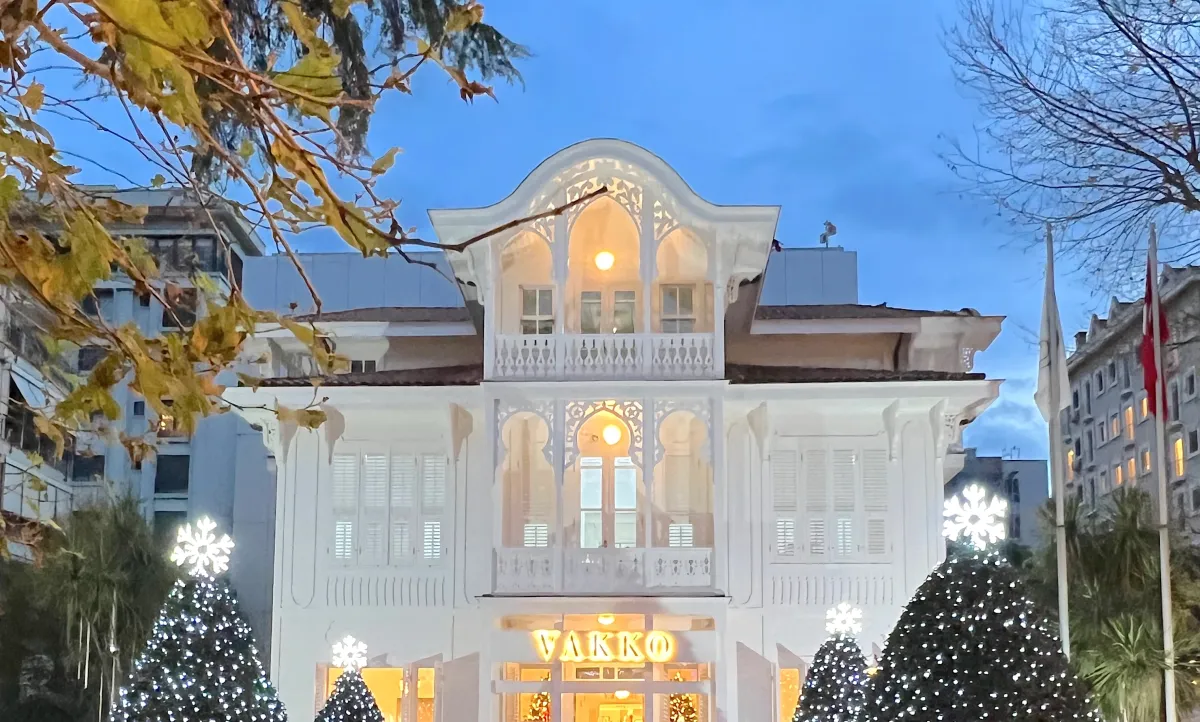
At the entrance of the Beyoğlu store hung a sign: no bargaining. Prices were fixed. Vakko trained its sales staff itself, with courses and foreign experts, and had a rule never to hire someone who had worked elsewhere. Hakko counted training, window displays, lighting and fixed prices among what Vakko brought to Turkish retail.
Vakko also held what Hakko described as the first real end-of-season sale in Türkiye: the unsold goods of the season, not leftovers from earlier years, at lower prices.
The Beyoğlu store opened with small ready-to-wear departments, some made by contract and some in the store’s own atelier. Sales of printed fabric were falling as ready-to-wear took over from made-to-measure in Europe, so Vakko began to make garments from its own printed fabrics.
From amateur show to professional runway
The first Vakko fashion show came just before the Beyoğlu store opened.
An amateur show
No choreographer, no models, one hall: the Taksim Belediye Gazinosu. Some ninety to a hundred pieces, sewn by a few trusted tailors.
A survey
Three questions: which pattern, which design, what to expect from Vakko. Most answered all three with a model’s name.
The second show
Shirts and dressing gowns needed a man: an Italian musician from the music hall was dressed and sent onto the runway.
A script
Cartoonist Oğuz Aral wrote it from Anatolian folk themes for young, first-time models. The story absorbed the guests; hardly anyone saw the clothes.
Shows become a tradition
Janine Jolliat, head of a Swiss model school, came to Istanbul under an agreement and trained the first professional Turkish models.
Eighteen years
At a Bernard Perris show in Paris, Hakko asked organisers Norbert Schmidt and Bernard Trux on the spot to stage Vakko’s shows. They agreed, and staged them for eighteen years.
For the 100th birthday of Atatürk, in 1981, Vakko staged Anadolu Güneşi, Anatolian Sun, a fashion show in seven episodes that ran from the Hittites through Greek, Roman, Byzantine, Seljuk and Ottoman times to modern Türkiye. The designs were by Necla Seyhun, the staging by Bernard Trux and Norbert Schmidt and the script by Ferit Edgü. The show then toured Europe.
- 12 November 1981 Premiere in Ankara, 45 minutes.
- Rome, Vienna, Brussels Rome at the Grand Hotel, then Vienna and Brussels.
- Paris The last big stop, at Espace Pierre Cardin.
The factory came next. Vakko needed at least 30,000 square metres. It found a former picnic meadow, Çırpıcı Çayırı, near Veliefendi in Merter, with no buildings and plenty of underground water. The architect was Haluk Baysal. The plant was planned to do every step in one place: bleaching, finishing, dyeing, printing, cutting, sewing, accessories, wholesale and storage. The foundation stone was laid on 1 October 1967, and the factory, with about 40,000 square metres under cover, stood by 1969.
Art inside the factory
- At the entrance: a concrete cut-out by Bedri Rahmi Eyüboğlu.
- In the halls: two ceramic panels by Jale Yılmabaşar and a metal sculpture by Şadi Çalık.
- On the walls: panels and stained glass by Eren Eyüboğlu, Mustafa Pilevneli and Erol Eti.
The opening ad called the factory a place where art and fashion meet. In 2008 the factory moved to Esenyurt and became the Vakko Production Centre.
Years later Pierre Cardin visited the factory, admired the Vakko printed fabrics and took samples for his own collection.
A store in Ankara followed, and the İzmir store opened in 1979.
Ankara
A whole floor of 500 square metres, run as an art gallery without pay by Abdurrahman Hancı, Mustafa Pilevneli and Ferit Edgü.
Fikret Muallâ
opening show
Eşref Üren
Avni Arbaş
Abidin Dino
Bedri Rahmi
Dino’s show
Doksan Çiçek (Ninety Flowers): ninety pictures, eighty sold in a week.
İzmir, 1979
Nine months to build, on the Birinci Kordon seafront avenue; architects Abdurrahman Hancı and Yalçın Çıkın. Gallery on the mezzanine, paintings on all floors by:
Abidin Dino
Fikret Muallâ
Avni Arbaş
Bedri Rahmi
Orhan Peker
The first sale
Hakko opened it himself and wrote out the first sale by hand: a wool cap an elderly man bought for his grandchild.
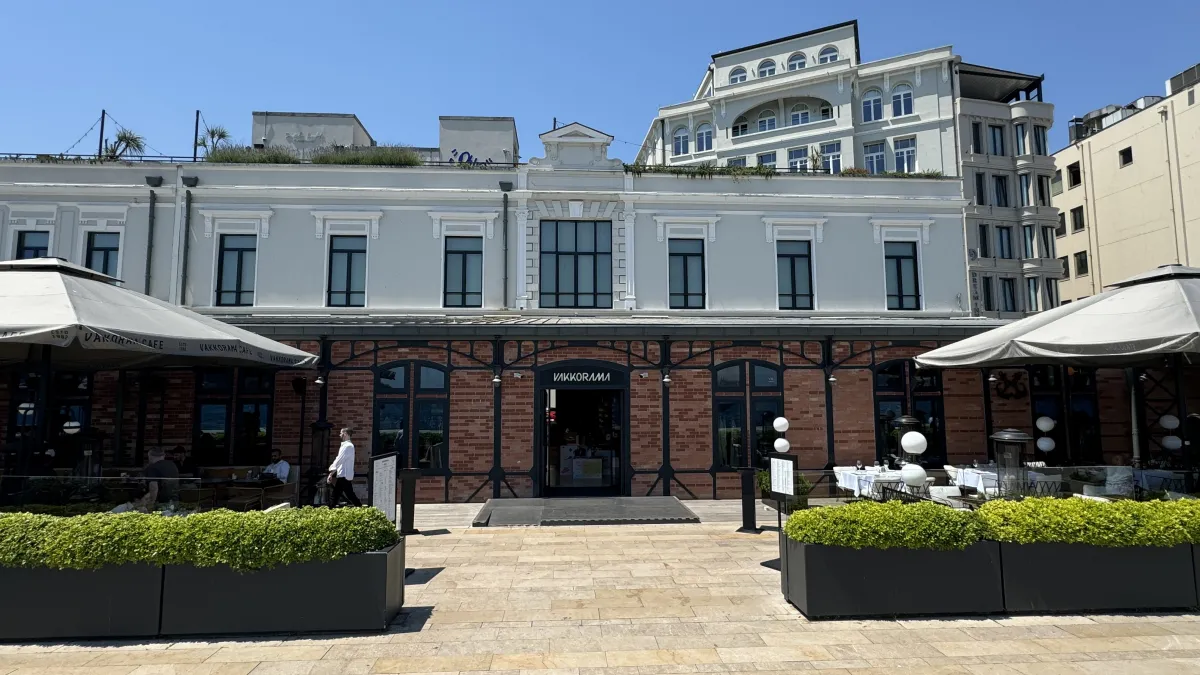
In 1982 Vakkorama opened in the empty basement of the Etap Hotel at Taksim: a modern shopping centre for young people, with clothes, sportswear and music. It was run by Cem Hakko, Vitali’s son, who had just finished his studies in Switzerland. It sold tickets for concerts, theatre and cinema, books, magazines and CDs, and had message boards and big screens for sport.
By 1997 there were twelve Vakkoramas; the newest had opened in 1993 on Rumeli Caddesi in Istanbul. A second brand was needed because Vakko’s own image was too grown-up to win young shoppers.
Two scenes show how far the name had travelled.
The group on one map
Hakko treated the name as the firm’s capital: “our most important capital is our brand”. That is why Vakko went beyond clothes: into perfume, with Katia, named after Cem Hakko’s elder daughter, V de Vakko and the children’s perfume Piu Piu in 1990; into radio, with Power FM in 1992; and into chocolate, at which people asked what chocolate had to do with ready-to-wear.

The logo in use today was drawn by the British designer Sir Terence Conran. Beside Vakko itself, the group has these parts, with the year each began.
| Part of the group | What it does | Began | Its own site |
|---|---|---|---|
| Vakko | Fashion house: clothes, scarves, shoes, bags, home goods, perfume | 1934 | vakko.com |
| Vakkorama | Youth stores and cafés; from 2000 the V2K line of other designers’ labels, renamed V2K designers in 2007 | 1982 | vakkorama.com.tr |
| Vakko L’Atelier | Chocolate, pastry and a bistro | The 1980s | vakkolatelier.com |
| Power Group | Radio and television; Power FM started in 1992, PowerXL in 1998, PowerTürk in 2001, Power Türk TV in 2003 | 1992 | powerapp.com.tr |
| Vitali Hakko Creative Industries Library | A public art and fashion library, now in the Atatürk Cultural Centre | 2011 | kutuphane.vakko.com.tr |
| Vakko ESMOD and Vakko Academy | A fashion school with ESMOD; a hospitality school with EHL of Lausanne | 2013 (ESMOD) | vakkoesmod.com vakkoacademy.com |
| Vakko Hotel & Residence | Two hotels: Nişantaşı and Sumahan Bosphorus | 2023 (Nişantaşı) | vakkohotel.com |
The group’s home is the Vakko Fashion Center at Nakkaştepe in Istanbul, designed by the New York architects REX and finished in 2010 on the concrete frame of an unfinished hotel, with 5,400 m² of offices, showrooms and a museum and 3,700 m² of media studios. Vakko L’Atelier is also among the chocolate makers in this guide to Turkish chocolate.
Vakko today
Vakko’s online shop sorts its range into women, men, scarves and shawls, accessories, shoes and bags, couture, wedding dresses, home goods and cosmetics. Under accessories there is still a line for hats. The V2K designers line sells other designers’ labels beside Vakko’s own. Most of these lines have a start year of their own, and two other dates fall among them:
- 1993 The first Vakko Boutique opens, a new store type that sells scarves, ties and shirts.
- 1998 Vakko designs the uniforms for Turkish Airlines.
- 2000 Vakkorama V2K brings well-known brands and designers under one roof.
- 2001 Vakko Wedding opens, with wedding dresses by well-known designers.
- 2003 Vakko opens its first stores abroad, in Frankfurt and Hamburg.
- 2004 Vakkorama H2O brings in swimwear.
- 2005 Vakko Cruise starts, with designs for boats and yachts.
- 2009 Vakko Home starts, with collections for houses and gardens.
- 2011 Hats come back to the Fashion Center, with an exhibition by the hat designer Stephen Jones.
- 2014 Vakko Mare gathers beachwear brands.
Hakko told his own story in Hayatım Vakko (My Life Vakko, 1997), now in its fifth printing (May 2023); in 2001 the Beyoğlu store held an exhibition under the same name. Cem Hakko’s 1982 thesis became the book Moda Olgusu (The Fashion Phenomenon), which Hakko saw as the first serious book on fashion in Türkiye.
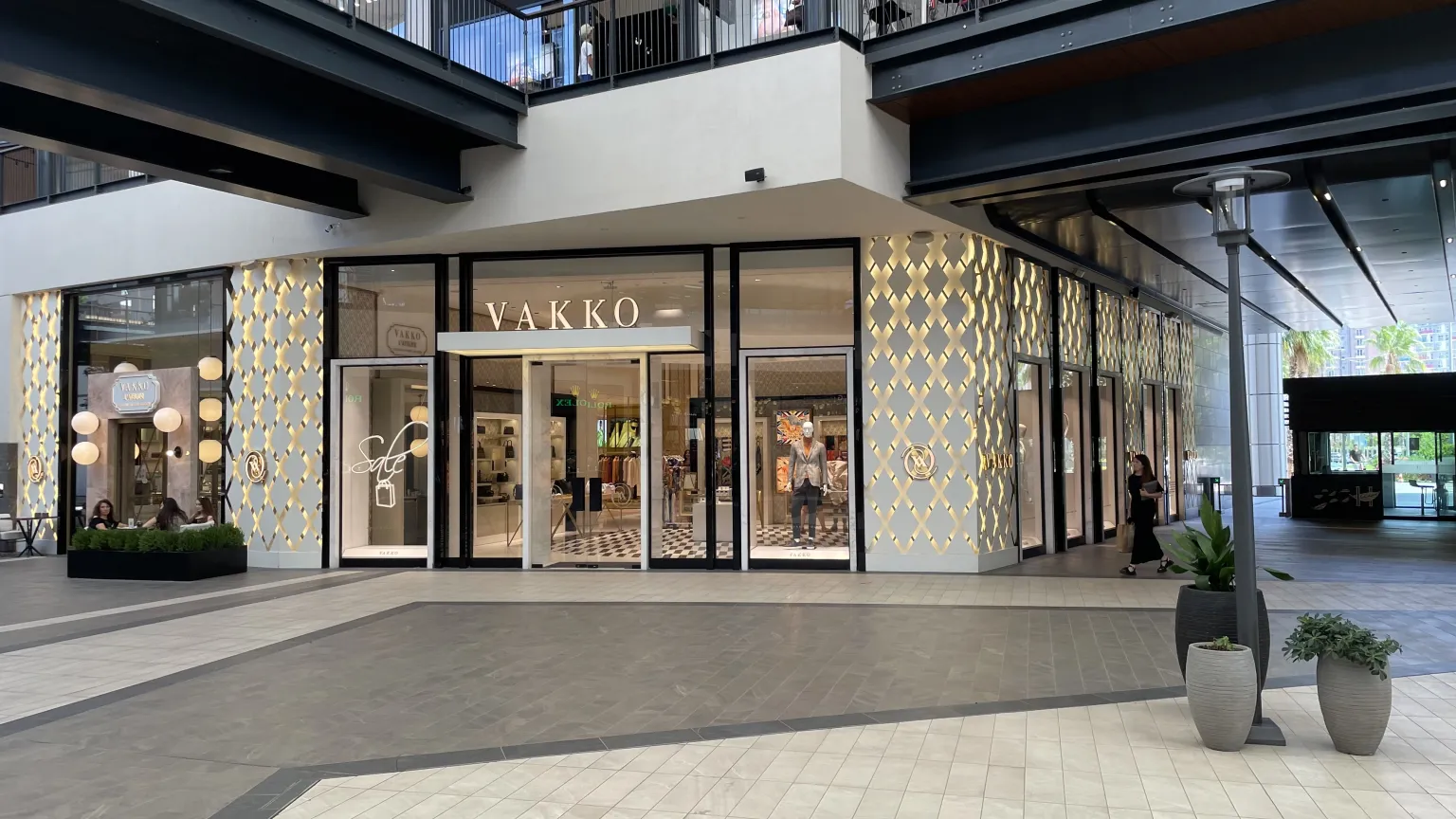
Vakko’s stores in Istanbul, by district and with opening hours, are in this guide to luxury shopping in Istanbul, together with the tax refund for visitors.
Quick answers
Who founded Vakko, and when?
Vitali Hakko, in 1934. He opened the hat shop Şen Şapka in the main street of the Covered Bazaar in Istanbul.
What does the name Vakko mean?
It joins the V of Vitali, the A of his brother Albert and the family name Hakko.
When did the big Beyoğlu store open?
In 1962. Hakko remembered it as the first store of that size to open in Istanbul.
What does the Vakko group run besides fashion?
Vakko L’Atelier chocolate, Vakko Hotel & Residence, Vakko ESMOD, the Vakko Academy of Hospitality and Service, the Power radio and television group and the Vitali Hakko Creative Industries Library.
Sources
- Vitali Hakko, Hayatım Vakko – Vakko’s corporate book, first printing May 1997, fifth printing May 2023; printed pages 3, 53–55, 61–73, 76–86, 100–108, 115, 126–142, 144–155, 156–165, 171–172, 175, 189–196, 207–209, 214–225, 231–240; checked 23 October 2026
- Vakko chronology (Tarihçe) – Vakko ESMOD’s page on Vakko’s history; the dated entries from 1962 to 2014; checked 23 October 2026
- vakko.com: the founder, Vakko Icons, the library page – checked 23 October 2026
- Vakko L’Atelier, Vakko Hotel & Residence, Vakko ESMOD, Vakko Academy, PowerApp, Vakkorama – the group’s own sites, checked 23 October 2026
- REX: Vakko Fashion Center – the architects’ project page, building facts only; checked 23 October 2026
- Pictures – Wikimedia Commons: VAKKO.jpg (Metuboy, CC BY-SA 4.0), Bağdat Avenue and Galataport (Keizers, CC BY-SA 4.0), and the 1942 ad (Le Journal d’Orient, public domain). The logo is Vakko’s own file, unaltered.