Shopping in Bursa: hans, bazaars, silk and malls
Bursa’s han quarter building by building, what is sold where, district markets, malls and Turkish lines to use in a shop.
Table of Contents
Bursa’s old market quarter, the Hanlar Bölgesi, lies around the Great Mosque (Ulu Cami): hans, which are merchants’ inns built round a courtyard, a roofed bazaar and a vaulted hall for valuables. Silk, towels, quilts and knives are Bursa’s traditional crafts; malls and weekly district markets cover the rest.
Shopping in Bursa at a glance
The shops are in the han quarter round Ulu Cami; malls and weekly markets are elsewhere.
- Where: the han quarter is in Osmangazi district and can be reached on foot from the centre.
- Buildings: hans (merchants’ inns), the Bedesten (a vaulted hall for valuables) and the Kapalı Çarşı (the roofed bazaar).
- Goods: silk (ipek), towels (havlu), quilts (yorgan), knives (bıçak) and Karagöz figures.
- Markets: Nilüfer district has 45 weekly markets, on every day of the week. Tahtakale Han’s courtyard holds a villagers’ market.
- Malls: Kent Meydanı, Korupark and Zafer Plaza, each in its own terms.
- Paying: fiş is a till receipt, fatura an invoice.
Tool · checked 28.10.2026
The han quarter from above
A plan of the old market quarter around Ulu Cami, not to scale. Press a building to see what it is, when it was built and what its shops sell. Each card ends in Turkish lines to copy.
For any shop
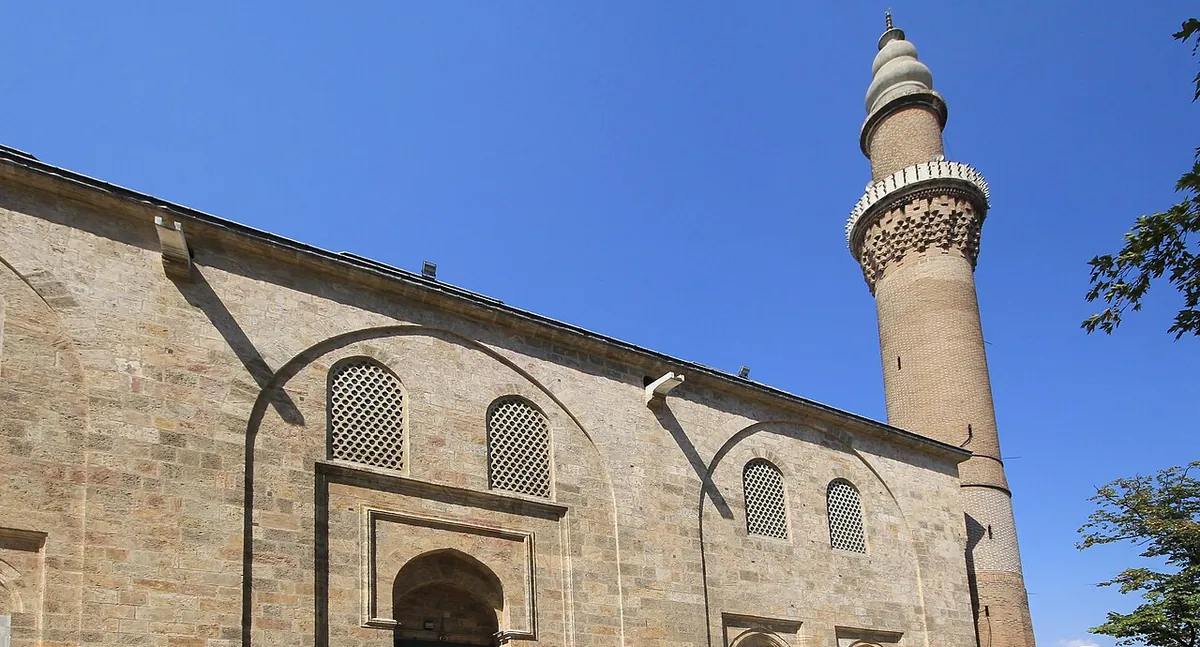
Ulu Cami the Great Mosque
- Built
- 1396–1400, under Yıldırım Bayezid. The inscription over the pulpit door is dated 1399–1400.
- Shape
- Twenty domes on twelve piers. The culture portal calls it the largest ulu cami (great mosque) in Türkiye.
- In the quarter
- The market fills the area between Ulu Cami and the Bedesten.
Say it in Turkish
Ulu Cami nerede?Where is the Great Mosque?Kapalıçarşı the roofed bazaar
- How it formed
- Some streets between the hans were roofed later, and that gave Bursa its Kapalı Çarşı. It burned in 1958.
- Trades
- The Havlucular Çarşısı, in the Kapalı Çarşı and han area, sells only towels and hamam goods. The Yorgancılar Çarşısı, inside the Kapalı Çarşı, is the quilt market.
- Doors
- Koza Han’s north gate opens toward it, and Emir Han is entered from inside it.
Say it in Turkish
Havlucular Çarşısı nerede?Where is the towel market?Yorgancılar Çarşısı nerede?Where is the quilt market?Bedesten a vaulted hall for valuables
- What it is
- A bedesten was where jewellery, gems, weapons, decorated harness and valuable cloth were sold. A city had many hans but one bedesten.
- Built
- By Bayezid I in 1400, to bring income to his foundation. Rebuilt after the 1958 fire; six piers divide it into fourteen bays.
- Today
- Shops stand along its walls inside.
Say it in Turkish
Bedesten nerede?Where is the Bedesten?Koza Han koza: cocoon · han: merchants’ inn
- Built
- For Bayezid II, as income for his mosque and medrese (school) in İstanbul, between 1490 and 1492; sources differ on the year and the room count. See Koza Han.
- Place
- Between Orhan Camii and Ulu Cami. The north gate, tiled in turquoise, opens toward the Kapalı Çarşı.
- Today
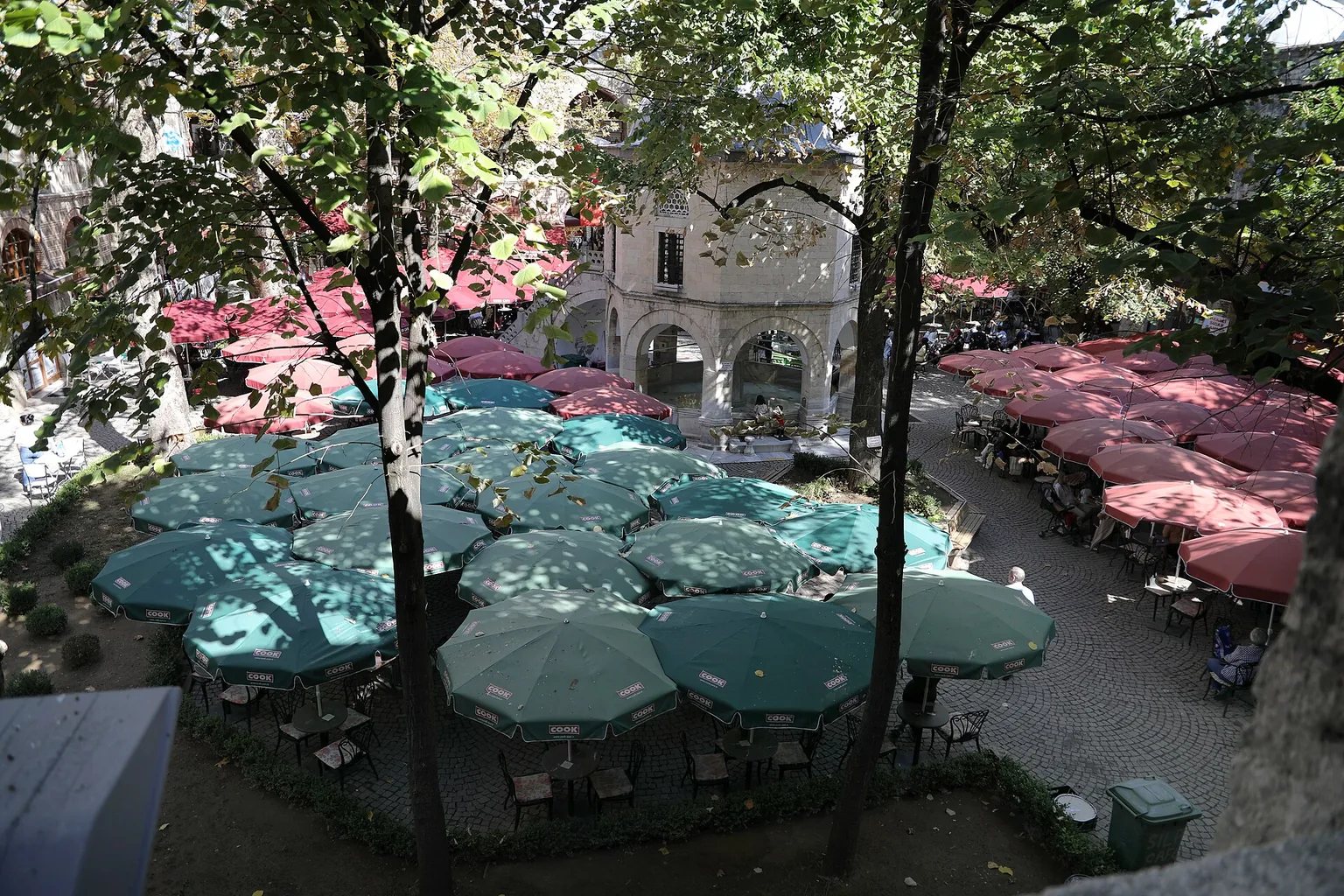
- Upstairs shops sell silk fabric, scarves and shawls, home textiles, clothing and silver gifts; downstairs are cafés. A small domed mescit (prayer room) stands in the courtyard.
Say it in Turkish
Koza Han nerede?Where is Koza Han?Bu ipek mi?Is this silk?Emir Han the first Ottoman han here
- Built
- 14th century, by Orhan Bey (Orhan Gazi), to bring income to his mosque complex. North-east of Ulu Cami.
- Rooms
- Two floors round a courtyard with a şadırvan (fountain) and old plane trees: 74 shops and storerooms, 36 on the ground floor and 38 upstairs.
- Entry
- From inside the Kapalı Çarşı.
Say it in Turkish
Emir Han’a nereden girilir?Where do you enter Emir Han?Geyve Han also İvaz Paşa Han and Lonca Han
- Built
- 15th century, by Hacı İvaz Paşa, who gave it to Sultan Mehmed I as income for the Yeşil Cami (Green Mosque).
- Place
- Inside the Demirkapı Çarşısı.
- Rooms
- Two floors round a square courtyard: 26 rooms on the ground floor and 30 on the upper floor. A mescit stands in the east wing. The stables are gone.
Say it in Turkish
Geyve Han nerede?Where is Geyve Han?Pirinç Han built for Bayezid II
- Built
- 1490–1508, for Bayezid II, as income for his mosque and imaret (charity kitchen) in İstanbul. Architects Yakup Şah and Ali.
- Shape
- Two floors round a large square courtyard; the east gate carries relief motifs.
- Since
- Damaged in the 1855 earthquake and restored 1983–2004. A shopping area today, on Cumhuriyet Caddesi.
Say it in Turkish
Pirinç Han nerede?Where is Pirinç Han?Tahtakale Han also Yoğurt Han and Bayezid Paşa Han
- Built
- Early 15th century; a registered monument. Little of it still stands.
- Courtyard
- The Köylü Pazarı: villagers from the surrounding villages sell their produce here.
- Renewal
- Begun in 2013 and finished in 2019: 54 shop fronts renewed and about 1,500 m² of courtyard paving and stalls rearranged.
Say it in Turkish
Köylü Pazarı nerede?Where is the villagers’ market?Irgandı Köprüsü Irgandı Bridge
- Built
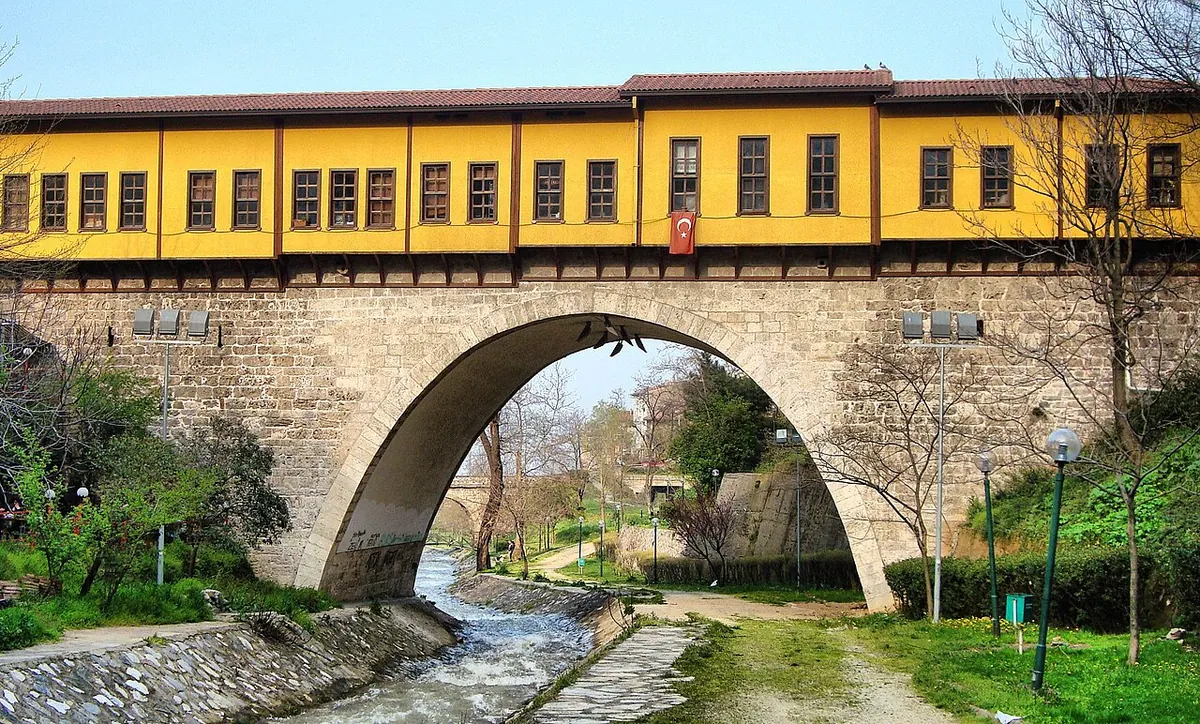
- 1442 over the Gökdere stream, for the merchant Hoca Muslihiddin, son of Irgandı Ali; architect Timurtaş. It links the Osmangazi and Yıldırım districts.
- Shape
- The culture portal calls it the only Ottoman arasta bridge (arasta: a row of shops built to bring income to a foundation): 32 shops, 16 on each side, one of them a mescit.
- Since
- Blown up in 1922 and rebuilt in concrete, without shops, in 1949; the reconstruction was finished in 2004. Craft workshops and shops sit on it today, and it carries traffic.
Say it in Turkish
Irgandı Köprüsü nerede?Where is Irgandı Bridge?
A market quarter of hans: what the words mean
Four words explain the quarter. Each comes with its plain meaning.
- ÇarşıA market street, with shops on both sides, kept by esnaf: small shopkeepers and craftspeople.
- HanA merchants’ inn and warehouse round a courtyard, for their goods and animals; craftsmen also worked and sold there. Also called a kervansaray (caravan inn).
- BedestenThe vaulted hall where jewellery, gems, weapons, decorated harness and valuable cloth were sold. A city had many hans but one bedesten.
- KapalıçarşıA roofed bazaar (kapalı means covered). Some streets between the hans were roofed later, and that gave Bursa its Kapalı Çarşı.
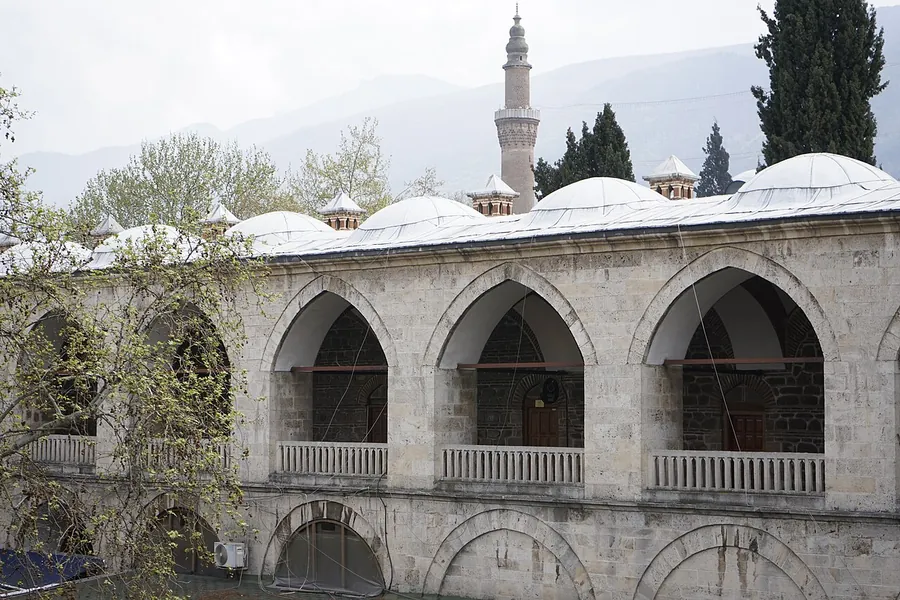
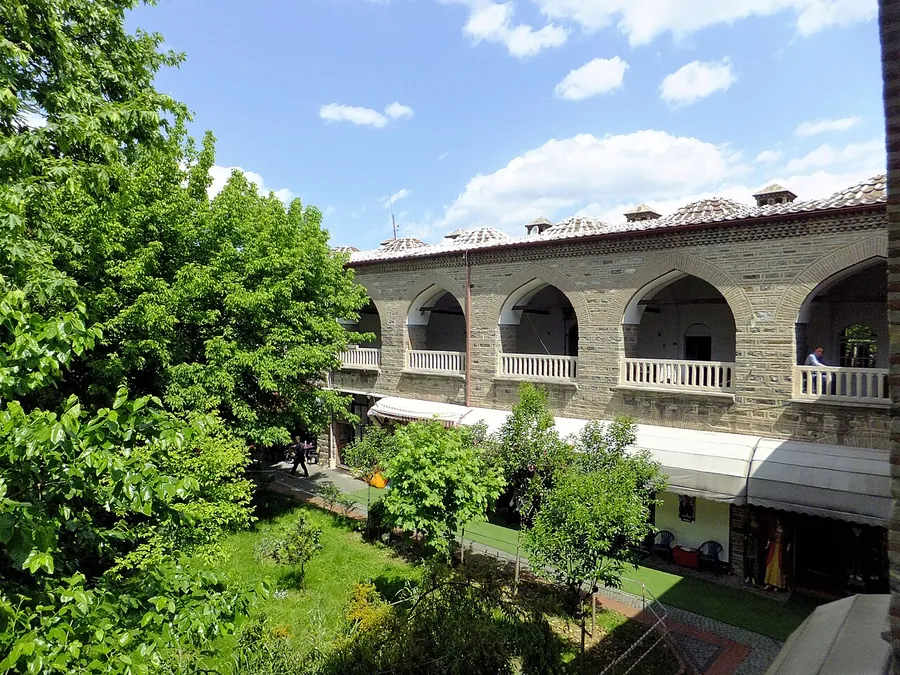
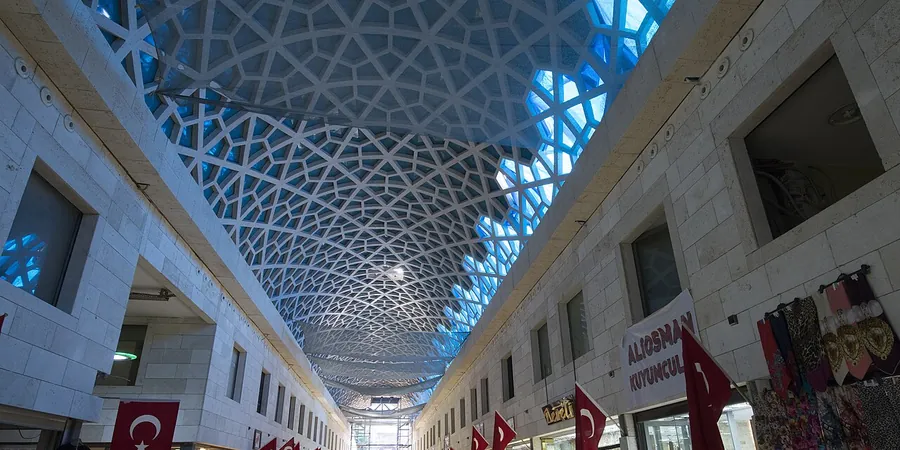
Why a quarter of hans? A sultan paid for a mosque or school, then built a han whose rents kept it running; this kind of endowment is a vakıf. Emir Han was built to give Orhan Gazi’s mosque complex an income, and Geyve Han went to Sultan Mehmed I as income for the Yeşil Cami (Green Mosque).
Ibn Battuta found lively markets and wide streets in Bursa in 1333, and Orhan Gazi’s complex of 1339–1340 had a kervansaray. The Ministry of Culture and Tourism’s culture portal calls the han quarter «the heart of the city’s economy since the 14th century», and UNESCO listed it in 2014 as part of «Bursa and Cumalıkızık: the Birth of the Ottoman Empire». For Bursa as the first Ottoman capital, see Osman I.
Koza Han: the cocoon hall of the silk trade
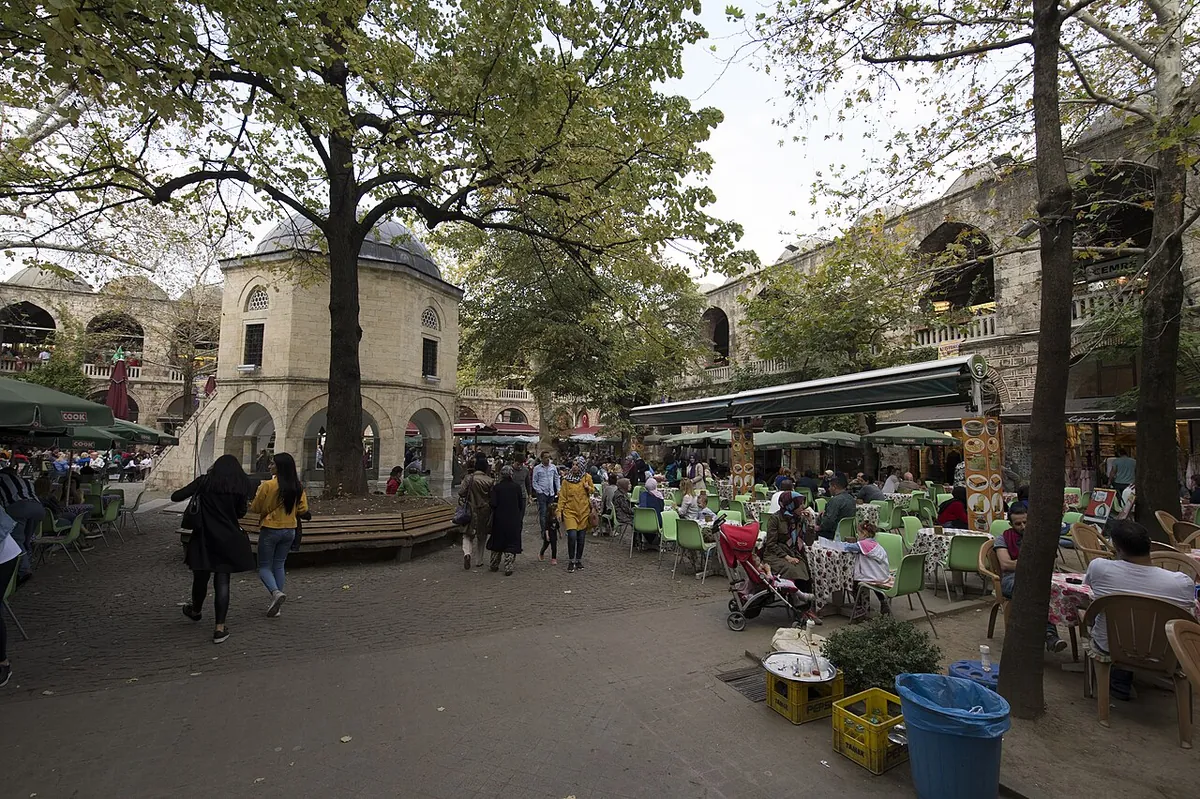
Silk is ipek, the silkworm ipekböceği and its cocoon koza. Koza Han (the cocoon hall) is where the cocoon trade was run for centuries: silk merchants lodged here, and the cocoon exchange (koza borsası) and silk sales were set up in Koza Han and İpek Han. Today the upstairs shops sell silk fabric, scarves and shawls.
Koza Han, in short
- Built
- For Bayezid II, as income for his mosque and medrese (school) in İstanbul.
- Shape
- Two floors round a courtyard, with arcades in front of the rooms. A small domed mescit (prayer room) stands on eight piers in the middle, with a fountain under it.
- Gates
- The north gate, tiled in turquoise, opens toward the Kapalı Çarşı.
- Today
- Upstairs shops; downstairs cafés; a tea garden in the courtyard.
The year and the room count differ by owner:
| Page | Built | Rooms |
|---|---|---|
| Bursa Valiliği (the provincial governor’s office) | 1492 | 95: 50 upstairs, 45 below |
| Culture portal, Ministry of Culture and Tourism | 1490–1491 | 101: 51 upstairs, 50 below |
| Osmangazi Belediyesi (the district municipality) | 1491 | 101: 51 upstairs, 50 below |
The architect’s name is also written two ways: Abdullah bin Pulad Şah (culture portal) and Abdül-Ula bin Pulad Şah (Bursa Valiliği). Osmangazi Belediyesi adds that Koza Han’s mescit is the only one that survived in a Bursa han.
Silk in Bursa, by date:
- End of the 14th centurySilk weaving develops in Bursa, as court registers show. Around 1400 the traveller Schiltberger describes Bursa as an international centre of the silk trade.
- 1548The traveller Belon puts it at more than 1,000 camels a year bringing silk from Anatolia and Syria to Bursa to be worked and dyed.
- 1856–1860The silkworm disease pébrine (karataban) appears in France in 1856 and reaches Bursa in 1860; silk output falls.
- 1888Torkomyan Efendi opens the Darülharir, Bursa’s first silkworm school, to work on disease-free seed.
- TodayKoza Han’s upstairs shops sell silk fabric, scarves and shawls, home textiles, clothing and silver gifts.
What Bursa makes: and where it is sold
Silk, towels, quilts and knives are among Bursa’s traditional crafts, along with Karagöz figures. Silk is at Koza Han and İpek Han, towels in the Havlucular Çarşısı and quilts in the Yorgancılar Çarşısı.
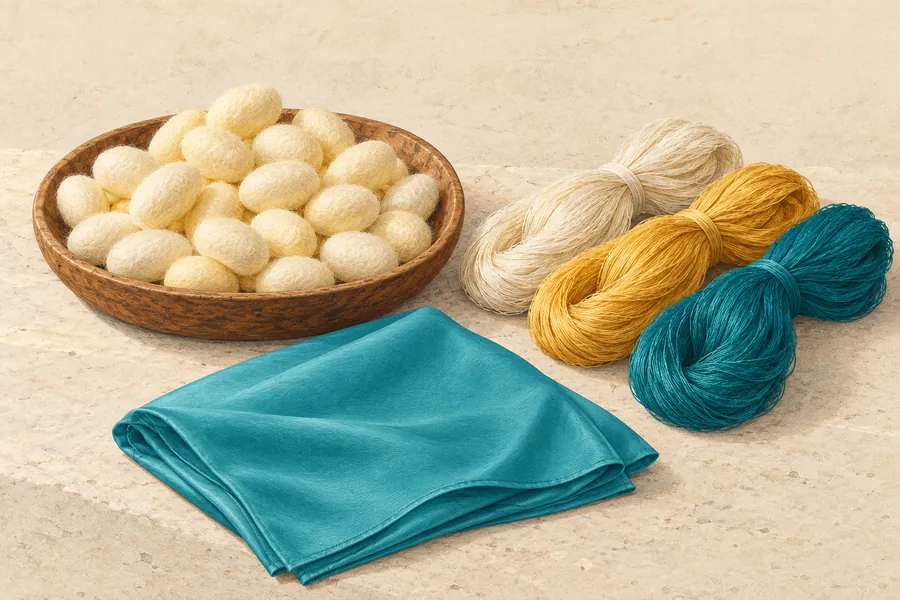
Silk · ipek
Woven in Bursa since the late 14th century
In the 15th to 17th centuries Bursa silks were woven under palace patronage and used by European noble families. Koza Han and İpek Han, both still standing, are where the cocoon exchange and the silk sales were set up.
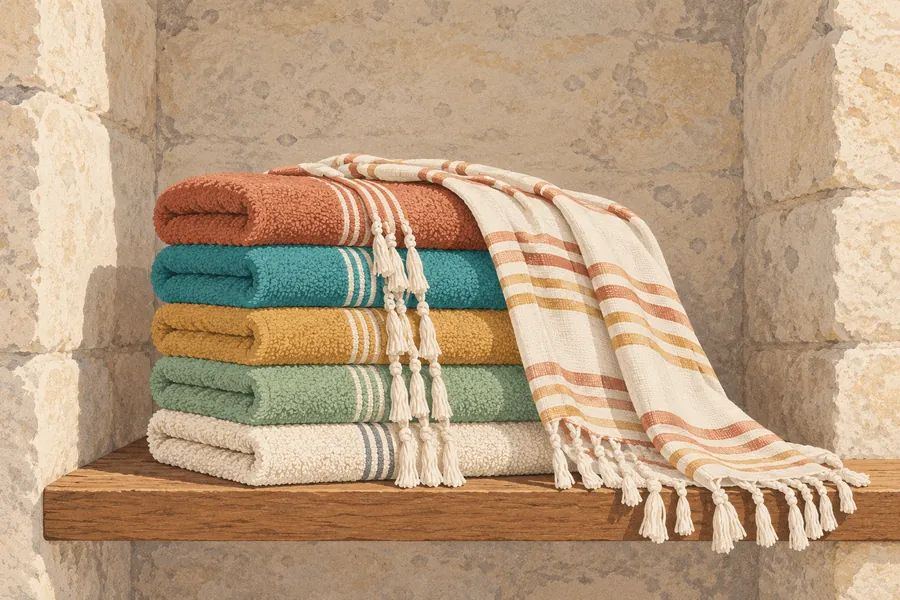
Towels · havlu
Hand looms from the early 18th century
The weaving technique comes from the velvet Bursa wove for palaces in the 15th century. Types are the hamam towel, hand towel and head towel, with jacquard patterns, embroidery and tassels. The Havlucular Çarşısı, in the Kapalı Çarşı and han area, sells only towels and hamam goods, hand-woven and factory-woven. A towel cooperative was founded in 1941.
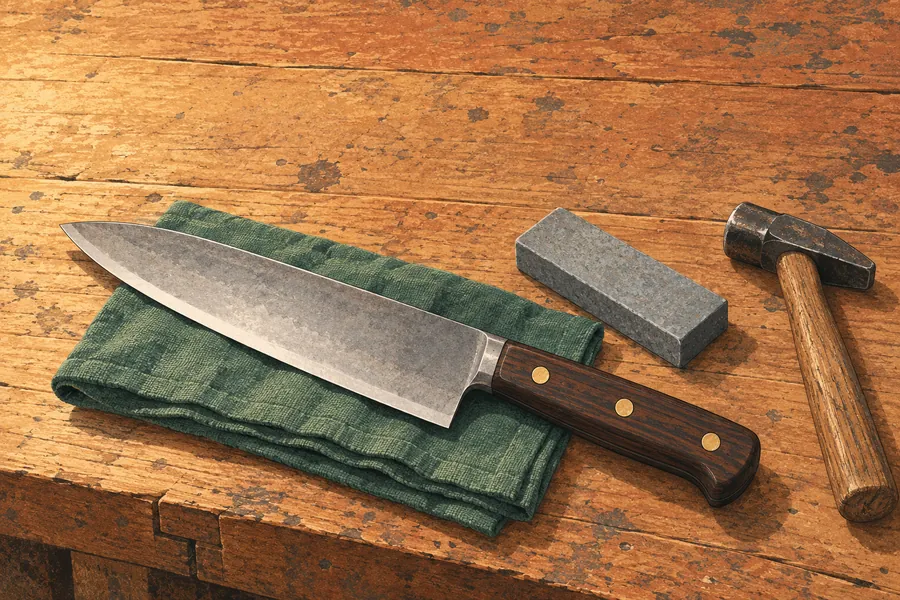
Knives · bıçak
About 150 hand-made types
Bursa smiths made swords and daggers; when those fell out of use in the early republic they turned to bread, table and fruit knives. There are about 150 hand-made types, by use. The maker traditionally puts his name on the blade. The knife is registered as a Bursa product with a geographical indication, a protected regional name.
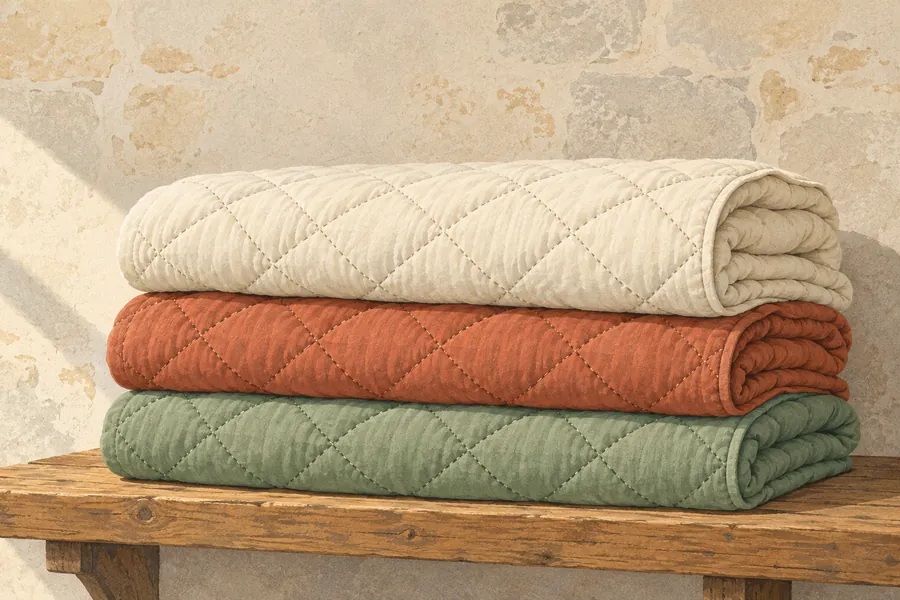
Quilts · yorgan
Made to a pattern the customer picks
Quilts are traditionally filled with wool and cotton. Everyday quilts use cotton cloth; bridal and guest quilts use silk satin. Patterns such as the tulip and the vine are chosen with the customer, and a quilt is finished in one day to a week, by the weight of the pattern. The Yorgancılar Çarşısı, the quilt market, lies inside the Kapalı Çarşı.
More crafts
Karagöz figures and the bridge workshops
Karagöz and Hacivat are the two main characters of Turkish shadow theatre. Their figures are cut from tanned camel, cow, goat, gazelle or donkey hide and coloured with plant and synthetic dyes; Karagöz figures are made in Bursa as a craft, and so are needle-lace (iğne oyası), wooden clogs (takunya) and baskets of chestnut wood (köfün). Irgandı Bridge carries craft workshops and shops today.
Weekly district markets: which day, which neighbourhood
A semt pazarı is the weekly neighbourhood market: stalls fill a street or a market ground for a day. Nilüfer district has 45 of them, on every day of the week. The han quarter is in Osmangazi district, so these are other markets.
| Day | Markets | Areas |
|---|---|---|
| Pazartesi (Monday) | 2 | Minareliçavuş, Üçevler (giyim) |
| Salı (Tuesday) | 5 | 23 Nisan (sokak), Batıkent / 19 Mayıs (giyim), Demirci, Esentepe, Görükle (müstahsil) |
| Çarşamba (Wednesday) | 9 | Çamlıca, Ertuğrul, Gazi / Cumhuriyet (giyim), Işıktepe (sokak), Karaman, Kayapa TOKİ Konutları (sokak), Konak (müstahsil), Kurtuluş, Özlüce |
| Perşembe (Thursday) | 7 | Ahmet Yesevi, Barış, Fethiye, Hasanağa (sokak), Kayapa (sokak), Konak (giyim), Kültür |
| Cuma (Friday) | 6 | Akçalar, Çalı, Gazi / Cumhuriyet, Gölyazı (sokak), Görükle (giyim), Üçevler |
| Cumartesi (Saturday) | 8 | Altınşehir, Balat, Beşevler, Çamlıca (müstahsil), Görükle, Hasanağa Kızılcıklı, İhsaniye Siteler, İhsaniye (giyim) |
| Pazar (Sunday) | 8 | Altınşehir (giyim), Ataevler, Balkan, Batıkent / 19 Mayıs, İhsaniye (antika, 3rd week of each month), İhsaniye (el emeği, 2nd week of each month), Karaman (müstahsil), Konak |
No label means a semt pazarı. Other labels: giyim (clothing market), müstahsil (producers’ market) and sokak (street market). Street markets with set hours: Kayapa 09:00–12:00, Hasanağa 12:00–18:00, Gölyazı 06:00–10:00. El emeği means handwork and antika antiques.
In the city centre, the courtyard of Tahtakale Han is a villagers’ market, the Köylü Pazarı, where villagers from the surrounding villages sell their produce. Osmangazi Belediyesi renewed 54 of its shop fronts by 2019.
Malls: in each one’s own terms
An AVM (alışveriş merkezi) is a shopping mall. Three Bursa malls follow in alphabetical order, each in its own terms, checked 28.10.2026.
Kent Meydanı
Address: Santral Garaj Mahallesi, Kıbrıs Şehitleri Caddesi No: 64, Osmangazi. Open every day, 10:00–22:00.
Korupark
Weekdays 10:00–22:00; Fridays and Saturdays 10:00–22:30. Free parking, a cinema and a mescit (prayer room).
Zafer Plaza
A cinema (Cinetech) and a food area with restaurants and cafés.
Getting there and paying: on foot, by BursaKart, with a receipt
The han quarter is a walk from the centre; BURULAŞ, the city’s transport operator, runs the rail and tram lines and the BursaKart.
- On footThe han quarter can be reached on foot from central Bursa, and Emir Han from inside the Kapalı Çarşı. Pirinç Han stands on Cumhuriyet Caddesi.
- By public transportBursaRay is a rail system linking the city’s east, west and north; the BurTram tram is line T1.
- With the BursaKartThe BursaKart is a contactless smart card that works on the city’s public transport; it comes in discounted, free and subscription types.
- At the tillA fiş is the till receipt and a fatura an invoice. For the VAT refund, see Shopping in Ankara.
Words for a shop: to say and to hear
Six lines you hear in a shop, with the meaning beside each. The Copy lines in the plan are for asking.
Buyurun.Please: how can I help?
Hoş geldiniz.Welcome.
Başka bir şey var mı?Anything else?
Nakit mi, kartla mı?Cash or card?
Fiş ister misiniz?Do you want a till receipt?
Poşet ister misiniz?Do you want a bag?
| Word | Plain meaning |
|---|---|
| çarşı | a market street, with shops on both sides |
| kapalıçarşı | a roofed bazaar |
| bedesten | the vaulted hall where valuables were sold |
| han, kervansaray | a merchants’ inn and warehouse round a courtyard |
| esnaf | small shopkeepers and craftspeople |
| koza, ipek, ipekböceği | cocoon, silk, silkworm |
| havlu, yorgan, bıçak | towel, quilt, knife |
| pazar, semt pazarı | a market; the weekly neighbourhood market |
| AVM | alışveriş merkezi, a shopping mall |
| fiş, fatura | till receipt, invoice |
| Karagöz, Hacivat | the two main characters of Turkish shadow theatre |
Quick answers
Where is the han quarter?
In Osmangazi district, round Ulu Cami. It can be reached on foot from the centre, and Emir Han from inside the Kapalı Çarşı.
What is the difference between a han and a bedesten?
A han is a merchants’ inn and warehouse round a courtyard; a city had many. A bedesten is the vaulted hall where jewellery, gems, weapons, decorated harness and valuable cloth were sold; a city had one.
What does Bursa make?
Silk, towels, quilts, knives and Karagöz figures, among other crafts. Silk is at Koza Han, towels in the Havlucular Çarşısı and quilts in the Yorgancılar Çarşısı.
On which day is a weekly market?
Nilüfer district has 45 by day: Monday 2, Tuesday 5, Wednesday 9, Thursday 7, Friday 6, Saturday 8, Sunday 8. Each market is named in Weekly district markets.
Is there a tea garden at Koza Han?
Yes: the courtyard is now a café and tea garden. For the tea habit itself, see Tea Culture in Turkey.
How do I ask for a receipt or an invoice?
Say Fiş alabilir miyim? for a till receipt, or Fatura alabilir miyim? for an invoice.
Shopping in other cities: İzmir, Konya and Edirne.
Sources
- Koza Han — Bursa Valiliği, checked 28.10.2026
- Bursa and Cumalıkızık: the Birth of the Ottoman Empire — Culture portal, Ministry of Culture and Tourism, checked 28.10.2026
- Bursa Ulu Cami — Culture portal, checked 28.10.2026
- Koza Han — Culture portal, checked 28.10.2026
- Emir Han — Culture portal, checked 28.10.2026
- Pirinç Han — Culture portal, checked 28.10.2026
- Geyve Han — Culture portal, checked 28.10.2026
- Irgandı Köprüsü — Culture portal, checked 28.10.2026
- Koza Han — Osmangazi Belediyesi, checked 28.10.2026
- Tahtakale Çarşısı — Osmangazi Belediyesi, checked 28.10.2026
- Bursa — TDV İslâm Ansiklopedisi, checked 28.10.2026
- Bedesten — TDV İslâm Ansiklopedisi, checked 28.10.2026
- Bursa Geleneksel El Sanatları — Bursa İl Kültür ve Turizm Müdürlüğü, checked 28.10.2026
- Tüm Pazarlar Listesi — Nilüfer Belediyesi, checked 28.10.2026
- Kent Meydanı — its own page, checked 28.10.2026
- Korupark — its own page, checked 28.10.2026
- Zafer Plaza — its own page, checked 28.10.2026
- BursaRay and BurTram — BURULAŞ, checked 28.10.2026
- BursaKart — BURULAŞ, checked 28.10.2026