Olives and Olive Oil in Turkey: Kinds, Grades and Harvests
How much olive Türkiye harvests and where, table olives, the oil grades on a Turkish label, exports and Kırkpınar oil wrestling.
Table of Contents
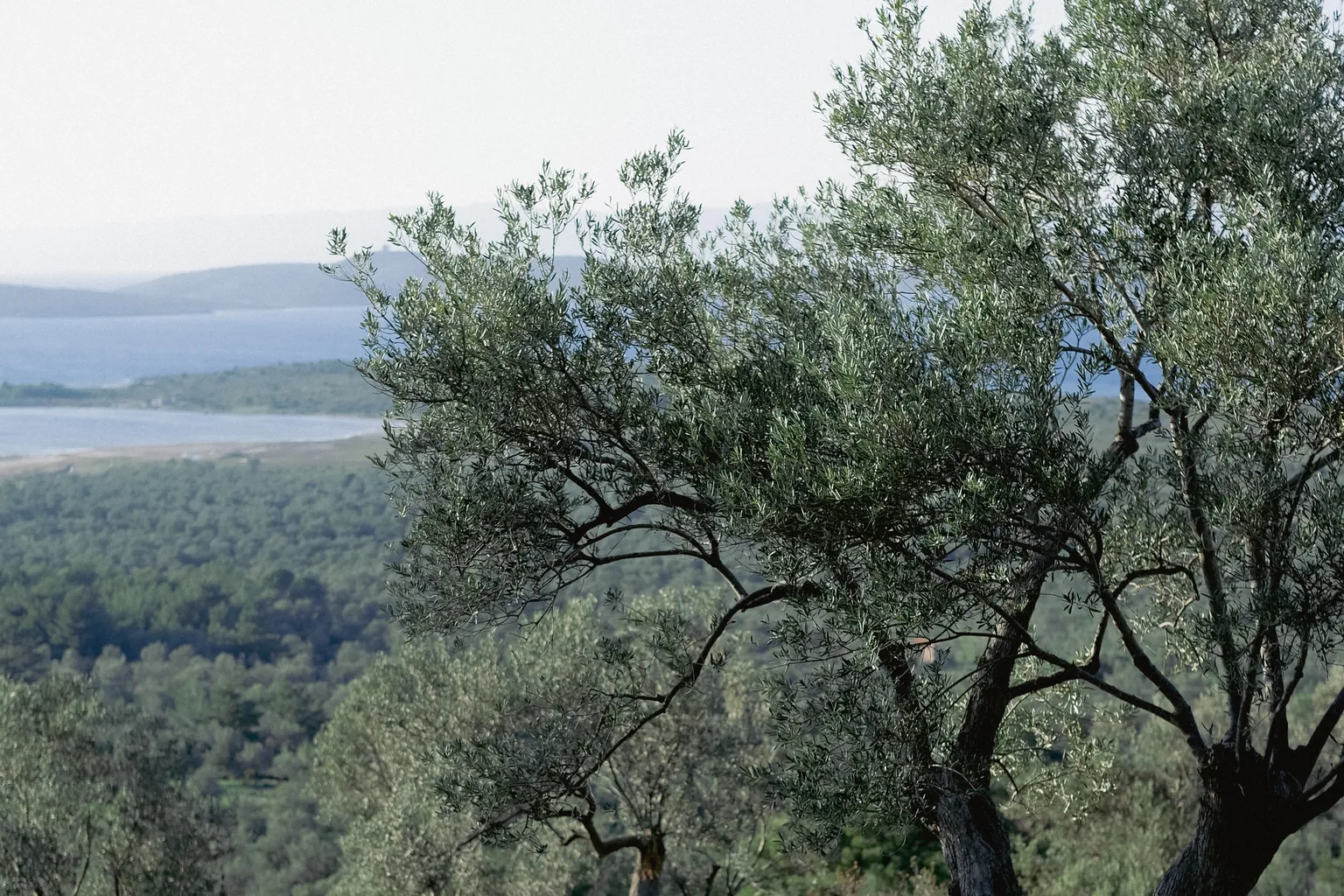
Türkiye harvested a record 3.75 million tonnes of olives in 2024 and 2.45 million in 2025. In 2024/25 it was first in table olives and, in olive oil, second after Spain.
In short · checked 29.10.2026
Türkiye harvested 3.75 million t of olives in 2024 and 2.45 million t in 2025: the trees bear heavily one year and lightly the next.
- About 202 million trees in 2023: 168 million bearing fruit, 34 million not yet (the national statistics office).
- Two uses, two ranks in 2024/25: sofralık zeytin (table olives), first in the world; zeytinyağı (olive oil), second after Spain.
- Oil in 2024/25: 475 thousand t by the Ministry’s agricultural economics institute, 505 thousand t by the International Olive Council (provisional).
- Acidity sets the grade: natürel sızma (extra virgin) at most 0.8, natürel birinci (virgin) at most 2.0. Pirina yağı (pomace oil) is never zeytinyağı.
- Kırkpınar oil wrestling in Edirne: UNESCO heritage list since 2010.
One tree · checked 29.10.2026
| Stop | What it is | When | Made into | Say |
|---|---|---|---|---|
| Yeşil green | Picked at the start of ripening, green to yellowish green, before the colour changes, once the fruit has normal size. | Aegean: late September to mid-October. Marmara: late October to early November. | Lye (İspanyol usulü, the Spanish method), or scored (çizme) or cracked (kırma) first and then soaked out in water and brine; or stuffed (dolgulu) with pickled pepper, carrot, shallot, black olive or almond. | Yarım kilo yeşil zeytin, lütfen.Half a kilo of green olives, please. |
| Rengi dönük turning, also called pink | Picked before full ripeness, during the colour change, while pink, red, dark red or light brown. | One of the three kinds of table olive, with green and black. | Rengi dönük zeytin var mı?Do you have turning olives? | |
| Siyah black | Picked at full ripeness or just before: black or near black, dark purple, dark brown, or red-black to violet-black. | In brine (Gemlik method, 10 % brine, 6 to 9 months to eating), layered with salt (tuz-katlama, 6 to 12 months), or sele zeytini: left on the tree until black, layered with coarse salt, ready in 3 to 4 weeks. | Bir kilo siyah zeytin, lütfen.A kilo of black olives, please. | |
| Zeytinyağı olive oil | Olives pressed for oil: 4 to 8 units of olives make 1 unit of oil. | The oil season runs 1 October to 30 September, so the 2024 harvest makes 2024/25 oil. | Washed, pressed or crushed, separated, left to settle and filtered. Natürel oil gets no other treatment. | Bir litre natürel sızma zeytinyağı, lütfen.A litre of extra virgin olive oil, please. |
| Harvest year | Oil-olive kg per bearing tree | Whole harvest, million t | Oil |
|---|---|---|---|
| 2023 | 9 | 1.52 | Oil season 2023/24: 215 thousand t of oil, from 1.03 million t of oil olives. |
| 2024 | 22 | 3.75 | Oil season 2024/25: 475 thousand t of oil by the Ministry's agricultural economics institute, from 2.584 million t of oil olives. |
| 2025 | 15 | 2.45 | The 2025 harvest of 1.5 million t of oil olives makes the oil of the 2025/26 season. |
Stops: report no. 394 (2023 data) of TEPGE, the Ministry of Agriculture and Forestry’s agricultural economics institute · months and ways of making green and black olives: the Ministry’s Erzurum directorate · harvest years and oil: TEPGE’s July 2026 reports and the International Olive Council (IOC) · report · green · black · oil report · checked 29.10.2026.
How much olive Türkiye grows, and why it swings
TÜİK (Türkiye İstatistik Kurumu, the national statistics office) measures the harvest; TEPGE is the Ministry of Agriculture and Forestry’s agricultural economics institute. A tonne (t) is 1,000 kilograms. Zeytin (zay-teen) is the olive; dane zeytin (dah-neh zay-teen) is the fruit as counted, all of it. Yağlık (yah-luhk) olives go to the press for oil, sofralık (soh-frah-luhk) olives to the table.
Olive harvest, 2024 · TÜİK figures in TEPGE’s report
3.75 million t of olives, a record.
The 2025 harvest was 2.45 million t, 34.7 % smaller. TÜİK counted 201.8 million olive trees in 2023: 167.5 million bear fruit (83 %) and 34.2 million do not yet (17 %).
| Harvest | Olives (thousand t) | Against 2024 |
|---|---|---|
| 2019 | 1,525 | |
| 2020 | 1,317 | |
| 2021 | 1,739 | |
| 2022 | 2,976 | |
| 2023 | 1,520 | |
| 2024 | 3,750 | |
| 2025 | 2,450 |
TÜİK figures: 2019 to 2023 in TEPGE report no. 394, 2021 to 2025 in TEPGE’s July 2026 reports · report no. 394 · oil report · checked 29.10.2026.
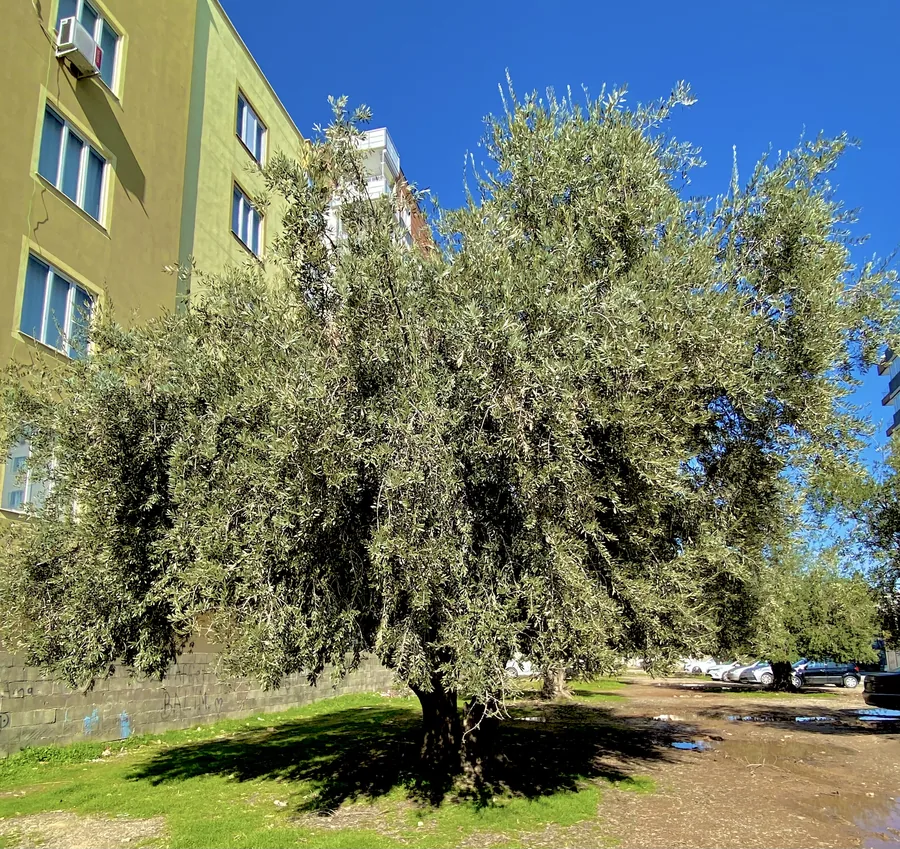
Olive trees tend to bear heavily one year and lightly the next: periyodisite (peh-ree-yoh-dee-see-teh) in Turkish. The heavy year is «var yılı» (vahr yuh-luh, the year there is), the light one «yok yılı» (yohk yuh-luh, the year there is not). The yield (verim, veh-reem) shows it: oil olives gave 11, 18, 9, 22 and 15 kg per bearing tree in 2021 to 2025.
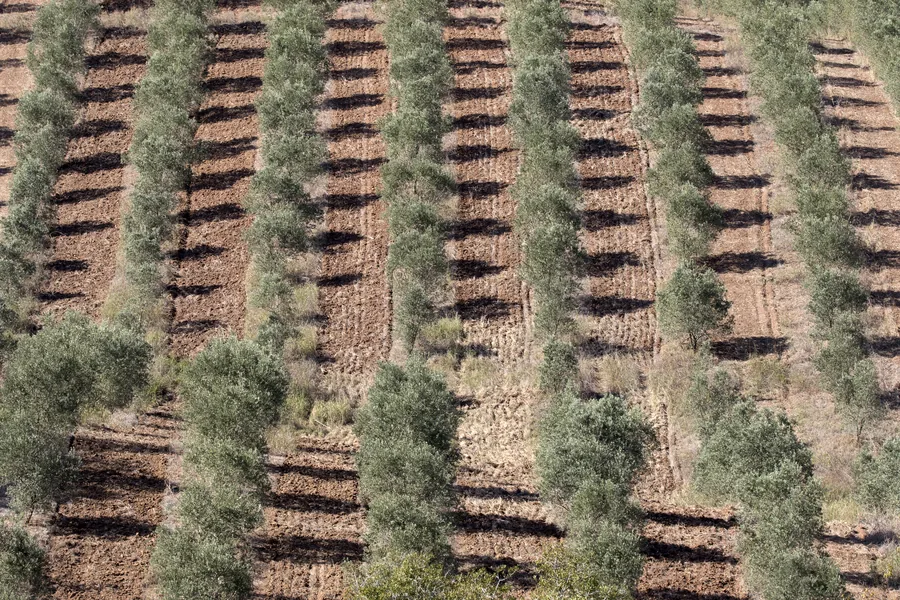
- Area, 2023
- Olive groves cover 9.03 million dekar (da): 6.64 million for oil olives and 2.39 million for table olives. A dekar is 1,000 square metres, a tenth of a hectare; people say dönüm for the same area, and the dönüm converter has the older local sizes.
- Trees, 2019
- 182.1 million olive trees, against 201.8 million in 2023.
TÜİK figures in TEPGE report no. 394 · report no. 394 · checked 29.10.2026.
Where the trees grow: twelve provinces
A province (il, eel) is the main administrative region of Türkiye. Ten provinces make up most of each crop. In 2025, İzmir grew 20.0 % of the oil olives and Manisa 20.5 % of table olives; Bursa grew 18.4 % of table olives and is not in the oil list. Agriculture in Turkey has the province atlas.
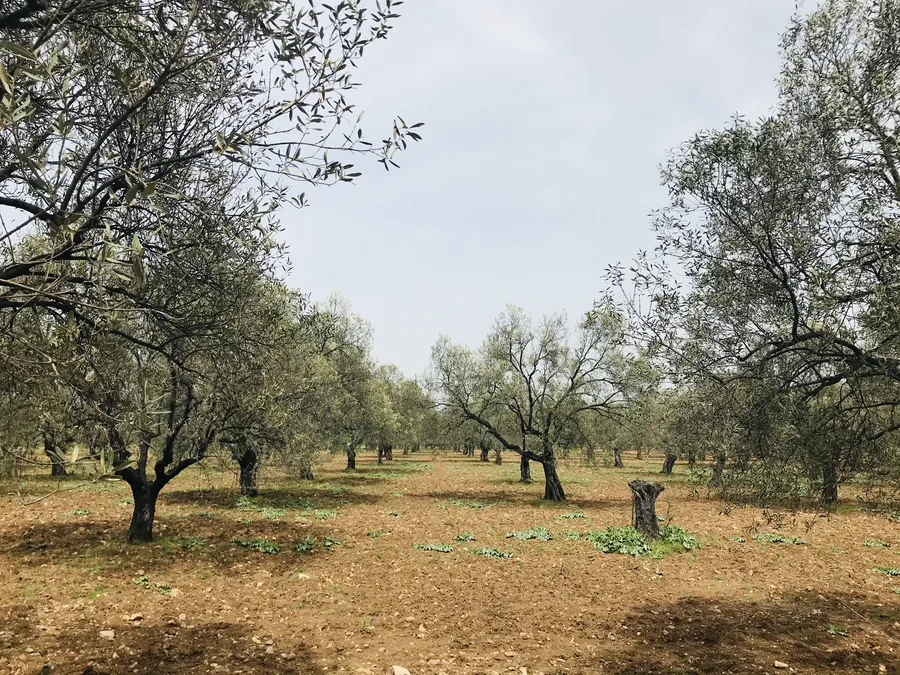
Shares of the 2025 harvest: TÜİK figures in TEPGE’s July 2026 reports · oil report · table-olive report · checked 29.10.2026.
Two uses of one olive
A picked olive is not ready to eat: it needs processing or ripening first. Sofralık zeytin (table olive; sofra is the table) is the olive made fit to eat, its bitterness taken out in brine or another way. Zeytinyağı (zay-teen-yah-uh) is the oil, made by pressing.
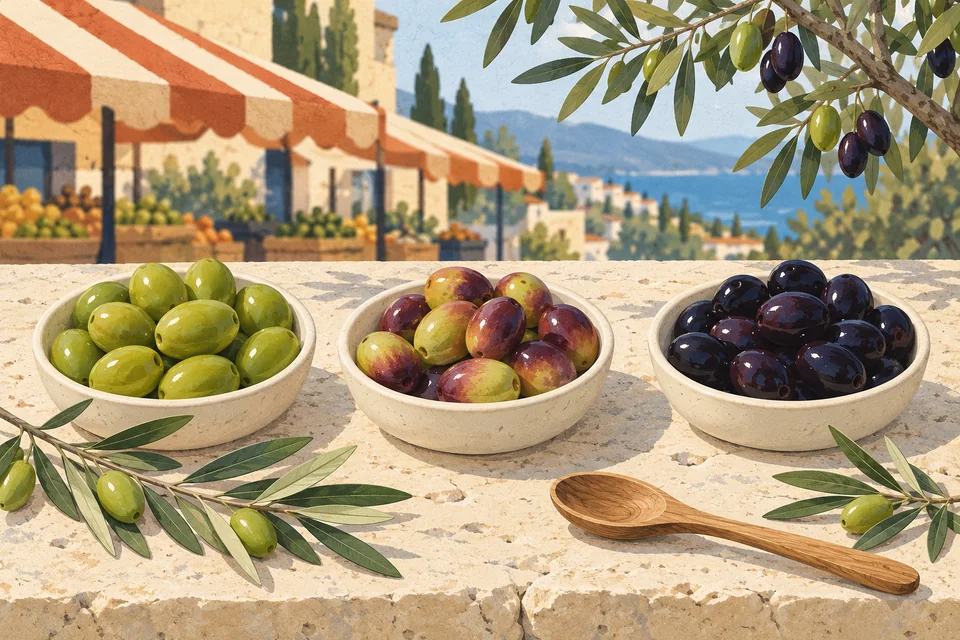
What a table olive becomes
- Salamura
- (sah-lah-moo-rah) is brine: olives kept in salted water.
- Konserve
- (kohn-sehr-veh) is canned or preserved olives.
- Dondurulmuş
- (dohn-doo-rool-moosh) is frozen.
- Dolgulu
- (dohl-goo-loo) is stuffed.
- Zeytin ezmesi
- (zay-teen ehz-meh-see) is olive paste.
TEPGE report no. 394 · checked 29.10.2026 · report no. 394
The 2024 harvest was 1.166 million t of table olives and 2.584 million t of oil olives. In 2024/25, 750 thousand t of table olives were processed, black and green.
| Harvest | Oil olives (thousand t) | Table olives (thousand t) | Table olives against 2024 |
|---|---|---|---|
| 2021 | 1,183 | 556 | |
| 2022 | 2,038 | 938 | |
| 2023 | 1,030 | 490 | |
| 2024 | 2,584 | 1,166 |
TÜİK figures, TEPGE’s July 2026 table-olive and oil reports; the two columns add up to the whole harvest of each year · table-olive report · oil report · checked 29.10.2026.
Oil: from tree to bottle
The olives go from the grove to a press. A yağhane (yah-hah-neh) is a village press where a grower has their own olives pressed, pays in a share of the oil or a fee, and takes the oil home. Larger plants press and bottle for sale. The pressed paste left over is pirina (pee-ree-nah).
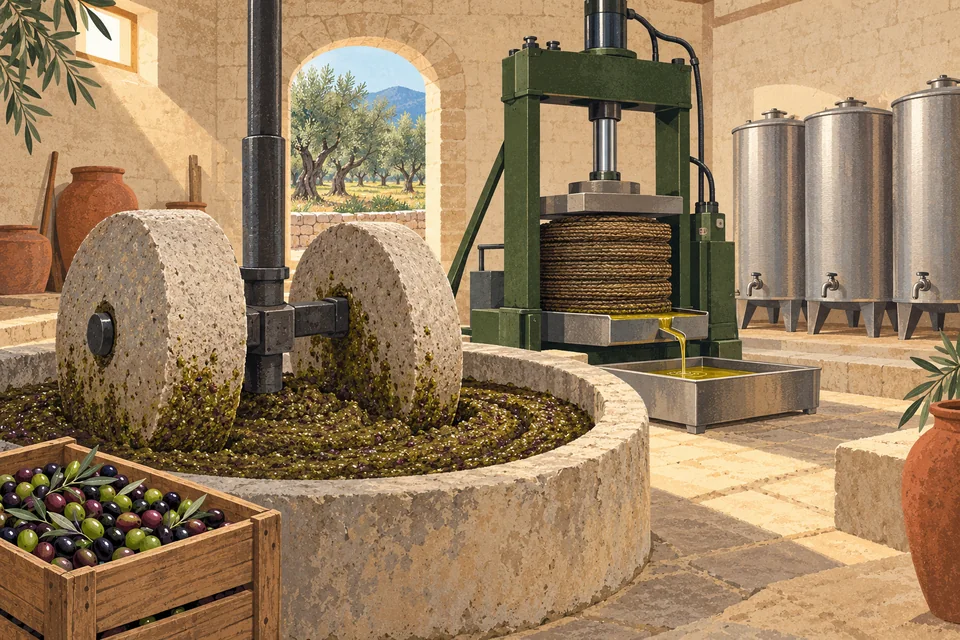
From olive to oil
- WashThe olives are washed.
- CrushThey are crushed to a paste (hamur, hah-moor).
- Press or spinA press or a spinner (centrifuge) takes the oil from the paste.
- Settle and filterDecantation (settling) and filtering clear the oil.
Steps: the definition of natürel oil in the Tebliğ (the oil regulation) · checked 29.10.2026 · Tebliğ
- Press plants
- About 1,200 plants can press about 70,000 t of olives a day, and use 40 to 50 % of that on average. The figures are UZZK’s (Ulusal Zeytin ve Zeytinyağı Konseyi, the national olive and olive-oil council).
- 4 to 8 for 1
- It takes 4 to 8 units of olives to make 1 unit of oil.
- Seasons
- The oil season of the International Olive Council (IOC) runs from 1 October to 30 September, so the 2024 harvest makes 2024/25 oil. The IOC’s table-olive season runs 1 September to 30 August.
Press plants and seasons: UZZK and IOC data · report no. 394 · checked 29.10.2026.
| Oil season | Olive oil made (thousand t) | Against 2024/25 |
|---|---|---|
| 2023/24 | 215 | |
| 2024/25 | 475 |
TEPGE’s count in its July 2026 oil report; the IOC’s provisional figure for 2024/25 is 505 thousand t · oil report · IOC page · checked 29.10.2026.
Reading an oil label: the grades
A Turkish label follows the Zeytinyağı ve Pirina Yağı Tebliği (teb-lee-ee, a communiqué that works as a regulation) of the Türk Gıda Kodeksi, the Turkish Food Codex, published on 17.09.2017. Natürel (nah-tew-rehl) oil is made only by washing, settling, spinning and filtering. Asit oranı (ah-seet oh-rah-nuh) is the free acidity: grams of oleic acid in 100 g of oil, a lab number, not a taste.
The grades, from low acidity to high
- Rafine
- (rah-fee-neh) is refined oil, made from ham, crude oil. At most 0.3.
- Natürel sızma
- (nah-tew-rehl suhz-mah) is extra virgin oil, fit to eat as it is. At most 0.8.
- Riviera
- (ree-vee-eh-rah) is refined oil mixed with natürel oil. At most 1.0.
- Natürel birinci
- (nah-tew-rehl bee-reen-jee) is virgin oil, fit to eat as it is. At most 2.0.
- Ham
- (hahm) is oil above 2.0 or not fit to eat as it is; it goes to refining.
Tebliğ 2017/26, FAOLEX copy · Tebliğ · checked 29.10.2026.
- Çeşnili
- (cheh-shnee-lee) is oil with spices, herbs, fruit or vegetables added.
- Pirina yağı
- (pee-ree-nah yah-uh) is a blend of refined pomace oil and natürel oil, at most 1.0. It is never called zeytinyağı.
- Soğuk sıkım
- (soh-uhk suh-kuhm, cold pressing): only for natürel sızma or birinci oil from olive paste kept below 27 °C and taken out by percolation or centrifuge.
- İlk soğuk baskı
- (eelk soh-uhk bahs-kuh, first cold press): only for natürel sızma or birinci oil from the first hydraulic pressing of paste below 27 °C.
- Place names
- Only natürel sızma and birinci oil may carry a geographical indication. No additive may be put into a natürel oil.
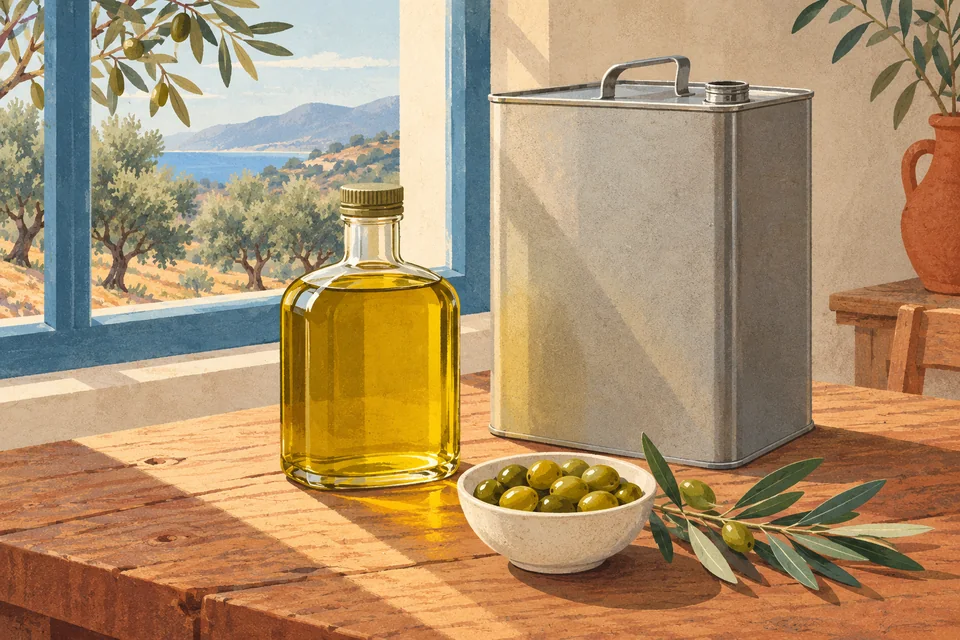
On the pack
- Packaged only
- Oil sold directly to the buyer is sold pre-packaged; there is no loose sale.
- Acidity on the label
- If it is printed, the peroxide value, the waxes and the UV absorption are printed with it, in the same size.
The International Olive Council’s standard (Rev. 22, June 2026) uses a different ladder: extra virgin up to 0.80, virgin up to 2.0, ordinary virgin up to 3.3, lampante above 3.3 · checked 29.10.2026 · IOC standard.
What leaves the country
An export is oil or olives Türkiye sells to another country; an import is what it buys. Oil exports were 69 thousand t in the 2023/24 season and about 150 thousand t in 2024/25; TEPGE notes that the 2024/25 figure is the average of the first three months’ data.
| Oil season | Oil exports (thousand t) | Against 2024/25 |
|---|---|---|
| 2023/24 | 69 | |
| 2024/25 | about 150 |
TEPGE’s July 2026 oil report · oil report · checked 29.10.2026.
Who buys oil, in the first nine months of the 2025/26 season:
Oil buyers, 2025/26
- 1United States32.5 %
- 2Italy14.9 %
- 3Spain10.1 %
- 4Japan7.3 %
- 5Saudi Arabia5.0 %
- All others30.2 %
Share of oil exports, first nine months of 2025/26 · TEPGE’s July 2026 oil report · checked 29.10.2026 · oil report
Table-olive buyers, 2025/26
- 1Germany30.1 %
- 2Iraq17.8 %
- 3Romania7.9 %
- 4Bulgaria7.2 %
- 5United States4.2 %
Share of table-olive exports, first nine months of 2025/26 · TEPGE’s July 2026 table-olive report · checked 29.10.2026 · table-olive report
Table-olive exports passed 100 thousand t in 2024/25, a record; Germany took 30 %, Iraq 18 % and Romania 8 % that season.
- The EU
- sets a quota of 100 tonnes on olive oil of Turkish origin.
- Dökme yağ
- (durk-meh yah) is bulk oil. After the restrictions on bulk oil exports, the incentives for branded and packaged exports were raised.
- Imports
- Türkiye has no net oil import. Of the small volume that comes in, 98.0 % is from Syria under the Dahilde İşleme Rejimi (dah-heel-deh eesh-leh-meh reh-zhee-mee, inward processing: imported goods are worked on and sent out again), only to be exported. For table olives the Syrian share of imports is 97.9 %.
TEPGE’s July 2026 oil and table-olive reports · oil report · table-olive report · checked 29.10.2026.
In the world, oil production was 3.572 million t in 2024/25, 38 % more than the season before, and consumption 3.066 million t. Shares of world production, as TEPGE draws them from IOC data:
| Season | Spain | Türkiye | Italy |
|---|---|---|---|
| 2022/23 | 24 % | 16 % | 9 % |
| 2023/24 | 33 % | 8 % | 13 % |
| 2024/25 | 38 % | 13 % | 7 % |
TEPGE’s July 2026 oil report (IOC data) · oil report · checked 29.10.2026.
Olive oil, 2024/25 · IOC, provisional
- 1Spain1,419
- 2Türkiye505
- 3Tunisia340
- 4Greece250
- 5Italy248
- 6Portugal177
Thousand tonnes · IOC sector statistics, December 2025 · checked 29.10.2026 · IOC page
Table olives
World production was 3.317 million t in 2024/25, 19 % more than a year before. Türkiye was first, then Egypt and Spain (TEPGE, from IOC data).
TEPGE’s July 2026 table-olive report · checked 29.10.2026 · table-olive report
The count of Türkiye’s oil differs by source: TEPGE 475 thousand t, IOC 505 thousand t (provisional) for 2024/25.
Oil wrestling: Kırkpınar
Kırkpınar (kuhrk-puh-nahr) is a festival of yağlı güreş (yah-luh gew-resh), oil wrestling, held each year in Edirne in Thrace, the European part of Türkiye. A pehlivan (pehl-ee-vahn) is a wrestler. Pehlivans oil themselves before the bout and wear a kıspet (kuhs-peht), thick trousers of water-buffalo or cow leather.
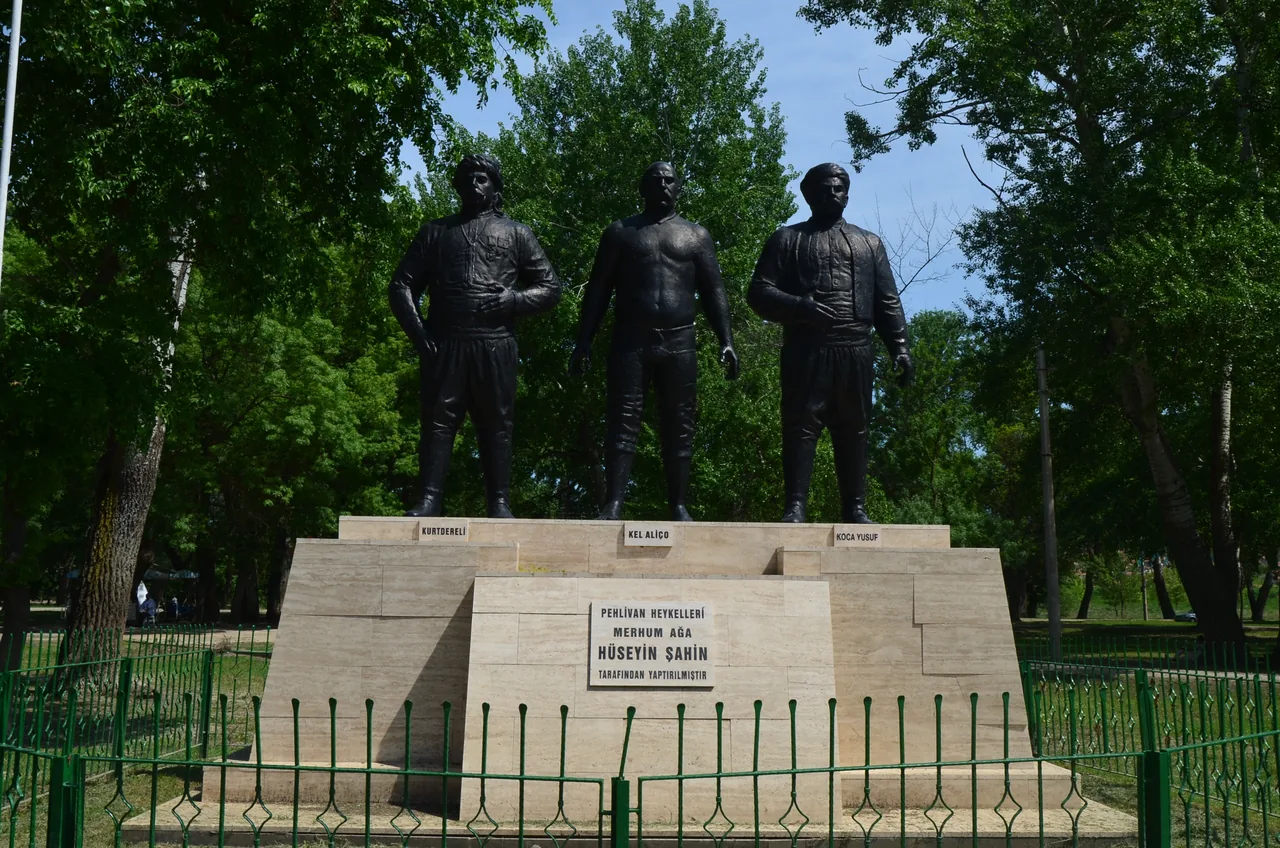
- UNESCO
- Kırkpınar oil wrestling festival was inscribed in 2010 on the Representative List of the Intangible Cultural Heritage of Humanity. In the nomination file the 2009 festival is the 648th.
- Three days of ceremonies (UNESCO nomination file)
- The festival opens with the welcome of the Kırkpınar Ağası (kuhrk-puh-nahr ah-ah-suh, the patron) with 40 davul-zurna bands (davul is a drum, zurna a double-reed pipe), a procession with the golden belt, and a mevlid (a recital of prayers) at the Selimiye Mosque.
- The field
- The bouts are held on the Er Meydanı (ehr may-dah-nuh, the Men’s Field). The winner is the Başpehlivan (bahsh-pehl-ee-vahn, the chief wrestler) for a year and keeps the belt after three wins in a row.
- Roles
- The cazgır (jahz-guhr) introduces the pehlivans to the audience by name; an oil man helps with the oiling; the peşgirci (pehsh-geer-jee) holds the towel.
- Leather
- Few masters in Çanakkale and Samsun make the kıspet.
UNESCO nomination file for element 00386 and the UNESCO list page · file · list page · checked 29.10.2026.
- 1357 and 1361The legend: in 1357 Süleyman Pasha, son of Orhan Gazi, takes Edirne’s surroundings, and forty men wrestle; two brothers, said to be Ali and Selim, cannot beat each other, die in the bout and are buried there, and a spring rises. Edirne’s page dates the first wrestling to the summer of 1361, in memory of forty raiders.
- 18.05.1924Six friends restart the wrestling at Sarayiçi, after the years of war.
- 1950Edirne municipality (Edirne Belediyesi) runs the festival.
- 1966The three-day fair becomes a seven-day week of wrestling and culture events (Edirne’s page).
- 16.11.2010UNESCO inscribes the festival.
Edirne municipality, history of the festival · Tarihî Kırkpınar Yağlı Güreşleri Festivali · checked 29.10.2026.
For a day in the town, see Shopping in Edirne.
Old trees: two on the register
An anıt ağaç (ah-nuht ah-ahch) is a monument tree, registered for protection as a tabiat varlığı (tah-bee-aht vahr-luh-uh, natural asset). Today a regional commission registers it and the Minister approves (Ministry of Environment, Urbanisation and Climate Change). Two district governorships (kaymakamlık, a district’s state office) each describe one registered olive tree.
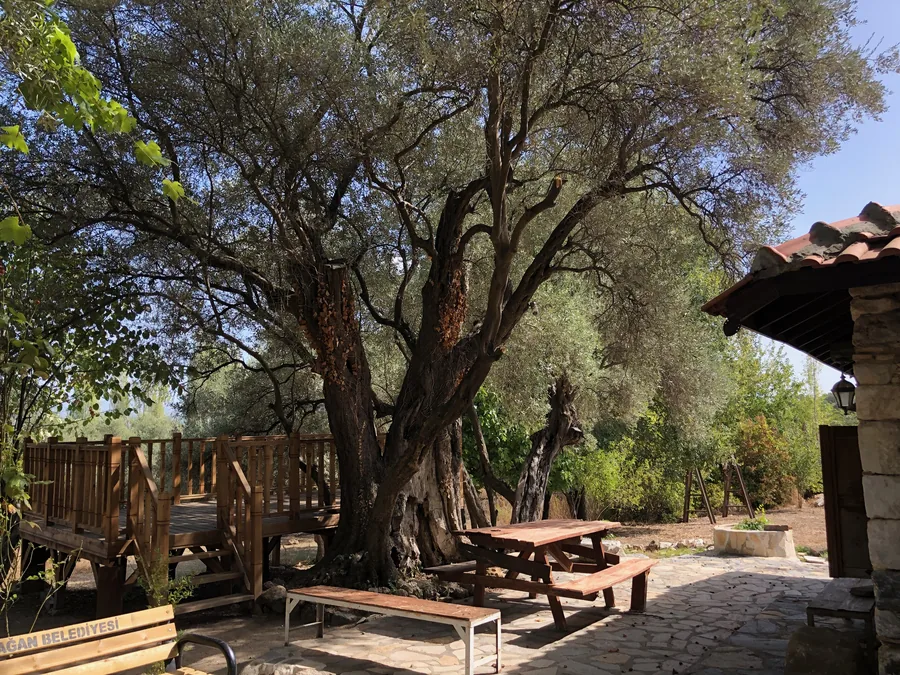
- Kırkağaç
- In the Bakır neighbourhood of Kırkağaç, Manisa province, the Anıt Zeytin Ağacı is 1,657 years old by the district governorship’s count and was registered in 2010 by the Tabiat Varlıklarını Koruma Kurulu (the nature-assets protection board). It still bears four kinds of olive, by the governorship’s page: Memecik, Edremit, Uslu and Trilye.
- Mut
- The Mut district governorship, in Mersin province, dates its registered tree at 1,300 years. The registration is by the Adana Regional Directorate for the Protection of Cultural and Natural Assets of the Ministry of Culture.
Kırkağaç and Mut district governorship pages; the Ministry’s natural-assets page · Kırkağaç · Mut · natural-assets page · checked 29.10.2026.
At the market and the shop: what to say
Six lines for a pazar (pah-zahr, a weekly open-air market) stall, a grocer or a şarküteri (shahr-kew-teh-ree, a delicatessen counter). Tap Copy to take a line.
- Green olives
- Yarım kilo yeşil zeytin, lütfen.Half a kilo of green olives, please. Yarım (yah-ruhm) is half, yeşil (yeh-sheel) green, lütfen (lewt-fen) please.
- Black olives
- Siyah zeytin var mı?Do you have black olives? Siyah (see-yah) is black; var mı (vahr muh) is «is there».
- Pitted?
- Çekirdeksiz mi?Is it pitted? Çekirdek (cheh-keer-dehk) is the stone, -siz means «without».
- Olive oil
- Bir litre natürel sızma zeytinyağı, lütfen.A litre of extra virgin olive oil, please. Litre is leet-reh.
- Acidity
- Asit oranı kaç?What is the acidity? Kaç (kahch) is «how much».
- Harvest
- Bu yılın hasadı mı?Is it this year's harvest? Yılın (yuh-luhn) is «of the year», hasat (hah-saht) the harvest.
More guides: Turkish Cheese Guide, Turkish Hazelnuts, Tomatoes in Turkey, Supermarkets in Turkey.
Sources and limits
Show the pages checked
- Zeytinyağı Tarım Ürünleri Piyasaları Raporu, Temmuz 2026 — Ministry of Agriculture and Forestry, TEPGE, checked 29.10.2026
- Sofralık Zeytin Tarım Ürünleri Piyasaları Raporu, Temmuz 2026 — Ministry of Agriculture and Forestry, TEPGE, checked 29.10.2026
- Zeytinyağı ve Sofralık Zeytin Ürün Raporu 394-2024 — Ministry of Agriculture and Forestry, TEPGE, checked 29.10.2026
- Olive sector statistics, December 2025 — International Olive Council, checked 29.10.2026
- Trade standard applying to olive oils and olive-pomace oils, COI/T.15/NC No 3/Rev. 22 — International Olive Council, checked 29.10.2026
- Türk Gıda Kodeksi Zeytinyağı ve Pirina Yağı Tebliği (2017/26), FAOLEX copy — FAO legal database; published 17.09.2017, checked 29.10.2026
- Sofralık Yeşil Zeytin Üretimi — Ministry of Agriculture and Forestry, Erzurum directorate, checked 29.10.2026
- Sofralık Siyah Zeytin Üretimi — Ministry of Agriculture and Forestry, Erzurum directorate, checked 29.10.2026
- Kırkpınar oil wrestling festival, 00386 — UNESCO, checked 29.10.2026
- Nomination file no. 00386 — UNESCO, checked 29.10.2026
- Tarihî Kırkpınar Yağlı Güreşleri Festivali — Edirne Belediyesi, checked 29.10.2026
- Anıt Zeytin Ağacı — Kırkağaç Kaymakamlığı, checked 29.10.2026
- Anıt Zeytin Ağacı — Mut Kaymakamlığı, checked 29.10.2026
- Tabiat Varlıklarını Koruma — Ministry of Environment, Urbanisation and Climate Change, checked 29.10.2026
The text is general information about olives and olive oil in Türkiye. TEPGE’s figures come from TÜİK, UZZK and IOC data; the IOC’s own figures differ for some seasons. The label rules are those of the Tebliğ published on 17.09.2017.