

Jerusalem under the Ottomans
What the Ottomans built and ran in Jerusalem, 1517–1917: Süleyman’s walls, water, endowed soup kitchens and courts, and how its communities lived.
Table of Contents
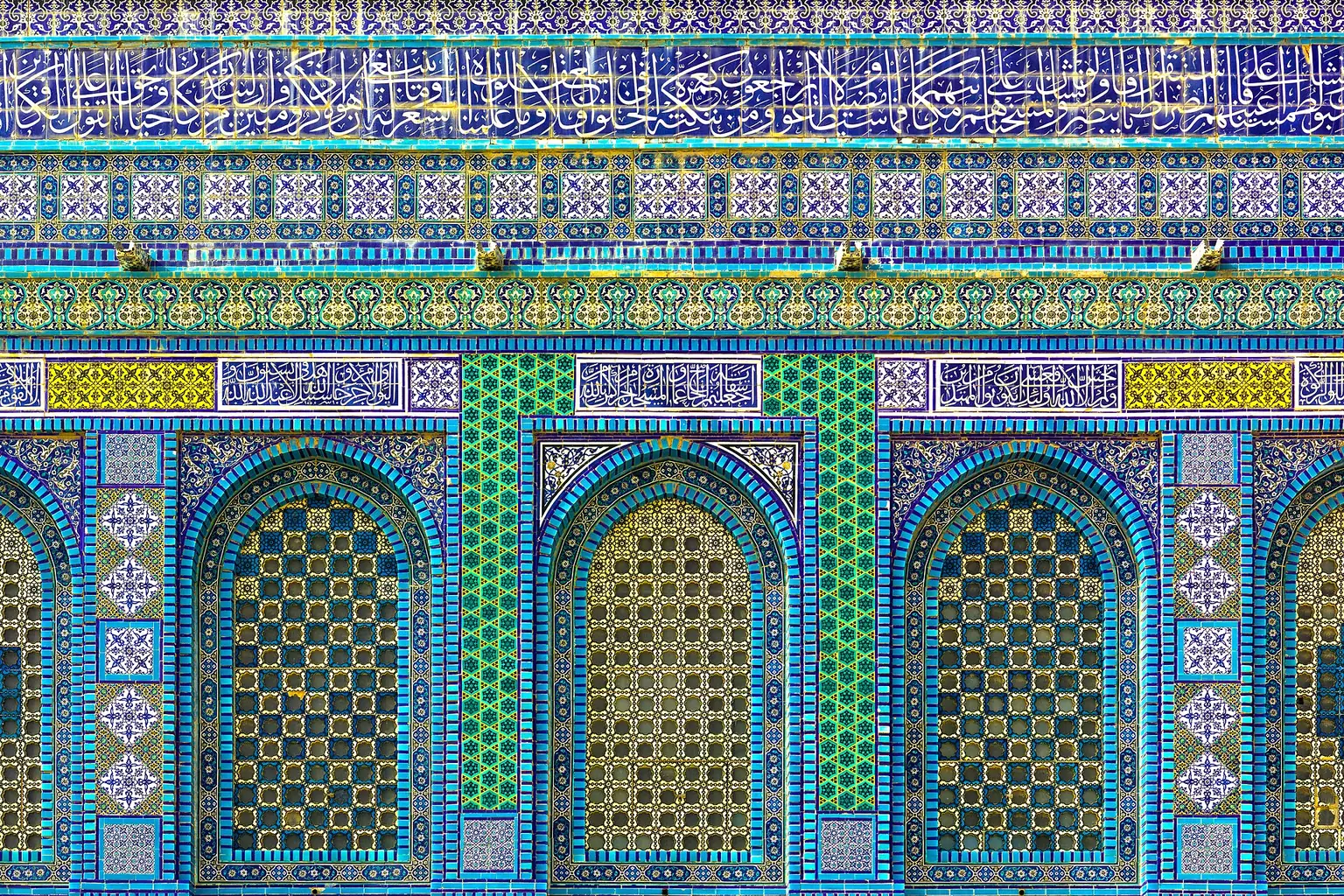
For about four centuries Jerusalem was an Ottoman district (sancak), with one break, in 1831–1840. In that time the sultans had its wall rebuilt and brought water to its fountains, Hürrem Sultan’s endowed kitchen fed hundreds of guests and poor people, and its court kept registers that survive.
In short · checked 03.11.2026
For about four centuries, 1517–1917, Jerusalem was an Ottoman district, and the record shows a wall, water works, endowed kitchens, courts and a municipality.
- Rule: from 1516 to December 1917, apart from 1831–1840, when Egypt’s governor held the city.
- Wall: built in five years, 1536–1540, with 34 towers and 7 gates.
- Water: pools, clay pipes and six fountains of Süleyman’s time; repairs dated 1574 to 1901.
- Kitchen: Hürrem Sultan’s complex of 1551 fed hundreds of guests and poor people.
- Court: 626 registers from 1530, 416 of them Ottoman.
- 19th century: municipality 1863, telegraph 1865, road 1868, railway 1892.
- Hard years: revolts in 1702–1705 and 1834–1838, cholera, locusts and typhus.
Nine dated stops · checked 03.11.2026
The wall as a timeline
Pick a stop and a lantern slides along the wall to it. Every card has the date, what happened, its source and a Turkish line to copy for a library or archive search. Dates come from the Turkish Religious Foundation’s Islamic Encyclopaedia (TDV İslâm Ansiklopedisi). The drawing shows the wall’s 34 towers and 7 gates and is not to scale.
Rule begins
1516 · The city comes under Ottoman rule
Jerusalem came under Ottoman administration probably in October 1516. Sultan Selim I reached the city on 29 December 1516. It stayed a sancak (district) throughout, at first within the province of Damascus.
TDV, «Kudüs» · checked 03.11.2026
1516: Kudüs Osmanlı yönetimine girdi.1516: Jerusalem came under Ottoman rule.Built
1536–1540 · The wall
Süleyman I had the wall built in five years. It is more than 3 km long and more than 12 m high, with 34 towers and 7 gates; six of the gates carry an inscription with the year of building. The works began with the repair of the Dome of the Rock.
TDV, «Kudüs» · checked 03.11.2026
1536-1540: Kudüs surları inşa edildi.1536–1540: the wall of Jerusalem was built.Built
1551 · Hürrem Sultan’s complex
Süleyman’s wife Hürrem Sultan founded a complex of mosque, school (medrese), inn (han), hostel (ribat) and soup kitchen (imaret). The kitchen fed hundreds of guests, Sufis, students and poor people.
TDV, «Kudüs» · checked 03.11.2026
1551: Hürrem Sultan külliyesi ve imareti yapıldı.1551: Hürrem Sultan’s complex and soup kitchen were built.Endowment
1558 · Four more villages for the endowment
Hürrem Sultan died in 1558. Süleyman added the land of four villages near Sayda to the endowment (vakıf) that paid for the complex. She had set aside many villages and wide lands in Syria and Palestine for it, mostly near Remle.
TDV, «Kudüs» · checked 03.11.2026
1558: Hürrem Sultan’ın vakfına dört köy eklendi.1558: four villages were added to Hürrem Sultan’s endowment.Hard years
1831–1840 · Egyptian rule
The governor of Egypt, Mehmed Ali Pasha, held Jerusalem. Higher taxes, disarmament and forced conscription led to uprisings centred on the city from 1834 to 1838. It came back under Ottoman rule in December 1840. Britain opened the first consulate in 1838.
TDV, «Kudüs» · checked 03.11.2026
1831-1840: Kavalalı Mehmed Ali Paşa dönemi.1831–1840: the time of Mehmed Ali Pasha of Egypt.Built
1863 · The municipality
A municipality was formed, with a council to run the district. It worked on street cleaning, sewers, lighting, street layout and tree planting. The telegraph followed in 1865 and the Jaffa road in 1868.
TDV, «Kudüs» · checked 03.11.2026
1863: Kudüs Belediyesi kuruldu.1863: the Municipality of Jerusalem was founded.Built
1892 · The railway to Jaffa
The Jerusalem–Jaffa railway opened in 1892, after the telegraph and the road. The links brought the city closer to the outside world, raised the number of visitors and helped its economy.
TDV, «Kudüs» · checked 03.11.2026
1892: Kudüs-Yafa demiryolu hizmete açıldı.1892: the Jerusalem–Jaffa railway opened.Built
1900 · Clock tower and fountain at Jaffa Gate
TDV dates a public drinking fountain (sebil) near Jaffa Gate and a clock tower on the gate to 1900. A museum and a theatre with plays in Turkish, Arabic and French belong to the same investments.
TDV, «Kudüs» · checked 03.11.2026
1900: Yafa Kapısı’na saat kulesi yapıldı.1900: a clock tower was built at Jaffa Gate.Rule ends
December 1917 · The end of Ottoman rule
Ottoman rule in Jerusalem lasted about four centuries and ended in December 1917, apart from the years 1831–1840.
TDV, «Kudüs» · checked 03.11.2026
Aralık 1917: Kudüs’te Osmanlı yönetimi sona erdi.December 1917: Ottoman rule in Jerusalem ended.
Stop 1 of 9 · 1516 · The city comes under Ottoman rule
Who ran it, and for how long
Ottoman rule in Jerusalem is dated 1517–1917 in round years. TDV puts the start probably in October 1516, before Sultan Selim I reached the city on 29 December 1516, and the end in December 1917. Jerusalem was always a district; the province it answered to changed, and from 1872 it answered directly to the central government. The province ladder and the sultans’ works at the Haram al-Sharif (the walled sanctuary with the al-Aqsa Mosque and the Dome of the Rock) are told in Ottoman Palestine.
“Between 1517 and 1917, for four full centuries, the lands of Jerusalem and Palestine were one of the most peaceful regions of the Ottoman state, and one of those that received the most service.”
Mehmet İpşirli, a study of Ottoman health services in Jerusalem, 2016, translated from Turkish. TDV adds that under Süleyman the Magnificent the city “lived the golden age of its history”.
From the 18th century, local families held the main offices in the city.
- Muftis
- The Ebü’l-Lutf family held the office of mufti (a legal scholar who issues rulings) most often.
- Head of the Prophet’s descendants
- The nakîbüleşraf was mostly chosen from the Hüseynî family.
- Court officers and mayors
- Senior court officers and the mayors came mostly from the Hâlidî family.
- District governors
- In the 18th century most governors of the district came from the local Tûkān and Nimr families.
Sources, checked 03.11.2026: TDV «Kudüs»; İpşirli, Ottoman health services in Jerusalem.
The wall and its gates
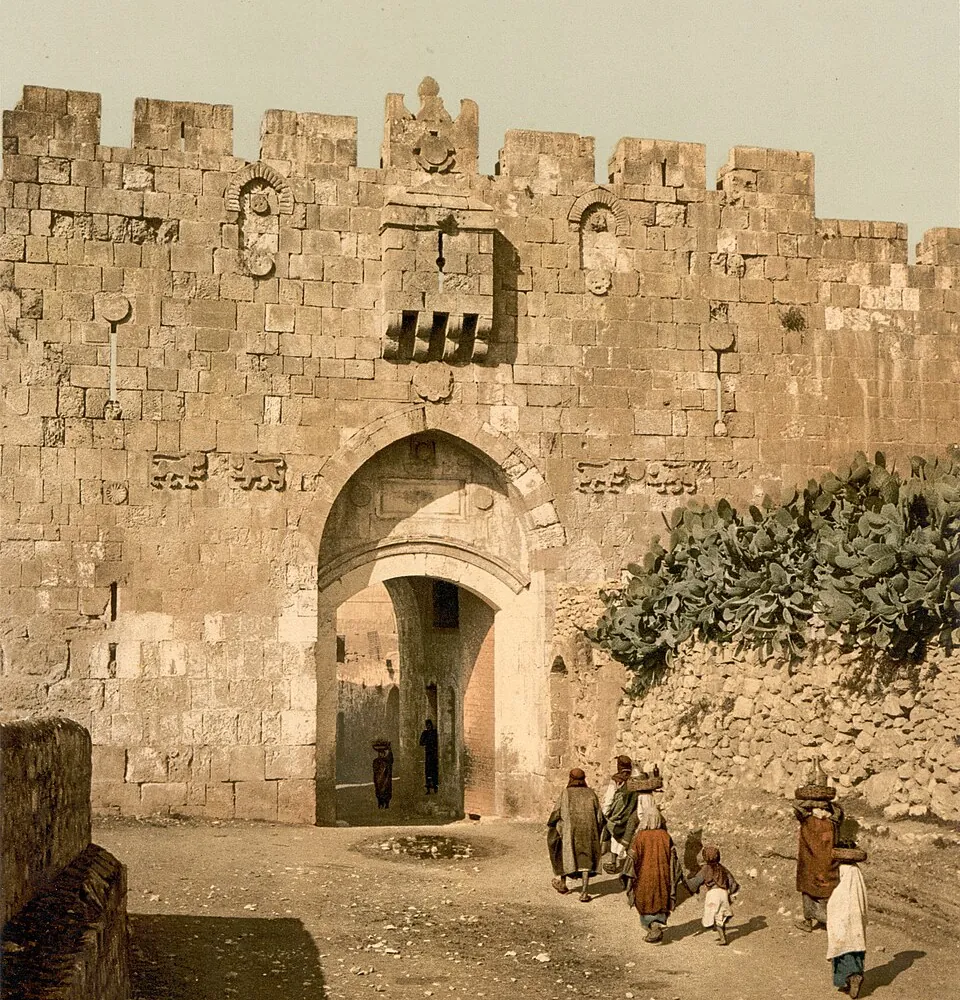
Süleyman I had the wall built in five years, 1536–1540, on foundations left from earlier times. It is more than 3 km long and more than 12 m high, with 34 towers and 7 gates.
Süleyman’s wall
34 towers · 7 gates
Six of the seven gates carry an inscription panel (kitâbe) that shows the year of building.
The wall in four lines
- Five years: 1536–1540.
- Older foundations: the wall follows foundations left from earlier times.
- Dated gates: six of the seven carry a panel with the year of building.
- First step: the works began with the repair of the Dome of the Rock.
Sources, checked 03.11.2026: TDV «Kudüs»; İpşirli, Ottoman health services in Jerusalem.
Water: pools, pipes and fountains
Jerusalem had no clean water source of its own; its water came from rainwater gathered in pools made for the purpose. Süleyman had clean rainwater collected in three large pools beside the fort he built between Hebron and Jerusalem. Finely graded clay pipes (künk) carried it to the al-Aqsa Mosque and the Dome of the Rock, and part went to fountains (çeşme) and public drinking fountains (sebil) in the city.
He also had the canals from Bethlehem and Hebron repaired, the pools that shared out the city’s water renewed and six fountains built, five of them inside the wall. The works then needed repair, and Ottoman documents record it:
- 26.01.1574
- Selim II orders the fortress warden (dizdar) to repair the clay pipes of Süleyman’s water, damaged by attacks to steal the water or to water fields.
- 1585
- Murad III sends a palace officer (saray çavuşu) to repair the ruined pools between Jerusalem and Hebron, with the money set aside for it, together with the Jerusalem judge (kadı).
- 1850
- The water routes are repaired more thoroughly under Sultan Abdülmecid I, and the water again reaches the al-Aqsa Mosque and the city. The city’s notables send Istanbul a petition of thanks (mahzar).
- 1866
- The outlets and routes of the Ayn-i Salih stream near Bethlehem are repaired.
- 1900
- For the 25th year of Abdülhamid II’s reign, a fountain and a cistern (sarnıç) are built at Babü’l-Halil in Jerusalem.
- 1901
- The routes of three springs that fed 18 fountains of Süleyman’s foundation were damaged. The repair is recorded at 600,000 kuruş.
Repair of 1901
600,000 kuruş
Kuruş was an Ottoman currency unit. The sum repaired the three spring routes that fed the 18 fountains of Süleyman’s foundation in Jerusalem.
Sources, checked 03.11.2026: İpşirli, Ottoman health services in Jerusalem; TDV «Kudüs».
Endowments: how kitchens, schools and lodges were paid for
An endowment (Turkish vakıf, Arabic waqf) is property whose income pays for a named purpose. In Jerusalem such endowments paid for water works, schools, lodges and soup kitchens. The largest single case is the complex of Hürrem Sultan.
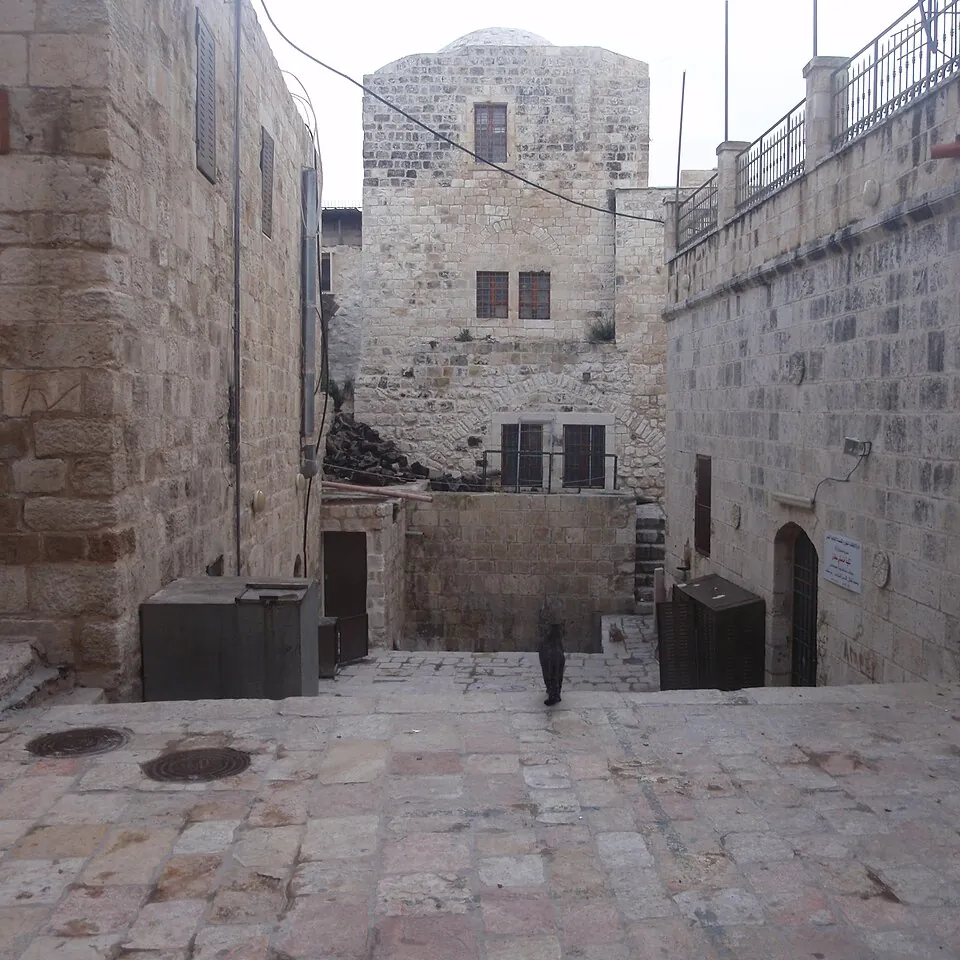
Hürrem Sultan’s complex, 1551
- Founded 1551 Süleyman’s wife founded a complex of mosque, school (medrese), inn (han), hostel (ribat) and soup kitchen (imaret).
- Paid by land She set aside many villages and wide lands in Syria and Palestine, mostly near Remle, to meet its costs.
- Extended 1558 After her death Süleyman added the land of four villages near Sayda.
- Meals The kitchen fed hundreds of guests, Sufis (sûfî, members of mystic orders), madrasa students and poor people.
The city’s madrasas lived on endowments. Many Sufi lodges (tekke) and cells (zâviye) stood near the al-Aqsa Mosque and the Damascus Gate, and the Mevlevi, Shâzilî, Rifâ‘î and Ahmedî orders had a part in the city’s religious and cultural life. From the 18th century the madrasas declined, mainly because the endowments behind them weakened; those lay not only in Jerusalem but also in Anatolia, Egypt and Syria.
The surre, a purse of money and gifts sent each year from Istanbul and Egypt, went to Mecca and Medina and also to Jerusalem and Hebron. It was Jerusalem’s most important source of income.
Sources, checked 03.11.2026: TDV «Kudüs»; TDV «Surre»; İpşirli, Ottoman health services in Jerusalem.
Courts and their registers
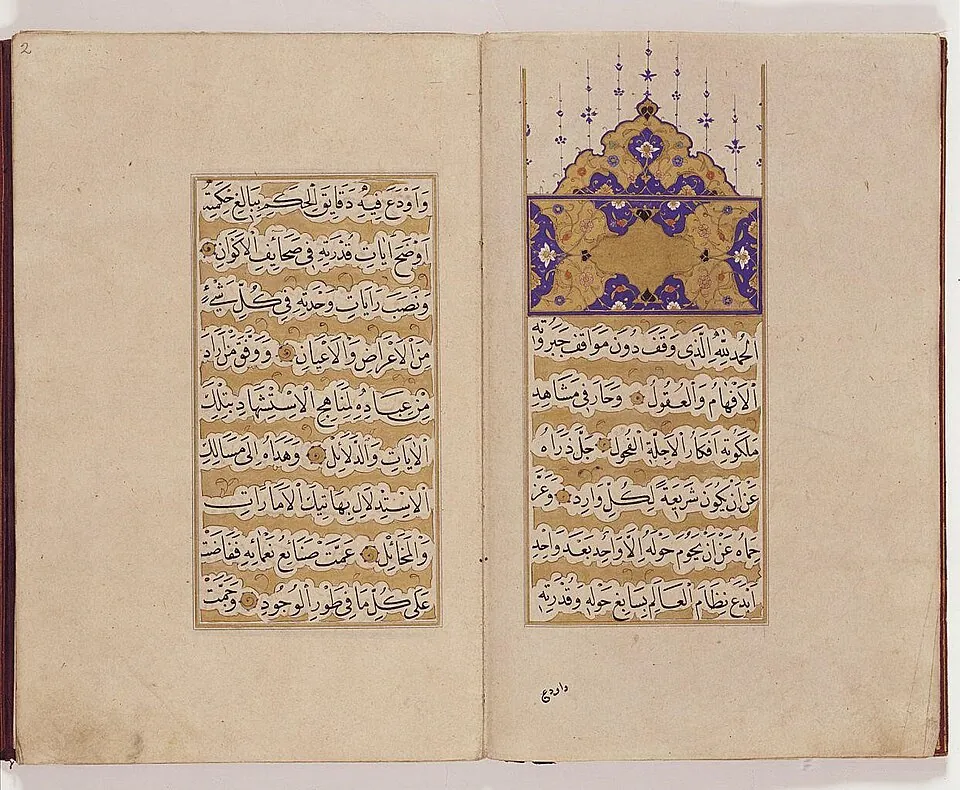
A judge (kadı) or his deputy kept a register (sicil) of what came before the court. The registers record legal relations among people of every class, and historians use them as a main source for the social and local history of Ottoman towns.
- Jerusalem’s series
- 626 registers, beginning in 1530 and unbroken apart from 1574–1576. 416 of them are Ottoman.
- One register
- Narrow and long, about 15 × 45 cm. On average about 100 pages and 400–500 entries.
- What fills them
- Judgments and contracts, estates and marriages, price schedules and appointments, guild and endowment entries, and copies of imperial orders (ferman). The sultan’s calligraphic emblem on such orders is the tughra.
- An example
- Jerusalem court register no. 70, pages 18–50, is cited for the 1558 addition of four villages to Hürrem Sultan’s endowment.
- Libraries
- The registers hold details of the city’s private libraries.
Sources, checked 03.11.2026: TDV «Şer‘iyye sicilleri»; TDV «Kudüs».
Communities side by side
Muslims, Christians and Jews lived in the city throughout Ottoman rule. Ottoman censuses of the 16th century counted them by household (hâne); the census of 1849 counted persons.
| Census | Muslim | Christian | Jewish | All households |
|---|---|---|---|---|
| 1525–26 | 616 | 119 | 199 | 934 |
| 1538–39 | 1,168 | 136 | 224 | 1,528, plus 160 single men |
| 1554 | 1,987 | 303 | 324 | not given |
| Year | Muslim | Christian | Jewish | All |
|---|---|---|---|---|
| 1525–26 | about 3,100 | 550–600 | about 1,000 | about 4,700 |
| 1538–39 | not given | not given | not given | 7,900–8,000, an estimate |
| 1554 | not given | not given | not given | over 13,000 |
| 1849 | 6,184 | 3,744 | 1,790 | 11,682 |
The Muslims included Arabs and people from Anatolia, North Africa, India and Central Asia; the North African group was large. The Christians were Syriac, Jacobite, Armenian, Greek, Melkite, Serb, Frank (Western European) and Georgian groups. The Jewish community grew in the 16th century because the Ottomans let some of the Jews expelled from Spain settle in Jerusalem, and it is recorded in three quarters from 1538. In 1525–26 the city had ten quarters.
A Polish traveller of 1617 noted 12 households of local Armenians, 20 to 30 Coptic households, a few Greeks and four monasteries: Armenian, Greek, Frank and Serb.
Millet, in plain words
- A millet was a religious community. The system rested on religion and sect, not on ethnicity or language.
- Each community lived in its own section under its own religious head. The central government was the final authority for appointing and removing a head.
- The duties differed mainly in money. Muslims, for example, did not pay the head tax (cizye).
- After the 1856 reform edict the communities issued regulations, and councils took over the management of their endowments, schools and social institutions.
Britain opened the first consulate in 1838, and Prussia, France, Austria and Russia followed. Three church changes fall in the 1840s: an English-German Protestant bishopric in 1841, the move of the Greek Orthodox patriarch from Istanbul to Jerusalem in 1845 and the revival of the Latin patriarchate in 1847.
Sources, checked 03.11.2026: TDV «Kudüs»; TDV «Millet».
The 19th-century city
The state tried to limit European interventions and to modernise Jerusalem. It set up a municipality, city services and links to the coast.
- 1863
- The municipality is formed, and a council to run the district. Its work: street cleaning, sewers, lighting, street layout, tree planting.
- 1865
- The telegraph reaches the city.
- 1868
- The Jerusalem–Jaffa road opens.
- 1872
- The district becomes an independent mutasarrıflık, answering directly to the central government.
- 1886
- A police force is formed.
- 1891
- The municipal hospital opens. İpşirli dates its service from 1890.
- 1892
- The Jerusalem–Jaffa railway opens.
- 1895
- Vaccination rules are issued.
- 1900
- A public drinking fountain near Jaffa Gate and a clock tower on the gate.
The municipal hospital on the Jaffa road
The poor and people without family were treated free, whatever their religion or nationality. Muslim doctors worked beside non-Muslim Ottoman doctors. Two pharmacies served it, one inside the wall and one at the hospital. Later the number of doctors rose and separate wards opened for epidemic diseases. After the rules of 1895, vaccination officers were paid by the municipality.
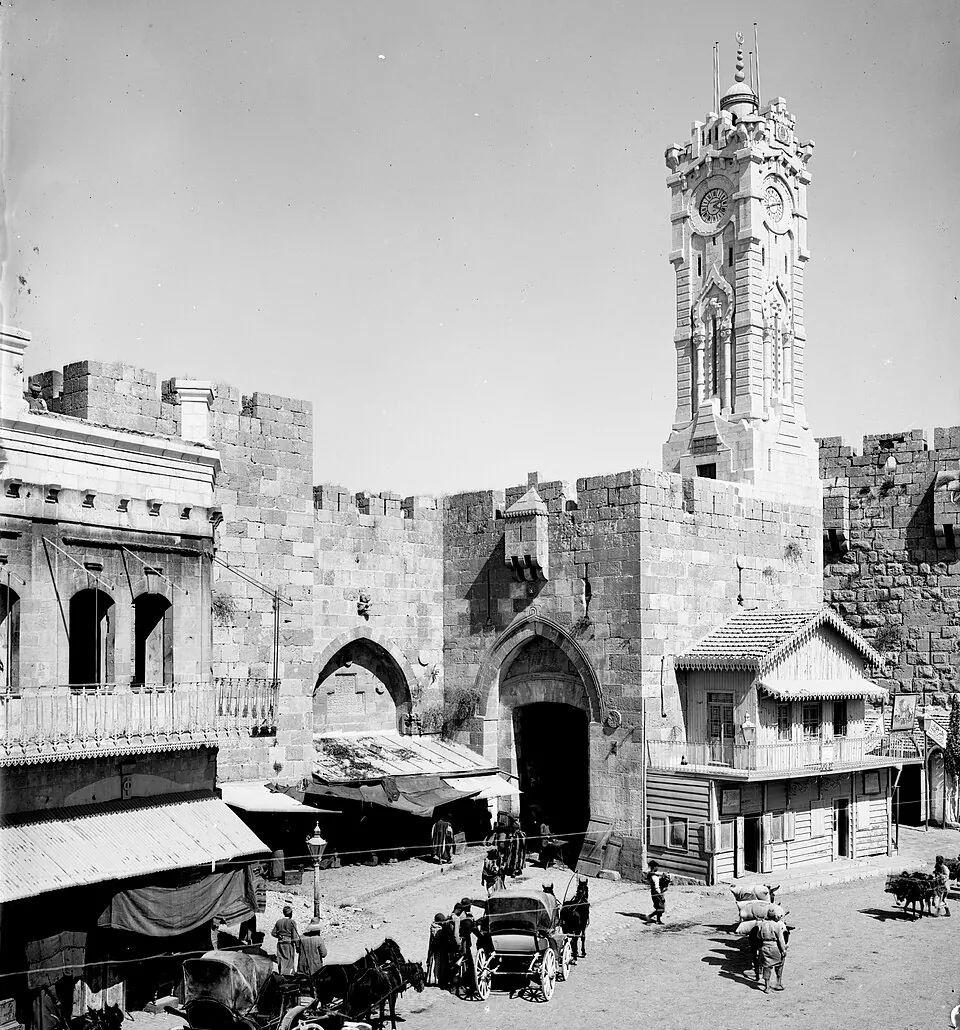
- Clock towerTDV dates a clock tower on Jaffa Gate to 1900.
- The gateYafa Kapısı in Turkish, Jaffa Gate: one of the seven gates of Süleyman’s wall.
- The wallMore than 3 km long and more than 12 m high.
- The squareHorse-drawn carriages and carts stand by the gate. The Jaffa road opened in 1868 and the railway in 1892.
From the second half of the century investment from abroad moved building outside the wall, and mission schools grew in number beside the state schools.
Population totals
11,682 people in 1849 · 55,000 in 1900
The 1849 figure is from Ottoman sources. After it only totals are available (TDV): 20,000 in 1870, 30,000 in 1880, 40,000 in 1890 and 55,000 in 1900. The railway and the debt of the time are covered in The Ottoman Economy Under Abdülhamid II: Debt, Rail and Banks.
Sources, checked 03.11.2026: TDV «Kudüs»; İpşirli, Ottoman health services in Jerusalem.
People and trade
Jerusalem had little farmland and no raw material for industry, and it lay off the main trade routes. Its main income came from its religious standing: visits by pilgrims and travellers of three faiths gave work to crafts and trade.
Crafts
Textiles and dyeing, leather, soap and metalwork.
Exports
Soap to Egypt. Grain to Egypt, Rhodes and Dubrovnik.
Imports
Rice from Egypt. Clothes and coffee from Damascus. Textiles and carpets from Istanbul, Iraq and China.
In 1806 a German traveller counted at least 700 tradespeople and merchants in the city. Income came from taxes and from sales to visitors, especially of souvenirs. The most important source was the surre sent from Istanbul and Egypt; money that Jews abroad sent to their fellow believers in the city and the support of European kingdoms for Christians also counted.
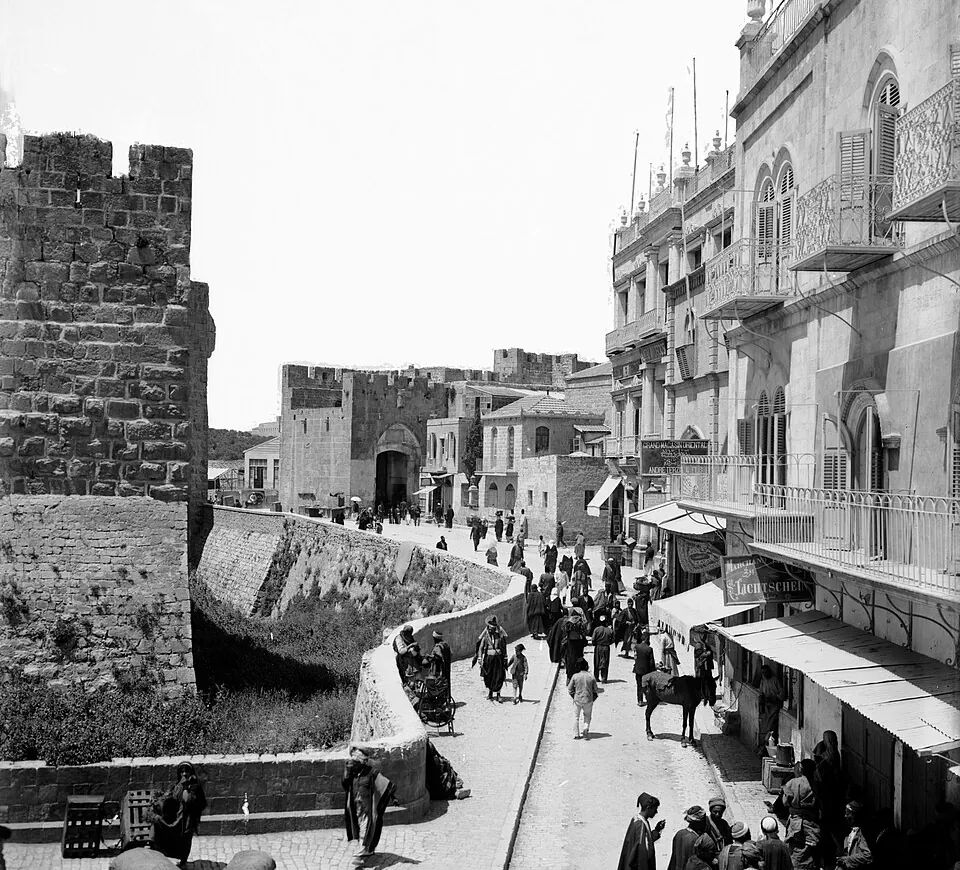
From the 1850s the city grew, building work increased and unemployment fell. Soap-making declined in the second half of the century, and the making of souvenirs moved to Bethlehem.
Sources, checked 03.11.2026: TDV «Kudüs».
Hard years, one line each
- 1660s–1670s: disputes over rights at the holy places between the Latin church and the Greek and Armenian churches led to bloody clashes, mainly between Latin and Greek Orthodox Christians.
- 1702–1705: a governor raised taxes, a revolt followed, and the governor of Damascus put it down by force in 1705.
- 1825–1826: villages near the city rose against conscription and taxes and took the city; calm returned in late 1826.
- 1834–1838: uprisings centred on the city during Egyptian rule.
- 1865, 1890, 1902: cholera epidemics, which in Jerusalem cost many lives.
- May 1915: a soldier’s diary mentions locust swarms on 20.05.1915 and, on 24.05.1915, four typhus cases in one day in the Bab Hutta quarter.
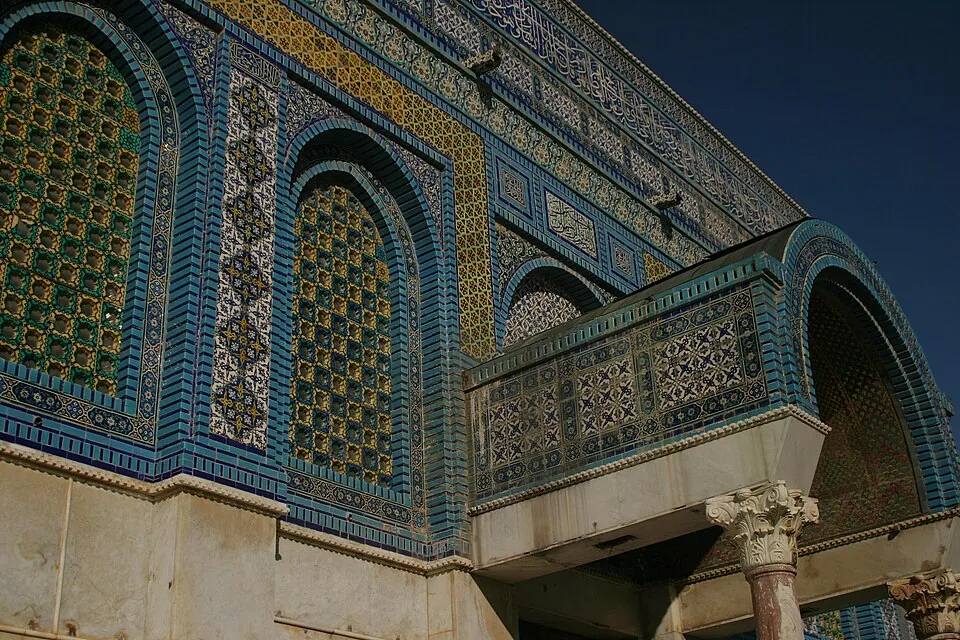
Süleyman’s wall is still standing, and the tiles that frame the upper windows of the Dome of the Rock belong to his time.
Sources, checked 03.11.2026: TDV «Kudüs»; TDV «Kubbetü’s-sahre»; İpşirli, Ottoman health services in Jerusalem; University of Arizona teaching set on the First World War.
Sources and limits
The story stops in December 1917. The photographs are from Wikimedia Commons, each with its author, date, licence and file page.
- TDV İslâm Ansiklopedisi (the Turkish Religious Foundation’s Islamic Encyclopaedia), entry «Kudüs», the Ottoman-period section — checked 03.11.2026
- TDV İslâm Ansiklopedisi, entry «Kubbetü’s-sahre» (the Dome of the Rock) — checked 03.11.2026
- TDV İslâm Ansiklopedisi, entry «Millet», the part on the Ottoman state — checked 03.11.2026
- TDV İslâm Ansiklopedisi, entry «Surre» — checked 03.11.2026
- TDV İslâm Ansiklopedisi, entry «Şer‘iyye sicilleri» (court registers) — checked 03.11.2026
- Mehmet İpşirli, «Osmanlı’nın Kudüs’e sağlık alanında hizmetleri» (Ottoman health services in Jerusalem), pages 80–85, summer 2016 issue, PDF on the site of Istanbul Medipol University — checked 03.11.2026
- University of Arizona Center for Middle Eastern Studies, teaching set «Documents on the Effects of WWI on Ottoman Civilians», quoting a soldier’s diary (University of California Press, 2011) — checked 03.11.2026