Ottoman Egypt, 1517–1914: How It Was Run and What Remains
Egypt as an Ottoman province, 1517–1914: dated steps, how it was run, Turkish titles explained, buildings in Cairo and traces in Istanbul.
Table of Contents
Egypt was a province of the Ottoman Empire from 1517 to 1914. Governors came from Istanbul until 1805, when Kavalalı Mehmed Ali Paşa («Mehmed Ali of Kavala», Muhammad Ali Pasha in English) became governor and founded a line of rulers; from 1866 they bore the title hidiv («khedive»). Dated steps, the way the province was run, the buildings in Cairo and the traces in Istanbul follow, with the Turkish words explained.
In short · checked 30.10.2026
A province for 397 years, with its buildings in Cairo and its traces in Istanbul.
- When: From 1517, after the battle at Ridâniye on 22 January and the arrival of the troops in Cairo, to 18 December 1914 (TDV «Selîm I», TDV «Mısır»).
- Who ran it: A governor-general sent from Istanbul, the beylerbeyi, with a council, a treasurer, a judge, six garrison corps and Mamluk beys; from 1805 Mehmed Ali and his line (TDV «Mısır»).
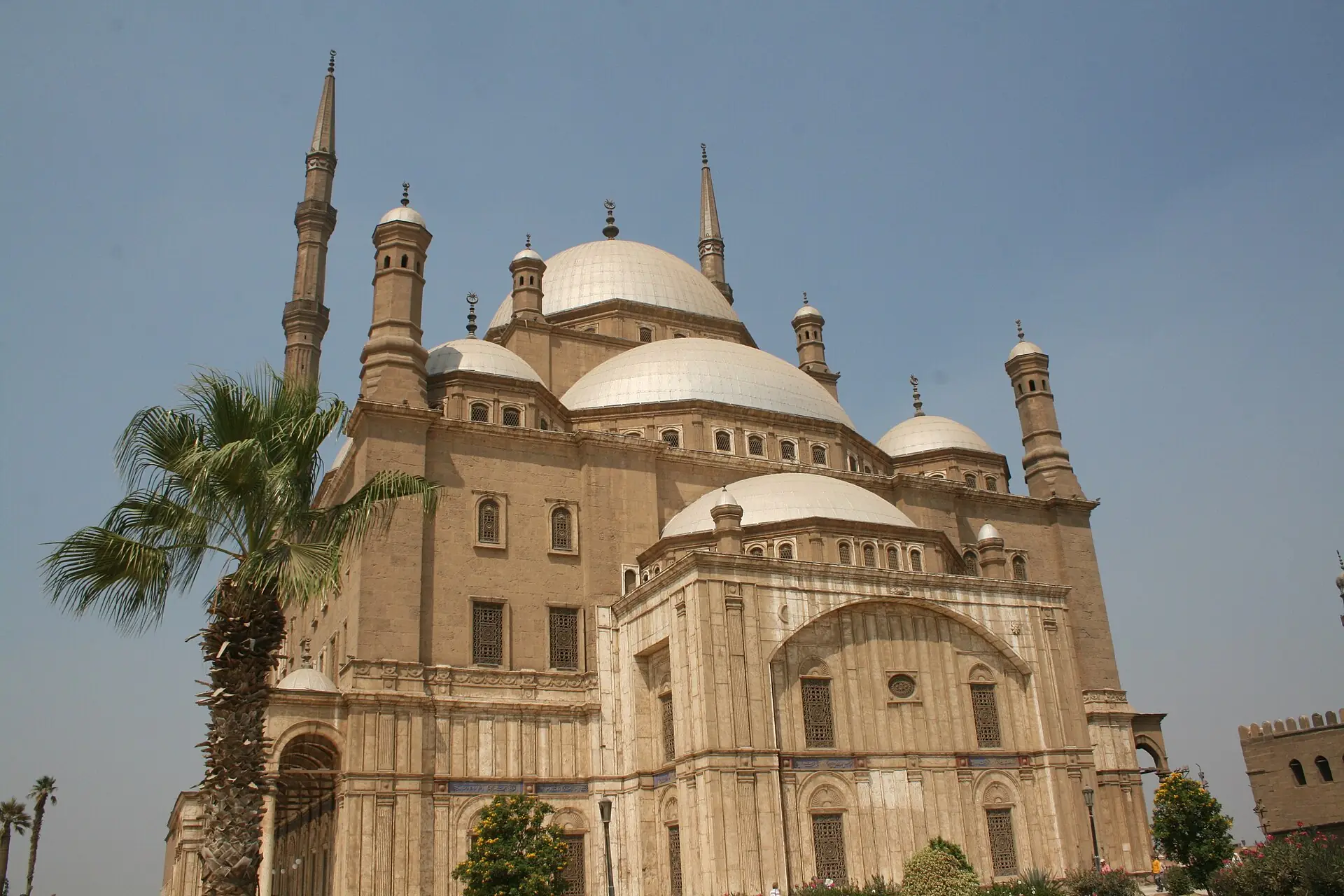
- In Cairo: The Sulayman Pasha al-Khadim Mosque (Süleyman Paşa Camii), 1528, and the Muhammad Ali Mosque, begun 1830; 199 monuments from 1517 to 1798 (TDV «Kahire»).
- In Istanbul: The Mısır Çarşısı, opened 1663–64, and the Hıdiv Kasrı, built 1907.
- Dates differ: on the Muhammad Ali Mosque, the Hüsrev Paşa sebil and the Mısır Çarşısı. Each is printed with its source.
Look at the minarets · checked 30.10.2026
Two minarets: Mamluk or Ottoman?
Tap a part of the minaret. The card shows the part’s name and meaning and, where a source describes a building’s part, one line for each era. Blue is the Mamluk era, rust the Ottoman era.
Kürsü 1/7
The base at ground level: square, round or many-sided. The door is usually here. TDV «Minare»
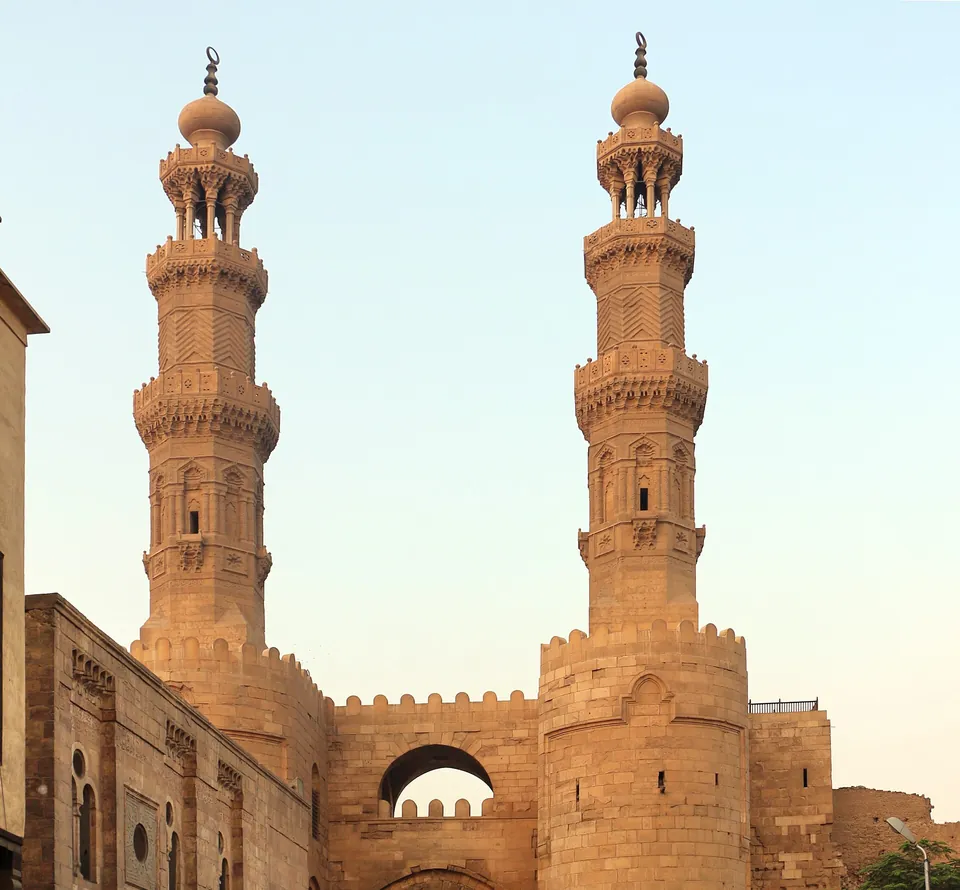
- Mamluk era: At Bab Zuwayla (Bâbüzüveyle), the two minarets of al-Mu’ayyad Shaykh’s mosque stand on the bases of the gate’s two towers; built 1415–1421. Ministry
- Ottoman era: At the Muhammad Ali Mosque, each minaret stands on a square base along the façade. TDV «Mehmed Ali Paşa Camii»
Pabuç 2/7
The part that joins the base to the shaft. TDV «Minare»
- Ottoman era: At the Muhammad Ali Mosque, the corners are softened into stepped triangles with stone mouldings. TDV «Mehmed Ali Paşa Camii»
Gövde 3/7
The shaft: the part between the pabuç and the balcony. TDV «Minare»
- Ottoman era: At the Muhammad Ali Mosque, an eight-sided, fluted shaft; each minaret is 84 m high, the highest in Egypt. TDV «Mehmed Ali Paşa Camii» Ministry
Şerefe 4/7
The balcony the muezzin walks round to call to prayer. In Ottoman practice more than one balcony or minaret goes only on the mosques of members of the dynasty (selâtin mosques). TDV «Minare»
- Ottoman era: At the Muhammad Ali Mosque, two balconies with stone railings on stacked mouldings. TDV «Mehmed Ali Paşa Camii»
Petek 5/7
The part on top of the shaft that carries the cone. TDV «Minare»
- Ottoman era: At the Muhammad Ali Mosque, an eight-sided petek. TDV «Mehmed Ali Paşa Camii»
Külâh 6/7
The cone on top. Ottoman cones are generally a wooden frame covered in lead; some later ones are of stone. TDV «Minare»
- Mamluk era: At the al-Nasir Muhammad Mosque (rebuilt 1335), the tops of the two minarets and the dome were once covered in green tiles, influenced by an eastern Islamic style. Ministry
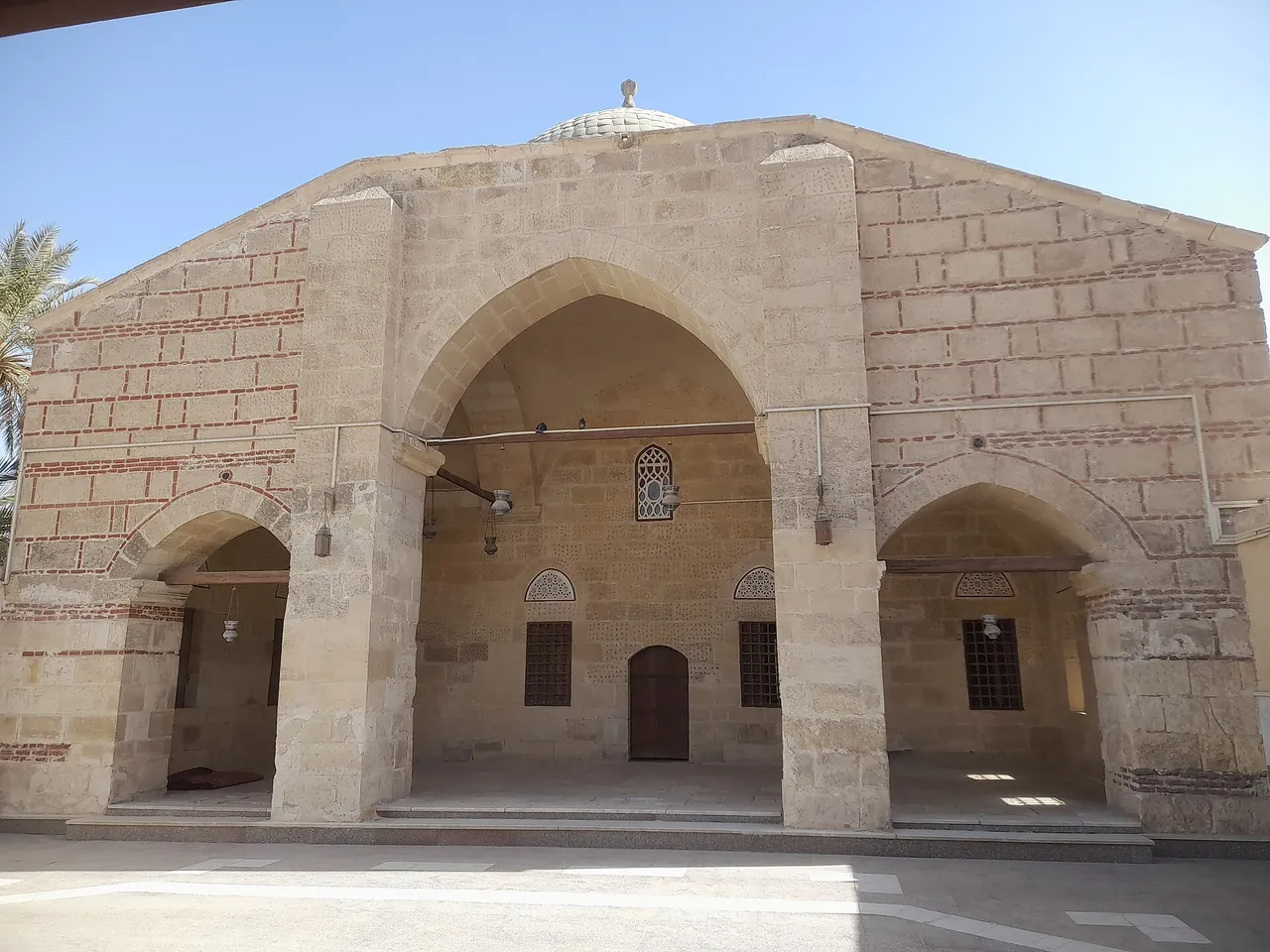
- Ottoman era: At the Sulayman Pasha al-Khadim Mosque (1528), the minaret ends in a pointed cone «in the shape of a pencil». Ministry
- Ottoman era: At the Muhammad Ali Mosque, a cone covered in lead. TDV «Mehmed Ali Paşa Camii»
Alem 7/7
The topmost piece, the finial. It is found mostly on Ottoman minarets. TDV «Minare»
Four dated buildings
- Al-Nasir Muhammad Mosque Mamluk era ordered 1318, rebuilt 1335 Hours 09:00–16:00; in the Citadel ticket, checked 30.10.2026. Ministry
- Sultan Hasan Mosque Mamluk era 1356–1362; two minarets «in the Mamluk style» Hours 09:00–17:00, checked 30.10.2026. Ministry
- Sulayman Pasha al-Khadim Mosque Ottoman era 1528 Hours 08:00–16:00, checked 30.10.2026. Ministry
- Muhammad Ali Mosque Ottoman era begun 1830, built 1848 Hours 08:00–16:00; in the Citadel ticket, checked 30.10.2026. Ministry
How it began in 1516–17
Ottoman rule in Egypt began in 1517 (923 AH), after a campaign of Selim I against the Mamluk sultan Tomanbay (Tuman Bay). The Mamluks, Memlük in Turkish, were the soldier-rulers who held Egypt before 1517.
- 24 August 1516. The armies of Selim I and of the Mamluks meet at Mercidâbık (TDV «Selîm I»).
- Late December 1516 to 2 January 1517. Selim I is in Jerusalem, then in Gaza, where the whole army gathers before the desert crossing (TDV «Selîm I», TDV «Tomanbay»).
- 22 January 1517. The Ottomans reach Ridâniye, outside Cairo, where Tomanbay had chosen to fight. Deep trenches had been dug and cannon brought from Alexandria and the Citadel. Selim split his army, one part going round the Mukattam hills. Light cannon and infantry rifles decided the battle (TDV «Tomanbay»).
- 24 January 1517. Ottoman troops are in Cairo (TDV «Selîm I»).
- 27–28 January 1517. Street fighting. On the night of 28 January Tomanbay returns with about 10,000 men (7,000 on another count) and holds part of the city for three days (TDV «Tomanbay»).
- 15 February 1517. Selim I takes his seat on the throne at Kasr-ı Yûsuf, the Yûsuf Palace (TDV «Selîm I»).
- 30 March 1517. Tomanbay is captured (TDV «Tomanbay»).
- 13 April 1517. Tomanbay is executed in public at Bab Zuwayla: hanged, in the words of TDV «Tomanbay» and the ministry. The body hung for three days.
- 29 August 1517. Hayır Bey, from the Mamluk ranks, is appointed the first beylerbeyi, the governor-general (TDV «Selîm I», TDV «Mısır»).
- 10 September 1517. Selim I leaves Cairo (TDV «Selîm I»).
A story in doubt
The caliphate ceremony
TDV «Selîm I»: the claim that Selim took over the caliphate himself and left it to his heirs is doubtful. The report that a ceremony in Hagia Sophia handed it to him has no historical value.
How the province was run and by whom
Egypt became a province, an eyalet, of the empire; TDV «Mısır» names it a beylerbeylik, the area of a beylerbeyi, «bey of beys», in plain words a governor-general. Selim I left the Mamluk emirs, the commanders, in their posts at first. The first beylerbeyi, Hayır Bey, was given about 3,000 guards.
Which period?
Tap a period.
Law and registers
- Law
- The Mısır Kanunnâmesi, a law code for Egypt, was drawn up under Grand Vizier Makbul İbrâhim Paşa. The settled phase runs 1525–1560.
- First posts
- In 1517 Zeyrekzâde Rükneddin Efendi became the kadı (judge) of Egypt and Dizdar Mehmed Çelebi the defterdar (treasurer).
- Land
- Hadım Süleyman Paşa (Sulayman Pasha al-Khadim) had the villages counted again. State land (mîrî) and charity land (evkaf) went into separate registers.
Unrest, then factions
- Phases
- Unrest from 1561 to 1583, repair from 1584 to 1611.
- Factions
- In the 17th and 18th centuries the beys (Mamluk lords) formed two factions. The Kazdağlı faction under İbrâhim Kethüdâ even tried to found the old Mamluk state again. In 1760 it had Bulutkapan Ali Bey made şeyhülbeled («head of the town»).
- 1786
- On 9 June the Porte, the sultan’s government in Istanbul, sent Cezayirli Gazi Hasan Paşa by sea to remove the Mamluk «strongmen».
A governor’s family
- 1805
- Kavalalı Mehmed Ali Paşa is made governor. A fermân (written order) of 24 May 1841 makes the rule of Egypt hereditary in his line.
- 1866
- The title hidiv and succession from father to son.
- 1882 and 1914
- British troops enter Egypt in 1882; on 18 December 1914 Britain ends the Ottoman rights of sovereignty and takes Egypt under its protection.
Beylerbeyi
«Bey of beys», the head of the province. TDV also uses vali, governor. The first was Hayır Bey, who died in 1522; Çoban Mustafa Paşa, in 1522, was the first sent from Istanbul.
Divan
The governor’s council, the eyalet divanı.
Defterdar
The head of the finances. Dizdar Mehmed Çelebi held the post in 1517.
Kadı
The judge of Egypt. In rank the post came after those of Istanbul, Edirne and Bursa.
Kâşif
He ran one of the 12 districts, called vilâyet or keşûfiyye.
Şeyhülarap
A shaykh placed over the tribes, next to the kâşifs. The word means «shaykh of the Arabs».
Sancak
Seven are named: Alexandria (İskenderiye), Damietta (Dimyat), Rashid (Reşîd), Suez (Süveyş), Jeddah (Cidde), Asyût and İbrim. Suez became a captaincy in 1560.
Cemaat
Six corps: gönüllü, tüfekçi, Çerâkise, müstahfızân (the janissaries), azeb and çavuş. By the late 16th century there were over 9,300 soldiers.
What Egypt sent and what it grew
Part of the province’s income paid for its own pay, bridges and repairs. What was left at the end of the year went to Istanbul as the irsâliye, the yearly surplus (TDV «Mısır»).
The irsâliye, in gold
About 500,000, later about 700,000.
About 500,000 gold a year until the late 16th century and about 700,000 until the second quarter of the 17th. In 1587–90 Üveys Paşa sent 600,000 gold a year (TDV «Mısır»).
- Grown
- Rice, wheat, sugar cane, lentils and chickpeas.
- Sent on
- Coffee, spices and gunpowder went to Istanbul.
One scholar’s view
The system of 1517
André Raymond, in TDV «Kahire»: the political order set up in Egypt from 1517 was not, as long described, a system of injustice and oppression. The Ottoman state took a very small part of the country’s income, and governors and the ruling class spent the taxes they took on the spot.
Ottoman-era Cairo building by building
The register of classified monuments in Cairo has 199 for 1517–1798, a little fewer than the 233 of the same length of time in the Mamluk period. The number actually built was much higher (TDV «Kahire»). Of the 233 public buildings, 77 are mosques, 38 are tekkes (dervish lodges) or madrasas (schools) and 118 are fountains.
- Built-up area
- 450 ha in 1517; 660 ha in 1798.
- People
- At most 150,000–200,000 in 1517, estimated from the area (André Raymond); 263,000 in 1798 (the authors of the Description de l’Égypte). Another section of TDV «Kahire» puts the figure just before Ottoman rule at 385,000.
- Inns and bazaars
- Cairo had 58 caravanserais and 87 bazaars in Mamluk times, and 348 and 144 in Ottoman times.
- Sebils
- About 300 in 1798, most of them Ottoman. The peak years were 1730–1770.
Sulayman Pasha al-Khadim Mosque
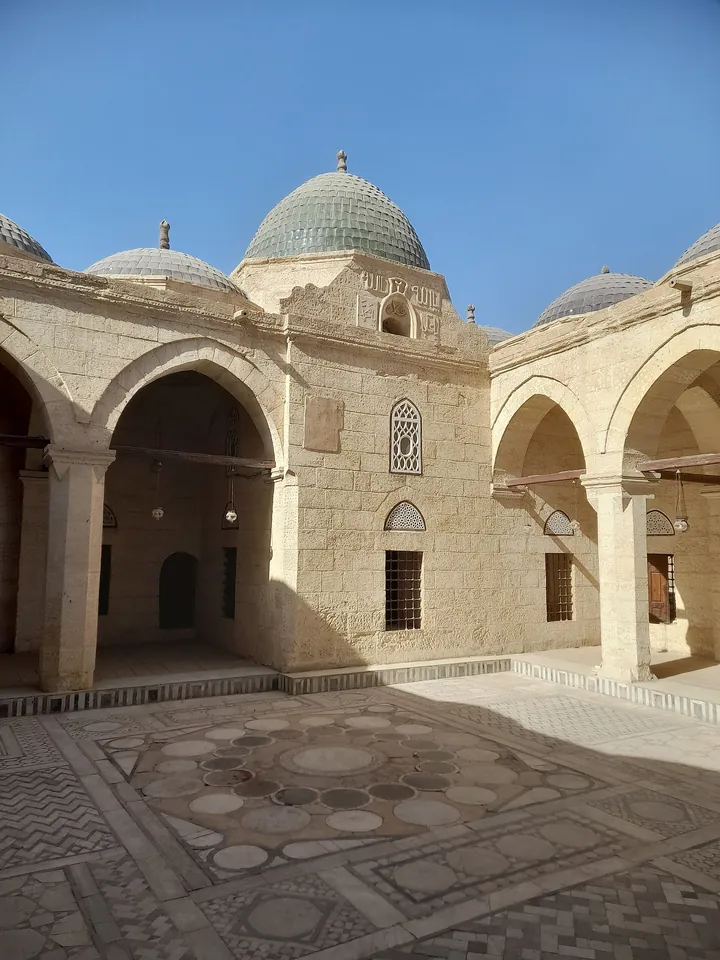
Built on the ruins of a Fatimid mosque under the governor Hadım Süleyman Paşa in the reign of Süleyman the Magnificent: the first Ottoman-style mosque in Egypt, with a walled court and a stair up from two sides (Ministry). A plan in the Ottoman manner with Mamluk decoration (TDV «Kahire»).
Mint, Jawhara Palace, Harem
Mehmed Ali’s mint (1812), the Jawhara Palace (Cevhere Sarayı, 1814) and the Harem (1827) stand in the Citadel (TDV «Kahire»).
Muhammad Ali Mosque
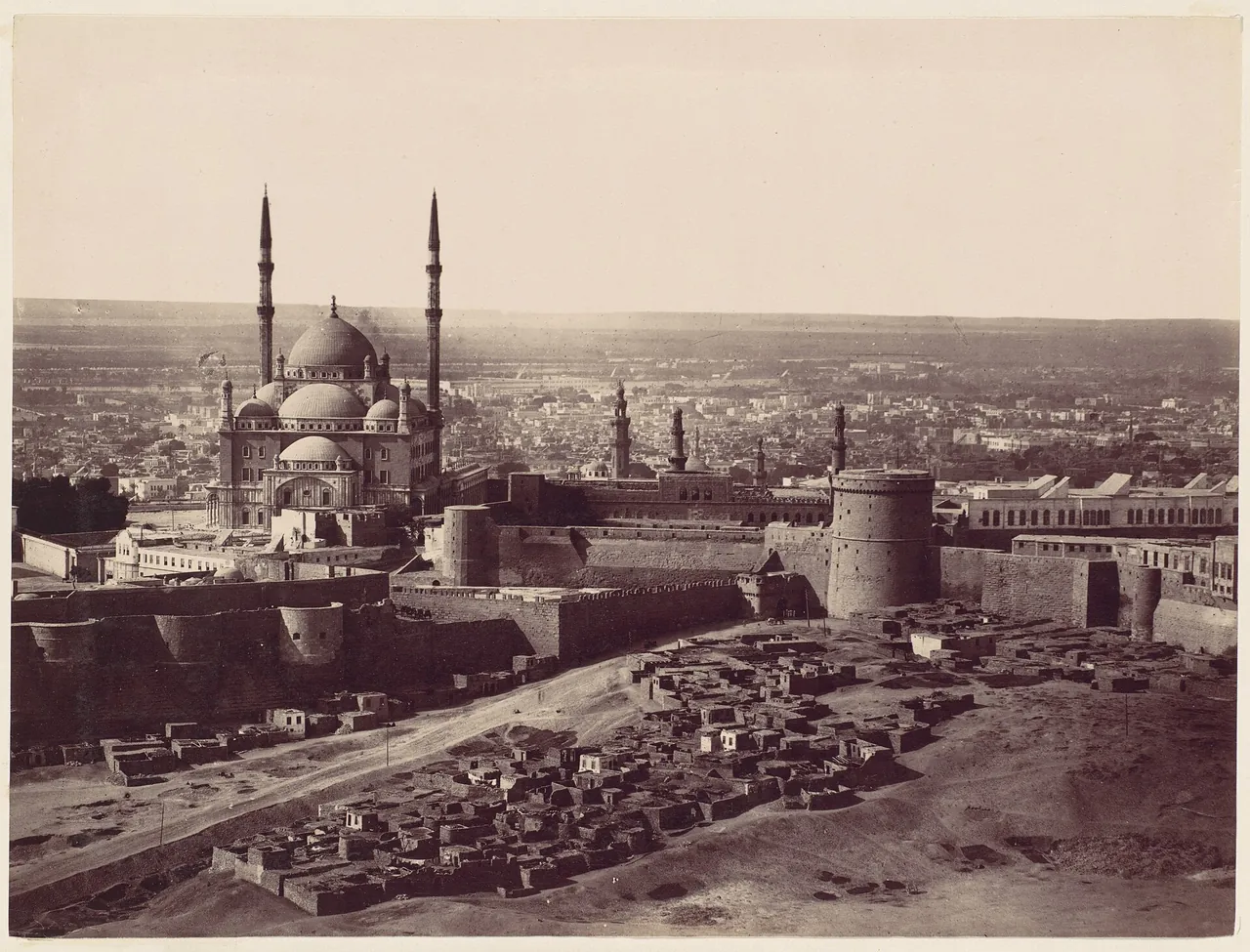
Built in the plan of the Ottoman sultans’ mosques (TDV «Mehmed Ali Paşa Camii»), by a team under the architect Yûsuf Boşnak, brought from Istanbul. Mehmed Ali is buried inside (Ministry).
- 1830 (1246 AH)
- Begun: the date of the verse inscription over the north-west gate (TDV; ministry tour).
- 1848 (1265 AH)
- Built (ministry). TDV: the rough construction was finished by 1849; Abbas Hilmi I (Abbas Pasha) added marble and the dome paintwork.
- 1863 and 1879
- Copper doors under İsmâil Paşa (Ismail Pasha); marble for the courtyard and lead for the dome under Tevfik Paşa (TDV).
- Clock tower
- A gift of Louis Philippe: 1845 (ministry) or 1848 (TDV).
- The two minarets
- 84 m high, the highest in Egypt (ministry, TDV). The prayer hall is square, 41 m a side, under a dome 21 m across and 52 m high.
Outside the Citadel, the old streets keep houses and fountains of the same centuries. A sebil is a public drinking-water fountain in a small building on a street, from the Arabic «way», as in «in God’s way» (TDV «Sebil»). A sebilküttâb adds a küttâb, a children’s Qur’an school, on the upper floor. It was the commonest Ottoman charity in Cairo (TDV «Kahire»).
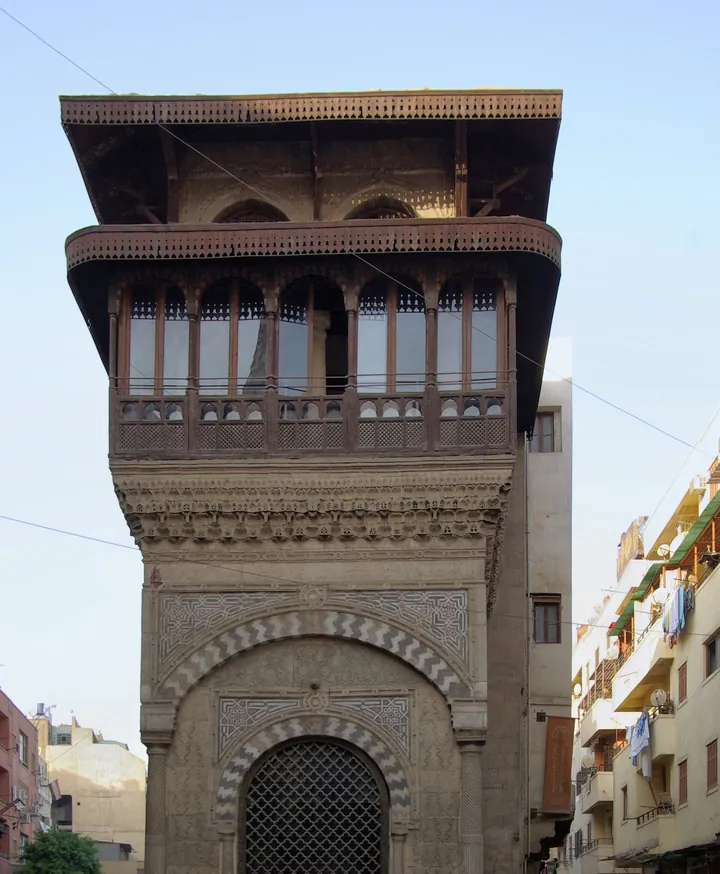
Al-Muizz Street · 1744 (1157 AH)
Sabil-Kuttab of Abd al-Rahman Katkhuda (Abdurrahman Kethüdâ Sebili)
Built by Prince Abd al-Rahman Katkhuda al-Qazdagli, an Ottoman military man, at the crossing of al-Muizz and Tambakshiya streets. The ground-floor sebil room has three façades with copper windows and marble basins. Inside are faience tiles with flowers and a picture of the Great Mosque of Mecca. On the upper floor is the küttâb, where orphans learned the Qur’an (Ministry).
Bayt al-Suhaymi
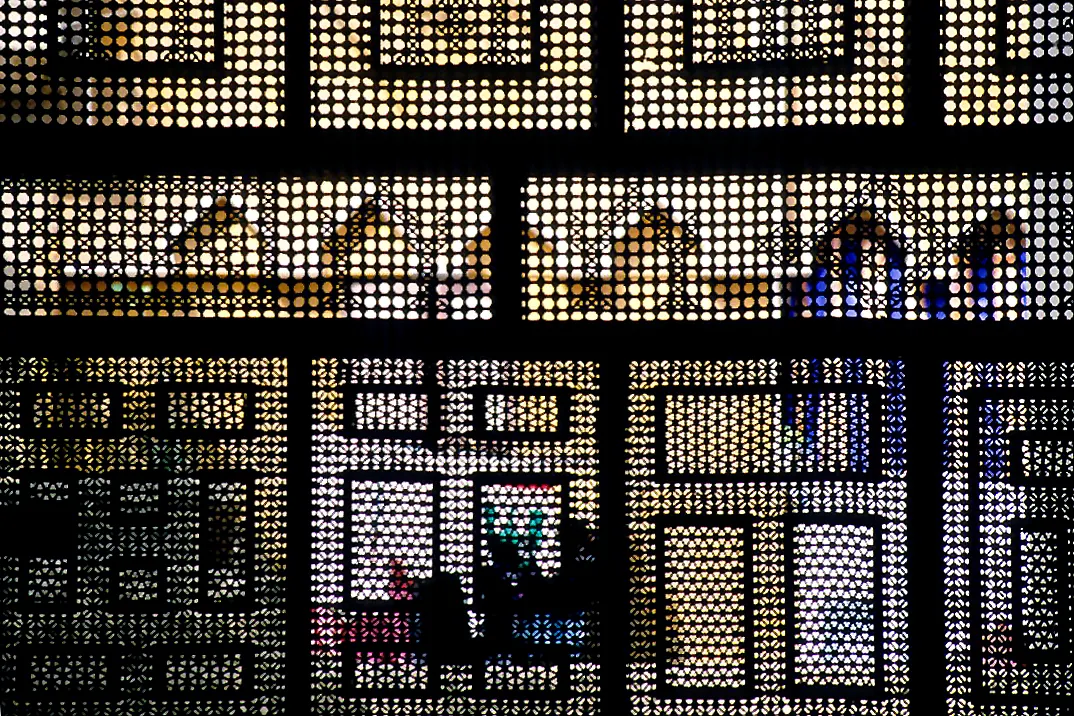
A house in al-Darb al-Asfar lane. Shaykh Abd al-Wahhab al-Tablawi built the first part in 1058 AH (1648); Haji Ismail Chelebi built the second in 1211 AH (1796) and joined the two. It is named for the last resident, Shaykh Muhammad Amin al-Suhaymi, a senior scholar of al-Azhar. There are mashrabiya screens (carved wooden window screens), a maq‘ad (open seating hall) and a courtyard (Ministry).
Hüsrev Paşa Sebili
The date is 1535 (941 AH) in TDV «Sebil» and one section of TDV «Kahire», and 1536 (943 AH) in TDV «Mısır» and another section of TDV «Kahire». Both are printed because the pages differ.
Inns and baths
Hans, merchants’ inns: Süleyman Paşa 1541, Hasan Paşa 1583, Abbas Ağa 1649. Hamams, bath houses: Bâbülvezîr 1691–92, Karameydan 1700–01, Kahye 1736–37 (TDV «Mısır»).
Visiting
Hours and tickets from the Ministry of Tourism and Antiquities, checked 30.10.2026. Prices change; the ministry’s page decides.
- Cairo Citadel
- 08:00–17:00 every day. Area entry, adult / student: foreigners EGP 550 / 275; Egyptians EGP 60 / 30.
- Muhammad Ali Mosque
- 08:00–16:00; in the Citadel ticket.
- Sulayman Pasha al-Khadim Mosque
- 08:00–16:00.
- Bayt al-Suhaymi
- 09:00–17:00, Friday to 16:00. Foreigners EGP 220 / 110; Egyptians EGP 10 / 5.
- Sabil-Kuttab of Abd al-Rahman Katkhuda
- 09:00–16:00. Area entry: foreigners EGP 220 / 110; Egyptians EGP 20 / 10.
- Bab Zuwayla
- 09:00–17:00. Foreigners EGP 100 / 50; Egyptians EGP 10 / 5.
The source is the Ministry of Tourism and Antiquities, egymonuments.gov.eg.
The French landing and a new governor, 1798–1805
A French army landed in Egypt in 1798 and left in 1801. In those years Kavalalı Mehmed Ali Paşa came to Egypt, and in 1805 he became its governor.
Egypt
A French army under Bonaparte lands (TDV «Mısır»).
Akka
Bonaparte is beaten at Akka by Cezzâr Ahmed Paşa (TDV «Mısır»).
Egypt
Bonaparte leaves Egypt.
Egypt
Mehmed Ali reaches Egypt (TDV «Kavalalı Mehmed Ali Paşa»).
Egypt
The French leave, unable to hold against the attacks of an Ottoman–British alliance (TDV «Mısır»).
Egypt
Mehmed Ali is made governor (TDV).
Paris
The Description de l’Égypte, a French work on Egypt in 23 volumes, appears (TDV «Mısır»).
Kavalalı Mehmed Ali Paşa 1805–1849
Kavalalı means «of Kavala», the town where he was born, in 1769 or 1770. TDV states that nothing certain is known of his family’s origin. He is the founder of the line named after him (TDV «Kavalalı Mehmed Ali Paşa»).
Egypt
Students are first sent to Europe in 1809. Schools open for engineering (1816), medicine (1827) and engineers, the mühendishâne (1834), and the first printing press opens at Bulak in 1820 (TDV).
Cairo
At a great reception for the departure of his son Tosun, named commander of an army, Mehmed Ali had the Mamluk beys, all but a few, killed (TDV).
Navarin
The allied fleet enters Navarin harbour and destroys the Ottoman–Egyptian fleet (TDV).
Syria
An army under his son İbrâhim Paşa is sent to Syria (TDV).
Konya
İbrâhim Paşa beats the Ottoman army under Grand Vizier Reşid Mehmed Paşa (TDV).
Nizip
The Ottoman army under Hâfız Paşa is beaten by the Egyptian forces (TDV).
London
The Porte, Britain, Russia, Austria and Prussia sign the London treaty: rule of Egypt in Mehmed Ali’s line and of Akka for his life (TDV).
Egypt
Mehmed Ali is removed from the governorship (TDV).
Istanbul
A fermân grants the rule of Egypt to the eldest male child of his line, and he accepts it (TDV).
Alexandria
Mehmed Ali dies and is buried in the new mosque in the Citadel (TDV).
Taxes and monopolies
What TDV states of his rule
Cultivated land doubled and the cotton crop was improved. Heavy taxes and a monopoly system, a state purchase of the crop at low prices, made the people poorer and the administration richer, and also weighed on the small crafts. In Syria new taxes, monopolies and conscription brought revolts, put down in 1834 (TDV «Kavalalı Mehmed Ali Paşa»).
The same decades elsewhere in the empire are in Ottoman Palestine, Ottoman Bulgaria and Sultan Mahmud II.
Khedives, the canal and the debt 1854–1914
Two titles name the governors of this line. Vali is the plain word, governor. Hidiv («khedive») was given in 1866 and comes from the language of the Porte, where it was used for some viziers (TDV «İsmâil Paşa, Hidiv»).
Egypt
Said Paşa becomes governor (TDV «Mısır»).
Egypt
The Suez Canal concession goes to de Lesseps. The Porte had not approved it. TDV adds that thousands of the forced labourers died.
Egypt
İsmâil Paşa becomes governor.
Istanbul
A fermân changes the succession: from father to son instead of the oldest of the family. The yearly tax to the Porte rises from 80,000 to 150,000 keses (purses) and the army from 18,000 to 30,000 men (TDV).
Istanbul
A second fermân grants the title hidiv. İsmâil had asked for «azîz-i Mısr», which was refused (TDV).
Istanbul
A fermân widens the privileges of Egypt: its internal administration, and customs and post agreements with foreign states that are not political (TDV).
Suez
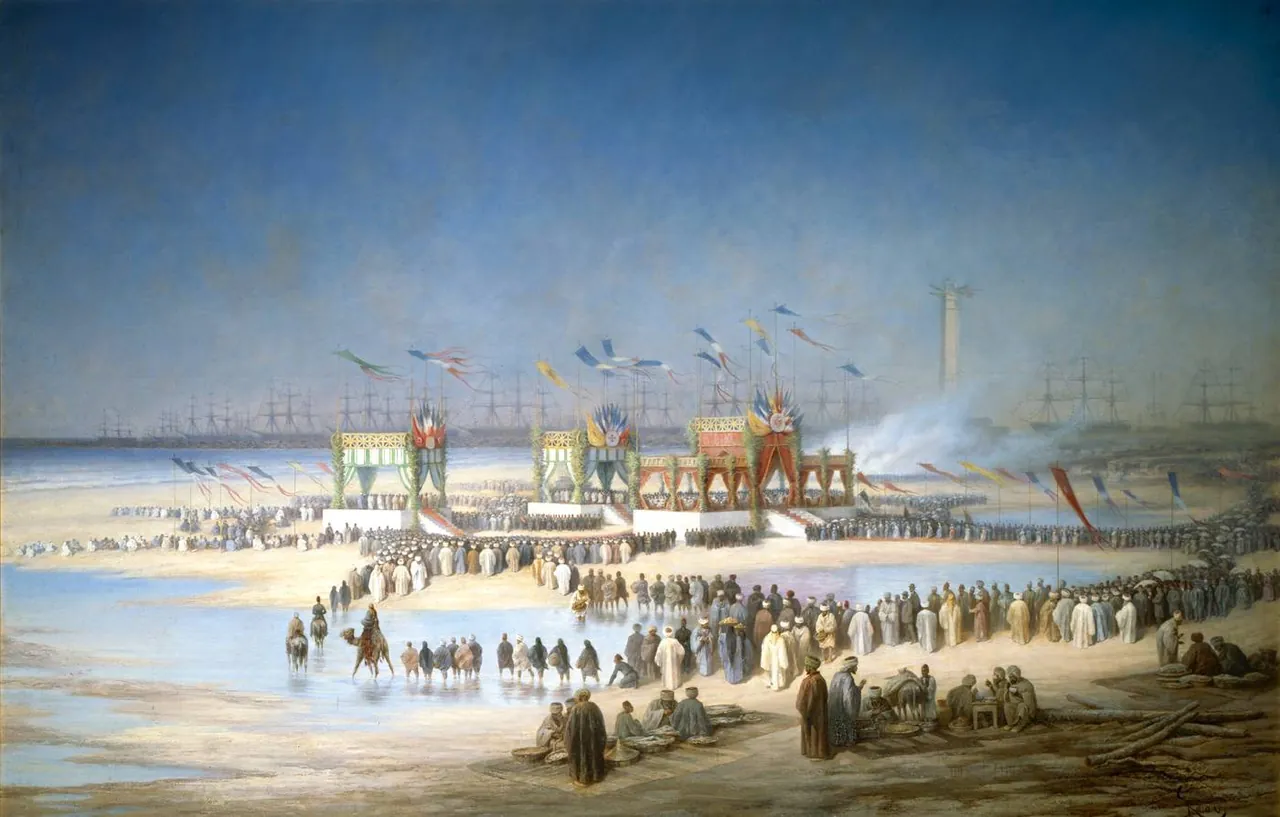
The Suez Canal opens (TDV «Mısır»).
Egypt
The debt of İsmâil stands at 68,496,460 pounds sterling, besides 18,243,076 of irregular debt (TDV).
Egypt
A Düyûn-ı Umûmiyye Sandığı, a fund for the public debt with representatives of the creditor states, is set up. İsmâil had sold 176,602 canal shares to Britain for 4 million pounds sterling (TDV).
Istanbul
Abdülhamid II removes İsmâil and appoints his son Tevfik Paşa (TDV).
Cairo
The Urâbî rising (June), the shelling of Alexandria by Britain (July) and fighting at Tellülkebîr near Cairo (13 September). TDV’s heading for what follows is «İngiliz İşgal Dönemi», the British occupation period. Britain stated that it would leave once order was kept and that the Ottoman rights of sovereignty stayed (TDV «Mısır»).
Cairo
Lord Cromer arrives as consul general and British commissioner (TDV).
Egypt
Tevfik Paşa dies; his son Abbas Hilmi II becomes hidiv (TDV).
Egypt
Britain ends the Ottoman rights of sovereignty by itself and takes Egypt under its protection. On 19 December it removes Abbas Hilmi II and names Hüseyin Kâmil «sultan of Egypt» (TDV).
The empire’s own money matters of the same years are in Ottoman Economy Under Abdülhamid II and the reign of Sultan Abdülaziz.
Coffee from Yemen through Cairo
Coffee was known in Yemen early in the 15th century. It reached Mecca and then Cairo early in the 16th and Istanbul around the middle of that century (TDV «Kahve»).
Yemen to Egypt to Istanbul
Each year 30,000–40,000 ferde (loads; about 5,000 tons) of coffee came from Yemen to Egypt, and half went on to Istanbul and other Ottoman cities. The route ran from Jeddah to Suez and on to Alexandria, Damietta and Rashid, where ships took it (TDV «Kahve»).
62 vikâles, 500 big merchants
The Yemen coffee trade became the main line of Cairo’s trade. Its base was 62 vikâles, merchants’ inns, and 500 big coffee merchants (TDV «Kahire»).
Early 1500s
The first coffeehouse-type places appear early in the 16th century in Mecca, Cairo and Damascus (TDV «Kahvehane»). Orders to close them are dated 1559 (Humus), 1565 (Aleppo, Damascus and Jerusalem), 1567 (Egypt) and 1568 (Istanbul and Galata) (TDV «Kahve»).
The story of the drink itself is in the history of Turkish coffee.
Where Ottoman Egypt shows in Istanbul
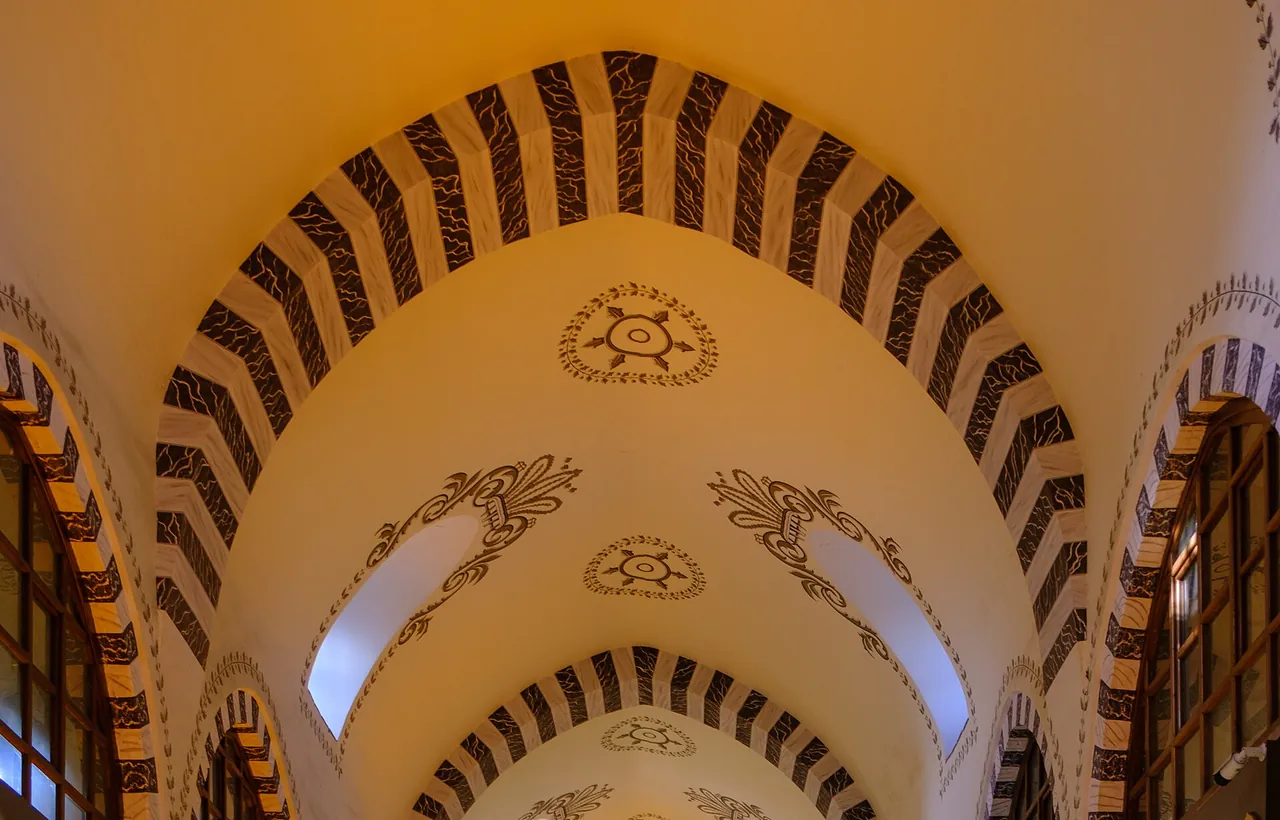
Mısır Çarşısı («Egypt Bazaar»)
- What
- The arasta of the Yeni Cami, the New Mosque: a row of shops whose rent pays for a mosque.
- When
- Begun in 1660 on the order of Turhan Sultan, completed in 1664 (Culture Portal). Opened in a ceremony in 1663–64 (Istanbul Governorate).
- The name
- Chroniclers of the 17th century wrote Yeni Çarşı and Valide Çarşısı. Mısır Çarşısı dates from the mid-18th century, for the goods that came from Egypt.
- Today
- Six gates and 113 shops in 2019. A fire in 1940. A restoration in 2013–2018 (Istanbul Governorate) or 2015–18 (Culture Portal).
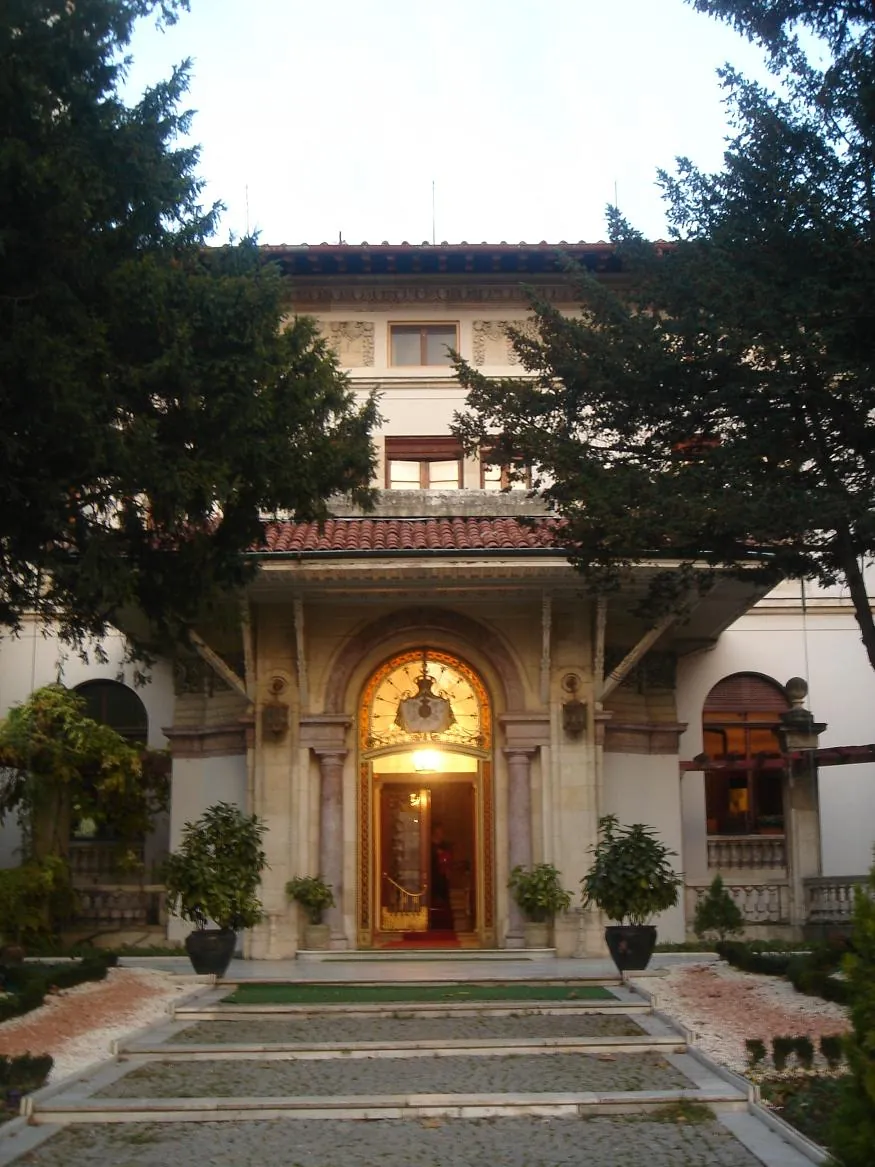
Hıdiv Kasrı («Khedive’s Palace»)
- What
- A villa on the Çubuklu ridge in Beykoz, built in 1907 for Abbas Hilmi II, the hidiv of Egypt (Culture Portal, Beykoz District Governorate).
- Style
- The architect was Delfo Seminati; the style is Art Nouveau. The tower holds one of the first steam lifts in Istanbul.
- Land
- Two wooden houses were bought in 1903, with a garden of 270 dönüm (a land measure). The family stayed until 1937, when the property was sold to Istanbul Municipality.
More bazaars of the city are in Istanbul Markets and Bazaars.
Turkish words and lines to say them
- Mısır Eyaleti
- The province of Egypt.
- beylerbeyi
- Governor-general, «bey of beys».
- vali
- Governor.
- divan
- Council.
- Memlük
- Mamluk: the soldier-rulers who held Egypt before 1517.
- bey
- A title for a lord or commander.
- Kavalalı
- «Of Kavala».
- hidiv
- Khedive, the title of Egypt’s governors from 1866.
- sebil
- A public drinking-water fountain.
- küttâb
- A children’s Qur’an school.
- kethüda
- A title for a deputy or steward.
- kahvehane
- Coffeehouse.
- minare
- Minaret.
- şerefe
- The balcony of a minaret.
- külâh
- The cone of a minaret.
- Mısır Çarşısı
- «Egypt Bazaar», in Istanbul.
- Hıdiv Kasrı
- «Khedive’s Palace», in Istanbul.
Press Copy to put a Turkish line on the clipboard.
- Mısır Çarşısı nerede?Where is the Mısır Çarşısı?
- Bu çarşı ne zaman yapıldı?When was this bazaar built?
- Bu cami ne zaman yapıldı?When was this mosque built?
- Minare kaç metre yüksekliğinde?How tall is the minaret?
- Bu bir sebil mi?Is this a sebil?
- Hıdiv Kasrı hangi gün açık?On which days is the Hıdiv Kasrı open?
Quick answers
When did Ottoman rule in Egypt begin?
In 1517 (923 AH). Ottoman troops were in Cairo on 24 January, and Tomanbay was executed on 13 April (TDV «Selîm I»).
How long did it last?
397 years by the dates, 1517 to 18 December 1914 (TDV «Mısır»). TDV «Kahire» adds that in practice it lost its effect early in the 19th century.
Who ran Egypt?
A governor-general sent from Istanbul, the beylerbeyi, with a council, a treasurer, a judge and six garrison corps. From 1805 Kavalalı Mehmed Ali Paşa and his line governed, as hidivs from 1866.
What is a beylerbeyi?
«Bey of beys»: the head of a province, in plain words a governor-general.
What is a sebil?
A public drinking-water fountain in a small building on a street. In a sebilküttâb a children’s Qur’an school is on the upper floor.
What happened on 1 March 1811?
Mehmed Ali had the Mamluk beys, all but a few, killed at a great reception for his son Tosun (TDV «Kavalalı Mehmed Ali Paşa»).
How did Ottoman rule end?
On 18 December 1914 Britain ended the Ottoman rights of sovereignty by itself and took Egypt under its protection (TDV «Mısır»).
What can I see of it?
In Cairo: the Sulayman Pasha al-Khadim Mosque (1528), the Muhammad Ali Mosque, Bayt al-Suhaymi and the Sabil-Kuttab of Abd al-Rahman Katkhuda. In Istanbul: the Mısır Çarşısı and the Hıdiv Kasrı.
Sources and where next
- Mısır — TDV İslâm Ansiklopedisi, vol. 29, 2004; §5 Seyyid Muhammed es-Seyyid, §6 Hilal Görgün, checked 30.10.2026
- Kahire — TDV İslâm Ansiklopedisi, vol. 24, 2001; André Raymond, J. M. Rogers, checked 30.10.2026
- Kavalalı Mehmed Ali Paşa — TDV İslâm Ansiklopedisi, vol. 25, 2022; Muhammed Hanefi Kutluoğlu, checked 30.10.2026
- Selîm I — TDV İslâm Ansiklopedisi, vol. 36, 2009, checked 26.10.2026
- Tomanbay — TDV İslâm Ansiklopedisi; Cüneyt Kanat, print 2012, checked 30.10.2026
- İsmâil Paşa, Hidiv — TDV İslâm Ansiklopedisi; Atilla Çetin, print 2001, checked 30.10.2026
- Mehmed Ali Paşa Camii — TDV İslâm Ansiklopedisi; Ahmet Ali Bayhan, print 2003, checked 30.10.2026
- Sebil — TDV İslâm Ansiklopedisi, vol. 36, 2009; Nur Urfalıoğlu, checked 30.10.2026
- Kahve — TDV İslâm Ansiklopedisi, vol. 24, 2001; İdris Bostan, checked 30.10.2026
- Kahvehane — TDV İslâm Ansiklopedisi, vol. EK-2, 2019, checked 28.10.2026
- Minare — TDV İslâm Ansiklopedisi, vol. 30, 2020; Filiz Gündüz, checked 30.10.2026
- Mosque of Sulayman Pasha al-Khadim — Ministry of Tourism and Antiquities, egymonuments.gov.eg, checked 30.10.2026
- Muhammad Ali Mosque — Ministry of Tourism and Antiquities, checked 30.10.2026
- A Virtual Tour through the Muhammad Ali Mosque — Ministry of Tourism and Antiquities, checked 30.10.2026
- Cairo Citadel — Ministry of Tourism and Antiquities, checked 30.10.2026
- Sultan al-Nasir Muhammad Mosque — Ministry of Tourism and Antiquities, checked 30.10.2026
- Mosque and Madrasa of Sultan Hasan — Ministry of Tourism and Antiquities, checked 30.10.2026
- Bab Zuwayla — Ministry of Tourism and Antiquities, checked 30.10.2026
- Bayt al-Suhaymi — Ministry of Tourism and Antiquities, checked 30.10.2026
- Sabil-Kuttab of Abd al-Rahman Katkhuda — Ministry of Tourism and Antiquities, checked 30.10.2026
- Mısır Çarşısı — Ministry of Culture and Tourism, Culture Portal, checked 30.10.2026
- Hıdiv Kasrı — Ministry of Culture and Tourism, Culture Portal, checked 30.10.2026
- Baharat ticaretinin kalbi 400 yıldır Mısır Çarşısı’nda atıyor — Istanbul Governorate (19.07.2019 edition), checked 30.10.2026
- Hıdiv Kasrı — Beykoz District Governorate, checked 30.10.2026
Hours and prices were read on 30.10.2026 and can change; the ministry’s page for each site is the first place to look before a visit.