Ottoman Bulgaria: Key Dates and the Buildings That Remain
Bulgaria left the Ottoman state in three steps: 1878, 1885 and 1908. The dates, and six Ottoman buildings that still stand.
Table of Contents
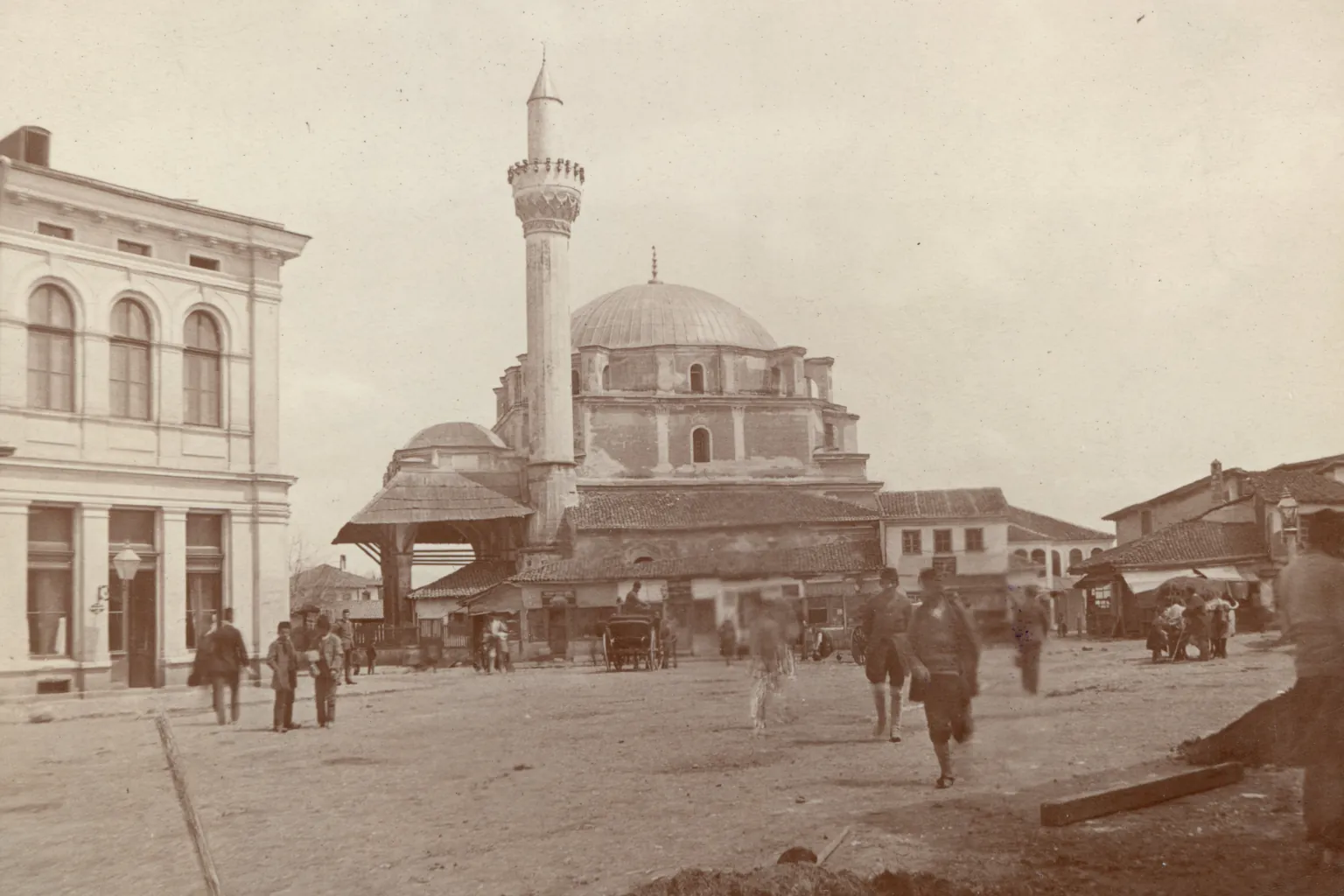
Bulgaria left the Ottoman state in three steps: a principality under the sultan in 1878, union with Eastern Rumelia in 1885, and independence, declared in 1908 and recognised by the Ottoman state in 1909. Bulgaria then used the Old Style calendar, so one day can carry two dates; the calendar leaves line them up. Six Ottoman buildings from the 1420s to the early 1800s still stand, from the Rhodopes to the Danube.
In short · checked 24 October 2026
Bulgaria left the Ottoman state in three steps: 1878, 1885 and 1908.
- 1878: the Treaty of Berlin sets up the Principality of Bulgaria, tied to the Ottoman sultan.
- 1885: the principality and Eastern Rumelia unite.
- 1908: independence is declared on 5 October (22 September Old Style). The Ottoman state recognises it on 19 April 1909.
- Two dates, one day: Bulgaria used the Old Style calendar until 1916, and the leaves show each day in three calendars.
- The buildings: six Ottoman buildings, each with its Bulgarian and Turkish name and a question to ask on the spot.
Checked 24 October 2026
Three steps out of the Ottoman state
Press a year, then a boundary stone.
The Treaty of Berlin, signed on 13 July 1878, sets up the Principality of Bulgaria, tied to the Ottoman sultan, and the province of Eastern Rumelia.
- The state
- A principality between the Danube and the Balkan Mountains: “an Autonomous and tributary Principality under the suzerainty of His Imperial Majesty the Sultan”. Suzerainty means overlordship. It had a Christian government and its own militia. The capital was Sofia.
- The prince
- The population elects the prince freely. The Porte, the Ottoman government, confirms him with the assent of the Great Powers. He cannot come from a ruling family of the Great Powers.
Treaty of Berlin, Art. I, III; Belleten 2021
- Tribute
- Left open. The Powers fix it at the end of the first year of the new order, from the average income of the territory.
- Army
- The Ottoman army no longer stays in Bulgaria, and the old fortresses are pulled down.
Treaty of Berlin, Art. IX, XI
- The province
- South of the Balkan Mountains the treaty makes a second part, Eastern Rumelia. It stays “under the direct political and military authority” of the Sultan. It has administrative autonomy and a Christian governor-general, named by the Porte with the assent of the Powers, for five years.
Treaty of Berlin, Art. XIII, XVII
- 3 March 1878
- The war of 1877–78 ended twice. The first peace, signed at San Stefano, would have set up a Bulgaria of 172,000 km². Bulgaria still keeps that day as its national holiday.
- 13 July 1878
- The Congress of Berlin cut the Bulgarian lands in three: the principality, Eastern Rumelia and Macedonia. Southern Thrace and all of Macedonia stayed Ottoman.
Bulgarians Abroad agency; Belleten 2021
- Property
- Muslim owners who lived outside the principality kept their property in it.
- Waqfs
- A Turkish-Bulgarian commission was to settle within two years the questions about state property and religious foundations, the vakoufs (waqfs).
- The commissioner
- The Ottoman state kept a commissioner in Sofia. The first, Pertev Efendi, was appointed in September 1878.
Treaty of Berlin, Art. XII; Belleten 2021
On 18 September 1885 (6 September Old Style) the principality and Eastern Rumelia unite.
- 14 September
- The union began as a rising in Panagyurishte (2 September Old Style).
- 17–18 September
- It was finished in Plovdiv, with the help of the army, in the night of 17 to 18 September (5 to 6 September Old Style).
- 18 September
- The Bulgarian flag went up for the first time over the Plovdiv konak, the government building, to announce that the principality and Eastern Rumelia were one.
Bulgarians Abroad agency; Presidency of Bulgaria
- Great Powers
- They warned the Ottoman state not to enter Eastern Rumelia.
- Greece, Serbia, Romania
- They failed to form an alliance against Bulgaria.
- Russia
- It declared itself against the union.
- Britain
- It defended the union.
Bulgarians Abroad agency
- The answer
- Sultan Abdulhamid II did not answer with force. Beyond dismissing Nihad Pasha, his commissioner in Sofia, he let it pass.
- Why
- The province brought in little money and was a constant worry, and he wanted to keep Bulgaria away from Russia.
Belleten 2021
Independence is declared on 5 October 1908 (22 September Old Style). The Ottoman state recognises it in the Istanbul Protocol of 19 April 1909.
- Declaration
- Prince Ferdinand declared independence in Veliko Tarnovo, on the Tsarevets hill, in a letter to Abdulhamid II. He took the title of tsar.
Belleten 2021; Veliko Tarnovo administration
- 19 April 1909
- The Istanbul Protocol: the Ottoman state recognised Bulgaria’s independence.
- Additional protocol
- The Muslims of Bulgaria got minority rights, and their rights in education and religion were guaranteed.
- In between
- The Ottoman protest, the replies of the Powers, the money and the talks in St Petersburg.
Belleten 2021
Map: coasts and the Danube from Natural Earth (public domain); the 1878 borders are traced from the map of Edward Hertslet, 1878. Where that map draws no line (the south of Eastern Rumelia, Macedonia) the colour fades. Areas and populations of 1878: Bulgarians Abroad agency, checked 23 October 2026.
Checked 22 October 2026
One day, three calendars
Pick an event. The three leaves show the same day as each calendar numbers it. The marked leaf is the day Bulgaria keeps each year. Old Style is the Julian calendar, which Bulgaria used until 1916. Rumi (Rûmî) is the Ottoman state’s solar calendar: it uses the Old Style day and month, and its year, which starts in March, is 584 lower (585 in January and February). Each event ends in a line to copy.
1878 · San Stefano
Preliminary peace treaty of San Stefano
A preliminary peace treaty between the Russian and the Ottoman empires is signed at San Stefano (Ayastefanos, today Yeşilköy in İstanbul). In Turkish the war of 1877–78 is “93 Harbi”, after the Rumi year 1293.
Old Style
19
февруари
1878
Gregorian
3
March
1878
Bulgaria marks this day
Rumi
19
Şubat
1293
Bulgaria’s national holiday, 3 March, keeps the Gregorian date of the treaty; by the Old Style calendar it still used, the day was 19 February.
The same day in three calendars
19 February 1878 (Old Style) = 3 March 1878 (Gregorian) = 19 Şubat 1293 (Rumi)
1878 · Berlin
Treaty of Berlin
The Treaty of Berlin sets up the Principality of Bulgaria, tied to the Ottoman sultan, between the Danube and the Balkan Mountains, and the province of Eastern Rumelia to the south of them.
Old Style
1
юли
1878
Gregorian
13
July
1878
Rumi
1
Temmuz
1294
The treaty is dated 13 July 1878; by Bulgaria’s Old Style calendar that was 1 July.
The same day in three calendars
1 July 1878 (Old Style) = 13 July 1878 (Gregorian) = 1 Temmuz 1294 (Rumi)
1879 · Tarnovo
Tarnovo Constitution voted
The assembly in Veliko Tarnovo votes the constitution of the Principality of Bulgaria.
Old Style
16
април
1879
Bulgaria marks this day
Gregorian
28
April
1879
Rumi
16
Nisan
1295
Bulgaria marks the constitution on 16 April, the Old Style date; by today’s calendar the vote fell on 28 April.
The same day in three calendars
16 April 1879 (Old Style) = 28 April 1879 (Gregorian) = 16 Nisan 1295 (Rumi)
1885 · Union
The principality and Eastern Rumelia unite
The Principality of Bulgaria and Eastern Rumelia unite. Bulgaria calls it Съединение (the union); Turkish histories speak of annexation.
Old Style
6
септември
1885
Bulgaria marks this day
Gregorian
18
September
1885
Rumi
6
Eylül
1301
Bulgaria marks the union on 6 September, the Old Style date; by today’s calendar the day was 18 September.
The same day in three calendars
6 September 1885 (Old Style) = 18 September 1885 (Gregorian) = 6 Eylül 1301 (Rumi)
1908 · Independence
Independence declared
Independence is declared in Veliko Tarnovo, on the Tsarevets hill. The Ottoman state recognises it with the Istanbul Protocol of 19 April 1909 (last leaf).
Old Style
22
септември
1908
Bulgaria marks this day
Gregorian
5
October
1908
Rumi
22
Eylül
1324
Bulgaria marks independence on 22 September, the Old Style date. By today’s calendar the day was 5 October 1908, the date Turkish histories use.
The same day in three calendars
22 September 1908 (Old Style) = 5 October 1908 (Gregorian) = 22 Eylül 1324 (Rumi)
1909 · Recognition
Istanbul Protocol
The Istanbul Protocol: the Ottoman state recognises Bulgaria’s independence.
Old Style
6
април
1909
Gregorian
19
April
1909
Rumi
6
Nisan
1325
The protocol is dated 19 April 1909; by Bulgaria’s Old Style calendar that was 6 April.
The same day in three calendars
6 April 1909 (Old Style) = 19 April 1909 (Gregorian) = 6 Nisan 1325 (Rumi)
How the leaves line up: Old Style ran 12 days behind today’s calendar from 1 March 1800 and 13 days from 1 March 1900. The Rumi date keeps the Old Style day and month; its year is the Old Style year minus 584 (minus 585 in January and February). That is why the war of 1877–78 is “93 Harbi” in Turkish: 3 March 1878 was 19 Şubat 1293.
1878: the Berlin settlement
The war of 1877–78 ended twice. The preliminary peace signed at San Stefano (Ayastefanos, today Yeşilköy in İstanbul) on 3 March 1878 would have set up a much larger Bulgaria. The Congress of Berlin changed the plan. The treaty of 13 July 1878 cut the Bulgarian lands in three.
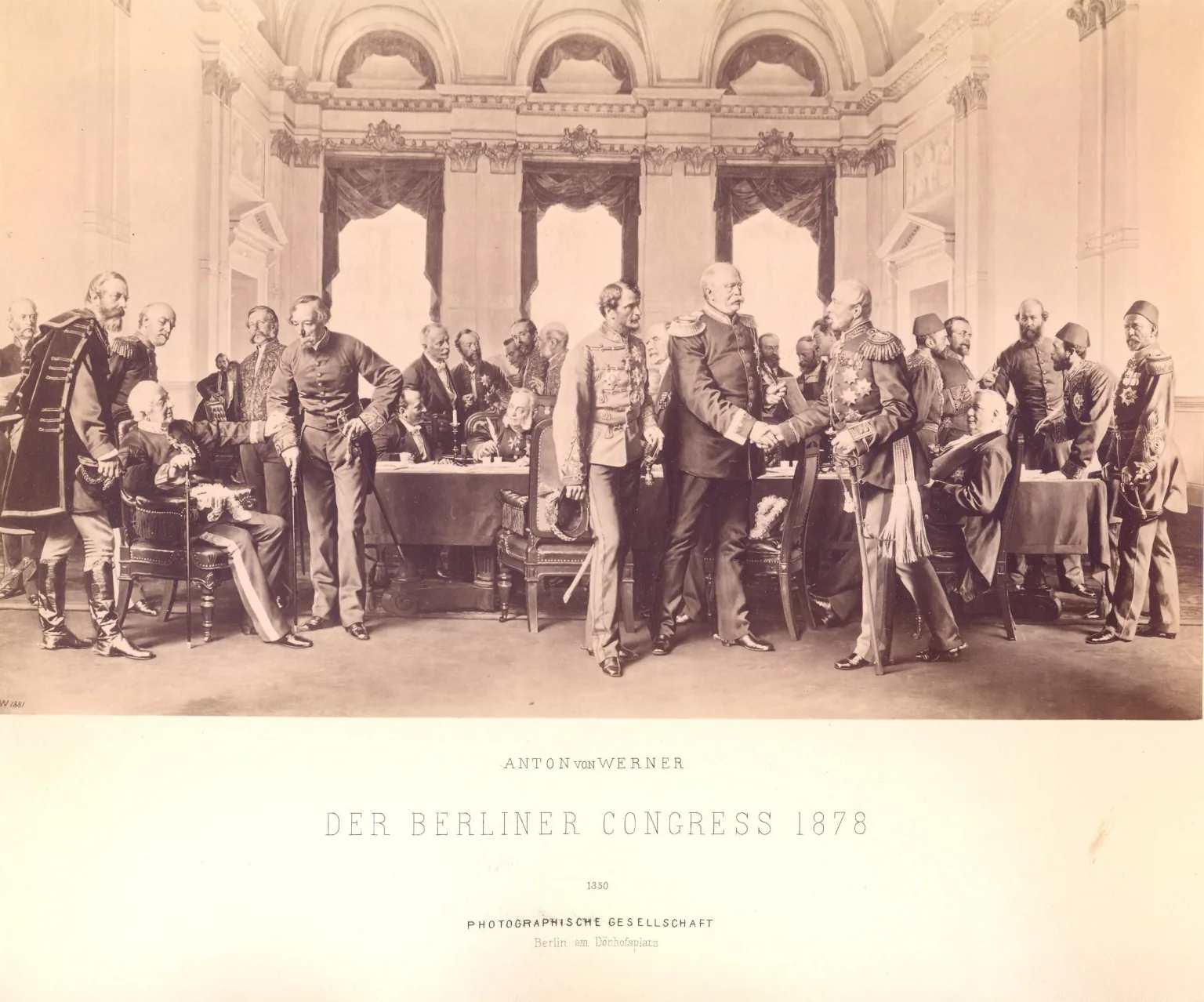
The principality’s first constitution was written in an assembly that met in Veliko Tarnovo in February 1879 and voted the text on 28 April 1879 (16 April Old Style). Thirteen of its members were Turkish: one was elected, one was the mufti of Vidin, who sat as a cleric, and eleven were appointed by the Russian governor-general, Dondukov.
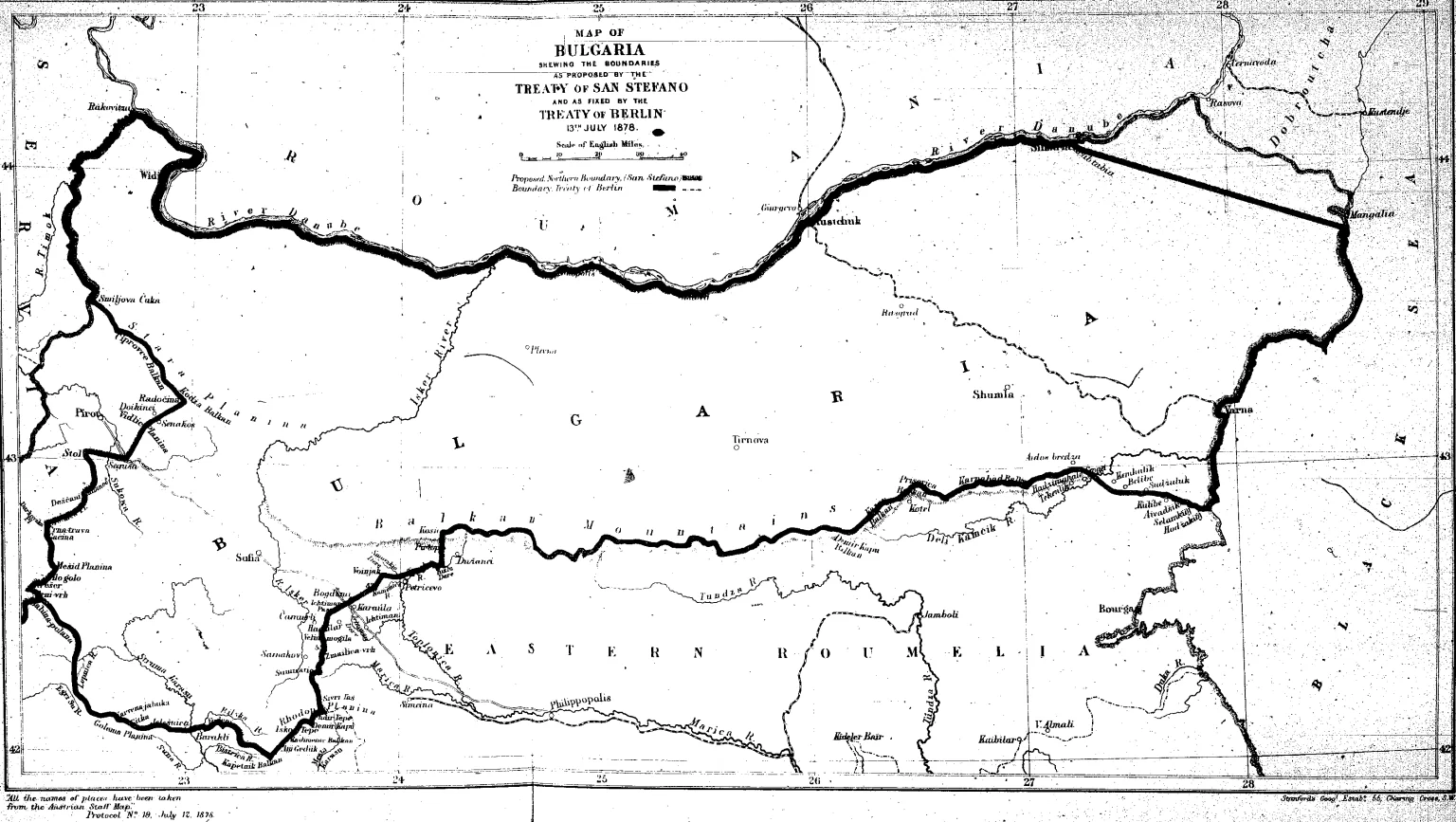
Sources: Treaty of Berlin; Belleten 2021; Belleten 2000; Bulgarians Abroad agency (3 March); Bulgarians Abroad agency (independence); Veliko Tarnovo administration.
1885: the union
Seven years later the line between the two halves went. The union was carried out in Plovdiv in the night of 17 to 18 September 1885 (5 to 6 September Old Style).
How the Ottoman state accepted the union
- 5 November 1885 (24 October Old Style)An ambassadors’ conference opens in Constantinople.
- 14 November 1885 (2 November Old Style)Serbia declares war on Bulgaria and crosses the border. The conference stops.
- 3 March 1886Peace between Bulgaria and Serbia is signed in Bucharest.
- The way outThe Bulgarian prince is named governor-general of Eastern Rumelia for five years. The union stays in fact, and the Treaty of Berlin is not broken on paper.
- 6 April 1886An edict of Abdulhamid II accepts that Eastern Rumelia is Bulgarian territory.
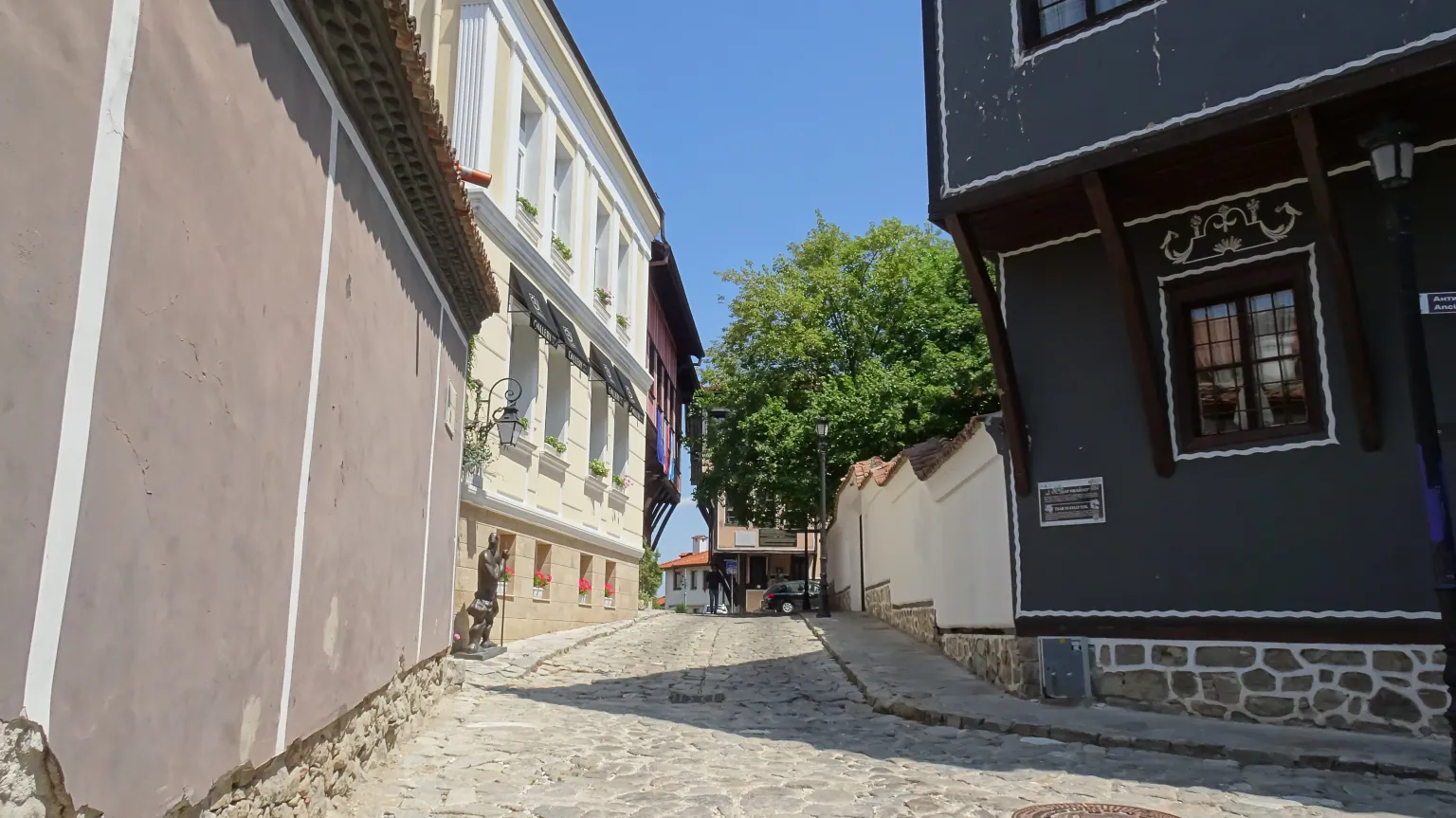
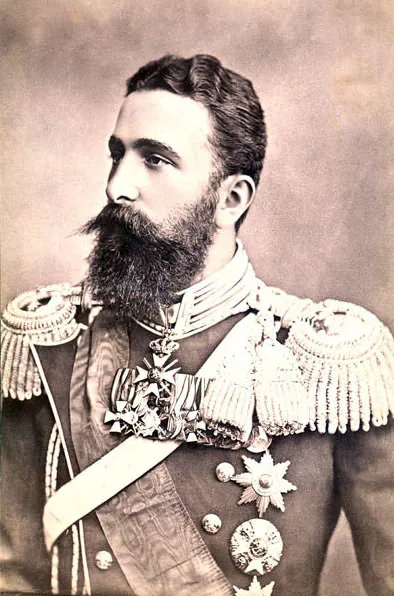
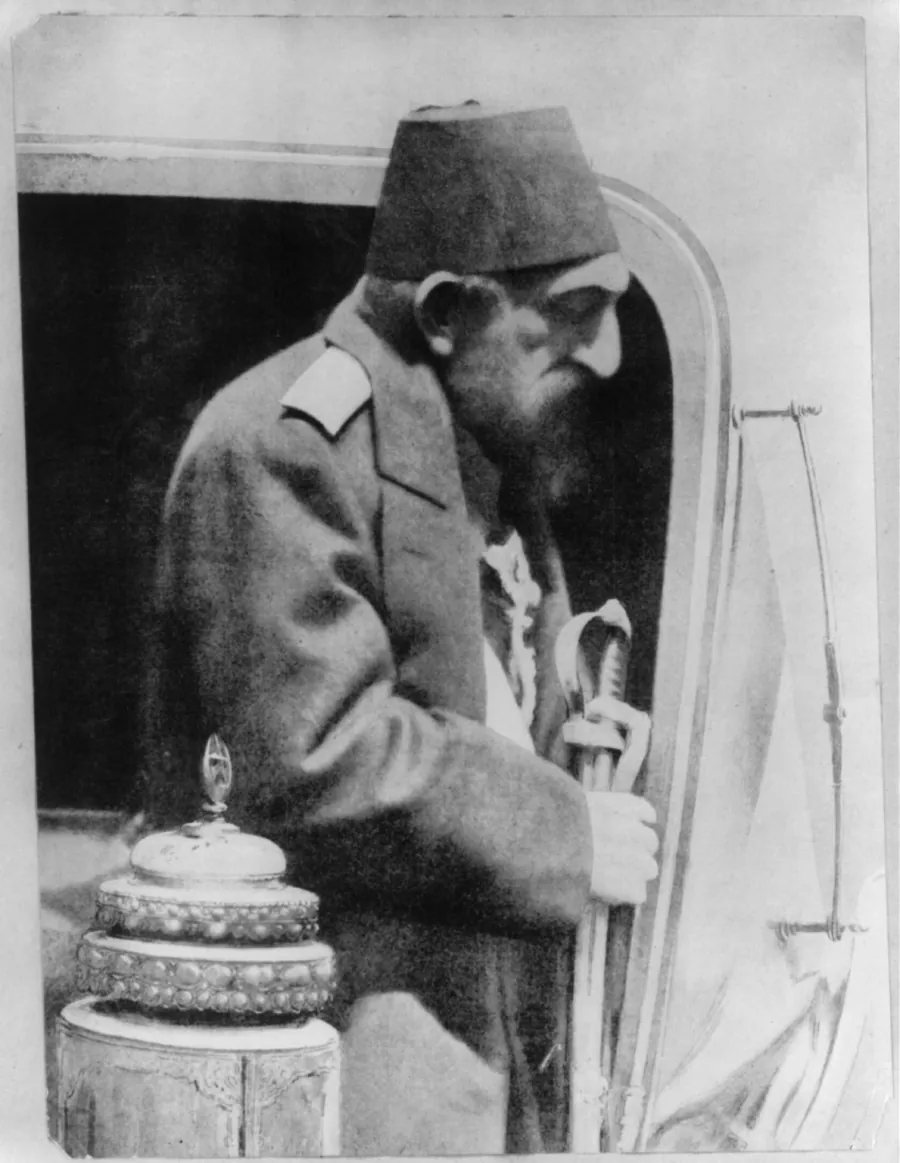
Sources: Bulgarians Abroad agency (union); Presidency of Bulgaria; Belleten 2021.
1908–1909: declaration and recognition
Dated slips
Independence, slip by slip
Dates are by today’s calendar. Old Style dates are marked. Sources: Belleten 2021; Bulgarians Abroad agency.
- Jan1908
The government of Aleksandar Malinov, which wanted independence, took office in Sofia.
- 23Jul 1908
The Ottoman state restored its constitution.
- 13Sep 1908
Tevfik Pasha, the Ottoman foreign minister, gave a dinner for the foreign representatives in Istanbul. Bulgaria’s agent, Ivan Geshov, was not invited: Bulgaria, said the Ottoman ambassador in St Petersburg, was not independent but a part of the Ottoman state.
- Then
Bulgaria’s foreign minister answered with a memorandum that recalled Geshov and broke off political relations.
- 5Oct 1908
22 September Old Style
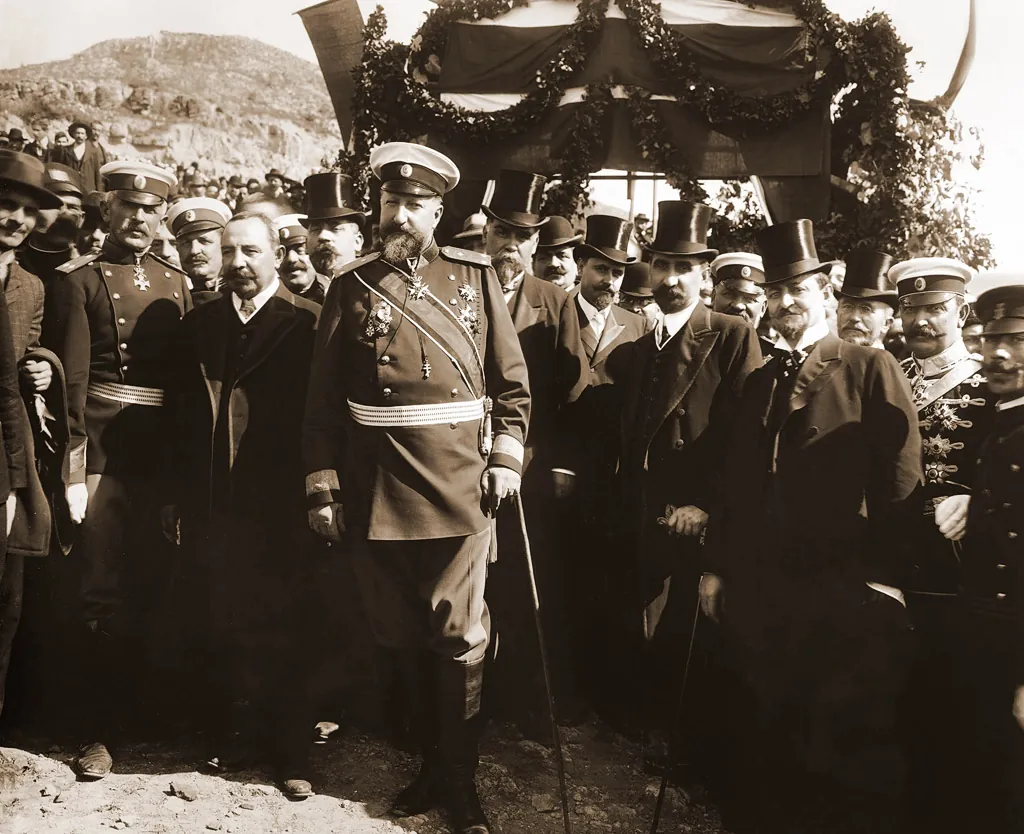
At 11.00 Prince Ferdinand declared independence in Veliko Tarnovo, on the Tsarevets hill, in a letter to Abdulhamid II. He took the title of tsar.

Ferdinand at the proclamation of independence, 1908. Photo: Dimitar Ruseyski, 1908; public domain, file page. - At once
The Ottoman state sent a protest telegram to Ferdinand. It asked the states that signed the Berlin treaty to discuss the matter, and tried to form an alliance with Romania, Greece and Serbia against Bulgaria.
- Replies
The Powers gave advice, not support:
- Greece would follow the Great Powers
- Russia wanted a peaceful settlement
- Britain protested against Bulgaria but suggested that the Ottoman state examine the question carefully
- Serbia offered the Ottoman state backing if Bulgaria massed troops at the border
Bulgaria answered threats of a trade war, customs trouble, sanctions and even armed attack by mobilising its army.
- Money
Russia offered the Ottoman state a way out: it would cancel the debt of 125 million francs from the war of 1877–78 if the Ottoman state recognised independence.
BulgariaOttoman stateRussia125million francsBulgaria gave the Ottoman state 125 million francs of war compensation.
The Ottoman state’s debt to Russia from 1877–78 was cut by the same sum.
A Bulgarian delegation under Andrey Lyapchev settled the details in Constantinople.
- 7Mar 1909
Rifat Pasha, the Ottoman foreign minister, went to St Petersburg and agreed a protocol with the Russian foreign minister, Alexander Izvolsky.
- 19Apr 1909
The Istanbul Protocol followed, and the Ottoman state recognised Bulgaria’s independence. An additional protocol gave the Muslims of Bulgaria minority rights and guaranteed their rights in education and religion.
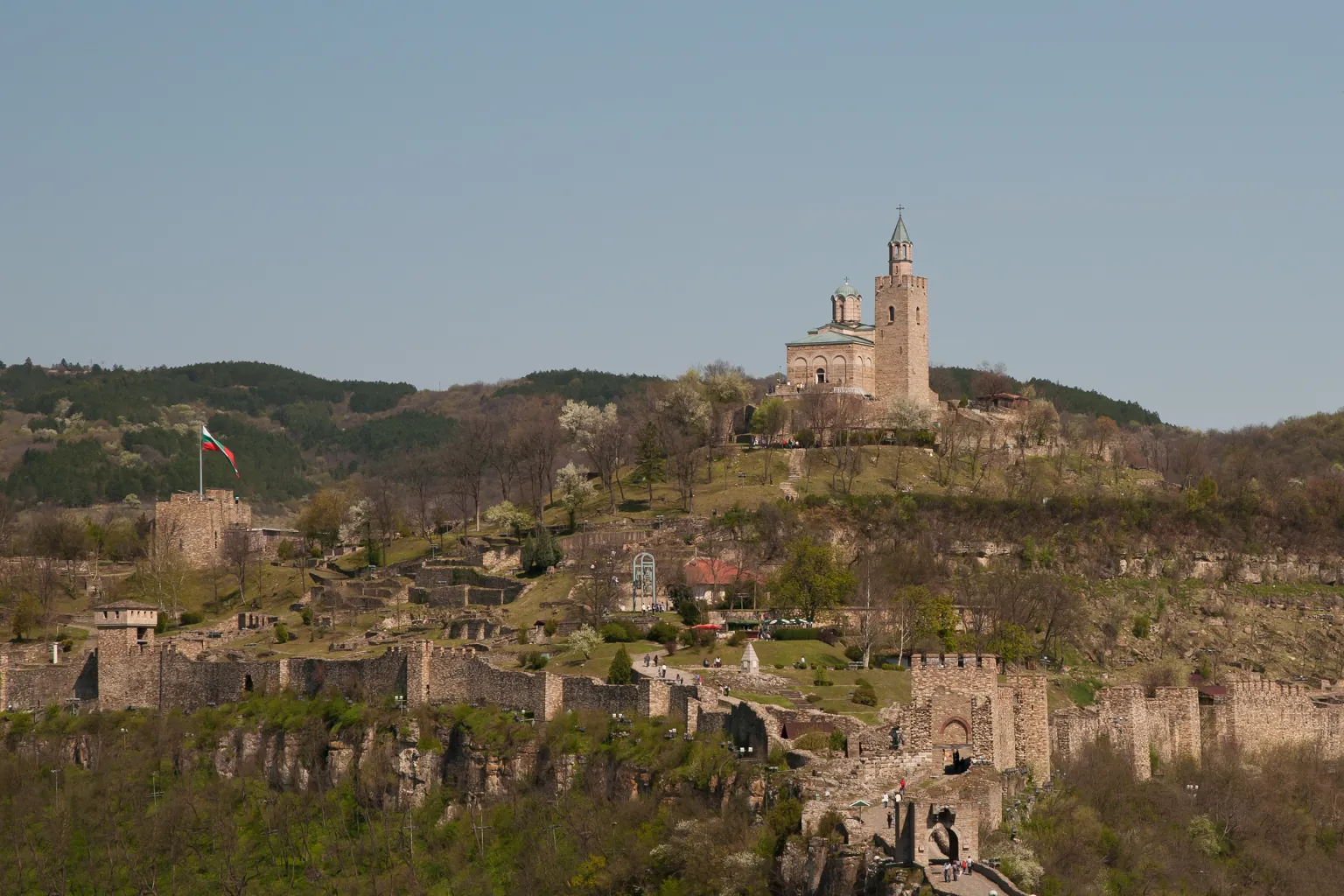
Sources: Belleten 2021; Bulgarians Abroad agency (independence); Ministry of Tourism (Bulgaria).
After 1909
Who sent whom
Recognition brought embassies
- Jun1909From Istanbul to Sofia
The Ottoman state named Mustafa Asım Bey envoy extraordinary to Sofia. He arrived on 3 September and presented his credentials to Ferdinand on 14 September.
- AfterprotocolFrom Sofia to Istanbul
Bulgaria appointed Mihail Sarafov as its ambassador to Istanbul.
- 27Jul 1909In Sofia
The Bulgarian government set up a commission on the waqfs, the religious foundations, made up of Bulgarians only. Recognition had been tied to it.
- 27Oct 1909In Sofia
The commission’s report turned down claims to take back 42 waqfs, on grounds such as missing documents.
- 27Dec 1909Both sides
A consulate agreement turned the Ottoman trade representations in Bulgaria into consulates, and the one in Plovdiv into a consulate general.
- Mar1910From Sofia to Istanbul
Ferdinand and his wife visited Istanbul.
- 8Dec 1910In Sofia
Hocazade Mehmet Muhiddin Efendi, the mufti of Sofia, was elected Grand Mufti of Bulgaria by 25 votes. The mufti of Vidin, Suleyman Rusdi, had 9.
- 1911Both sides
The two states signed a trade and navigation treaty.
Sources: Belleten 2021.
Muslims and Turkish deputies, 1880–1910
Muslims, share of the population
Census of 1880 (principality) and 1884 (Eastern Rumelia): 802,597 Muslims
Census of 1910: 602,085 Muslims
Turkish deputies in the parliament, by year of election
- 151880
- 131882
- 221884
- 251887
- 151890
- 91893
- 8–91894
- 101908
Sources: Belleten 2000.
Same events, two names
Türkiye and Bulgaria name some of the same events differently.
| Event | In Türkiye | In Bulgaria |
|---|---|---|
| The war of 1877–78 | 1877-1878 Osmanlı-Rus Savaşı (93 Harbi): 93 is the Rumi year 1293, in which the war fell | “Russian-Turkish liberation war (1877-1878)” |
| 3 March 1878 | Ayastefanos Antlaşması, signed on 3 March 1878 | The preliminary peace treaty of San Stefano, signed on 3 March 1878 |
| 1885 | The principality “annexed East Rumelia” | Съединение, the union of the principality and Eastern Rumelia |
| Independence | Declared on 5 October 1908, at 11.00, in a letter of Prince Ferdinand to Abdulhamid II | Declared on 5 October 1908 (22 September Old Style), in Veliko Tarnovo, on the Tsarevets hill |
| 1913 | On 29 June 1913 Bulgaria declared war on Greece and Serbia; the Ottoman state, seeing the Bulgarian forces in difficulty, took Edirne | “In the Second Balkan (Inter-Ally) War (1913) … defeated by Romania, Turkey and its former allies” |
Sources: Ministry of National Education (Türkiye); Ministry of Foreign Affairs (Bulgaria); Bulgarians Abroad agency (3 March); Bulgarians Abroad agency (union); Presidency of Bulgaria; Belleten 2021; Bulgarians Abroad agency (independence).
What stands today
Six Ottoman buildings still stand from the Rhodopes to the Danube. Pick one on the post: its card shows the Bulgarian and Turkish names and a question to ask on the spot (Къде е …? means “Where is …?”).
Checked 22 October 2026
Six Ottoman buildings, one post
Pick an arm of the post to turn the card to that building.
Dzhumaya · Plovdiv
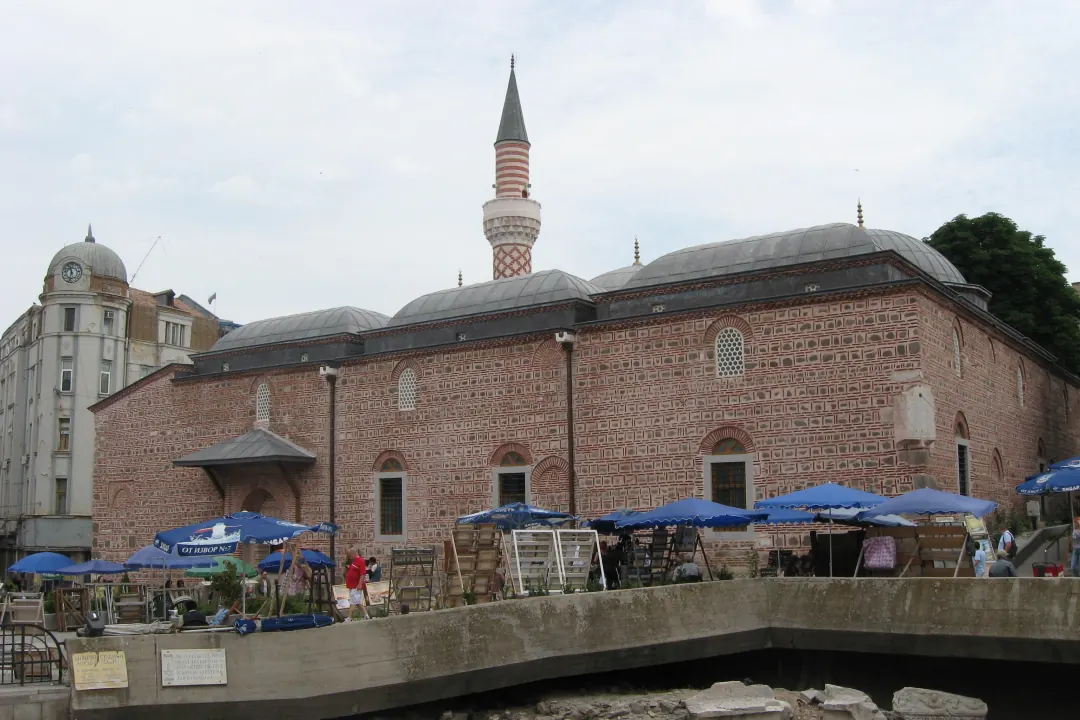
Джумая джамия
Cuma Camii
Пловдив · Filibe
- Built
- On the site of Plovdiv’s church of St Petka of Tarnovo, soon after the Ottoman army took the town in 1364, when it became Filibe. Under Sultan Murad II (1421–1451) the old building was pulled down and the present mosque raised. The porch inscription reads 827 in the Hijri calendar, 1423.
- What it is
- The main Muslim place of worship in Plovdiv: a hall of 33 by 27 metres under nine lead-covered domes, with two courses of brick after each course of cut stone and a minaret at the north-east corner of the façade. Also called Hüdavendigâr Camii.
From: Ministry of Tourism (Bulgaria); Belleten 1986 (Mijatev)
Name card, to show or copy
Джумая джамия, Пловдив
Cuma Camii, Filibe
Ask on the spot: “Where is …?”
Къде е Джумая джамия?
Cuma Camii nerede?
Tombul · Shumen
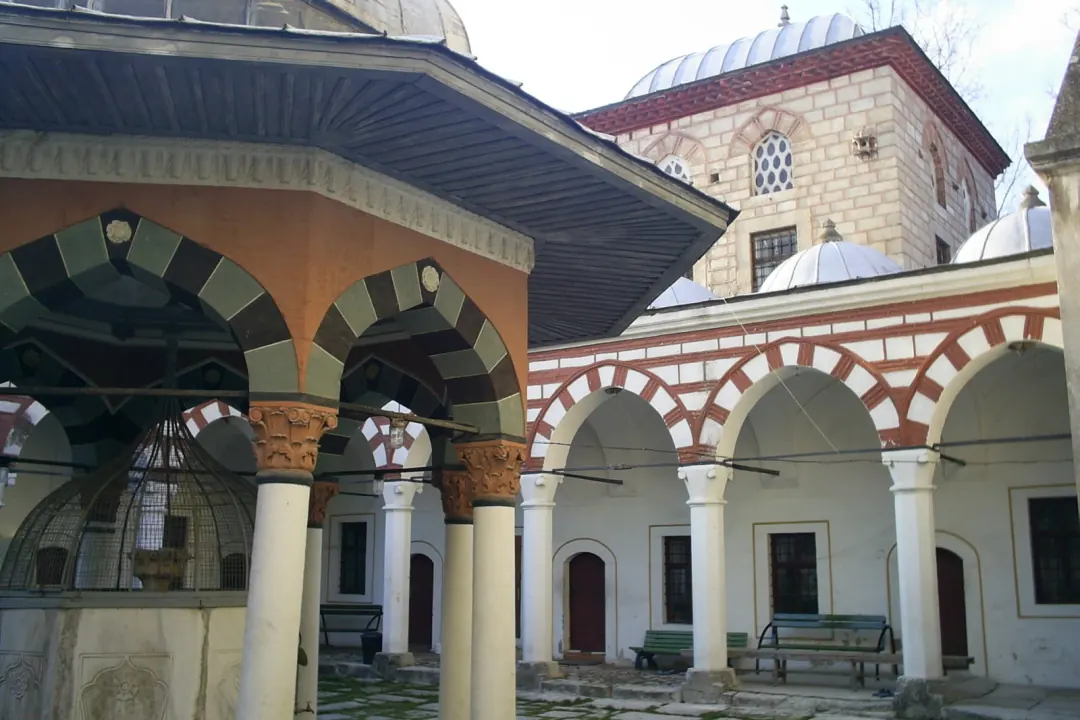
Томбул джамия
Şerif Halil Paşa Camii
Шумен · Şumnu
- Protected
- A monument of national importance for its architecture, listed with its minaret, madrasa (religious school), primary school, fountain, courtyards and the bridge beside the mosque.
- Built
- The Ottoman inscription over the porch reads 1157 in the Hijri calendar, 1744. The Turkish name is Şerif Halil Paşa Camii.
- Restoration
- TİKA, Türkiye’s cooperation agency, took on the restoration of the mosque and its complex; the work was under way in February 2017.
From: Ministry of Culture (Bulgaria); Belleten 1986 (Mijatev); TİKA
Name card, to show or copy
Томбул джамия, Шумен
Şerif Halil Paşa Camii, Şumnu
Ask on the spot: “Where is …?”
Къде е Томбул джамия?
Şerif Halil Paşa Camii nerede?
Banya Bashi · Sofia
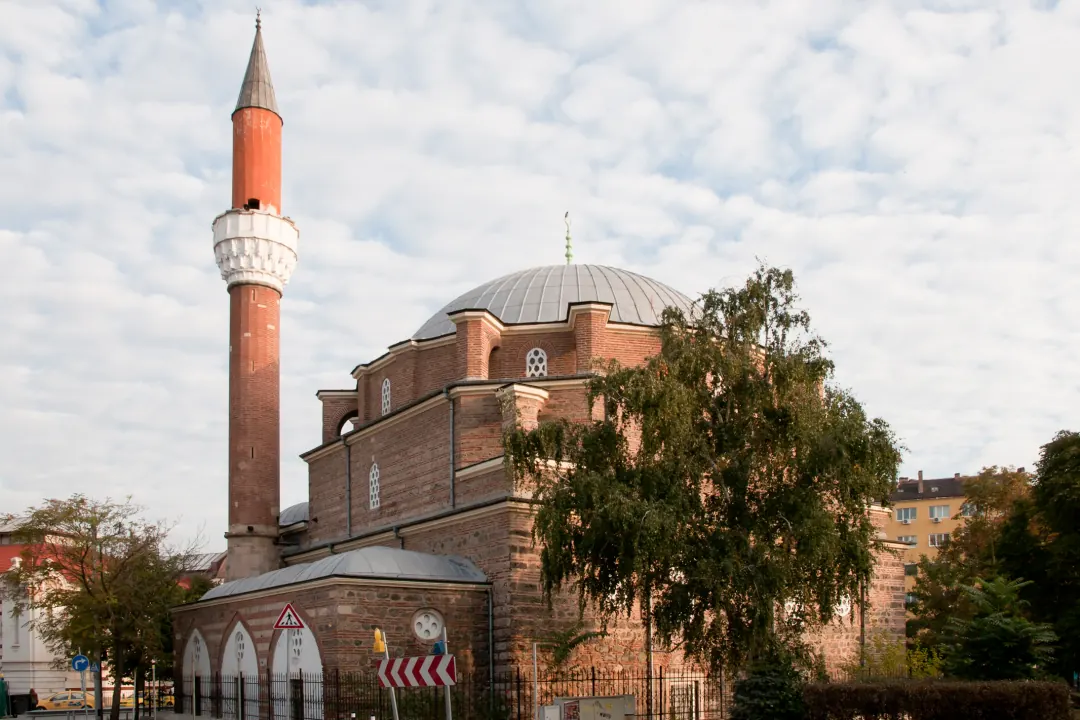
Баня баши джамия
Banyabaşı Camii
София · Sofya
- What it is
- A mosque in Sofia, one of the mosques in Bulgaria restored by TİKA, Türkiye’s cooperation agency, like the Aytos Sultan Beyazıt and Rusçuk Mirza Said Paşa mosques.
- The name
- Banyabaşı is Turkish for “by the baths”.
From: TİKA
Name card, to show or copy
Баня баши джамия, София
Banyabaşı Camii, Sofya
Ask on the spot: “Where is …?”
Къде е Баня баши джамия?
Banyabaşı Camii nerede?
Mustafa Pasha Bridge · Svilengrad
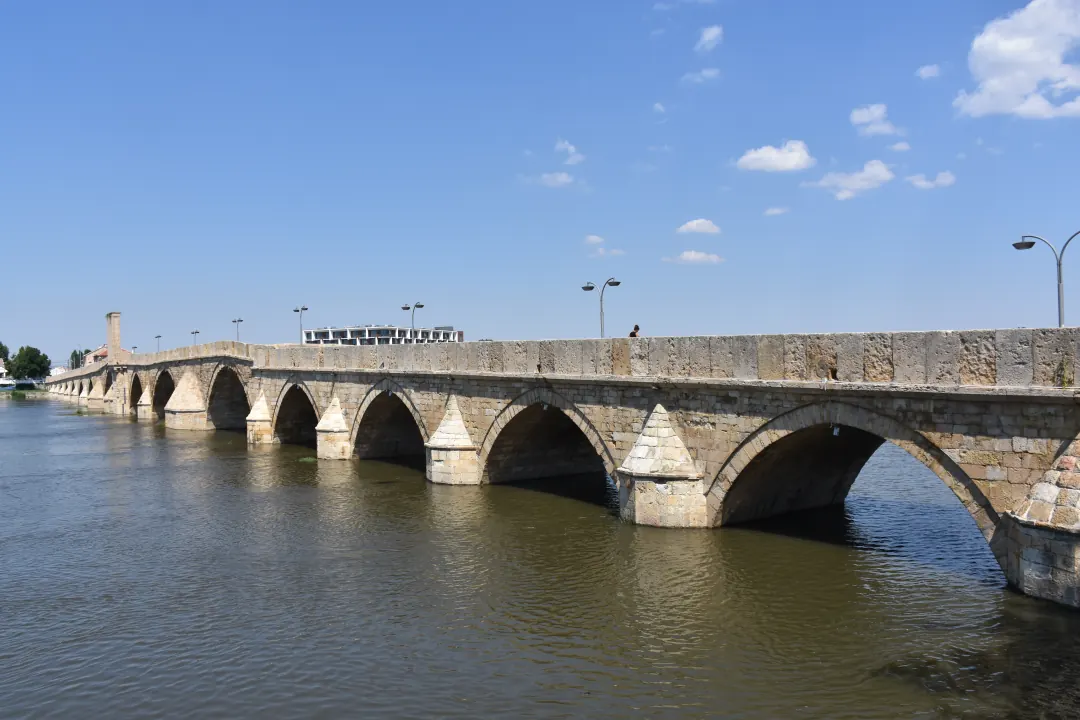
Мостът на Мустафа паша
Mustafa Paşa Köprüsü
Свиленград · Svilengrad
- Built
- 1528/29 (935 in the Hijri calendar). Benedetto Ramberti, secretary of the Venetian ambassador to Suleiman, crossed it in 1534 and counted twenty arches; the German Hans Dernschwam crossed it on 18 August 1553.
- What it is
- A road bridge over the Maritsa (Meriç) with 20 pointed arches, the middle four clearly larger, 6 metres wide and 299 to 300 metres long, part of a charitable-foundation complex with a caravanserai, a mosque, a market and a bath. In Ottoman Turkish it is Cisr-i Mustafa Paşa.
- Saved
- In 1960, while the Maritsa near Svilengrad was being straightened, some experts proposed pulling the bridge down; the Ministry of Education and Culture, the Bulgarian Academy of Sciences and the public refused. In 1963 the water administration raised the idea again. The bridge still stands; the photograph was taken in 2017.
From: Ministry of Tourism (Bulgaria); Belleten 1964 (Eyice)
Name card, to show or copy
Мостът на Мустафа паша, Свиленград
Mustafa Paşa Köprüsü, Svilengrad
Ask on the spot: “Where is …?”
Къде е Мостът на Мустафа паша?
Mustafa Paşa Köprüsü nerede?
Devil’s Bridge · Ardino
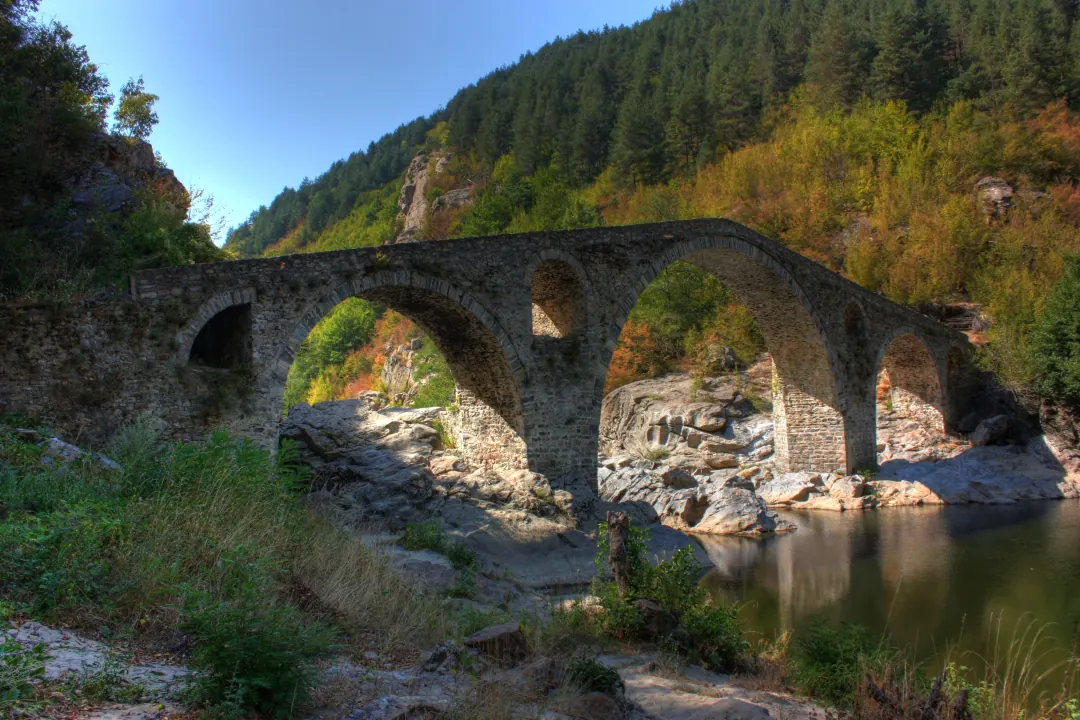
Дяволският мост
Şeytan Köprüsü
Ардино · Ardino
- Built
- 1515–1518, by the master builder Dimitar of Nedelino, on the remains of a Roman bridge on the old road through the Makaza pass.
- What it is
- A three-arched stone bridge over the Arda in a gorge about 10 kilometres north-west of Ardino, 420 metres above sea level, 56 metres long and 3.5 metres wide, its central arch 11.5 to 12 metres high. Declared a monument of culture in 1984. Its other Bulgarian name, Шейтан кюприя, comes from the Turkish Şeytan Köprüsü.
From: Ministry of Tourism (Bulgaria)
Name card, to show or copy
Дяволският мост, Ардино
Şeytan Köprüsü, Ardino
Ask on the spot: “Where is …?”
Къде е Дяволският мост?
Şeytan Köprüsü nerede?
Pazvantoğlu · Vidin
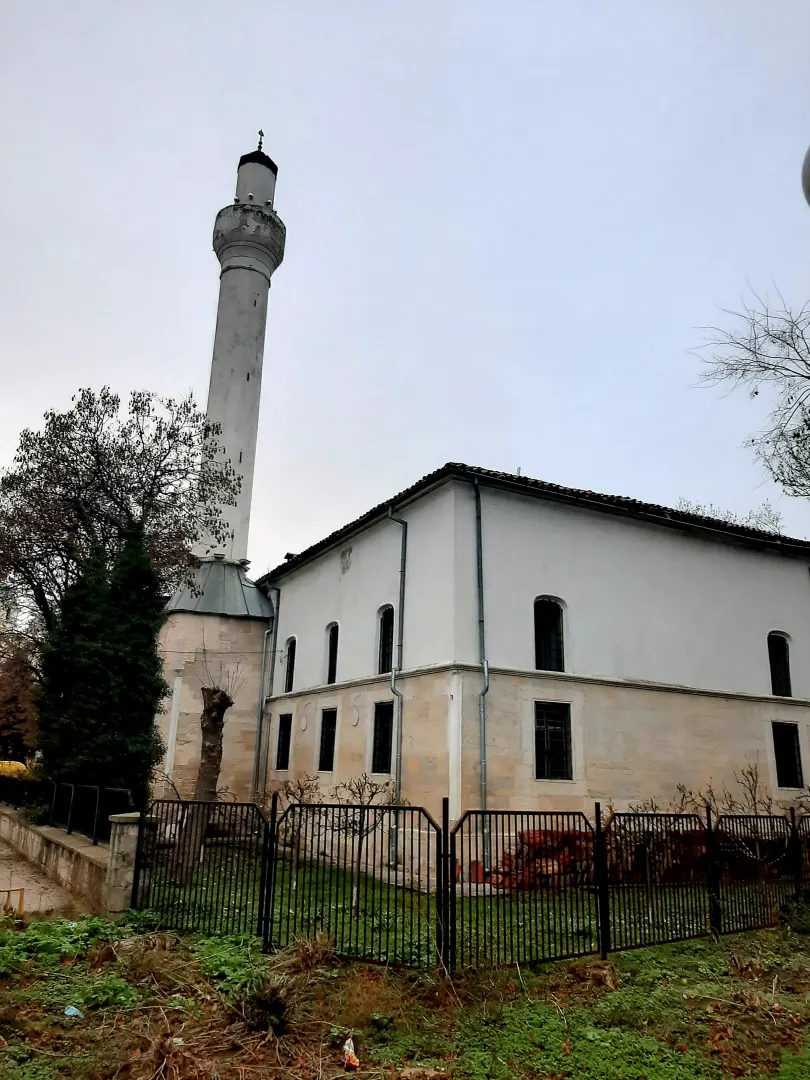
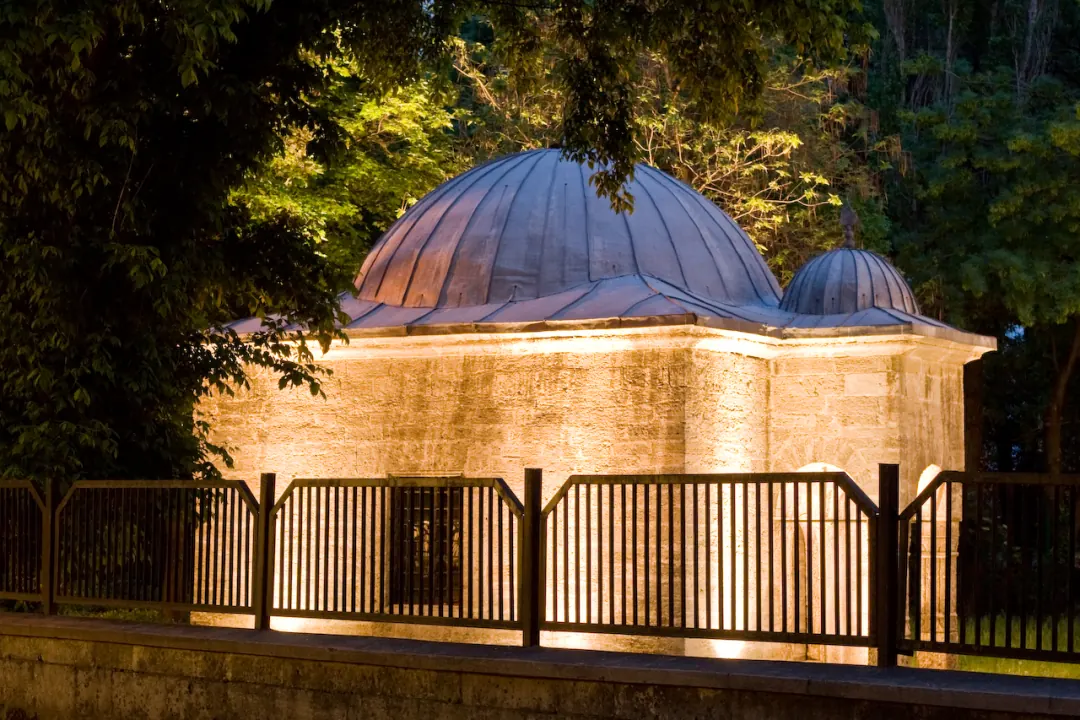
Джамията на Осман Пазвантоглу
Pazvantoğlu Camii
Видин · Vidin
- Who
- Around 1800 Vidin was Osman Pazvantoğlu’s town: most of the Ottoman buildings that survive there carry his name.
- Built
- The ensemble dates from the late 18th to the early 19th century.
- What it is
- Of the ensemble only the mosque and the library remain; it also held a madrasa (religious school) and a zawiya (small religious lodge). The mosque is a square one-room stone building under a lead-covered dome. The library held about 2,664 books.
From: Ministry of Tourism (Bulgaria); Belleten 1986 (Mijatev)
Name card, to show or copy
Джамията на Осман Пазвантоглу, Видин
Pazvantoğlu Camii, Vidin
Ask on the spot: “Where is …?”
Къде е Джамията на Осман Пазвантоглу?
Pazvantoğlu Camii nerede?
Dates cut in stone
Many of these buildings carry the year they were built, cut in stone. Each year is given as carved, in the Hijri calendar and in today’s calendar, oldest first.
| Date as carved | Town | The building |
|---|---|---|
| 797/1394 | Haskovo | The Old Mosque: rough Arabic lines over the porch |
| 827/1423 | Plovdiv | The Dzhumaya mosque: porch inscription, in the time of Murad II |
| 839/1435 | Veliko Tarnovo | The Hisar mosque on Tsarevets (in ruins by the 1980s): Arabic inscription, in the time of Murad II |
| 1002/1593 | Shumen | A fountain with the oldest inscription known in Shumen, naming the innkeeper Hacı Mustafa |
| 1157/1744 | Shumen | The Tombul mosque (Şerif Halil Paşa Camii): inscription over the porch |
| 1221/1812 | Plovdiv | The clock tower on Sahat Tepe: “built in 1221/1812” |
| 1271 · 26 October 1854 | Shumen | A fountain: Turkish verse dated 1271 and a Bulgarian line dated 26 October 1854 |
| 1285 · 17 March 1868 | Plovdiv | The national central school: an Ottoman plaque with the sultan’s tughra, and a Bulgarian plaque saying it was built on his firmans with the help of Plovdiv’s Bulgarian citizens |
| 1287/1870 | Veliko Tarnovo | The old military depot, later the town’s court archive: six-line Ottoman inscription |
Plovdiv’s clock tower carries the year 1812, while Bulgaria’s Ministry of Tourism dates the tower to the 16th century.
Sources: Belleten 1986; Ministry of Tourism (Bulgaria).
The calendars, in a minute

- Old Style: the Julian calendar. Bulgaria switched to the Gregorian calendar in 1916. It ran 12 days behind the Gregorian calendar from 1 March 1800 and 13 days from 1 March 1900.
- Rumi: the Ottoman state’s solar calendar, used for its finances. Its years ran 584 behind the Gregorian years and began in March. The war of 1877–78 fell in Rumi 1293, hence “93 Harbi”.
- Gregorian: today’s calendar, used in Türkiye since 1 January 1926.
So a Bulgarian and an Ottoman document of the same day can carry different numbers.
Short answers
When did Bulgaria leave the Ottoman state?
In three steps: a principality under the sultan in 1878, union with Eastern Rumelia in 1885 and independence, declared in 1908. The Ottoman state recognised the independence on 19 April 1909.
Why does the same day have two dates?
Until 1916 Bulgaria used the Old Style (Julian) calendar, 13 days behind the Gregorian calendar by 1908. Independence is 5 October in the Gregorian calendar and 22 September in Old Style. Bulgaria marks the anniversary on the Old Style number; Turkish histories use the Gregorian date.
What does “93 Harbi” mean?
It is the Turkish name of the war of 1877–78. The 93 is the Rumi year 1293 in which the war fell.
What was Eastern Rumelia?
A province south of the Balkan Mountains, set up by the Treaty of Berlin. The sultan kept political and military authority over it; a Christian governor-general named by the Porte ran it for five years. It united with the principality in 1885.
Which Ottoman buildings can you still see in Bulgaria?
The Dzhumaya mosque in Plovdiv, the Tombul mosque in Shumen, Banya Bashi in Sofia, the Mustafa Pasha Bridge in Svilengrad, the Devil’s Bridge near Ardino and the Pazvantoğlu mosque and library in Vidin. Dated inscriptions on Ottoman buildings in Bulgaria run from 1394 to 1870.
How do I ask for one in Bulgarian?
Each card on the post has a question that starts with Къде е (“Where is”), with its Turkish twin, and a name card to show. Copy either from the card.
Sources
Show the pages checked
- Treaty of Berlin, 13 July 1878 — English text in the American Journal of International Law, Supplement, vol. 2 (1908), checked 24 October 2026
- Bulgaristan’da Prenslik Döneminde Türklerin Sosyal ve Siyasal Kurumlaşma Çalışmaları — Belleten, Turkish Historical Society, 2000, checked 24 October 2026
- The Independence Process of Bulgaria and the First Ambassador of the Ottoman Empire to Sofia, Mustafa Asım Bey — Belleten, Turkish Historical Society, 2021, checked 23 October 2026
- Bulgaristan’daki Osmanlı Anıtları — Belleten, Turkish Historical Society, 1986, checked 22 October 2026
- Svilengrad’da Mustafa Paşa Köprüsü (Cisr-i Mustafa Paşa) — Belleten, Turkish Historical Society, 1964, checked 22 October 2026
- Tarih 11, 3. Ünite özeti — Ministry of National Education (Türkiye), checked 22 October 2026
- Tarih 9, Tarih ve Zaman — Ministry of National Education (Türkiye), checked 22 October 2026
- Türkiye Balkanlar’daki Osmanlı yadigâri eserlere sahip çıkıyor — TİKA, checked 22 October 2026
- 113 години от 22 септември 1908 г. — Executive Agency for Bulgarians Abroad, checked 24 October 2026
- 136 години от Съединението и неговата защита — Executive Agency for Bulgarians Abroad, checked 23 October 2026
- 3 март – национален празник на България — Executive Agency for Bulgarians Abroad, checked 22 October 2026
- Слово по случай 139-ата годишнина от Съединението — Presidency of Bulgaria, checked 24 October 2026
- Честване на 147 години Търновска конституция — Veliko Tarnovo regional administration, checked 24 October 2026
- Отбелязваме 114 години от обявяването на Независимостта на България — Ministry of Tourism (Bulgaria), checked 22 October 2026
- History — Ministry of Foreign Affairs (Bulgaria), checked 22 October 2026
- Въведен е Григорианският календар — Institute for Historical Research, Bulgarian Academy of Sciences, checked 22 October 2026
- Архитектурно-исторически комплекс “Стария Пловдив” — Ministry of Tourism (Bulgaria), checked 22 October 2026
- Джумая джамия — Ministry of Tourism (Bulgaria), checked 22 October 2026
- Мостът на Мустафа паша – Свиленград — Ministry of Tourism (Bulgaria), checked 22 October 2026
- Дяволския мост – Ардино — Ministry of Tourism (Bulgaria), checked 22 October 2026
- Джамията на Осман Пазвантоглу — Ministry of Tourism (Bulgaria), checked 22 October 2026
- Списък на паметниците на културата, област Шумен — Ministry of Culture (Bulgaria), checked 22 October 2026
- Natural Earth, 1:10m land and river lines — public domain, checked 24 October 2026
- Map of Bulgaria shewing the boundaries as proposed by the Treaty of San Stefano and fixed by the Treaty of Berlin — Edward Hertslet, 1878, Bibliothèque nationale de France, public domain, checked 24 October 2026