Anadolu University: Campus, Open Education and Admission
A state university in Eskişehir with a campus and an open-education faculty: the ways in, who may apply and what it costs.
Table of Contents
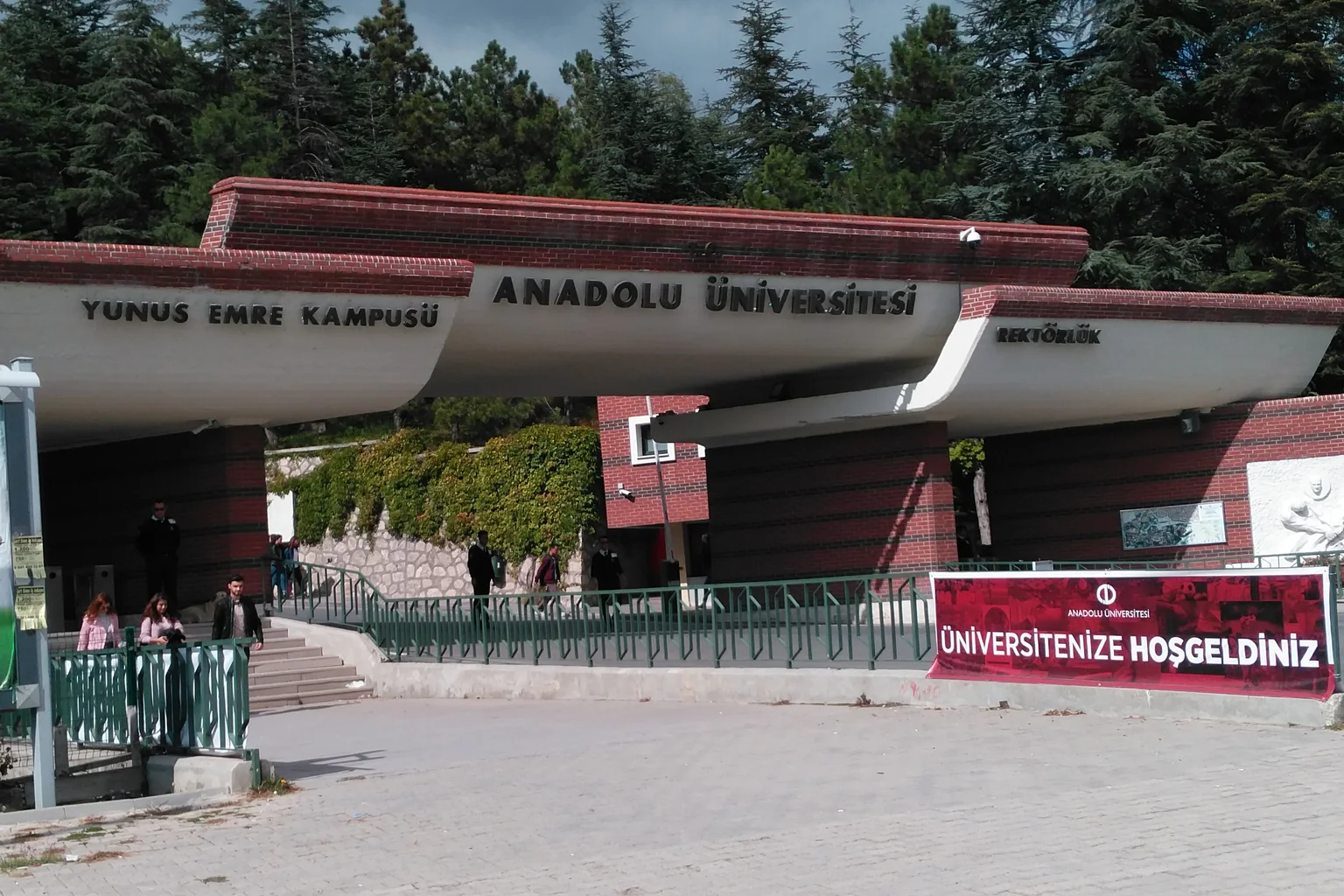
Anadolu University is a state university in Eskişehir with two sides. On the Yunus Emre campus, students attend in person. Its Open Education Faculty (Açıköğretim Fakültesi, AÖF) teaches at a distance, with course books, online material and exams sat in exam centres. It is by far the larger side.
In short · checked 27.10.2026
A state university with a campus side and an open-education side about 38 times larger.
- Two sides. A campus in Eskişehir, and an open-education faculty with about 38 times as many active students: 873,584 against 22,843 resident (table of 07.11.2025).
- Open education is books, a screen and exams. Course books are PDFs on the e-campus; exams are sat in person at exam centres in provinces, districts and Lefkoşa.
- Foreign applicants have a window of their own. For 2026–27, international applications ran from 15.06.2026 to 10.08.2026 and registration from 17.08.2026 to 19.10.2026. Both windows are past.
- Fees are per semester, by programme. For 2026–27 the first-registration amounts run from TL 2,900 to TL 4,960 a semester.
- Eskişehir Technical University (ESTÜ) is another university. Law 7141, published 18.05.2018, set it up. Check which one a programme belongs to.
Tool · pages checked 27.10.2026
Which window do you ask at?
Open education has five ways in, and each has its own page. Pick a level, then press a window: the card shows what that route needs and a Turkish question to send, with its meaning beside it.
1New registration with a YKS score
For candidates who are, or will be, graduates of at least a secondary school. They enter through the YKS (Yükseköğretim Kurumları Sınavı, the national university entrance exam), run by ÖSYM, the state assessment and placement centre.
- What you need
- A TYT score (the basic-skills part of the YKS) for associate programmes; a score in the right category for bachelor’s programmes. An e-Devlet password, and an education record that is up to date in the MEBBİS/YÖKSİS systems.
- Dates
- Set by ÖSYM for 2026–27. The 2025–26 windows were 01–05.09.2025 and 10–17.10.2025 (past).
Merhaba, YKS sonucumla Açıköğretim Fakültesi’nin lisans programlarına başvurmak istiyorum. Başvuru ve kayıt tarihleri ile gerekli belgeler nelerdir?
Hello, I would like to apply to the Open Education Faculty’s bachelor’s programmes with my YKS result. What are the application and registration dates, and which documents are needed?
2Second university (a second degree)
For graduates of, or students currently enrolled in, any higher education programme. No entrance exam.
- What you need
- Online application with an e-Devlet password. Your record must be up to date in YÖKSİS, the higher-education student database. Registration is confirmed once the application is complete and the tuition fee is paid.
- Dates
- 17.08.2026 to 19.10.2026 in the 2026–27 calendar (past). 2025–26: 21.07.2025 to 17.10.2025.
Merhaba, [üniversite adı] mezunuyum. Açıköğretim Fakültesi’nin lisans programlarına İkinci Üniversite ile başvurmak istiyorum. Başvuru koşulları ve kayıt tarihleri nelerdir?
Hello, I am a graduate of [university]. I would like to apply to the Open Education Faculty’s bachelor’s programmes through Second University. What are the conditions and the registration dates?
3Vertical transfer (associate to bachelor’s)
For graduates, or final-year students, of vocational schools and of the Open Education Faculty’s associate programmes who go on to a bachelor’s programme. This route leads to a bachelor’s programme only.
- What you need
- The DGS (Dikey Geçiş Sınavı, the vertical-transfer exam) of ÖSYM. Programmes of four years or more do not qualify. Online application with an e-Devlet password; registration is confirmed once the application is complete and the fee is paid.
- Dates
- Set by ÖSYM for 2026–27. 2025–26: 11–24.09.2025 (past); the dates follow the DGS placement results.
Merhaba, ön lisans programından mezunum. DGS ile Açıköğretim Fakültesi’nin lisans programlarına dikey geçiş yapmak istiyorum. Kayıt tarihleri ve gerekli belgeler nelerdir?
Hello, I have an associate degree. I would like to move to the Open Education Faculty’s bachelor’s programmes by vertical transfer with the DGS. What are the registration dates and which documents are needed?
4Lateral transfer (from another university)
For students enrolled in formal education who want to continue through the Open Education Faculty. Also called interuniversity transfer.
- What you need
- Online application with an e-Devlet password on the university’s application site; your record must be up to date in YÖKSİS. Registration is online with an e-Devlet password.
- Dates
- 2026–27 calendar (past): 01–15.08.2026 with a central placement score; 10–21.08.2026 between institutions; registration 07–14.09.2026.
Merhaba, şu anda [üniversite ve bölüm] öğrencisiyim. Açıköğretim Fakültesi’nin lisans programlarına yatay geçiş yapmak istiyorum. Başvuru tarihleri ve gerekli belgeler nelerdir?
Hello, I am currently a student of [university and department]. I would like to transfer to the Open Education Faculty’s bachelor’s programmes. What are the application dates and which documents are needed?
5Foreign applicants (TR-YÖS)
For candidates who have graduated from a university abroad or are foreign nationals. The route runs through TR-YÖS, the Türkiye International Student Admission Exam, an ÖSYM exam; the guide to studying in Türkiye explains it.
- Dates
- 2026–27 calendar: international applications 15.06.2026 to 10.08.2026 and registration 17.08.2026 to 19.10.2026 (past).
- Fees
- The 2026–27 first-registration fee list covers international student admission; the amounts are in the fees chapter.
Merhaba, [ülke] vatandaşıyım. Açıköğretim Fakültesi’nin lisans programları için uluslararası öğrenci olarak başvurmak istiyorum. Başvuru tarihleri, gerekli belgeler ve sınav merkezleri nelerdir?
Hello, I am a citizen of [country]. I would like to apply to the Open Education Faculty’s bachelor’s programmes as an international student. What are the application dates, the required documents and the exam centres?
Fill in every [bracket] before you send the question. Support site: aosdestek.anadolu.edu.tr; call centre 444 10 26.
One university, two ways to study
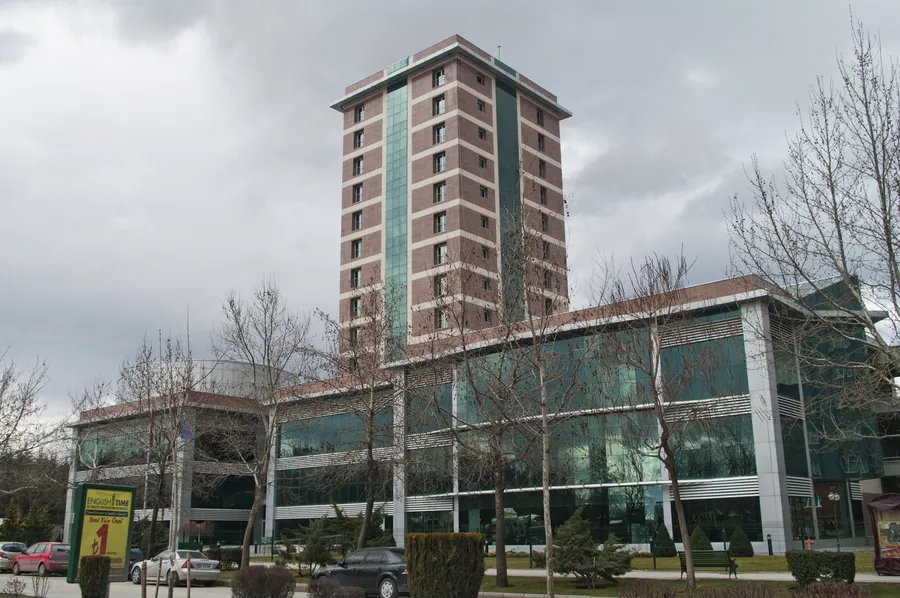
Anadolu University grew out of the Eskişehir Academy of Economic and Commercial Sciences, founded on 6 November 1958. The Academy was replaced by the university in 1982. It stands in Eskişehir, in the Tepebaşı district, and teaches in Turkish, English, French, German and Russian.
It is a state university (devlet üniversitesi), a public one, unlike a foundation university (vakıf üniversitesi). The studying splits in two: the campus, and open education (açıköğretim), where students learn from course books and online material and sit exams at exam centres.
Anadolu at a glance · table updated 07.11.2025
22,843 on campus, 873,584 in open education.
Resident students: 16,056 bachelor’s, 1,819 associate (two-year) and 4,968 master’s and doctoral. Open education has 873,584 active students, or 1,731,673 when passive ones are added.
Foreign students: 2,458, and 5,816 in open education.
At a glance
- Units
- 3 schools, 3 vocational schools (two-year trade schools, meslek yüksekokulu), 1 state conservatory (a music and drama school), 2 graduate schools and 23 research centres.
- Staff
- 1,458 academic and 3,032 administrative staff.
- Languages
- Turkish, English, French, German and Russian.
Anadolu at a glance, updated 07.11.2025 · checked 27.10.2026 · page
From an academy to open education
A decree law (kanun hükmünde kararname, KHK) is a government decree with the force of law.
- 6 November 1958The Eskişehir Academy of Economic and Commercial Sciences is founded. It is the base of the later university.
- 1981–82Law 2547 (06.11.1981) lets universities run open-education programmes. Decree Law 41 (20.07.1982) assigns open education to Anadolu University; the faculty starts inside its Faculty of Communication Sciences.
- 1982The Academy is replaced by Anadolu University. The first open-education year, 1982–83, has 29,500 students, in Economics and Business Administration.
- 1993Decree Law 496 makes the faculty responsible for course books, radio and TV programmes, computer resources, counselling, exams and student affairs.
- 1996The open-education exams move from ÖSYM to Anadolu University.
- 2012–13A semester-credit system covers all students, the make-up exam is dropped and a 444 call line opens.
- 2018–19Course books become PDFs on the e-campus; free printed copies end (decision of 9 August 2018).
- 2025The Faculty of Computer and Information Sciences is established; it starts teaching in 2026–27.
Open Education Faculty history, Textbooks and Faculties pages · checked 27.10.2026 · history · textbooks · faculties
The 2018 split: Anadolu and ESTÜ
Eskişehir has a second state university, Eskişehir Technical University (Eskişehir Teknik Üniversitesi, ESTÜ). Law 7141, published on 18.05.2018, set it up. It is a separate university with its own units, campuses and website, not a faculty of Anadolu.
ESTÜ has 6 faculties, 3 vocational schools, 1 school, 3 institutes and 8 research centres on 3 campuses in Eskişehir. Its Faculty of Aeronautics and Space Sciences runs Hasan Polatkan Airport, on the 2 Eylül Campus.
| Unit | At Anadolu University | At ESTÜ |
|---|---|---|
| Faculties | Open Education; Computer and Information Sciences; Pharmacy; Humanities; Education; Fine Arts; Law; Economics and Administrative Sciences; Communication Sciences; Health Sciences; Tourism | Computer and Information Sciences; Science; Aeronautics and Space Sciences; Engineering; Architecture and Design; Sports Sciences |
| Vocational schools | Justice; Information Technologies; Eskişehir; Yunus Emre Health Services | Information Technologies; Porsuk; Transportation |
| Schools and institutes | Schools: Music and Drama, the Handicapped, Foreign Languages. Graduate: Research Institute for the Handicapped; Graduate School | Institutes: Transportation and Communication Sciences; Earth and Space Sciences |
Same name, two universities
Both universities have a Faculty of Computer and Information Sciences and a Vocational School of Information Technologies. Check the website address on the programme page: Anadolu’s are on anadolu.edu.tr, ESTÜ’s on eskisehir.edu.tr.
Anadolu faculties, schools and vocational-schools pages; ESTÜ about page · checked 27.10.2026 · Anadolu faculties · ESTÜ about page
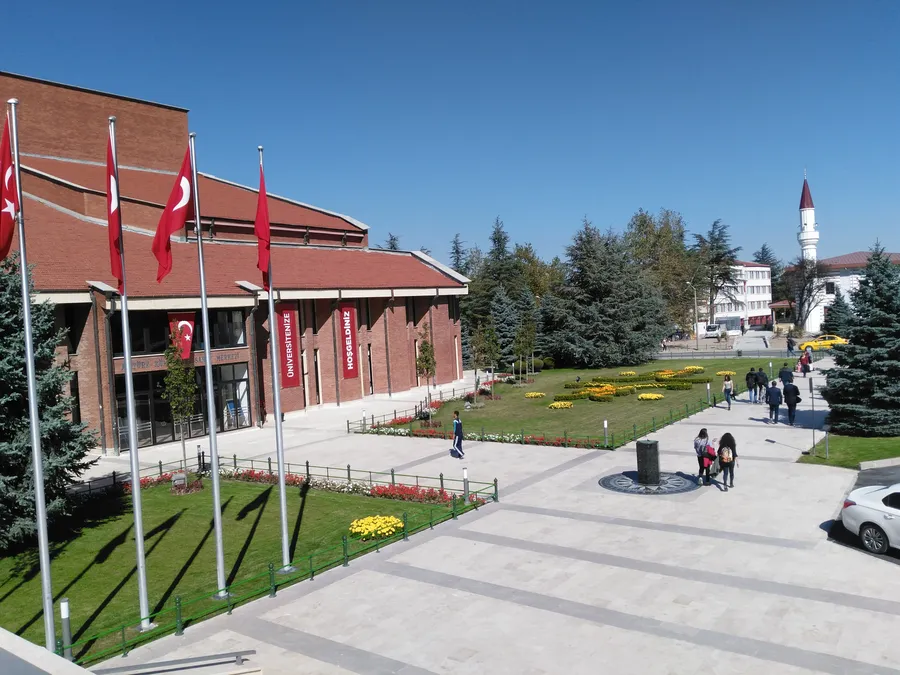
On the Yunus Emre campus
The campus is Yunus Emre Kampüsü, 26210 Tepebaşı, Eskişehir; the switchboard is +90 222 335 05 80. The faculties, and when each began:
| Faculty | Start |
|---|---|
| Open Education | Started in 1982 inside the Faculty of Communication Sciences. |
| Pharmacy | A private school of pharmacy in 1968, a state school in 1971; renamed Anadolu University Faculty of Pharmacy in 1982. |
| Education | Founded in 1982 with two programmes: English Language Teaching and German Language Teaching. |
| Communication Sciences | Founded in 1972 as the Academic Closed Circuit Television Education Institute; first students in 1977. |
| Humanities | Founded in 1993 as the Faculty of Letters, under Decree Law 496. |
| Law | Teaching since 1993. |
| Fine Arts | The College of Applied Fine Arts (1983) took full-time students from 1985–86 and became the faculty in 1992. |
| Economics and Administrative Sciences | Marked its 60th anniversary in 2018. |
| Health Sciences | First students in 2012–13, in Language and Speech Therapy and Social Services. |
| Tourism | A faculty since a Council of Ministers decision of 10 January 2012; before that the School of Tourism and Hotel Management (1993). |
| Computer and Information Sciences | Established in 2025; starts teaching in 2026–27. |
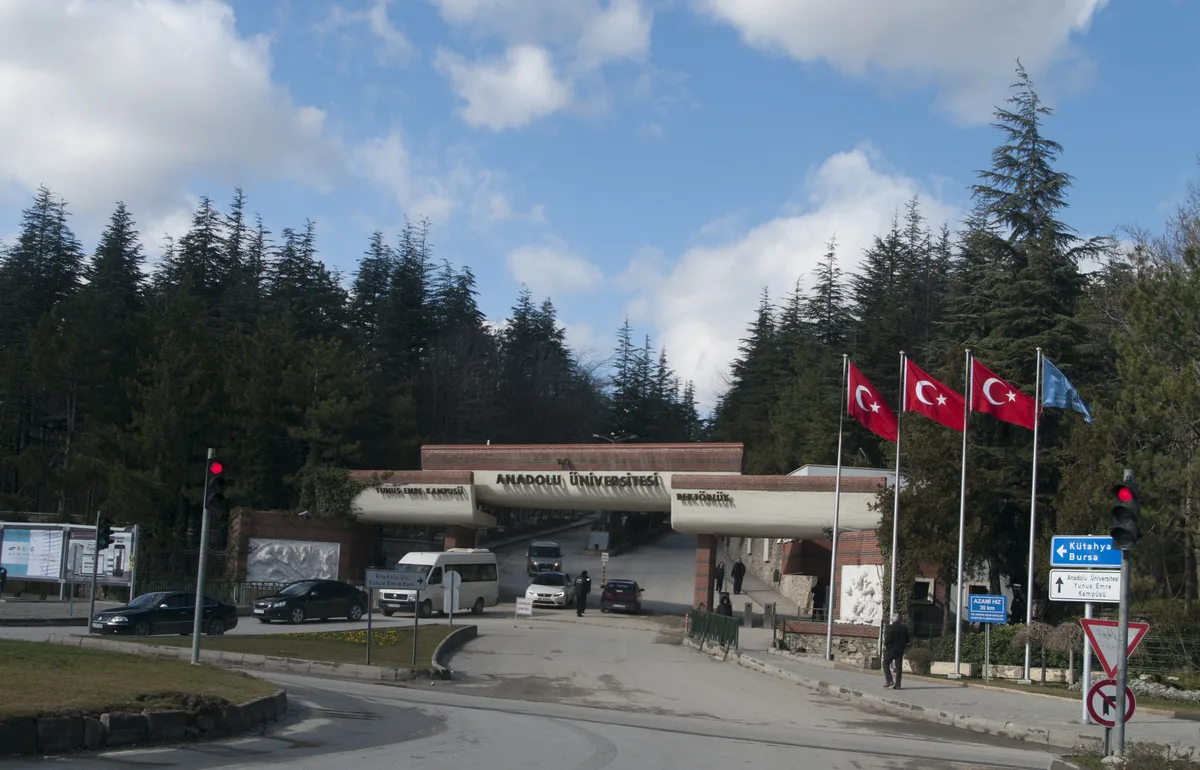
Besides the faculties there are the School of Music and Drama (1986), the School for the Handicapped and the School of Foreign Languages. The vocational schools (two-year trade schools) are Justice, Information Technologies, Eskişehir and Yunus Emre Health Services.

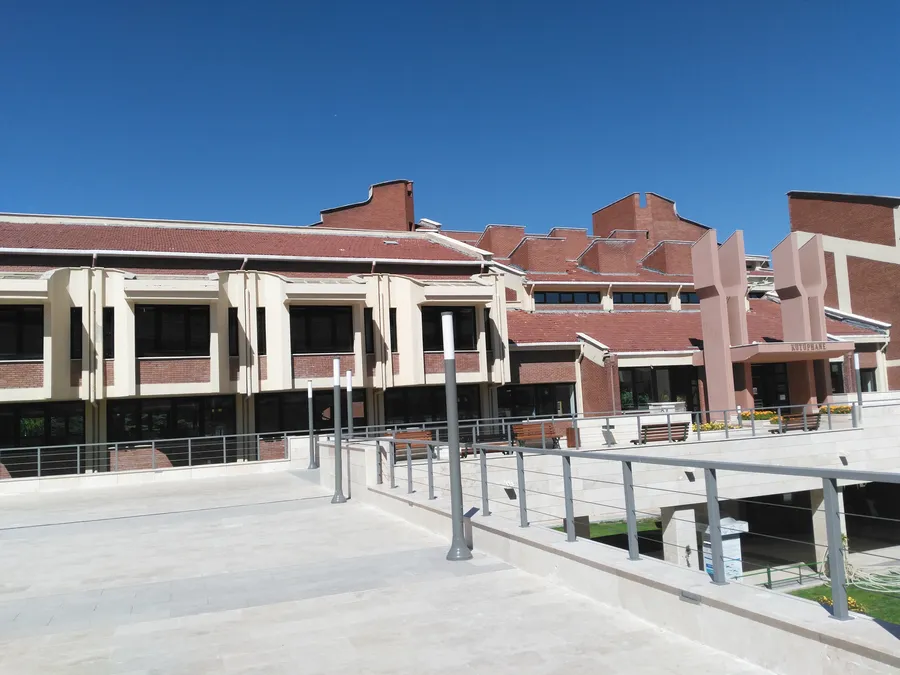
The main library
- Open
- 24 hours a day, including holidays.
- Size
- 12,330 m², with more than 500,000 printed resources and many e-resources.
- Soup, tea, coffee
- Free for students from 00:00 to 01:00 in the library area.
Anadolu at a glance · checked 27.10.2026 · page
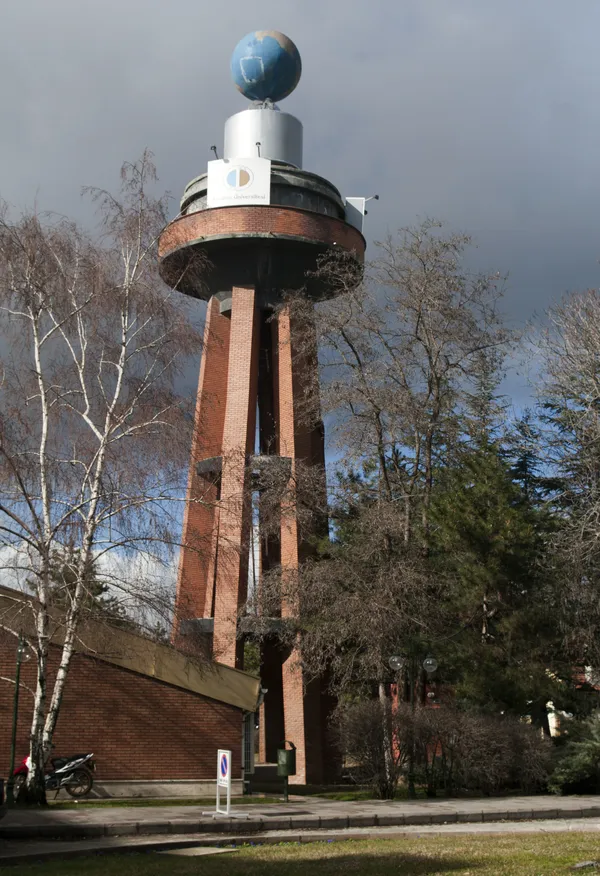
On the campus: the Atatürk Culture and Arts Center, the Congress Center and Cinema Anadolu; an indoor swimming pool, tennis courts, a football field and a sports hall; the Anadolu Symphony Orchestra, a youth choir, folk dance and Theatre Anadolu; three museums, Cumhuriyet, Contemporary Arts and Cartoon Art.
Anadolu at a glance and Campus Information pages · checked 27.10.2026 · glance · campus
Open education: books, a screen and exams
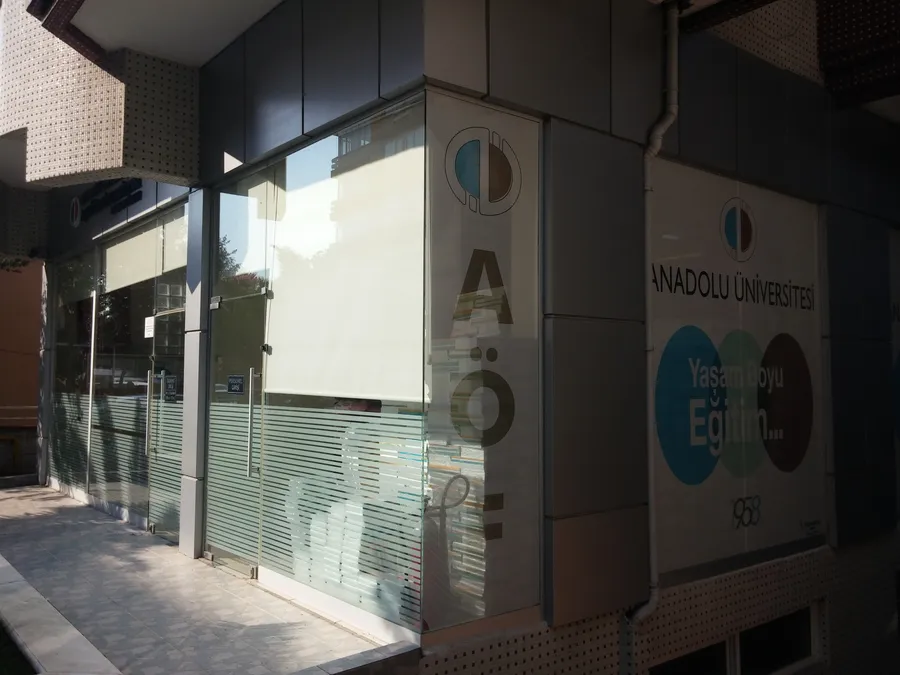
Open education (açıköğretim) is distance study. You register online, study from the course books and online material, and come to an exam centre for the exams. The Open Education Faculty is part of Anadolu University, and its address is Yunus Emre Kampüsü, 26470 Tepebaşı, Eskişehir.

What you study from
- Course books
- Written for distance study since 1982. From 2018–19 they are PDFs on the Anadolum e-Campus; a printed copy can be ordered for a fee, subject to stock.
- The e-campus
- A learning platform with unit summaries, summary videos, exercises, a live-class platform and a mobile app. Log in with a Turkish ID number and password or through e-Devlet.
- For the exams
- Exam questions follow the current PDF edition of the course book.
Textbooks and e-Campus pages · checked 27.10.2026 · textbooks · e-campus
Application is online on the university’s registration site with an e-Devlet password, the state portal login. The 2026–27 year for the Türkiye programmes:
- 05.10.2026 to 17.01.2027Fall semester, 15 weeks. Registration renewal runs 05–19.10.2026.
- 08.02.2027 to 30.05.2027Spring semester, 16 weeks. Registration renewal runs 08–22.02.2027.
- 05.07.2027 to 21.08.2027Summer school, 7 weeks. Course selection runs 05–12.07.2027.
| Exam | Date | Choose the exam centre by |
|---|---|---|
| Fall midterm | 05–06.12.2026 | 19.10.2026 |
| Fall final | 16–17.01.2027 | 06.12.2026 |
| Spring midterm | 10–11.04.2027 | 22.02.2027 |
| Spring final | 29–30.05.2027 | 11.04.2027 |
| Summer school exam | 21.08.2027 | 12.07.2027 |
Academic calendar 2026–27, published 30.03.2026, exam section updated 14.05.2026. Exam dates may change with the schedules of the Ministry of National Education and ÖSYM · checked 27.10.2026 · calendar · exam dates

Exam day has two documents. One is the exam entry document with your photo, from the student portal. The other is an accepted ID: a national ID, a Turkish Republic of Northern Cyprus ID, a driver’s licence with a Turkish ID number, a valid passport, a Mavi Kart (the card for former Turkish citizens) or a temporary ID; abroad, an equivalent national ID. A student card, a professional card, a military ID or a lawyer’s card is not accepted.
- Leaving the hall. You may not leave in the first 30 minutes or the last 5.
- Calculator. Only one without alphabetic keys or programming and storage keys. No phones, papers, books or rulers; use a black pencil.
- Marking. Every exam is multiple choice and computer-graded, and each course is passed separately. One fourth of your wrong answers is taken off your right ones.
- Appeals. An appeal against a result must come within 2 working days of the announcement.
Exam rules page updated 08.10.2025; assessment page updated 13.05.2026 · checked 27.10.2026 · documents · rules · assessment
Exam centres are in provinces and districts and in Lefkoşa (Nicosia, in the Turkish Republic of Northern Cyprus). Overseas programmes have their own calendars on the university’s global campus site.
Programmes outside Türkiye
Overseas programmes began in the Turkish Republic of Northern Cyprus and Western Europe, then reached Azerbaijan (2009–10), Kosovo, North Macedonia and Bulgaria (2012–13), Albania and Bosnia and Herzegovina (2015–16), North America (2016–17), Saudi Arabia (2017–18) and Central Asian and Southern African countries (2021–22). The first foreign-language programmes began in 2017–18: International Relations in English and Theology in Arabic.
Overseas Programs page, Open Education Faculty history · checked 27.10.2026 · page
Applying from abroad: routes, dates and fees
Foreign nationals, and candidates who have graduated from a university abroad, enter open education through TR-YÖS, the Türkiye International Student Admission Exam of ÖSYM. The guide to studying in Türkiye explains the exam, the student visa and the residence permit: Studying in Türkiye.
2026–27 open-education calendar · published 30.03.2026
Applications 15.06 to 10.08.2026, registration 17.08 to 19.10.2026.
Both windows are for international students, and both are past; the next dates are on the university’s calendar page.
The campus programmes have a separate international site: International Students Admission.
Foreign school and university papers may need legalisation first: Legalisation of foreign documents. Grants are in Türkiye scholarships.
The 2026–27 first-registration amounts cover candidates under YKS, YKS additional placement, second university and international student admission. Each figure is the semester teaching-material fee (Dönem Öğretim Materyal Ücreti), in lira.
| Programmes | Which | Per semester |
|---|---|---|
| Associate (two years), 29 programmes | Foreign Trade, Office Management, Cultural Heritage and Tourism and Social Media Management | TL 2,900 |
| Associate | Business Management, Banking and Insurance, Logistics, Accounting and Taxation and eight more | TL 3,010 |
| Associate | Photography and Videography, Brand Communication, Media and Communication, Agricultural Technology | TL 3,275 |
| Associate | Tourism and Hotel Management | TL 3,375 |
| Associate | Computer Programming, Culinary Arts, Web Design and Coding, Geriatric Care and two more | TL 3,385 |
| Associate | Emergency and Disaster Management; Disability Care and Rehabilitation | TL 3,535 |
| Bachelor’s, 20 programmes | Economics, Business Administration, Public Finance, International Relations, Aviation Management and seven more | TL 3,010 |
| Bachelor’s | Philosophy, Sociology, History | TL 3,120 |
| Bachelor’s | Visual Communication and Design | TL 4,300 |
| Bachelor’s, in English | Economics, Business Administration, International Relations | TL 4,960* |
| Bachelor’s, in English | Political Science and Public Administration | TL 4,800* |
* Under YKS the first payment for the English-language programmes is TL 4,000; a difference (TL 960, or TL 800 for Political Science) is charged to students who show foreign-language proficiency after registration. Vertical transfer (DGS) in 2026–27: TL 2,680 to TL 2,790 for direct registration, TL 2,790 to TL 3,230 when registering with extra courses. Fee page updated 31.08.2026 · checked 27.10.2026 · fee page · fee list (PDF)
Getting to Eskişehir
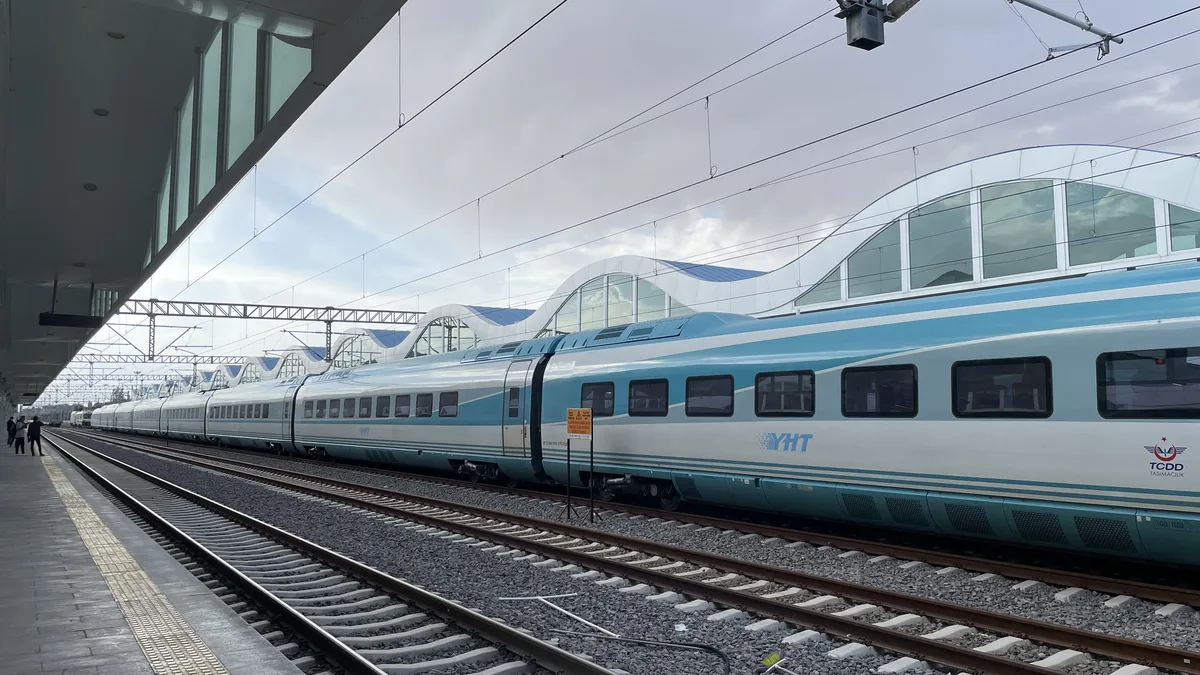
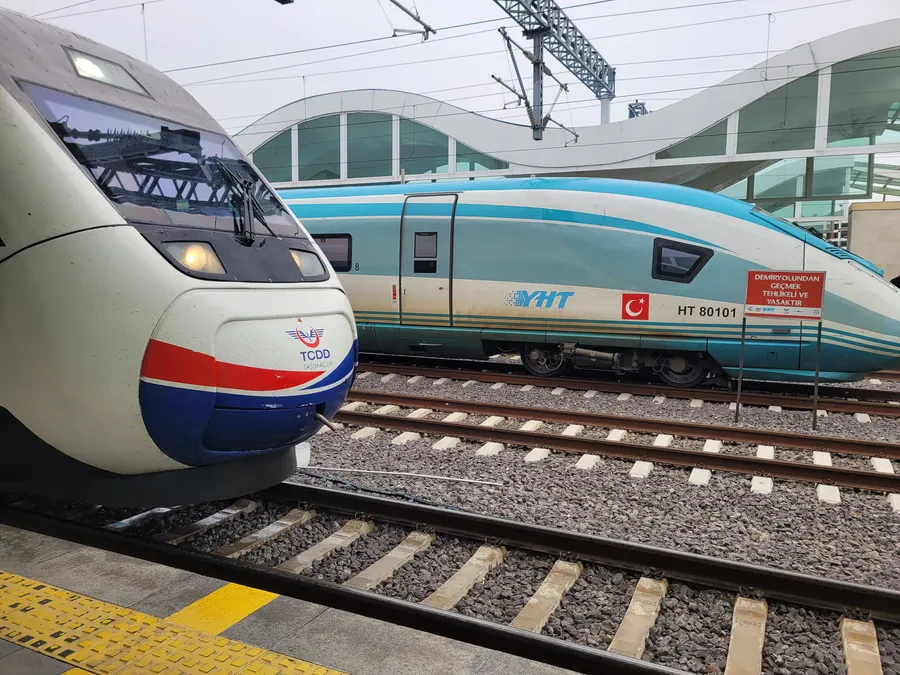
Eskişehir is on the YHT (Yüksek Hızlı Tren, high-speed train) lines. Tickets, times and fares are on the ticket site of TCDD Taşımacılık, the passenger company of the state railways: tcddtasimacilik.gov.tr. The city page covers the tram and the town: Tourism in Eskişehir. The next province is covered in Kütahya.
Quick answers
Is Anadolu University a state or a private university?
State. Private universities in Türkiye are foundation (vakıf) universities, such as Sabancı University.
How many students does it have?
Resident students: 22,843. Active open-education students: 873,584 (table of 07.11.2025).
Is Eskişehir Technical University the same university?
No. Law 7141, published 18.05.2018, set up ESTÜ as a separate state university.
Do I need to live in Eskişehir to study open education?
No. You study from the course books and online material and sit the exams at an exam centre; the centre list covers provinces, districts and Lefkoşa.
What does open education cost?
In 2026–27 the first-registration fee ranges from TL 2,900 to TL 4,960 a semester, by programme.
Which exams does a foreign applicant sit?
TR-YÖS, an ÖSYM exam for foreign nationals and for graduates of universities abroad; the Studying in Türkiye guide explains it.
Is the library open at night?
Yes: the main library is open 24 hours, holidays included, with free soup, tea and coffee from 00:00 to 01:00 in the library area.
Who do I ask about my registration?
The open-education support site and the call centre, 444 10 26.
Show the pages checked
- Anadolu at a glance (updated 07.11.2025) — Anadolu University, checked 27.10.2026
- Faculties — Anadolu University, checked 27.10.2026
- Schools — Anadolu University, checked 27.10.2026
- Vocational Schools — Anadolu University, checked 27.10.2026
- Campus Information — Anadolu University, checked 27.10.2026
- İletişim Bilgileri — Anadolu University, checked 27.10.2026
- Open Education Faculty history — Anadolu University, checked 27.10.2026
- Overseas Programs — Anadolu University, checked 27.10.2026
- How to Become a Student? — Anadolu University, checked 27.10.2026
- New Enrollment (updated 15.05.2026) — Anadolu University, checked 27.10.2026
- Second University — Anadolu University, checked 27.10.2026
- Vertical Transfer (updated 07.10.2025) — Anadolu University, checked 27.10.2026
- Lateral Transfer (updated 07.10.2025) — Anadolu University, checked 27.10.2026
- Academic calendar 2026–2027 (published 30.03.2026) — Anadolu University, checked 27.10.2026
- Öğretim Giderleri (updated 31.08.2026) — Anadolu University, checked 27.10.2026
- 2026–2027 first-registration amounts (PDF) — Anadolu University, checked 27.10.2026
- Examinations — Anadolu University, checked 27.10.2026
- Examination Dates — Anadolu University, checked 27.10.2026
- Exam Center Selection — Anadolu University, checked 27.10.2026
- Documents Required to Sit the Exam — Anadolu University, checked 27.10.2026
- Exam Regulations (updated 08.10.2025) — Anadolu University, checked 27.10.2026
- Student Assessment (updated 13.05.2026) — Anadolu University, checked 27.10.2026
- Textbooks — Anadolu University, checked 27.10.2026
- ANADOLUM e-Campus — Anadolu University, checked 27.10.2026
- Open Education contact — Anadolu University, checked 27.10.2026
- About page (Hakkımızda) — Eskişehir Technical University, checked 27.10.2026
- Home page — Eskişehir Technical University, checked 27.10.2026
Contact · Turkish contact page

Anadolu Üniversitesi, Yunus Emre Kampüsü, 26210 Tepebaşı, Eskişehir. Switchboard: +90 222 335 05 80. Open Education Faculty: Yunus Emre Kampüsü, 26470 Tepebaşı, Eskişehir; call centre 444 10 26; support site aosdestek.anadolu.edu.tr.
The logo belongs to Anadolu University and is shown unaltered to mark the contact details. Checked 27.10.2026 · contact page · open-education contact