Istanbul Technical University: Admission, Language, Campuses
How a foreigner applies to Istanbul Technical University: the exams and minimum scores it prints, the English year, fee rules and the five campuses.
Table of Contents
Istanbul Technical University (İstanbul Teknik Üniversitesi, İTÜ) teaches in 13 faculties on five campuses in Istanbul. This page follows an applicant from abroad: who may apply, the 20 exams and diplomas ITU lists with a minimum score, the documents, the English and Turkish rules, what tuition means and where each campus stands. Every figure is ITU’s own, with the date it was checked.
In short · checked 01.11.2026
A listed exam, a printed minimum, then the language rules.
- 13 faculties, 5 campuses in Istanbul. 37,210 students were enrolled on 31.12.2025.
- Applications are online, usually in August. For 2026–27 the second round for international undergraduate applicants ran from 21.08.2026 to 26.08.2026, 17:00.
- An application needs one of 20 listed exams or diplomas at or above the minimum ITU prints. The slide rule below reads it.
- English and Turkish: a valid English test at registration, or a one-year preparatory class. Programmes taught 30 % in English and the conservatory also need a C1 Turkish certificate within a year of registration.
Tool · exam minimums checked 01.11.2026
The slide rule
Slide the rule to read ITU’s printed minimum for your exam or diploma, then drag it to your own score. The card gives the minimum exactly as ITU prints it, the other conditions, and a question in Turkish for the Registrar’s Office to copy. Nothing you press is stored or sent. ITU says the scores in its table are subject to the approval process of the Council of Higher Education and may change.
1 · Programmes
- Most programmes
- Conservatory
2 · Exam or diploma
- SAT SAT 1 (Scholastic Assessment Test) SATTotal 1200 / 1600 and Math 650 / 800.Total 1000 / 1600. A second row prints 400 / 800 for Reasoning (MAT).SAT and ACT scores are valid for two years.SAT and ACT scores are valid for two years.SAT
- ACT ACT (American College Testing) ACT26 / 36.16 / 36.SAT and ACT scores are valid for two years.SAT and ACT scores are valid for two years.ACT
- IB IB (International Baccalaureate) IB30 / 45.20 / 45.IB
- Abitur Abitur (German high school proficiency) Abitur1-2.1-2-3.Abitur
- Bac FR French Baccalauréat French Baccalauréat15 / 20 for Economics (Economics and Social Sciences) and 15 / 20 for other Sciences (Science and Mathematics).10 / 20 for the applied programme.Valid only if taken from the French Ministry of Education; others are not accepted.Valid only if taken from the French Ministry of Education; others are not accepted.Fransız Baccalauréat
- Matura AT Austrian Matura Austrian Matura1-2.Avusturya Matura
- Matura AL Albanian Matura+ Albanian Matura+9 / 10 (minimum 9.0).Arnavutluk Matura+
- A level GCE Advanced Level (General Certificate of Education) GCE A levelThree A-level courses: one must be Mathematics or Physics with grade A, and the other two at least grade C.At least grade C in 3 courses.GCE A Level
- AP AP (Advanced Placement) exams APThree AP courses: one in Mathematics and Computer Science, or in Basic Science, with grade 5, and the other two at least grade 4.At least grade 4 in 3 courses.AP
- TR-YÖS TR-YÖS (the Exam for Foreign Students of ÖSYM, the Centre for Assessment, Selection and Placement) TR-YÖS400 / 500.340 / 500.TR-YÖS
- Gaokao Gaokao exam (China) Gaokao450 / 750.450 / 750.Gaokao
- STPM Sijil Tinggi Persekolahan Malaysia, STPM (Malaysia) STPMExams taken in Mathematics and two elective subjects, with at least grade B in all three.Exams taken in Mathematics and two elective subjects, with at least grade B in all three.STPM (Malezya)
- Bac MA Diplôme du Baccalauréat (Morocco) Moroccan BaccalauréatA diploma score of at least 12 / 20.A diploma score of at least 12 / 20.Fas Baccalauréat
- Bulgaria Diploma za Sredno Obrazovanie, Diploma of Secondary Education (Bulgaria) Bulgarian diplomaA score of at least 4.0 / 6.0.A score of at least 4.0 / 6.0.Bulgaristan Diploma za Sredno Obrazovanie
- UTBK UTBK-SNBT, the computer-based written exam of the national selection (Indonesia) UTBK-SNBTAt least 550 points.At least 550 points.If the UTBK cannot be submitted, the Ujian Nasional (UN) may be accepted instead: at least 45 out of 60 (weighted average).If the UTBK cannot be submitted, the Ujian Nasional (UN) may be accepted instead: at least 45 out of 60 (weighted average).UTBK-SNBT
- HSC Higher Secondary Certificate (HSC), Higher Secondary School Certificate (HSSC) or Intermediate Certificate (Pakistan) Pakistani HSC80 %: an average of at least 80 % on the certificate or diploma.80 %: an average of at least 80 % on the certificate or diploma.Pakistan HSC
- ENT ENT (Kazakhstan) ENTAt least 100 points.At least 100 points.At least 30 out of 40 from the 3 core compulsory subjects (Basic Mathematics included), and at least 60 out of 100 from 2 elective subjects related to the applied programme.At least 30 out of 40 from the 3 core compulsory subjects (Basic Mathematics included), and at least 60 out of 100 from 2 elective subjects related to the applied programme.ENT (Kazakistan)
- EGE Unified State Examination, EGE (Russia) EGEAt least 70 % in three subjects.At least 70 % in three subjects.Mathematics must be one of them, and at least two of the subjects must be related to the applied programme. The average over the three subjects is at least 70 %.Mathematics must be one of them, and at least two of the subjects must be related to the applied programme. The average over the three subjects is at least 70 %.EGE (Rusya)
- Bachiller Título de Bachiller (Spain) Spanish Bachiller7 / 10.7 / 10.İspanya Título de Bachiller
- Maturità Diploma di Maturità, Diploma di Esame di Stato conclusivo dei corsi di istruzione secondaria superiore (Italy) Italian Maturità70 / 100.70 / 100.İtalya Diploma di Maturità
The slide reads one figure only; the other conditions in the card apply too. A printed minimum is an admission requirement, not a place: ITU places applicants by selection priority, the administration of the faculty evaluates the application, and at most 3 choices are allowed.
Registrar’s Office: [email protected] · +90 212 365 78 00-99 (100 line)
Registrar’s Office, Valid Exam Results page, academic year 2026–27 · checked 01.11.2026 · page
The university: numbers, faculties and history
A faculty (fakülte) is a group of departments, and a department (bölüm) is one programme of study. A campus is a yerleşke. ITU’s faculty page counts 13 faculties for undergraduate programmes and 7 institutes for graduate and doctoral programmes, on 5 campuses in Istanbul.
Size · checked 01.11.2026
37,210 students, 13 faculties.
Enrolled students on 31.12.2025, as ITU’s About page counts them. The same page gives 250,000+ alumni.
The faculties: Computer and Informatics; Maritime; Electrical and Electronics; Science and Letters; Naval Architecture and Marine Sciences; Civil Engineering; Management; Chemical-Metallurgical Engineering; Mines; Mechanical Engineering; Architecture; Textile Technologies and Design; Aeronautics and Astronautics. The Turkish Music State Conservatory is listed beside them.
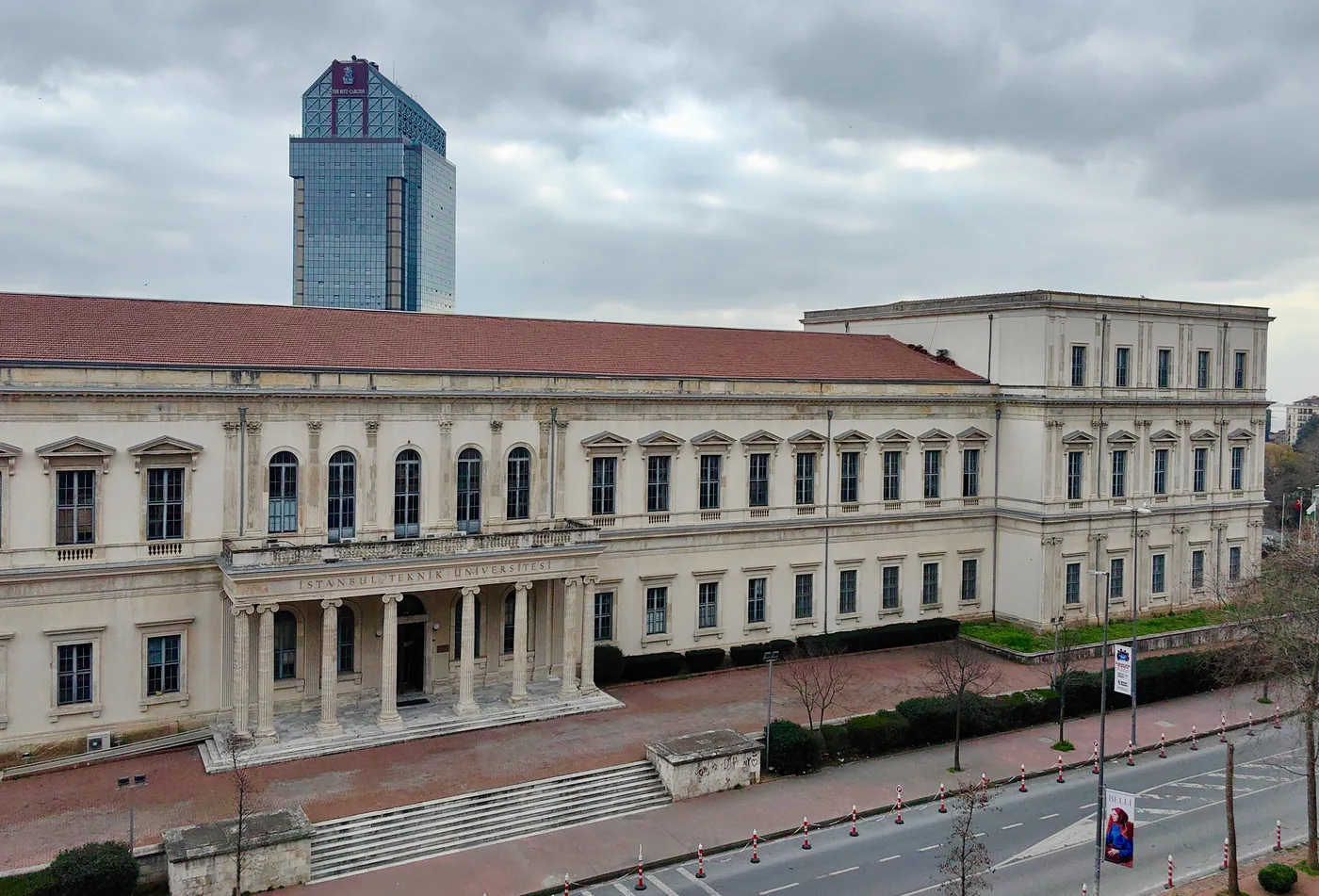
The school’s names, as ITU’s history page lists them
- 1773Mühendishâne-i Bahrî-i Hümâyûn (gloss, not ITU’s wording: «the imperial naval school of engineering»), founded by Sultan Mustafa the Third.
- 1795–1909Mühendishâne-i Berrî-i Hümâyûn (1795; gloss: «the imperial land school of engineering»), Hendese-i Mülkiye (1883; gloss: «the civil school of engineering»), Mühendis Mekteb-i Ali’si (1909; gloss: «the higher school of engineers»).
- 1928–1944School of Higher Engineering (1928), Graduate School of Engineering (1941), then the transition to Istanbul Technical University (1944).
- 1970–1975The Ayazağa main campus (1970), the start of undergraduate and graduate education (1974) and the Istanbul Turkish Music State Conservatory (1975).
- 2023The 250th year in higher education.
ITU About and History pages · checked 01.11.2026 · history · about
Who may apply: the groups ITU lists
ITU’s Application page says that international students who are in their last year at, or have graduated from, a secondary school with a curriculum equivalent to a Turkish high school, and who meet the conditions below, may apply to undergraduate programmes. Applications are made online, usually in August every year, through the Registrar’s Office website.
The five groups on the Application page
- Foreign nationals who have not attended or graduated from a high school in Türkiye. Exceptions the page prints: those who completed all their high school in embassy schools or international private institutions registered in the MOBİS system, and those who came to Türkiye under a project of the Ministry of National Education or the Council of Higher Education.
- Born as Turkish citizens who gave up Turkish citizenship with the Ministry of Interior’s permission, and holders of a Blue Card issued on request after losing citizenship, who have not attended a high school in Türkiye or in the Turkish Republic of Northern Cyprus. ITU advises these applicants to read Article 7 of Law No. 5901 on Turkish Citizenship.
- Foreign nationals who later became Turkish citizens, and dual nationals in that position, under the same high school condition.
- Turkish citizens who completed all their high school abroad, other than in the Turkish Republic of Northern Cyprus. This includes those who completed it in Turkish schools abroad opened under the Ministry of National Education.
- Citizens of the Turkish Republic of Northern Cyprus who have not attended high schools in Türkiye or Turkish-curriculum high schools there, and meet GCE A level, TR-YÖS or other criteria approved by the Council of Higher Education.
ITU Application page, eligibility requirements · checked 01.11.2026 · page
How the place is decided
Placement is made by the applicant’s selection priority, and at most 3 choices are allowed. The administration of the relevant faculty evaluates the applications after all application steps are complete, and the list of students who have the right to register is announced on the Registrar’s Office website.
ITU Application page · checked 01.11.2026 · page
The 2026–27 call table, three lines for international applicants
- 2nd round application conditions to undergraduate programmes for international students
- 21.08.2026 09:00 – 26.08.2026 17:00 (UTC/GMT+3)
- English Proficiency Exam application
- 20.08.2026 09:00 – 02.09.2026 23:59
- English Proficiency Exam registration for the 2026 associate and undergraduate admissions and the candidates on the 2026 list of eligible students
- 03.09.2026 09:00 – 06.09.2026 23:59
- First round
- The Application page says only «usually in August».
All of these dates are past on 01.11.2026. ITU’s registrar page for application and admission · checked 01.11.2026 · call table
The exams: twenty listed, a minimum for each
ITU’s Valid Exam Results page lists 20 exams and diplomas for international undergraduate applicants, each with a minimum, and a second table of minimums for the Turkish Music State Conservatory. The Application page says an applicant applies with one of them: no other exam, and no score below the table’s, is accepted. SAT and ACT scores are valid for two years.
What the table says about three words
- TR-YÖS is the Exam for Foreign Students of ÖSYM, the Centre for Assessment, Selection and Placement. The guide Studying in Türkiye explains it.
- YÖK is Yükseköğretim Kurulu, the Council of Higher Education. ITU says the table’s scores need its approval and may change.
- Conservatory is the Turkish Music State Conservatory. ITU prints a lower minimum for some exams there, and no row for the Austrian and Albanian Matura.
The 20 exams in one list, with both minimums
- SAT 1 (Scholastic Assessment Test)
- Most programmes: Total 1200 / 1600 and Math 650 / 800. Conservatory: Total 1000 / 1600. A second row prints 400 / 800 for Reasoning (MAT).
- ACT (American College Testing)
- Most programmes: 26 / 36. Conservatory: 16 / 36.
- IB (International Baccalaureate)
- Most programmes: 30 / 45. Conservatory: 20 / 45.
- Abitur (German high school proficiency)
- Most programmes: 1-2. Conservatory: 1-2-3.
- French Baccalauréat
- Most programmes: 15 / 20 for Economics (Economics and Social Sciences) and 15 / 20 for other Sciences (Science and Mathematics). Conservatory: 10 / 20 for the applied programme.
- Austrian Matura
- Most programmes: 1-2. Conservatory: no row.
- Albanian Matura+
- Most programmes: 9 / 10 (minimum 9.0). Conservatory: no row.
- GCE Advanced Level (General Certificate of Education)
- Most programmes: Three A-level courses: one must be Mathematics or Physics with grade A, and the other two at least grade C. Conservatory: At least grade C in 3 courses.
- AP (Advanced Placement) exams
- Most programmes: Three AP courses: one in Mathematics and Computer Science, or in Basic Science, with grade 5, and the other two at least grade 4. Conservatory: At least grade 4 in 3 courses.
- TR-YÖS (the Exam for Foreign Students of ÖSYM, the Centre for Assessment, Selection and Placement)
- Most programmes: 400 / 500. Conservatory: 340 / 500.
- Gaokao exam (China)
- Most programmes: 450 / 750. Conservatory: 450 / 750.
- Sijil Tinggi Persekolahan Malaysia, STPM (Malaysia)
- Most programmes: Exams taken in Mathematics and two elective subjects, with at least grade B in all three. Conservatory: Exams taken in Mathematics and two elective subjects, with at least grade B in all three.
- Diplôme du Baccalauréat (Morocco)
- Most programmes: A diploma score of at least 12 / 20. Conservatory: A diploma score of at least 12 / 20.
- Diploma za Sredno Obrazovanie, Diploma of Secondary Education (Bulgaria)
- Most programmes: A score of at least 4.0 / 6.0. Conservatory: A score of at least 4.0 / 6.0.
- UTBK-SNBT, the computer-based written exam of the national selection (Indonesia)
- Most programmes: At least 550 points. Conservatory: At least 550 points.
- Higher Secondary Certificate (HSC), Higher Secondary School Certificate (HSSC) or Intermediate Certificate (Pakistan)
- Most programmes: 80 %: an average of at least 80 % on the certificate or diploma. Conservatory: 80 %: an average of at least 80 % on the certificate or diploma.
- ENT (Kazakhstan)
- Most programmes: At least 100 points. Conservatory: At least 100 points.
- Unified State Examination, EGE (Russia)
- Most programmes: At least 70 % in three subjects. Conservatory: At least 70 % in three subjects.
- Título de Bachiller (Spain)
- Most programmes: 7 / 10. Conservatory: 7 / 10.
- Diploma di Maturità, Diploma di Esame di Stato conclusivo dei corsi di istruzione secondaria superiore (Italy)
- Most programmes: 70 / 100. Conservatory: 70 / 100.
ITU Valid Exam Results page, academic year 2026–27 · checked 01.11.2026 · page. The ITU-TRNC table on the same page is not used here.
The documents and where they go
All candidates apply by uploading their documents to ITU’s system. ITU says the authenticity of the documents is checked by the relevant institutions, and that an application with forged documents is invalid and legal action follows.

What ITU asks of every file
- Readable, complete, PDF. The files go up in PDF format and in the required standards.
- Turkish or English. A document in another language goes up with a Turkish or English translation, together with the original.
- One exam only. The application is made with one result from the table of chapter 3: no other exam, and no lower score.
The seven uploads on the Application page
- High school diploma: the diploma and its approved translation. An applicant without a diploma yet uploads a document from the school with the expected graduation date.
- Transcript: all courses and grades, approved by the high school directorate, with a translation if needed. A university transcript too, for an applicant who studies at or graduated from a university.
- Valid exam result: one of the results in the table of chapter 3, with a certified translation if it is not in Turkish or English.
- Passport: a photocopy of the page with the photograph, not approved. An applicant without a passport skips this upload.
- Blue Card: the card issued by the Turkish government, for those who have one. An applicant without a Blue Card skips this upload.
- Residence permit: uploaded only by those who already have one. The residence permit procedures follow after final registration.
- Statement of Purpose: only for Textile Development and Marketing, Faculty of Textile Technologies and Design: 300 words at most.
ITU Application page, required documents · checked 01.11.2026 · page
The equivalency certificate
The applicant brings an Equivalency Certificate to registration. It comes from the Turkish Ministry of Education or from Turkish embassies in the applicant’s country and confirms that the diploma equals a Turkish high school diploma. ITU’s page for the students who may apply says this under the diploma line; the residence permit and the student visa are in Studying in Türkiye.
ITU Application page · checked 01.11.2026 · page
English and Turkish: what ITU asks
ITU’s Application page asks for an English proficiency result accepted by the ITU Senate, handed in at registration. An applicant without one completes a one-year English preparatory class at the School of Foreign Languages (Yabancı Diller Yüksekokulu). An applicant who hands in a valid result is exempt from the preparatory class and starts the programme directly. The faculties teach 30 % or 100 % in English.

The preparatory class
- One or two terms. Students complete at least one and at most two terms, and pass the ITU Proficiency Exam or one of the exams the Senate approves (TOEFL iBT or PTE), to start in their departments.
- Compulsory since 1997–98. The class has been compulsory for undergraduates since that academic year.
- Passing the exam ends the class. A student who passes continues in the department, not in the preparatory class.
- Contact: Student Affairs Office, 0212 285 7495, [email protected]; Turgut Özal Yabancı Diller Yüksekokulu Kongre ve Öğrenci Sosyal Merkezi, İTÜ Ayazağa Yerleşkesi, 34469 Maslak/Sarıyer.
School of Foreign Languages pages · checked 01.11.2026 · about the programme · questions
The ITU English Proficiency Exam
- Two sessions
- Session 1 lasts 120 minutes: Language Comprehension (14 points: a cloze text of 10 questions at 0.5 and a restatement part of 9 questions at 1) and Reading (36 points: 24 questions at 1.5). Session 2 lasts 135 minutes: Writing (30 points: an academic essay worth 20 and an integrated task worth 10) and Listening (20 points: 10 questions at 2).
- Passing
- Only students with 25 out of 50 in the first session can take the second. To pass, a student needs 25 out of 50 in the second session too.
- Non-ITU candidates
- They can take the exam. At the application stage they choose the non-ITU student category.
- September 2026
- Session I on 09.09.2026 and Session II on 11.09.2026 at 9:30 at the School of Foreign Languages on the Ayazağa Campus. Candidates bring an identity card, driving licence or passport and are in the room 15 minutes before. Registration for those on the 2026 list of eligible students ran 03.09.2026 – 06.09.2026.
- CEFR levels
- The exam score 90–100 corresponds to B2+, 75–89 to B2, 60–74 to B1+.
School of Foreign Languages, proficiency exam pages · checked 01.11.2026 · exam · CEFR table · home page
The preparatory calendar for 2026–27
- 14–15.09.2026English preparatory placement exam.
- 28.09.2026The fall term begins, with orientation for the English preparatory students. Fall break: 16–20.11.2026.
- 08.01.2027The fall term ends. Proficiency exam registration 28.12.2026 – 11.01.2027; the exams are on 15.01.2027 and 18.01.2027.
- 01.02.2027The spring term begins. Spring break: 08–12.03.2027. Registration for the exam: 30.04.2027 – 13.05.2027; the exams are on 26.05.2027 and 28.05.2027.
- 05.07–06.08.2027Summer school. Registration for the exam: 20.07.2027 – 03.08.2027; the exams are on 09.08.2027 and 12.08.2027.
School of Foreign Languages, preparatory classes calendar · checked 01.11.2026 · calendar
The Turkish certificate (C1)
Students accepted to departments of the faculties taught 30 % in English, and to the Turkish Music State Conservatory (except the Musicology programme, taught 100 % in English), hand in a C1 Turkish certificate to the Registrar’s Office within one year of registration. Since 2023–24 it counts only from ITU TÖMER (the Turkish Teaching Application and Research Center) or the Yunus Emre Institute, by a Senate decision of 22.12.2022, no. 820. Those who miss the year are on leave for one more year, and those who miss the legal deadlines are disenrolled by the Registrar’s Office.
ITU Application page and Undergraduate programs page · checked 01.11.2026 · application · programmes
Tuition: who pays, and when
ITU’s Tuitions page says every international student pays a student fee or tuition fee at registration, under the regulations of the Council of Higher Education, to a Vakıfbank branch on the Ayazağa Campus. The page links the amounts for each academic year, and this page prints none.
The fee rules, as ITU’s fee page words them
- Two words
- The student contribution fee (katkı payı) is owed by students of daytime programmes who exceed the programme’s length. The tuition fee (öğrenim ücreti) is owed by international students, students of international dual degree programmes and students of second-degree programmes without a thesis. Both rest on Article 46 of the Higher Education Law No. 2547.
- Who pays tuition
- International students who register within the quota for students from abroad. They keep paying if they later become Turkish citizens.
- When
- At registration or registration renewal, at the start of each semester. A student who does not pay in time, and whose excuse the institution’s board does not accept, cannot enrol for that semester and loses the student rights for it.
- Length of study
- Preparatory class: 1 year, 2 semesters. Four-year undergraduate programme: 4 years, 8 semesters. ITU’s undergraduate page counts 102 programmes, and its all-departments page counts 114 including 18 UOLP programmes.
- Exempt
- Scholarship students whose scholarship covers the fee, within the programme length; children of martyrs and veterans; and the other groups the page lists.
- Discounts
- Students with disabilities, by their level of disability, and a 25 % sibling discount in 2026–27 for international students admitted within the international quotas, if the student and the family hold residence permits in Türkiye and more than one family member studies at a state institution. The application deadline was 17:00 on 02.10.2026.
ITU Tuitions page and fee page · checked 01.11.2026 · Tuitions · student fee and tuition fee
The five campuses: addresses, phones and the road
ITU’s contact page says all five campuses are in central points of Istanbul and reachable by public transport; 8 bus lines on the European side and 2 on the Anatolian side stop at ITU. The department lists below follow ITU’s all-departments page, which tags each department with a campus.
Pick a campus
- Address
- İTÜ Ayazağa Campus, Rectorate Building, 34467 Maslak, Istanbul. The main campus; ITU’s main line is 444 1 488.
- Departments
- Aeronautical Engineering, Artificial Intelligence and Data Engineering, Astronautical Engineering, Chemistry Engineering, Chemistry, Civil Engineering, Computer Engineering, Control And Automation Engineering, Cybersecurity Engineering, Data Science and Analytics, Electrical Engineering, Electronics And Communications Engineering, Environmental Engineering, Food Engineering, Geological Engineering, Geomatics Engineering, Geophysical Engineering, Mathematical Engineering, Metallurgical and Materials Engineering Department, Meteorological Engineering, Mineral Processing Engineering, Mining Engineering, Molecular Biology And Genetics, Naval Architecture And Marine Engineering, Petroleum and Natural Gas Engineering, Physics Engineering, Shipbuilding and Ocean Engineering.
- Getting there
- An ITU metro stop is in front of the main campus. The guide Istanbul Metro lists the M2 line and its İTÜ-Ayazağa stop.
- Address
- İTÜ Mechanical Engineering Faculty, Gümüşsuyu Campus, 34437 Gümüşsuyu, Istanbul. Phone 0 (212) 293 13 00.
- Departments
- Fashion Design, Mechanical Engineering, Textile Development and Marketing, Textile Engineering.
- Getting there
- Any public transport vehicle to Taksim: the Taksim–Hacı Osman metro line or the Kabataş–Taksim funicular. The campus is on Gümüşsuyu Street, between Taksim and Beşiktaş.
- Address
- İTÜ Faculty of Business, Maçka Campus, 34357 Maçka, Istanbul. Phone 0 (212) 293 13 00.
- Departments
- Composition Department, Economics, Industrial Engineering, Instrument Department, Management Engineering, Manufacturing Engineering, Music Technology Department, Music Theory Department, Musicology Department, Turkish Folk Dance Department, Voice Training Department.
- Getting there
- The campus is on the Beşiktaş–Nişantaşı route: vehicles from Beşiktaş through Nişantaşı reach it. From Taksim there is the Taksim–Maçka cable car.
- Address
- İTÜ Taşkışla Campus, 34437 Taksim, Istanbul. Phone 0 (212) 293 13 00.
- Departments
- Architecture, Industrial Design, Interior Architecture, Landscape Architecture, Urban and Regional Planning.
- Getting there
- Any public transport vehicle to Taksim, the Taksim–Hacı Osman metro line or the Kabataş–Taksim funicular. The campus is at the eastern end of Taksim Gezi Park, and the Taksim–Maçka cable car runs between it and Maçka.
- Address
- İTÜ Maritime Faculty, Tuzla Campus, 34940 Tuzla, Istanbul. Phone 0 (216) 395 45 01.
- Departments
- Marine Engineering, Maritime Transportation And Management Engineering.
- Getting there
- The campus is in the Tuzla district, on the Marmara Sea coast. Public transport vehicles run to Tuzla from Kadıköy and Topkapı.
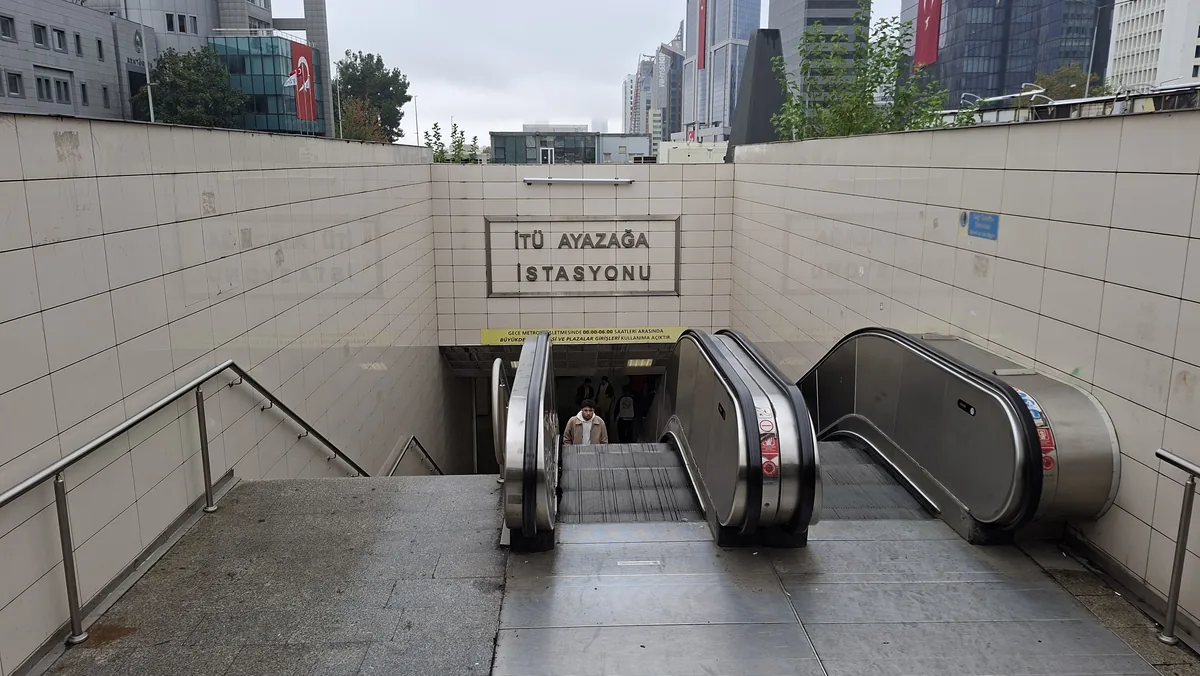
Ayazağa, the main campus
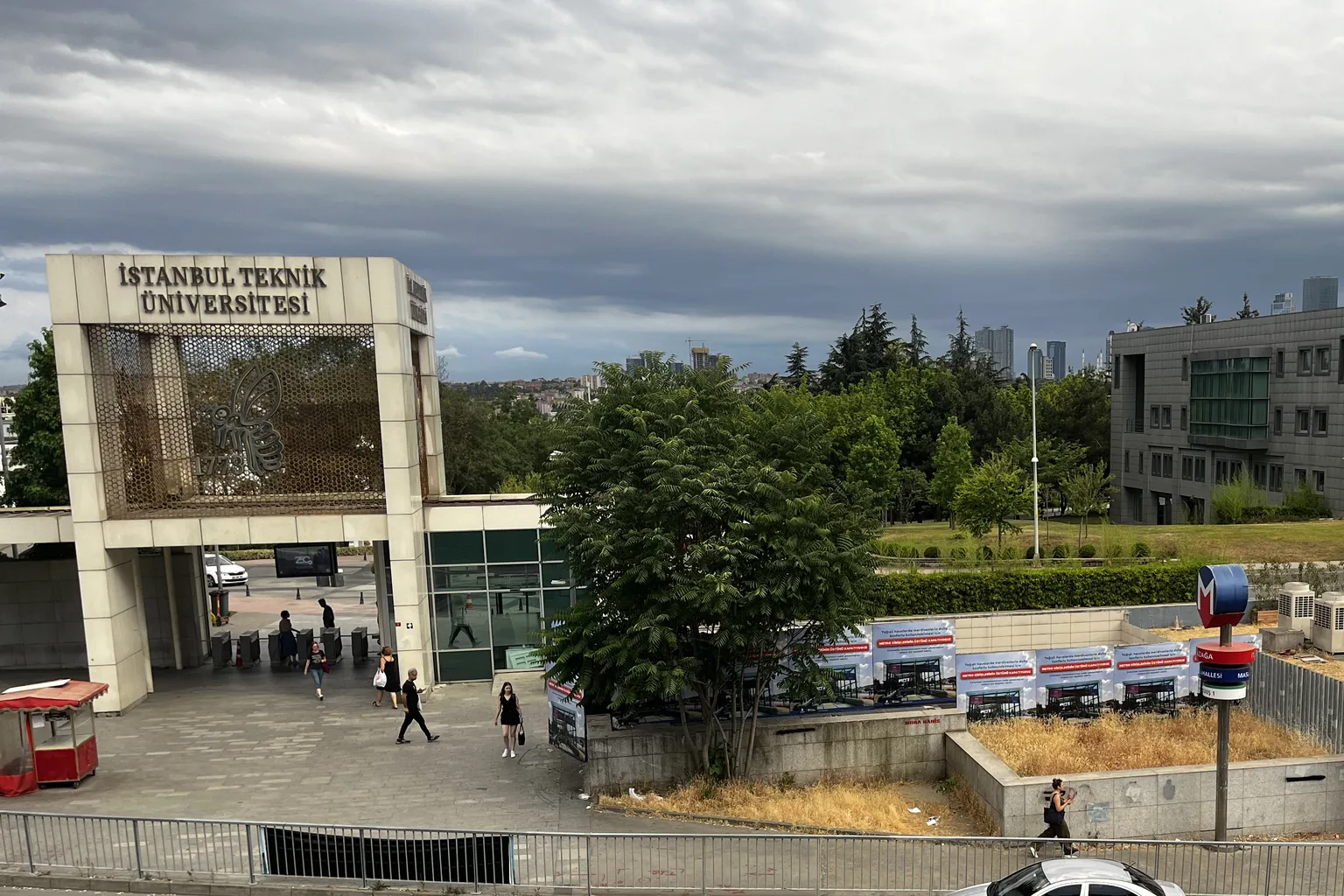
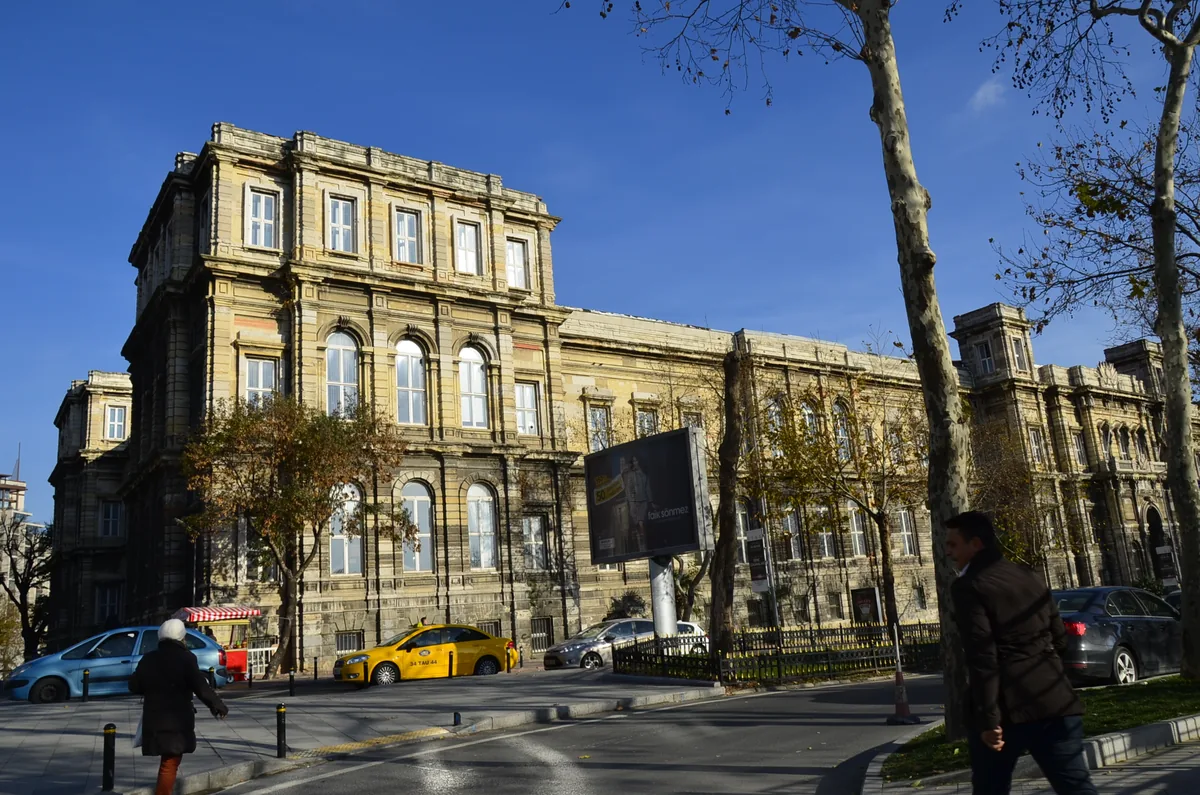
ITU’s contact page says an ITU metro stop is in front of the main campus in Ayazağa. The photograph shows the stop’s sign.
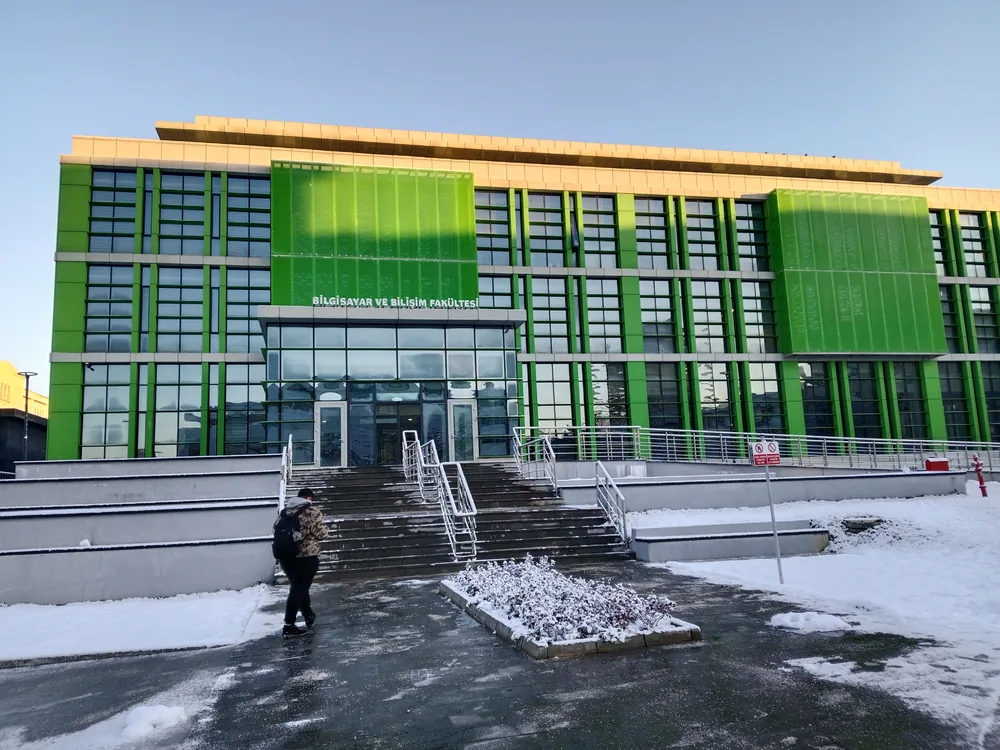
The other campuses
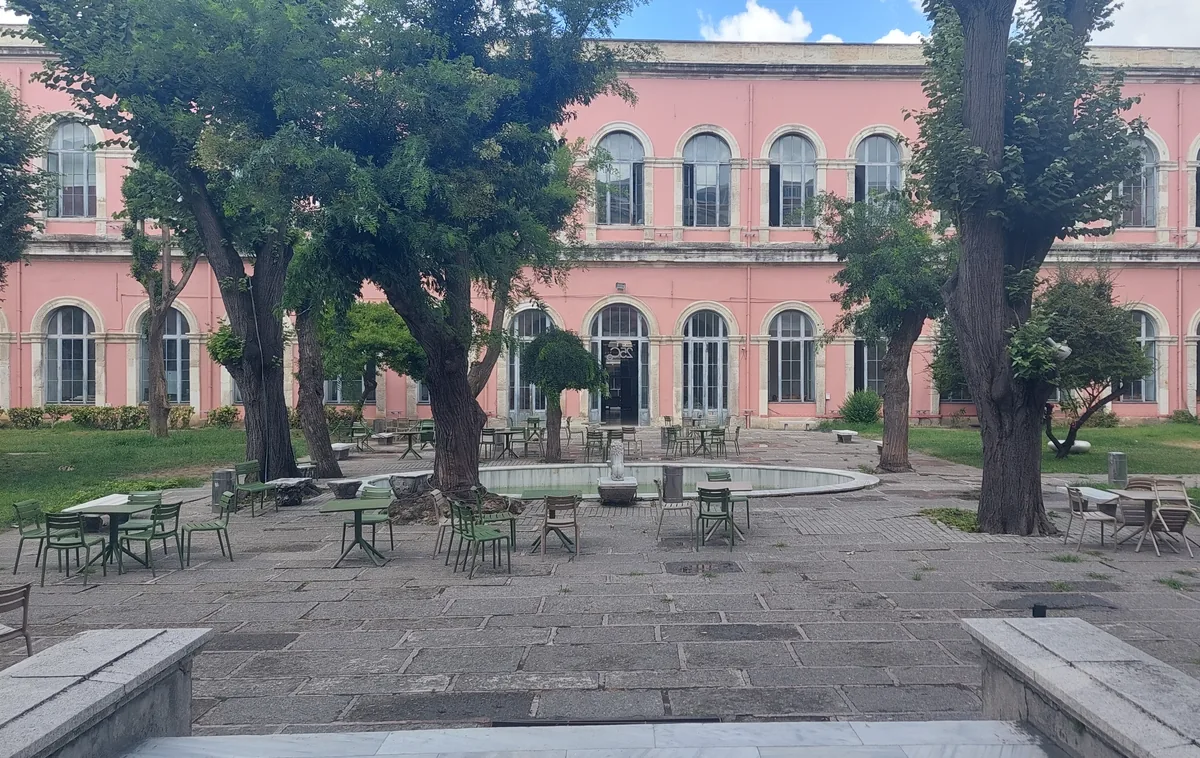
Maçka, Taşkışla, Gümüşsuyu and Tuzla each have their own address and phone in the switch above. The Computer and Informatics building in the photograph is on the Ayazağa Campus.
Housing: dormitories on three campuses
ITU’s Scholarship and Dormitories Coordination says it runs student dormitories with 5,300 beds on the Ayazağa, Gümüşsuyu and Tuzla campuses. ITU’s campus life page speaks of 15 dormitory buildings for 5,000 students. The Coordination’s site lists the dormitory fees, the dormitory regulation (yurt yönergesi) and the 2026–2027 commitment form (taahhütname) on separate pages in Turkish. This page prints no dormitory fee.
Where to ask
- ITU, main line
- 444 1 488
- Registrar’s Office
- [email protected] · +90 212 365 78 00-99 (100 line) · İTÜ Ayazağa Campus, 34469 Maslak, Istanbul
- School of Foreign Languages
- [email protected] · 0212 285 7495
- Residence permit
- ITU’s international students index has a Residence Permit page. The guide Studying in Türkiye covers the student visa and the permit.
ITU Scholarship and Dormitories Coordination, campus life, international students pages · checked 01.11.2026 · dormitories · campus life
Studying in Türkiye
The national system, TR-YÖS, how to apply in general and the student residence permit.
Turkey Scholarships
Türkiye Bursları, the state scholarships.
Istanbul Metro
The lines, including the M2 and its İTÜ-Ayazağa stop.
Working as an engineer in Türkiye
What a foreign engineering graduate does next.
Graduate level: in one fold
Master’s and doctoral applications from abroad
- When
- Online, twice a year, in the fall and spring semesters. The quotas, deadlines and conditions of the programmes are announced each term on the Registrar’s Office website.
- Test scores
- One of ALES (the Academic Personnel and Graduate Level Entrance Exam), GRE or GMAT, valid for 5 years. Master’s: ALES at least 55. Doctorate after a bachelor’s degree: ALES at least 80, not required for the Social Sciences Institute music programmes. GRE: at least 610 in Quantitative (149 in the new system). GMAT: at least 450, for the Graduate School of Arts and Social Sciences.
- Doctorate
- After a bachelor’s degree, a cumulative GPA of at least 3.0 out of 4.00.
- Documents
- Transcripts, test score, Statement of Purpose, Curriculum Vitae and two recommendation letters for each programme. For a master’s, one letter comes from an instructor the applicant worked with; for a doctorate, one from the planned supervisor. The referee uploads the letter, not the applicant.
ITU Application page, graduate section · checked 01.11.2026 · page. The required scores and GPA can differ by programme.
Quick answers in a few lines
Who may apply from abroad?
Five groups: foreign nationals without a Turkish high school, former Turkish citizens and Blue Card holders, those who later became citizens, Turkish citizens who studied all their high school abroad, and Turkish Republic of Northern Cyprus citizens with GCE A level, TR-YÖS or other approved criteria. Chapter 2 gives the conditions.
Which exams count?
20 exams and diplomas, each with a minimum. The slide rule above and the list in chapter 3 give them. Some exams carry two conditions, for example the SAT total and its Math part.
When did the 2026–27 window run?
ITU’s call table lists the 2nd round for international undergraduate applicants from 21.08.2026 to 26.08.2026, 17:00. The first round is «usually in August».
Is English required?
A valid English test at registration, or a one-year preparatory class at the School of Foreign Languages. The class lasts one or two terms and ends with the ITU Proficiency Exam.
Is Turkish required?
For departments taught 30 % in English and for the conservatory: a C1 certificate from ITU TÖMER or the Yunus Emre Institute within a year of registration.
What does tuition cost?
This page prints no amount. International students pay a tuition fee at registration; ITU’s Tuitions page links the amounts for each academic year.
Where are the campuses?
Ayazağa (the main campus), Gümüşsuyu, Maçka, Taşkışla and Tuzla, all in Istanbul. Chapter 7 has the addresses and the road.
Whom to ask?
The Registrar’s Office: [email protected], +90 212 365 78 00-99. ITU’s main line is 444 1 488.
Sources and limits
Show the pages checked
- İTÜ home page: Istanbul Technical University, checked 01.11.2026
- About: Istanbul Technical University, checked 01.11.2026
- History: Istanbul Technical University, checked 01.11.2026
- List of faculties: Istanbul Technical University, checked 01.11.2026
- All departments: Istanbul Technical University, checked 01.11.2026
- Contact and campuses: Istanbul Technical University, checked 01.11.2026
- Campus life: Istanbul Technical University, checked 01.11.2026
- Scholarship and Dormitories Coordination: Istanbul Technical University, checked 01.11.2026
- Application and admission, 2026–27 call table: Registrar’s Office, checked 01.11.2026
- International students: Registrar’s Office, checked 01.11.2026
- Application process: Registrar’s Office, checked 01.11.2026
- Valid exam results: Registrar’s Office, checked 01.11.2026
- Tuitions: Registrar’s Office, checked 01.11.2026
- Explanations about student fee and tuition fee: Registrar’s Office, checked 01.11.2026
- Undergraduate programs: Registrar’s Office, checked 01.11.2026
- School of Foreign Languages home page: School of Foreign Languages, checked 01.11.2026
- About the programme: School of Foreign Languages, checked 01.11.2026
- Proficiency exam: School of Foreign Languages, checked 01.11.2026
- Frequently asked questions: School of Foreign Languages, checked 01.11.2026
- Proficiency exam and CEFR equivalency: School of Foreign Languages, checked 01.11.2026
- Preparatory classes academic calendar: School of Foreign Languages, checked 01.11.2026
Photos are from Wikimedia Commons, each with its author, date, licence and file page in the caption. Pictures marked «Illustration» are drawn for this guide.
Where two ITU pages differ, this page says so or prints neither figure. Dates, minimums and rules are those printed for 2026–27 on the date shown.