Turkey Scholarships (Türkiye Bursları): Who Can Apply
Turkey’s government scholarship for international students: who can apply, what it covers, the papers to upload, the dates and how selection works.
Table of Contents

Türkiye Scholarships (Türkiye Bursları) is the Turkish state’s scholarship for students from other countries. It pays for a university place in Türkiye, from a two-year associate degree to a PhD, and it also covers housing, health insurance, a year of Turkish and a monthly stipend. The folder checks your age and grade average against the limits and makes a checklist for you to copy.
Türkiye Scholarships, in short
Five things to know.
- What it is: a government-funded scholarship for international students at associate, bachelor’s, master’s and PhD level. The Presidency for Turks Abroad and Related Communities (YTB) runs it with other state bodies.
- Who can apply: people from any country except Turkish citizens. The age limit is under 21 for associate and bachelor’s, under 30 for master’s and under 35 for PhD. The grade average must be at least 70% (associate, bachelor’s), 75% (graduate) or 90% (Medicine, Dentistry, Pharmacy).
- What it covers: a university place, tuition, a year of Turkish, housing, general health insurance, a flight ticket for the first arrival and one for the journey home, and a monthly stipend of 6,500 TL (associate, bachelor’s), 9,500 TL (master’s) or 13,000 TL (PhD).
- Dates: the 2026 round ran 10 January – 20 February 2026. Results usually come in early August. The next round’s dates come with the programme’s announcement.
- Who decides: a selection committee, after an expert review and an interview.
The application folder check your numbers, copy the checklist
Pick a level, type your age and grade average, and tick the papers you hold. The folder compares your two numbers with the limits and stamps the result. The checklist under it is ready to copy, and the stubs show the dates of the 2026 round. The stamp cannot tell who will be chosen: a selection committee decides.
The application folder
Type your numbers, copy the checklist
The 2026 round ran 10 January – 20 February 2026
Limits by level
| Level | Age | Grade average |
|---|---|---|
| Associate | under 21 | at least 70% |
| Bachelor’s | under 21 | at least 70% Medicine, Dentistry, Pharmacy: at least 90% |
| Master’s | under 30 | at least 75% |
| PhD | under 35 | at least 75% |
Papers to upload
- ID card or passport
- Photo taken in the last year
- National exam results (if any)
- Diploma or temporary graduation certificate
- Transcript
- International exam results (GRE, GMAT, SAT) (if the university or programme requires it)
- Language test results (TOEFL, DELF) (if the university or programme requires it)
- Research proposal and a written example of your research (PhD applications only)
Dates
- Apply 10 January – 20 February 2026
Applications went through the online application system and cost nothing. The 2026 round ran 10 January – 20 February 2026; it was announced on 29 December 2025. The next round’s dates come with the programme’s announcement. - Evaluation March–April
Every application is checked for the minimum grade average, the age limit and the papers. An expert committee then looks at each eligible application and sets the shortlist for the interviews. - Interviews April–June
Interviews usually last 15–30 minutes. Bachelor’s applicants first take a 30-question test of mathematics, geometry and logic, 60 minutes long, on the same day. Applicants bring the original documents of their latest education. - Results Early August
A selection committee goes through the interview results and names the applicants who receive scholarships. Results are announced in early August. - Initial procedures August
The first paperwork of awardees runs in August. Awardees ask for the once-off flight ticket in the online application system before they travel. - Arrival in Türkiye September
Awardees travel to Türkiye in September. The monthly stipend goes into the bank account they open after arriving, and the general health insurance becomes active after a 30-day provisioning period.
Checked 22 October 2026
The programme in a minute where it comes from, how big it is
Türkiye has given scholarships to students from abroad for many years. In 2012 the state put them under one name, Türkiye Scholarships, and the Presidency began to coordinate the work. Four more state bodies take part: the Council of Higher Education, the credit and dormitories agency (KYK), the migration agency and the foreign ministry.
150,000+
members of the Türkiye Alumni Network, who work in 160 countries
100+
countries that the interviewed candidates come from
12
choices of university and programme
95 fields
in 46 cities, at four levels of study
Applications are judged on academic success, social activities and motivation for the chosen field.
Who can apply age, grade average and groups
Each level has an age limit and a minimum grade average. A candidate has to be within both. Being within them makes an applicant eligible, nothing more: a selection committee still chooses among the eligible applicants.
| Level | Age limit | Grade average |
|---|---|---|
| Associate degree and bachelor’s degree | Under 21 | At least 70% |
| Medicine, Dentistry and Pharmacy | Under 21 | At least 90% |
| Master’s degree | Under 30 | At least 75% |
| PhD | Under 35 | At least 75% |
Three groups are eligible and two are not:
- Citizens of all countries.
- Graduates, and students who graduate at the end of the current academic year, before August.
- Researchers and academics, for the Research Scholarship.
- Turkish citizens and people who lost Turkish citizenship.
- People who are enrolled at that level in a Turkish university at the time of the application.
Each level covers its own fields:
- Associate
- Two-year technical and vocational programmes, which add professional knowledge and skills to a career.
- Bachelor’s
- Many departments in engineering, social sciences, health sciences and basic sciences.
- Master’s and PhD
- Social sciences, humanities, natural sciences and engineering. There are no graduate scholarships in health sciences.
- Art
- Performing arts, music and fine arts, at three universities.
A candidate chooses only among the universities and departments that the system offers for that candidate’s education so far. The programme search on the programme’s website filters programmes by field, city and level: 95 fields in 46 cities, at four levels. Before applying, check that the field is valid, and recognised as equivalent, in your own country.
What the award covers item by item
The award covers study and the first costs of living: a place at a university, the fees, a year of Turkish, a bed, health care, a flight and a monthly stipend. Amounts are in Turkish lira (TL).
| Item | What it covers |
|---|---|
| University and department | The programme places each awardee at a university and in a department. One application holds 12 choices of university and programme. |
| Tuition | Covered, with the fees of the Turkish course. |
| Turkish course | One year of free Turkish at a Turkish teaching centre of a university. Every awardee without a C1 certificate takes it, including those placed in English-taught programmes. |
| Housing | Bachelor’s awardees live in a dormitory for the whole study, with the fees covered. Master’s and PhD awardees live in a dormitory in the first year. After that, they can rent a home with a housing allowance of 6,000 TL (İstanbul and Ankara) or 5,000 TL (other cities). |
| Health insurance | General health insurance for every awardee. It becomes active after a 30-day provisioning period. |
| Flights | A once-off ticket on first arrival and another one for the journey home after graduation. |
| Monthly stipend | 6,500 TL for associate and bachelor’s, 9,500 TL for master’s and 13,000 TL for PhD, paid into the bank account the awardee opens after arriving. Merit Scholarship awardees receive twice the regular amount. |
Bachelor’s awardees live in a state dormitory (KYK) for their whole study. Students are placed in a dormitory as close to the university as possible. After arriving in the city, they go to the dormitory in person and register there.
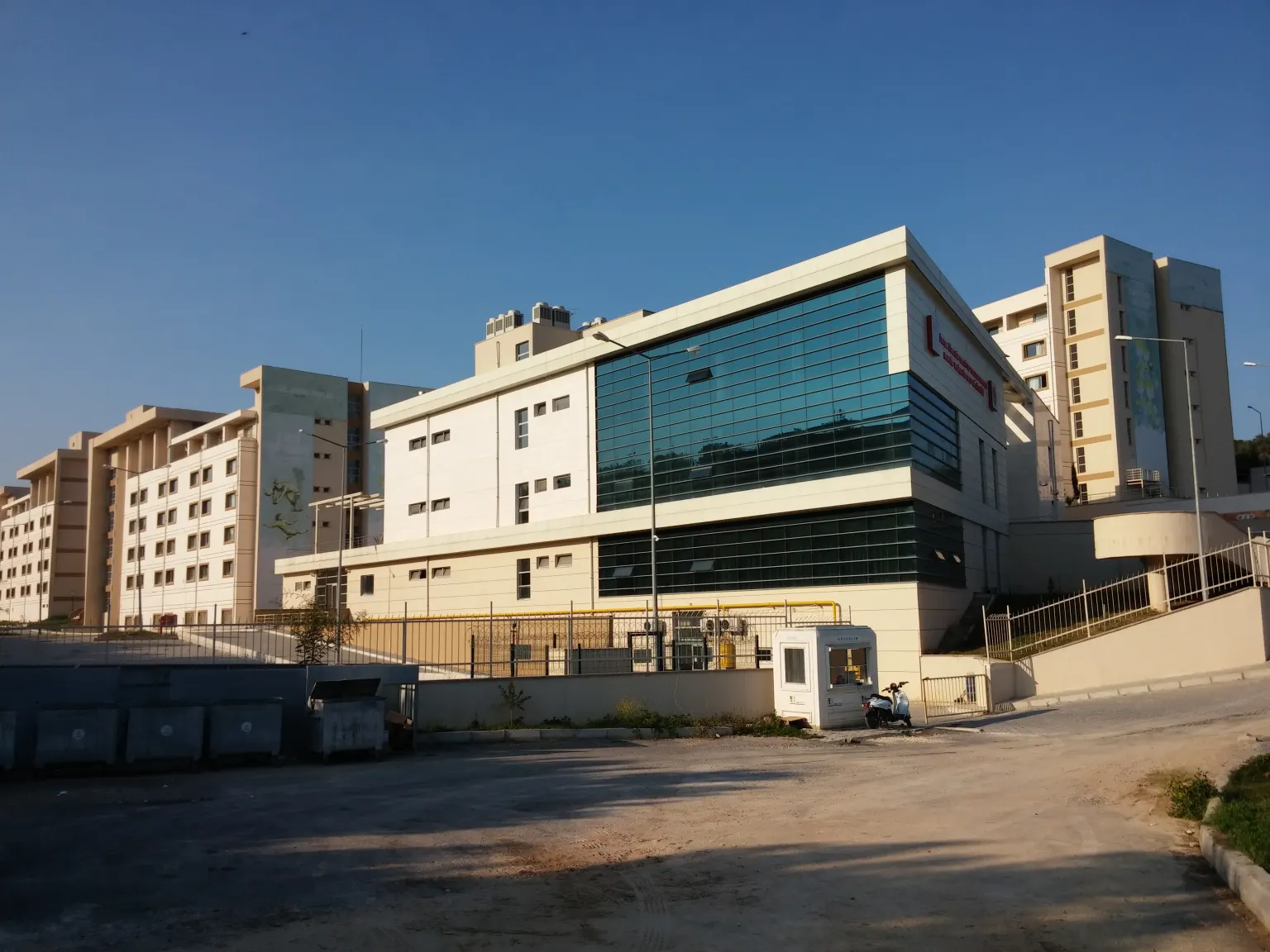
Master’s and PhD awardees live in a dormitory in their first year. After that they can rent a home with a housing allowance of 6,000 TL a month in İstanbul and Ankara, or 5,000 TL in other cities. Private dormitories that belong to the dormitories agency are another choice. Someone who looks for a private place can rent a single room, or a whole flat through an agent or directly from a landlord.
A student in a state dormitory who wants to change it sends a request to the provincial office of the dormitories agency and tells the programme. For a private, university or foundation dormitory the request goes to the programme. After graduation, or after a scholarship ends, the programme can add up to 2 months of housing support. A student who gave up the dormitory place once, during the acceptance process, cannot ask for a dormitory place or housing support from the programme later.
Awardees can join the student clubs of their universities. The programme also runs the International Student Academy: seminars, specialisation programmes, culture and art programmes and online programmes. Every international student in higher education in Türkiye can take part, and the lessons are taught in Turkish. The programme also organises student congresses and art competitions. After graduation, awardees join the Türkiye Alumni Network: more than 150,000 members in 160 countries, with alumni associations that graduates started in many countries and an online alumni portal.
How long it lasts a Turkish year, then the degree
The scholarship starts when the agreement is signed. Payments start when the awardee enrols. A student who does not enrol in time loses the status. If the reason lies outside the student’s control, for example a programme that did not open at the university or a journey to Türkiye that was delayed, the programme looks at the case.
An awardee who already holds a C1 Turkish certificate starts the degree at once. A year of foreign-language preparation, or for master’s and PhD students a year of scientific preparation, can add up to one more year.
A student who cannot finish in time can ask for one more year, and for up to two more years in programmes graded pass–fail, such as Medicine, Dentistry and Pharmacy. The request needs proof that the student can graduate in that time: a bachelor’s student shows a letter from the university with the credits still missing, and a graduate student shows how the thesis is going, with the opinion of the thesis adviser.
The year, month by month the 2026 round
The 2026 round was announced on 29 December 2025, with posters and flyers in 22 languages. Applications run from 10 January to 20 February every year and cost nothing; the programme confirms the dates when it announces each round.
| Step | When, in the 2026 round |
|---|---|
| Applications | 10 January – 20 February 2026 |
| Evaluation | March–April |
| Interviews | April–June |
| Results | Early August |
| First paperwork | August |
| Journey to Türkiye | September |
The other programmes keep their own calendars. The Success Scholarship takes applications in October–November, with results in November. The Research Scholarship has four periods a year: January–March, April–June, July–September and October–December. Its results come the month after each period closes. The dates of these programmes are announced on the programme’s website and social media.
Papers to upload what the online system asks for
Every applicant uploads the same set of papers in the online application system (tbbs.turkiyeburslari.gov.tr).
- A valid identity document: an ID card or a passport.
- A photo taken within the last year.
- National exam results, if any.
- A diploma or a temporary graduation certificate.
- A transcript.
- International exam results (GRE, GMAT, SAT and similar), if the chosen university or programme requires them.
- Language test results (TOEFL, DELF and similar), if the chosen university or programme requires them.
- PhD applications only: a research proposal and a written example of the research the applicant has done.
GRE, GMAT and SAT are international admission tests, and TOEFL and DELF are language tests. Many programmes at Turkish universities are taught in Turkish. Some universities teach in English or other languages. Those programmes ask for an internationally accepted language certificate, such as TOEFL, or an equivalent that the university accepts, and most of them ask for an international admission test as well. The application system shows the teaching language of each programme while the applicant chooses.
A bachelor’s applicant who holds an international qualification such as SAT or GCSE (a school qualification from the United Kingdom) instead of national exam scores needs the minimum result that is accepted as finishing secondary school in that exam. C1 is the fifth of six levels on the European language scale (A1 to C2). Every awardee without a C1 Turkish certificate, including those placed in English-taught or other foreign-language programmes, takes the one-year Turkish course and has to reach C1 by the end of that year.
How selection works five steps
Each application goes through five steps.
- Preliminary check Every application is checked for the minimum grade average, the age limit of the level and the papers.
- Expert review An expert committee looks at each eligible application: academic status, earlier qualifications, academic interests, career goals, the consistency of the choices, the letter of intent and social activities. It then sets the shortlist for the interviews.
- Test Bachelor’s candidates take a 30-question test of mathematics, geometry and logic, 60 minutes long, on the day of the interview. It is set for health sciences, science and engineering, the fields with the most applications, and also for social sciences, where results are compared within the field. Some questions come with an explanation in Turkish and English, and some need no translation. The questions follow the curriculum of the candidate’s own country and the Turkish curriculum, so a candidate who plans to study in Türkiye should know the core of the Turkish one. Candidates for health, science and engineering programmes need enough English to follow the questions. Candidates from some countries take a longer test. A sample test and its answer key are public.
- Interview Candidates from more than 100 countries reach this step. Committees of academics and experts hold the interview, which usually lasts 15–30 minutes: a welcome, a check of documents, the purpose of the application, academic knowledge and career goals, and a close with the candidate’s own questions. The test and the interview fall on the same day, in a morning or an afternoon session, and the invitation names the time. Candidates bring the original documents and certificates of the latest education they completed.
- Final selection A selection committee evaluates the interview results and names the applicants who receive scholarships. At this step it also checks the general eligibility of each applicant.

After an award money, health, residence, Turkish and flights
The stipend is paid every month, after the month has ended: January’s payment arrives on 1 February, and so on. A month is paid when nothing blocks the scholarship for at least 20 days of it, except the first month and the month of graduation. If a student is paid too much, the programme takes it back at 25% of the scholarship each month, or faster when graduation is near. Awardees tell the programme about any change in their student status within 15 days: a suspension of enrolment, a transfer, a leave, a health report, a marriage, military service or a new address.
Health insurance
How does the health insurance work?
The scholarship pays for the general health insurance, and the programme does the registration, the premium payments and the renewals. Care is free in public hospitals, in university hospitals and in private institutions that have a contract with the social security institution. With a doctor’s prescription, any pharmacy hands out the medicine for the contribution fee only. The insurance becomes active after a 30-day provisioning period. For the registration, the awardee gets a foreigner identification number as soon as possible and hands it to the programme.
What if a doctor is needed before the insurance is active?
In an emergency, the cost of treatment in a public hospital can be refunded. Four papers go into the online application system under a request called Health Expenditure Statement: the provisioning inquiry document that shows the insurance was not applied on the day, the bank receipt for the fee, a photocopy of the prescription and the invoice for the medicine. Costs in private institutions and medicines that the insurance does not cover are not refunded.
Where does a student get a paper that shows the insurance during the 30 days?
The insurance provisioning document comes from the e-government portal or from a provincial or district office of the social security institution. Students need it, for example, for the residence permit.
Residence permit
How does an awardee get a residence permit?
First comes an online application in the e-residence system (e-ikamet.goc.gov.tr). On the day of the appointment, the awardee goes to the migration office of the province where the university is, with the documents the system asks for. Student permits can only be applied for in that province. A first application is made before the visa or the visa exemption ends, and right after enrolment at the university. The permit covers the study period.
Which documents does the permit need?
After the online application, the required documents appear on the application form and in the “requested documents” section of the e-residence screen. The migration information line, 157, answers more questions, and the migration office of the province answers questions about the state of an application.
When does the permit have to be extended?
From 60 days before it expires, and in any case before it expires. The request goes to the migration office of the university’s province, by appointment through the e-residence system, with the documents.
What if an appointment is missed?
The application is not processed. If the permit is still valid, a new appointment can be made. If it has expired, the student is in violation of the residence rules.
Can an awardee leave the country while the application is pending?
On the day of the appointment the migration office issues a residence application paper. To leave the country, this paper has to be approved by the office. The approved copy allows leaving and coming back, as long as the student returns within 15 days.
What if papers are missing?
The migration office can allow up to 30 days to complete them. If they do not arrive in time, the application is dropped from processing.
Can an extension be requested with an expired passport?
No. An extension cannot be requested with an expired passport.
What if the permit expires while the student is abroad?
Residence applications cannot be made from abroad. The student enters Türkiye under the visa rules that apply between the two countries.
What if a student has two foreigner numbers (YU numbers)?
The student asks the migration office in the university’s province to combine them.
What ends a student permit?
The permit is cancelled when enrolment is suspended, when the student is dismissed from the university or does not renew the enrolment, and at graduation. A student who wants to stay after graduating applies for a permit that fits the new purpose before graduating.
The Turkish year
The Turkish year takes place at the Turkish teaching centre of a university in the province of the awardee’s own university, and has 960 hours of Turkish and 140 hours of academic Turkish. A C1 certificate from the Yunus Emre Institute or from the Turkish teaching centre of a university ends the need for it. So does a certificate of graduation from a programme taught in Turkish, or a high-school diploma from a school that follows the curriculum of the Turkish Ministry of National Education. Someone who knows Turkish but holds no paper can take the exemption exam of the teaching centre, which is free; the acceptance letter names the centre. A student who then starts the degree at once tells the programme within 10 days.
Attendance matters in the Turkish year. A student who misses more than 20 hours in a month loses 25% of the scholarship for the next three months, and more than 100 lesson hours missed without an excuse or permission ends the scholarship. A student who earns the certificate starts the degree in the next academic year, or in the second semester if the first-semester course went well and the university agrees. A student who fails the year is paused, not ended: the scholarship stops until a certificate and proof of a started degree arrive, and the pause is not part of the length. Without a certificate by the end of the second year, the scholarship ends.
Flights
The programme provides a once-off ticket for the first arrival and another for the journey home after graduation, either by buying the ticket or by paying the cost in cash. A student who bought the first ticket hands in a copy of it and the receipt, to be repaid. For the return, the student shows proof of graduation, applies within 6 months after graduation and notifies the programme at least 15 days before the date.
Other tracks merit, art, research, short-term and joint
The Merit Scholarship is for students with outstanding results, and it pays twice the regular monthly stipend. An applicant needs a grade average of 90% and has to meet more conditions for the level. SAT, GRE and the IB (International Baccalaureate) are international exams. ALES is the Turkish entrance exam for graduate study. TOEFL iBT and IELTS test English.
| Level | Grade average | Exam scores and other conditions |
|---|---|---|
| Bachelor’s | 90% | At least one of three conditions. (1) SAT 1400 (Math 680/800) for engineering or SAT 1350 for other departments, or IB 33 with a Higher Level subject for the chosen programme, together with TOEFL iBT 80/120 or IELTS 6.5/9.0. (2) One of the ten highest scores in the national exam of the applicant’s country. (3) A gold, silver or bronze medal at an international science olympiad that the Scientific and Technological Research Council of Türkiye recognises. |
| Master’s | 90% | ALES Quantitative 80 (engineering), ALES Quantitative 75 (science) or ALES Equal Weight 75 (other departments); or GRE Quantitative 155 (engineering) or 153 (other departments). Plus TOEFL iBT 90/120 or IELTS 7.0/9.0. |
| PhD | 90% | ALES Quantitative 85 (engineering), ALES Quantitative 75 (science) or ALES Equal Weight 75 (other departments); or GRE Quantitative 160 (engineering) or 157 (other departments). Plus TOEFL iBT 90/120 or IELTS 7.0/9.0. |
The olympiads for the bachelor’s route are the international olympiads in mathematics, physics, science, informatics, and astronomy and astrophysics. The medal has to come from one of these.
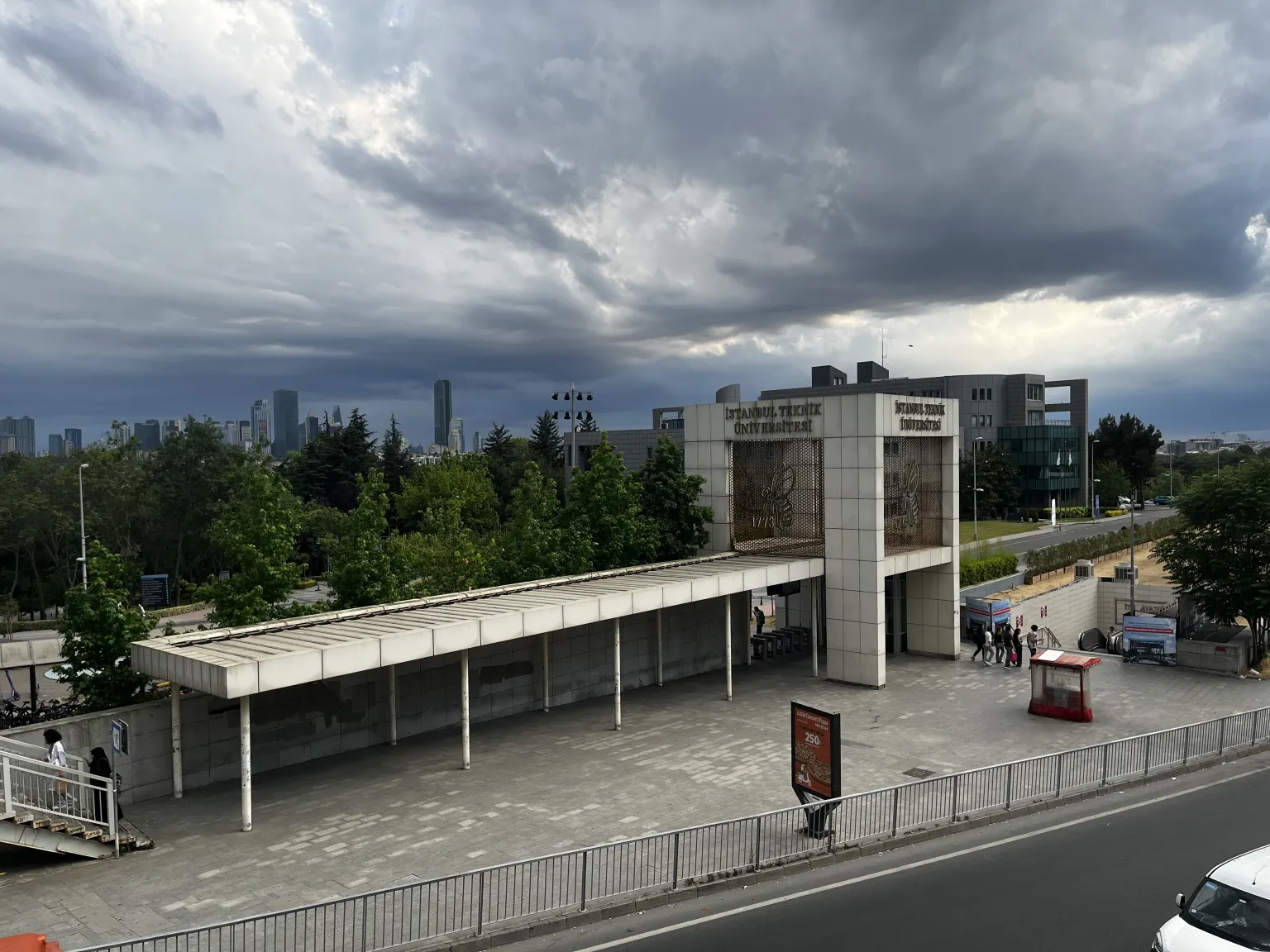
The Art Scholarship offers bachelor’s, master’s and PhD places in performing arts, music and fine arts at Ankara Music and Fine Arts University, Ankara Hacı Bayram Veli University and İstanbul Technical University. Applications come in the main window. It covers 16 departments: 13 in music and performing arts and 3 in fine arts.
- Bachelor’s, music
- Instrument education, voice training, music technology, music theory, musicology.
- Master’s, music
- Instrument education, music technologies, music theory, musicology, voice education, instrument and voice, music theory and composition.
- PhD, music
- Music sciences.
- Bachelor’s, fine arts
- Photography and video, painting, visual communication design.
The Success Scholarship has its own application period, October–November, with results in November. The Research Scholarship is for researchers and academics under 50, with four application periods a year. There are also short-term scholarships and joint scholarships with international institutions.
One joint programme is with the Islamic Development Bank; its 2026 application period was announced on 29 January 2026.
What can pause, cut or end a scholarship the rules, in plain words
- Pause Payments stop for a time.
- Cut The stipend is lower.
- Ends The scholarship ends.
A scholarship that has ended does not come back
A pause is not an ending: when a decision is re-evaluated, the stipend stops, and if the result is good it starts again with the unpaid months. But once a scholarship has been ended, the student cannot receive it again. The grade rules use the university’s own scale, out of 4.00, not the percentage needed to apply.
- Grades, associate
- Ends Cut 25% Under 1.00 after the first year ends the scholarship. Under 2.00, or a repeated course or level, cuts the stipend by 25% in the next year.
- Grades, bachelor’s
- Cut 50% Ends Under 1.00 after the first year cuts the stipend by 50% in the next year. Under 1.00 in a later year ends the scholarship. Under 2.00 or a repeated year in a later year cuts it by 50% from the next year, and if the same thing happens again, the scholarship ends. The exception is a student in the last year of the normal study period who can graduate. When the problem is fixed and proved, the full stipend returns.
- Medicine, Dentistry, Pharmacy
- Cut 50% Ends Repeating a year for the second time cuts the stipend by 50%. A third repeat ends the scholarship.
- Master’s and PhD
- Ends Four semesters without the credit courses and seminars done, or without the minimum grade average of the university, end the scholarship. A PhD student has to sit the qualifying exam by the end of the fifth semester, may retake it once in the next semester, and loses the scholarship after a second failure.
- Language and preparation years
- Cut 25% Pause Ends More than 20 hours of absence in a month in the Turkish year cut the stipend by 25% for three months, and more than 100 lesson hours without an excuse end it. A failed Turkish or foreign-language year pauses it until a certificate arrives, and without one by the end of the second year it ends. A failed scientific preparation year ends it.
- Absence
- Ends More than two months of absence in a semester without a valid excuse, or skipped final and make-up exams without one, end the scholarship.
- Enrolment
- Pause Ends Not enrolling, or not renewing enrolment, ends the scholarship, except in language preparatory programmes. A suspension of enrolment pauses it for up to one academic year in total; longer ends it. Dismissal from the university ends it.
- Study duties
- Ends A compulsory internship not done in time without a valid excuse, skipped single-course and make-up exams, and courses delayed on purpose are treated as negligence and can end the scholarship.
- Discipline
- Pause A university suspension of one week to one month pauses the scholarship for a month. A suspension of one month to a semester pauses it for the length of the suspension. A longer one is assessed by the programme. Discipline in a dormitory is assessed by the programme too.
- Work
- Pause Cut Master’s and PhD students who finished their language or scientific preparation can work in a field linked to their studies, with the programme’s approval and a valid work permit. The stipend can be paused or reduced during the permit. Other support, except the health insurance premium, goes on.
- Other reasons
- Ends False information or papers at any stage; a threat to public order, public security or public health; Turkish citizenship, apart from approved exceptions; another scholarship from an international organisation or a public body in Türkiye; a sentence for any crime other than a negligent one. A student under administrative or judicial investigation is assessed case by case.
- Leave
- Pause Payments go on during school holidays and for leaves of under a month, and leaves add up to at most a month a year, with three exceptions. Sick leave or leave for other compelling reasons, such as military service, can last up to a year; the scholarship is paused if it lasts more than a month and is spent outside Türkiye. Master’s and PhD students can take up to 6 months of research leave abroad, with payments. An exchange can last up to a semester, and payments stop if it takes place at a university abroad.
- Changes
- A change of university, department or programme for compelling reasons can be requested until the end of the first semester, and it needs the approval of the programme and the Council of Higher Education. A lateral transfer is reported to the programme within a month.
- After an ending
- The programme informs the interior ministry, the Council of Higher Education, the credit and dormitories agency, the social security institution and the Turkish teaching centre.
Rules: Scholarship Procedures Guide, 2019 edition (the current edition on 22 October 2026).
Common questions short answers
Is there an application fee?
No. Applications go through the online application system and cost nothing.
Who cannot apply?
Turkish citizens and people who lost Turkish citizenship cannot apply, and neither can people who are already enrolled at that level in a Turkish university.
Does an applicant need to speak Turkish?
No. The scholarship includes a year of Turkish for everyone without a C1 certificate, English-taught programmes included. The year ends with the C1 certificate.
Can an applicant choose the university?
The application holds 12 choices of university and programme, taken from the options that the system offers for the applicant’s level and education. The programme places each awardee.
When does the stipend start?
Payments start when the awardee enrols, the Turkish year included. The regular amounts are 6,500 TL for associate and bachelor’s, 9,500 TL for master’s and 13,000 TL for PhD.
Can awardees work?
Master’s and PhD students who finished their preparation year can work in a field linked to their studies, with the programme’s approval and a valid work permit.
What does the stamp in the folder mean?
It compares the typed age and grade average with the limits of the level, nothing else. It cannot tell who will be chosen.
Sources
A university and a selection committee decide each application; this page is not application advice.
Open the sources
- Türkiye Scholarships (home, with the programme search) — Türkiye Scholarships, checked 22 October 2026
- About Us (programme and the Presidency) — Türkiye Scholarships, checked 22 October 2026
- Criteria & Scholarship Programs — Türkiye Scholarships, checked 22 October 2026
- Why Türkiye Scholarships? (the package) — Türkiye Scholarships, checked 22 October 2026
- Application Calendar — Türkiye Scholarships, checked 22 October 2026
- Application in 5 Steps (papers to upload) — Türkiye Scholarships, checked 22 October 2026
- Evaluation and Selection Process — Türkiye Scholarships, checked 22 October 2026
- Sample Questions (PDF) — Türkiye Scholarships, checked 22 October 2026
- Sample Questions, Answer Key (PDF) — Türkiye Scholarships, checked 22 October 2026
- Full-Time Scholarships (levels, Merit and Art tracks) — Türkiye Scholarships, checked 22 October 2026
- Türkiye Scholarships 2026 Applications (announcement of 29 December 2025) — Türkiye Scholarships, checked 22 October 2026
- Scholarship Procedures — Türkiye Scholarships, checked 22 October 2026
- Scholarship Procedures Guide (PDF, 2019 edition) — Türkiye Scholarships, checked 22 October 2026
- FAQ: Accommodation — Türkiye Scholarships, checked 22 October 2026
- FAQ: General Health Insurance — Türkiye Scholarships, checked 22 October 2026
- FAQ: Residence and Immigration — Türkiye Scholarships, checked 22 October 2026
- FAQ: Turkish Education — Türkiye Scholarships, checked 22 October 2026
- FAQ: The Scope of Transportation Support — Türkiye Scholarships, checked 22 October 2026
- FAQ: International Student Academy — Türkiye Scholarships, checked 22 October 2026
- Yurtdışı Türkler ve Akraba Topluluklar Başkanlığı (home page) — Presidency for Turks Abroad and Related Communities, checked 22 October 2026
- Application/Login (the online application system, where applications are made) — Türkiye Scholarships, checked 22 October 2026