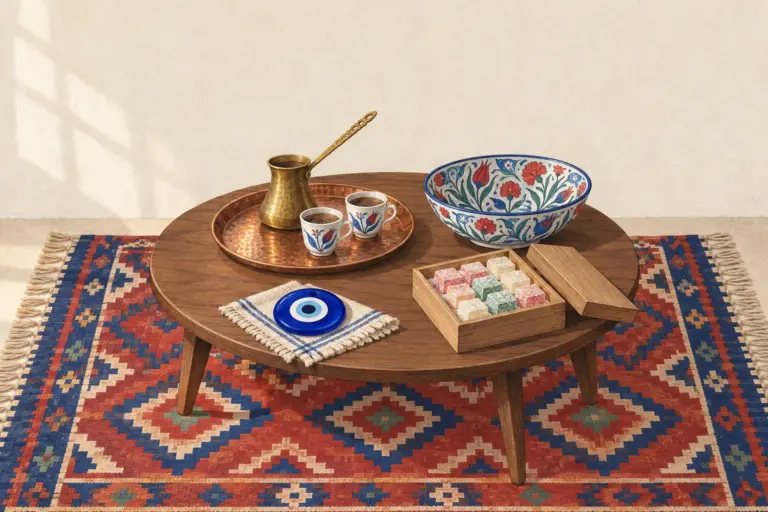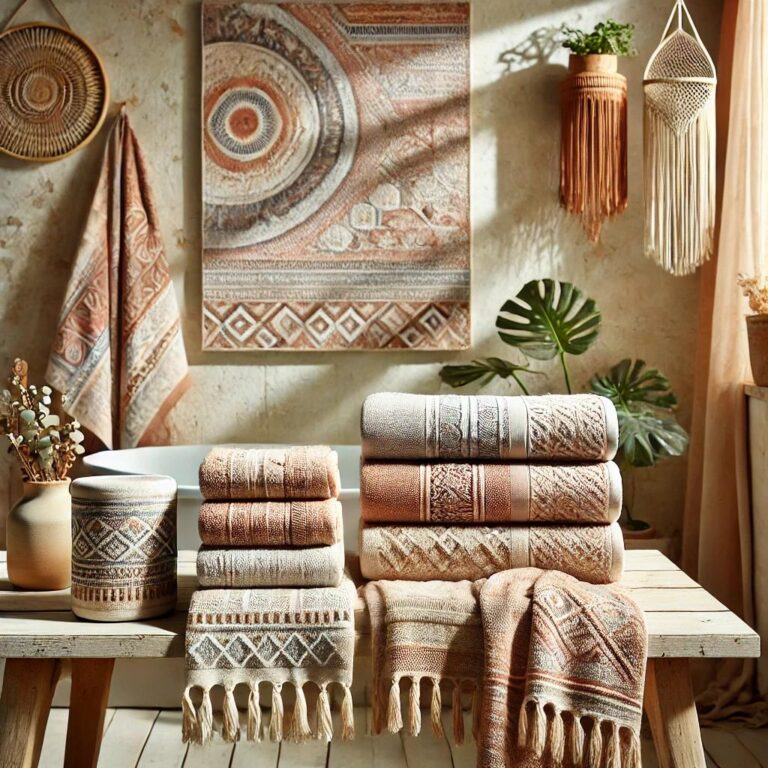
Anatolian Rugs: Halı, Kilim, Motifs and Museums in Turkey
Halı (knotted) and kilim (flat-woven): the knot, the weaving places, what a few motifs mean and where to see old rugs in Türkiye.
Table of Contents
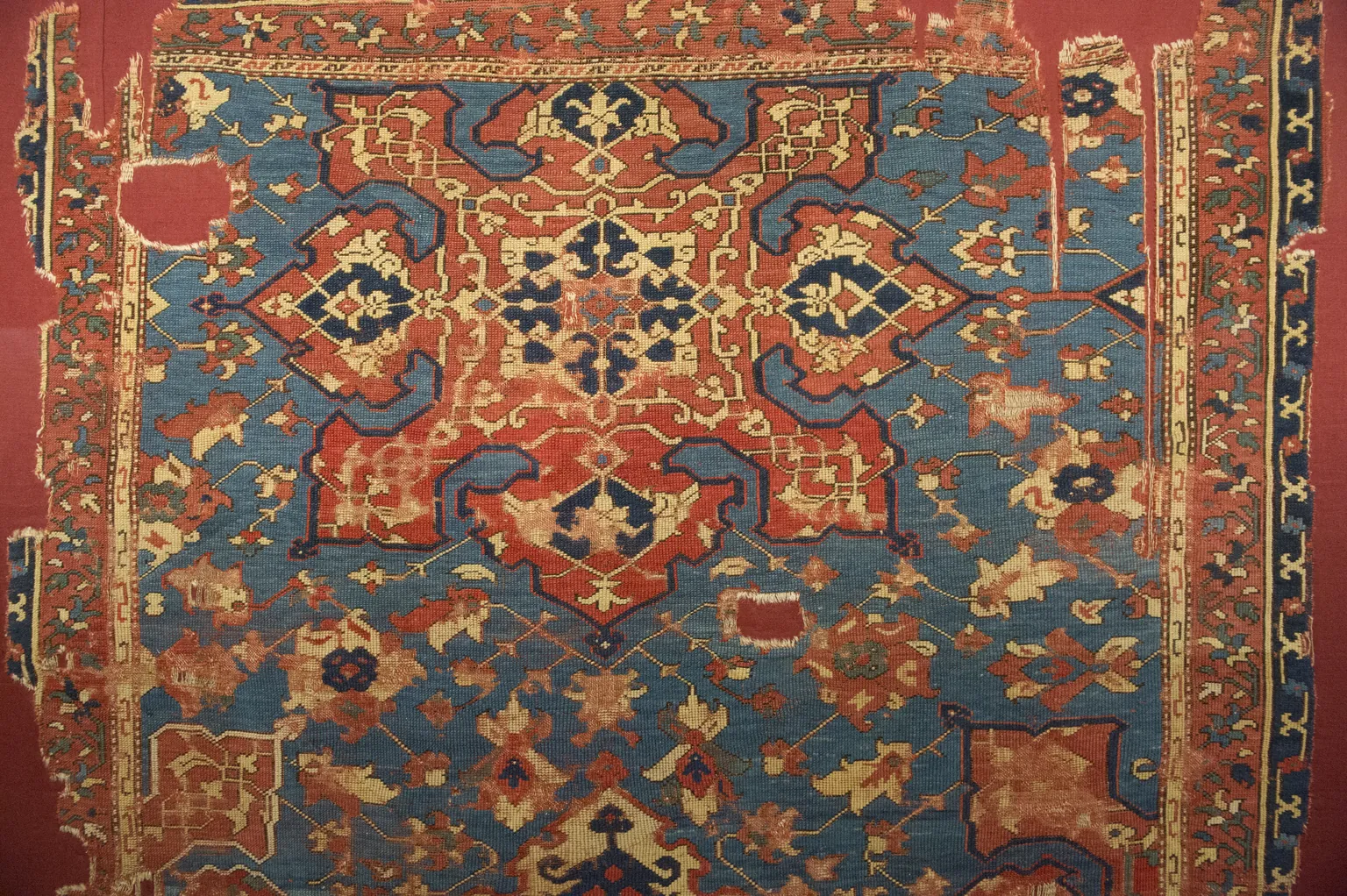
An Anatolian rug is woven by hand in Anatolia, the Asian part of Türkiye. It is one of two kinds: the halı, a knotted rug with a soft pile, or the kilim, a rug woven flat with no pile. The Culture Portal lists ten registered rug names; its records name the knots, the dye plants and the motifs, and state pages name the museums where old rugs are shown.
In short · checked 30.10.2026
Knotted or flat, then where it was woven.
- A halı is knotted. The Yağcıbedir record names the Turkish double knot (Türk düğümü) and counts 1,050 knots in each square decimetre.
- A kilim is flat-woven. The weft passes between the warp threads from the front and the back, says the Beytüşşebap record. No pile.
- Ten rug names are registered. A coğrafi işaret (geographical indication) ties a rug to an area: seven halı names and three kilim names.
- A meaning belongs to the record that words it. The scorpion is jealousy and fear in one record; others list the name and give no meaning.
- Old rugs are on show. Vakıf museums in Ankara, Kastamonu, Konya, Tokat and Sivas hold rugs and kilims, free as printed.
Tool · checked 30.10.2026
Read the rug
A rug drawn for this page, with twelve motifs that the registered records name. Press a motif, or its name in the row, to see what it is called, what a record says it means and a Turkish line to ask. The second view cuts a halı and a kilim open.
Motifs
Madalyon medallion
A large figure in the middle of the field, with quarter-medallions in the corners of some rugs.
- Means
- Infinity, for the medallion on the central axis of an Uşak rug. Uşak
Yıldız star
An eight-pointed star.
- Means
- Productivity, and also birth, peaceful life and the renewal of the universe, for the star of the «yıldızlı» Uşak rugs. Uşak
Hayat ağacı tree of life
A tree with a straight trunk and paired branches.
- Means
- A symbol of immortality in the Beytüşşebap record. With a bird and a dragon, the Uşak page reads a Lotto rug as the soul’s endlessness and immortality. Beytüşşebap · Uşak
- Named in
- Akçadağ, Beytüşşebap, Uşak. Akçadağ
El belinde hands on hips
A figure with its hands on its hips; Beytüşşebap also calls it «gelin kız», the bride.
- Means
- A symbol of productivity in the Beytüşşebap record. Beytüşşebap
Koç boynuzu ram’s horn
A pair of curled horns.
- Means
- Manhood, bravery and quarrelsomeness in the Beytüşşebap record. Beytüşşebap
Akrep scorpion
A scorpion with two claws and a curled tail.
- Means
- Feelings such as jealousy and fear in the Beytüşşebap record, which names the wolf’s foot with it. Beytüşşebap
- Named in
- Akçadağ (akrep, also called nık), Beytüşşebap. Akçadağ
Kurt ayağı wolf’s foot
A paw print with a pad and four toes.
- Means
- Jealousy and fear, with the scorpion, in the Beytüşşebap record. Beytüşşebap
- Named in
- Beytüşşebap. Karatepe lists kurt izi, the wolf’s track, and kurtağzı, the wolf’s mouth. Karatepe
Muhabbet kuşu lovebird
Two small birds face to face.
- Means
- Affection, love, fleetingness (fanilik) and conversation in the Beytüşşebap record. Beytüşşebap
- Named in
- Beytüşşebap. Karatepe lists other birds: ördek, the duck, and kırlangıç ayağı, the swallow’s foot. Karatepe
Çiçek flower
A flower on a stem with a leaf, one of the plant motifs.
- Means
- Abundance (bereket), productivity and happiness for plant and flower figures in the Beytüşşebap record; the abundance of nature in the «çiçekli» Uşak rugs. Beytüşşebap · Uşak
Bulut cloud
A cloud with wavy lines under it.
- Means
- The continuity of life, when clouds repeat across the ground, in the «bulutlu» Uşak rugs. Uşak
- Named in
- Uşak. The cloud is also among the things the three-dot sign can stand for.
Çintemani three dots
Three dots set as a triangle.
- Means
- Several cultures use the sign for the sun, the moon and the cloud; sun, moon and dragon together carry the theme of abundance. Uşak
- Named in
- Uşak, on the «postlu» rug: the dots recall a leopard’s spots.
Mihrap prayer niche
A niche with a pointed arch; a prayer rug (seccade) is built round it.
- Means
- A sacred place: on a prayer rug the mihrap and its motifs carry that meaning. Uşak
- Named in
- Karatepe (mihrap), Akçadağ (mihrap compositions), Yağcıbedir (a double mihrap). Karatepe · Akçadağ · Yağcıbedir
Weave
Halı knotted, with a pile
- Pile (hav)
- Warp (çözgü)
- Weft (atkı)
- Knot
- Türk düğümü (çift), the Turkish double knot.
- Count
- 30×35, which is 1,050 knots (ilme) in each square decimetre.
- Pile
- 5–7 mm high, all wool.
- Material
- 4,070 g in each m²: pile 2,900, warp 720, thick weft 200, thin weft 250. Yağcıbedir record, no. 17
Kilim flat-woven
- Warp in double rows
- Weft, front and back
- Weave
- Weft threads pass crosswise, from the front and the back, between warp threads in double rows.
- Size
- Traditionally 1.3 × 2 m, about 2 m².
- Weight
- About 1.7 kg in each m², pure thin wool.
- Use
- Both sides are used, as a cover, a spread or an ornament. Beytüşşebap record, no. 1568 · Karatepe
Schematic, not to scale. The records give the knot’s name and its counts, not how it is tied, so no knot is drawn.
Halı and kilim: knotted or flat
A halı is a rug of knots with a pile; a kilim is a rug woven flat. Both words stand on labels, and the Culture Portal places rug making (halıcılık) and kilim making (kilimcilik) among the iplik işleri, the thread works, of Türkiye’s hand-craft tradition. El Sanatları Geleneği · checked 30.10.2026
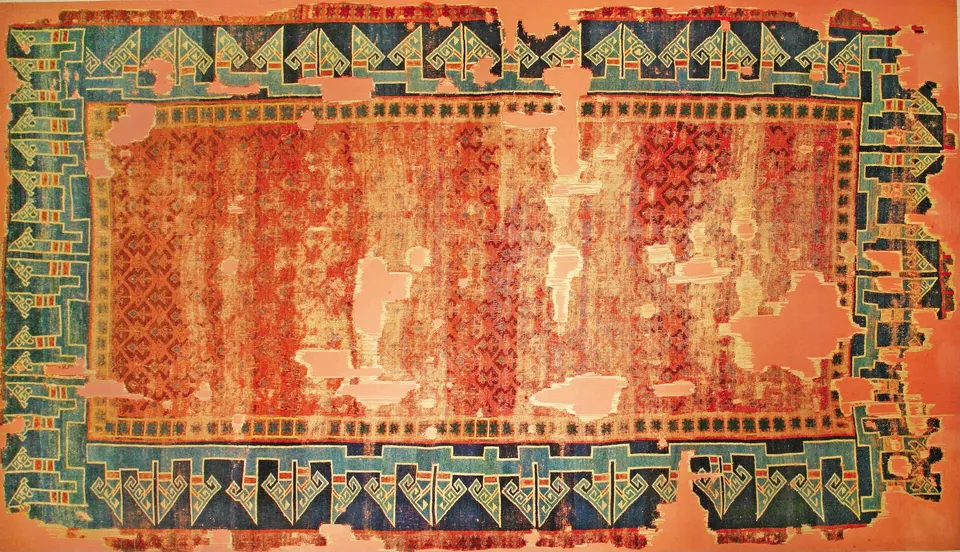
A halı: knots and a pile
A halı is counted in knots (ilme, also düğüm) and carries a pile (hav). The Yağcıbedir record gives the Turkish double knot, a quality of 30×35 and 1,050 knots in each square decimetre, with a pile 5–7 mm high. Fethiye’s record explains the same notation: 28×32 means 28 threads and 32 rows in 10 cm. Yağcıbedir · Fethiye
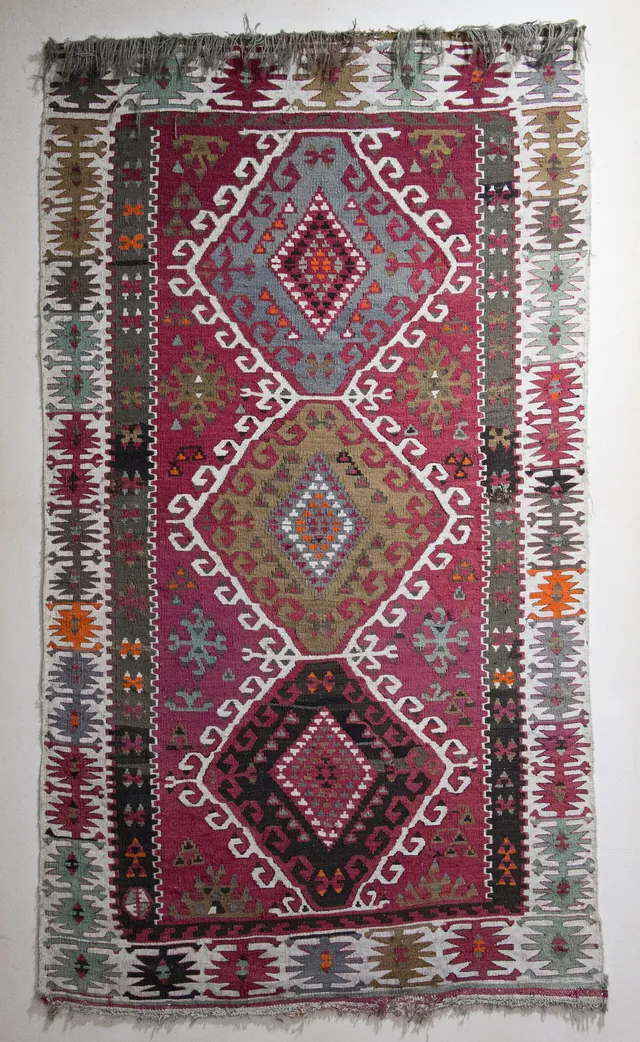
A kilim: weft only
In a kilim the weft (atkı) is passed crosswise, from the front and the back, between warp threads (çözgü) stretched in double rows, says the Beytüşşebap record. Nothing is knotted. Karatepe’s record adds that a kilim is used on both sides, as a cover, a spread or an ornament. Beytüşşebap · Karatepe
The registered names say el halısı, a hand rug; a hand-woven piece is el dokuması. The rugs part of Souvenirs from Turkey gives the short version.
Threads, knots and dye plants
A rug is made of çözgü, the warp threads stretched on the loom (tezgâh), and atkı, the weft threads that cross them; a halı adds the pile yarn (ilmelik ip). The records print wool, in weights and in dyes.
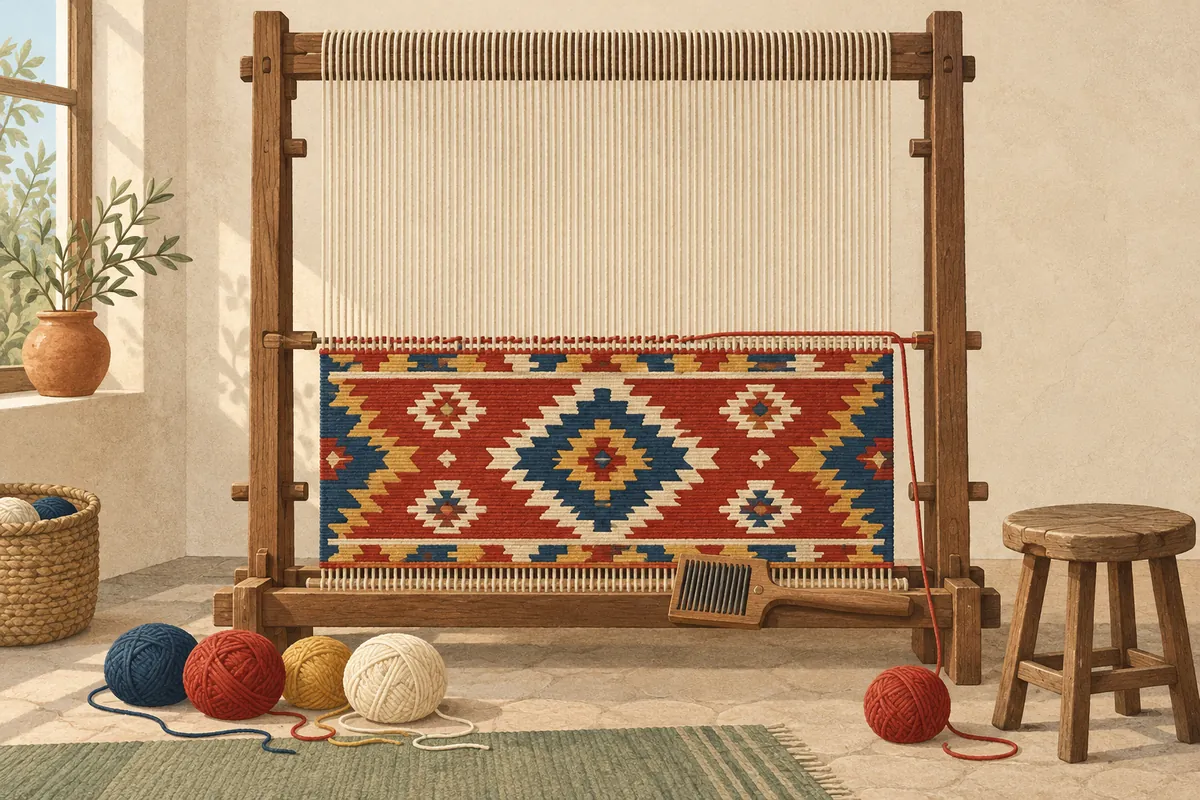
The loom
- Wool
- Yağcıbedir, Karatepe, Beytüşşebap and Yahyalı print wool, for the warp, the weft and the pile or for the whole rug. Yağcıbedir · Karatepe · Beytüşşebap · Yahyalı
- Looms
- Beytüşşebap kilim are woven on vertical looms; Bayat kilim on metal kilim looms, by hand. Beytüşşebap · Bayat
- Winding
- Fethiye’s record says that after 30 cm the loom is loosened and the woven part is wound onto the lower beam (alt levent), the iron beam the warp is wound on. Fethiye
One record, counted
30 × 35 = 1,050 knots in each dm²
The Yağcıbedir El Halısı record, no. 17, gives 4,070 g of material in each square metre; Beytüşşebap’s kilim record gives about 1.7 kg in each square metre.
Yağcıbedir · Beytüşşebap · checked 30.10.2026
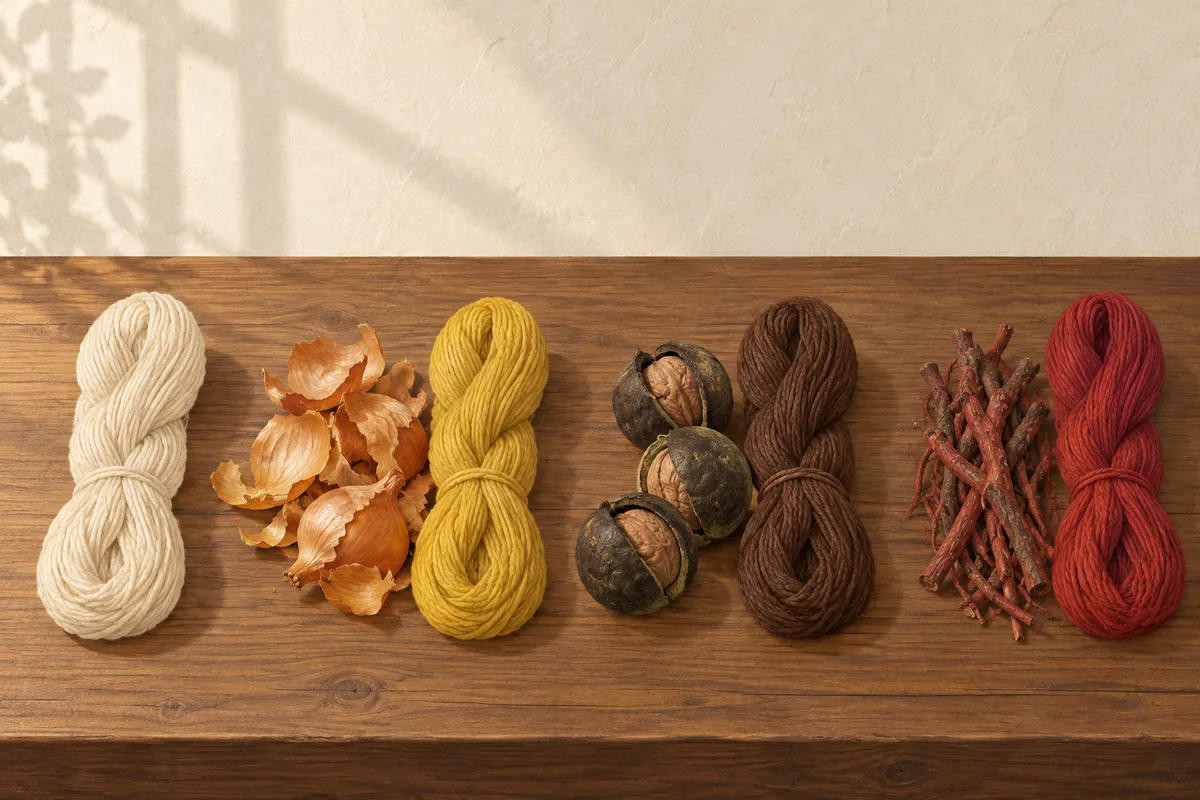
Kök boya: dye from plants and roots
- Beytüşşebap
- Onion skin gives yellow, walnut shell brown and black, the rın root red and the giyarenk root green; the sumak plant fixes the red. Beytüşşebap
- Karatepe
- Pomegranate rind, onion skin, walnut leaf and pine bark, among other plants. Karatepe
- Bayat
- Plant-dyed colours start dark and matt, grow brighter with washing and use, and do not run in the wash. Bayat
- Çanakkale
- The dyes are mostly kök boya; blue, green, brown, black and white are common. Çanakkale
Where rugs are woven
The Culture Portal lists 39 registered hand-crafts, ten of them rugs: seven halı and three kilim. A coğrafi işaret ties a product to an area. Nine of the rug names are a mahreç işareti, an indication of source: a clear feature or the fame comes from the area. Akçadağ is a menşe adı, a name of origin: the features owe to the area and every step happens there. El Sanatları · Coğrafi İşaretli Ürünler · checked 30.10.2026
On the Culture Portal’s list
39 hand-crafts, 10 of them rugs.
Seven halı and three kilim. The Çanakkale, Fethiye, Karatepe and Beytüşşebap records put the name and emblem on the rug or its package; if that is not possible, they are kept where they are easy to see.
El Sanatları · checked 30.10.2026
Seven halı names
- Çanakkale El Halısı
- No. 19, mahreç işareti. Rug making here begins with the Yörüks, semi-nomadic herders who came from Central Asia and the Caucasus. Motifs include the eight-armed star in a circle (yıldız tabak); usually three borders, and in Çan the main border is the water motif. Record
- Fethiye Halısı
- No. 598, mahreç işareti. Registered as Fethiye Kaya, Fethiye Kayaköy and Fethiye Halısı. It grew from the meeting of Turkmens who settled in the area and local people: small rugs with plant motifs in a medallion or corner-and-centre layout, hand-spun and plant-dyed, red and navy leading. Record
- Yahyalı El Halısı
- No. 18, mahreç işareti. From the Yahyalı district of Kayseri, with about 250 years of history. Warp, weft and pile are all wool; red, navy, brown, yellow and grey dominate; the border carries scenes of nature and buildings, and mythological figures occur. Record
- Taşpınar El Halısı
- No. 0007, mahreç işareti. Stylised plant and geometric motifs set as corner and centre pieces, with the ground left empty. Navy, red and white lead, with a little light green, yellow, blue and camel-hair colour. Record
- Kars El Halısı
- No. 8, mahreç işareti. A medallion composition with plant, bird and dragon motifs, and geometric, hook, arrow and ram’s-horn motifs inside. Red, navy, green, white, yellow and brown, and the natural wool colours. Record
- Akçadağ Halısı
- No. 422, menşe adı: the only name of origin of the ten. Red dominates; the pile yarn and the warp are dyed with kök boya. From the outside in: narrow edge water, fine water, wide water, then the ground or centre. Motifs are woven from memory or from earlier rugs. Record
- Yağcıbedir El Halısı
- No. 17, mahreç işareti. A navy ground, a white line like a road down the middle and a white water-like border; plant and geometric motifs in a double mihrab. Wool, Turkish double knot, 1,050 knots in each dm². Record
Three kilim names
- Karatepe Kilimi
- No. 785, mahreç işareti. From Karatepe village, Kadirli, Osmaniye; the page dates its history to the 8th century BC. All wool, plant-dyed; geometric motifs dominate, small on the border and large on the field. Used on both sides. Record
- Beytüşşebap Jirki Kilimi
- No. 1568, mahreç işareti. From the Beytüşşebap district of Şırnak: thin pure wool on vertical looms, traditionally 1.3 × 2 m, woven as a bride’s trousseau (çeyiz). Plant dyes; the logo sits on the back. Record
- Bayat Türkmen Kilimi
- No. 29, mahreç işareti. Trained masters weave it by hand on metal kilim looms from good wool yarn spun on a spindle (kirman) and dyed with kök boya. The colours start dark and brighten with washing. Record
Only Yahyalı (Kayseri), Karatepe (Kadirli, Osmaniye) and Beytüşşebap (Şırnak) print a province or district; the other seven records print a name and no place. Checked 30.10.2026.
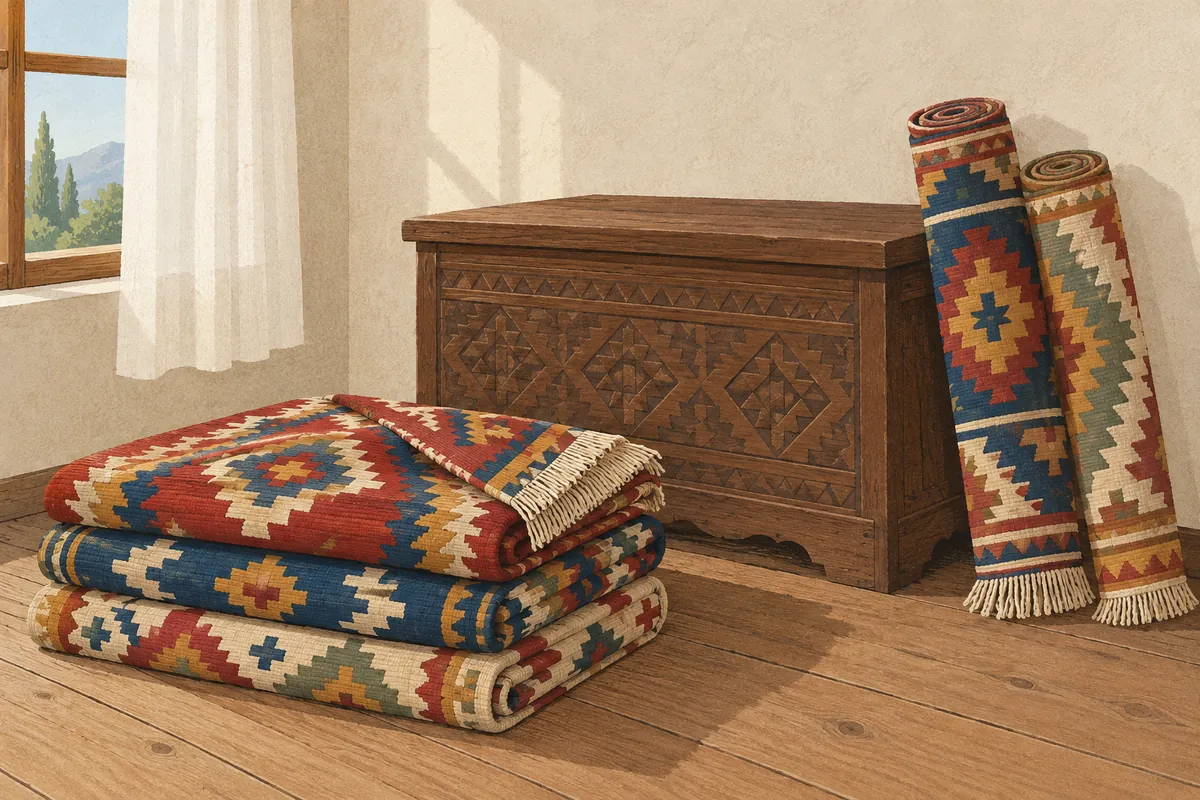
A rug for the trousseau
The Beytüşşebap record says its kilim is woven as the bride’s trousseau (çeyizlik). The same record names the plants for each colour and puts the logo on the back. More on names and emblems: Souvenirs from Turkey. Beytüşşebap
Two old names: Uşak and Hereke
Two names stand for old Ottoman rugs: Uşak, a rug-making area, and Hereke, a palace factory.
From Uşak to Hereke
- 15th centuryUşak and its area create the early Ottoman rugs and become the Ottoman rug-making centre. Uşak Halıları
- 1500sAfter the capitulations that begin in the 1500s, envoys are given the right to trade inside the Ottoman borders and the rugs show abroad. European families have painters show Uşak rugs on walls, floors and tables, and the rugs take the painters’ names: Lotto and Holbein.
- Süleyman’s timeUşak rugs gain great importance. Their patterns are designed by court artists and called palace rugs.
- 1843 and 1845The Hereke factory is founded on the northern shore of the Gulf of İzmit, and in 1845 begins to make upholstery and curtain cloth for the palaces then being built, as Hereke Fabrika-i Hümâyûnu. Jacquard looms and designers come from France. Milli Saraylar
- Abdülhamid IIRug-weaving units are added to the factory and lay the foundations of Hereke rug making. More on the period: the Ottoman economy in Abdülhamid II’s reign.
- 1995After the Republic’s years under Sümerbank, the factory passes to Milli Saraylar, the National Palaces. It works as a museum-factory that re-creates lost Hereke fabric patterns for the palaces; the factory is closed to visits.
- Lotto
- Named for the painter Lorenzo Lotto. A bird, a dragon and a tree of life together. Uşak
- Holbein
- Named for the painter Hans Holbein.
- Çintemani
- Rugs of triangles of three dots, called postlu because the dots recall a leopard’s spots.
- Madalyon
- Made in the 16th century: a large central medallion and quarter-medallions in the corners.
- Yıldızlı
- Eight-pointed stars; examples run to the 17th century.
- Bulutlu
- Symmetric shapes on the ground that are likened to clouds.
The Uşak page credits its text to the Uşak Belediyesi Dokur Evi. · checked 30.10.2026
How to read a motif
A motif has a name first. A meaning is what one record says about it, and each record words it its own way. The rug tool gives twelve names, the meaning where a record prints one, and the records that list the name.
Every motif has one fixed meaning.
Beytüşşebap gives meanings. Akçadağ lists the scorpion, the ram’s horn and the tree of life and gives none; Kars lists the ram’s horn the same way. A meaning is printed in a few records only.
The scorpion is a protective sign.
The Beytüşşebap record words the scorpion, with the wolf’s foot, as feelings such as jealousy and fear.
El belinde means motherhood.
The Beytüşşebap record calls el belinde, also «gelin kız», a symbol of productivity. Karatepe and Akçadağ list the name without a meaning.
Motifs are a code every weaver shared.
Fethiye’s record says the motifs reflect the feelings, thoughts and way of life of the people of the area. Akçadağ’s says motifs are woven from memory or from earlier rugs, and that the area also calls them desen or model.
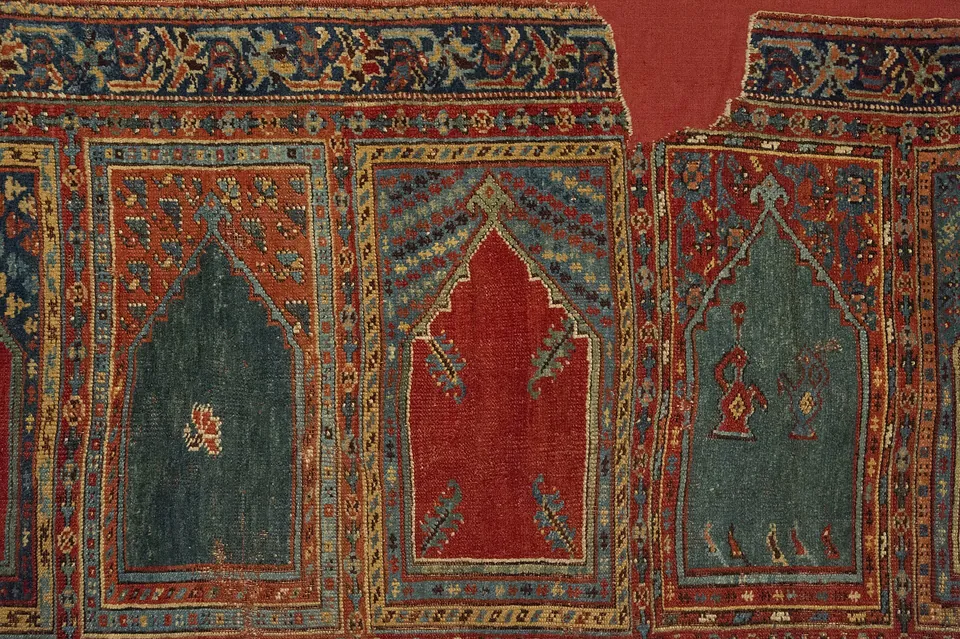
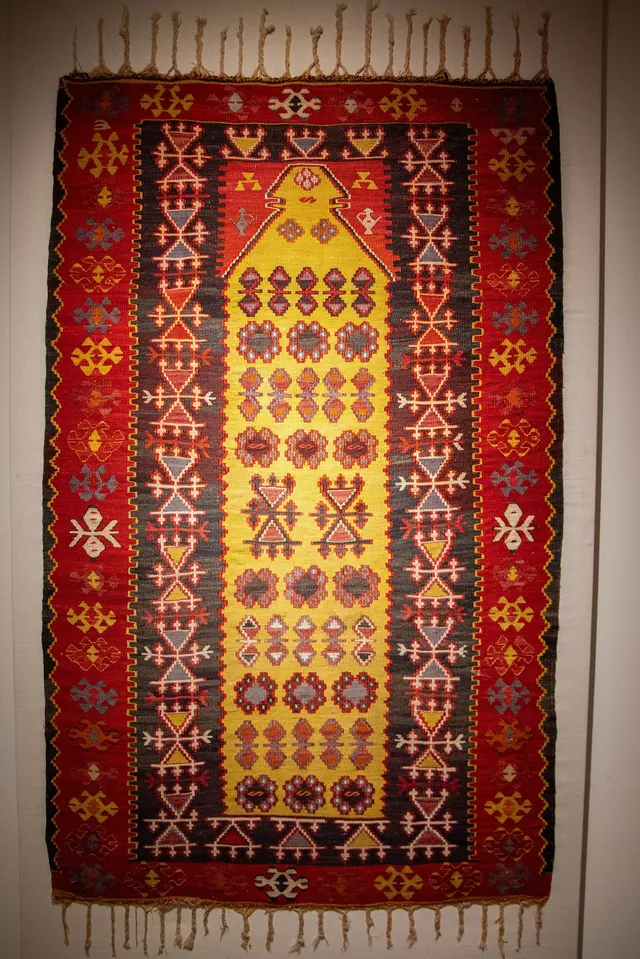
Karatepe’s record lists names without meanings: baklava dilimi, merdiven (ladder), küpeli, yar yâre küstü, yar yâre baktı, taraklı, saç bağ (hair tie), yengeç (crab), papatya (daisy), sevdi dolaştı and zikzak, among others. Karatepe Kilimi · checked 30.10.2026
Where to see old rugs
Five Vakıf museums hold rugs and kilims, and their pages print free entry. Vakıf means a foundation; the Vakıflar Genel Müdürlüğü (VGM) is the General Directorate of Foundations. The page prints no opening hours. Müzeler · checked 30.10.2026
- Ankara Vakıf Eserleri Müzesi
- The central museum of the directorate: rugs and kilims collected from all areas of Türkiye and kept in its stores for years, a rug-washing pool and conservation units. Atatürk Bulvarı 23, Ulus. Entry free.
- Kastamonu Şeyh Şaban-ı Veli Vakıf Müzesi
- Opened 04.05.2007. Rugs and kilims of East and Southeast Anatolia, Kırşehir, Kayseri and Tokat; items of the 16th to 19th centuries. Entry free.
- Konya Sahip Ata Vakıf Müzesi
- In the restored Sahip Ata hanigâh, a Seljuk building. Among the exhibits are rug and kilim examples of the Alâeddin Mosque. Entry free.
- Tokat Mevlevihanesi Vakıf Müzesi
- Founded in 2007. Late rugs and kilims of East and Southeast Anatolia, Kırşehir, Kayseri and Tokat. Entry free.
- Sivas Gök Medrese Vakıf Müzesi
- The medrese was built in 1271; the museum has been open since January 2021. Sivas rugs and kilims of different centuries are shown, and pieces not on show can be browsed on a touch table. Entry free.
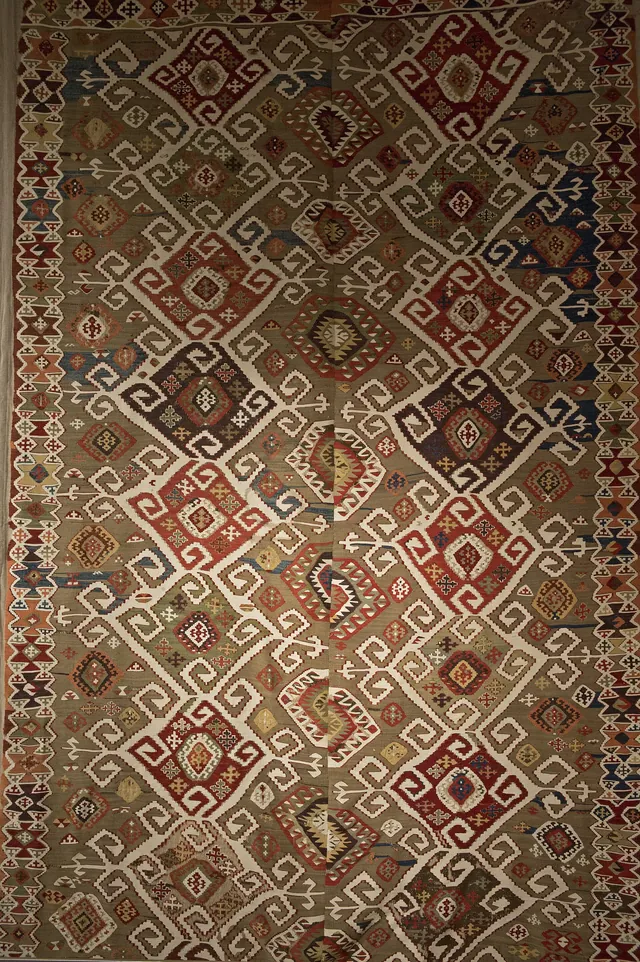
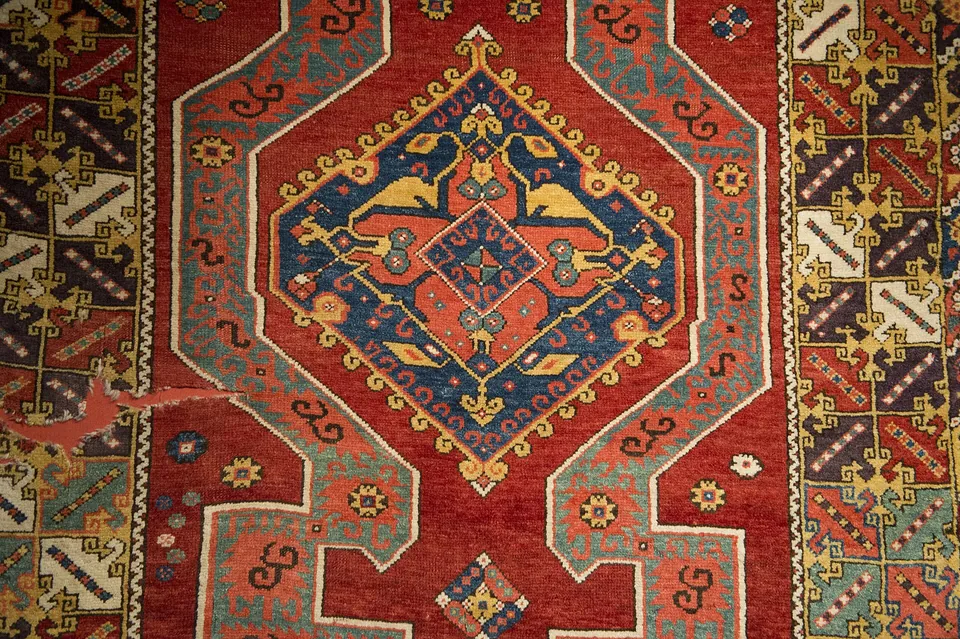
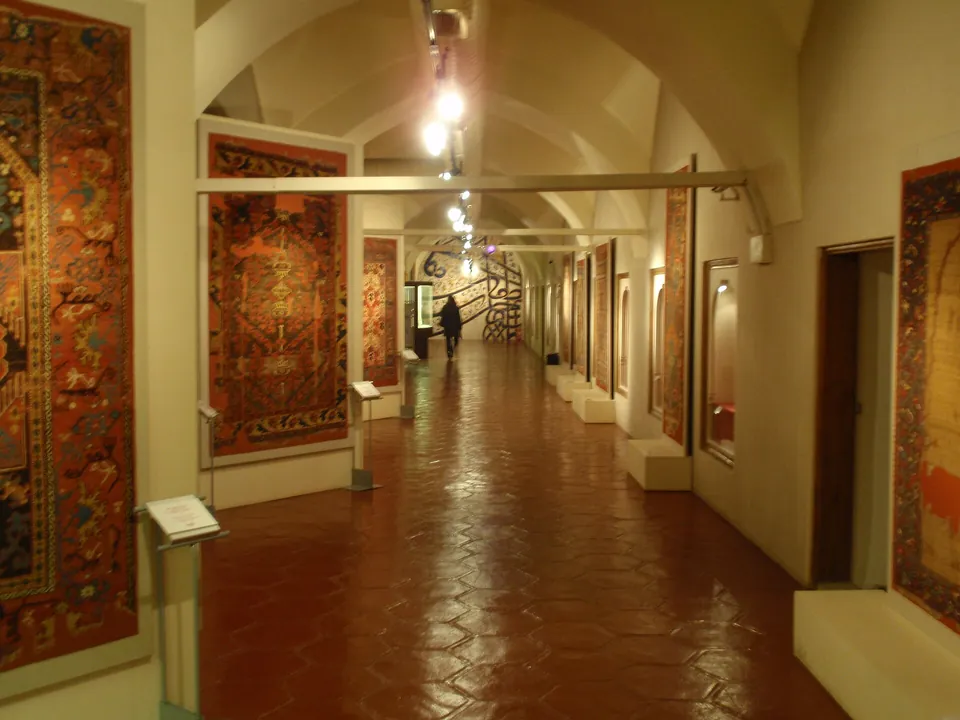
Named for old Uşak rugs
The Uşak page lists museums that show old Uşak rugs: the Louvre, the Metropolitan Museum and the Victoria and Albert Museum among them, and in Türkiye the Türk ve İslam Eserleri Müzesi and the Vakıflar Halı Müzesi in Istanbul and the Mevlana Müzesi in Konya. It prints no hours, tickets or address for them. Uşak Halıları · checked 30.10.2026
Hereke: the kiosk beside the factory
- What opens
- The Wilhelm Kaiser Müze-Köşk, a wooden kiosk made at Yıldız Palace for Kaiser Wilhelm II’s visit. The factory is closed to visits.
- Hours
- Ticket office 09:00–17:00. Closed on New Year’s Day (Yılbaşı) and on the first day of Ramazan Bayramı and of Kurban Bayramı; open on every other public holiday.
- Tickets
- 50 TL local visitors, 100 TL foreign visitors, 50 TL reduced.
- Address
- Hacı Akif Mahallesi, Tayyar Yıldırım Caddesi 14, Hereke, Körfez, Kocaeli.
Milli Saraylar, Hereke Halı ve İpekli Dokuma Fabrikası · checked 30.10.2026
Before an old rug leaves Türkiye
Two rules, as the ministry words them.
- Protected cultural property cannot be taken abroad. Under law 2863, movable cultural and natural property that needs protection inside Türkiye cannot leave the country.
- A piece outside registration can leave with the document. Objects that the museum directorates (müze müdürlükleri) certify as outside registration (tescil dışı) can be taken abroad if the prepared document is shown.
checked 30.10.2026 · Kültür Varlıkları ve Müzeler Genel Müdürlüğü
The page names no age, no penalty and no steps. A rug bought new has its own rule, the invoice and the tax refund, in Souvenirs from Turkey.
- Bu halının müze müdürlüğünden alınmış belgesi var mı?Does this rug have a document from the museum directorate?
Words to ask
Eight short Turkish questions for a stall or a museum desk, each with a Copy button.
- Bu el dokuması mı?Is this hand-woven?
- Bu halı mı, kilim mi?Is this a halı or a kilim?
- Yün mü, ipek mi?Is it wool or silk?
- Kök boya mı?Is it dyed with plants and roots?
- Nerede dokundu?Where was it woven?
- Coğrafi işaretli mi?Does it carry a registered name?
- Bu motifin adı ne?What is this motif called?
- Bu motifin anlamı nedir?What does this motif mean?
Istanbul’s covered markets, where carpets are among the goods, are described in Markets and Bazaars in Istanbul.
Sources and limits
Every name, number and meaning on this page comes from the pages listed here, checked on 30.10.2026. Nothing about money or an age limit is printed, because none of these pages gives it. The records give the knot’s name and counts, not how it is tied, and the Istanbul museums named on the Uşak page have no page of their own among them. Photographs are credited under each picture.
Show the pages checked
- El Sanatları Geleneği — T.C. Kültür ve Turizm Bakanlığı, Kültür Portalı, checked 30.10.2026
- El Sanatları (39 registered hand-crafts) — Kültür Portalı, checked 30.10.2026
- Coğrafi İşaretli Ürünler — Kültür Portalı, checked 30.10.2026
- Çanakkale El Halısı — Kültür Portalı, checked 30.10.2026
- Fethiye Kaya / Fethiye Kayaköy / Fethiye Halısı — Kültür Portalı, checked 30.10.2026
- Yahyalı El Halısı — Kültür Portalı, checked 30.10.2026
- Taşpınar El Halısı — Kültür Portalı, checked 30.10.2026
- Kars El Halısı — Kültür Portalı, checked 30.10.2026
- Akçadağ Halısı — Kültür Portalı, checked 30.10.2026
- Yağcıbedir El Halısı — Kültür Portalı, checked 30.10.2026
- Karatepe Kilimi — Kültür Portalı, checked 30.10.2026
- Beytüşşebap Jirki Kilimi — Kültür Portalı, checked 30.10.2026
- Bayat Türkmen Kilimi — Kültür Portalı, checked 30.10.2026
- Uşak Halıları (text credited to Uşak Belediyesi Dokur Evi) — Kültür Portalı, checked 30.10.2026
- Müzeler — T.C. Vakıflar Genel Müdürlüğü, checked 30.10.2026
- Hereke Halı ve İpekli Dokuma Fabrikası — Millî Saraylar, checked 30.10.2026
- Yurt dışına kültür varlığı çıkarmak istiyorum, ne yapmalıyım? — T.C. Kültür ve Turizm Bakanlığı, Kültür Varlıkları ve Müzeler Genel Müdürlüğü, checked 30.10.2026