

Turkish Ministry of Education (MEB): Schools in Türkiye
How school works in Türkiye: stages and ages, enrolment, diploma equivalence for foreign children, adaptation classes and the 2026–27 calendar.
Table of Contents
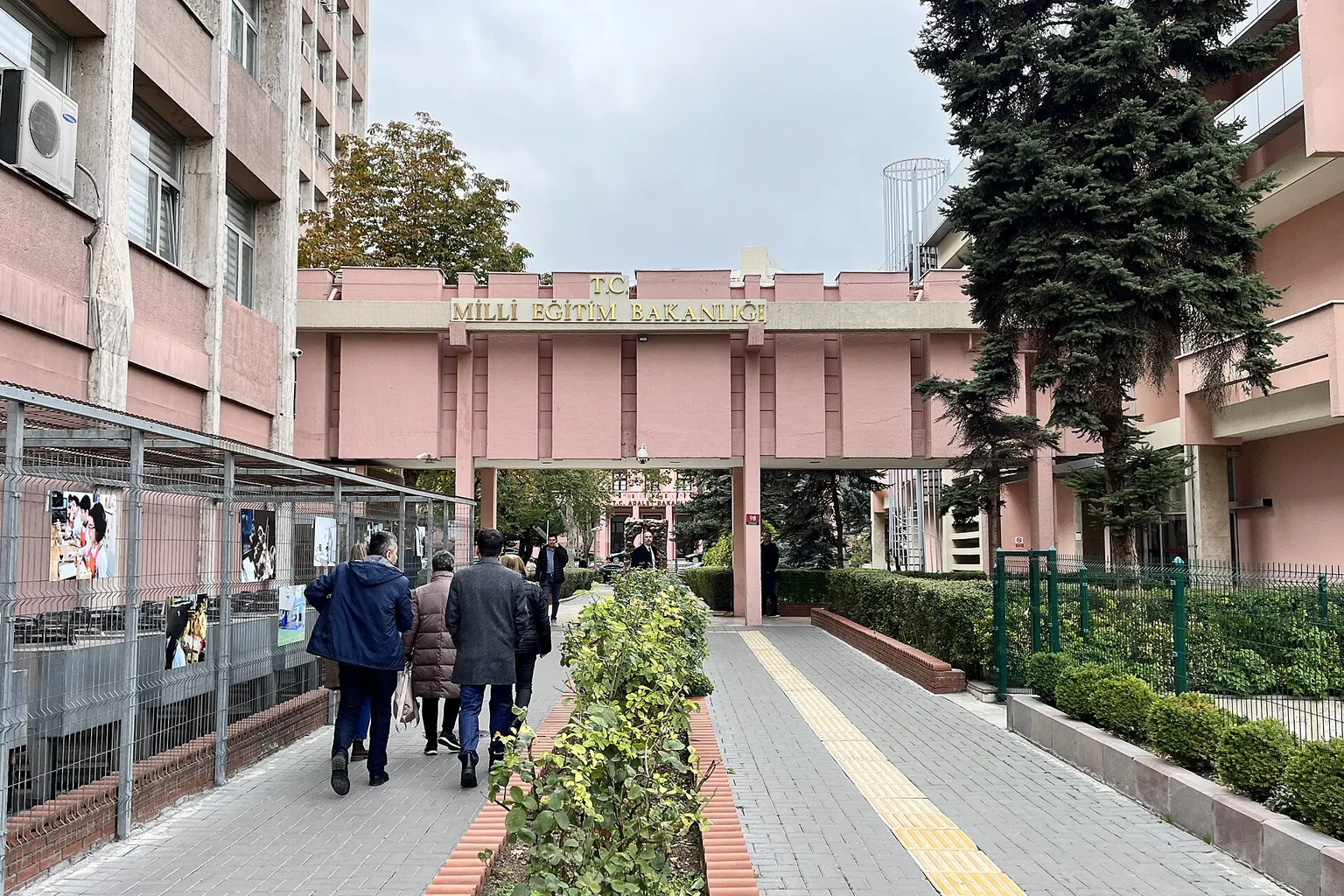
Türkiye’s Ministry of National Education (Millî Eğitim Bakanlığı, MEB) is the state ministry for schooling from pre-school to the end of high school. Its working calendar sets the school year, its Board of Education and Discipline publishes the curricula, and its equivalence system says which Turkish grade a school record from abroad matches. In 2025–26 it counted 17,704,308 pupils in formal education.
In short · checked 06.11.2026
One ministry behind the schools. This is what a family needs from it.
- Schools: 75,012 schools and 17,704,308 pupils in formal education in 2025–26, from pre-school to grade 12.
- Enrolment: new registrations open on the first working day of July, and the home address in the national address database sets the school. Grade 1 takes a child who has completed 69 months by the end of September.
- Foreign children: a school record from abroad is matched to a Turkish grade by an equivalence certificate (denklik), applied for online. Meanwhile a child can attend on the parent’s written statement.
- Turkish: a foreign pupil in grades 3 to 12 who scores under 60 on the Turkish test joins an adaptation class with 30 lessons a week, 24 of them Turkish.
- Calendar: the 2026–27 school year runs from 14 September 2026 to 25 June 2027.
- Help: the ministry’s hotline, 444 0 632, answers 24 hours a day, 7 days a week.
Enrolment guide · checked 06.11.2026
The report card
Pick the birth year, and the month if you know it. The stamp (kayıt, enrolment) lands on the grade of this report card (karne).
A sample report card (drawing)
Age ruler: months old on 30 September 2026, counted by birth month from the ministry’s rule of months completed by the end of September (drawing)
Pre-school (okul öncesi)
- Age
- Under 36 months: below the ministry’s pre-school range. 36 to 56 months: kindergarten (anaokulu) from 36 months, nursery class (ana sınıfı) from 45, if the school has room. 57 to 68 months: the priority group. 66 to 68 months: a parent can ask in writing for grade 1.
- When
- Registration opens on the first working day of July. No tuition; a fee for meals, cleaning and materials is set each April.
- Registration
- The address in the national address database sets the school, and no document is asked for when it is on record. A foreign child with an ID number from the Interior Ministry registers by the details on that identity document.
- Papers
- The equivalence pages list papers for primary school, middle school and high school. A foreign child with an ID number from the Interior Ministry registers by the details on that identity document.
Primary school (ilkokul), grades 1 to 4
- Age
- 69 months or more on 30 September: grade 1. 69 to 71 months: a parent can ask in writing for pre-school or a year’s wait.
- When
- Registration opens on the first working day of July; school starts on 14 September 2026. A lesson lasts 40 minutes, with breaks of at least 15.
- Registration
- The address in the national address database sets the school, and no document is asked for when it is on record. A foreign child with an ID number from the Interior Ministry registers by the details on that identity document. Parents look up the assigned school on e-Devlet, the state’s online portal.
- Papers
- The approved report card of the last year, with the leaving certificate or diploma, stamped or on school letterhead. The certificate sets the grade.
Middle school (ortaokul), grades 5 to 8
- Age
- The ministry’s statistics give 10 to 13 as the middle-school age group.
- When
- Registration by address opens on the first working day of July. After grade 8 a central exam places pupils in the high schools that take pupils by score.
- Registration
- The address in the national address database sets the school, and no document is asked for when it is on record. A foreign child with an ID number from the Interior Ministry registers by the details on that identity document. A foreign pupil who speaks little Turkish sits a Turkish test first: under 60 points means an adaptation class.
- Papers
- The approved, stamped report card of the last year, with the leaving certificate or diploma, through an equivalence application. The certificate sets the grade.
High school (lise), grades 9 to 12
- Age
- Ages 14 to 17 in the ministry’s statistics. High schools are general, vocational and technical, or Anadolu imam hatip schools.
- When
- Some high schools take pupils by score from the grade 8 central exam. The provincial directorate’s commission decides transfers between secondary schools.
- Registration
- A foreign pupil is registered under the ministry’s secondary-school rules. The school’s own admission terms apply too.
- Papers
- A passport and a study visa; the child of a foreigner who may work or live in Türkiye shows a parent’s work permit or a residence permit of at least six months.
- Papers
- Grade 9: the diploma of basic education (ilköğretim) or proof of finishing it. Later grades: earlier report cards or transcripts, and the leaving certificate. Graduates: the diploma with an apostille.
Adults and open school
- Age
- Over 17, or out of school: open education (açık öğretim) runs open high school and open middle school; the public education centres (halk eğitimi merkezi) run adult courses. A literacy course takes anyone 14 or older who cannot read and write, and a foreigner who speaks Turkish can join.
- When
- Pre-register on e-Yaygın, the ministry’s adult-education site, or go to the centre; the centre confirms it, since pre-registration is not final.
- Registration
- Courses register on the ID number. A foreigner with a foreign ID number registers with that number.
- Papers
- A diploma from abroad needs an apostille, or approval from that country’s education ministry, foreign ministry or embassy, before equivalence.
What the ministry is and where it began
MEB is the state ministry for schooling in Türkiye. State schooling began on 17 March 1857, when the schools that foundations had run passed to a new ministry. The same office has changed its name several times since.
- 17.03.1857The schools run by foundations pass to the Ministry of Public Education (Maarif-i Umumiye Nezareti). A minister for schooling takes a place in the parliament. Schools are sorted into three levels.
- 1869The first education regulation sets out the right to education, how schools are run, their budgets, teacher training, provincial offices and exams.
- 1911A new regulation shapes a ministry of ten departments, from primary, secondary and higher education to private schools, statistics and supplies.
- 1920 to 1923Two education ministries exist at once in the war years: the Ottoman one in İstanbul, and one in Ankara under the new Grand National Assembly. The İstanbul ministry is closed in 1923.
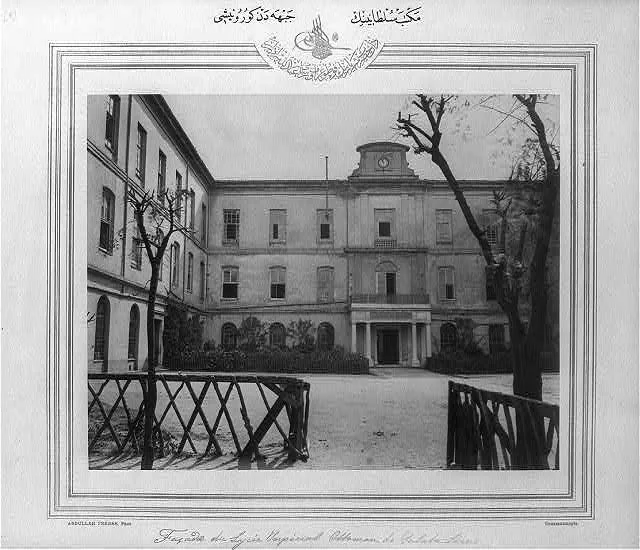
The name over time
- 1923–1935
- Maarif Vekâleti (Ministry of Education)
- 1935–1941
- Kültür Bakanlığı (Ministry of Culture)
- 1941–1946
- Maarif Vekilliği
- 1946–1950
- Millî Eğitim Bakanlığı
- 1950–1960
- Maarif Vekâleti
- 1960–1983
- Millî Eğitim Bakanlığı
- 1983–1989
- Ministry of National Education, Youth and Sports
- Since 1989
- Millî Eğitim Bakanlığı again
Today’s structure rests on Decree Law No. 652 on the ministry’s organisation and duties, in force since 14 September 2011.
Who runs it the directorates a family meets
The minister is Yusuf Tekin, appointed on 4 June 2023 (checked 06.11.2026). The ministry’s work is split between general directorates (genel müdürlük).
Basic Education
Pre-school, primary school and middle school. Its question pages carry the rules on registration, age, lesson times and fees.
Secondary Education
High schools: transfers between schools, the placement and transfer commission, and study material for the central exams.
Vocational and Technical
Vocational high schools, training of pupils in firms, and the journeyman and master exams.
Lifelong Learning
Public education centres, open school, adult literacy, and the department that runs adaptation classes for foreign pupils.
Private Institutions
Private schools and courses, and rehabilitation centres for special education.
Board of Education and Discipline
Curricula, textbooks, weekly lesson tables and the diploma equivalence system.
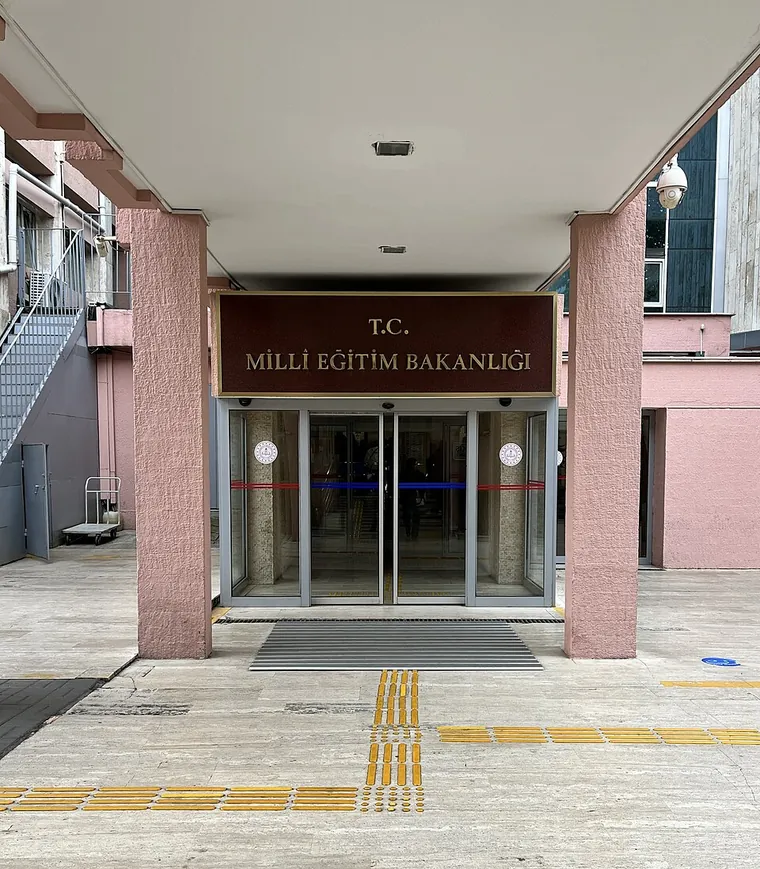
Outside the head office
- In each province: a provincial national education directorate (İl Millî Eğitim Müdürlüğü), and a district directorate in each district.
- First stop: these directorates take the registration and transfer questions of families.
- Abroad: education counsellors and attachés at Türkiye’s missions, who also run equivalence centres.
School in four stages ages, grades and pupils
Formal education has four stages: pre-school, primary school (grades 1 to 4), middle school (grades 5 to 8) and high school (grades 9 to 12). The figures are for the 2025–26 school year.
| Stage | Age group | Pupils | Schools |
|---|---|---|---|
| Pre-school | 5 (84.14% enrolled) | 1,739,723 | 18,636 |
| Primary, grades 1–4 | 6–9 (98.46%) | 5,408,899 | 25,000 |
| Middle, grades 5–8 | 10–13 (98.16%) | 5,307,934 | 18,977 |
| High, grades 9–12 | 14–17 (87.09%) | 5,247,752 | 12,399 |
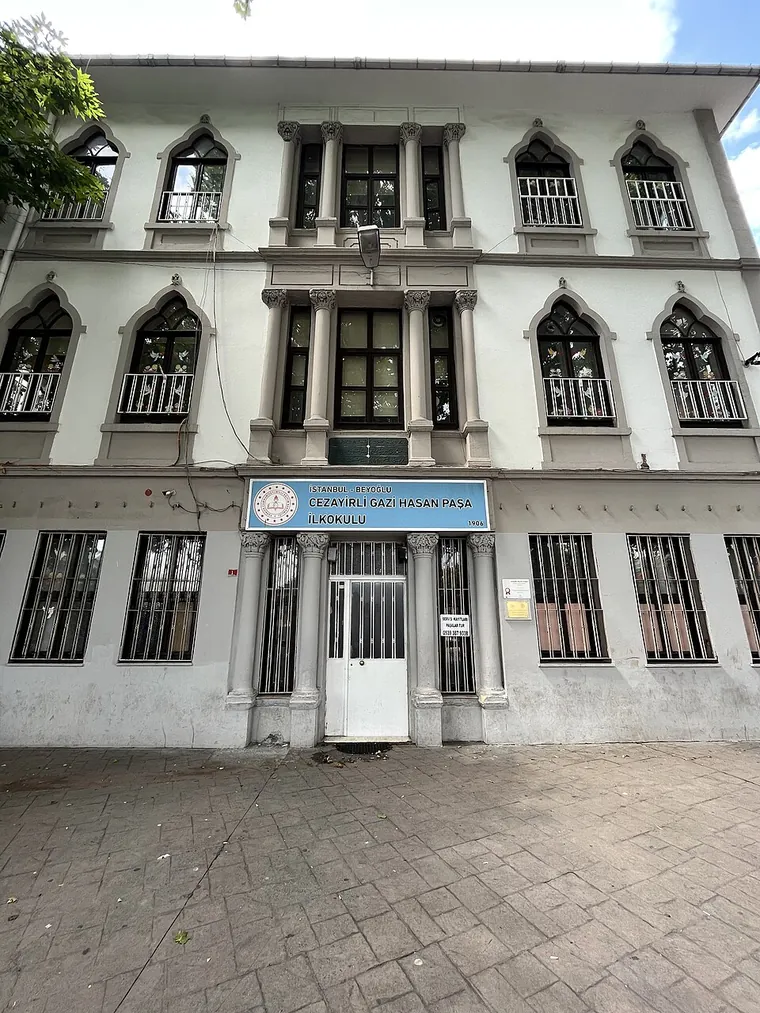
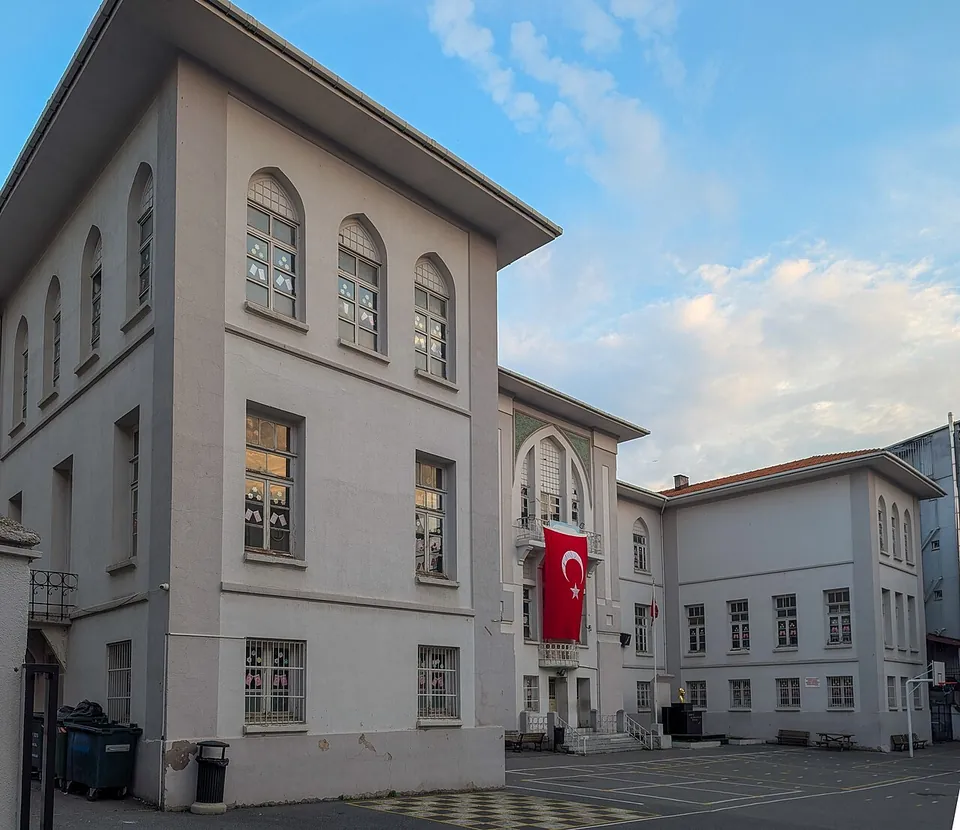
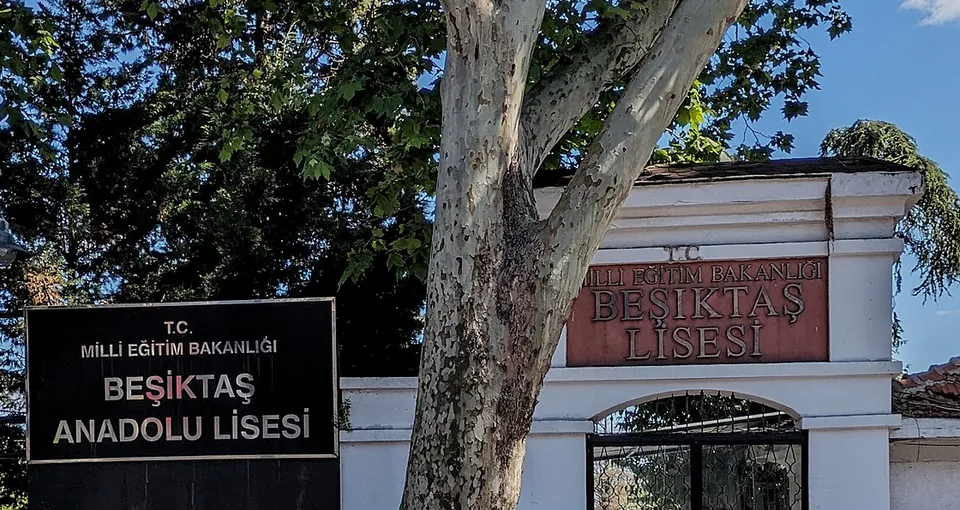
Formal education, 2025–26
17,704,308 pupils
1,211,799 teachers, 75,012 schools and 769,933 classrooms. Of the pupils, 15,167,794 attend public schools, 1,485,021 private schools and 1,051,493 open-education institutions.
High school has three groups in the ministry’s statistics. Vocational and technical schools now hold 39.51% of formal high-school pupils, up from 37.56% a year earlier.
3,046,666 pupils
General high schools.
1,736,473 pupils
Vocational and technical high schools, including open vocational education.
464,613 pupils
Anadolu imam hatip high schools (Anadolu imam hatip liseleri), the third group in the statistics.
- Teachers
- 17 pupils per teacher in primary school, 13 in middle school, 12 in high school.
- Class size
- 19 pupils per classroom in primary school, 25 in middle school, 21 in high school.
345,112 pupils
received a scholarship in 2025–26.
765,728 pupils
in primary, middle and high school were bussed to school.
2,852 dormitories
in schools housed about half a million pupils.
What pupils learn now follows the Century of Türkiye Education Model (Türkiye Yüzyılı Maarif Modeli). It sets the skills a pupil should have at each stage, from pre-school to high school, and groups values around three: justice, respect and responsibility.
Enrolling a child the address decides the school
A public school is set by the family’s home address in the national address database. For pre-school, primary and middle school the ministry asks the parent for no document when the address is on record. A foreign child registers by the details of the identity document with which the Interior Ministry gave the child an ID number. The format of a Turkish address is explained in the Turkish address format guide. The year runs like this.
- MarchIn each province a commission of school heads decides which streets each school takes pupils from, and enters the areas in e-Okul, the ministry’s school system.
- First working day of JulyNew registrations start and the ministry publishes the results. Parents look up the assigned pre-school, primary school and middle school on e-Devlet, the state’s online portal, under the ministry’s services.
- 14 September 2026The school year begins.
- From the first working day of SeptemberTransfers between schools are open until 15 working days before the end of the year. A move of home, a health reason or a disaster is not bound by that limit.
- Grade 1: a child needs to have completed 69 months on 30 September. A parent can ask in writing to enrol a child of 66 to 68 months, or to hold back a child of 69 to 71 months for a year.
- The law: compulsory schooling covers ages 6 to 14, and grade 1 takes a child who has completed 72 months on 31 December of the year.
- Pre-school: public pre-school has no tuition. A fee for meals, cleaning and teaching materials is set each April, and no other fee may be charged under another name.
- Donations: the parent-school association may not force a family to give, and may not collect money during registration.
- Lessons: 40 minutes each, with breaks of at least 15 minutes; lunch lasts 40 to 90 minutes.
- Repeating: not the rule in primary school; once, if the parent asks in writing before the school year ends.
- Moving between provinces: up to five days of absence for the move are not counted.
Papers from abroad the equivalence certificate (denklik)
Before a child from abroad is placed, the ministry says which Turkish grade the last school year equals. That paper is the equivalence certificate (denklik). The Board of Education and Discipline (Talim ve Terbiye Kurulu) runs it online in the e-Denklik system, and the same system covers diplomas.
- Gather the originalsThe report cards, transcripts, leaving certificate or diploma, a passport or residence document, and the ministry’s application form.
- Apply onlineUpload the form and the papers in e-Denklik and choose an equivalence centre in the province where you live. A parent or guardian applies for a child under 18.
- Show the originalsTake them to that centre. The centres sit in provincial and district education directorates in Türkiye, and in education counsellors’ offices abroad.
- Follow the resultThe application status is on the system’s “Başvuru Sorgulama” (application query) page. Hand the certificate to the school.
Equivalence centres
228 centres
146 in Türkiye and 82 abroad. In the province of residence, any centre will take the application.
- Primary and middle school: the approved, stamped report card of the last school year, with a leaving certificate or the diploma. Stamp, seal or school letterhead is needed.
- Grade 9: the diploma of basic education (ilköğretim, primary and middle school together), or proof of finishing it.
- Grades after 9, before graduation: report cards or transcripts of earlier years, and a leaving certificate.
- Graduates: the diploma with an apostille. Where the country is not in the apostille system, the diploma carries the approval of that country’s education ministry, foreign ministry or embassy.
- Identity: a foreigner in Türkiye shows an identity paper such as a residence permit, work permit, temporary protection document or Blue Card, and a passport with the entry and exit pages of the country where the child studied, or proof of living there.
- Translation: a notary’s translation if the staff cannot read the language. A translation made abroad needs the approval of a Turkish consulate.
- Surnames: if the parent’s surname differs from the child’s, upload a birth certificate or a population record from the child’s embassy.
- High school placement: pupils from abroad are placed by the placement and transfer commission, by equivalence paper and programme fit, in the schools of the area that take pupils by choice.
Can my child start school while I wait?
Yes. On the parent’s written statement of the country, school and grade the child last attended, the child can attend for now. The parent is asked to bring the school papers within three months and to follow the application.
What is an apostille?
A stamp that confirms a document is genuine so that it can be used in another country. It is needed on papers that give a high-school graduation, including international diplomas such as Cambridge, IB or Matura. On a photocopy it is valid only if the authority has also certified the copy as a true copy. The member countries are listed on the Hague Conference’s status table.
Can my child go one grade lower?
Yes. A parent can ask the school head in writing to place the child one grade below the one on the certificate, and the school does so.
Which schools need no certificate?
Schools Türkiye runs abroad, schools of the Türkiye Maarif Foundation abroad, public and private schools of Northern Cyprus, and international schools in Türkiye that teach a whole stage with the Turkish programme and weekly timetable.
The original papers are lost.
Copies work if the school or the issuing office certifies that they match the original, and the country’s education ministry approves them: with an apostille where the country is a member, with an embassy’s approval where it is not.
Can someone apply for me?
For a person over 18 the application is made in person. For countries where Türkiye has no mission, an application made in Türkiye can go through a notary’s power of attorney; one signed abroad needs a Turkish consulate’s approval.
Turkish for foreign pupils adaptation classes
A foreign pupil’s Turkish is tested first. A score under 60 sends the child to an adaptation class (uyum sınıfı) that teaches intensive Turkish and prepares the pupil for the regular lessons. Turkish and language teachers with spare hours, and paid teachers, take the classes.
- Test
- The ministry’s Turkish test. A pupil new to the school who missed it sits a written and oral test before a committee of at least three: the head or deputy head, the class teacher, the guidance teacher and a Turkish teacher.
- Lessons
- 30 a week, 24 of them Turkish, each 40 minutes.
- Length
- One term at least, two terms in a row at most.
- Grades
- From grade 3 to grade 12, in primary, middle and high school separately.
- Size
- 10 to 30 pupils per grade. Where there are too few, grades 3–4, 5–8 and 9–12 can be taught together. Where a district has fewer than 10, the provincial directorate picks one school.
Adults
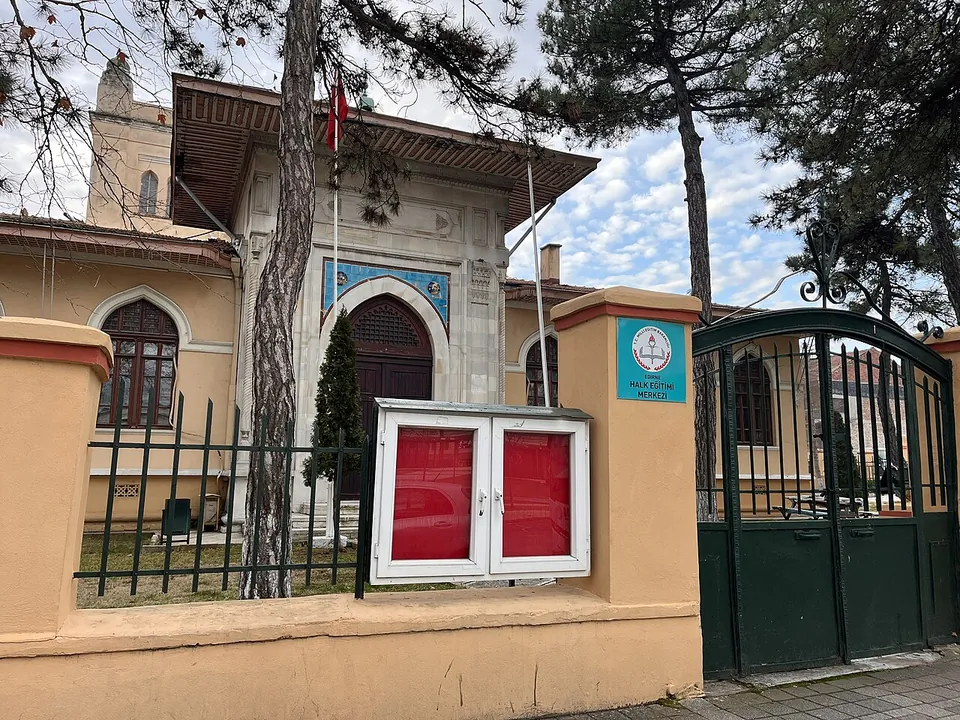
Public education centres (halk eğitimi merkezi) run courses for adults. Courses register on the identity number, and a foreigner uses the foreign identity number. A literacy course takes anyone 14 or older who cannot read and write; a foreigner can join if he or she speaks Turkish.
The school year 2026–27, 14 September to 25 June
The year has 180.5 school days: 88.5 in the first term and 92 in the second. The law asks for at least 180. The Ramadan Feast and the Feast of the Sacrifice both fall inside the school year.
- Ceremonies
- Pupils attend the ceremonies on 29 October, 23 April and 19 May, so those public holidays count as school days.
- Feasts
- Ramazan Bayramı: 8 to 11 March 2027, 3.5 days. Kurban Bayramı: 15 to 19 May 2027, 4.5 days.
- First term
- 14 September 2026 to 22 January 2027, 88.5 school days.
- Second term
- 8 February to 25 June 2027, 92 school days.
Systems and numbers e-Okul, EBA and the hotline
Most school business runs through ministry systems. The ones a family meets are these.
e-Okul
The school management information system: registrations, transfers, exam applications and the files of foreign pupils in adaptation classes.
EBA
The Educational Informatics Network (Eğitim Bilişim Ağı): digital lessons and material for pupils and teachers.
MEBİ
The ministry’s individual learning platform.
e-Yaygın and e-Kurs
Pre-registration for courses at public education centres, and for support courses.
e-Denklik
The equivalence application and its status page.
The hotline
444 0 632
- Hours
- 24 hours a day, 7 days a week.
- From abroad
- +90 444 0 632
- Answer
- A call is settled during the call where possible. Other cases go to the right unit; the result comes by text message to the phone number given, and is shown on e-Devlet.
- Head office
- Atatürk Bulvarı No:98, Bakanlıklar, Ankara
- Switchboard
- +90 312 413 26 80 · +90 312 413 26 81 · +90 312 413 18 38
- Board of Education and Discipline
- +90 312 413 43 00 (equivalence, curricula and textbooks)
- In the provinces
- Each provincial and district directorate of national education has its own address and number.
Sources and dates
Every figure and rule here comes from the ministry’s own pages, checked on the date shown. Dates and fees change; the ministry’s pages carry the current version.
- Ministry of National Education, English home page with the ministry’s history — checked 06.11.2026
- Ministry of National Education, the minister — checked 06.11.2026
- Ministry of National Education, frequently asked questions (Sıkça Sorulan Sorular) — hotline and scholarships; checked 06.11.2026
- Ministry of National Education, contact (İletişim) — checked 06.11.2026
- Strategy Development Directorate, “Millî Eğitim İstatistikleri: Örgün Eğitim 2025-2026” — published 01.10.2026; checked 06.11.2026
- Basic Education Directorate General, frequently asked questions (S.S.S) — registration, age rules, transfers, lesson times, donations, the pre-school fee rule; checked 06.11.2026
- Basic Education Directorate General (Temel Eğitim Genel Müdürlüğü) — checked 06.11.2026
- Secondary Education Directorate General, frequently asked questions (S.S.S) — transfers, placement commission; checked 06.11.2026
- Secondary Education Directorate General, 2026–2027 school year working calendar (Eğitim-Öğretim Yılı Çalışma Takvimi) — checked 06.11.2026
- Vocational and Technical Education Directorate General (Mesleki ve Teknik Eğitim Genel Müdürlüğü) — checked 06.11.2026
- Lifelong Learning Directorate General, frequently asked questions — adaptation classes and adult courses; checked 06.11.2026
- Private Education Institutions Directorate General (Özel Öğretim Kurumları Genel Müdürlüğü) — checked 06.11.2026
- Board of Education and Discipline (Talim ve Terbiye Kurulu Başkanlığı) — checked 06.11.2026
- Century of Türkiye Education Model (Türkiye Yüzyılı Maarif Modeli) — checked 06.11.2026
- Bursa Provincial Directorate of National Education, FAQ (quotes the regulations) — foreign pupils’ registration and the pre-school fee; checked 06.11.2026
- e-Denklik system, public FAQ page — documents, apostille, temporary attendance; checked 06.11.2026
- e-Denklik system, public home page — the 228 equivalence centres; checked 06.11.2026
The photographs are from Wikimedia Commons, each with its author, date, licence and file page. The report card, the age ruler and the school-year ladder are drawings.