Ephesus: Temple of Artemis, the Roman City and Ayasuluk Hill
Ephesus (Efes) beside Selçuk in İzmir province: its temple site, the Roman city, Ayasuluk Hill, the 2015 World Heritage listing and the hours.
Table of Contents
Ephesus (Efes in Turkish) is an ancient city beside the town of Selçuk in İzmir province, on the Aegean side of Türkiye. It has been on the UNESCO World Heritage List since 2015, in four parts: the ancient city, Ayasuluk Hill, the House of the Virgin Mary and Çukuriçi Höyük, a mound built up by layers of settlement (KVMGM). The ancient city is open every day from 08:00 to 18:00 (muze.gov.tr, checked 30.10.2026).
In short · checked 30.10.2026
A city that moved, and the places it left.
- What: an ancient city beside Selçuk and the places round it: the temple of Artemis, the Hellenistic and Roman city, and Ayasuluk Hill.
- Where: in İzmir province. Selçuk is 3 km from the ruins (TDV, the TDV İslâm Ansiklopedisi).
- Listed: World Heritage since 2015, list no. 1018, criteria (iii), (iv) and (vi) (KVMGM, the ministry directorate for cultural assets and museums).
- Hours: the ancient city is open every day, 08:00–18:00; the ticket office (gişe) closes at 17:30 (muze.gov.tr, checked 30.10.2026).
- Ticket: 40 euros for non-Turkish citizens, the Experience Museum included; 600 ₺ for Turkish citizens over 18 (muze.gov.tr, checked 30.10.2026).
- Dates differ: the first settlement is put at 6,000 BC (muze.gov.tr) and the settlement at about 9,000 years (KVMGM); the temple of Artemis at the 8th century BC (KVMGM) or the 6th (TDV).
Walk it · six stops
Down the slope, stop by stop
Press a number, tap a building or press Next. The red marker shows the stop. Drawing, not to scale.
Stop 1 of 6
The Prytaneion
The town hall of Ephesus.
Built under Augustus and Tiberius, 27 BC–37 AD muze.gov.tr
Prytaneion nerede?Where is the Prytaneion?Stop 2 of 6
The Odeum Odeon
A hall for city council meetings and performances.
Built in the Pax Romana, to about 180 AD muze.gov.tr
Odeon nerede?Where is the Odeum?Stop 3 of 6
The Terrace Houses Efes Yamaçevler
Seven Roman houses on a slope, where the prominent people of Ephesus lived. Look for the coloured mosaic floors and the painted walls.
Built from the 1st century AD, on a Hellenistic cemetery muze.gov.tr
Yamaçevler için ayrı bilet gerekiyor mu?Do the Terrace Houses need a separate ticket?Stop 4 of 6
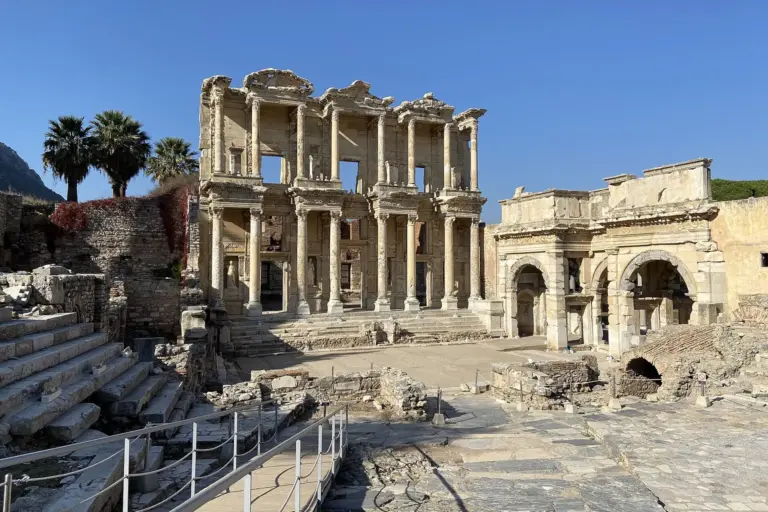
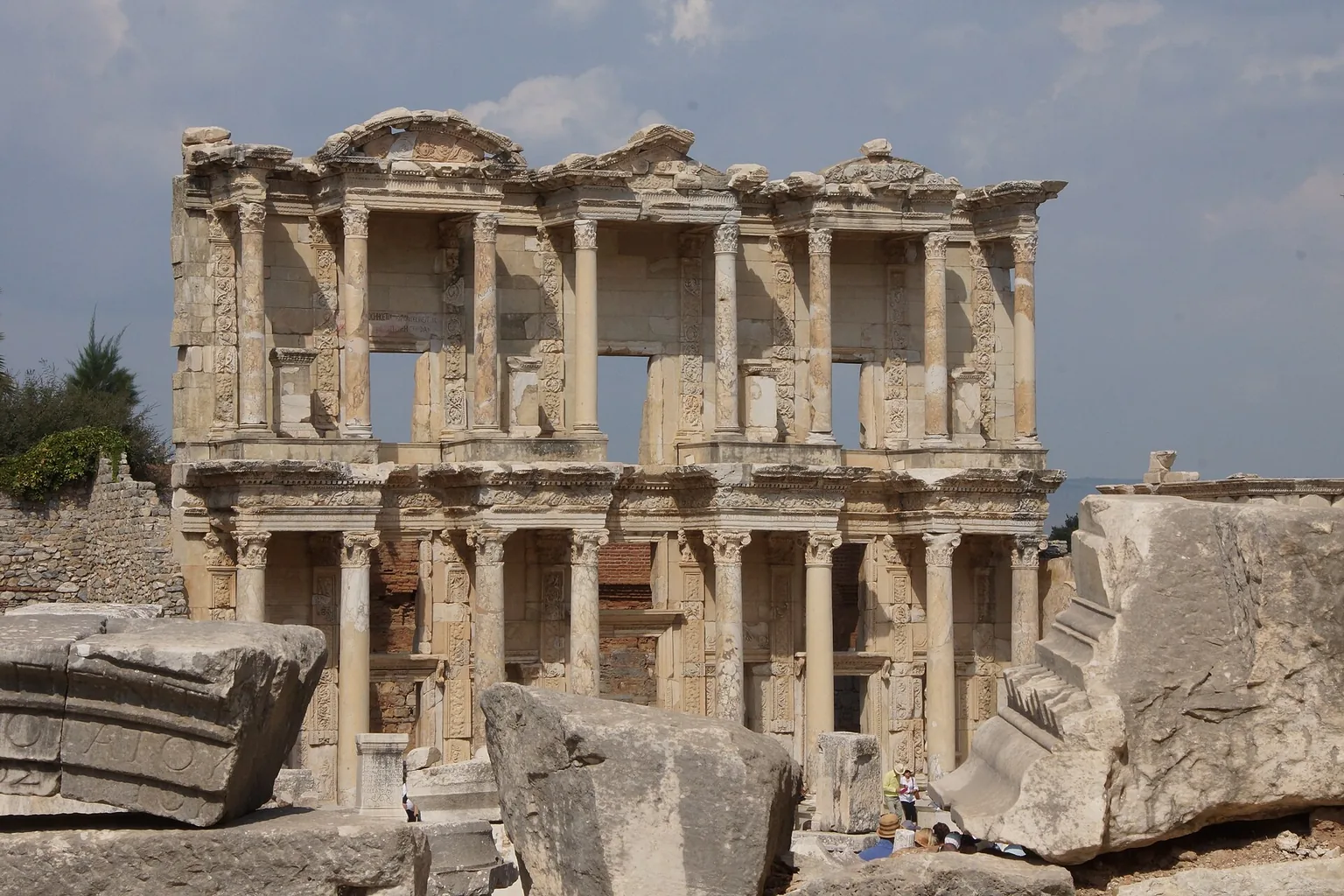
The Library of Celsus Celsus Kütüphanesi
A library of the Roman city, with a two-storey front.
Built in the Pax Romana, to about 180 AD muze.gov.tr
Celsus Kütüphanesi nerede?Where is the Library of Celsus?Stop 5 of 6
The Agora
The city square and the centre of the business district, with a two-storey stoa, a roofed colonnade, on all four sides.
Begun about 23 AD under Tiberius, finished about thirty years later muze.gov.tr
Agora nerede?Where is the agora?Stop 6 of 6
The theatre Antik Tiyatro
The theatre of Ephesus. The Efes Experience Museum has its address opposite it.
Renovated in the Pax Romana, to about 180 AD muze.gov.tr
Antik Tiyatro nerede?Where is the ancient theatre?
Three places, one name
Ephesus has stood in more than one place. The hill, the temple and the Roman city are three of them, and the name belongs to all three.
Ayasuluk Hill
The first city of Ephesus stood here, on the coast (TDV). The Ministry dates settlement on the hill to the Neolithic, 7000 BC, and says it was the main city until 560 BC (muze.gov.tr).
The temple of Artemis
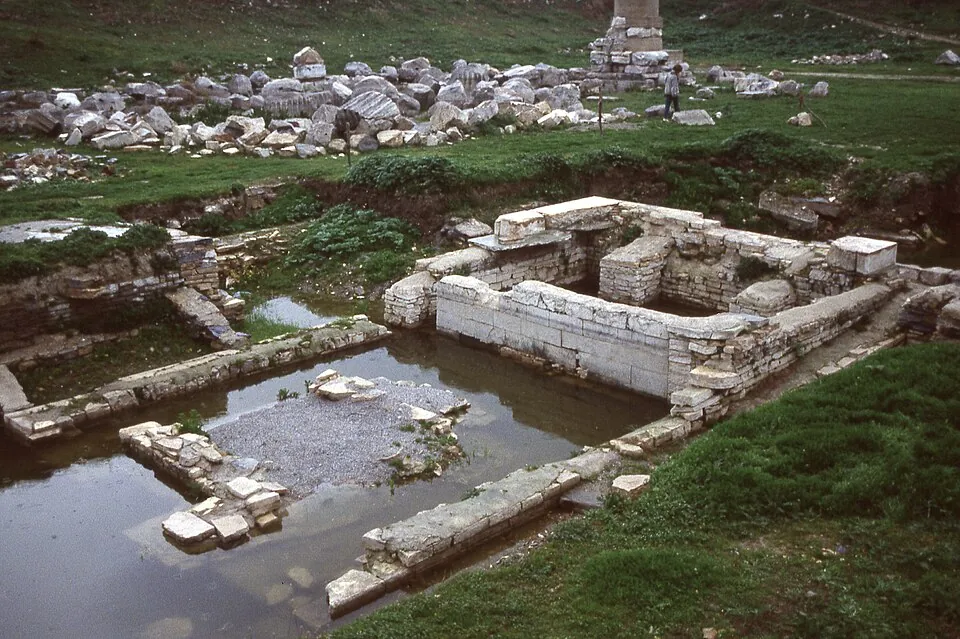
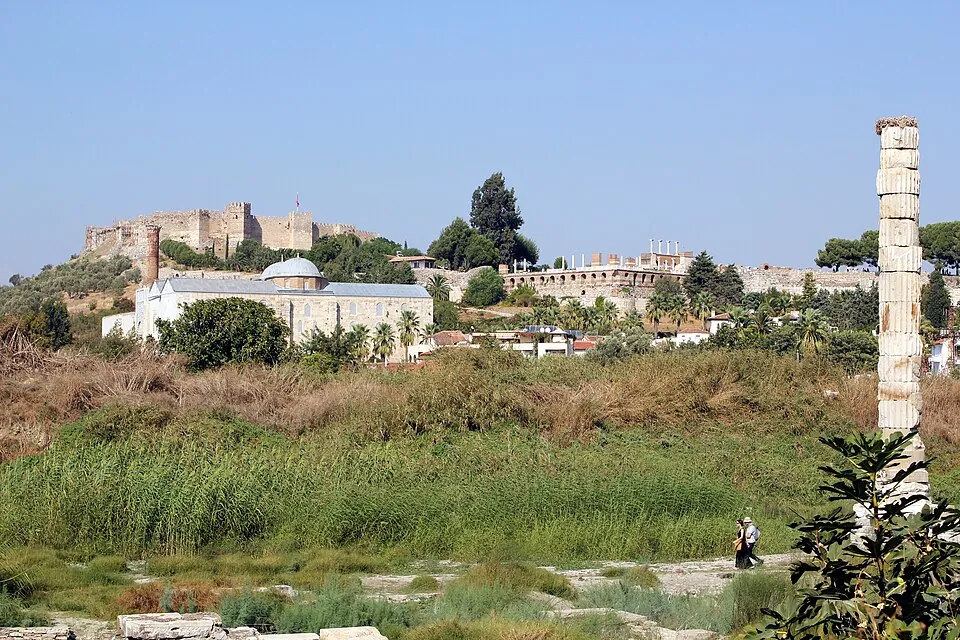
A great temple of the goddess Artemis, called the Artemision. KVMGM dates it to the 8th century BC and says it is famous as one of the seven wonders of antiquity. TDV says it was built in the 6th century BC, burned and rebuilt several times, and gone after Theodosius’ edict at the end of the 4th century.
The Hellenistic and Roman city
Lysimachus, a general of Alexander the Great, re-founded Ephesus around 300 BC (muze.gov.tr). Under Rome it was the capital of the province of Asia, and the ruins that stand today were built under Augustus and Tiberius and in the Pax Romana, the time of peace from Augustus to about 180 AD (muze.gov.tr).
Settlement · three figures
About 9,000 years, and two other dates.
About 9,000 years of continuous settlement, from prehistory through the Hellenistic, Roman, Eastern Roman, Beylik (Turkish principality) and Ottoman periods (KVMGM).
6,000 BC for the earliest settlement in the area (muze.gov.tr).
7000 BC for the Neolithic settlement on Ayasuluk Hill, from digging there since 1990 (muze.gov.tr).
- Efes
- The Turkish name of Ephesus.
- ören yeri
- An archaeological site in the open air, «a ruin place».
- Ayasuluk
- The hill’s name in Arab and Ottoman sources, after St John Theologos, St John the Theologian (TDV).
- Selçuk
- The town beside the ruins. The place called Ayasuluk took the name in 1914 and became a district centre in 1957 (TDV).
- höyük
- A mound built up by layers of settlement, as at Çukuriçi Höyük.
How the city moved
Ephesus was not always in one place, because the sea left it. The river Küçük Menderes brought mud that filled the shallow bay, and the city moved west to where the ruins stand today. When that harbour also filled with sand, Ephesus lost its importance, and in the Middle Ages a new settlement came to life on the hill where the city was first founded (TDV).
ThenThe first city stands on the hill, on the coast.
SiltingMud from the river fills the bay and the city moves west.
NowThe hill lies about 9 km from the sea (TDV).
Drawing, not to scale. Sea in teal, river mud in sand, the hill in brown, a city in red.
The cities of Ephesus are numbered I to IV (muze.gov.tr).
- Ephesus I
- The city or fortress on Ayasuluk Hill, the main settlement from 1900 to 560 BC.
- Ephesus II
- The city around the temple of Artemis, from 560 BC. It awaits excavation, at least 4 metres below the surface.
- Ephesus III
- The city Lysimachus re-founded about 300 BC. It declined in Late Antiquity.
- Ephesus IV
- The settlement back on Ayasuluk Hill from the 7th century AD, when the harbour became unusable.
- 7000 BC Settlement on Ayasuluk Hill: the Ministry dates it to the Neolithic (muze.gov.tr).
- 11th century BC An Ionian (Greek) city. Its founders and the date of its founding are not certain (TDV). The Ministry puts Greek colonisation at about 700 BC (muze.gov.tr).
- 560 BC The Lydian king Croesus moves the city to the temple of Artemis: Ephesus II (muze.gov.tr).
- 547–334 BC Under the Persians from 547–546 BC, then part of Alexander’s empire from 334 BC (TDV).
- About 300 BC As the harbour fills, Lysimachus re-founds the city between two hills, Panayırdağı and Bülbüldağı, and walls it: Ephesus III (muze.gov.tr, TDV).
- 133 BC Ephesus passes to Rome and becomes the capital of the province of Asia (TDV).
- 27 BC–180 AD The Prytaneion, a stadium, new aqueducts, the Library of Celsus and more are built under Augustus, Tiberius and the Pax Romana (muze.gov.tr).
- 431 The Third Ecumenical Council, a meeting of the church, gathers in Ephesus (TDV, KVMGM).
- 7th century AD The harbour is unusable and the settlement returns to Ayasuluk Hill: Ephesus IV (muze.gov.tr, muze.gov.tr).
- 1071–1375 The city passes to the Turks, who had begun to settle in Anatolia from 1071; in 1097, during the Crusade, it comes back under Byzantine control. Sasa Bey takes it for good in October 1304, Aydınoğlu Mehmed Bey about 1309, and İsa Bey builds his mosque in 1375 (TDV).
- 1914 The town takes the name Selçuk. It becomes a district centre in 1957 (TDV).
What stands today, period by period
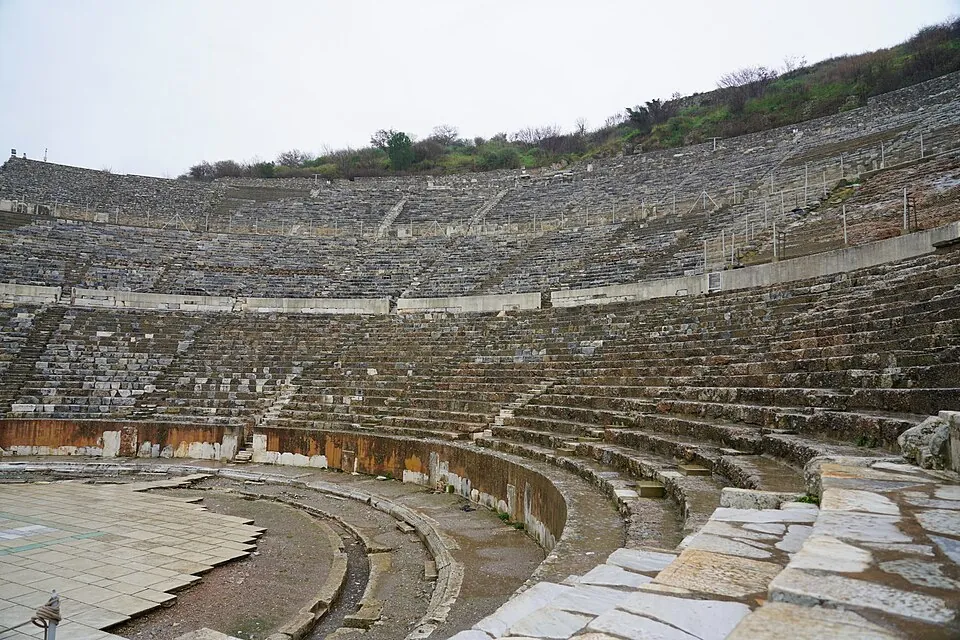
The ruins date mostly from the time of Augustus and Tiberius, 27 BC–37 AD, and from the Pax Romana, to about 180 AD (muze.gov.tr).
Built under Rome
- Under Augustus and Tiberius
- The Prytaneion, the town hall; a stadium in the form of a hippodrome; new aqueduct lines (muze.gov.tr).
- In the Pax Romana
- The theatre renovated; the Odeum, a hall for council meetings and performances; the Library of Celsus; bathhouses; public latrines (muze.gov.tr).
- The Agora
- The city’s market square, with a two-storey stoa, a roofed colonnade, on all four sides. Begun about 23 AD, finished about thirty years later, and open for trade by 43 AD, as dedicatory inscriptions show (muze.gov.tr).
- Prytaneion
- The town hall of a Greek city.
- agora
- The city square, where trade and public life met.
- stoa
- A long roofed colonnade, open on one side.
The Terrace Houses, on the slope
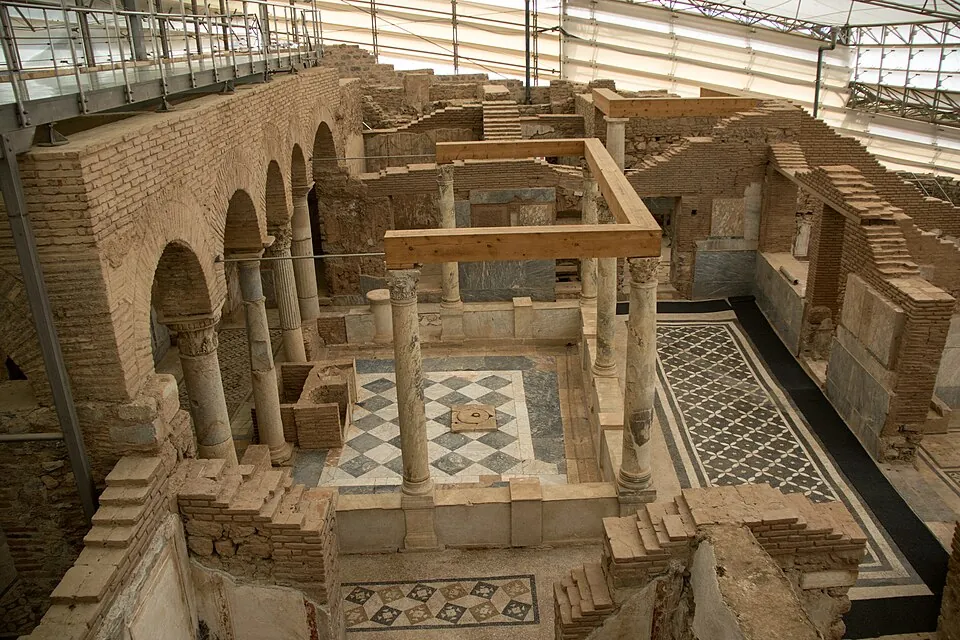
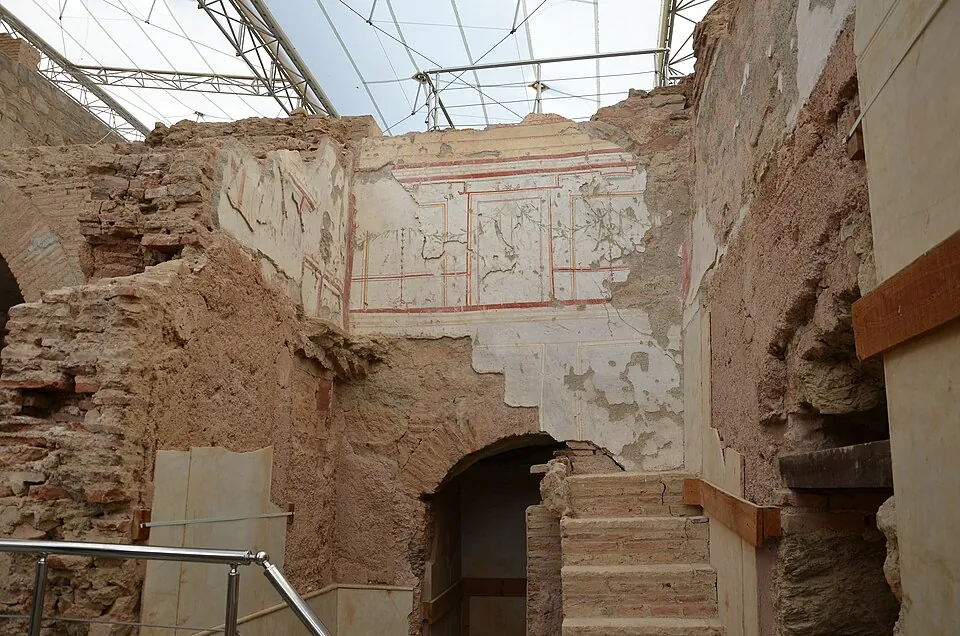
The Terrace Houses (Yamaçevler; yamaç is «slope», ev «house») are seven Roman houses on the terraces of Mount Koressos, where the prominent people of Ephesus lived (muze.gov.tr). The Culture Portal calls the hill Bülbül Dağı. The area was a cemetery in the Hellenistic period (Culture Portal).
The houses in brief
- Seven houses built from the 1st century AD. The earliest of those that can be visited dates from the time of Augustus (Culture Portal).
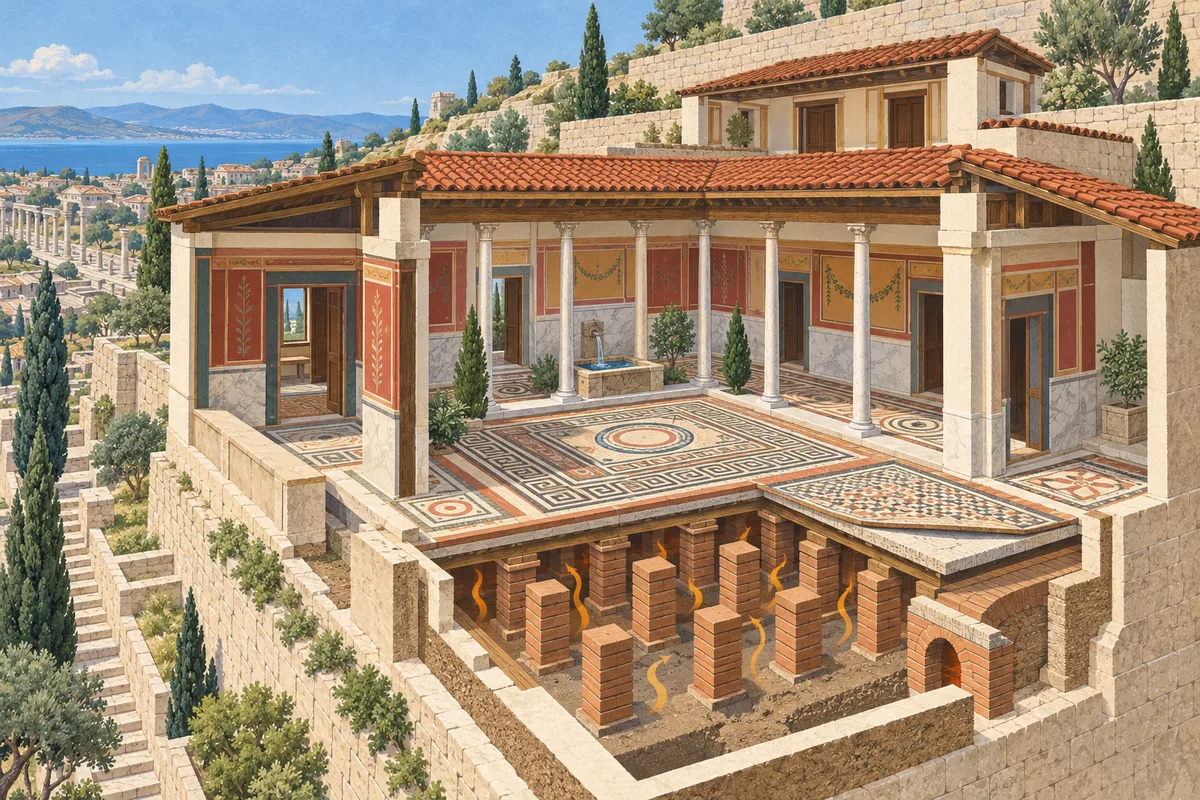
- A courtyard open to the sky and ringed by columns, a peristil, with rooms round it. Some houses have two or three floors (Culture Portal).
- Floors and walls: coloured mosaics, mostly black and white with geometric patterns, some with scenes from myth; marble on the walls; frescoes, paintings on wet plaster (muze.gov.tr, Culture Portal).
- Water and heat: a fountain in every house, and a heating system like a bath’s that sent heat through pipes to other rooms. Hot and cold water ran at the fountains in front of the dining room, the kitchen and the latrine (Culture Portal).
- Finds: busts of emperors, empresses and philosophers, lamps, jewellery, toys, perfume bottles and medical and cosmetic tools (Culture Portal).
- peristil
- The Culture Portal’s word for a peristyle: a rectangular courtyard open to the sky, with a colonnade round it.
- Fresco
- A painting made on wet plaster. The Culture Portal lists muses, erotes (small winged figures), birds, fish, people from daily life and scenes from the theatre.
- Koressos
- The hill of the Terrace Houses (muze.gov.tr).
Ayasuluk Hill and Selçuk
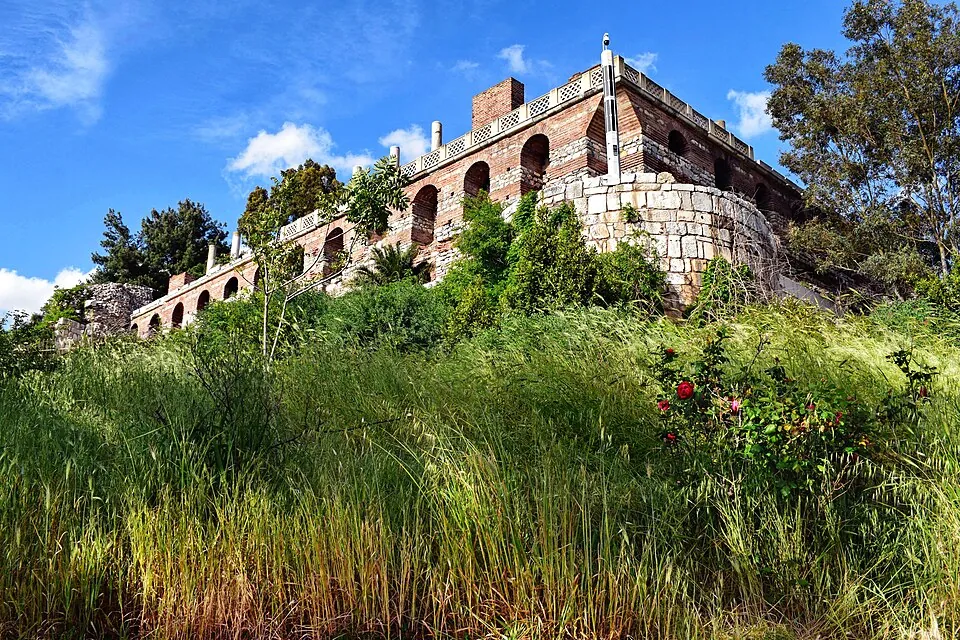
Ayasuluk Hill is in Selçuk, the town beside the ruins. The hill was lived on from the Neolithic to the end of the Ottoman period (muze.gov.tr). The World Heritage listing names five parts of it: Selçuk Castle, St John’s Basilica, the İsa Bey Bath, the İsa Bey Mosque and the temple site (KVMGM).
The castle
- Selçuk Kalesi · the castle
- Ayasuluk Castle takes in the Church of St John, the outer walls, a monumental entrance, a chapel and treasury, a baptistery, an atrium, a bishop’s palace, cisterns, aqueducts, a castle mosque, a pavilion and bath and a basilica-cistern (muze.gov.tr). The tower and walls are partly restored (muze.gov.tr).
- St. John Bazilikası · St John’s Basilica
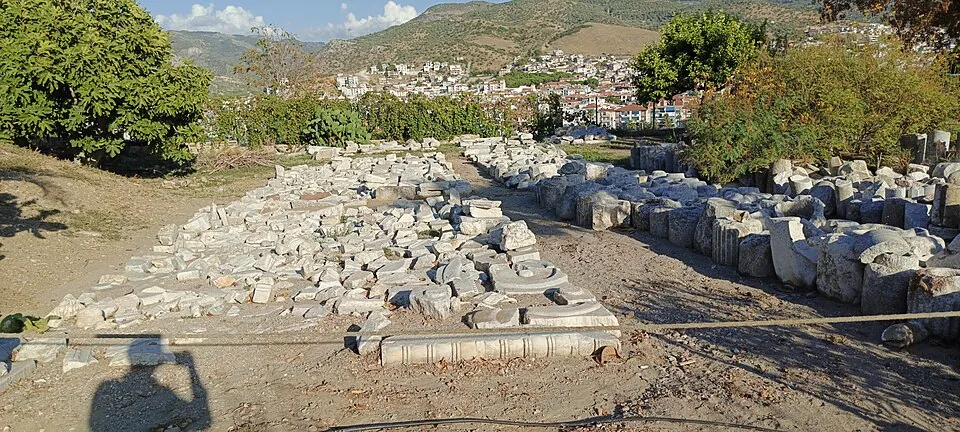
- A bazilika is a large church hall. This one stands over the grave that tradition gives to St John (muze.gov.tr, KVMGM). It had six domes, with the tomb at the centre, and a baptistery of the 4th century (muze.gov.tr). Emperor Justinian had it built in the 6th century AD, and its remains still stand (TDV).
Tradition and history, each with its source
- John and Mary: according to tradition, St John took the Virgin Mary to Ephesus, four or six years after the death of Jesus (muze.gov.tr). John is believed to have written the Gospel of John in Ephesus (muze.gov.tr).
- Paul: TDV says Paul came to Ephesus twice and stayed more than two years the second time, and met a sharp reaction from followers of the cult of Artemis (Acts 19:23–41).
- The council of 431: KVMGM names the Church of Mary as the place where it met.
The House of the Virgin Mary · Meryem Ana Evi
- Where: on Bülbül Dağı, 9 km from Selçuk (Selçuk Municipality).
- The house: by tradition Mary spent her last days in a house that Lazarist missionaries rediscovered in 1891, after the visions of a German nun. The building has a cross plan and a dome, was restored and is a shrine. Since Pope Paul VI’s visit in 1967 a ceremony is held there every 15 August (muze.gov.tr).
- The municipality adds that Muslims also hold the house holy (Selçuk Municipality).
The World Heritage listing
The UNESCO World Heritage List names places that meet numbered tests, the criteria.
KVMGM · checked 30.10.2026
2015, list no. 1018, criteria (iii), (iv) and (vi).
Type: cultural. Year: 2015. Name in Turkish: Dünya Mirası Listesi, the World Heritage List.
Four parts: Çukuriçi Höyük, Ayasuluk Hill, the ancient city and the House of the Virgin Mary.
About 9,000 years of settlement is the directorate’s figure for the site as a whole.
Ayasuluk Hill
Selçuk Castle, St John’s Basilica, the İsa Bey Bath, the İsa Bey Mosque and the temple site (KVMGM).
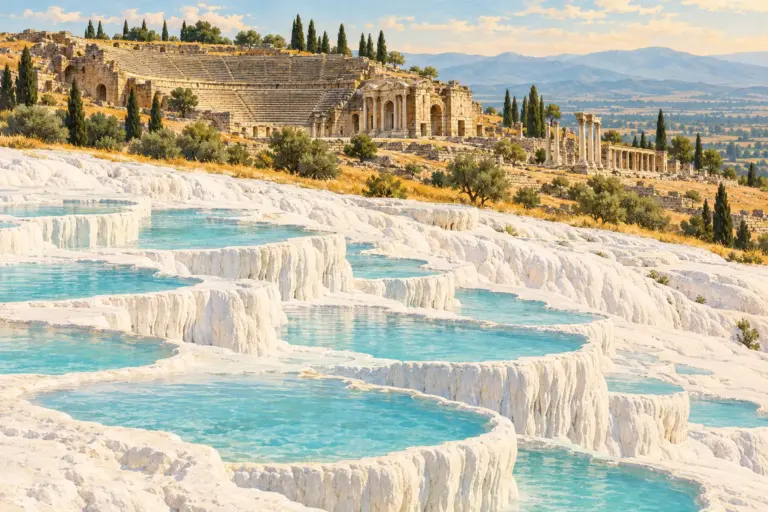
Other World Heritage sites in Türkiye: Hierapolis, in the Aegean, and Mount Nemrut.
The visit, hours and tickets
All six places are open every day (Her gün açık). The opening hours and the closing time of the ticket office differ from place to place.
| Place | Open | Ticket office closes | Also printed |
|---|---|---|---|
| Ephesus Ancient City · Efes Örenyeri | 08:00–18:00 | 17:30 | MüzeKart, the museum pass, is valid for Turkish citizens. Audio guide. |
| Efes Experience Museum · Efes Deneyim Müzesi | 08:00–18:00 | 17:30 | 40 euros for non-Turkish citizens, the Experience Museum included; 600 ₺ for Turkish citizens over 18. MüzeKart is not valid. Audio guide. |
| Terrace Houses · Efes Yamaçevler | 09:00–17:00 | 16:30 | Turkish citizens can buy a reduced ticket. Audio guide. |
| Ephesus Museum · Efes Müzesi | 08:30–17:30 | 17:00 | MüzeKart is valid for Turkish citizens. Audio guide. |
| St John’s Basilica · St. John Bazilikası | 08:00–18:00 | 17:30 | MüzeKart is valid for Turkish citizens. |
| Ayasuluk Archaeological Site · Ayasuluk Örenyeri | 09:00–16:30 | 16:00 | 130 TL. The castle can be visited between 09:00 and 16:00. |
- Ancient city
- Efes Harabeleri, 35920 Selçuk/İzmir; the Efes Experience Museum is opposite the ancient theatre, Antik Tiyatro Karşısı (muze.gov.tr).
- Ephesus Museum
- Atatürk Mahallesi, Uğur Mumcu Sevgi Yolu No: 26 (muze.gov.tr).
- St John’s Basilica
- İsa Bey Mahallesi, St.Jean sok. No:4 (muze.gov.tr).
- Rail
- İZBAN, İzmir’s suburban rail operator, lists Selçuk among its stops, on a line from Aliağa that includes the airport stop, Adnan Menderes Havalimanı (izban.com.tr, checked 30.10.2026).
Ticket prices for Ephesus Ancient City, the Terrace Houses and the Ephesus Museum: museum ticket prices in Türkiye.
The Ephesus Museum in Selçuk
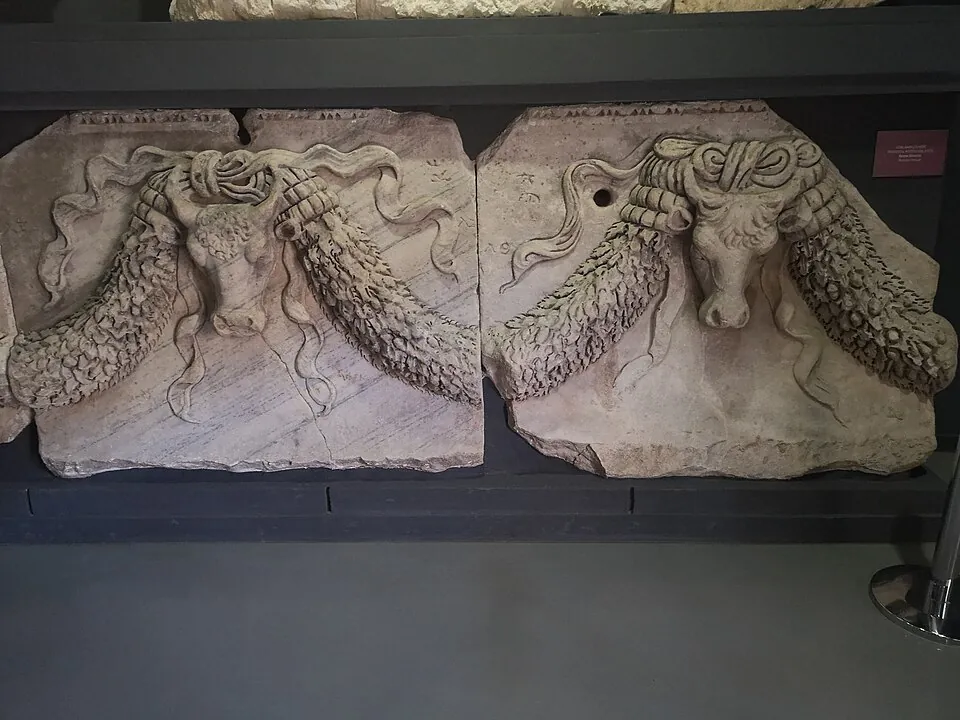
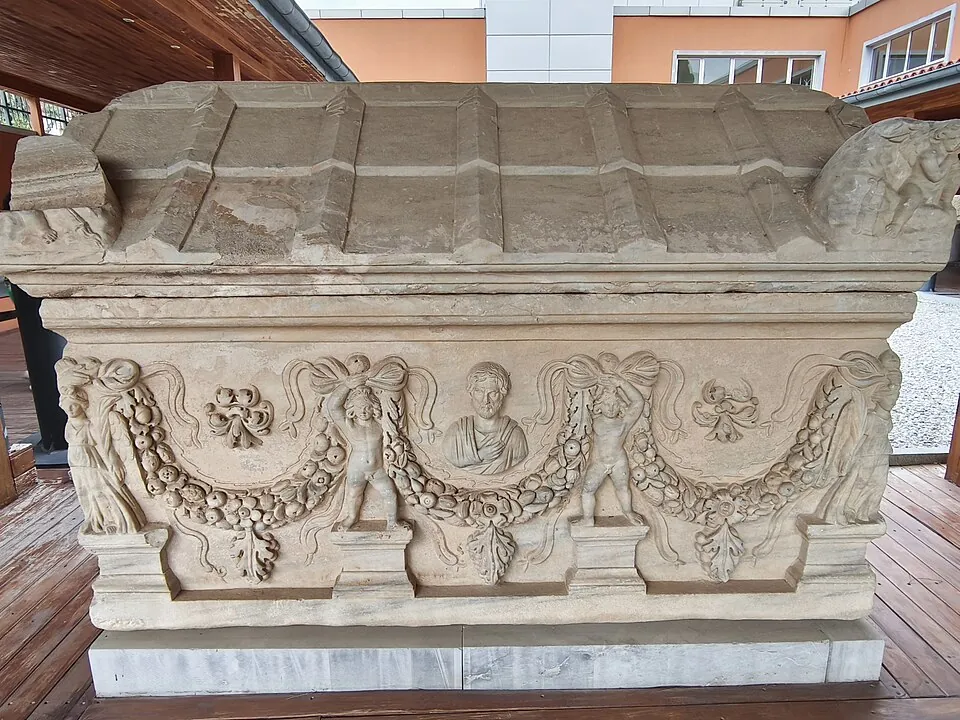
The Ephesus Museum (Efes Müzesi) shows finds from the city under the heading «8500-Year Journey». Its rooms are arranged by subject and by group of finds (muze.gov.tr).
- At the entrance: the Information Hall.
- Rooms: Fountain Findings, Terrace Houses Findings, Ancient Coins, Ephesus Through the Ages, an Inner Garden, the Cybele Cult, Artemis Temple Findings, and Ephesus Artemis and the Imperial Cult (muze.gov.tr).
- Finds from: Çukuriçi Mound, the Artemision, the St Jean Church, the fortress on Ayasuluk Hill, the Belevi Mausoleum and Ephesus.
Resting Warrior
A young warrior, half lying, his weight on his left arm. He holds a shield and a sword, and has wavy hair tied with a band and a calm face.
Marcus Aurelius
White marble, 2nd century AD, of the Roman emperor and Stoic philosopher. The back of the statue is left rough.
Head of Eros
White marble, broken at the neck. A replica of Lysippos’ «Eros stretching the bow», created between 330 and 320 BC.
Artemis
A high crown, polos, shaped like a three-storey temple, and a belt with bees, the symbol of Ephesus. The museum describes her as merging with Kybele, the mother goddess of Anatolia (muze.gov.tr).
A second museum on the site
The Efes Deneyim Müzesi, the Ephesus Experience Museum, has its address opposite the ancient theatre. It tells the story of daily life, trade, art and architecture in Ephesus. Its entry is part of the ancient city ticket (muze.gov.tr, muze.gov.tr).
Turkish lines and sources
Seven lines to ask or say
- Gişe nerede?Where is the ticket office?
- Gişe saat kaçta kapanıyor?What time does the ticket office close?
- Sesli rehber var mı?Is there an audio guide?
- Yamaçevler için ayrı bilet gerekiyor mu?Do the Terrace Houses need a separate ticket?
- Bugün açık mı?Is it open today?
- Efes Müzesi nerede?Where is the Efes Museum?
- Selçuk’a İZBAN ile gidebilir miyim?Can I go to Selçuk by İZBAN?
- gişe · sesli rehber
- Ticket office · audio guide.
- Her gün açık · Bugün açık mı?
- Open every day · Is it open today?
- MüzeKart · indirimli bilet
- The museum pass · a reduced ticket.
- ören yeri · Dünya Mirası
- An archaeological site in the open air · World Heritage.
- Efes Örenyeri (Ephesus Archaeological Site) — Ministry of Culture and Tourism, muze.gov.tr, undated, checked 30.10.2026
- Efes Yamaçevler (the Terrace Houses) — Ministry of Culture and Tourism, muze.gov.tr, undated, checked 30.10.2026
- Efes Deneyim Müzesi (Ephesus Experience Museum) — Ministry of Culture and Tourism, muze.gov.tr, undated, checked 30.10.2026
- Efes Müzesi (Ephesus Museum) — Ministry of Culture and Tourism, muze.gov.tr, undated, checked 30.10.2026
- St. John Bazilikası (Basilica of St. John) — Ministry of Culture and Tourism, muze.gov.tr, undated, checked 30.10.2026
- Ayasuluk Örenyeri (Ayasuluk Archaeological Site) — Ministry of Culture and Tourism, muze.gov.tr, undated, checked 30.10.2026
- Efes (İzmir) — Kültür Varlıkları ve Müzeler Genel Müdürlüğü (KVMGM), the ministry directorate for cultural assets and museums, checked 30.10.2026
- Efes Antik Kenti — Kültür Portalı, the culture portal of the Ministry of Culture and Tourism, checked 30.10.2026
- Efes Yamaçevler — Kültür Portalı; the entry names the Efes Müzesi as its source, checked 30.10.2026
- Ayasuluk (Feridun Emecen; Orhan Seyfi Yücetürk) — TDV İslâm Ansiklopedisi, volume 4, 1991, a reference work, checked 30.10.2026
- Meryem Ana Evi — T.C. Selçuk Belediyesi, the municipality, checked 30.10.2026
- İzban A.Ş. — İZBAN, home page and station list, checked 30.10.2026
Hours are checked 30.10.2026 and can change. The drawings of the slope and of the bay and the cut-away of a house are illustrations, not photographs and not to scale.