Chocolate Factories in Turkey: Who Makes What, and How to Buy
Nine Turkish chocolate brands from their own sites: founding years, what they list, certificates named, and the EU rules on names, duty and cocoa.
Table of Contents
This guide covers nine Turkish chocolate brands: Elit, Ülker, Mabel, Eti, Şölen, Torku, Divan, Vakko and Melodi. For each it gives what its own pages say (checked 18 October 2026): since when, what it lists, which certificates it names and where a business buyer goes. After the brands come the EU rules for chocolate: what a pack may be called, as a decoder, then the deforestation regulation, the customs code and the certificates.
Turkish chocolate, in short · checked 18 October 2026
Pick the brand by what you need, then read the pack before you pay.
- Nine brands: Elit, Ülker, Mabel, Eti, Şölen, Torku, Divan, Vakko and Melodi. The bar below opens each one’s own words.
- Size: Türkiye’s exports under customs heading 1806, chocolate and other cocoa food preparations, were US$1,408.9 million in 2025 (Ticaret Bakanlığı).
- Certificates: six of the nine name certificates on their own pages, and none shows a certificate number. Ask for the document.
- Duty depends on the exact code: chocolate is a processed agricultural product with its own arrangement under EU–Türkiye Decision 1/95. Look it up in TARIC; this page states no rate.
- Deforestation regulation: cocoa is covered; the main obligations apply from 30 December 2026 (30 June 2027 for micro and small firms).
- Pack names: “chocolate”, “milk chocolate” and “white chocolate” are protected names with minimum numbers. The decoder shows which one a pack’s numbers allow.
Break the bar, one square per brand
Who is behind which brand
Founding years and owners are the brands’ own words. A dash means its pages give none.
| Brand | Since, in its own words | Behind it, in its own words |
|---|---|---|
| Elit | “Master Chocolatier Since 1924” | – |
| Ülker | Since 1944; first product Pötibör biscuits, in a workshop in Eminönü | Part of Yıldız Holding |
| Mabel | 1947, a workshop in Karaköy, Istanbul | Founded by Mihail Payotis and Haralambos Küçük Anastasiadi; Ahmet Tatlıcı took over the brand in 1981 |
| Eti | Over 60 years | The story “starts with Firuz Kanatlı” |
| Şölen | Established in Gaziantep in 1989 | – |
| Torku | – | A farmers’ cooperative brand |
| Divan | – | The Divan Group: hotels, restaurants and pastry shops |
Buying from a brand
Who makes it, and where?
A name on the box is not always the maker’s. Ask who makes the product you are buying and at which site: certificates and the customs paperwork belong to a site and a product, not to a brand name.
Six of the nine have a page for business buyers on their own sites, and the bar above links each one. Eti, Ülker and Vakko list a contact page only.
What are you buying?
- The spec sheet – For each product: cocoa solids, cocoa butter, milk solids and any other vegetable fat, as numbers.
- Shelf life at delivery – The days left when it reaches you, not the days when it was made.
- Summer shipping – Cooled lorry, insulated box or no shipping in the hottest weeks: ask which, in writing.
- What the name needs – Couverture chocolate needs at least 31% cocoa butter. Ask for that figure and the dry non-fat cocoa solids, not the word.
- Whether it sells it – Blocks and drops for other makers are an industrial trade: ask whether the brand sells in that form at all.
- The pack size and the site – Which factory fills it, and the certificate for that site.
- Own-label terms – None of the nine pages states them. Ask for the minimum run, who owns the recipe and who prints the label.
- The label text – The pack must carry the product name the numbers allow, and the vegetable-fat line if any other vegetable fat is used.
- The certificate – The one for the site that will make your product.
Six lines for the first email
Tick them off as you write. Your ticks stay on this phone.
A brand that answers all six in one reply is easier to work with than one that sends a catalogue.
Ask the brand
All six. Keep the answers with the order.
Read the pack: which name the numbers allow
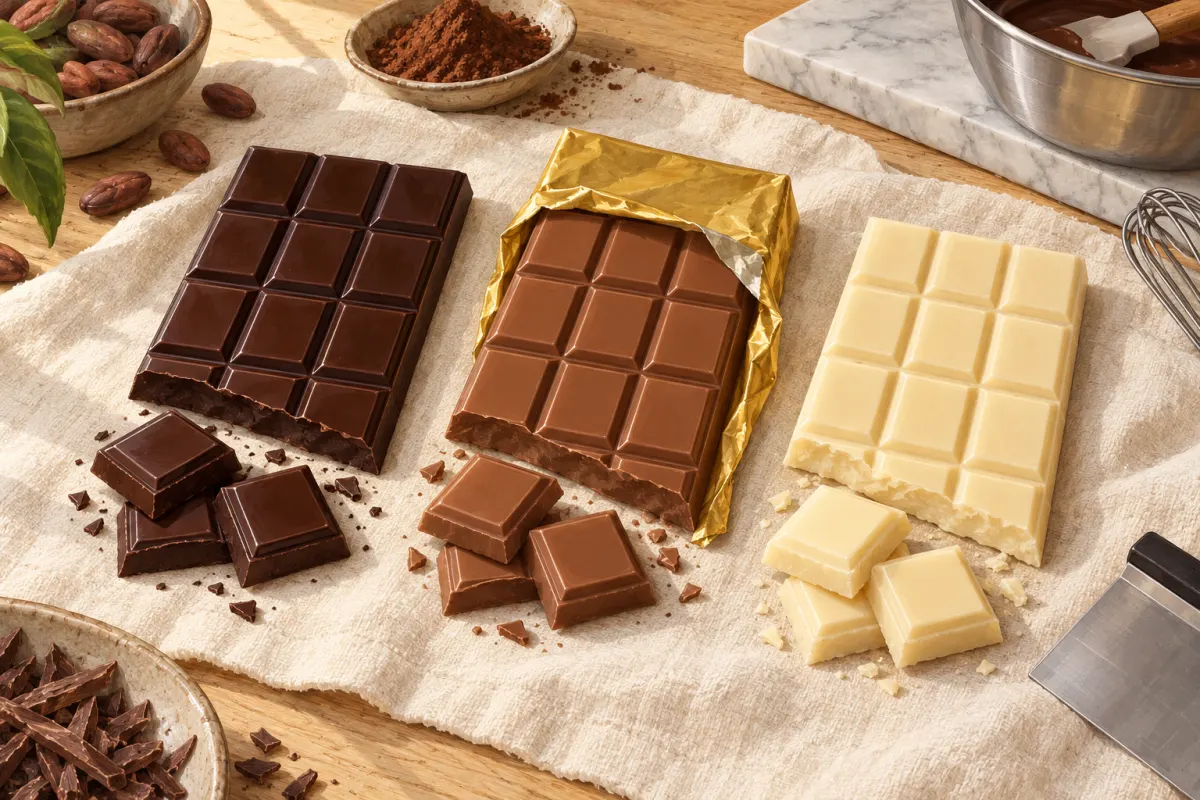
Three colours, four names
Dark, milk and white are not only colours. In the EU each name has minimum numbers, and a Turkish pack follows the Turkish Food Codex communiqué, which sets the same ones. A bar with less cocoa than the minimum may not carry the name.
The pack prints few of those numbers. The decoder turns the two it usually prints into the names they allow, and lists what it cannot see.
Pack decoder · Directive 2000/36/EC, Annex I
Which name do the numbers allow?
Two numbers on a pack decide which name it may carry. Set the sliders to what the pack says. The table of minimums sits below.
Milk solids are rarely printed. Use 0% for plain chocolate.
These numbers allow the name
Chocolate
On a Turkish pack: çikolata
Also required: the label does not show it, so ask the maker
- Cocoa butter: at least 18%
- Dry non-fat cocoa solids: at least 14%
On a Turkish pack the word bitter may be added to çikolata. Couverture chocolate (kuvertür çikolata) needs at least 31% cocoa butter and 2.5% dry non-fat cocoa solids.
From 43% cocoa solids the pack may add a quality description, if cocoa butter is at least 26%: ask for that figure.
These numbers allow the name
Milk chocolate
On a Turkish pack: sütlü çikolata
Also required: the label does not show it, so ask the maker
- Dry non-fat cocoa solids: at least 2.5%
- Milk fat: at least 3.5%
- Total fat (cocoa butter and milk fat): at least 25%
The cocoa figure also meets the minimum for “chocolate” (35%). These numbers allow both names; the maker chooses which one goes on the pack.
These numbers reach the first two parts of a quality description (30% cocoa solids, 18% milk solids). It also needs at least 4.5% milk fat: ask.
These numbers allow the name
Family milk chocolate
On a Turkish pack: bol sütlü çikolata
Also required: the label does not show it, so ask the maker
- Dry non-fat cocoa solids: at least 2.5%
- Milk fat: at least 5%
- Total fat: at least 25%
The UK, Ireland and Malta may allow the name “milk chocolate” for this product if the pack adds “milk solids: …% minimum”.
These numbers allow the name
White chocolate
On a Turkish pack: beyaz çikolata
Also required: the label does not show it, so ask the maker
- Milk fat: at least 3.5% (part of the milk solids)
No name fits
Below the minimums
These numbers do not reach the minimums of any name: chocolate needs 35% cocoa solids; milk chocolate needs 25% cocoa solids and 14% milk solids; family milk chocolate needs 20% and 20%. The directive has no name for them. Check that the first slider is cocoa solids and not cocoa butter, and that the milk solids are right.
No name fits
Below the minimums
White chocolate needs 20% cocoa butter and 14% milk solids, and these numbers do not reach both. The directive has no other name for them. Check that the first slider is cocoa butter and that the milk solids are right; if the pack shows cocoa solids, switch the first control.
More than 5% other vegetable fat
Not chocolate
Above 5% vegetable fat other than cocoa butter, none of the four names may be used. The directive sets no other name for the product: ask the maker what it is called and what is in it.
Other vegetable fat, up to 5%
The pack must say contains vegetable fats in addition to cocoa butter
(Turkish: Kakao yağına ek olarak bitkisel yağ da içermektedir), in bold, in the same field of vision as the ingredients list and clearly apart from it, with the product name nearby.
Only illipe, palm, sal, shea, kokum gurgi and mango kernel fats are allowed, and they may not lower the minimum cocoa butter or cocoa solids.
The minimums behind the tool · shares of the finished chocolate
| Name | On a Turkish pack | Cocoa solids | Milk solids | Also required (ask the maker) |
|---|---|---|---|---|
| Chocolate | çikolata (“bitter” may be added) | 35% | No figure set | Cocoa butter 18%, dry non-fat cocoa solids 14% |
| Couverture chocolate | kuvertür çikolata | 35% | No figure set | Cocoa butter 31%, dry non-fat cocoa solids 2.5% |
| Milk chocolate | sütlü çikolata | 25% | at least 14% | Dry non-fat cocoa solids 2.5%, milk fat 3.5%, total fat 25% |
| Family milk chocolate | bol sütlü çikolata | 20% | at least 20% | Dry non-fat cocoa solids 2.5%, milk fat 5%, total fat 25% |
| White chocolate | beyaz çikolata | Cocoa butter 20% | at least 14% | Milk fat 3.5% |
Cocoa solids are the cocoa part of a bar: cocoa butter plus dry non-fat cocoa solids. The figures are shares of the finished chocolate, worked out after the weight of nuts, fillings and other added edible ingredients is taken off. A filled chocolate or praline needs its outer chocolate to be at least 25% of the total weight. On EU packs of chocolate, milk chocolate and family milk chocolate the label must show the cocoa figure as “cocoa solids: …% minimum”. Gianduja nut chocolate (fındık ezmeli / gianduja çikolata) has its own rules, among them at most 5% dry milk solids and 20 to 40 g of hazelnuts in 100 g; the decoder does not cover it. Sources: Directive 2000/36/EC, Annex I (text of 18.11.2013) and the Turkish Food Codex communiqué on cocoa and chocolate products, articles 4 and 5 (gazette issue 30229, 3 November 2017).
Rules for an EU buyer
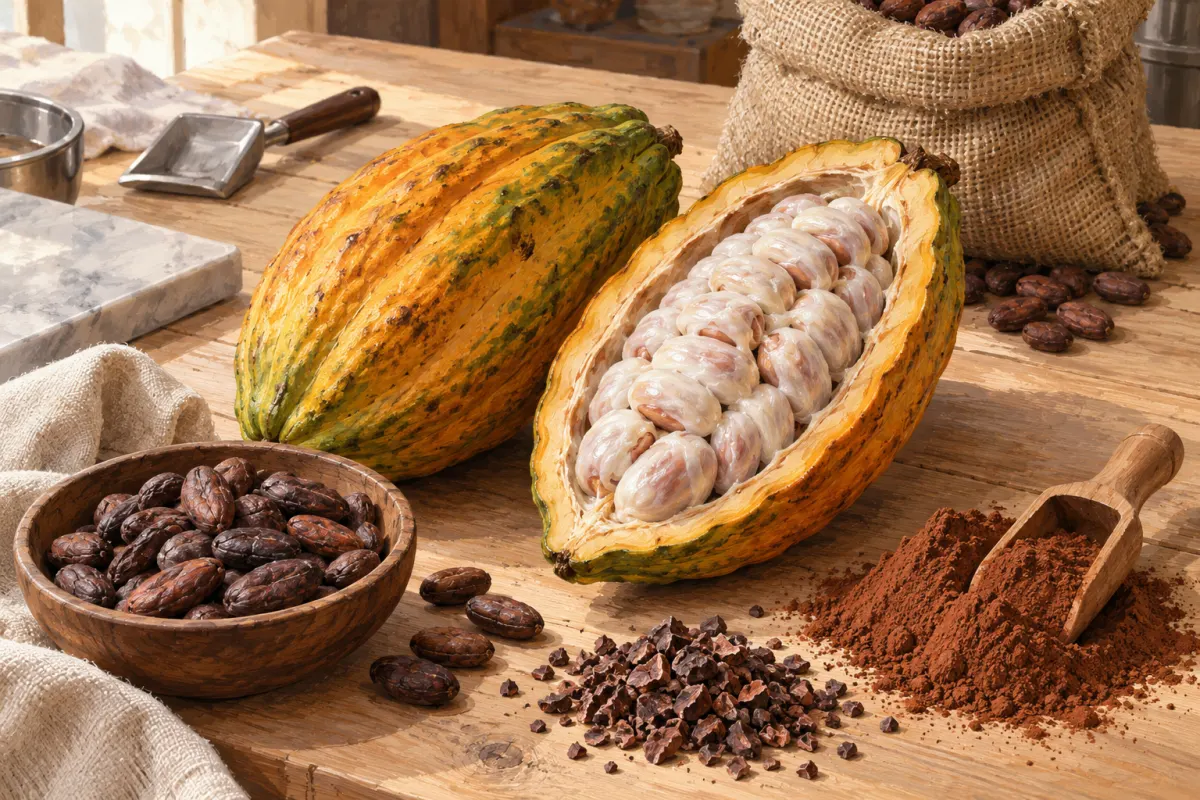
Cocoa is imported
Anadolu Ajansı reported on 16 February 2026 that Türkiye does not grow cocoa, so its chocolate starts from imported cocoa. That is why a rule about where cocoa was grown reaches a Turkish bar.
Türkiye’s exports under customs heading 1806 were US$1,408.9 million in 2025 (Ticaret Bakanlığı country matrix, checked 18.10.2026).
The deforestation regulation
Regulation (EU) 2023/1115 covers cocoa. Regulation (EU) 2025/2650, published on 23 December 2025, moved the main date: the obligations apply from 30 December 2026, and from 30 June 2027 for micro and small firms established as such by 31 December 2024. If you place cocoa products on the EU market, ask the maker what it can document, and check EUR-Lex for any later change before you ship.
The name and the label
Directive 2000/36/EC sets the names and minimums above. Up to 5% vegetable fat other than cocoa butter is allowed with a line on the pack, and a quality description needs 43% cocoa solids (chocolate) or 30% cocoa solids with 18% milk solids and 4.5% milk fat (milk chocolate).
Duty and the customs code
Chocolate under heading 1806 is a processed agricultural product. For goods from Türkiye, Section V of Decision No 1/95 of the EC–Türkiye Association Council sets the arrangement, and Decisions 1/97 and 1/2007 add concessions for some products. What applies to your product depends on its exact code: look it up in TARIC with origin Türkiye on the day you order. TARIC showed the reference date 18.10.2026, last updated 16.10.2026.
Certificates: what each brand names
A certificate named on a page is a claim, not a check. The table lists what each brand’s own page names; none of them shows a number.
| Brand | Named on its own page | Page |
|---|---|---|
| Elit | Halal, vegan (three), BRCGS, IFS Food, kosher, FSMA, RSPO, ISO 10002, 14001, 27001, 45001, 9001 | Open |
| Ülker | ISO 14046, 14001, 9001, 45001, 50001, 22000, ISCC, Green Check, Zero Waste, BRCGS, RSPO | Open |
| Mabel | ISO 22000:2005 and a halal food conformity certificate (images) | Open |
| Şölen | Halal standards GSO 2055-1/2015, TS OIC/SMIIC 1:2019, HAS 23000-1 and a conformity certificate | Open |
| Divan | BRCGS, ISO 9001, 14001, 50001, 45001, an FDA document, a halal certificate | Open |
| Torku | A group-wide list: ISO, BRC, FSSC 22000, halal, TSE product certificates; one halal title names chocolate | Open |
To check one, ask the maker for the certificate document with its number, then look the site up in the certifier’s own register: the BRCGS Directory or the IFS database. A halal certificate covers the products it lists, so ask which ones.
Gift boxes and the premium end
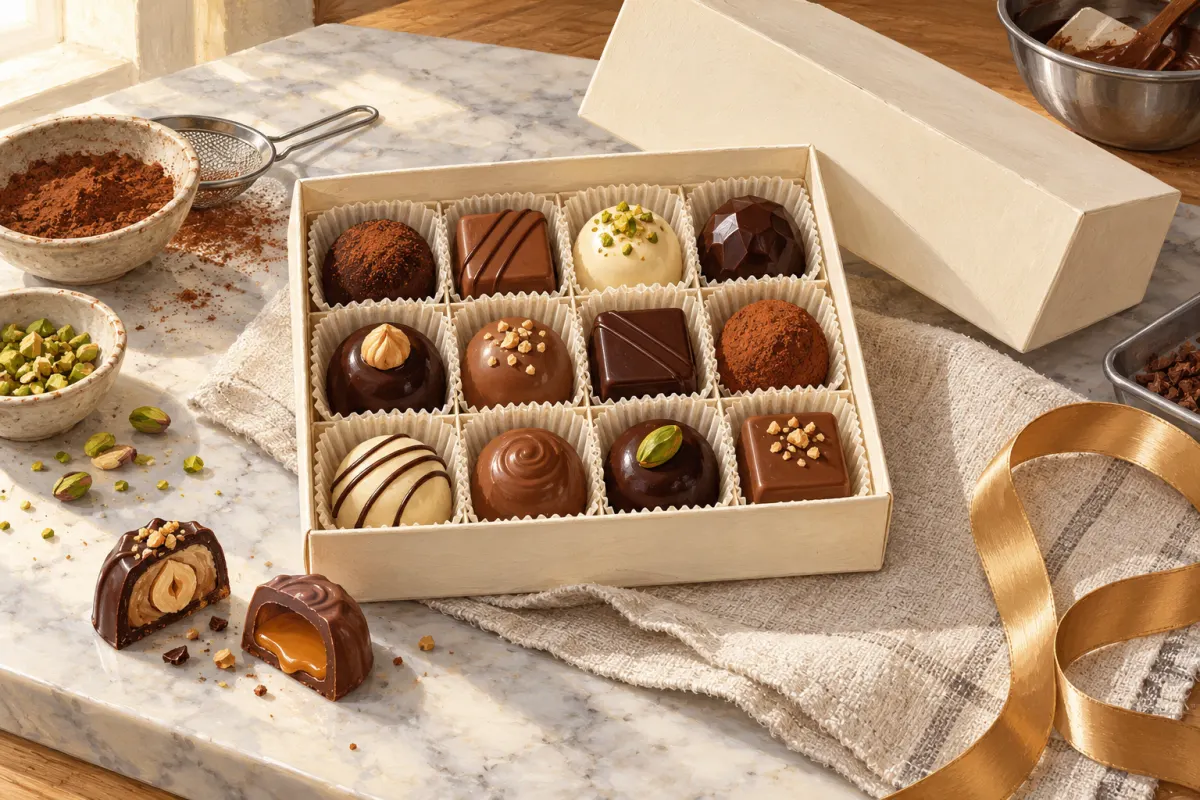
Before you choose a box
Six of the nine list a gift or boxed line on their own pages: Elit, Ülker, Mabel, Şölen, Vakko and Melodi. Ask what is in the box piece by piece, how long it keeps, and how it travels in summer.
Sending one abroad? The guide to shipping from Turkish shops covers parcels.
Vakko L’Atelier
Its chocolate page lists Classic Chocolate, Handmade Chocolate and Treats, with boxed sets and snack formats; stores are listed on the Vakko site.
Divan
A hotel, restaurant and pastry group with its own chocolate shop site; its export page says it makes pralines and Madlen.
Elit
On its Turkish shop: a Gourmet Collection, a Beyoğlu chocolate range and a box builder; its English site tells the 1924 story.
Quick answers
How do I choose a Turkish chocolate brand?
By what you need. The bar above keeps the brands whose own pages show a gift line, a page for business buyers, a named certificate or biscuits and wafers too. None is ranked here.
Which Turkish chocolate brands export?
Ülker says it ships to over 100 countries and Şölen to over 120. Şölen has an export inquiry form, Divan an export page with a catalogue, Torku an exports menu with a catalogue, and Ülker a list of its export countries.
When may a bar be called chocolate?
When it reaches the minimums for the name: 35% cocoa solids for chocolate, 25% cocoa solids with 14% milk solids for milk chocolate, 20% cocoa butter with 14% milk solids for white chocolate. The decoder above shows the rest.
Is Turkish chocolate halal?
Ask for the certificate for the product. Five of the nine name a halal certificate on their own pages: Elit, Mabel, Şölen, Divan and Torku. Check that the document covers the product you are buying.
What duty applies to Turkish chocolate coming into the EU?
It depends on the exact code, and this page states no rate. Chocolate is a processed agricultural product with its own arrangement under Decision 1/95. Look up the code in TARIC with origin Türkiye on the day you order.
What is the EU deforestation regulation, and does it cover chocolate?
Regulation (EU) 2023/1115 covers cocoa and products made from it; check your product’s customs code against its annex. Its main obligations apply from 30 December 2026, and from 30 June 2027 for micro and small firms (Regulation 2025/2650, checked 18.10.2026).
Can I visit a chocolate factory?
Tour times and conditions change and are not kept here. Ask the brand: each card in the bar links its own contact or business page.
Why are there no prices?
Prices and shop hours change often. Open the brand’s own shop page for today’s number.
Sources
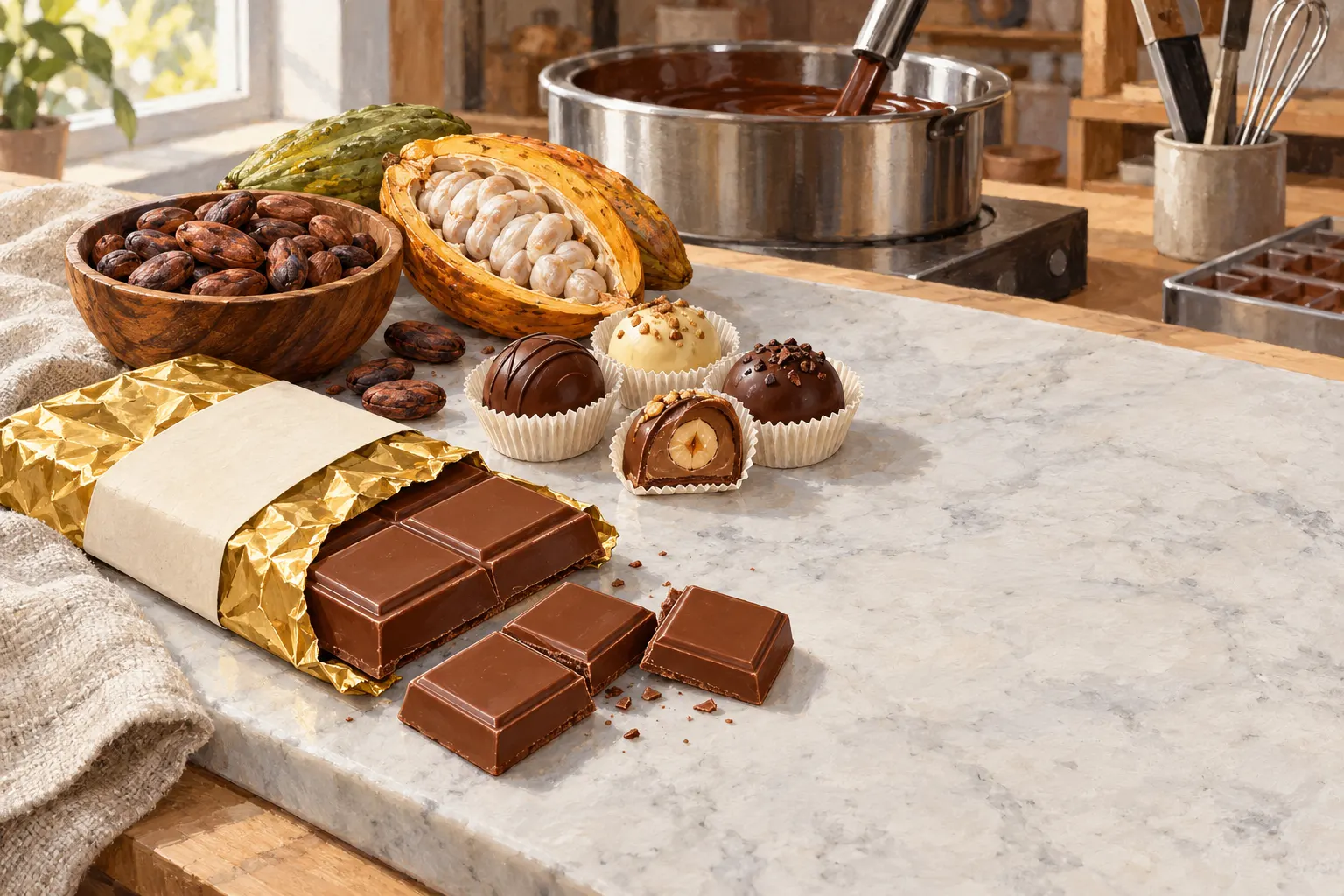
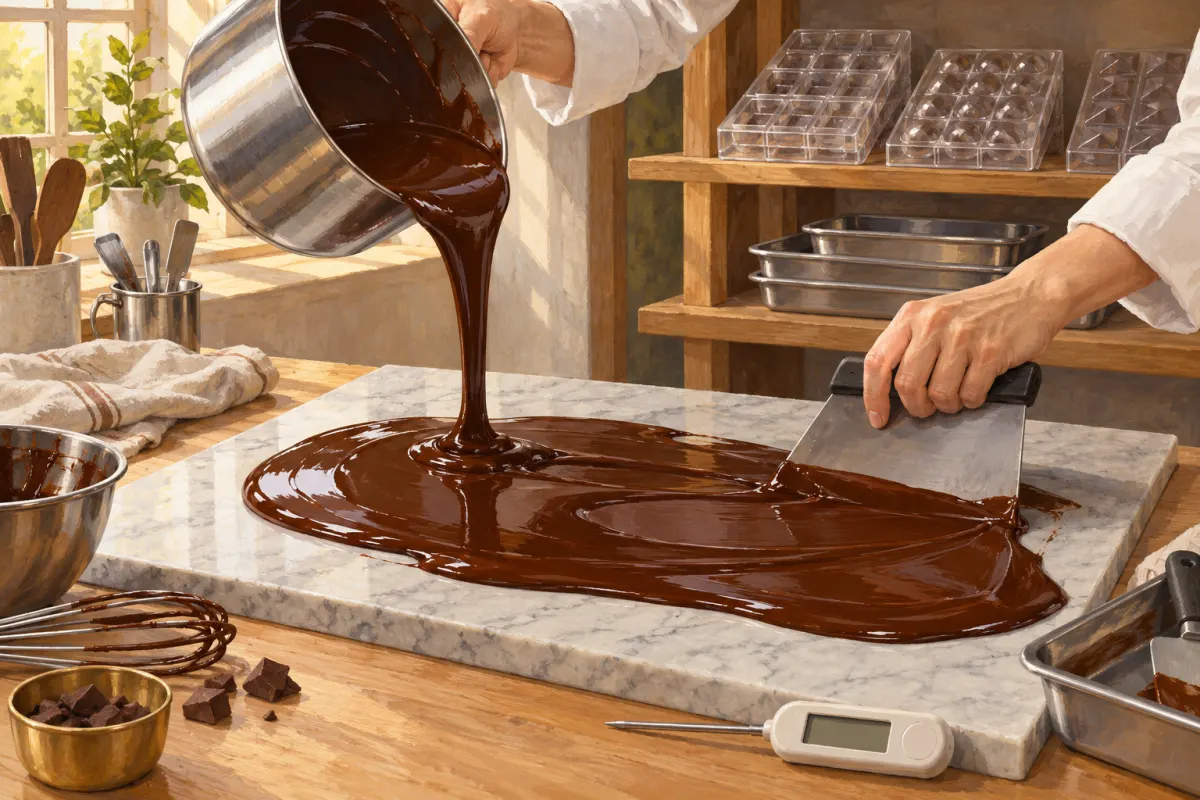
Every brand fact above comes from that brand’s own pages and was checked on 18 October 2026; the rules come from the texts linked below. The pictures show kinds of chocolate, not real packs, and no brand’s wrapper or logo is drawn.
- History: since 1944, Pötibör, Eminönü, over 300 products — Ülker, checked 18.10.2026
- Certificates — Ülker, checked 18.10.2026
- Export countries — Ülker, checked 18.10.2026
- About us — Eti, checked 18.10.2026
- About us: 1989, workers, countries — Şölen, checked 18.10.2026
- Certificates — Şölen, checked 18.10.2026
- Export inquiry form — Şölen, checked 18.10.2026
- About us: 1947, founders — Mabel, checked 18.10.2026
- Certificates — Mabel, checked 18.10.2026
- Corporate sales — Mabel, checked 18.10.2026
- About and history — Elit, checked 18.10.2026
- Certificates — Elit, checked 18.10.2026
- Corporate sales form — Elit shop, checked 18.10.2026
- Export page: products, certificates, catalogue — Divan, checked 18.10.2026
- Chocolate shop — Divan Pastaneleri, checked 18.10.2026
- L’Atelier chocolate — Vakko, checked 18.10.2026
- Stores — Vakko, checked 18.10.2026
- Home and wholesale page — Melodi, checked 18.10.2026
- Home page: chocolate groups — Torku, checked 18.10.2026
- Certificates and quality documents — Torku, checked 18.10.2026
- Directive 2000/36/EC on cocoa and chocolate products, text of 18.11.2013 — EUR-Lex, checked 18.10.2026
- Kakao ve Çikolata Ürünleri Tebliği (2017/29), gazette issue 30229 — Turkish Food Codex, checked 18.10.2026
- Regulation (EU) 2023/1115 on deforestation-free products — EUR-Lex, checked 18.10.2026
- Regulation (EU) 2025/2650 amending it — EUR-Lex, checked 18.10.2026
- Regulation (EC) No 816/2007: Decision 1/95, Section V, recitals — EUR-Lex, checked 18.10.2026
- TARIC consultation — European Commission, checked 18.10.2026
- Fas matrix: GTİP 1806, exports to the world, 2025 — Ticaret Bakanlığı, checked 18.10.2026
- Kakao ihracatı (cocoa not grown in Türkiye) — Anadolu Ajansı via Türkgün, 16.02.2026, checked 18.10.2026
- BRCGS Directory — BRCGS, checked 18.10.2026
- IFS — IFS, checked 18.10.2026