
Turkish Address Format | Writing Guide & Examples (2026)
Line by line: what goes on a Turkish envelope, what Mah., Cad., Sok., No and D mean, where the postcode goes and how to register a new home.
Table of Contents
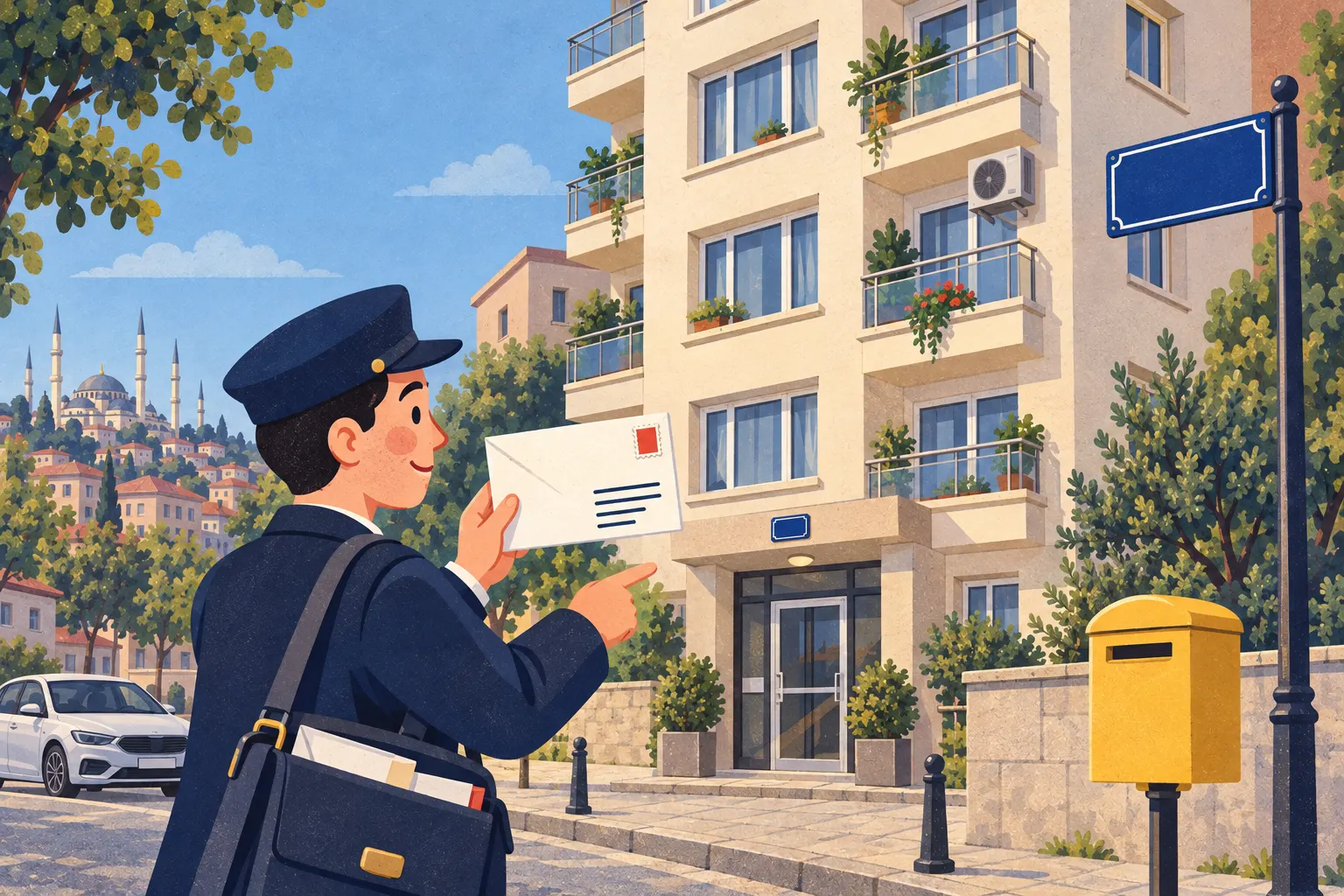
Write a Turkish address from the neighbourhood down to the door, then finish with the postcode and the city. On an envelope that makes four or five lines: the name, the mahalle, the street with the building and flat number, and the 5-digit postcode with DISTRICT/PROVINCE, as in 06101 ALTINDAĞ/ANKARA.
The short version
Neighbourhood, street, door. Then postcode, district, province.
- Order: name, Mah., street with No and flat, then postcode and İLÇE/İL.
- Postcode: 5 digits; keep the leading zero (06200, not 6200).
- PK: on a postal label it means a post-office box (posta kutusu). Write the postcode on its own.
- Moving in: residence-permit holders report a new home address within 20 working days.
- Ad Soyad Name
- Hasan Taşkın
- İl Province
- Ankara
- İlçe District
- Altındağ
- Mahalle Neighbourhood
- Doğanbey Mah.
- Adres Street, building, flat
- Şehitteğmenkalmaz Cad. Posta Sarayı A Blok No: 2 D: 311
- Posta kodu Postcode
- 06101
Type your own address
The parts in order
A city address needs six to eight parts. Write them from the neighbourhood down to the flat, then the postcode and the place names. PTT’s page in the UPU addressing guide uses this order, with the postcode on the left of the last line.
| Part | Turkish | Written as | Example |
|---|---|---|---|
| Neighbourhood | Mahalle | Mah. or Mahallesi | Doğanbey Mah. |
| Street | Cadde, sokak, bulvar | Cad., Sok., Blv. | Şehitteğmenkalmaz Cad. |
| Estate and block (if any) | Site, blok | Sitesi, Blok | Posta Sarayı A Blok |
| Building number | Dış kapı numarası | No | No: 2 |
| Floor (optional) | Kat | Kat | Kat: 3 |
| Flat | İç kapı numarası, daire | D or Daire | D: 311 |
| Postcode, district/province | Posta kodu, ilçe/il | five digits, then capitals | 06101 ALTINDAĞ/ANKARA |
NVİ’s address standard has more parts than a city letter needs: villages, hamlets, küme evleri (clusters of houses) and fixed ID numbers for streets and places. It also gives every building a 9-digit ID and every flat a 10-digit address number. Those identify the home in the registry; on an envelope you write the door number and the postcode.
Mah., Cad., Sok. decoded
Five short forms cover most addresses: Mah., Cad., Sok., No and D. PTT’s glossary also allows one-letter forms such as M., C. and S.
| Written | Means | Note |
|---|---|---|
| Mah., M., Mahallesi | Neighbourhood | Its own line on an envelope. |
| Cad., C., Caddesi | Main street, avenue | |
| Sok., S., Sokak | Street, often a side street | Numbered streets keep the number: 2176. Sok. |
| Blv., Bulvarı | Boulevard | |
| Sitesi, Blok | Housing estate, block | Before the building number. |
| No | Building number | The plate over the street door. |
| Kat | Floor | Optional on a label. |
| D., Daire | Flat number | The number on your own door. |
| PK | Post-office box (posta kutusu) | Not the postcode. |
PK is a box, not a postcode
NVİ prints PK: 06200 in its footer, but PTT uses PK for a post-office box: Ulus PTT Merkezi PK 543. On a label, write the five digits alone, or Posta kodu on a form.
Cadde or sokak? Copy the street name and type exactly as the recipient gives them, whether that is one street or a cadde and the sokak off it.
No, Daire and the building
No is the building, and D or Daire is the flat inside it. In an estate, the estate name and block come first.
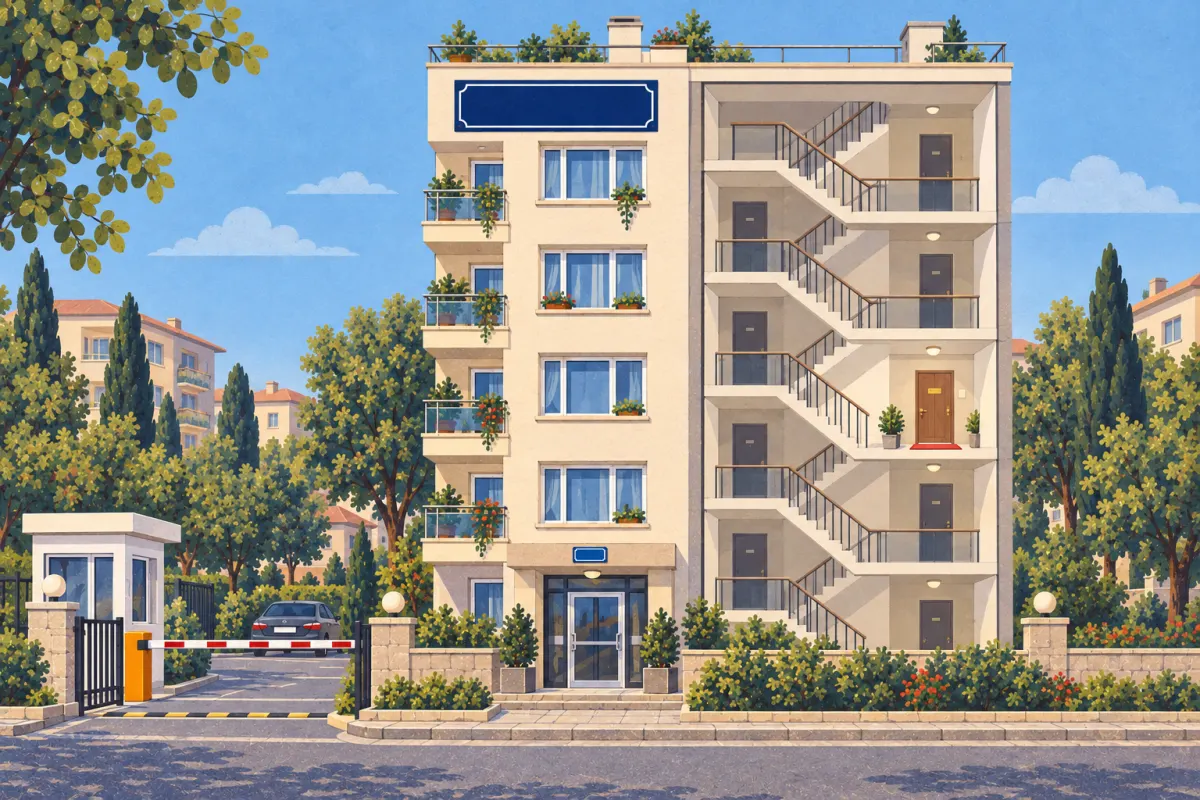
- Site the estate. Its name goes before the block: Papatya Sitesi.
- Blok the block letter on the facade: B Blok.
- No the blue plate over the street door: the building number.
- Kat the floor. Optional, written Kat: 3.
- Daire your own door: D: 7 or Daire: 7.
PTT writes both styles: Sağlık Sok. No:5 for a house, and Posta Sarayı A Blok No: 2/311 for flat 311. Use the version the recipient gives you. When a form has separate boxes for building and flat, split it.
Five digits, no guessing
Every Turkish postcode has 5 digits. Get the full code from the recipient or from PTT’s postcode search; one area’s code is not right for the next street.
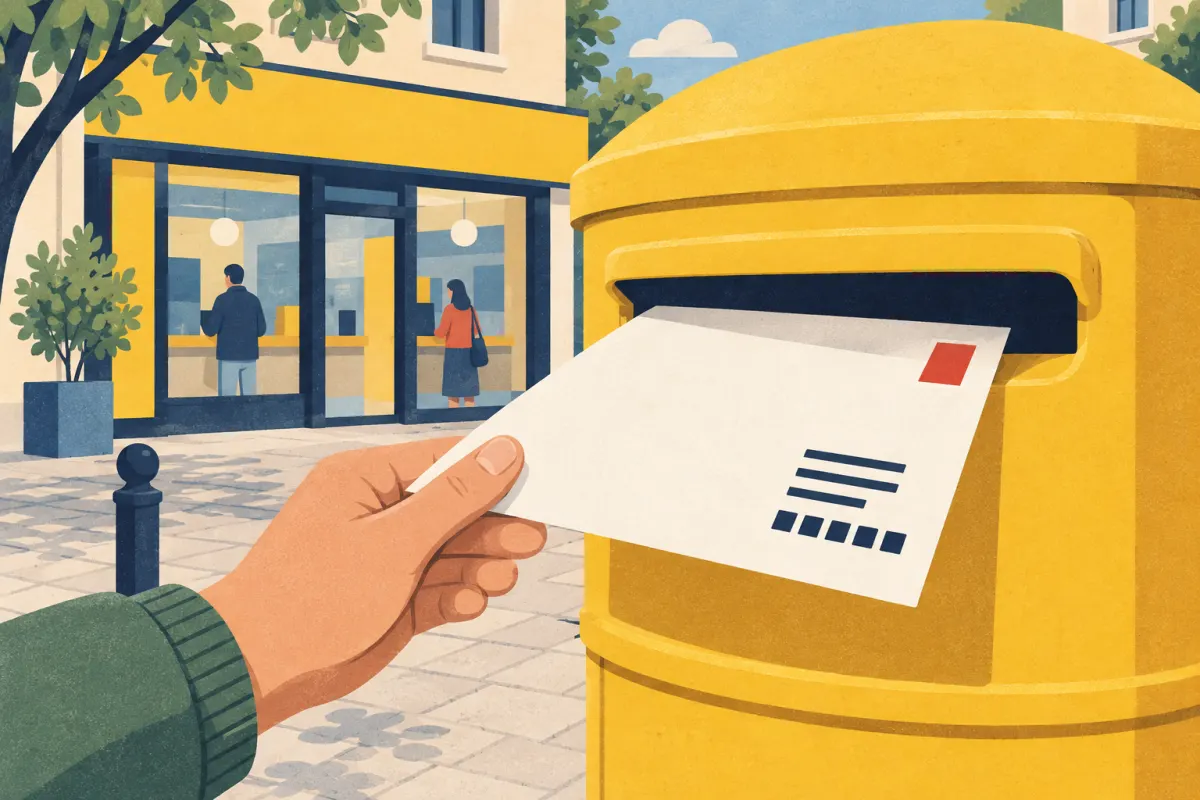
Posta kodu
Five digits. Keep the zero.
Ankara’s 06200 becomes 6200 in a spreadsheet. Type the code as text, and check it on PTT’s postcode search by province, district and neighbourhood.
Real addresses, as published
Here are three public addresses as their owners print them, seen on 01.10.2026, and the same address written for an envelope. Contact pages put the postcode in different places; on a letter it goes first on the last line.
| Who | As published | On an envelope |
|---|---|---|
| NVİ (population and citizenship authority), Ankara | Çamlıca Mah. Prof. Dr. Haydar Baş Caddesi No:136 PK: 06200 Yenimahalle / ANKARA | Nüfus ve Vatandaşlık İşleri Genel Müdürlüğü Çamlıca Mah. Prof. Dr. Haydar Baş Cad. No: 136 06200 YENİMAHALLE/ANKARA |
| TİTCK (medicines agency), Ankara | Söğütözü Mahallesi 2176.Sokak No:5 PK 06520 Çankaya/Ankara | Türkiye İlaç ve Tıbbi Cihaz Kurumu Söğütözü Mah. 2176. Sok. No: 5 06520 ÇANKAYA/ANKARA |
| Apple Akasya, a shop in an Istanbul mall | Akasya AVM, Acıbadem Mah, Çeçen Sok No: 25, Üsküdar İstanbul 34660 | Apple Akasya Acıbadem Mah. Çeçen Sok. Akasya AVM No: 25 34660 ÜSKÜDAR/İSTANBUL |
Moving in? Report the address
Your residence (yerleşim yeri) is the home you live in and mean to stay in, and you have one at a time. A summer house, a dormitory or a hospital is an other address (diğer adres). Residence-permit holders report a change within 20 working days to the nüfus müdürlüğü or the il göç idaresi. Changing your address with a shop or a bank does not count.
Which home are you moving into?
Bring a document that ties you to the address: a subscription contract or bill for electricity, water, gas, a landline or fixed internet. The office can also ask for a paper from the owner, the building management or the muhtar.
Moving in with an adult who is already registered there? That person gives consent. This is its own procedure, and people who pass e-Devlet’s checks can do it online.
The previous residents are still registered at the flat? Go to the office with your documents. This case cannot be done on e-Devlet.

Online or at the counter
e-Devlet runs eligibility checks before it accepts an online address report, and an account alone does not mean you pass them. If it stops you, go to the nüfus müdürlüğü or the il göç idaresi with your passport, residence permit and proof of address.
Fines and deadlines
Late reports and false addresses are fined under Article 68 of Law 5490. NVİ lists the 2026 amounts below; they are raised every year.
814 TL
For an address not reported within 20 working days.
17,051 TL
For declaring an address where you do not live.
- 7 daysSend a written defence to the population office named on the notice.
- 15 daysApply to the criminal judgeship of peace (sulh ceza hâkimliği) from the date of notification (Law 5326, Article 27).
- 2 weeksAppeal the judge’s decision (Article 29).
Privacy, plates and renamed streets
The address registry is not a phone book, and street plates belong to the municipality. Five quick answers:
Can I find out who lives at an address?
No. NVİ gives address details only to the person, someone registered at the same address, a spouse or adult children, or an authorised representative, with consent.
How do I prove where I live?
Download the residence and other address document on e-Devlet. A well-written envelope proves nothing about residence.
The door plate is missing. Who fixes it?
Apply to the municipality, or to the provincial special administration outside municipal areas.
My street was renamed. Do I report it?
No. The authority enters the new name or number in the national address database within 10 working days. Use the new form from then on.
Sending a parcel from Turkey abroad?
Use the address format of the destination country.
Writing your address for a work or business application? Use the same order. See our guides to finding a job in Turkey and starting a company.
Sources
This guide covers writing an address and NVİ’s rules for reporting one. For your own case, the population office or the migration office decides.
- Türkiye: postal addressing sheet (line order, examples, glossary) — Universal Postal Union, with PTT, checked 09.10.2026
- Posta kodu: postcode search — PTT, checked 05.10.2026
- Adres hizmetleri: address standard, registry numbers, residence, 2026 fines — NVİ, checked 05.10.2026
- Address services FAQ: foreign residents, documents, privacy, door plates — NVİ, checked 05.10.2026
- Residence and other address document — e-Devlet, checked 05.10.2026
- Law 5326 on Misdemeanours, Articles 27 and 29 — Ministry of Justice legislation database, checked 05.10.2026
- TİTCK website footer address — TİTCK, checked 01.10.2026
- Apple Akasya store page — Apple Türkiye, checked 01.10.2026
Illustrations drawn for this guide.