
Tirit Recipe: Konya-Style Lamb, Portion Calculator and Urfa Differences
Table of Contents
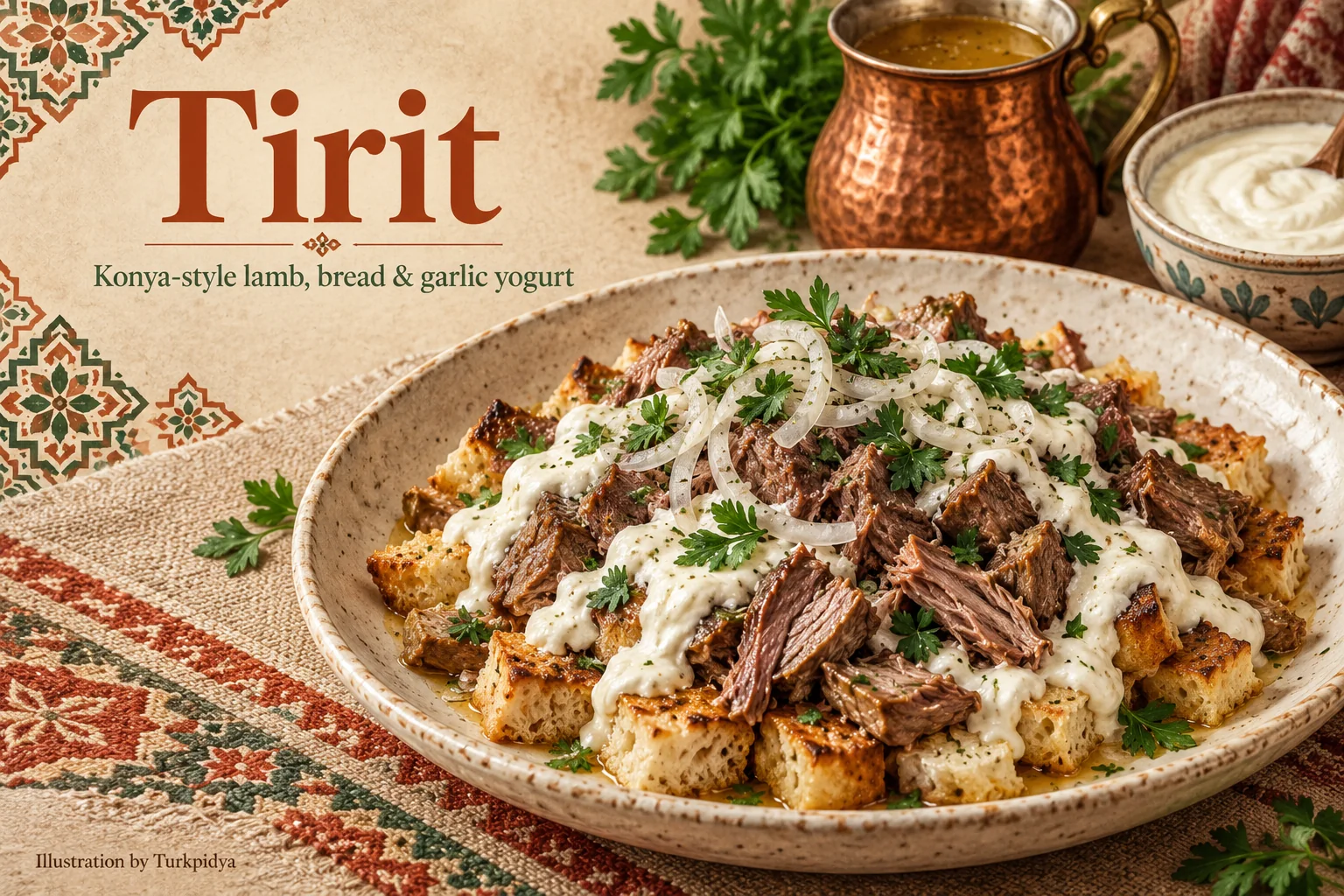
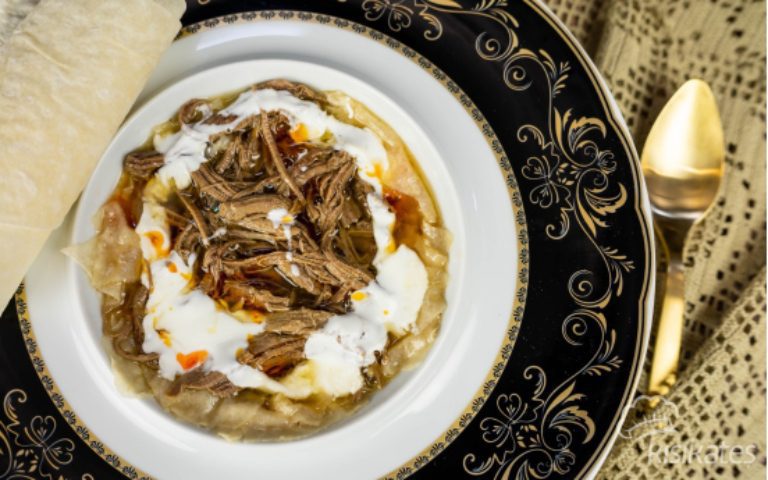
Tirit has several layers. Bread absorbs the meat broth. Tender lamb goes on the bread. Cold garlic yogurt covers the lamb. Onion and parsley add fresh flavor. Prepare each part separately. Assemble the tirit immediately before the meal. The bread must become soft but keep some structure.
This recipe uses the Turkish Culture and Tourism Ministry’s Konya ingredient list for five people. The method below adapts that recipe for a home kitchen. Our serving calculator and ingredient checklist help you plan the meal. The separate Urfa comparison explains important regional differences.
Understand the parts of tirit
In a stew, the ingredients usually finish cooking together. In this version of tirit, you prepare the bread separately. You assemble the tirit immediately before you serve it. This method gives you control over the texture. You can keep some firm bread edges under the soft meat.
The broth carries the meat flavor into the bread. Do not discard the broth after you cook the lamb. Too little broth leaves dry bread under the meat. Too much broth causes the bread to lose its structure. Different bread types absorb different amounts of liquid.
Use a shallow serving dish to spread the bread evenly. Use a ladle to add the broth in small amounts. A fixed broth quantity cannot account for every bread type. Examine the bread after each broth addition. Keep extra hot broth separate for people who want softer bread.
Konya-style tirit
Your ingredients
Set your servings. Tick off what is ready.
0 of 11 ready
Loaf weight and spoon size are not specified in the source. Fractions are approximate. Only ingredient quantities scale; water, cooking time and appliance limits do not.
Estimate cost per serving (optional)
Use a decimal point or comma. Do not use thousands separators. The maximum is 999999999.99. The tool does not supply prices. A new serving number clears the cost field and ingredient marks.
Cook and assemble the tirit
Six steps, from the pan to the plate. Keep each part separate until the final assembly.
Step 1 / 6
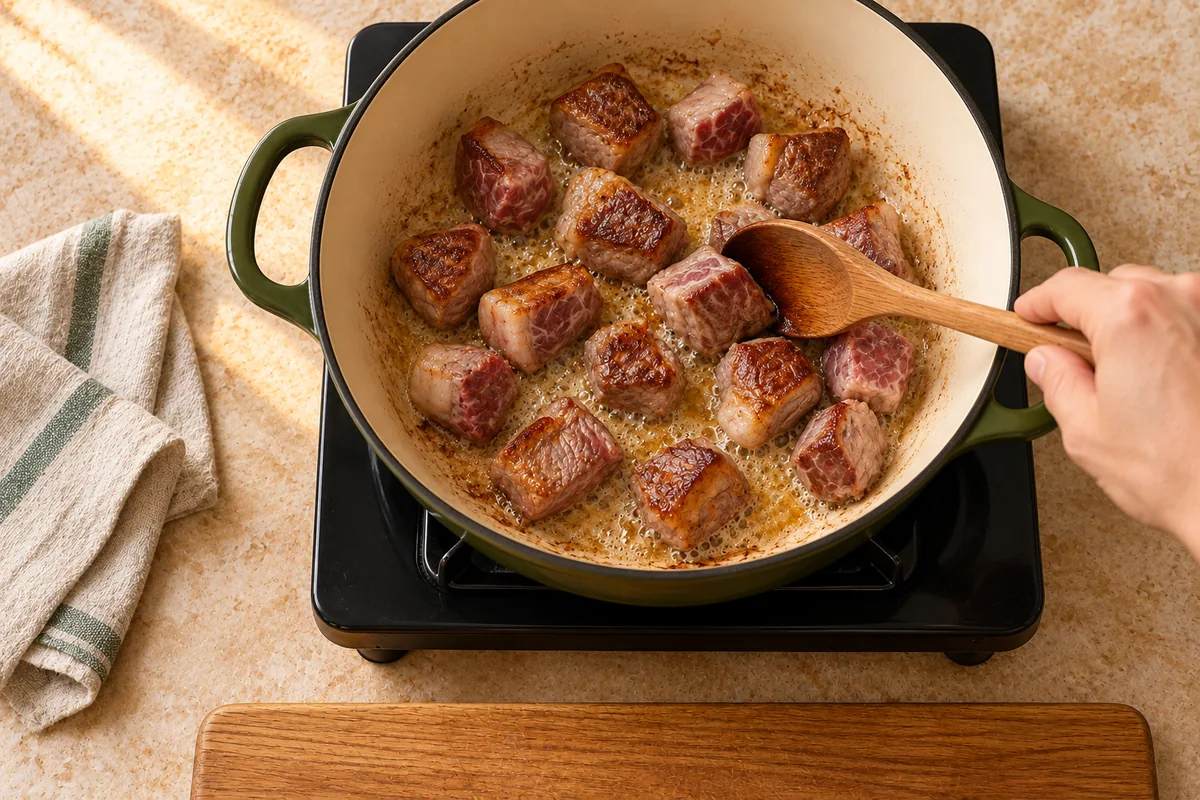
Brown the lamb
Brown the lamb in the butter. Use a wide pan. Keep the heat low enough to prevent burned butter.
Step 2 / 6
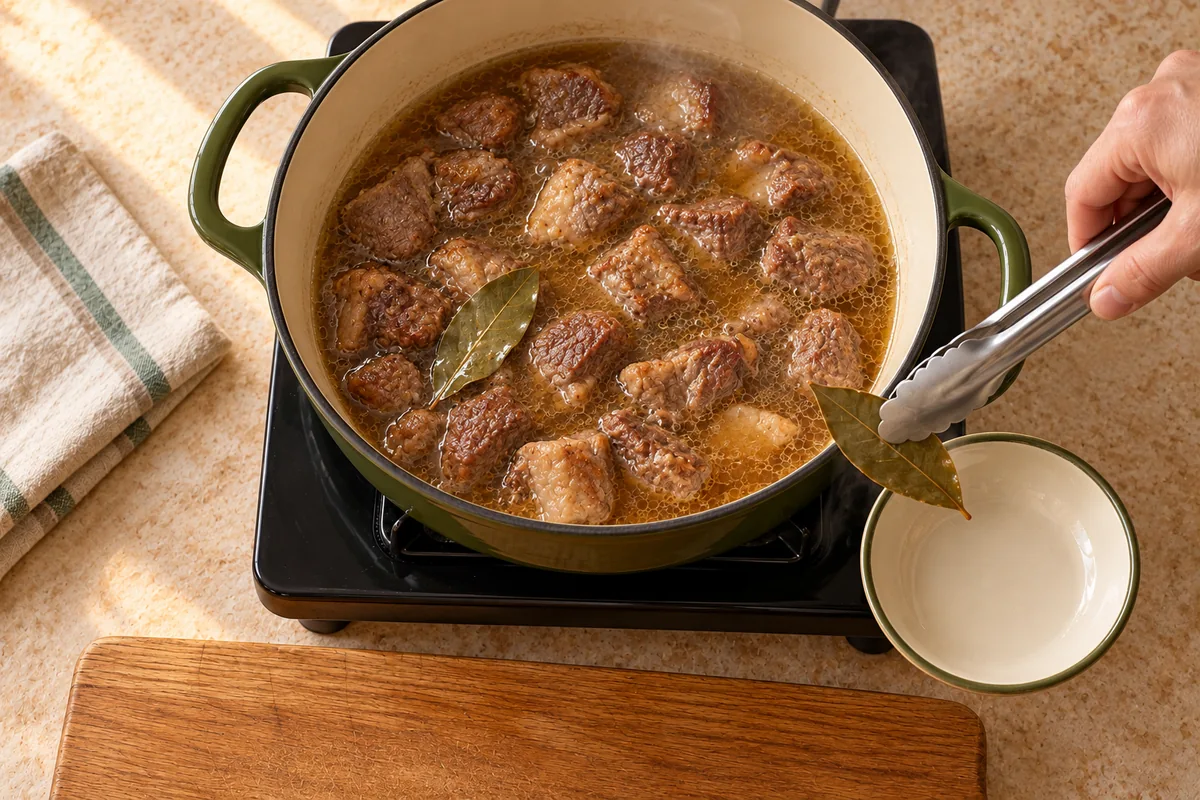
Simmer and keep the broth
Add hot water and the bay leaves. Simmer until the lamb is tender. Keep enough liquid in the pan. Remove the bay leaves before serving. Keep the broth with the lamb.
Step 3 / 6
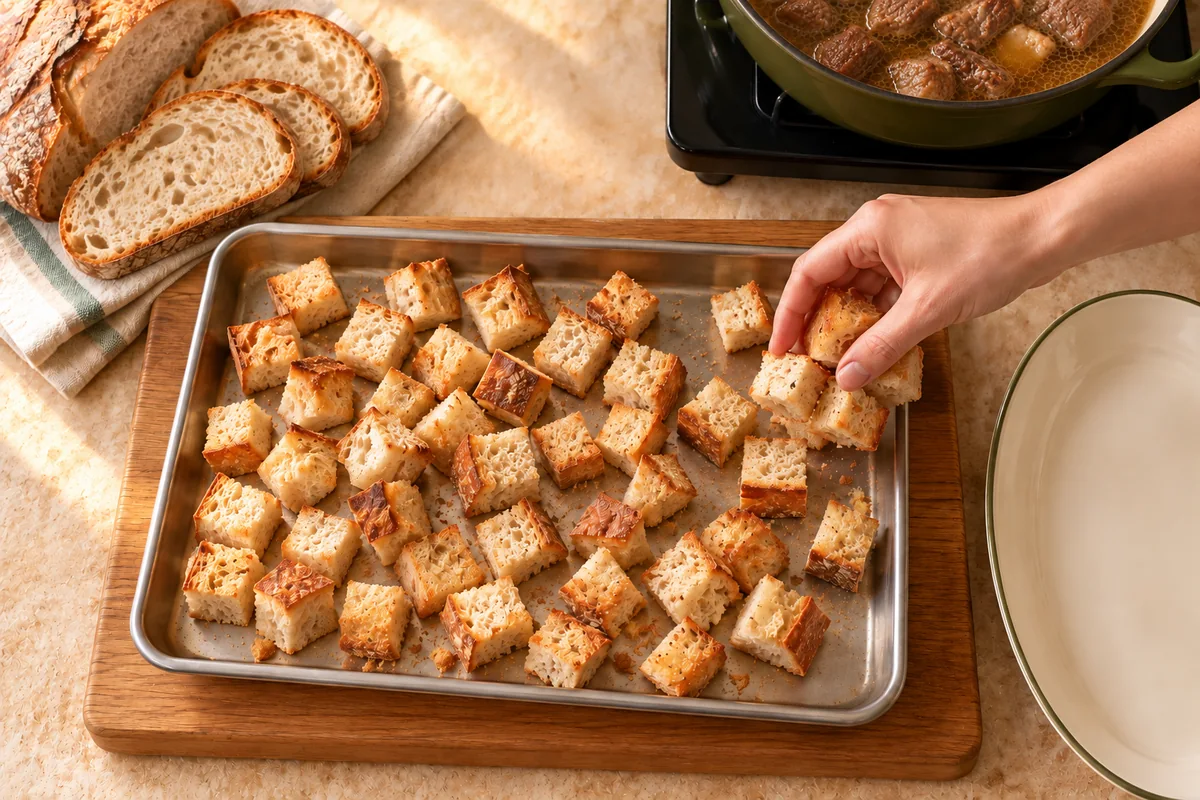
Prepare the bread
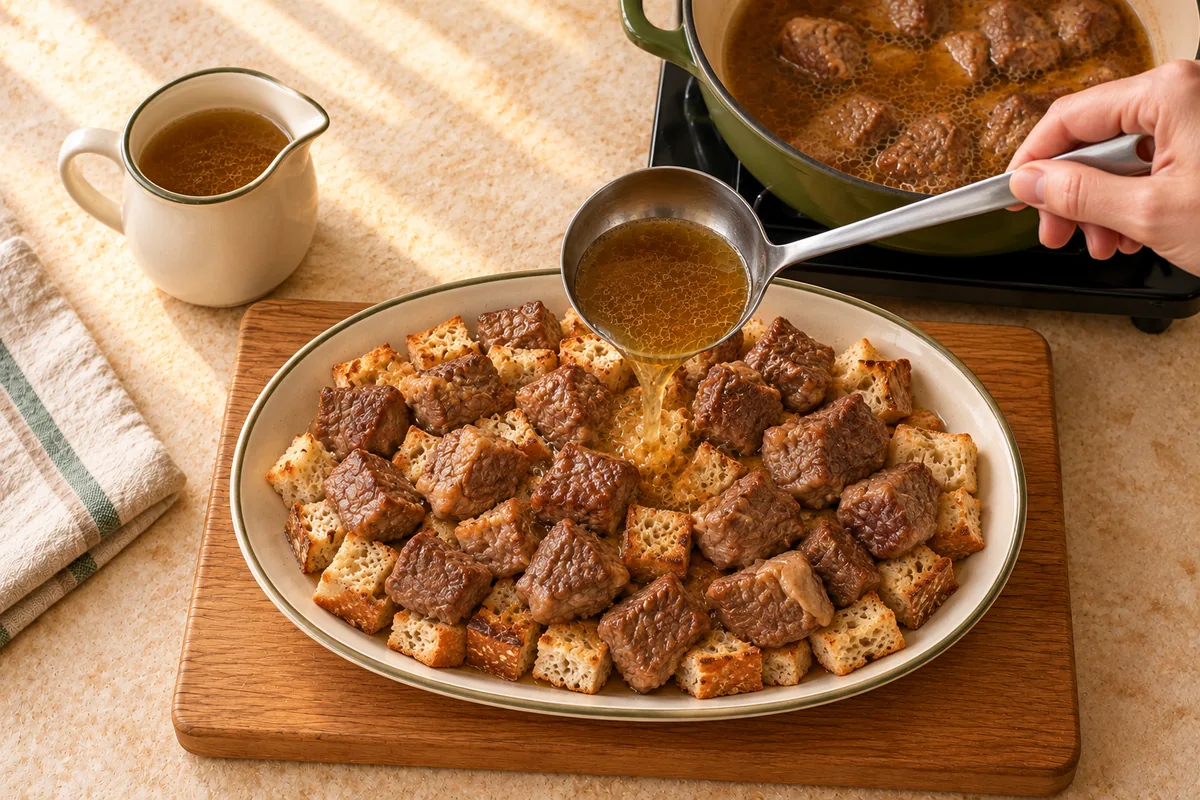
Lightly crisp the fully baked, dried bread. Cut it into pieces of about 2 cm. Spread the pieces evenly in a shallow serving dish. Keep the bread dry until assembly.
Step 4 / 6
Prepare the toppings
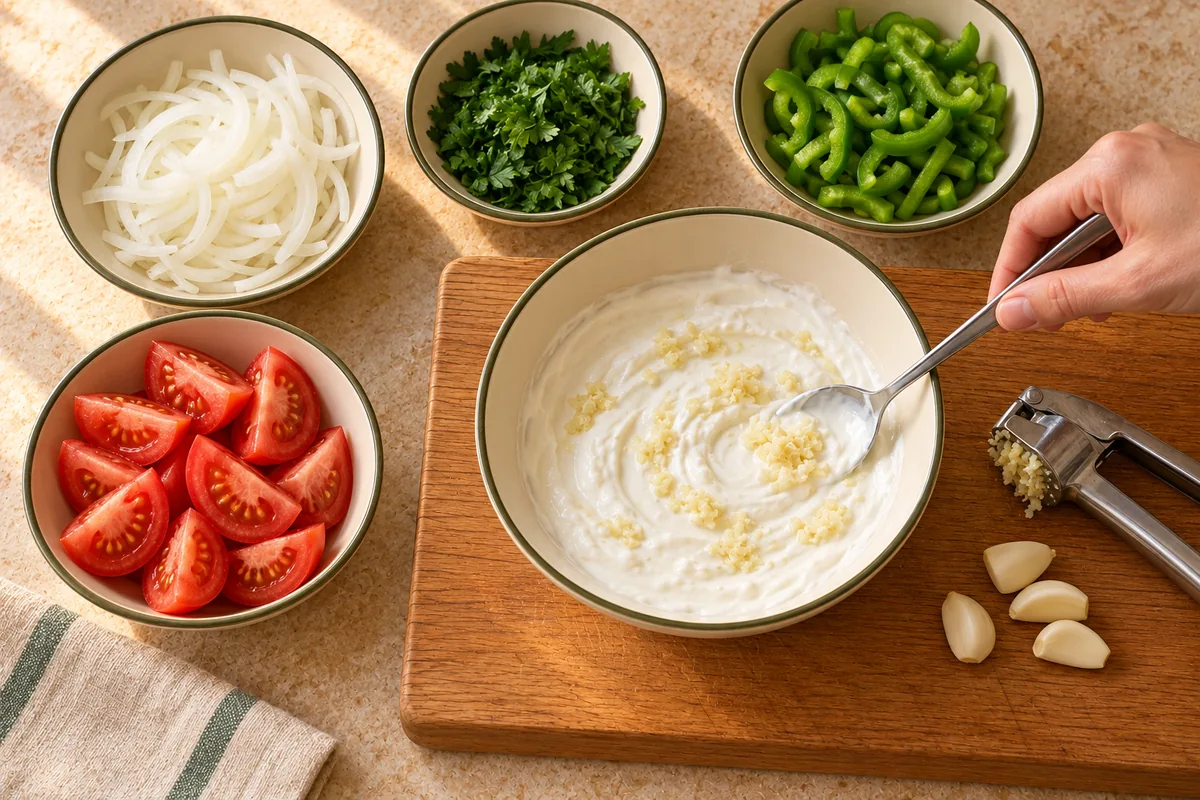
Mix the crushed garlic with plain yogurt. Put sliced onion, chopped parsley, pepper and tomato garnish in separate bowls. Keep the yogurt cold until assembly.
Step 5 / 6
Add lamb and broth
Spread the lamb over the bread. Add hot broth gradually to several areas. Let the bread absorb it. Examine a piece from the center. Add a little more broth if it is dry.
Step 6 / 6
Finish and serve
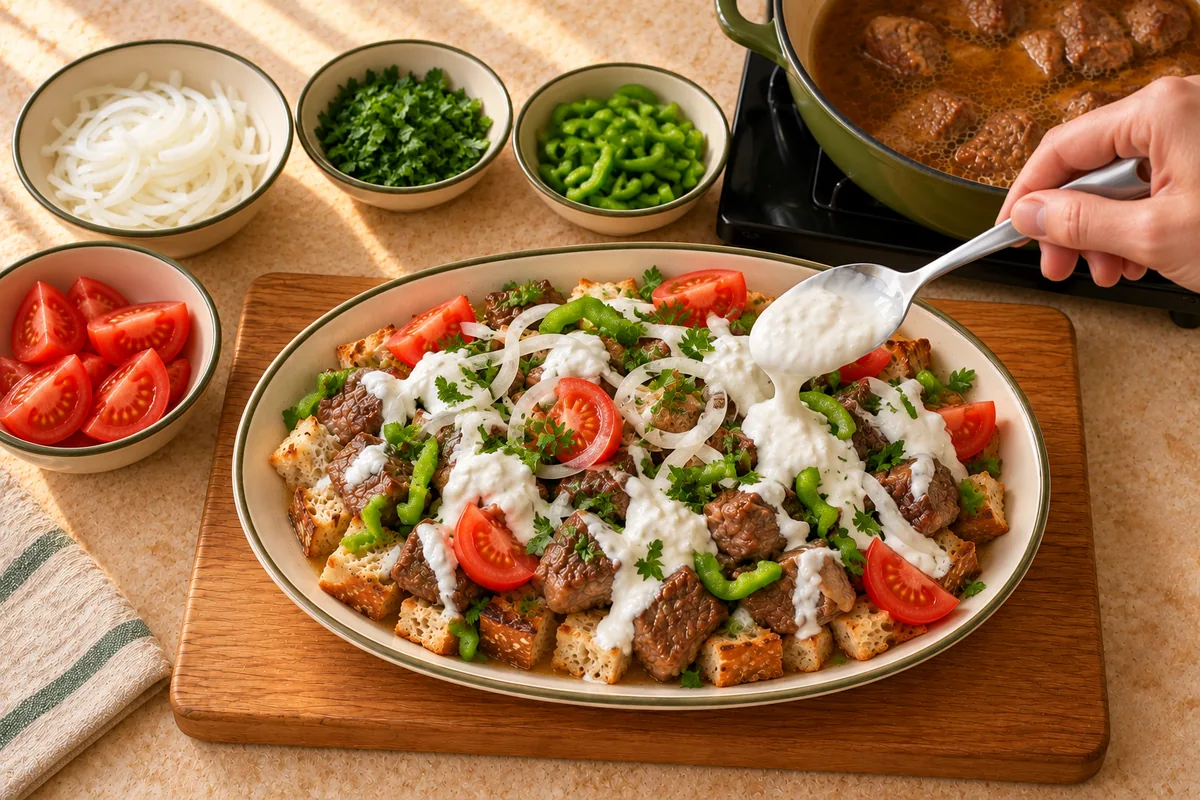
Put the garlic yogurt on the lamb. Add onion, parsley, pepper and tomato garnish as required. Serve immediately. Keep extra hot broth separate.
Illustration by Turkpidya. The images show the method, not exact portion weights.
Check tenderness and use your cooker safely
This adaptation uses butter at the start. The Ministry’s method adds butter near the end. Both approaches need care with the heat. Neither approach gives one total cooking time for every meat cut and appliance.
Test one piece with a fork. The piece must separate easily under gentle pressure. If the meat remains tough, continue the gentle simmer. If necessary, add more hot water. Do not let the pan become dry.
If you use a pressure cooker, follow its instructions. Read its minimum liquid requirement. Read its maximum fill level. Follow its pressure-release instructions. Do not calculate the cooking time from the serving number. Twice the ingredients do not require twice the pressure-cooking time.
Keep the layers distinct
The bread surface should be dry, with lightly toasted edges. This step prepares the bread to absorb broth. It does not cook raw dough. A deep pile can leave dry pieces in the center. An even layer makes the broth easier to distribute.
Separate bowls let you control the final amounts on each plate. Some people may want less raw garlic or onion. Plain yogurt and extra onion on the table give them that choice. The source does not give a fixed amount of garnish.
For a large group, several shallow serving dishes can work better than one deep serving dish. Fill each serving dish immediately before you serve the tirit. Bread continues to soften after it absorbs the broth. A long wait also warms the yogurt. Separate components help the last serving keep a good texture.
Choose the ingredients
Lamb and broth
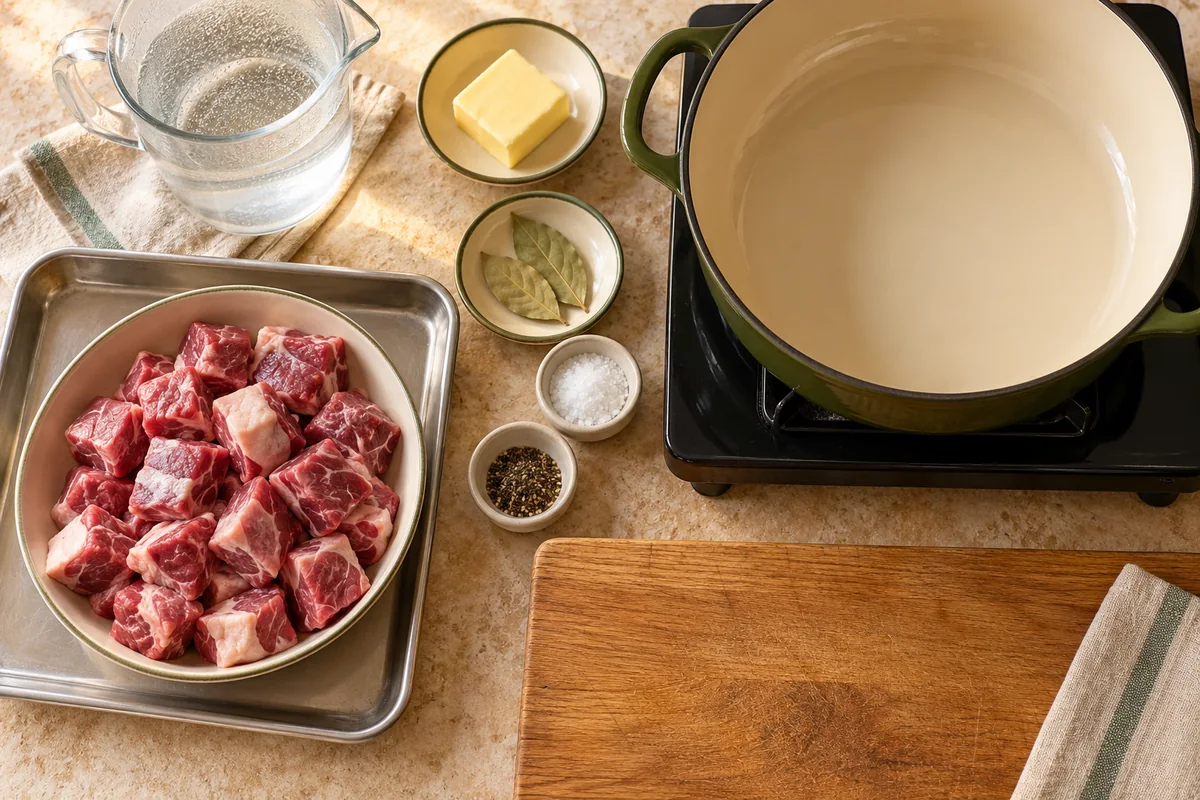
Select lamb that is suitable for slow cooking, such as shoulder. Cut the lamb into pieces of similar size. Very lean meat can become dry during a long simmer. The shoulder recommendation is a practical choice for this adaptation. The Ministry’s ingredient list does not specify a cut of lamb.
Use a wide pan for the first stage. Crowded meat can release enough water to prevent browning. Let excess water evaporate before you add more liquid. Keep the heat low enough to prevent burned butter. Burned butter gives the broth an unpleasant taste.
Add hot water for the simmer. Examine the liquid level during cooking. If the liquid level becomes too low, add more hot water. Keep the cooked lamb in its broth until assembly. Lamb can become dry if it waits on a separate plate.
Taste the broth before assembly. The broth must also give flavor to the bread. If you use prepared stock, read its salt content first. Prepared stock can contain enough salt for the whole batch. The salted onion can add more salt later.
Dry bread
Use fully baked bread that has become dry. A plain, sturdy loaf or Turkish bread is a practical choice. Very soft sandwich bread can quickly become a paste. Dense wholegrain bread changes the flavor and absorbs a different amount of broth. Test a small piece before you prepare the whole batch.
The original recipe specifies one dried loaf. It does not give the loaf weight. The calculator therefore keeps the loaf unit. It does not invent a weight in grams. Start with one even bread layer in the serving dish. Keep excess bread separate until you know whether you need it.
Dry bread can work well in this recipe. Do not use moldy bread. Heat does not make moldy bread a suitable ingredient. Cut or tear suitable bread into pieces of similar size. Even pieces make the final texture easier to control.
Plain yogurt and garlic
Use plain, unsweetened yogurt. Stir the yogurt until it is smooth. Add the crushed garlic. If the yogurt is too thick, add a small amount of clean water. The yogurt must move easily from the spoon onto the lamb.
Keep the yogurt cold until assembly. Do not add all the meat broth to the yogurt bowl. The yogurt must remain a separate layer on the finished tirit. Add the yogurt after the hot broth. Do not mix it into the hot meat pan.
The original recipe gives four to five garlic cloves for five people. Garlic cloves differ in size and strength. Fractions in the calculator are approximate preparation amounts. They are not exact weights. Taste the garlic yogurt before you put it on the whole batch.
Onion, parsley and garnish
Cut the onion into thin slices. Wash the parsley. Chop the parsley with clean utensils. Prepare the pepper and tomato garnish separately. You can rub the onion with a little salt to reduce its sharp taste. Drain the onion before you add it to the tirit.
Remember the onion salt when you season the broth. If people prefer less raw onion, serve some onion separately. Keep some plain yogurt for people who prefer less garlic. These choices let people adjust their servings. They do not change the original ingredient quantities in the calculator.
Prepare the kitchen
You need a pan with a lid, a baking tray, a shallow serving dish and a ladle. Use separate utensils for raw meat and ingredients that need no further heat. Clean your hands and work surface after contact with raw meat. Keep the yogurt and prepared garnish away from raw meat.
The source lists bay leaves but does not explain when to add them. This adaptation adds the bay leaves during the simmer. Remove the bay leaves before you serve the tirit. The source method also mentions cumin without a quantity. The calculator does not add cumin as a measured ingredient.
Correct common texture problems
The bread is dry in the center
Add broth across the bread layer. Do not pour it only around the edge. Examine a piece from the center. Add more broth only where the bread remains dry.
The bread becomes a paste
Stop the broth addition. Use sturdier bread for the next batch. Crisp the bread more evenly. Assemble the next batch immediately before you serve it.
More broth cannot restore the structure of bread that has already collapsed. The next batch needs less liquid or stronger bread.
The lamb remains tough
Continue to cook the lamb gently in its broth. Keep enough liquid in the pan. Test the meat again before assembly.
Hot broth on the plate cannot replace the time that tough meat needs in the pan.
The broth has too much fat
Let the fat collect on the broth surface. Remove some fat with a spoon. Keep enough fat for the flavor you want.
The yogurt also makes the tirit rich. You do not need a thick layer of fat on every bread piece.
The tirit needs more flavor
Taste the broth separately. Taste the yogurt separately. Adjust the salt in small amounts. Taste the food again before you add more salt.
Bread absorbs the flavor of the broth. Prepared stock and salted onion can make the tirit too salty.
The yogurt disappears
Add the yogurt last. Use separate spoonfuls or thin lines. Do not stir the yogurt into the hot pan.
Use substitutions carefully
Beef instead of lamb
Beef suitable for a stew can replace lamb in a home adaptation. Its flavor and cooking behavior will differ. Test its tenderness with a fork. Do not use an assumed lamb cooking time. The original ingredient list remains a lamb recipe. The calculator does not change its meat choice.
A different bread
You can use leftover plain bread, pide or another fully baked bread. Thin flatbread becomes soft faster than thick bread with a firm crust. Add smaller amounts of broth to thin bread. Keep the bread pieces similar in size. The source loaf has no reliable universal conversion to grams.
A different yogurt
You can add a little water to thick strained yogurt. Lactose-free dairy yogurt may suit some people with lactose intolerance. It still contains milk proteins. An unsweetened plant-based alternative changes the flavor and ingredients. Read its label for allergen information.
A yogurt substitute does not automatically make the complete meal safe for a person with a food allergy. Bread, butter, stock and shared utensils also need attention. The calculator cannot identify those risks.
A recipe without meat
Mushrooms or chickpeas can go on bread with a vegetable broth that has enough flavor. You can use the same assembly method. This idea makes a different home-cooked meal. It is not the Ministry’s lamb recipe or the registered Urfa product. The tool does not calculate its ingredients or nutrition.
Compare the Konya and Urfa recipes
The Konya formula uses lamb, dried bread, yogurt, onion and parsley. The Urfa Tiridi / Şanlıurfa Tiridi registration describes another regional preparation. It specifies İvesi lamb, tail fat, marrow bones, turmeric and Şanlıurfa Açık Ekmeği. Lemon and fresh green pepper are also part of its service.
The Urfa document gives a separate recipe for six people. It lists 750 g lamb and 100 g tail fat. It also lists four to five marrow-bone pieces, 10 g salt and 2 g turmeric. For service, it specifies 500 g sheep yogurt and six garlic cloves. It adds three local breads, two lemons and green pepper.
These ingredients do not extend the five-person Konya list. The calculator on this page handles only the Konya quantities. Do not combine the two lists as one recipe.
The Urfa document describes assembly in a copper serving dish. It also permits crushed garlic without yogurt. It connects the meal with hospitality and communal events. The regional meat, fat and bread give that version its identity. Its appliance method does not supply a universal time for every home kitchen.
Prepare food in advance
Keep cooked meat and broth together. Keep the yogurt cold in a separate container. Keep dry bread separate. Assemble only the quantity that you intend to eat. Use clean utensils for the yogurt and garnish.
Separate storage protects the bread texture. Bread that has absorbed broth will not become crisp again through reheating. An assembled batch can also lose the smooth yogurt texture. Separate components give a better result for a later meal.
Store leftovers safely
FoodSafety.gov gives a two-hour limit before refrigeration for perishable food. Above 90°F, or about 32°C, that limit is one hour. Its food-safety guidance explains these limits.
Refrigerate perishable leftovers within two hours. Above about 32°C, refrigerate them within one hour. Divide large amounts of meat and broth into shallow containers. Do not leave the pan on the counter all evening. Do not wait for a large pan to become completely cold.
The FoodSafety.gov storage chart gives cooked meat leftovers 3–4 days at 40°F / 4°C or below. A yogurt label can give a shorter storage period. Follow the shortest applicable storage instruction. Mark the storage date on the containers.
Reheat leftovers safely
The FoodSafety.gov temperature chart specifies 165°F / 74°C inside reheated leftovers. A food thermometer measures the temperature. A hot surface does not prove that every part is hot enough.
Reheat only the amount that you need. Stir the meat and broth to distribute the heat. Measure the temperature in more than one place. Heat the leftovers to 74°C throughout. Assemble the hot meat and broth with bread. Add the cold yogurt last.
Yogurt can separate if you reheat an already mixed serving. The bread can also become softer. Smell and appearance cannot prove that leftovers are safe. Reheating cannot reliably correct unsafe storage. If you doubt the safety of leftovers, discard them. Do not taste them to test their safety.
Identify allergens
The standard recipe contains milk in the yogurt and butter. The bread usually contains wheat. Prepared stock and substitute products can contain other allergens. Shared utensils and work surfaces can also transfer allergens.
Read the actual product labels. Identify allergens in substitute ingredients. Examine shared preparation areas and utensils for possible allergen transfer.
The serving calculator is not an allergen check. It does not calculate nutrition. It does not provide a personal diet plan.
Calculate the cost of a serving
The cost field uses your own total for the selected batch. It does not supply current prices or exchange rates. A blank field means that the cost is unknown. It does not mean that the meal is free.
Add the cost of the ingredients that your batch uses. Enter that total in the cost field. Select the currency for your amount.
Half a tub of yogurt can contribute half its purchase price to the ingredient cost. The price of the whole tub answers a different question about your cash payment. Small pantry amounts can also form part of your estimate. Use the same method for all ingredients in one calculation.
The tool divides your total by the selected serving number. The currency label does not convert the amount. A change to the serving number clears the cost field and ingredient checks. This prevents an old batch total from describing a new quantity.
Recipe sources and editorial notes
We reviewed the recipe and safety sources on October 2, 2026. The eleven ingredients and garlic range follow the Ministry’s Konya recipe. Advice about pan size, bread texture and substitutions adapts the method for home use. The Urfa comparison follows registration 382.
The source does not give one complete preparation or cooking time for this home adaptation. This article does not invent those times. It also does not invent calories, review counts or star ratings.