

How To Import from Turkey To USA: A Complete Guide 2026
Table of Contents
This comprehensive guide details how to import from Turkey to the USA, covering the required documents for various products and the import duties you need to anticipate in 2025.
Importing from Turkey to the US provides a significant opportunity to access high-quality products at competitive prices, potentially increasing profit margins for your business.

About Importing from Turkey to the USA
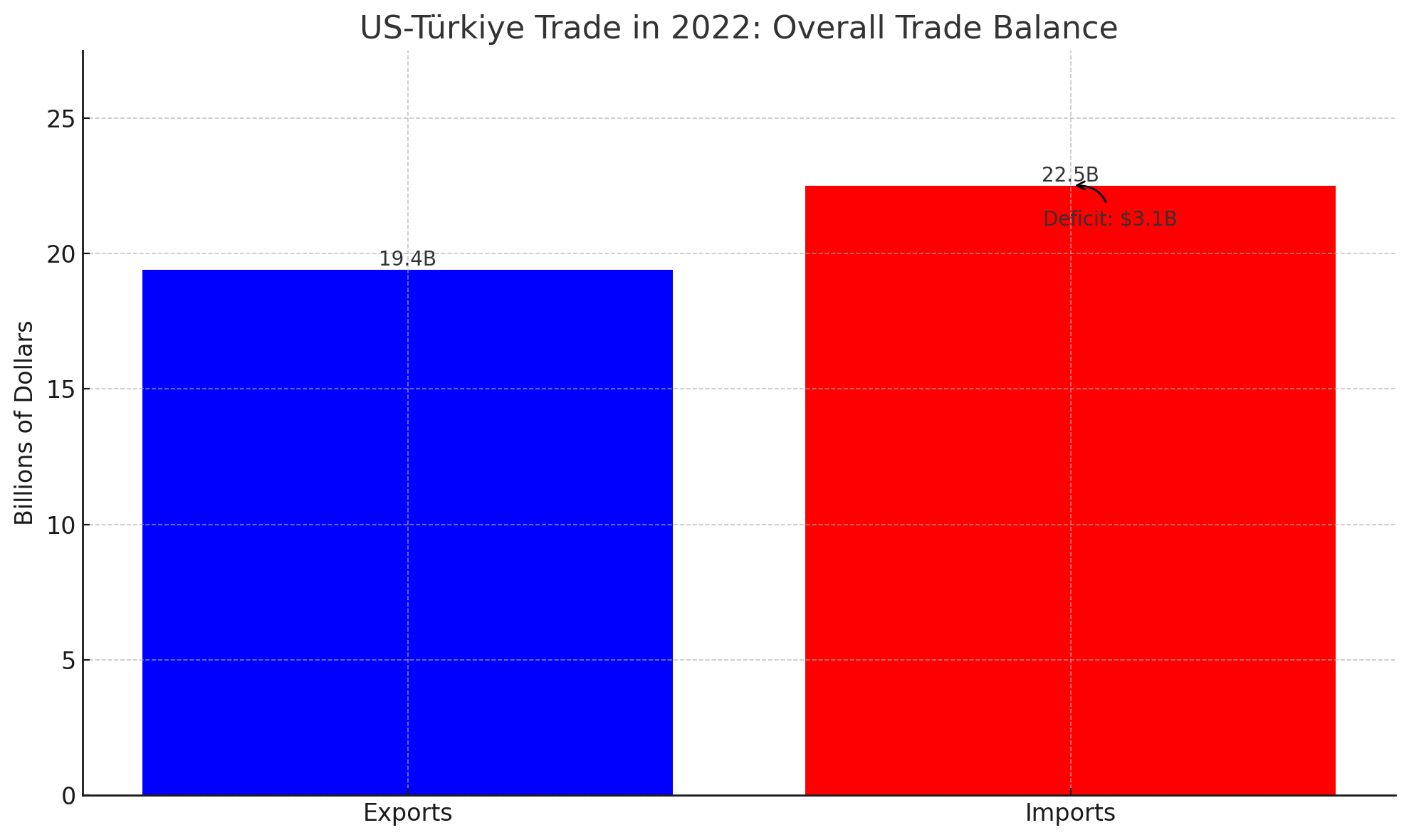
The United States and the Republic of Türkiye maintain a strong commercial relationship. In 2024, total U.S.–Türkiye trade in goods and services reached approximately $43 billion. U.S. exports of goods and services totaled about $20.4 billion, while imports from Türkiye were around $22.6 billion, resulting in a modest overall trade deficit.
Specifically within the goods sector, U. S. exports to Turkey reached $15.2 billion in 2022, showing remarkable growth of 27.4% from the previous year. Imports from Turkey also climbed to $18.8 billion, marking an 18.6% increase from 2021. For the latest economic context, you can review Turkey’s foreign trade indices to understand current trends.
The services sector shows a different dynamic. U. S. exports of services to Turkey reached $4.3 billion in 2022, while imports of services from Turkey jumped to $3.7 billion. In this sector, the United States enjoyed a trade surplus.
Top Products the U. S. Imports from Turkey
Stone & Glass, Textiles, Machinery & Electronics, Metals, and Mineral Products are Turkey’s top export categories. Together, these items account for a majority of the total export volume from Turkey to the USA.
Importing Textiles and Turkish Clothing
Turkey’s textile industry is highly developed, which explains why textile exports comprise a significant percentage of Turkey’s total trade volume. This is no coincidence; the Turkish textile industry has supplied major global brands like H& M, Zara, and Nike with quality clothing and fabric.
While prices may be higher compared to some Asian countries, Turkish jeans and clothing manufacturers are preferred for their superior quality, craftsmanship, and proximity to western markets.
When discussing importing from Turkey to the USA, textiles are often the first items that come to mind. Home textile products, such as carpets, rugs, and towels, are also high-quality Turkish products available for import. Cities like Isparta, Kocaeli, and Gaziantep are renowned for luxury handmade carpets as well as standard carpets for home use.
Porcelain and Ceramic
The Turkish Republic possesses vast mineral deposits, allowing for the export of beautiful tiles including mosaic, marble, and ceramic. Kutahya Porcelain is an excellent example of a Turkish company offering premium ceramic and porcelain products suitable for the US market.
The elegance and quality of Turkish porcelain are well-known, with many American homeowners choosing these products for their durability and design.

Dry Fruit and Nuts
Turkey is a major supplier of hazelnuts, walnuts, figs, and apricots. In fact, Turkey historically supplies roughly 70% of the world’s hazelnut demand.
Consequently, Turkish ingredients are frequently found in baked goods such as biscuits, cookies, crackers, and chocolates worldwide. Another key product is the pistachio, grown in high quality in the Gaziantep and Siirt regions.
Dried fruits, particularly figs and apricots, are also famous Turkish exports. These agricultural products account for a significant portion of Turkey’s trade with the US.

What to Import from Turkey to the US?
There is a wide variety of products to import from Turkey. For example, the country is a significant producer of olive oil and olives.
Similarly, Turkish coffee is a popular choice, known for its rich taste and unique consistency. Turkish clothing is another excellent option, often made from quality materials such as cotton and wool. The variety of colors, cuts, and styles makes it attractive to customers globally.
Turkish dried fruit is also in high demand. It is naturally sweet and consumed as a snack or side dish across the world. Additionally, investing in Turkish Halal food products can help you reach the growing Muslim community in the US.
Leather goods, such as handbags for women and men, are also major exports. These products are often made of 100% pure leather, making them durable and elegant.
Turkey also produces high-quality metal and iron products, as well as carpets, blankets, and rugs. These items are crafted using wool, cotton, or other fabrics that resist fading and feature unique finishes.
For food importers, Turkey offers various types of pasta, including spaghetti and ravioli, as well as canned seafood like tuna and mackerel. The country also exports frozen chicken breast and other meat cuts, though strict USDA regulations apply to meat imports.
Finally, Turkish cheese is a hidden gem. Made primarily from pasteurized cow, sheep, or goat milk, it offers rich flavors that rival European varieties and is perfect for special occasions.

Required Documents to Import from Turkey to the USA
Shipments from Turkey to the United States must generally include a commercial invoice and a bill of lading or air waybill. You may also need to check the requirements for the legalization of foreign documents depending on the nature of your goods.
Additional paperwork may be required based on the type of product. This can include a Certificate of Origin, Control Certificates (for animals and certain plants), import licenses, and phytosanitary certificates.
Specific criteria for the shipment of the following items must be met to avoid delays and detention at customs.
Agriculture
Importing plants violates international or domestic laws if not done correctly. Importation is permitted only when a declaration is made, which must include:
- The plant’s scientific name (genus and species)
- Importation value
- The quantity
- The country or territory of harvest
For paper and paperboard products, you must declare the average percentage of recycled content. This declaration requirement generally does not apply to packaging used to support or transport another item (unless the packaging itself is the commercial item).
Animals and Animal Byproducts
The importation of ruminant meat products (from animals such as cows, goats, and sheep) is highly regulated and often prohibited due to disease control measures. For current information on importing animal by-products from Turkey, contact the USDA Veterinary Services at www.aphis.usda.gov.
Food
The FDA requires Prior Notice for all imported food. Key regulations include:
- Manufacturer Registration: The food facility must be registered with the FDA.
- Prior Notice: Must be submitted electronically before the food arrives in the US.
- Shipper Information: If the shipper is different from the manufacturer, the prior notice must include the shipper’s name and full address.
Chemicals
The Toxic Substances Control Act (TSCA) governs the importation of chemical substances. Customs and Border Protection (CBP) will not release chemical substances unless a TSCA Declaration is provided.
Declaration Types:
- Negative Declaration: Certifies the shipment is not subject to TSCA regulations.
- Positive Declaration: Certifies the shipment complies with TSCA regulations.
Common items requiring this include industrial chemicals, inks, and certain bulk substances.
Clothing
A commercial invoice for importing clothing into the US must include detailed information:
- Fabric content (percentage of each fiber)
- Manufacturer’s name and address
- Knit or Woven construction
- Gender (Men’s, Women’s, etc.)
- Fabric weight and dimensions
Cosmetics
Bath oils, essential oils, and cosmetics require FDA review when imported from Turkey to the USA. They must meet US labeling and safety standards.
Seeds
Seeds generally require a USDA Plant Protection and Quarantine (PPQ) Permit or a Phytosanitary Certificate to enter the United States. Inspection by the USDA is mandatory.
Jewelry
When importing jewelry from Turkey, be aware of both Customs rules and carrier restrictions:
- Customs Duty: Under Section 321, shipments valued under $800 may be duty-free. Shipments above this value are subject to duties (Turkey’s GSP status was revoked in 2019, so standard rates apply).
- Carrier Limits: Carriers like UPS and FedEx often limit their liability for jewelry (e.g., to $500 or $1,000) unless you have a specific high-value contract (ISC). Always check with your shipper before sending high-value items.
Artwork
Original works of art are generally duty-free under Chapter 97 of the Harmonized Tariff Schedule. However, if you are shipping high-value artwork, carriers may require a special contract or handling procedure to ensure insurance coverage and security.
Import Duties from Turkey to USA
The US uses the Harmonized Tariff Schedule (HTS) codes to determine duties. You can find these on the official USITC website. Since Turkey is no longer a GSP beneficiary for the US, importers should check the “General” rates of duty (Column 1) for their specific products.
How can you import from Turkey to USA?
You can import from Turkey to the USA by identifying your product, finding a supplier, and ensuring you have the required documents such as a Commercial Invoice and Bill of Lading. You must also comply with US Customs and FDA/USDA regulations depending on the product.
What are the customs duties and taxes for importing from Turkey to the USA?
Customs duties depend on the HTS code of the product. Since Turkey’s GSP status was revoked, standard ‘General’ duty rates apply. Small shipments under $800 may qualify for duty-free entry under Section 321.
How long does it take to import from Turkey to the USA?
Shipping time varies by mode. Air freight typically takes 3-7 days, while sea freight can take 20-35 days depending on the ports of departure and arrival.
How can I find a reliable freight forwarder in Turkey?
You can find reliable forwarders by searching directories like the Turkish Exporters Assembly or asking for recommendations from trade associations. Many global logistics companies also have strong operations in Turkey.
Are there any restrictions on what can be imported from Turkey to the USA?
Yes. Restrictions apply to fresh produce, meats, certain chemicals, and cultural artifacts. Always check the CBP and FDA/USDA prohibited items lists before shipping.
Can I import used goods from Turkey to the USA?
Yes, used goods can be imported but may be subject to specific duties. US Customs has strict rules regarding the sanitation and pests for used textiles and agricultural machinery.