Sultan Murad V: The Freemason Who Ruled for 93 Days
Table of Contents
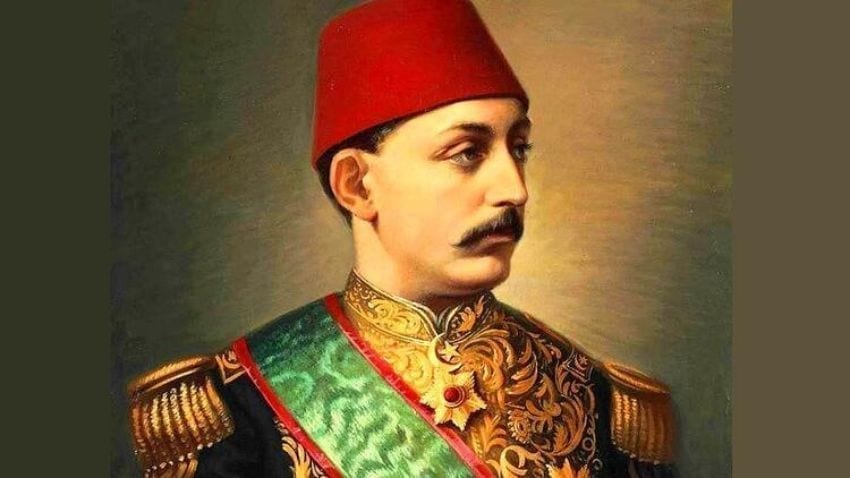
Sultan Murad V is perhaps the most fascinating tragic figure in the Ottoman archives. While other Sultans are remembered for their conquests or their harems, Murad holds a unique distinction that still sparks conspiracy theories today: he was the only Ottoman Sultan to become a Freemason.
His story, however, is not one of long-term reform, but of immediate collapse. Thrust onto the throne following the violent deposition and mysterious death of his uncle, Sultan Abdülaziz, Murad V crumbled under the pressure. His reign lasted only 93 days before a severe nervous breakdown forced his removal, turning him from the ruler of an empire into its most famous prisoner.

The Heavy Burden of Lineage
To understand the weight on Murad’s shoulders, you have to look at the bloodline he was expected to uphold. He wasn’t just a prince; he was the culmination of six centuries of dynasty. His direct ancestry reads like a roll call of history’s heavyweights:
He is Sultan Murad V, son of Abdülmecid I, son of Mahmud II, son of Abdülhamid I, son of Ahmed III, son of Mehmed IV, son of Ibrahim I, son of Ahmed I, son of Mehmed III, son of Murad III, son of Selim II, son of Süleyman the Magnificent, son of Selim I, son of Bayezid II, son of Mehmed the Conqueror (Fatih), son of Murad II, son of Mehmed I, son of Bayezid I, son of Murad I, son of Orhan Gazi, son of Osman Gazi, son of Ertuğrul Gazi.
The Prince Who Preferred Piano to Politics
Born in the opulent Çırağan Palace, Murad V was not your typical Ottoman warrior prince. He was an intellectual. While he studied the Holy Quran and Hadiths, his true passion lay in Western culture. He was fluent in French, a student of French literature, and an accomplished pianist.
He spent vast fortunes renovating his estate in Kurbağalıdere (Kadıköy), creating a sanctuary for art and music. But this sensitivity came with a cost; contemporaries described him as deeply introspective, prone to melancholy, and often lost in thoughttraits that would later prove disastrous in the cutthroat world of palace politics.
The turning point in his life was the 1867 European tour with his uncle, Sultan Abdülaziz. While his uncle was inspecting naviesa legacy that lives on in the nation’s maritime industry, as seen in our ranking of the top Turkish shipyards—Prince Murad was charming European royalty. He befriended the Prince of Wales (later King Edward VII) and impressed Napoleon III with his liberal ideas.
It was during this period of openness that Murad did the unthinkable: he joined the Freemasons. Initiated into the Proodos (Progress) Lodge, he even proposed founding a Turkish language lodge named “Envar ı Şarkiye” (Eastern Lights). His goal was to conduct rituals in Turkish, bridging the gap between East and West. Though this plan never materialized, it marked him as a dangerous radical in the eyes of the establishment.
Sultan Abdülaziz, fearing a coup, tightened the leash. Murad was essentially placed under house arrest, requiring permission just to leave the palace grounds. In secret, however, Murad was already drafting a new constitution with a French lawyer, preparing for a reign he hoped would modernize the empire.
The 93-Day Nightmare
Murad V finally ascended to the throne on May 30, 1876, after a coup by reformist ministers deposed his uncle. But the celebration was short lived.
Days after taking power, the deposed Sultan Abdülaziz was found dead. While officially ruled a suicide, the circumstances were suspicious, and Murad was terrified he would be blamed for murder. The shock shattered his already fragile mental state. He suffered a complete nervous breakdown, at times failing to recognize his own ministers.
The empire was paralyzed. The “Girding of the Sword” ceremonythe Ottoman equivalent of a coronationhad to be postponed. Foreign ambassadors could not present their credentials. Dr. Leidesdorf, a specialist brought in from Austria, offered a bleak prognosis: the Sultan was consumed by paranoia and guilt, with no quick cure in sight.
The bureaucracy, which can be difficult enough to navigate even todayas anyone trying to handle legal paperwork in Turkey knowscould not function without a coherent head of state. On August 31, 1876, after a fatwa declared a mentally incapacitated ruler unfit to lead, Murad V was deposed.
His brother took the throne as Sultan Abdülhamid II. Murad’s reign had lasted just 93 days, the shortest in Ottoman history.

Life in the Gilded Cage
Following his deposition, Murad returned to the Çırağan Palace, this time as a prisoner of state. Ironically, once the immense pressure of ruling was removed, his mental health improved significantly within nine months.
Despite his recovery, he was never released. His supporters, including the fiery journalist Ali Suavi, launched botched rescue attempts (most notably the Çırağan Incident), but these only served to make the new Sultan, Abdülhamid II, more paranoid. Security was tightened, and Murad spent the next 28 years in total isolation.
Death and Legacy
Sultan Murad V passed away from complications of diabetes on August 29, 1904, still inside the Çırağan Palace. There was no state funeral, no public announcement, and no pomp. The empire wanted to forget him.
Today, the Çırağan Palace is one of the most expensive hotels in the world, a far cry from the complex rental market in Istanbul that modern expats face. Yet, walking its halls, one can still sense the tragedy of the Prince who wanted to bring “Eastern Lights” to the empire but ended up in the dark.
His body was washed in the Topkapi Palace and quietly transported to the Hidayet Mosque. He rests today in the mausoleum of the New Mosque (Yeni Cami) in Istanbul, beside his mother, Şevkefza Sultana quiet end for the Sultan who dared to dream too big.
Was Sultan Murad V really a Freemason?
Yes, Murad V was an initiated member of the Freemasons. He joined the Proodos (Progress) Lodge and even had ambitions to establish a Turkish-language lodge called Envar-ı Şarkiye.