Kurban Bayramı in Turkey: 2026 Guide, Prices & Traditions
Table of Contents
Visiting Turkey during Kurban Bayramı (Eid al Adha) is like seeing the country through a completely different lens. It isn’t just the most significant religious event in the Islamic calendar; it is a massive logistical shift. Banks shut their doors, toll roads become free, and millions of people migrate across the country to visit their hometowns.
For travelers and expats, this means one thing: You need a strategy. We are ditching the textbook definitions to look at this holiday through the Practitioner’s Lens. Here is the reality of what happens on the ground from the 2026 dates you need to block off to the specific opening hours of Istanbul’s top museums.
Ritual & Resilience
Kurban 2026
May 26 — 30
~110k TL (Estimated)
Based on weight of 400kg+. Usually shared by up to 7 partners.
20kTL (Est.)
Standard sheep or goat. Preferred for individual family sacrifice.
`; } }customElements.define('kurban-vision-2026', KurbanVision2026);
When is Kurban Bayramı 2026?
The Sacrifice Feast follows the Islamic lunar calendar, meaning it moves forward by approximately 10 to 11 days each Gregorian year. While the 2025 holiday fell in early June, the 2026 dates arrive even earlier.
Official 2026 Schedule:
- Arefe (Preparation Day): Tuesday, May 26, 2026 (Half day holiday starting at 1:00 PM).
- Day 1: Wednesday, May 27, 2026.
- Day 4 (Final Day): Saturday, May 30, 2026.
Practitioner’s Warning: Because the holiday lands mid week, there is public speculation about a possible extended administrative leave. As of January 2026, no official 9-day holiday decision has been announced. Plan based on the statutory dates of May 26–30, 2026 only.
The Economics of Sacrifice: 2026 Price Outlook
A central pillar of the festival is the animal sacrifice. For expats, the scale of this economy can be shocking. Turkey’s inflation has made this a significant financial commitment for families.
While 2026 market prices won’t be finalized until weeks before the feast, the 2025 benchmarks serve as a critical floor for your budgeting. Expect 2026 prices to be at least 25-30% higher due to inflation.
- Small Livestock (Sheep/Goat/Ram): In 2025, prices ranged between 13,000 TL and 40,000 TL. In agricultural hubs like Bursa, starting prices were around 15,000 TL.
- Large Livestock (Cow/Bull): A much larger investment, ranging from 80,000 TL to a massive 350,000 TL in 2025. The live weight price averaged 300 TL per kg.
- Butcher Fees: Don’t forget the processing cost. In 2025, professional butchering services charged approx. 7,500 TL for large cattle and 1,250 TL for sheep.
Alternatively, many locals opt for Vekalet (donation by proxy). In 2025, the Diyanet (Presidency of Religious Affairs) set this donation price at 13,500 TL domestically and 5,450 TL (approx. €125) for overseas donations.
Logistics Survival Guide: Transport & Closures
For tourists, this is the most critical section. What actually works when the country shuts down?
Free Public Transport
One of the few “Hidden Gems” of the holiday chaos is the cost savings. Public transport in major metropolitan areas like Istanbul, Ankara, and Izmir is traditionally free. This usually covers all days of the feast (May 27-30, 2026) and includes key commuter lines like the Marmaray and Başkentray.
Driver’s Alert: State run highways and bridges (like the 15 July Martyrs Bridge) are also free. However, “free” comes at a cost: massive congestion. If you are planning a road trip, check our guide on Car Insurance in Turkey to ensure you are covered for the holiday traffic.
Are Museums and Sites Open?
Yes, but you need to time it right. Based on the Ministry of Culture’s standard operating procedures:
- Day 1 (May 27): Most museums remain closed in the morning and open after 1:00 PM. Historical sites like Dolmabahçe Palace often have delayed openings.
- Days 2 & 3: Business as usual (typically 09:00 AM 5:30 PM).
- Day 4: Proceed with caution. While major sites like Topkapı Palace usually stay open, smaller National Palaces may close early or entirely on the final day.
Note: Notaries, government offices, and banks are closed for the entire duration. If you need cash, withdraw it before Arefe day, as coastal ATMs often run empty.
Traditions: It’s Not Just About Meat
Kurban Bayramı commemorates Prophet Ibrahim’s willingness to sacrifice his son, an act of obedience for which God provided a ram as a substitute. Today, this tradition is less about the sacrifice itself and more about community sharing. The meat is strictly divided into three parts:
- One part for the immediate family.
- One part for neighbors and guests.
- One part for those in need (the most crucial component).
This is a distinct difference from Eid al Fitr (The Sugar Feast), which focuses more on sweets and ending the Ramadan fast.
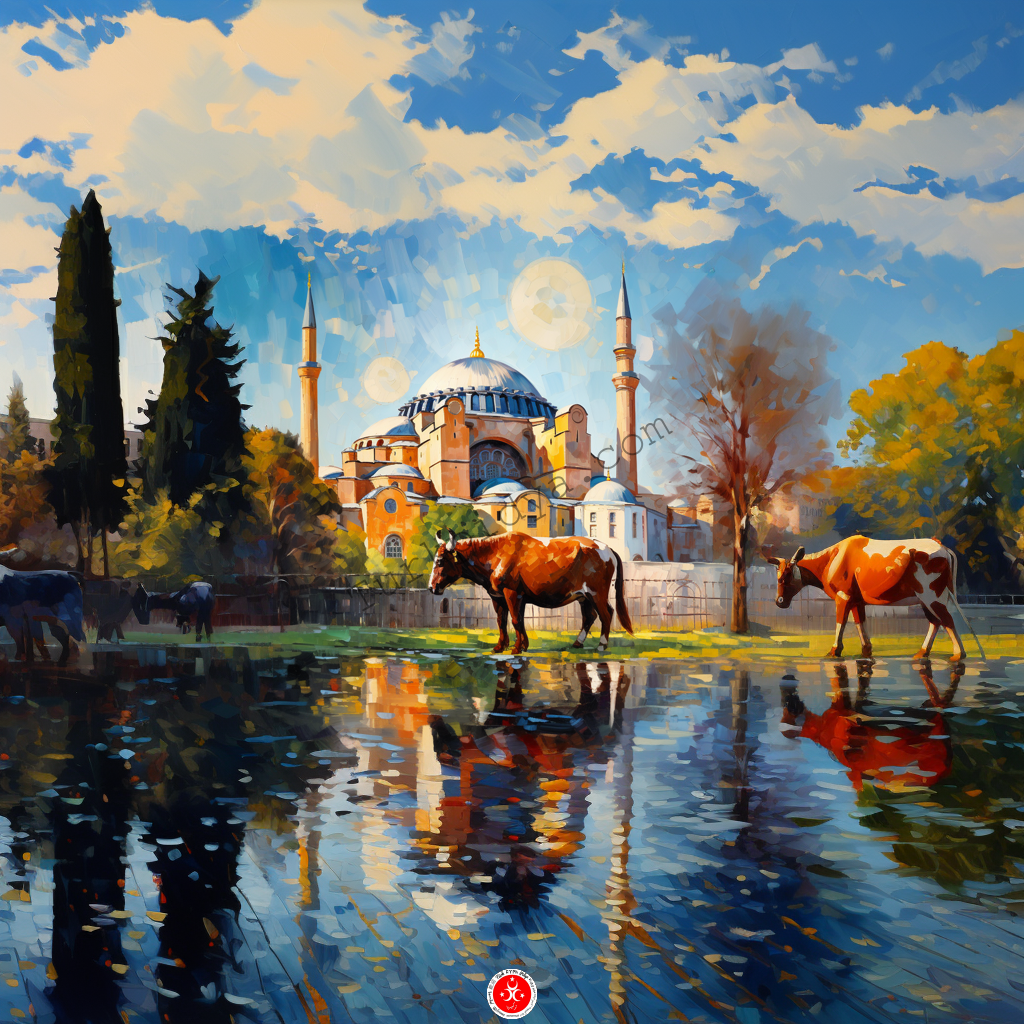
Culinary Highlights
The signature dish of the holiday is Kavurma. The meat is fried in its own fat and preserved with salt, making it incredibly tender and durable. If you are invited to a Turkish home, expect a heavy rotation of Kavurma, Dolma (stuffed vegetables), and plenty of Baklava.
For breakfast, tables are often laden with regional Turkish cheeses. If you plan to self cater, be aware that local butchers and small markets will likely be closed. Supermarkets generally remain open but operate on reduced holiday hours.
Essential Dictionary for Your Visit
A few words of Turkish go a long way. Use these phrases to break the ice:
- İyi Bayramlar / Bayramınız Mübarek Olsun: “Happy Holidays” / “May your holiday be blessed” The standard greeting.
- Kurban: The sacrifice (or the animal itself).
- Bayram Harçlığı: Pocket money given to children by elders, usually after the child kisses the elder’s hand.
- Arife: The eve of the festival (half day holiday), when preparations hit fever pitch.
Whether you are actively participating or just observing as a traveler, Kurban Bayramı is a time of intense hospitality. Accept invitations, enjoy the festive atmosphere, and if you are traveling, keep your Vodafone Turkey data plan topped up to navigate the changes in schedules.