Turkish Election System 2026: An Expat & Observer Guide
Table of Contents
In Turkey, politics isn’t just a topic for the evening newsit is the heartbeat of the economy and daily life.
For expats, investors, and foreign observers, understanding the Turkish election system is more than academic theory; it is survival knowledge. Why? Because election results here often trigger immediate shifts in the exchange rate, rent prices in Istanbul, and residency regulations. In this guide, we strip away the complexity and explain exactly how the system worksand why your “Blue Card” (Mavi Kart) stays in your wallet on election day.
The Power Structure: Parliament & The President
Turkey operates under a presidential system. This means the center of power resides with the President, not a Prime Minister (a role abolished in 2018). The legislative body, the Grand National Assembly of Turkey (TBMM), consists of 600 Members of Parliament (MPs).
Elections are held regularly every five years. The next scheduled Presidential and Parliamentary elections are set for May 2028, assuming no snap elections are called before then.
The system is based on proportional representation, but there is a critical hurdle that parties must clear:
- The 7% Threshold: In 2022, the national threshold was lowered from 10% to 7%. A party must secure at least 7% of the national vote to gain seats in parliament.
- Alliances (İttifak): This is where strategy comes in. Smaller parties can bypass the 7% rule by joining an alliance with larger parties. If the alliance’s combined vote exceeds 7%, the smaller partners can also enter parliament.
The Presidential Race: The 50+1 Principle
The President is elected directly by the people. The rule is simple in theory but difficult in practice:
A candidate wins only if they receive more than 50% of the valid votes (50% + 1 vote) in the first round. If no one achieves thiscommon in Turkey’s polarized political landscapethe top two candidates face off in a runoff election two weeks later.
Who Can Be President?
The requirements for the highest office are strict:
- Must be at least 40 years old.
- Must hold a four year university degree.
- Must be a Turkish citizen.
A President is limited to two terms. However, there is a constitutional loophole: If parliament calls for early elections during the President’s second term, the incumbent is allowed to run for a third time.
Parliamentary Elections: Who Makes the Laws?
Unlike the presidency, the requirements for becoming an MP are more lenient to ensure broader representation. Turkey is divided into 87 electoral districts (Istanbul alone has three districts due to its massive population).
Requirements for MPs
- Minimum age: 18 years.
- Education: Minimum primary school diploma (no university degree required).
- Military service completed or exempted (for men).
- No criminal record for serious offenses.
A Practitioner’s Note: Public servants must resign from their jobs before they can even declare their candidacy. This includes judges, prosecutors, military personnel, and even lecturers at state universities. This rule is intended to preserve state neutrality during the campaign.
Local Elections: Where Daily Life is Decided
While Ankara handles grand strategy, your local Mayor (Belediye Başkanı) decides if the pothole in front of your apartment gets fixed. Local elections also occur every five years (last held in 2024; the next round is in 2029).

In these elections, you vote for more than just the mayor; you also elect the Muhtar (Neighborhood Headman). The Muhtar is your primary contact for local residency paperwork and documentscrucial if you need to deal with the legalization of documents. Interestingly, Muhtars do not belong to political parties; it is purely a personality based contest.
Can You Vote? (The Blue Card Reality Check)
This is a common point of confusion for the Turkish diaspora. Voting rights are strictly tied to active Turkish citizenship.
Can Blue Card (Mavi Kart) holders vote?
No. The “Blue Card” grants former Turkish citizens almost all civil rights (inheritance, work, property ownership), but it does not grant the right to vote or stand for office. If you surrendered your Turkish passport to gain citizenship elsewhere (e. g., Germany), you cannot vote in Turkey.
For Turkish citizens living abroad, however, the story is different. They can vote at consulates or border crossings. The “expatriate vote” is massive and often sways the final result.
Election Day: What to Expect
Voter turnout in Turkey is exceptionally high by international standards (often exceeding 85%). Voting is deeply embedded in the civic culture here.
- Location: Usually public schools. You can find your specific ballot box via the e Devlet portal. Make sure your address is registered correctlycheck our guide on Turkish address formats if you are unsure.
- ID Check: You must present a valid Turkish ID card (Kimlik) or passport.
- The Alcohol Ban: Election day is a dry day. There is a strict ban on serving alcohol in public venues and selling it in shops until the polls close.
Security & Trust: Who Counts the Votes?
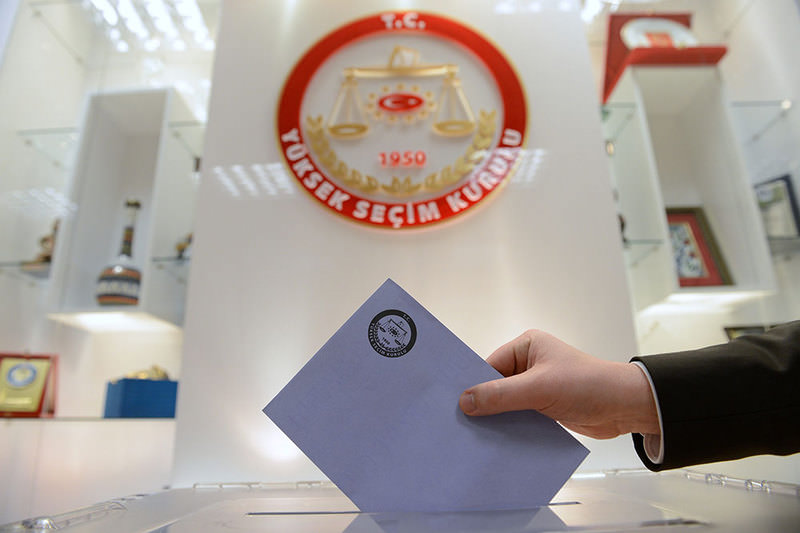
The ultimate authority is the Supreme Election Council (YSK), composed of high ranking judges. Its decisions are final and cannot be appealed to any other court.
The “Street Smart” Tip: Trust is good, but verification is better. After polls close (usually at 17:00), votes are counted publicly right there in the classroom. Any citizen has the right to watch the count. The results (the “Tutanak”) are signed on-site and often photographed by party observers to prevent manipulation during transport. It’s a high tension, high stakes process that often rivals the excitement of major national holidays.