Mount Ararat Summit Guide: Myths, Permits & The 5,137m Reality
Table of Contents
Mount Ararat is not just a mountain. It is a geological contradiction: a dormant volcano resting under an eternal ice cap, yet arguably the most vibrant symbol in biblical history. To some, it is Ağrı Dağı, the “Roof of Turkey.” To others, it is the sacred ground where humanity supposedly received a second chance.
But strip away the legends, and Ararat remains a serious objective for alpinists. If you plan to conquer this 5,000-meter giant, faith alone won’t get you to the topyou need logistical precision, government clearance, and serious altitude respect. We are moving past the folklore to separate fact from fiction, providing you with the practitioner’s guide to standing on top of Turkey.
The Giant in the East: Geography and Hard Facts
Before we dive into the mythology, let’s look at the reality on the ground. Ararat dominates the landscape of Eastern Anatolia, sitting in a geopolitically sensitive triangle between Turkey, Iran, and Armenia (specifically the Nakhchivan exclave).
The Ararat massif isn’t a single peak; it is a massive volcanic complex comprised of two distinct cones:
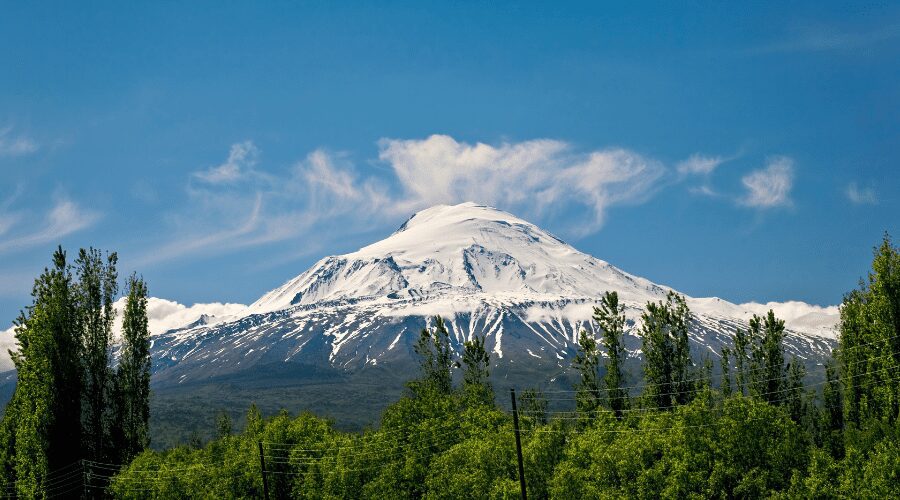
- Greater Ararat (Büyük Ağrı): At 5,137 meters (16,854 ft), this is Turkey’s highest point. Its summit is capped by a glacier year round, requiring technical gear for the final ascent.
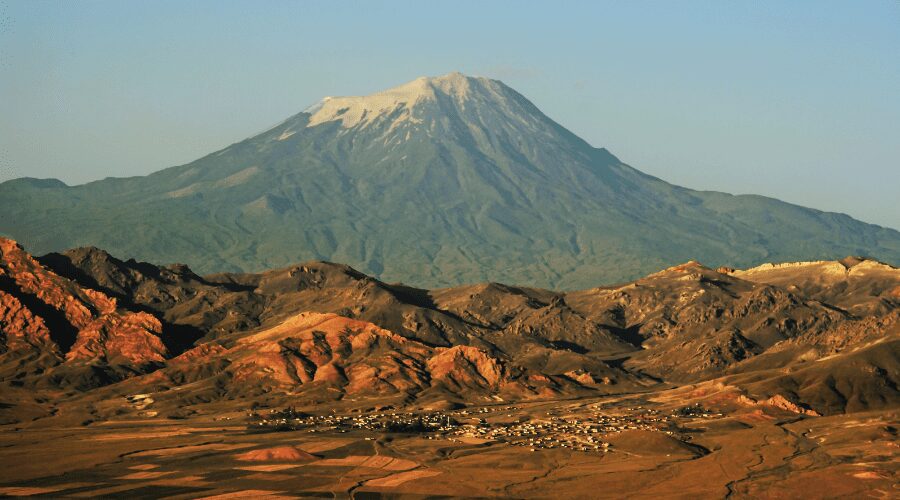
- Little Ararat (Küçük Ağrı): Rising southeast of the main peak, this perfect volcanic cone stands at 3,896 meters (12,782 ft).
Is the Volcano Still Active?
Many guidebooks label Ararat as “extinct,” but geologists prefer the term “dormant.” The last major confirmed eruption occurred on July 2, 1840. A phreatic explosion, triggered by a massive earthquake, caused a devastating landslide that wiped out the village of Arguri (now Akori) and the St. Jacob Monastery. The mountain has been silent since, but the geothermal power beneath the surface is very much alive.
The wildlife here has adapted to these harsh extremes. While you might encounter bears, wolves, or lynx in the lower foothills, the zone above 4,000 meters belongs almost exclusively to the wind and ice.
The Myth: Noah’s Ark (Clarifying the Confusion)
We need to address a common point of confusion. We are talking about Noah’s Ark (the ship), not the Ark of the Covenant. Even with the correct Ark in mind, the text requires a closer look.
Genesis 8:4 does not explicitly state the Ark landed on Mount Ararat specifically. The Hebrew text refers to the “mountains of Ararat” (plural). Historically, this referred to the ancient Kingdom of Urartu, a vast region spanning parts of modern day Turkey and Armenia. Despite this geographical nuance, tradition has firmly identified the 5,137-meter peak as the landing site for millennia.
If you are interested in exploring the deep spiritual history of this land beyond just the mountains, check out our guide to 10 Biblical Sites in Turkey.
The Search for Evidence
Hardly a decade goes by without a new “discovery.” Sometimes it is satellite imagery showing an “Ararat Anomaly,” other times expeditions claim to find petrified wood in the glacier. To date, none of these claims have held up to rigorous scientific scrutiny. A popular alternative site is the Durupinar formation, a boat shaped geological structure located a few kilometers from the summit, which draws thousands of pilgrims annually.
Practitioner’s Guide: Climbing Mount Ararat
Let’s get to the logistics. Technically, Ararat is not an extreme climbit is mostly trekking rather than vertical climbingbut it is a severe high altitude test. Underestimating the elevation or the weather is the most common mistake climbers make.
1. Permits and Red Tape
The mountain sits in a military security zone. You cannot climb Ararat independently. This is the golden rule. To attempt the summit, you legally require:
- An official climbing permit issued by the Turkish government.
- A licensed local mountain guide.
The permit process can take several weeks. Always book your tour well in advance with a certified operator who handles the bureaucracy for you. Also, be mindful of connectivity; having a working phone is crucial for safety coordination. Check our Vodafone Turkey survival guide to ensure you stay connected even in remote areas.
2. When to Go
The prime climbing window is June through September. July and August offer the most stable weather windows. While winter ascents (March/April) are possible for elite ski mountaineers, the extreme cold and logistical complexity make it a completely different beast.
3. Physical Prep and Route
The standard route ascends the southern face, starting from Doğubayazıt. A proper itinerary spans 4 to 5 days to ensure safety and acclimatization:
- Day 1: Hike to Base Camp (approx. 3,200m).
- Day 2: Acclimatization day (hike high, sleep low).
- Day 3: Ascent to High Camp (approx. 4,200m).
- Day 4: Summit push (often starting at 2:00 AM) and descent.
Pro Tip: Once you hit 4,800 meters, you are on the glacier. Crampons are mandatory here. If you have never walked on ice with crampons, do not learn on summit daypractice beforehand.
Cultural Context and Surroundings
Ararat is more than an athletic endeavor; it is a cultural crossroads. Before or after your climb, the Ishak Pasha Palace near Doğubayazıt is non negotiable. It is an architectural marvel blending Ottoman, Persian, and Seljuk styles that rivals any palace in the west.
Don’t forget to bring a piece of this heritage home. The region is famous for its rugged craftsmanship. If you are looking for authentic mementos, read our guide on finding the perfect Turkish local products or a lasting souvenir in Turkey to commemorate your summit.
Verdict: A Summit for the Ages
Whether you are drawn by the search for the Ark or the lure of the altitude, Mount Ararat demands humility. It is a place where geography collides with mythology. Prepare your gear, respect the local regulations, and you will be rewarded with a view that spans three nations.