Sultan Abdülaziz: The Globe Trotting Modernizer & His Tragic End
Table of Contents
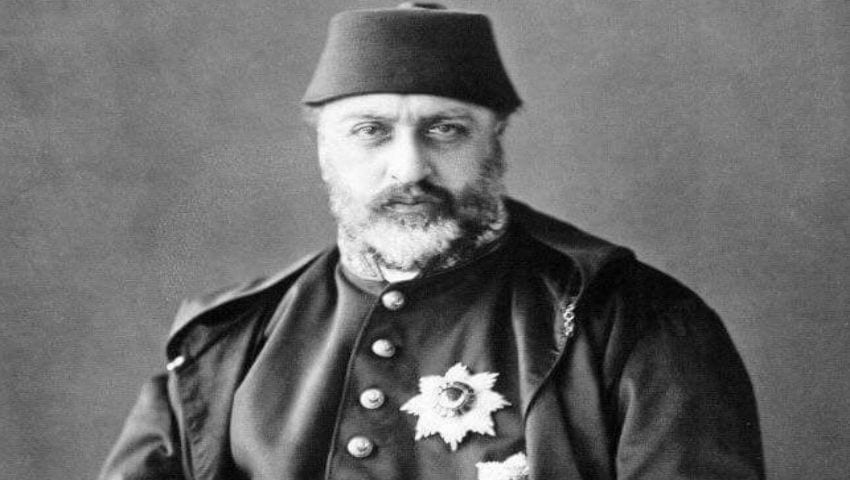
Sultan Abdülaziz stands out as one of the most fascinating figures of the late Ottoman era. He wasn’t just a ruler confined to the palace; he shattered centuries of isolationist tradition to become the first Sultan to conduct diplomatic state visits to Europe and Egypt.
However, his story reads like a tragic thriller. Just days after being deposed in a coup, he was found dead in the Feriye Palace. His mysterious death sparked controversies that haunted the reign of his successor, Sultan Abdülhamid II, and remains a subject of heated historical debate to this day: was it a desperate suicide or a cold blooded political assassination?

Lineage and Family of Sultan Abdülaziz
Sultan Abdülaziz was born into the prestigious Ottoman dynasty, tracing his roots back to Osman Gazi and his father Ertuğrul Gazi. His lineage connects him to the heavyweights of imperial history:
Sultan Abdülaziz was the son of Mahmud II, grandson of Abdülhamid I, and traced his line through Ahmed III, Mehmed IV, Ibrahim I, and Ahmed I, all the way back to Suleiman the Magnificent and Mehmed the Conqueror.
The Sultan’s private life centered around his harem. According to historical records, Abdülaziz had five principal consorts (Kadın Efendiler) and several children:
- Dürrünev Kadın: Mother of Şehzade Yusuf İzzeddin and Saliha Sultan.
- Edadil Kadın: Mother of Şehzade Mahmud Celaleddin and Emine Sultan (who died young).
- Hayranidil Kadın: Mother of the future Caliph Abdülmecid II and Nazime Sultan.
- Neşerek (Nesrin) Kadın: Mother of Şehzade Mehmed Şevket and Emine Sultan.
- Gevheri Kadın: Mother of Esma Sultan.
Early Life
Born on February 8, 1830, in Istanbul to Sultan Mahmud II and Pertevniyal Sultan, Abdülaziz received an education that balanced strict tradition with modern curiosity.
Beyond his religious studieshe reportedly recited the Quran every morningthe Sultan was artistically gifted. He was a man of duality: he composed music in both Western and classical Ottoman styles and was a talented calligrapher, bridging the gap between East and West even in his hobbies.

The Reign of Sultan Abdülaziz (1861-1876)
Abdülaziz took the throne during a geopolitical storm. The Ottoman Empire was facing internal fires on multiple fronts, which the Sultan met with military resolve. The most critical conflicts included:
- The uprising in Montenegro
- Unrest in Serbia
- The Cretan Revolt
Internal Reforms and Modernization
Despite political turbulence, Abdülaziz pushed the Empire forward. His reforms targeted the legal system, education, and infrastructure, laying the groundwork for the modern Turkish state.
The Mecelle: A Milestone in Islamic Law
One of the most enduring legacies of this era was the codification of Islamic civil law into the Mecelle i Ahkam ı Adliye (Mecelle for short). Led by the brilliant scholar Ahmed Cevdet Pasha starting in 1869, this civil code was based on the Hanafi school of thought but structured like a modern European legal text.
The Mecelle regulated daily lifecontracts, rentals, and guarantees. It was so effective that it remained the basis for civil law in many successor states, including Syria, Jordan, and Iraq, long after the Empire fell. If you are navigating bureaucracy today, understanding these historical foundations can be surprisingly useful. For modern administrative hurdles, check out our guide on Turkish Address Formats to ensure your paperwork doesn’t get lost in the void.
Relations with Egypt and Tunisia
On the diplomatic front, Abdülaziz worked to stabilize relations with semi autonomous provinces. He granted the Egyptian governor, Ismail Pasha, the elevated title of “Khedive,” significantly expanding his powers. In return, the Empire secured higher tribute paymentscash that was desperately needed.
In Tunisia, the Sultan strengthened ties with the local Bey to counter growing French influence in North Africa. By confirming Tunisia’s autonomy, he attempted a strategic balancing act to keep the territory formally within the Ottoman sphere.

Economy and Education
Under Abdülaziz, the Industrial Revolution finally arrived in Istanbul. The railway network expanded, and the iconic Sirkeci Stationthe future terminus of the Orient Expressbegan to take shape. In 1863, the Empire also issued its first postage stamps bearing the Sultan’s Tughra.
In education, the founding of the Galatasaray High School (Mekteb i Sultani) in 1868 was a revolutionary step. This institution offered a Western style curriculum in French and Turkish and was open to students of all religions, creating a new elite class.
For those looking to understand the modern business landscape that evolved from these early reforms, our Investor’s Practical Guide to Starting a Company in Turkey offers a look at the current regulatory environment.
The Ottoman Fleet: The World’s Third Largest
Sultan Abdülaziz had an obsession with the sea. He invested heavily in modernizing the navy, buying ironclads from Europe and expanding domestic shipyards. His efforts succeeded in making the Ottoman Navy the third largest in the worldtrailing only Great Britain and France.
This maritime heritage has transformed Turkey into a modern shipbuilding powerhouse. Today, Turkey is a global leader in yacht construction. You can read more about this legacy in our report on Top 15 Turkish Shipyards.
Financial Crisis and Bankruptcy
The dark side of this modernizationand the massive military spendingwas catastrophic debt. To finance wars, the fleet, and opulent palaces, the Empire took out loan after loan from European banks. The terms were predatory; the state often received only about 57% of the face value of bonds after fees and interest were deducted.
By 1875, the situation was unsustainable. Over half of the state’s revenue was consumed by debt servicing alone. The state was forced to declare de facto bankruptcy (the Ramadan Decree) and halve interest payments, destroying European confidence in Ottoman markets forever.

The Historic Foreign Tours
The Visit to Egypt (1863)
Sultan Abdülaziz was the first Ottoman ruler to leave his capital for peaceful purposes. Invited by Ismail Pasha, he traveled to Egypt in 1863 aboard the royal yacht Sultaniye.
In Egypt, he was reportedly impressed by the rapid modernization, particularly the railway network, which at that time was more advanced than Istanbul’s. He visited Alexandria and Cairo and toured historic sites like the Pyramids of Giza.

The European Tour (1867)
Even more significant was his tour of Europe in the summer of 1867. Invited by Emperor Napoleon III to the Paris World Exhibition, he was accompanied by his nephews, Crown Prince Murad (later Murad V) and Abdülhamid (later Abdülhamid II).
The itinerary was a diplomatic victory lap:
- France: Arrived in Toulon and was received in Paris by Napoleon III.
- Great Britain: Traveled to London, where he was welcomed by Queen Victoria at Buckingham Palace and reviewed a Royal Navy fleet parade.
- Belgium & Prussia: Met King Leopold II in Brussels and King Wilhelm I in Koblenz.
- Austria Hungary: Received by Emperor Franz Joseph in Vienna.
This trip was designed to improve the Empire’s image and secure new loans, but it also highlighted the Sultan’s openness to Western technology and culturea stance that alienated traditionalists back home.


The Fall of the Sultan
By 1876, discontent in the Empire had reached a boiling point. Religious students (Softas) were demonstrating in Istanbul, demanding the dismissal of the Grand Vizier. Behind the scenes, leading reformists, including Midhat Pasha and Minister of War Hüseyin Avni Pasha, were plotting a coup.
On the night of May 30, 1876, the Dolmabahçe Palace was surrounded. Sultan Abdülaziz was declared deposed and replaced by his nephew, Murad V. Abdülaziz was initially moved to Topkapı Palace and later, at his own request, transferred to Feriye Palace.

The Mysterious Death: Suicide or Murder?
On June 4, 1876, just days after losing his throne, the ex Sultan was found dead in his room. His wrists were slashed, and he had bled to death.
A hastily convened commission under the supervision of his enemy, Hüseyin Avni Pasha, officially ruled the death a suicide. The official narrative claimed that out of despair, the Sultan had asked for scissors to trim his beard and then turned them on himself.
This version was immediately viewed with suspicion. Many believed it was a political assassination orchestrated by the coup leaders who feared a counter revolution. Years later, under the rule of Sultan Abdülhamid II, the case was reopened in the infamous “Yıldız Trial” (1881). The court convicted Midhat Pasha and other conspirators of murdering Abdülaziz. However, historians still debate whether this verdict was the truth or simply a convenient way for Abdülhamid II to eliminate his own political rivals.