Hierapolis Ancient City: The Ultimate Guide to Pamukkale’s Historic Gem
Table of Contents
Imagine a city built for a single purpose: healing. An ancient wellness resort that drew kings, emperors, and pilgrims from every corner of the known world. This is Hierapolis. Perched directly above the blinding white limestone terraces of Pamukkale, this UNESCO World Heritage site offers one of the most striking combinations of natural wonder and Roman architecture in Turkey.
Here is the reality: most tourists stop here just to snap a quick Instagram photo on the white travertines. They miss the real treasure sitting just a few hundred meters away. We are talking about the “Gate to Hell” where ancient priests defied death, and a thermal pool where you can still swim between submerged Roman columns today. In this guide, we are skipping the fluff to give you the history that matters and the practical, street smart tips you need for a visit in 2025.
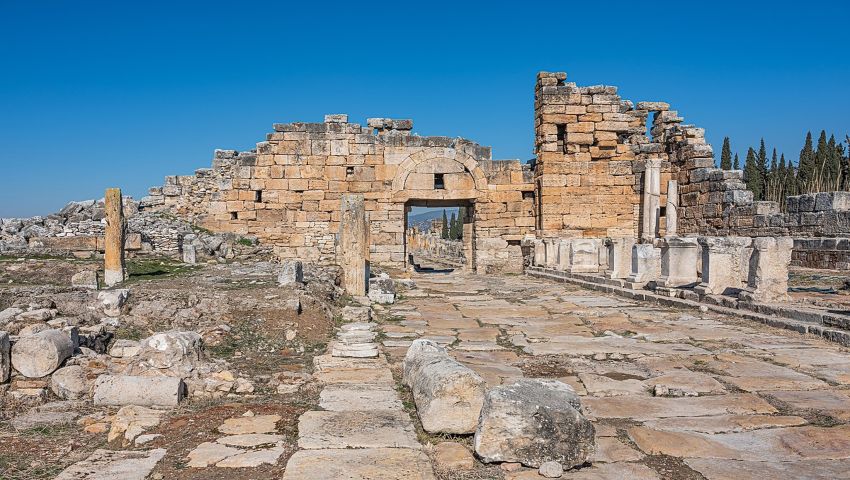
The History: More Than Just Old Stones
The name Hierapolis likely comes from Hiera, the wife of Telephus (the legendary founder of Pergamon), or simply from the Greek word hieros (holy). And “holy” fits perfectlyprimarily because of the thermal springs, which were believed to have miraculous healing powers even in antiquity.
The city was founded in the 2nd century BC by the kings of Pergamon. However, the Hierapolis we see today is almost entirely Roman. Why? Geology. This region sits on a volatile tectonic fault line. Massive earthquakesspecifically in 17 AD under Emperor Tiberius and again in 60 AD under Neroleveled the city. But like a phoenix, it rose from the rubble each time, rebuilt more lavishly than before, funded by its booming textile industry and what we would today call “medical tourism.”
A Center of Early Christianity
Hierapolis wasn’t just a place for physical healing; it was a spiritual battleground. The Apostle Philip, one of the twelve disciples of Jesus, spent his final years here and was martyred in 80 AD (believed to be by crucifixion). His tomb was only discovered in 2011 by Italian archaeologist Francesco D’Andriaa massive archaeological breakthrough that cemented Hierapolis as a key site for biblical history enthusiasts.
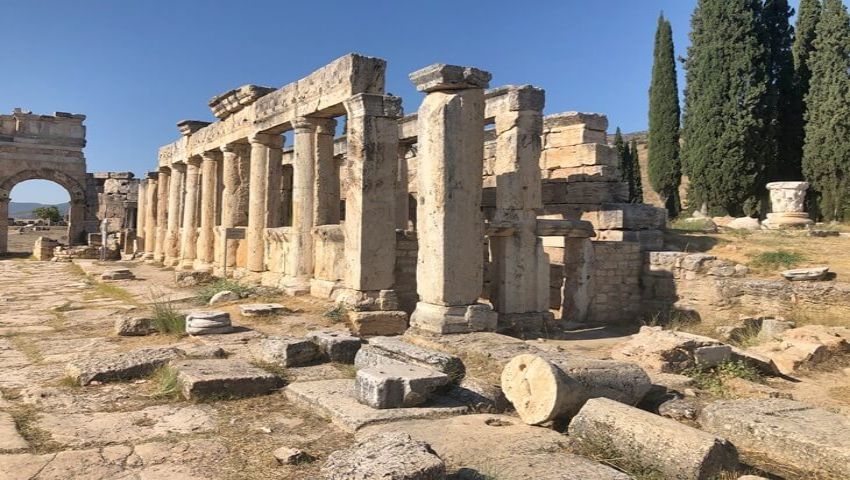
The Highlights: What to Focus On (And What to Skip)
The site is massive. If you are battling the heat or a tight schedule, ignore the smaller ruins and prioritize these three spots:
1. The Roman Theater
This isn’t just another pile of rocks. The theater at Hierapolis is one of the best preserved in the ancient world. Built under Emperor Hadrian in the 2nd century AD and renovated under Septimius Severus, it could hold up to 15,000 spectators. The ornate stage façade is still largely intact, offering a commanding view over the Denizli plains.
2. The Plutonium (The Gate to Hell)
For centuries, scholars thought this was a myth. Then, in 2013, it was confirmed: The Plutonium, a sanctuary to the underworld god Pluto. It was built directly over a fissure in the earth’s crust that vents deadly carbon dioxide. In ancient times, priests demonstrated their divine power by holding their breath and entering “hell,” while birds and bulls that followed them dropped dead instantly. Today, you can view the restored sanctuary from a safe distancea fascinating spot where mythology meets hard geology.
3. The Antique Pool (Cleopatra Pool)
Have you ever swum over genuine Roman artifacts? At the Antique Pool, you can. Following a devastating earthquake, the marble columns of the nearby Temple of Apollo collapsed into the thermal water and were left there. The water remains a constant 36°C (97°F) and fizzes slightly like champagne. Taking a dip here is a bucket list experience, though it comes with an extra price tag (see below).
Pro Tip: This area gets incredibly crowded. If you want a serene swim, be the first one through the gates in the morning.
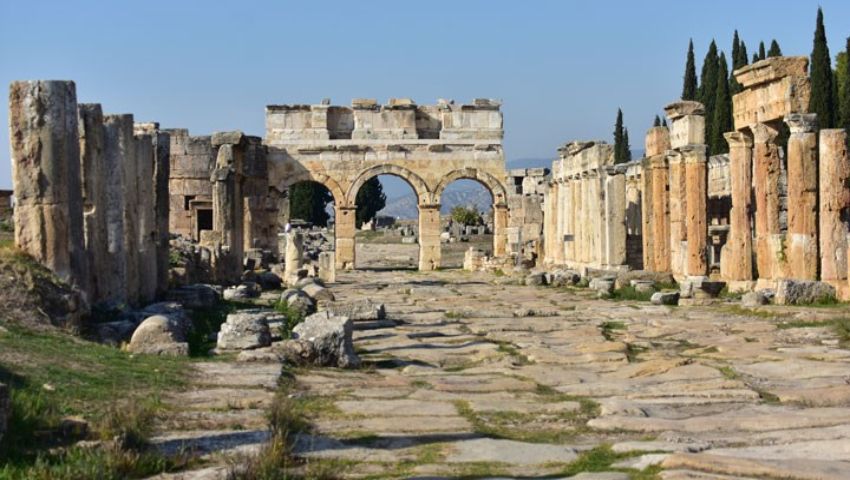
Entry Prices & Opening Hours (2025 Update)
Hierapolis and Pamukkale share a single entry ticket. Due to ongoing inflation in Turkey, admission fees for international visitors are now pegged to the Euro to maintain stability.
- Combo Ticket (Hierapolis & Pamukkale): €30 (payable in Turkish Lira at the daily exchange rate, approx. 1100+ TL).
- Antique Cleopatra Pool: Separate entry fee, fluctuates between 200-400 TL (approx. €6–€10).
- Archaeological Museum: Usually included in the main ticket (subject to seasonal changes).
Traveler’s Hack: If you plan to visit Ephesus, Troy, or explore the valleys of Cappadocia on this trip, do not buy single tickets. Get the Museum Pass Türkiye (€165 for 15 days). It covers almost all state run museums and lets you skip the ticket lines. Note: The cheaper “Müzekart” (60 TL) is strictly for Turkish citizens and residents.
Opening Hours:
Summer: 06:30-20:00
Winter: 08:00-18:00
Recommendation: Arrive at 06:30. You will have the site to yourself before the tour buses arrive from the coast at 10:00.
How to Get There
Hierapolis is located in the Pamukkale district, about 18 km north of the provincial capital, Denizli.
By Dolmuş (Minibus):
This is the most authentic and cheapest way. Minibuses leave from the Denizli Bus Terminal (Otogar), lower level, platform 76. The ride takes 20-30 minutes and costs around 50 TL per person.
By Taxi:
A taxi from Denizli to Pamukkale will cost between 400 and 600 TL, depending on traffic and your negotiation skills. Always agree on a price before getting in or insist on the meter.
By Rental Car:
The roads are excellent. Ample parking is available at both the North and South entrances (Parking fee approx. 50-100 TL). A car also gives you the flexibility to explore the surrounding areaperhaps even stopping for paragliding over the ruins, which is a popular activity here.
Best Time to Visit & Weather
Spring (April, May) and Autumn (September, October) are the sweet spots. Temperatures are manageable (20-25°C), and the lighting is perfect for photography. Summer is brutal; temperatures can hit 40°C. Since there is very little shade among the ruins, a hat and high SPF sunscreen are non negotiable.
Also, keep an eye on the calendar. During major holidays, domestic tourism spikes, making the pools feel more like a crowded subway car than a spa.
Hierapolis Map
The ancient city is sprawling. Use this overview to orient yourself so you don’t end up walking kilometers in the wrong direction:
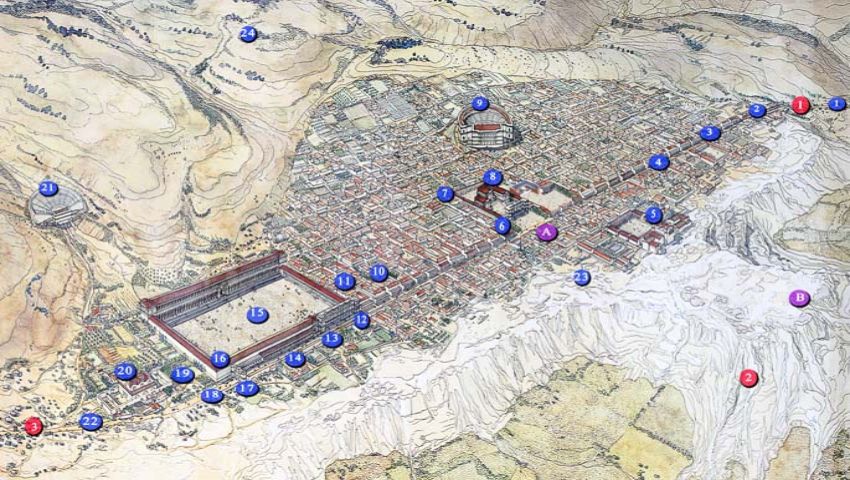
- South Roman Gate
- Frontinus Gate (South)
- Gymnasium
- Church with Pillars
- Great Baths (Museum)
- Nymphaeum
- Temple of Apollo & Plutonium
- Antique Pool (Cleopatra Pool)
- Roman Theater
- Cathedral
- Northern Necropolis (City of the Dead)
- Martyrium of St. Philip
Staying in Pamukkale
Many visitors make the mistake of treating Pamukkale as a day trip. However, staying overnight allows you to watch the sunset over the travertines after the crowds have left. The village of Pamukkale sits directly at the foot of the white mountain and has plenty of options.
Hotel Tips
Hotel Bellamaritimo: A solid mid range option. Good breakfast, family atmosphere, and reliable Wi Fi.
Venus Suite Hotel: A step up in luxury. Recently renovated and offers a free shuttle to the ancient city entrance, saving you a walk in the heat.
If you have some time left in the evening, browse the local shops. It is an experience in itself, provided you have mastered the art of Turkish haggling.