Ottoman Economy Under Abdülhamid II: Debt, Rail and Banks
How the Ottoman state paid its way, 1876 to 1909: the 1881 debt deal, a creditors' tax office, a tobacco monopoly and railways built on guarantees.
Table of Contents
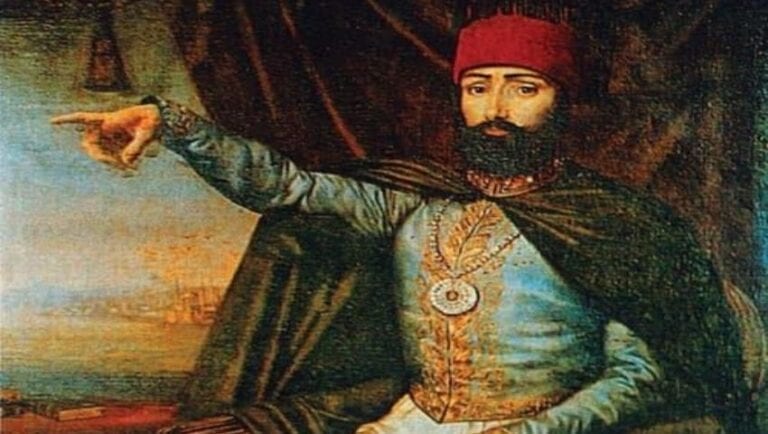
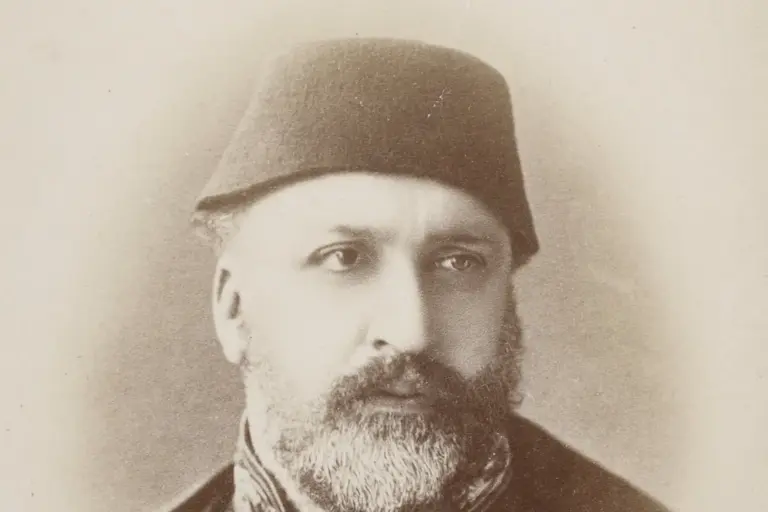
Abdülhamid II (often written Abdul Hamid II) took the Ottoman throne in 1876, when the yearly payments due on its foreign loans were more than half of its normal revenue. What followed: a debt deal in 1881, a tax office run by the lenders, a company that held the whole tobacco trade, railways paid for by promised sums, and the banks.
In short · checked 25.10.2026
The state paid its lenders partly with its own taxes.
- The debt was cut by agreement. A decree of December 1881, the Muharrem Decree, cut what was owed on the old bonds by up to 54 % and lowered the interest.
- The lenders ran part of the tax system. A council of seven lenders’ representatives collected revenues such as salt, tobacco, silk, stamps and fishing, and paid the bondholders first.
- One company held all of tobacco. From 1883 it had the growing, processing and selling. Clashes between its guards and growers were deadly.
- Railways were paid for by promises. The state promised a company a yearly sum for each kilometre of track and set aside the tithes (the share of the harvest farmers paid the state) of the provinces the line crossed.
- Two kinds of bank. The Ottoman Bank, with British and French money, acted as the state’s treasurer. Ziraat Bank, named in 1888, supported farmers.
- The old debt took a century to close. It began in 1854; the last day to claim payment was 25 May 1954.
The Cut · 20.12.1881
Twelve bond issues, before and after the decree
A bond is a paper IOU: the state sold it to lenders and paid them interest. By 1881 the state could not pay what its bonds promised. The Muharrem Decree of 20 December 1881 cut what was owed and the interest on it. Each strip is one bond issue, as long as the amount in circulation on that day; the hatched part is what the decree cut off. The lever switches between before and after the cut. Tap a strip to read its slip.
Source: TDV İslâm Ansiklopedisi (TDV), the encyclopaedia of the Turkish Religious Foundation, on the decree. Amounts in Ottoman lira, the gold lira of the time; checked 25.10.2026.
- A1858 loan
- A1862 loan
- B1860 loan
- B1863/64 loan
- B1872 loanaccepted amount is higher
- C1865 loan
- C1869 loan
- C1873 loan
- C1865/73/74 general debt
- DRumeli railway bonds
- Ramazan bondsaccepted amount left empty
- 1881 privileged bondsnot cut
- 1854 loan, turned into the 1877 loanleft outside the decree
- 1855 loanleft outside the decree
- 1871 loan, turned into the 1877 loanleft outside the decree
- 1877 defence loanleft outside the decree
Bonds under the decree
- In circulation
- 219,938,559
- Accepted
- 125,250,943
After the exchange period the total fell to 124,305,049, because 945,894 lira of old bonds were never exchanged.
With the four loans left outside
- Owed before
- 237,138,819
- Owed after
- 141,505,309
The four loans stayed outside the decree and kept their amounts.
The decree sorted the old bonds into four series, A to D. Up to 54 % came off the debt, and interest rates fell from about 9 % to as low as 1 %.
Show the bond issues in a table
| Issue | Series | In circulation on 20.12.1881 | Accepted by the decree | Note |
|---|---|---|---|---|
| 1858 loan | A | 4,053,225 | 3,789,848 | |
| 1862 loan | A | 5,407,490 | 4,112,411 | |
| 1860 loan | B | 1,808,730 | 1,148,621 | |
| 1863/64 loan | B | 5,618,250 | 4,371,050 | |
| 1872 loan | B | 5,302,220 | 5,745,482 | The accepted amount is higher than the amount in circulation. |
| 1865 loan | C | 4,437,950 | 3,212,784 | |
| 1869 loan | C | 22,715,000 | 14,174,160 | |
| 1873 loan | C | 29,916,414 | 16,528,818 | |
| 1865/73/74 general debt | C | 95,917,096 | 48,365,235 | |
| Rumeli railway bonds | D | 34,652,640 | 15,632,548 | |
| Ramazan bonds | 1,939,558 | TDV’s table leaves the accepted amount empty, so the strip is drawn cut away. | ||
| 1881 privileged bonds | 8,169,986 | 8,169,986 | The same amount in both columns: this strip is not cut. | |
| 1854 loan, turned into the 1877 loan | 1,925,660 | 1,925,660 | Left outside the decree; the same amount in both columns. | |
| 1855 loan | 4,196,720 | 4,196,720 | Left outside the decree; the same amount in both columns. | |
| 1871 loan, turned into the 1877 loan | 5,783,140 | 5,783,140 | Left outside the decree; the same amount in both columns. | |
| 1877 defence loan | 5,294,740 | 5,294,740 | Left outside the decree; the same amount in both columns. |
Before 1876: how the state came to owe so much
Two words to know first
- What
- A bond (tahvil) is a printed paper in which the state promises to repay a sum, with yearly interest, to whoever holds it.
- Why
- The state needed cash faster than taxes brought it in: first for the Crimean War, later to cover deficits.
- Who
- Big banks issued the bonds and small savers bought them.
- How much
- Fifteen loans from 1854 to 1874 promised 238,773,272 lira. The state received 127,120,220, because the bonds sold at low prices and commissions were paid.
- When
- The first loan agreement is dated 24 August 1854, the last of the fifteen came in 1874.
- How
- Bankers sold the bonds abroad. The state paid interest every year and named revenues as security, a pledge for repayment: for the first two loans, the tribute of Egypt and the customs of Syria and İzmir.
- What
- A default is a state stopping payment on what it owes. In 1875 the Ottoman state paid half of its yearly instalment in cash and half in new bonds, then stopped altogether.
- Why
- The 1875 budget ran more than 5 million lira short, and 14 million lira of loan instalments fell due the same year.
- Who
- The state stopped; bondholders in Europe took the loss. They protested in the streets, and European opinion turned against the state.
- How much
- Half of the 14 million lira due was paid in five-year bonds at 5 % interest instead of cash.
- When
- A decree of 6 October 1875 announced it, and payments stopped in April 1876, during the war with Serbia.
- How
- The new bonds paid 5 % for five years and were secured on all customs revenues, on salt, tobacco and the sheep tax, and on the tribute of Egypt.
Most of the borrowed money did not build railways. Of the foreign loans of those years, 7.8 % went into the Rumeli railway. The rest went mostly to cover budget deficits, pay instalments on earlier loans and withdraw worn paper and copper money.
Foreign loans, 1854 to 1874
Fifteen loans: 238,773,272 lira promised, 127,120,220 received.
Each loan was a set of bonds sold in Europe, and each time the state named revenues as security.
Only the bonds of 1855 sold above their face value (the sum printed on the bond), at 102.6 %.
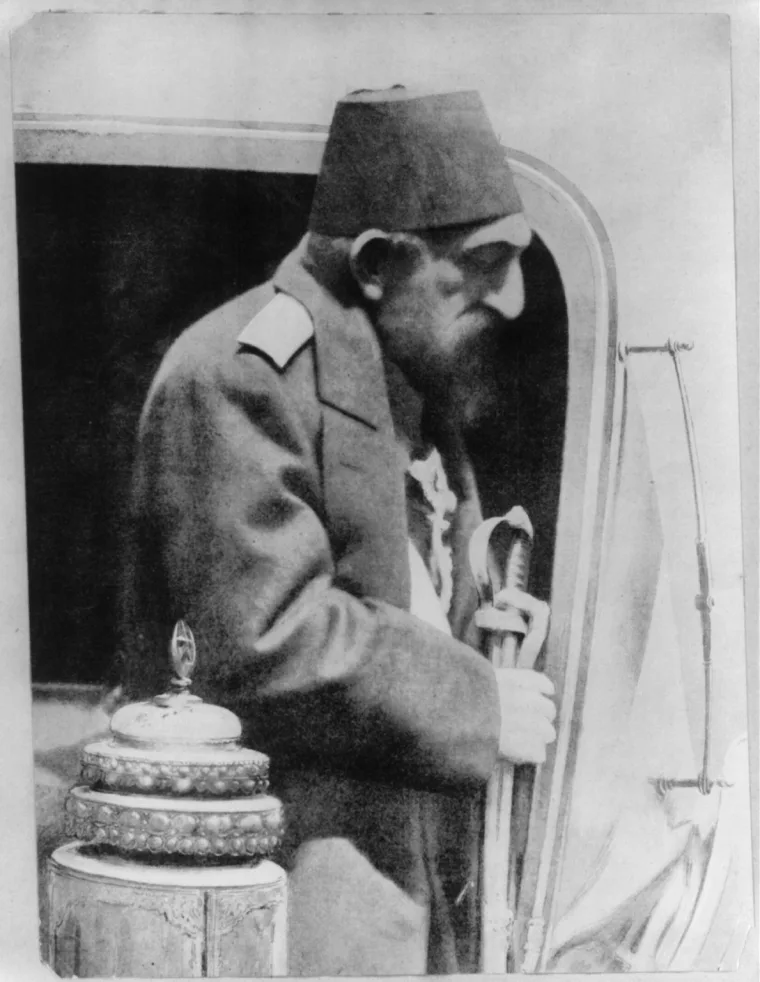
The sultan the state got in 1876
- 31 August 1876. He took the throne after Abdülaziz and Murad V had been removed.
- A state in trouble. Uprisings in Bosnia-Herzegovina and Bulgaria could not be put down for lack of money, and wars in Serbia and Montenegro had been added.
- First priority. He put clearing the inherited foreign debts first.
His reign, and the fleet he paid for beyond what the budget could carry.
The short reign of 1876, after the October 1875 decree that paid half of what was due in bonds.
The Muharrem Decree: what the lenders accepted
Two words to know first
- What
- A written order of the government, issued on 20 December 1881 after talks with the lenders. The government called it a nizamnâme (regulation); financial circles knew it as the Muharrem Decree, after the month of its date.
- Why
- The lenders wanted their payment guaranteed. The government wanted a cut in the debt and no foreign intervention: it won a cut of up to 54 % and kept European states from intervening.
- Who
- The government and a group of financiers who acted for the lenders and represented no state. Server Pasha, head of the Council of State, led the government side.
- How much
- Up to 54 % off the debt, and interest rates cut from about 9 % to as low as 1 %.
- When
- Talks began on 13 September 1881. The decree is dated 28 Muharrem 1299, which is 20 December 1881.
- How
- The agreed terms were announced as one government order, which set an accepted amount for each bond issue.
- What
- A conversion is the exchange of old bonds for new ones on lower terms: a smaller amount owed, a lower interest rate, or both.
- Why
- The state could not pay the old terms. In exchange for the cut, the lenders got their payment guaranteed.
- Who
- Each holder of an old bond got a new bond. The loans of 1854, 1855, 1871 and 1877, secured on the tribute of Egypt, stayed outside the decree and kept their amounts.
- How much
- Bonds counted at 219,938,559 lira in circulation became 125,250,943 lira under the decree. With the four loans left outside, 237,138,819 became 141,505,309.
- When
- Old bonds could be exchanged during a set period after 20 December 1881. 945,894 lira of them were never exchanged.
- How
- The debts were merged into four series, A to D, and holders swapped their old bonds for new ones.
Abdülhamid told the lenders that the debts were private, not debts between states, and asked them to send representatives. They wanted an international commission to run the state’s finances. The government refused.
- 13.07.1878The Treaty of Berlin passes part of the debts to states that left the empire or gained land, and the powers recommend an international commission to see the debts paid.
- 01.10.1878The government sets up a financial commission of its own under Grand Vizier Hayreddin Pasha, to head off a foreign one. The managers of the Ottoman Bank and of Crédit Lyonnais sit on it.
- 22.11.1879The debts owed inside the empire, up to 9 million lira, are cut to 8,725,000 lira and set to be paid in ten equal instalments. The lenders’ first office starts running assigned revenues.
- 23.10.1880A payment plan goes to the lenders and the powers: more revenues to be assigned, to be run by a bank the lenders choose.
- 13.09.1881Talks begin under Server Pasha. The lenders ask for an international commission, the government refuses, and a council of the lenders’ representatives is agreed instead.
- 20.12.1881The decree is issued.
The Public Debt Administration: a tax office run by the lenders
Two words to know first
- What
- A body run by the lenders that collected certain state revenues and paid the bondholders first. Its name, Düyûn-ı Umûmiyye, means «the general debts».
- Why
- To see the debts paid in order. The decree guaranteed the lenders’ payment and kept European states from intervening.
- Who
- A council of seven lenders’ representatives, a general director chosen by the council, and 5,537 staff at the start of the First World War, 182 of them foreign nationals.
- How much
- Each year the revenues paid 5 % of the foreign debts: 1 % of the principal and 4 % interest. On the debt that remained, that was 5,850,000 lira. Anything above it went to the treasury. From 1882 to 1914 the revenues never reached that sum.
- When
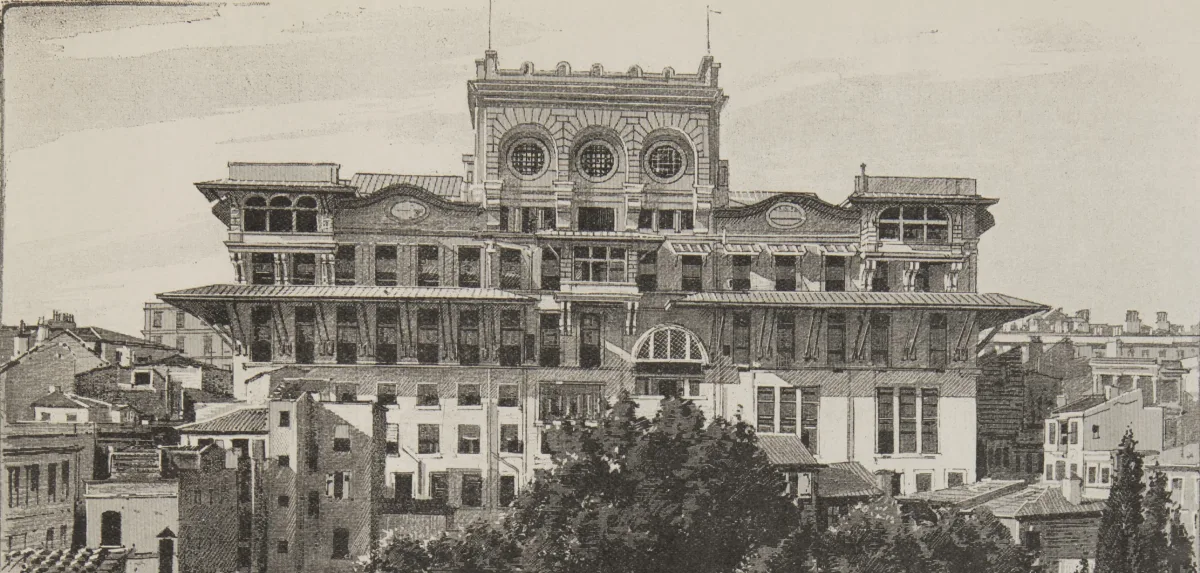
- From the decree of 20 December 1881, in Sirkeci at first and from 1897 in a large building of its own in Cağaloğlu.
- How
- It collected the revenues handed over to it, paid the yearly sum and sent any surplus to the treasury. The council drew up a budget two months before each fiscal year (the state’s budget year) and gave it to the Ministry of Finance.
The seven seats of the council. The numbers run left to right: 1 British, 2 French, 3 German, 4 Austrian, 5 Italian, 6 Dutch and 7 Ottoman creditors.
- What
- The Düyûn-ı Umûmiyye Meclisi, the council of the Public Debt Administration: seven members, one for each group of creditors.
- Why
- To protect the lenders’ interest and see the debts paid to a plan.
- Who
- One member each for the British, French, German, Austrian, Italian, Dutch and Ottoman creditors. The government sent a commissioner, paid by the council, with an advisory vote at meetings, and many inspectors, paid by the government.
- How much
- Pay was £2,000 for members from abroad and £1,200 for those living in Istanbul.
- When
- Members were elected for five years and counted as civil servants in Ottoman service. The chair passed between the French and British members every five years.
- How
- Disputes between the council and the government went to an arbitration board of four, chosen by the two sides.
The lenders’ first office
The Rüsûm-ı Sitte Administration, the name of a bundle of state revenues, ran among others stamps, sea-product duties in and around Istanbul, the silk tithe of Istanbul, Edirne, Samsun and Bursa, and tobacco. It had 5,714 staff.
Revenues the lenders collected
The revenues the first office had run, plus Bulgaria’s tribute, the surplus of Cyprus, the tax of Eastern Rumelia and the customs revenues. The Administration could also run the tobacco and salt monopolies, trades in which only one seller is allowed.
Show the numbers of the chart
| Fiscal year | Tobacco tithe and monopoly | Salt | Stamps | Silk tithe | Fishing |
|---|---|---|---|---|---|
| 1883–84 | 870,694 | 658,554 | 147,687 | 21,972 | 36,570 |
| 1886–87 | 842,114 | 682,227 | 162,672 | 31,909 | 37,104 |
| 1887–88 | 842,070 | 655,113 | 156,274 | 34,717 | 40,625 |
| 1889–90 | 833,455 | 722,059 | 186,053 | 39,281 | 42,725 |
| 1890–91 | 818,382 | 699,887 | 205,979 | 51,251 | 47,307 |
| 1891–92 | 877,652 | 730,354 | 209,373 | 45,895 | 48,445 |
| 1892–93 | 888,559 | 787,645 | 212,868 | 56,409 | 44,405 |
| 1893–94 | 892,067 | 814,235 | 224,208 | 66,739 | 40,037 |
| 1895–96 | 894,292 | 773,865 | 224,908 | 46,773 | 46,356 |
| 1896–97 | 861,793 | 828,506 | 220,145 | 59,163 | 47,832 |
| 1898–99 | 814,003 | 870,759 | 233,406 | 65,505 | 52,309 |
| 1899–1900 | 792,857 | 823,826 | 235,168 | 90,719 | 47,543 |
| 1900–1901 | 834,681 | 949,169 | 225,926 | 69,846 | 50,504 |
| 1902–1903 | 970,185 | 935,763 | 220,234 | 76,094 | 45,734 |
| 1903–1904 | 1,015,962 | 937,962 | 233,043 | 106,117 | 54,960 |
| 1905–1906 | 955,790 | 1,037,586 | 439,264 | 117,495 | 63,924 |
| 1906–1907 | 1,022,553 | 1,075,880 | 353,631 | 110,132 | 54,952 |
| 1907–1908 | 1,059,422 | 1,123,886 | 366,254 | 131,217 | 69,548 |
| 1908–1909 | 1,040,517 | 1,063,566 | 377,681 | 110,995 | 71,287 |
| 1911–12 | 824,752 | 1,271,703 | 506,164 | 90,661 | 67,653 |
| 1913–14 | 884,600 | 1,103,023 | 419,241 | 82,497 | 77,426 |
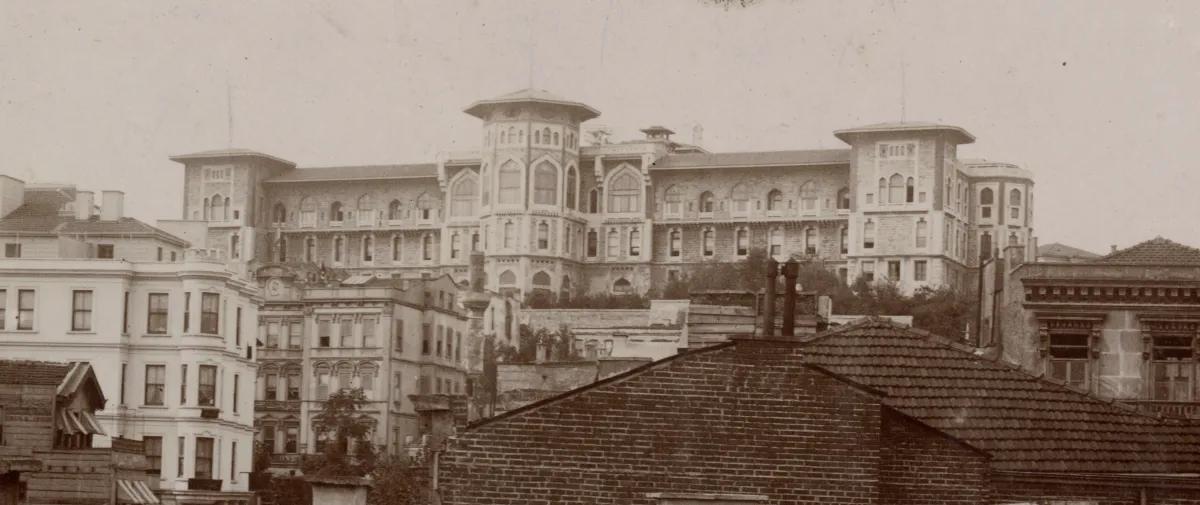
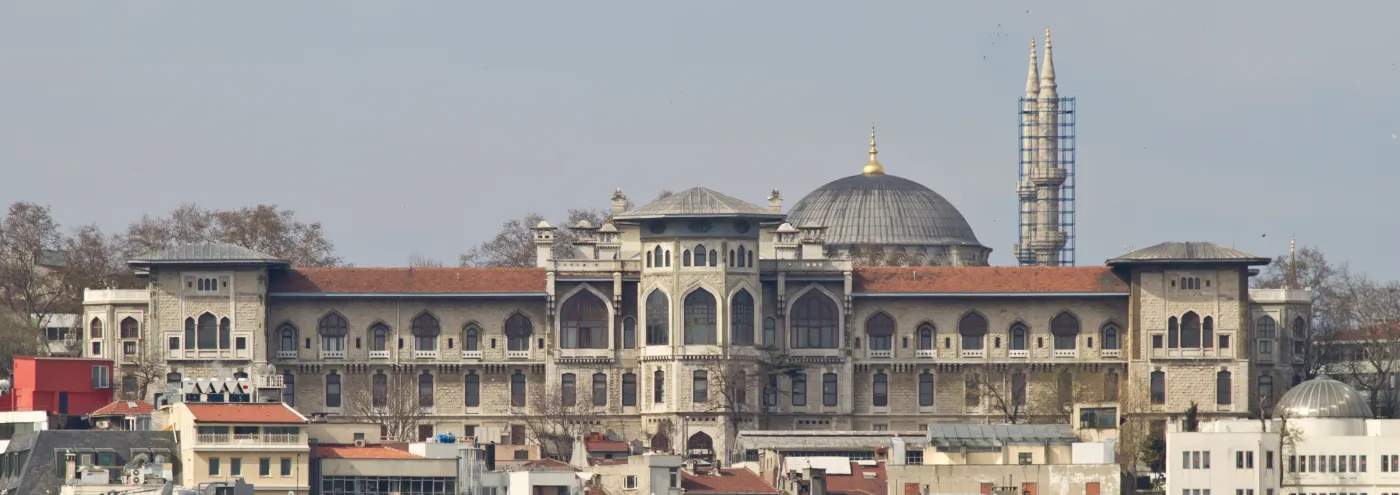
The building
- First home. In Sirkeci, in a building the Galata bankers arranged for the lenders’ first office.
- 1897. It moved into a large building of its own in Cağaloğlu, completed that year. The architect was Alexandre Vallaury, who also designed the Ottoman Bank on Voyvoda Street.
- Today the building is İstanbul Erkek Lisesi, the Istanbul Boys’ High School.
- Staff. In Istanbul there were 508 staff members and 42 inspectors at the start of the First World War.
The borrowing went on after 1881. The state signed 18 more loan agreements: 12 from 1886 to 1908 and 6 from 1908 to 1914. Most of the money went into railways, ports and irrigation canals, and payments ran regularly until the First World War.
A verdict on the Administration
- The cost. TDV’s verdict: the debts hurt the empire’s development and weighed on the new Republic, and the Administration became «practically a state within a state».
- The use. It was also useful in running state resources efficiently and in paying the debts in order.
- The change. Before it, most borrowed money went to deficits and old instalments; afterwards mostly into railways, ports and canals.
Tithe and tobacco: the Régie
Two words to know first
- What
- The tithe (öşür, from the Arabic word for «one tenth») is a share of a farmer’s harvest paid to the state.
- Why
- Taxes on farming were the base of the state’s income, and the tithe was among them.
- Who
- Farmers paid it. Since the 17th century the right to collect it was auctioned to tax farmers (iltizam). The Public Debt Administration collected the tithes of some provinces for the lenders.
- How much
- In 1904–05 the rate was an eighth of the crop. For tobacco, after the Tanzimat, the reform period of the mid-19th century, it was 10 % of the market price. The tithe was 33.7 % of budget revenue in 1876–77 and 19.9 % in 1906–07.
- When
- Paid at harvest, every year, until it was abolished in 1925.
- How
- In kind, as a share of the crop, or in cash. Each crop had its own tithe: tobacco, wheat, silk.
- What
- A monopoly is a trade in which only one seller is allowed. The Régie (from the French régie, «administration») was the company that held the tobacco monopoly: Osmanlı Devleti Tütünleri Müşterekülmenfaa Reji Şirketi.
- Why
- The decree let the Administration run the tobacco monopoly. It handed the tobacco tithe to the company in return for a yearly advance.
- Who
- A company founded on 27 May 1883, with 1,112 guards (kolcu) and staff across the country.
- How much
- 750,000 lira a year, paid to the Administration in advance, in quarterly instalments, even if the company made a loss.
- When
- A 30-year concession (a permit to run the trade) from 1883, extended in 1913 to 1928. The company went on until the Lausanne Treaty of 1923.
- How
- All tobacco growing, processing and selling went to it. Its guards policed the trade, and it tried to buy from growers at the lowest price.
The company tried to buy tobacco at the lowest price. Growers wanted to sell by illicit routes to foreign buyers who paid three or four times as much. TDV puts the deaths in clashes between the company’s guards and tobacco growers from 1883 to 1902 at more than 20,000.
What the sultan could do
- He asked. Abdülhamid asked for the company’s pressure on the people to end.
- The government could not end it. It tried several ways to cancel the concession and did not succeed.
- TDV’s judgement. The company went on exploiting Turkish tobacco growers until the Lausanne Treaty of 1923.
Railways: paid for by promises
Three words to know first
- What
- A concession (imtiyaz) is a permit: the state lets a company build and run something, here a railway, for a set time on the terms of a contract.
- Why
- Farm output fell, tithe collection faltered and investment stopped. The concession system brought new investment, but it also brought large bribes and corruption, in TDV’s view.
- Who
- Exploitation rights went to British, French and German companies and banks. İzmir–Aydın was British. The Anatolian concession of 1888 went to Alfred von Kaulla, manager of the Württembergische Vereinsbank, a German bank.
- How much
- The price was a promise, not cash: a yearly sum for each kilometre built (see the next tab) and, for the Baghdad line, free use of the state’s forests, mines and quarries along it.
- When
- Anatolian railway: contract of 4 October 1888, company of 4 March 1889. Baghdad railway: agreements from 23 December 1899 to 21 March 1903, company of 13 April 1903.
- How
- The company built and ran the line. For the Baghdad line the government issued Ottoman bonds of 275,000 francs for every kilometre built, and the company’s real estate stood as security.
- What
- A kilometre guarantee is a yearly payment the state promised a railway company for each kilometre of track.
- Why
- The state could not pay to extend the Haydarpaşa–İzmit line, which stood still from 1873 until 1888, and foreign capital was needed. About two thirds of the foreign capital invested in the empire went to railway companies.
- Who
- The state promised and the railway company received. The farmers along the line paid the tithes that stood as the guarantee.
- How much
- 15,000 francs a year for each kilometre, in the Anatolian contract of 4 October 1888, on a line extended from Haydarpaşa–İzmit (92 km) towards Ankara.
- When
- Paid every year. For the Baghdad line, the pledged tithes were those of Konya, Aleppo and Urfa.
- How
- The guarantee was the tithe income of the provinces the line crossed. The Public Debt Administration collected these tithes in the lenders’ name.
- What
- A buy-back is the state’s right, written into the concession, to buy the company out.
- Why
- So that a line the company built and ran could return to the state.
- Who
- The state buys and the company sells. The Baghdad company had mostly German capital, with 30 % French.
- How much
- The Rumeli railway company was bought out and nationalised under a contract of 25 December 1936 for 6 million lira.
- When
- The Baghdad contract ran 99 years and gave the state the right to buy after the first 30. The Republic bought the company on 10 January 1928.
- How
- By agreement with the company: the state paid and took over the line and its running, as in 1928 and in 1936.
The state paid for railways with promises, not cash. A foreign company built and ran the line; the state promised a yearly sum for each kilometre and set aside the tithes of the provinces along the way.
- 1856 to 1866İzmir–Aydın: a British company takes the concession in 1856 and opens the line in 1866.
- 03.05.1873The 92 km Haydarpaşa–İzmit line opens.
- 12.08.1888The first Orient Express leaves Sirkeci for Vienna. The Rumeli company had passed to Austrian nationality in 1878; German capital took it over in 1889.
- 04.10.1888The Anatolian contract: the line is to go on to Ankara, with 15,000 francs a year for each kilometre. The company is founded on 04.03.1889.
- 1890 to 1896İzmit–Adapazarı (1890), Haydarpaşa–Eskişehir–Ankara (1892) and Eskişehir–Konya (1896) are finished: more than 1,000 kilometres of line in all.
- 1899 to 1903The Baghdad agreements. The company is founded on 13.04.1903, and its first line is the 250 km from Konya to Ereğli.
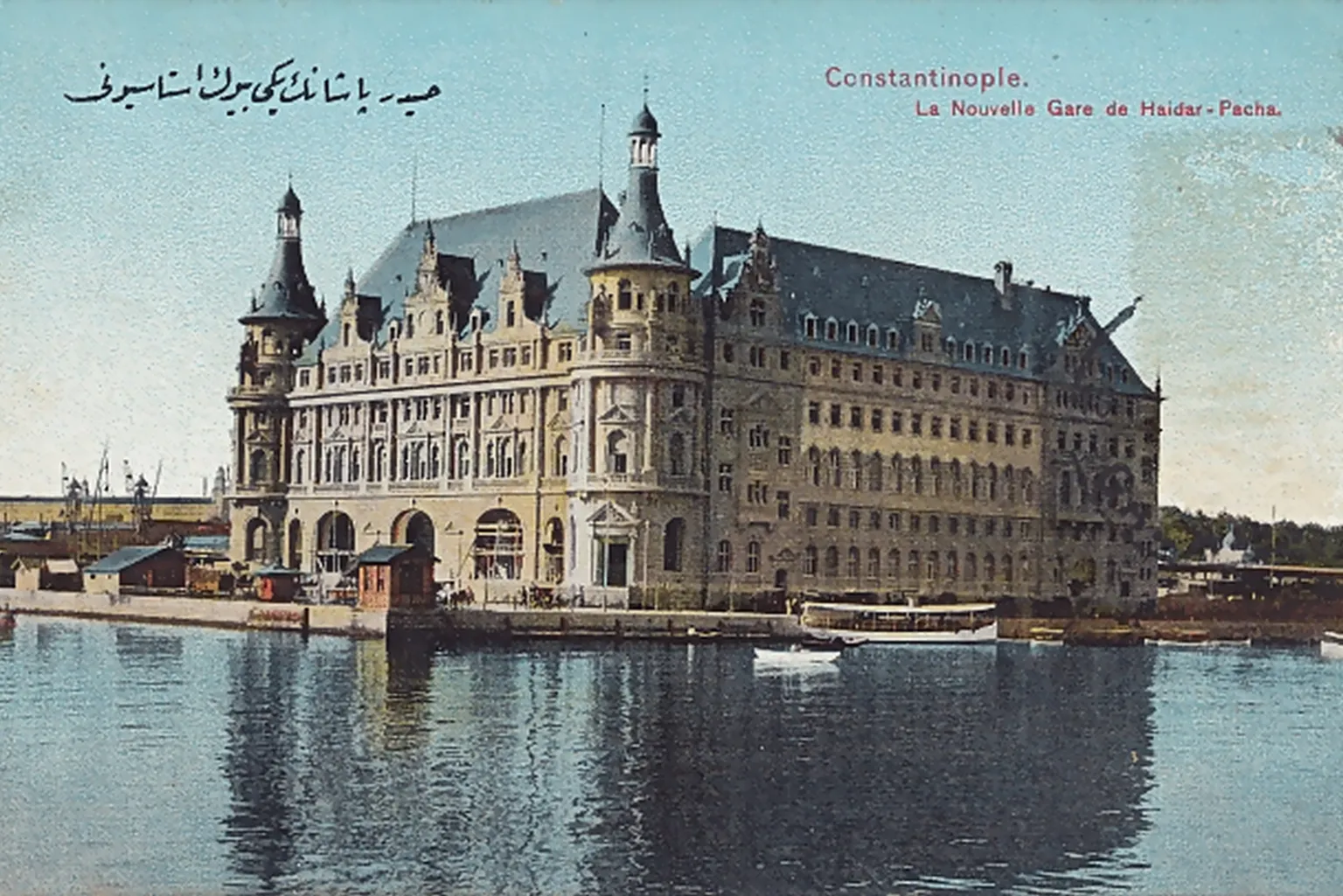
- 1906 to 1908Haydarpaşa station is built on land made firm with piles, to the plans of Otto Ritter and Helmuth Cuno.
- 1909After Bulgaria declares independence, the empire gives up the 309 km of Eastern Rumelia lines for compensation of 42 million francs.
- 1918 and 1928The line reaches Baghdad without a break in October 1918. The Republic buys the company and nationalises it on 10.01.1928.
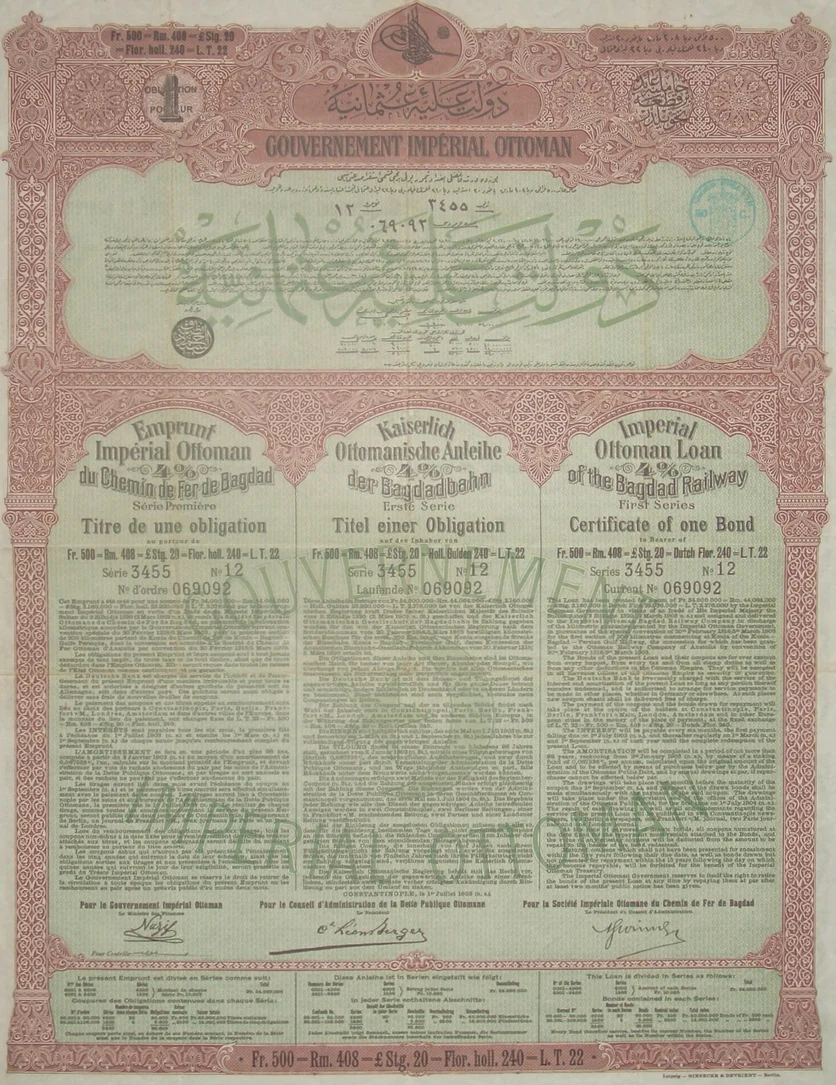
A railway bond
- What. One bond of the loan that paid for the Baghdad line.
- In five currencies. The value is printed in francs, marks, pounds sterling, Dutch florins and Ottoman liras, and the text runs in French, German and English.
- How the loan grew. For every kilometre built, the government issued bonds with a face value of 275,000 francs in all; each certificate is one bond.
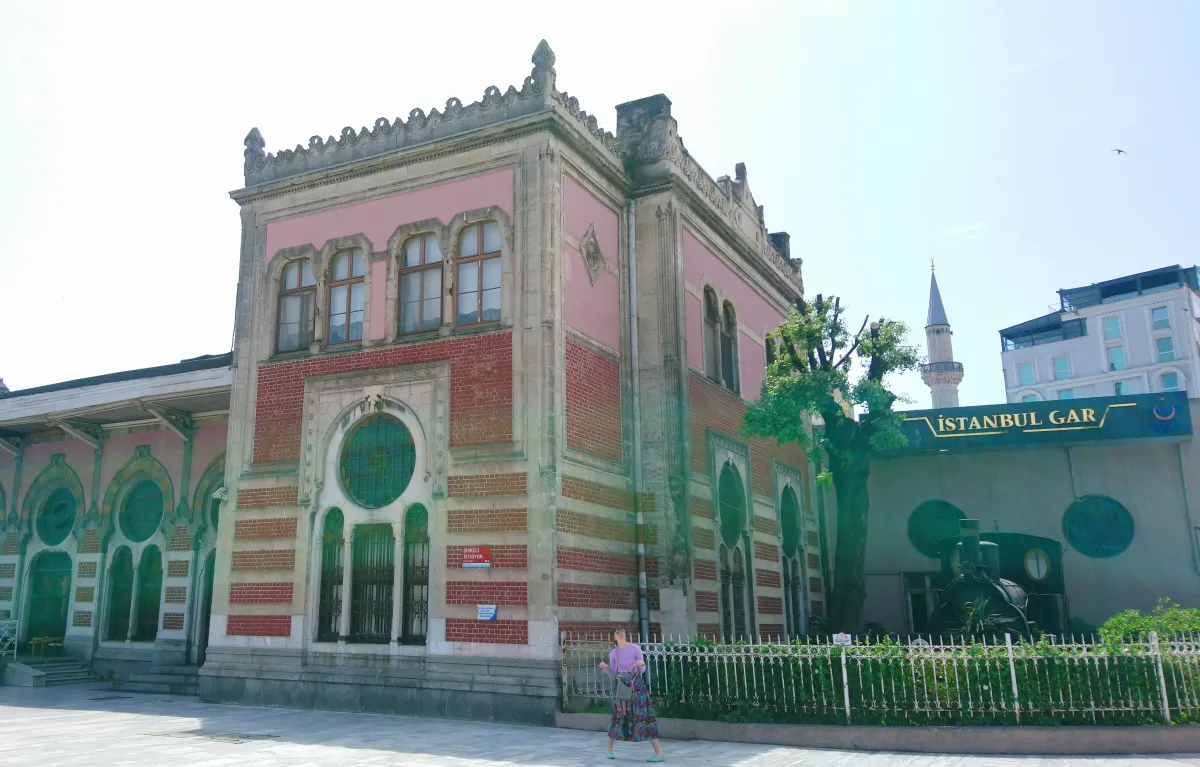
Two stations, two shores
- Sirkeci is on the European side. The first Orient Express to Vienna left from it on 12 August 1888.
- Haydarpaşa is on the Asian side, where the Anatolian line starts. The first small station there opened with the suburban line of 1872; the present building dates from 1908.
What the concessions brought
- Grain and settlers. Anatolian grain reached Istanbul, so the capital no longer depended on Russian and Bulgarian wheat, and hundreds of thousands of migrants settled along the line.
- Zones of influence. Companies of one state gathered their concessions in set regions, which split the empire into zones of foreign economic influence.
- Rivalry. The struggle between foreign companies in railways ended with a German win.
Hejaz Railway: Route and Stations from Damascus to Medina
A line the state built itself from 1900, paid for from a railway fund that took in donations. Its own guide has the route and the stations.
Banks: one foreign, one for farmers
The state first borrowed abroad in 1854, during the Crimean War, and needed a bank to handle the payments to its lenders. The first Ottoman Bank was set up in 1856 for that work. In 1863 it became a British–French bank with the right to print banknotes.
A bank for the debt
The first Ottoman Bank (Bank-ı Osmanî) was founded with British capital, with its centre in London, when the government, borrowing abroad for the first time, needed a state bank to handle debt payments. Its powers were small: small loans and advances to the government.
Bank-ı Osmanî-i Şahane
It became a British–French partnership with a monopoly on printing banknotes for 30 years, and acted as the state’s treasurer: it collected revenue, paid the Treasury’s bills and paid interest and principal on the debts.
A bank under foreign capital
Foreign ownership drew reaction in time and led to the idea of a national central bank; a national credit bank was founded on 11 March 1917. Under Abdülhamid the bank was given wide powers, which let foreign experts supervise state finance, and it did the central bank’s work in Türkiye until 1930.
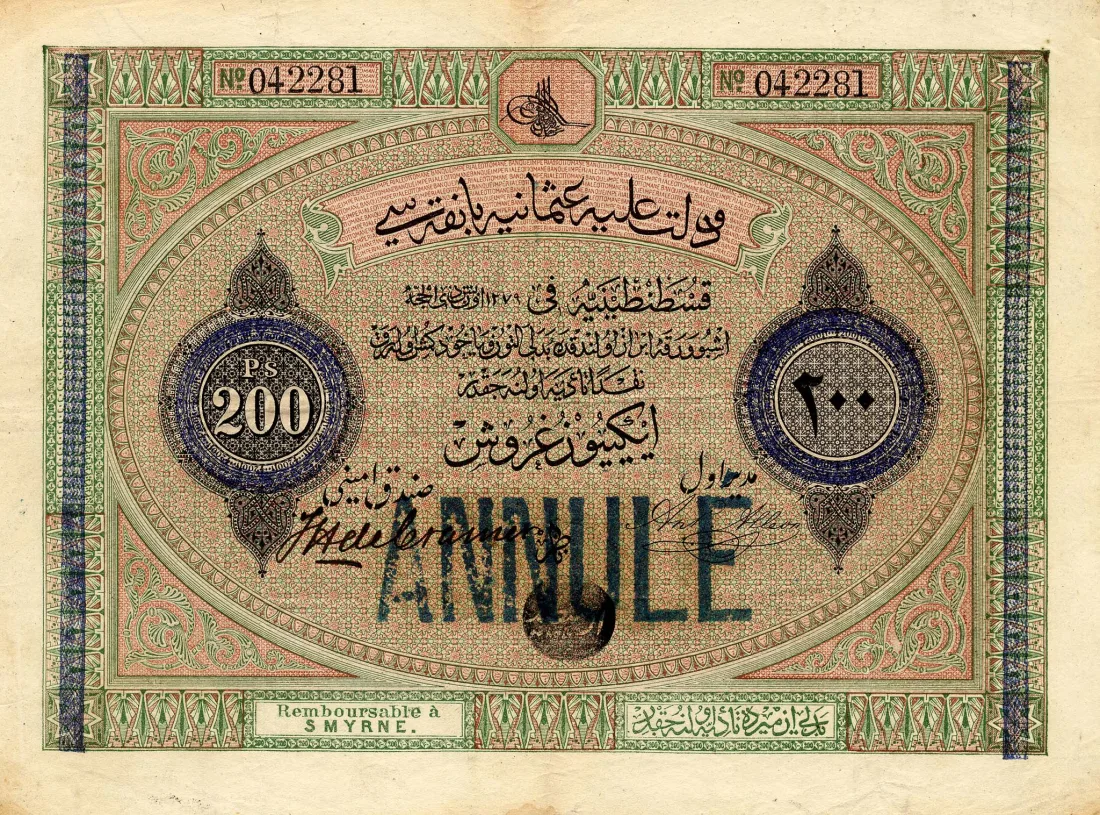
From the Menâfi Sandıkları to Ziraat Bankası
Credit funds for farmers set up under Abdülaziz took the name Menâfi Sandıkları («benefit funds») in 1883 and became Ziraat Bankası on 15 August 1888. Under Abdülhamid its organisation was widened and branches opened in various places to support farmers. A share added to the tithe, the menâfi share, financed the founding of the bank.
Factories, water and chambers
Feshane
Feshane made fezzes and wool cloth. From 1877 its whole output went to military needs. It won a prize at the Chicago fair in 1893, was enlarged and renewed in 1894 and opened a school in 1895. Enlarged again in 1916, it and Hereke together supplied half of the state’s total weaving output.
Hereke and Yıldız
The Hereke cloth factory was expanded and the Yıldız porcelain factory opened in the same reign.
Chambers and a census
Chambers of trade, agriculture and industry opened across the country. A population-registration office was set up for the first time, to record the people and property of the country every year.
Trams, quays and telegraph
Horse-drawn and electric trams ran in several cities, quays were built, and telegraph lines were drawn as far as the Hejaz and Basra. A paved road network was built in Anatolia, where there were no roads.
The Hamidiye water
The Hamidiye water gathered 56 springs in 20 chambers and carried 1,200 to 1,300 cubic metres a day to Istanbul, soft water of clean spring origin. Most of the works were finished in 1900, and the water was first supplied to the city on 26 May 1902.
How the debt ended: a hundred years after the first loan
- 1914 to 1918The Allied states ban the payment of coupons, the yearly interest slips of the bonds, to their citizens, so payments stop. The council keeps collecting revenues without its British and French members present.
- 1920The ban is lifted and the Administration pays saved coupons as far as it can. Then the Ankara government takes the assigned revenues and payments stop again.
- 23.07.1923The Lausanne Treaty shares the debts: those taken before 7 October 1912 among the states that left the empire after the Balkan War, later ones among the new states of Asia.
- 13.06.1928Türkiye agrees to pay 62 % of the part before 1912 and 76 % of the later part: 107,528,461 of 161,303,833 lira, from 42 loan agreements of 1854 to 1914, over 99 years.
- 22.04.1933Interest rises from 4 % to 7.5 % in return for a cut of 28,163,540 lira in the principal. The debt stands at 78,349,417 lira, to be paid over fifty years.
- 1936 and 1938Payments in half francs and half lira, then in lira only.
- 30.09.1940Türkiye stops recognising the council in Paris and takes the payments on itself.
- 25.04.1944 to 25.05.1954The government buys back the bonds the creditors hold, over ten years. The last day to apply for payment is 25 May 1954.
Türkiye paid 29 years before the date set in 1933. That raised its financial standing. The borrowing that began in 1854 closed after exactly 100 years.
Questions people ask
Did the sultan wipe out the debt?
No. The 1881 decree cut it, and with the four loans left outside it stood at 141,505,309 lira. During his reign 30 % of state revenue went to debts and interest, and the old debts were still not cleared. TDV adds that far more was paid than was borrowed and that the burden was largely lightened. The old debt was settled only in the Republic, with 25 May 1954 as the last day to claim payment.
What was the Public Debt Administration?
A body run by the lenders under the decree of 20 December 1881. It collected certain state revenues, such as salt, tobacco, silk, stamps and fishing, and paid the bondholders first. A council of seven lenders’ representatives ran it. TDV calls it «practically a state within a state» and also says it was useful in running state resources efficiently and in paying debts in order.
Who owned the railways?
It varied. İzmir–Aydın was British. The Rumeli company passed to Austrian nationality in 1878, and German capital took it over in 1889. The Baghdad company had mostly German capital with 30 % French. The Hejaz line was built by the state.
What is a monopoly?
A trade in which only one seller is allowed. The decree let the Public Debt Administration run the tobacco and salt monopolies. In 1883 it passed tobacco to the Régie, a company that then held all tobacco growing, processing and selling.
Is the Ottoman Bank the same as Ziraat Bank?
No. The Ottoman Bank (1863) was a British–French bank that printed banknotes and acted as the state’s treasurer. Ziraat Bank took its name on 15 August 1888 and grew out of credit funds for farmers.
Sources, checked 25.10.2026
Show the sources
- Düyûn-ı Umûmiyye (Cevdet Küçük, Tevfik Ertüzün) — TDV İslâm Ansiklopedisi, checked 25.10.2026
- Abdülhamid II (Cevdet Küçük) — TDV İslâm Ansiklopedisi, checked 25.10.2026
- Abdülaziz (Cevdet Küçük) — TDV İslâm Ansiklopedisi, checked 25.10.2026
- Bağdat Demiryolu (Kemal Beydilli) — TDV İslâm Ansiklopedisi, checked 25.10.2026
- Rumeli Demiryolu (Vahdettin Engin) — TDV İslâm Ansiklopedisi, checked 25.10.2026
- Haydarpaşa (Semavi Eyice) — TDV İslâm Ansiklopedisi, checked 25.10.2026
- Hicaz Demiryolu (Ufuk Gülsoy, William Ochsenwald) — TDV İslâm Ansiklopedisi, checked 25.10.2026
- Öşür, section on the Ottomans (Ahmet Tabakoğlu) — TDV İslâm Ansiklopedisi, checked 25.10.2026
- Tütün (Fehmi Yılmaz) — TDV İslâm Ansiklopedisi, checked 25.10.2026
- Feshâne (Tevfik Güran) — TDV İslâm Ansiklopedisi, checked 25.10.2026
- Hamidiye Suyu (Kazım Çeçen) — TDV İslâm Ansiklopedisi, checked 25.10.2026
- TCMB history: the Ottoman Bank — Central Bank of the Republic of Türkiye, virtual museum, checked 25.10.2026
- Okul Binamız (the school’s page on its building) — İstanbul Erkek Lisesi, school site of the Turkish Ministry of National Education, checked 25.10.2026