Rahmi M. Koç Museum in Istanbul: Collection and Visit
A museum of transport and industry on the Golden Horn: its two sites, what you can go aboard, hours, entry prices and the ferry to Hasköy.
Table of Contents
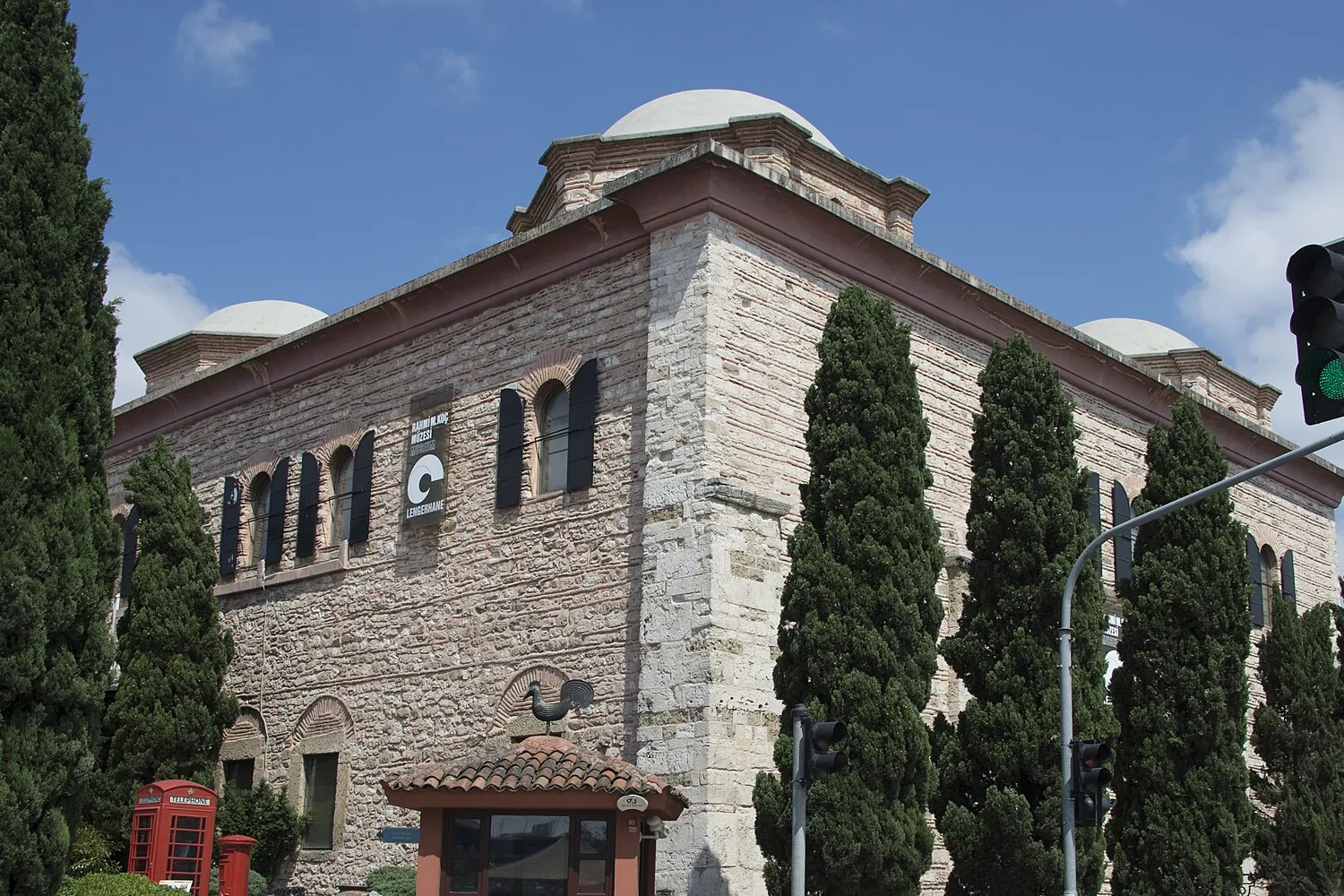
The Rahmi M. Koç Museum is a museum of transport and industry at Hasköy, a district on the north shore of the Golden Horn (Haliç in Turkish) in Istanbul. It stands on two sites on either side of one road: the Lengerhane, an Ottoman anchor foundry, and a former dockyard (tersane) that runs down to the water, with a ferry moored at its quay. The tool places twelve objects on one drawing, each with a Turkish line to ask about it.
In short · checked 29.10.2026
Closed on Mondays, and the ferry stops at Hasköy.
- Open Tuesday to Sunday. 09:30–17:30 from Tuesday to Friday, 09:30–18:00 on Saturday and Sunday. Last ticket sales are 30 minutes before closing.
- Two sites, one road between. The Lengerhane (the Mustafa V. Koç Building) and the Hasköy Dockyard, with an open-air area and a quay.
- A ferry to go aboard. The Fenerbahçe was built in 1952 and made its last voyage in 2008; it has been open to the public as a museum ship since 2009.
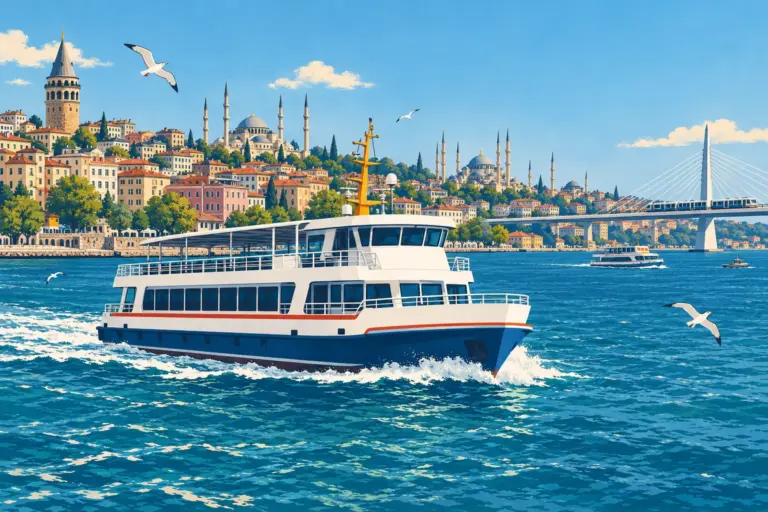
- By water. Ferries of Şehir Hatları, the city ferry company, stop at Hasköy on three Haliç (Golden Horn) lines.
- Entry prices differ between the museum’s English and Turkish pages: an adult ticket is 1000 or 550 Turkish lira (TL). Both are under Visiting.
Tool · museum pages checked 29.10.2026
The slipway
Twelve objects on one drawing of the museum, laid out left to right as on the museum’s own plan. A tag marks the part of the museum where a museum page puts the object, not an exact spot. Press a tag for the object, where it stands and a Turkish line to ask about it. Add objects to a list to copy one Turkish message that names them all.
Fenerbahçe ferry Moored at the quay on the Golden Horn
A passenger ferry built in 1952 by William Denny & Brothers in Dumbarton. It went into service on 14 May 1953 and for many years ran from Sirkeci in Istanbul to the Princes’ Islands (Adalar), Yalova and Çınarcık, until its last voyage on 22 December 2008. It has two Sulzer diesel engines of 1,500 hp each and a top speed of 18 knots. Since 2009 it is a museum ship with temporary exhibitions and educational workshops.
Open to the public as a museum ship
Fenerbahçe ferry page · ferry activities page · checked 29.10.2026
Say it in Turkish
Fenerbahçe vapuruna girebilir miyim?Can I go aboard the Fenerbahçe ferry?
Kont Ostrorog Moored along the north side (museum plan)
A fishing boat of the Black Sea whose hull was modified into a pleasure boat. It makes the museum’s Golden Horn tours: Wednesday to Friday at 14:00 and 15:00, Saturday and Sunday at 13:00, 14:00, 15:00 and 16:00. A boat tour costs 250 TL (Turkish lira) for an adult and 150 TL for a student. The museum’s Turkish boat-tour page gives May to October, on days the weather allows.
Visitors go aboard on the boat tour
boat tours page · Turkish boat-tour page · Turkish hours page · checked 29.10.2026
Say it in Turkish
Tekne turu için ayrı bilet gerekiyor mu?Do I need a separate ticket for the boat tour?
Steam tug Rosalie Moored along the north side (museum plan)
The museum lists it as one of the oldest steam tugs in the world. It has a 95 hp compound steam engine. A tug is a small strong boat that pulls or pushes bigger ships.
boat tours page · maritime page · checked 29.10.2026
Say it in Turkish
Rosalie römorkörüne girilebiliyor mu?Can visitors go on board the Rosalie tug?
Tug Liman 2 Moored along the north side (museum plan)
A harbour tug in service at the Port of Istanbul from 1935.
boat tours page · maritime page · checked 29.10.2026
Say it in Turkish
Liman 2 römorkörüne girilebiliyor mu?Can visitors go on board the Liman 2 tug?
Turgut Alp Floating Sheerlegs Open-air area (museum text and plan)
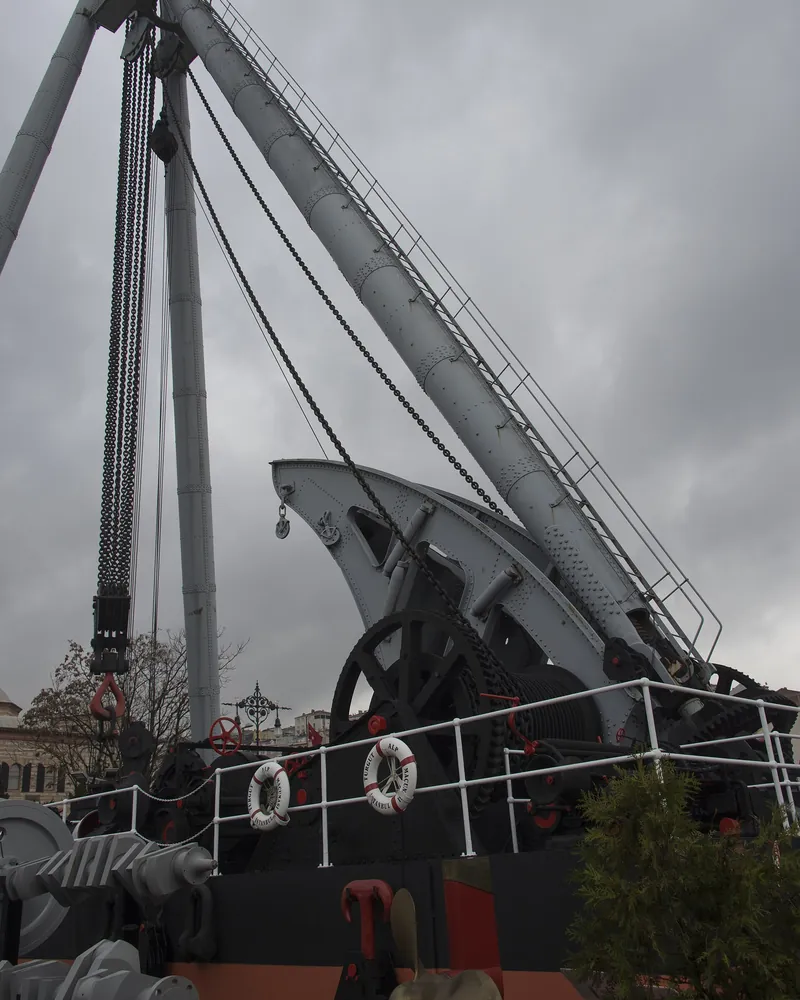
Ships and aircraft stand in the open air, among them the Turgut Alp Floating Sheerlegs, a floating crane 30 metres high. Sheerlegs are two leaning legs joined at the top to lift heavy loads.
history page · museum plan · checked 29.10.2026
Say it in Turkish
Turgut Alp Yüzer Maçuna’sı nerede?Where is the Turgut Alp floating crane?
Marine steam engine of SS Kalender Mustafa V. Koç Building, ground floor (museum plan, L07)
A full-size steam engine from a ship, SS Kalender, stands in the Mustafa V. Koç Building.
engineering page · museum plan · checked 29.10.2026
Say it in Turkish
Kalender Gemisi’nin buharlı ana makinesi hangi katta?Which floor is the Kalender ferry’s steam engine on?
Marshall Portable Steam Engine Dockyard (museum text)
A portable steam engine, built to be moved from place to place, stands in the Dockyard.
engineering page · checked 29.10.2026
Say it in Turkish
Marshall buhar makinesi Tersane’de mi?Is the Marshall steam engine in the Dockyard (Tersane)?
Moda tram No. 20 Dockyard, rail transport gallery (museum plan, T20)
Tram No. 20 ran on the Kadıköy–Moda route (Kadıköy is a district on the Asian shore, Moda a neighbourhood in it). It went into service in 1934, served for over thirty years and ran until the route was abandoned in 1966. On loan from İETT, the city’s bus operator. It is 9.1 m long and 4 m high.
Moda tram page · rail transportation page · checked 29.10.2026
Say it in Turkish
Kadıköy-Moda Tramvayı hangi galeride?Which gallery is the Moda tram in?
Imperial coach of Sultan Abdülaziz Dockyard, rail transport gallery (museum plan, T20)
Made in Birmingham and presented to Sultan Abdülaziz by the British company that built the first railway in Türkiye. In 1867 he used it on a European journey that took him to Emperor Napoléon III of France, Queen Victoria, the King of Belgium, the King of Prussia and the Austro-Hungarian Emperor.
imperial coach page · rail transportation page · checked 29.10.2026
Say it in Turkish
Sultan Abdülaziz’in saltanat vagonu nerede?Where is Sultan Abdülaziz’s state coach?
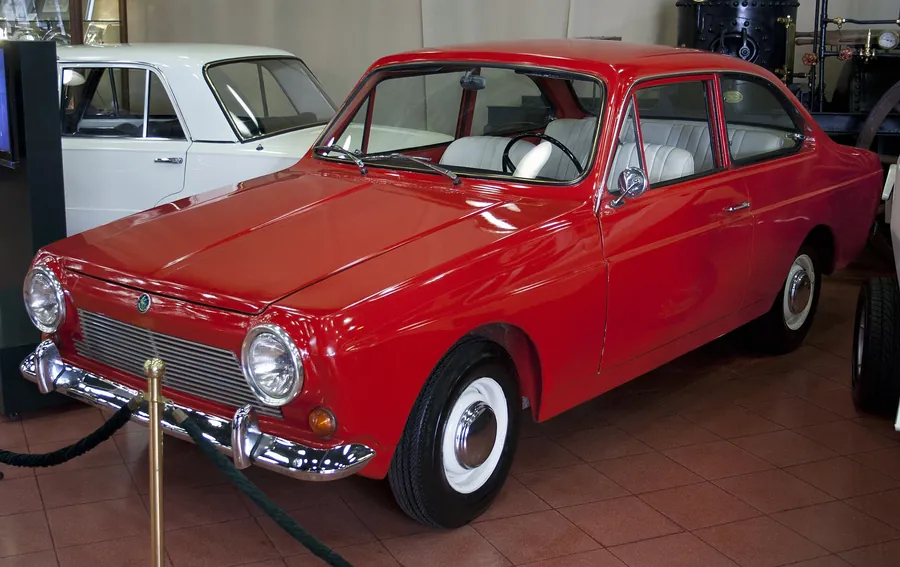
Anadol A1 Dockyard, car galleries (museum plan)
The first Anadol prototype was a five-seat fibreglass saloon car with a 1,198 cc engine. It was driven to Istanbul in December 1965 and named Anadol after a national competition.
classic cars page · museum plan · checked 29.10.2026
Say it in Turkish
Anadol A1 nerede?Where is the Anadol A1?
Douglas DC-3 Dakota Open-air area (museum plan)
A passenger aircraft the museum describes as one of the most important airliners in history. The aviation collection stands in the Mustafa V. Koç Building and the open-air area.
aviation page · museum plan · checked 29.10.2026
Say it in Turkish
Douglas DC-3 uçağı nerede?Where is the Douglas DC-3 aircraft?
F-104 Starfighter Open-air area (museum plan)
The F-104 S Starfighter is one of the museum’s examples of its aviation collection, with the Douglas DC-3 and a model of the Wright Brothers’ glider. The museum’s plan also marks a B-24 Liberator and a Jet Provost in the open-air area.
aviation page · museum plan · checked 29.10.2026
Say it in Turkish
F-104 Starfighter nerede?Where is the F-104 Starfighter?
Nothing you press is stored or sent. Hours, prices and boat times can change.
A museum of transport and industry
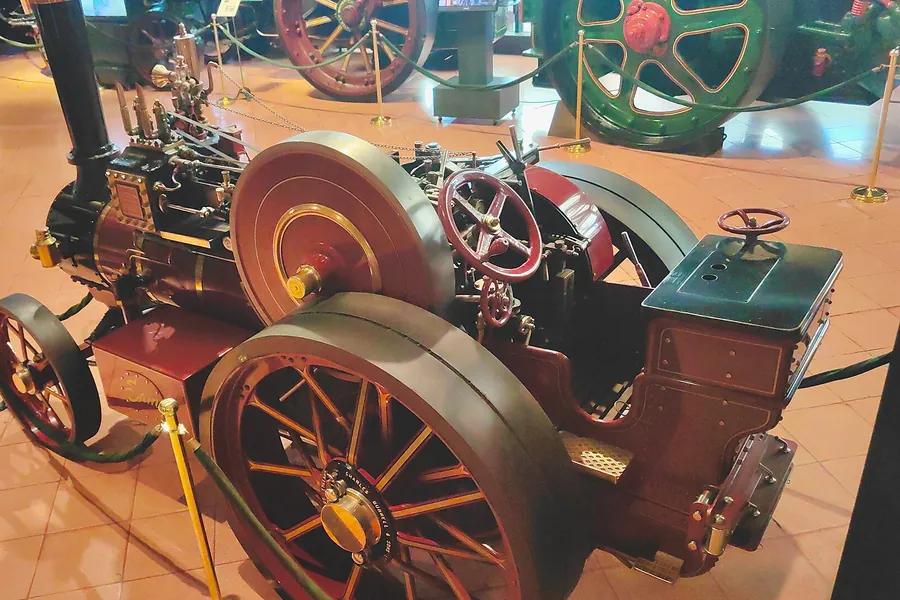
The museum collects machines and the things they moved: engines, carriages, cars, trams, boats, aircraft and telegraphs, and rebuilt workshops such as a motor repair shop and an olive-oil factory.
- Opened
- Bought in 1991 by the Rahmi M. Koç Museum Foundation for Museology and Culture; opened on 13 December 1994.
- Where
- Rahmi M. Koç Cad. No: 3, Hasköy, 34445 Istanbul. Cad. is short for caddesi, avenue.
- On now
- «National Industry, Global Reputation», 9 October 2026 to 7 February 2027, in the Mustafa V. Koç Building: a chronology of Turkish industry from 1926 to 2026.
Museum pages, checked 29.10.2026: history · ongoing exhibitions
Two sites, one road between
The Lengerhane stands on the landward side of Hasköy Caddesi, the road along the shore. The building between the road and the sea was the Hasköy Shipyard, built in 1861 by the Şirket-i Hayriye ferryboat company; it is now the Dockyard. A third part, the open-air area, lies outside.
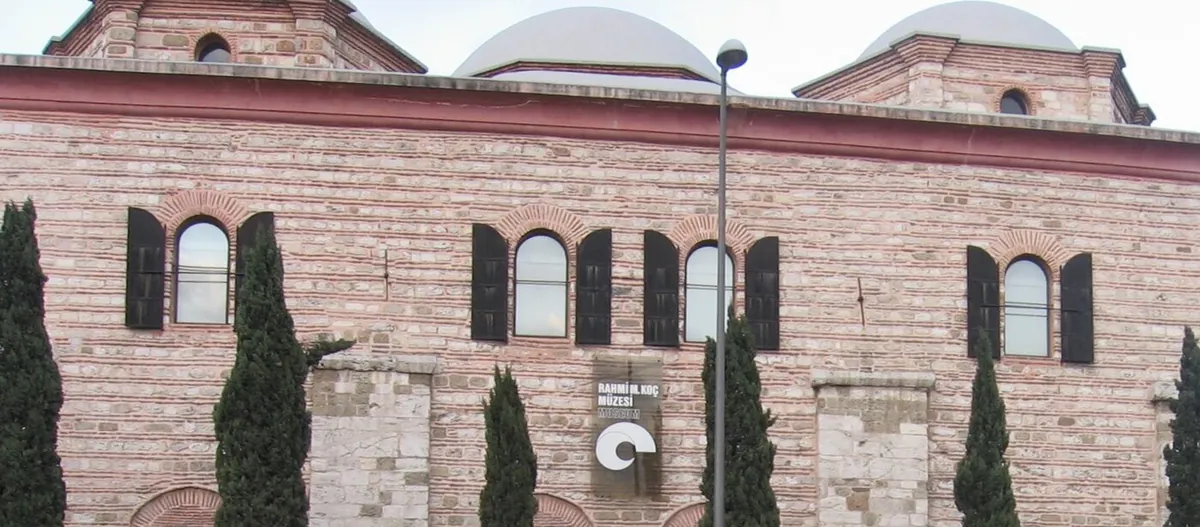
The Lengerhane
Lenger means «anchor and chain» and hane means «building»: this was the Ottoman Navy’s anchor foundry.
- 12th centuryA Byzantine building stands here; its foundations remain.
- 1703–1730The anchor foundry is built on them in the reign of Sultan Ahmet III.
- 1789–1807Restored in the reign of Sultan Selim III.
- After thatIt passes to the Ministry of Finance and, in the Republican era, becomes the Cibali Tobacco Factory of the state monopolies.
- 1984Fire destroys most of the roof, and the building is left empty.
- 1991–1994Bought in 1991; after more than two years of renovation it opens on 13 December 1994.
- 2016Named the Mustafa V. Koç Building.
Museum pages, checked 29.10.2026: history
On each floor of the Lengerhane
- Ground floor. Steam engines and rail models, hot-air and internal-combustion engine models, a full-size marine steam engine and timekeeping devices.
- First floor. Scientific instruments and communication instruments.
- Basement. Aviation and maritime collections, early mechanical toys, a replica of a ship’s bridge, film and printing.
Museum pages, checked 29.10.2026: history · museum plan
In the Dockyard and the open air
- Three wings. Underwater life, a «how it works» hall, a colourful mathematics world, farm machines, bicycles, motorcycles, strollers, horse carriages, cars, engines, an olive-oil factory, a woodworking shop, marine engines and a slipway (the ramp a ship is launched down).
- Also in the Dockyard. Living history, rail and sea transport, full-size ships, aircraft, the Atatürk Collection and the Rahmi M. Koç Gallery.
- Open air. Ships and aircraft, among them the 30 m Turgut Alp Floating Sheerlegs.
Museum pages, checked 29.10.2026: history · museum plan
What is inside, by collection
The museum sorts its pieces into collections. Each has its own page, and each page shows several examples of the many works in it.
Steam and diesel engines
Engines made in Türkiye and abroad. The steam engine of SS Kalender is in the Mustafa V. Koç Building, and the Marshall Portable Steam Engine is in the Dockyard.
Railroad cars and models
Railroad cars, among them the royal carriage of Sultan Abdülaziz and the Kadıköy–Moda tram, with locomotive and tram models, photographs and other papers of rail transport.
From carriages to cars
Since the early 19th century: horse carriages, hansom cabs (two-wheeled horse cabs), strollers, bicycles, motorcycles, farm vehicles, classic cars, car models, fire engines and steam cars.
Models, boats and yachts
Models and many full-size boats and yachts, outboard motors, a rare Amphicar (a car that floats) and a Bosphorus excursion caique, a traditional wooden boat.
Aircraft and a glider model
In the Mustafa V. Koç Building and the open-air area: a model of the Wright Brothers’ glider, the Douglas DC-3 airliner and the F-104 Starfighter.
Telegraphs to television
In the Mustafa V. Koç Building: telegraphs, telephones, phonographs (early record players), gramophones, cameras and television sets.
Rebuilt scenes
A bazaar, a carpenter’s workshop and lathes, a fishing port, an olive-oil factory, a rowboat workshop, a motor repair shop, a ship’s bridge and a film set.
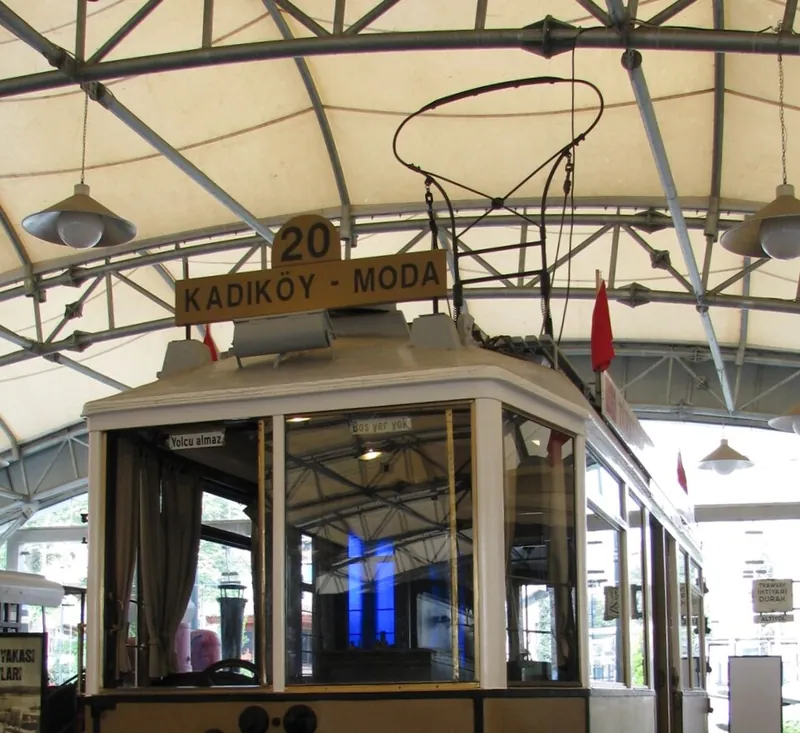
What you can go aboard
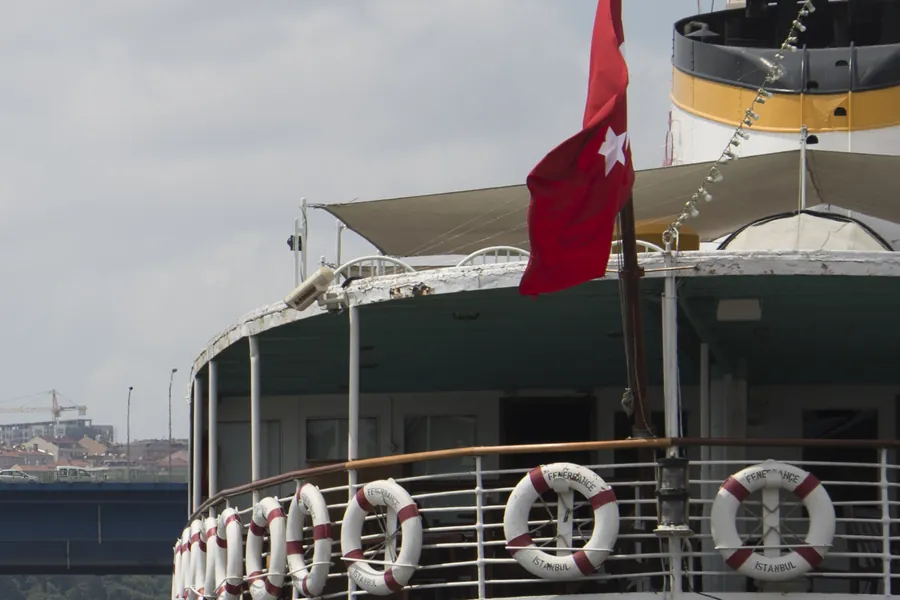
The Fenerbahçe ferry
Vapur is the Turkish word for a passenger ferry, from the word for steam; the Fenerbahçe itself has two diesel engines of 1,500 hp, twin screws and a top speed of 18 knots. It was built in 1952, ran for years between Sirkeci and the south shore of the Marmara Sea, and made its last voyage on 22 December 2008. Since 2009 it is a museum ship open to the public. Its multipurpose hall on the middle floor holds temporary exhibitions, and educational workshops are held aboard.
Museum pages, checked 29.10.2026: ferry page · ferry activities
The Golden Horn boat tour
- Boat
- The Kont Ostrorog, a fishing boat of the Black Sea whose hull was modified into a pleasure boat.
- Days and times
- Wednesday, Thursday and Friday at 14:00 and 15:00. Saturday and Sunday at 13:00, 14:00, 15:00 and 16:00.
- Price
- Adult 250 TL, student 150 TL. The museum’s Turkish boat-tour page gives May to October, on days the weather allows.
- Moored beside it
- The steam tug Rosalie, which the museum lists as one of the oldest steam tugs in the world, and the harbour tug Liman 2, in service at the Port of Istanbul from 1935.
Museum pages, checked 29.10.2026: boat tours · Turkish boat-tour page · Turkish hours page
Visiting: hours, entry and closed days
Hours · checked 29.10.2026
Closed on Monday, open the rest of the week.
Tuesday to Friday 09:30–17:30. Saturday and Sunday 09:30–18:00. Last ticket sales are 30 minutes before closing.
Closed on the eve and the first day of the religious holidays (bayram) and on 31 December and 1 January every year.
Entry, as the museum’s two pages show it
- English page
- Adult 1000 TL, student 500 TL.
- Turkish page
- Adult 550 TL, student 280 TL, and «Öğrenci Grup» (student group) 230 TL, valid when ten or more students pay together.
- Boat tours
- Adult 250 TL, student 150 TL, on both pages.
- Tickets
- Tickets are sold online through the seller the museum links on its hours page.
- Parking
- Paid, with a limited number of spaces.
- Carousel and playground
- Open on days when the weather is favourable.
Museum pages, checked 29.10.2026: English hours page · Turkish hours page · carousel and playground · prices in Turkish lira (TL)
The two pages differ
The English hours page shows 1000 TL for an adult and the Turkish page 550 TL. Both were read on 29.10.2026, on the same morning. The figures here are the museum’s.
To ask at the desk: «Hangi bilet fiyatı bana uygulanıyor?» (Which ticket price applies to me?) or «Bilet ne kadar?» (How much is a ticket?)
Getting there by ferry and bus
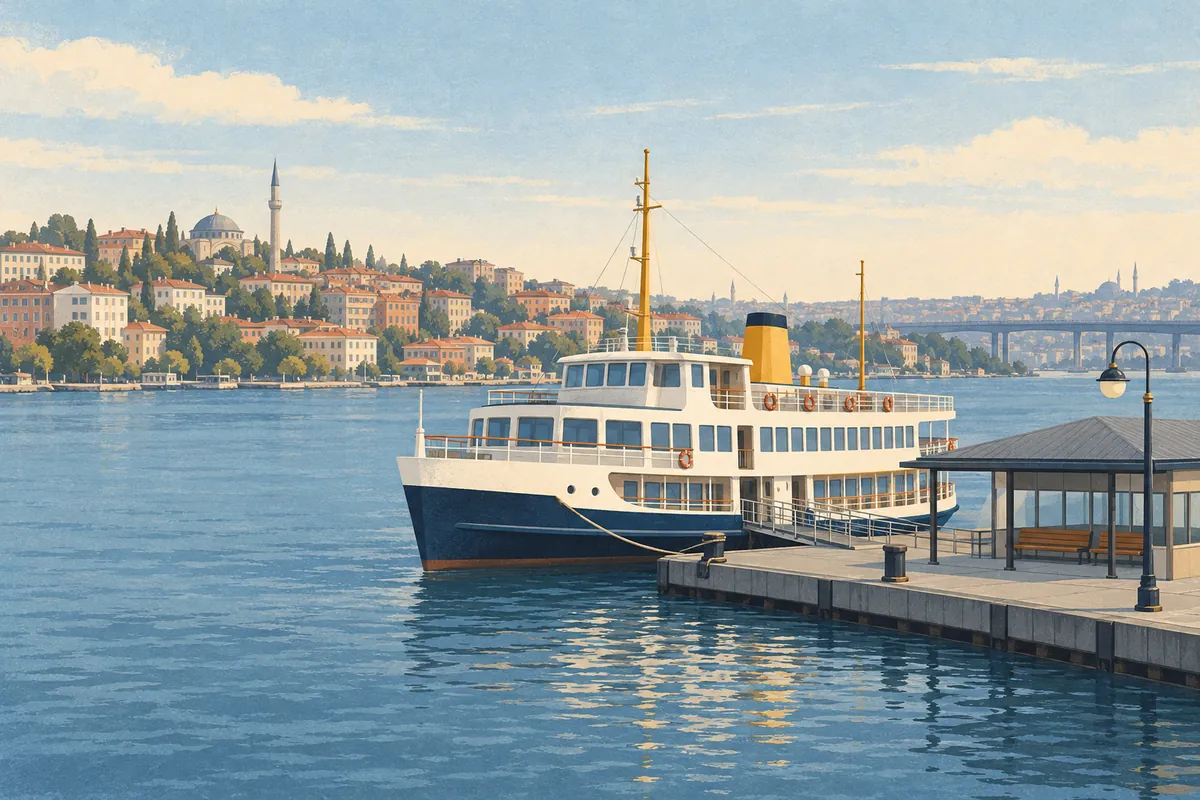
The museum’s own page names three ways in: the ferry to Hasköy Pier, an İETT bus (İETT is the Istanbul city bus operator) to the stop Kırmızı Minare, and the Metrobüs (a bus line on its own lanes) to the stop Halıcıoğlu.
- Buses
- 50E Alibeyköy Metro–Eminönü; 50N Alibeyköy Metro–Harbiye Askeri Müze; 54HT Taksim–Hasköy.
Museum pages, checked 29.10.2026: getting to the museum
The ferry: three Haliç lines
Şehir Hatları is the city ferry company. Its timetable pages for three Haliç lines show Hasköy as a stop on each. The stops are named in the order of the timetable columns.
- Üsküdar–Haliç
- Eyüpsultan, Sütlüce, Ayvansaray, Hasköy, Balat, Fener, Kasımpaşa, Karaköy, Üsküdar.
- Kadıköy–Haliç
- Kadıköy, Kasımpaşa, Fener, Hasköy, Sütlüce, Eyüpsultan.
- Beşiktaş–Haliç
- Beşiktaş, Kabataş, Karaköy, Kasımpaşa, Hasköy, Sütlüce, Eyüpsultan.
- Reading the timetable
- Some trips do not run on Sundays and public holidays; others run only on those days. The pages mark each trip.
Şehir Hatları pages, checked 29.10.2026: Üsküdar–Haliç · Kadıköy–Haliç · Beşiktaş–Haliç. No departure times are printed here; they change.
The museum’s page also names a line called Üsküdar–Eminönü–Eyüp; the ferry company’s pages read on 29.10.2026 name the three lines in this chapter. For the İstanbulkart (the city travel card), fares and the ferry and bus network, see Istanbul public transport.
Other places under the same name
The museum has four more sites in Türkiye.
- Ankara
- In the Çengelhan and Safranhan, two han (merchants’ inns) built in the 16th century.
- Ayvalık
- In a historic olive-oil factory.
- Cunda
- In a church built of garlic stone, converted into a museum.
- Cunda Sevim Necdet Kent Library
- A library on the museum’s list of places.
Museum pages, checked 29.10.2026: Ankara · Ayvalık · Cunda · home page
Ask in Turkish at the gate and the quay
Eight lines for the ticket desk, the boat and the way there, each with its English meaning. Copy copies the Turkish.
- Müze bugün açık mı?Is the museum open today?
- Son bilet satışı saat kaçta?What time is the last ticket sale?
- Bilet ne kadar?How much is a ticket?
- Hangi bilet fiyatı bana uygulanıyor?Which ticket price applies to me?
- Öğrenci bileti ne kadar?How much is a student ticket?
- Tekne turu saat kaçta?What time is the boat tour?
- Hasköy iskelesine giden vapur nereden kalkıyor?Where does the ferry to Hasköy pier leave from?
- Hasköy’e hangi otobüs gidiyor?Which bus goes to Hasköy?
Sources and limits
Show the pages checked
- Hours and prices (English) — Rahmi M. Koç Museum, checked 29.10.2026
- Saatler ve ücretler (Turkish) — Rahmi M. Koç Museum, checked 29.10.2026
- History: the Lengerhane, the Hasköy Dockyard, the open-air area — Rahmi M. Koç Museum, checked 29.10.2026
- Getting to the museum — Rahmi M. Koç Museum, checked 29.10.2026
- Museum plan — Rahmi M. Koç Museum, checked 29.10.2026
- Fenerbahçe ferry — Rahmi M. Koç Museum, checked 29.10.2026
- Fenerbahçe ferry boat activities — Rahmi M. Koç Museum, checked 29.10.2026
- Golden Horn boat tours — Rahmi M. Koç Museum, checked 29.10.2026
- Tekne ile Haliç Turları (Turkish) — Rahmi M. Koç Museum, checked 29.10.2026
- Ongoing exhibitions — Rahmi M. Koç Museum, checked 29.10.2026
- Engineering collection — Rahmi M. Koç Museum, checked 29.10.2026
- Rail transportation collection, with the Moda tram and the imperial coach — Rahmi M. Koç Museum, checked 29.10.2026
- Road transportation collection, with the classic cars — Rahmi M. Koç Museum, checked 29.10.2026
- Maritime collection — Rahmi M. Koç Museum, checked 29.10.2026
- Aviation collection — Rahmi M. Koç Museum, checked 29.10.2026
- Communication instruments — Rahmi M. Koç Museum, checked 29.10.2026
- Living history — Rahmi M. Koç Museum, checked 29.10.2026
- Carousel and playground — Rahmi M. Koç Museum, checked 29.10.2026
- Ankara, Ayvalık and Cunda sites, and the home page — Rahmi M. Koç Museum, checked 29.10.2026
- Üsküdar–Haliç, Kadıköy–Haliç and Beşiktaş–Haliç timetable pages — Şehir Hatları, checked 29.10.2026
General information on a place whose hours, prices and timetables change. Left out on purpose: where to eat or shop, how to buy tickets, and how long a visit takes.