

Bursa for Visitors: The First Ottoman Capital and Uludağ
Where the early Ottoman capital stands today: Ulu Cami, the green tomb, Cumalıkızık, the Uludağ cable car, Çekirge baths and Karagöz.
Table of Contents
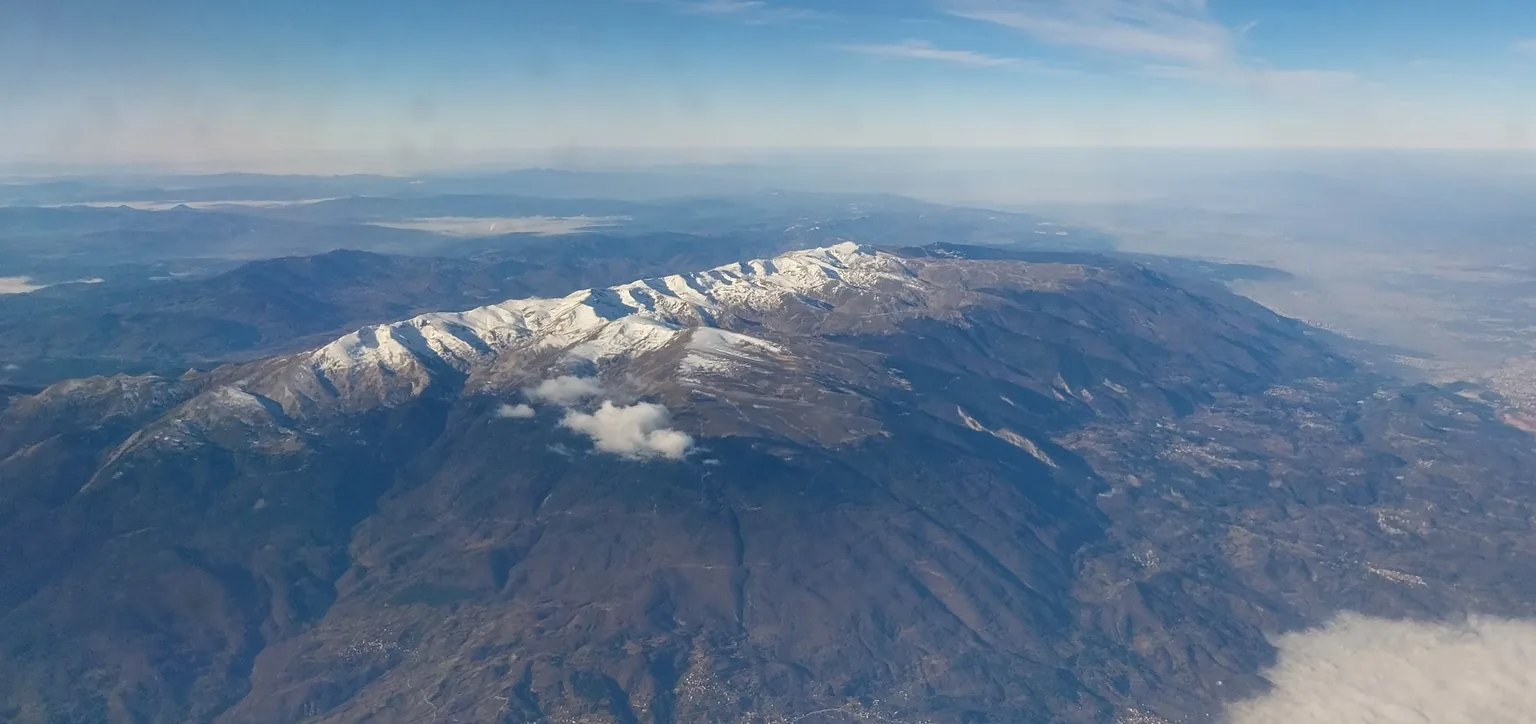
Bursa lies on the north-western foot of Uludağ (ulu = great, dağ = mountain, the Great Mountain). The Ottomans took the city on 6 April 1326 and made it their first capital; its early mosques, tombs and baths still stand, and the village of Cumalıkızık is reached by bus from the centre.
Bursa at a glance
A visit has three parts: the early capital in the city, the village of Cumalıkızık and Uludağ above them.
- History: Bursa passed to the Ottomans on 6 April 1326. Orhan Gazi made it the centre of the state and struck his silver coin (akçe) there in 1327.
- World Heritage: in 2014 UNESCO listed «Bursa and Cumalıkızık: The Birth of the Ottoman Empire», in six parts.
- Sights: Ulu Cami (the Great Mosque), the Yeşil (green) complex with the Yeşil Türbe (the Green Tomb), the Muradiye complex, the tombs of Osman Gazi and Orhan Gazi, and Cumalıkızık.
- Mountain: Uludağ, 2,543 m, lies 36 km south of the city. The cable car runs from Teferrüç to Sarıalan (1,635 m) and the Oteller (hotels) area (1,810 m).
- Getting there: city buses reach the Yeşil, Muradiye, Çekirge and Teferrüç districts, and Cumalıkızık. Yenişehir airport is 50 km from the centre.
Tool · checked 03.11.2026
The lantern screen
A shadow-play screen with six cut-out figures of Bursa. Press a figure or a name: the lamp moves behind it, and its card shows how to get there as a state page prints it, with a Turkish line to copy.
Ulu Cami ulu = great, cami = mosque
- What
- Twenty domes on twelve piers, 55 × 69 m. Built 1396–1400 under Bayezid I; the inscription over the pulpit door gives 1399–1400.
- Getting there
- In the centre, on Atatürk Caddesi (Atatürk Street), opposite the PTT (post office).
- Page
- Culture Portal, checked 03.11.2026
Say it in Turkish
Ulu Cami’ye nasıl gidebilirim?How can I get to the Great Mosque?Yeşil Türbe yeşil = green, türbe = tomb
- What
- The tomb of Sultan Çelebi Mehmed, built in 1421; architect Hacı İvaz Paşa. People named it for its green and turquoise tiles.
- Getting there
- Buses from the centre to the Yeşil district.
- Page
- Culture Portal, checked 03.11.2026
Say it in Turkish
Yeşil Türbe nerede?Where is the Green Tomb?Tophane tombs the tombs of Osman Gazi and Orhan Gazi
- What
- They stand on the Tophane ridge, where Orhan Gazi had a palace. Ulu Cami and the Hans area (han = merchants’ inn) can be seen from there.
- Getting there
- In the centre, in the Tophane district. Minibuses and taxis to Uludağ also leave from Tophane.
- Page
- Culture Portal, TDV, Bursa provincial culture directorate, checked 03.11.2026
Say it in Turkish
Osman Gazi Türbesi hangi yönde?Which way is the tomb of Osman Gazi?Çekirge bath kaplıca = a bath at a hot spring
- What
- Çekirge is the baths district west of the centre, called Pythia in Byzantine times. The Yeni Kaplıca (New Bath) was built in 1552 by Rüstem Paşa.
- Getting there
- Dolmuş (shared minibuses) and buses go to Çekirge.
- Page
- Culture Portal, TDV, checked 03.11.2026
Say it in Turkish
Çekirge’ye hangi otobüs gidiyor?Which bus goes to Çekirge?Cumalıkızık cuma = Friday, kızık = a foothill village
- What
- A foundation village (vakıf köyü) of 270 houses, 180 still in use: three storeys of rubble stone, timber and mud brick.
- Getting there
- Buses from the centre go to the village; minibuses run on the Ankara road.
- Page
- Culture Portal, checked 03.11.2026
Say it in Turkish
Cumalıkızık’a hangi otobüs gidiyor?Which bus goes to Cumalıkızık?Cable car teleferik = cable car
- What
- Türkiye’s first cable car, opened 29 October 1963 and rebuilt in 2014. Stations: Teferrüç, Kadıyayla 1,231 m, Sarıalan 1,635 m, Oteller 1,810 m.
- Getting there
- Buses from the centre to Teferrüç, then the cable car. Address: Piremir Mahallesi (neighbourhood), Teleferik Caddesi No. 88, Yıldırım.
- Page
- Culture Portal, checked 03.11.2026
Say it in Turkish
Teleferik Teferrüç’ten mi kalkıyor?Does the cable car leave from Teferrüç?
The early capital: what remains and where
Bursa was the first centre of the Ottoman state, and the first sultans’ tombs are in the city. The early buildings stand along a strip of city about 8 km long, between the edge of the plain and the foot of Uludağ.
TDV İslâm Ansiklopedisi · checked 03.11.2026
6 April 1326 Bursa passed to the Ottomans.
The TDV İslâm Ansiklopedisi (the Islamic Encyclopedia of the Türkiye Diyanet Foundation) writes that a blockade of more than ten years had left the people hungry, and the city surrendered. Orhan Gazi made it the centre of the Ottoman principality.
1327: Orhan Gazi struck his silver coin, the akçe, in Bursa.
1339–1340: east of the citadel he built a külliye (a mosque complex): a mosque, an imaret (soup kitchen), a medrese (school), a hamam (bath) and caravanserais (merchants’ inns), Beyhan Han and Emir Han.
- 1326The Ottomans take the city after the long blockade (6 April).
- 1339–1340Orhan Gazi’s complex rises east of the citadel and becomes the centre of the city.
- 1399–1400Ulu Cami is finished under Bayezid I. The TDV puts the city’s greatest growth in his reign.
- 1402Timur defeats the Ottomans; his soldiers plunder Bursa and set it on fire.
From west to east the districts run Çekirge (the baths), Muradiye, the centre between the Cilomboz and Gökdere valleys (the old market, the hans, Ulu Cami and the citadel), then Yeşil across the Gökdere valley, Emir Sultan and, higher up the slope, Teferrüç. The market quarter has its own page: Shopping in Bursa.
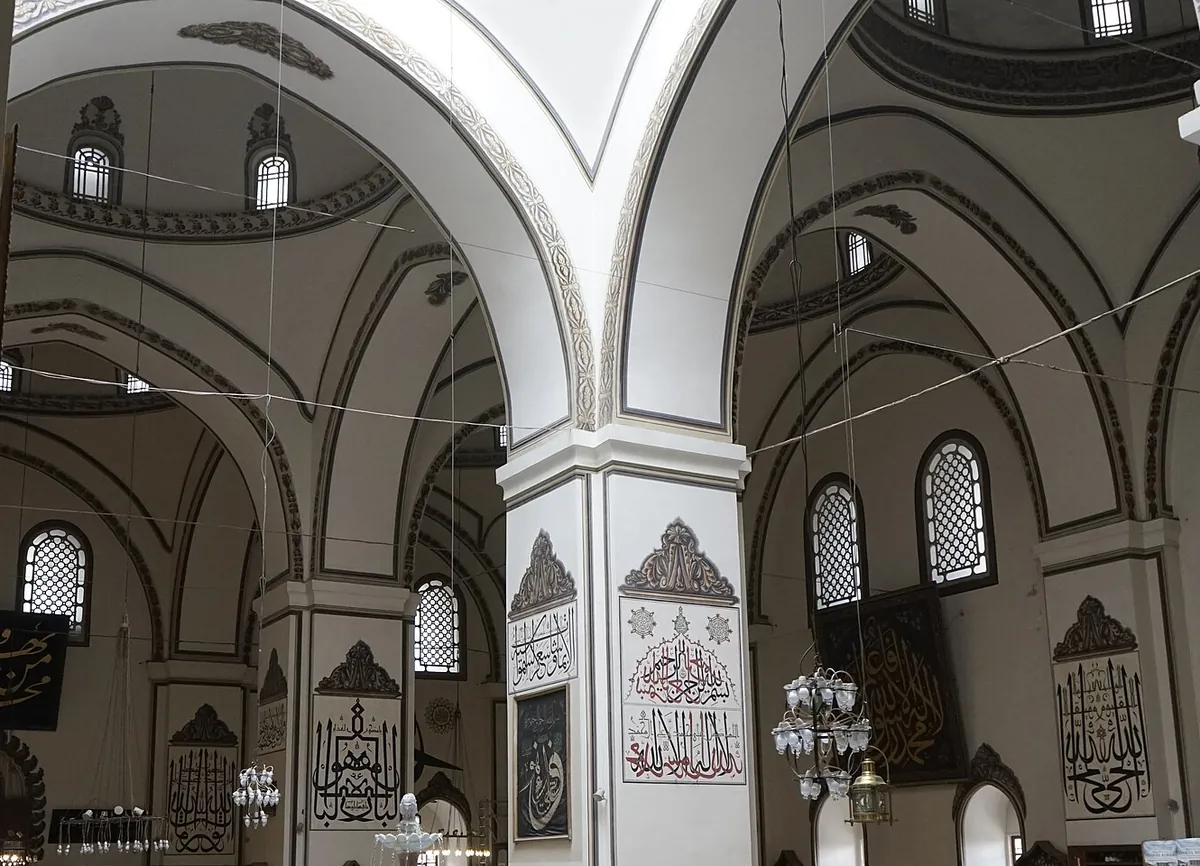
Ulu Cami · ulu = great, cami = mosque
Twenty domes on twelve piers
- Built
- 1396–1400 under Bayezid I, after his 1396 victory at Niğbolu (Nicopolis); the inscription over the pulpit door gives 1399–1400.
- Size
- 55 × 69 m, 3,165 m² inside; the central dome is open at the top, now glazed. The Culture Portal lists it as Türkiye’s largest ulu cami.
- Minarets
- West: Bayezid I. East: his son Çelebi Mehmed.
- Inside
- 87 calligraphy panels by 41 calligraphers in 13 scripts; a şadırvan (fountain) with a 16-sided pool.
- Repairs
- After Timur’s invasion and, the largest, after the 1855 earthquake.
- Where
- In the centre, on Atatürk Caddesi, opposite the PTT (post office).
Culture Portal (Ministry of Culture and Tourism), checked 03.11.2026
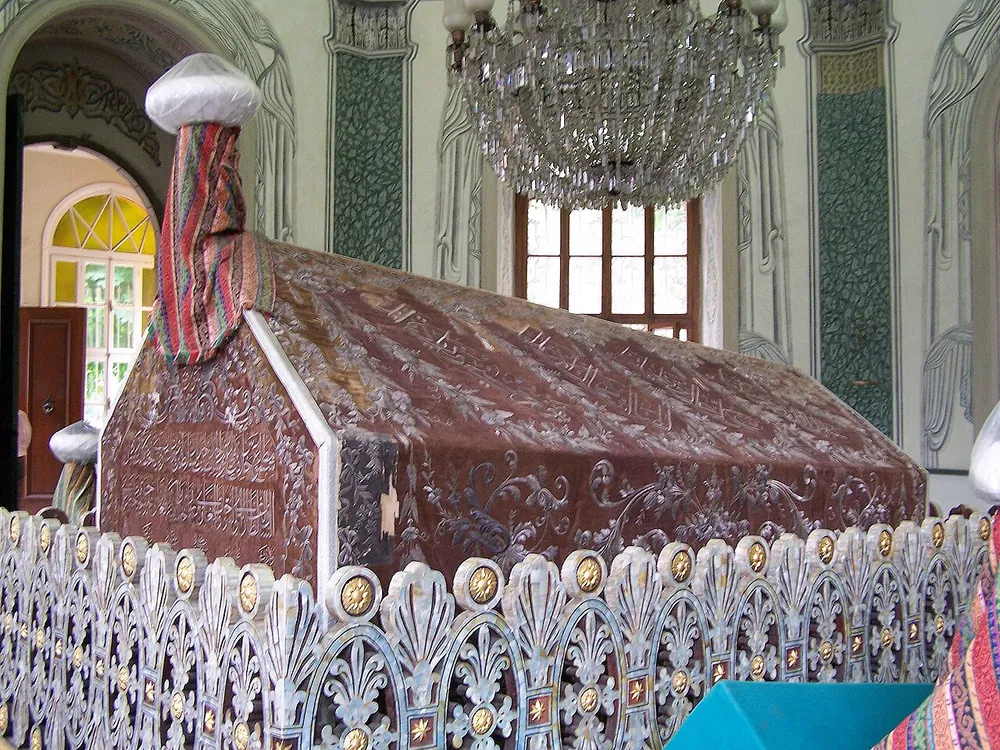
Tophane ridge · türbe = tomb
The tombs of Osman Gazi and Orhan Gazi
- Where
- On the Tophane ridge. Orhan Gazi had a palace, the Bey Sarayı, on this spot looking over the plain; today it is called Tophane.
- View
- The Bursa provincial culture directorate writes that Ulu Cami and the Hans area can be seen from the two tombs.
- More
- The TDV lists the tombs of the first Ottoman sultans, from Osman on, among the buildings of the city. For the ruler himself, see Osman I.
TDV, Bursa İl Kültür ve Turizm Müdürlüğü (the provincial directorate of culture and tourism), checked 03.11.2026
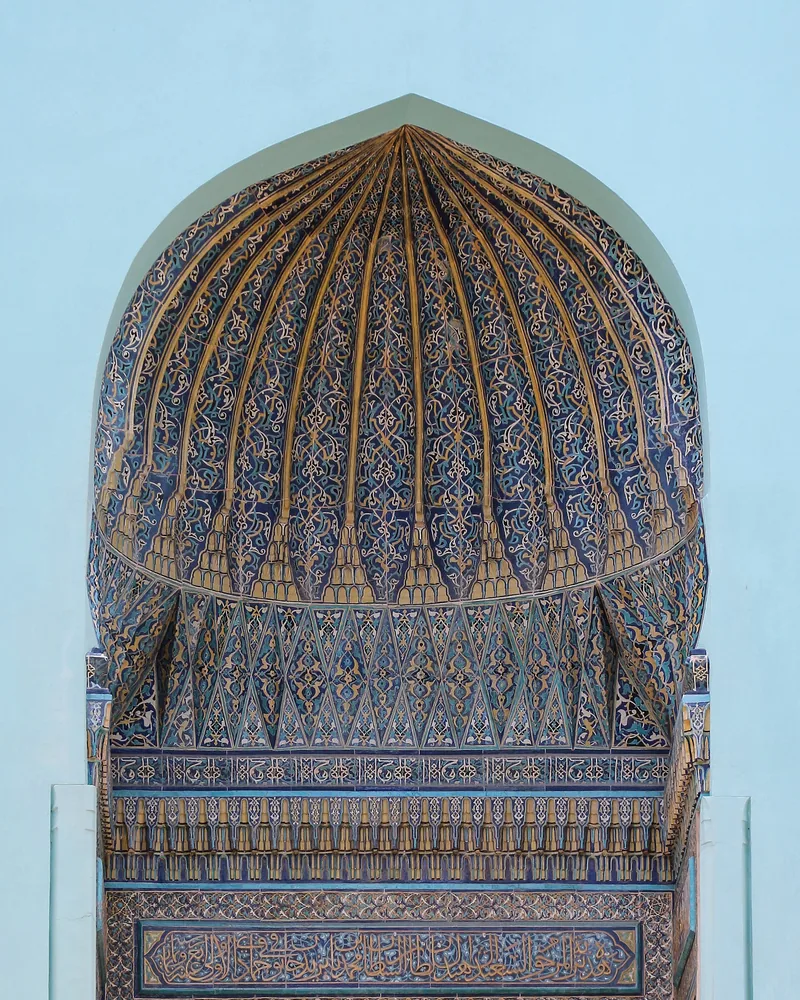
Yeşil complex · yeşil = green
A mosque, a tomb and a museum
- Yeşil Cami
- Built in 1419 by Çelebi Sultan Mehmed (Mehmed I); architect Hacı İvaz Paşa. An inverted-T plan; most of the inside is tiled, and the tile mihrap (prayer niche) is more than 10 m high.
- Yeşil Türbe
- Built in 1421 for Çelebi Mehmed, on higher ground than the mosque. An octagon in turquoise tiles. He lies inside with four daughters, two sons and his nurses.
- The door
- Badly damaged in the 1855 earthquake and repaired in 1864.
- Getting there
- Buses from the centre to the Yeşil district.
Culture Portal, checked 03.11.2026
Museum beside Yeşil Cami · open every day
The Bursa Türk-İslam Eserleri Müzesi (Turkish and Islamic Art Museum) stands beside Yeşil Cami; its visitor sheet says it moved into the Yeşil Medrese in 1930. From 1 April to 1 October it is open 08:00–19:00, ticket office closing 18:30; from 1 October to 1 April 08:00–17:00, ticket office closing 16:30. The sheet asks visitors to check the website for current hours (Ministry of Culture and Tourism, muze.gov.tr, checked 03.11.2026).
Muradiye complex · Murad II
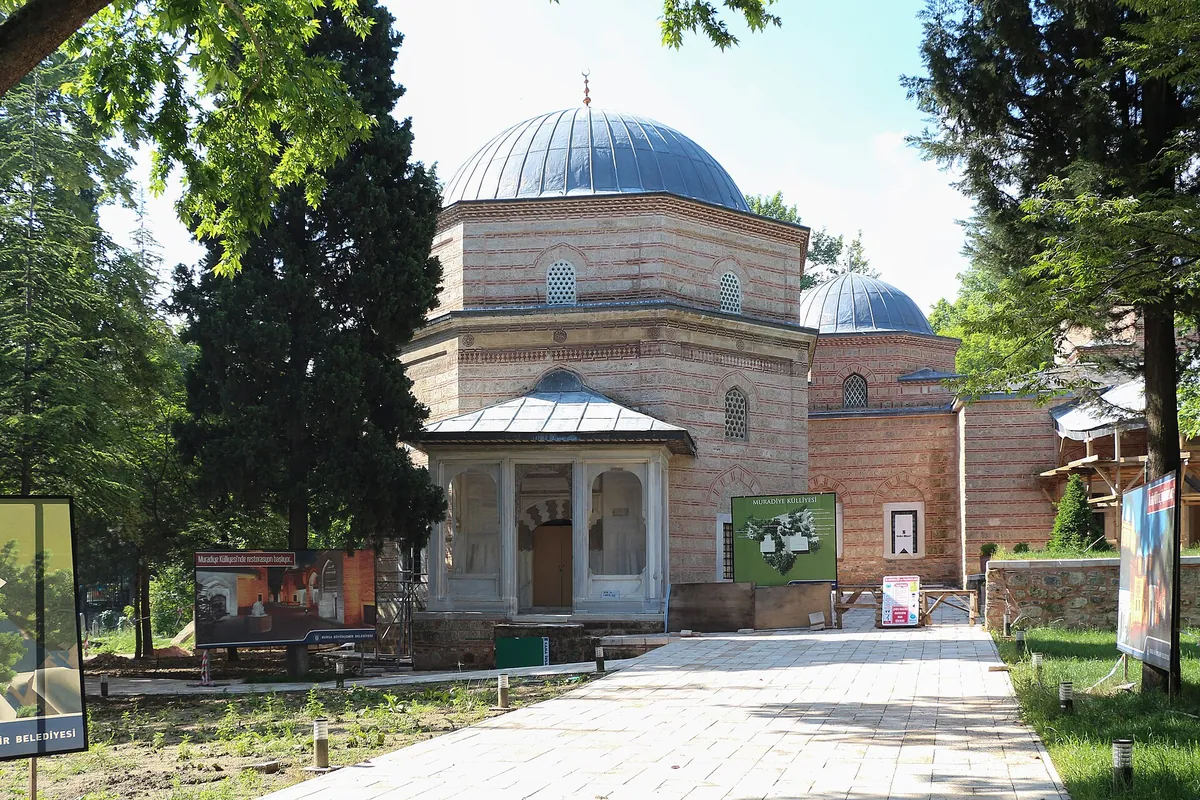
The last complex the sultans built in Bursa
- Built
- June 1425 to November 1426, for Murad II.
- Parts
- A mosque, a medrese, an imaret, a hamam and tombs. Twelve tombs stand in a garden, one outside it; Murad II and his relatives lie there.
- Where
- Muradiye Mahallesi, 2. Murad Caddesi. Buses go to the Muradiye district.
Culture Portal, checked 03.11.2026
In 2014 UNESCO listed «Bursa and Cumalıkızık: The Birth of the Ottoman Empire» in the cultural category. The Culture Portal names its six parts:
- the Hans area with the complex of Orhan Gazi;
- the Hüdavendigâr complex (Murad I);
- the Yıldırım complex (Bayezid I);
- the Yeşil complex (Mehmed I);
- the Muradiye complex (Murad II);
- the village of Cumalıkızık.
Cumalıkızık: the Ottoman foundation village
Cumalıkızık lies at the foot of Uludağ and is one of the places where the Ottomans first settled around Bursa. 270 houses stand, 180 of them still in use; on some, protection and restoration work is going on. It was founded as a vakıf köyü: a village whose income belongs to a vakıf, an endowment that pays for a mosque, a school or a similar charity.
The houses
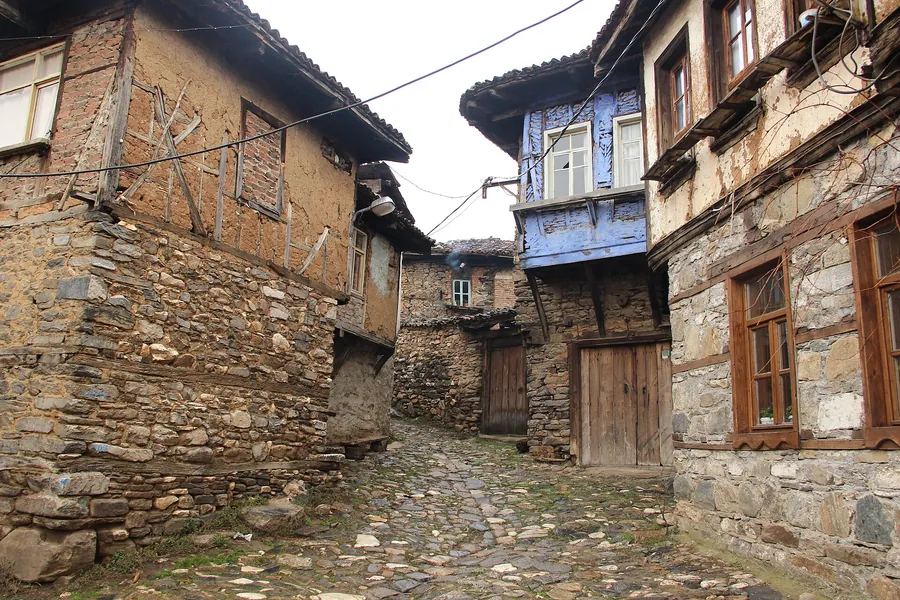
Three storeys, stone and timber
- Materials
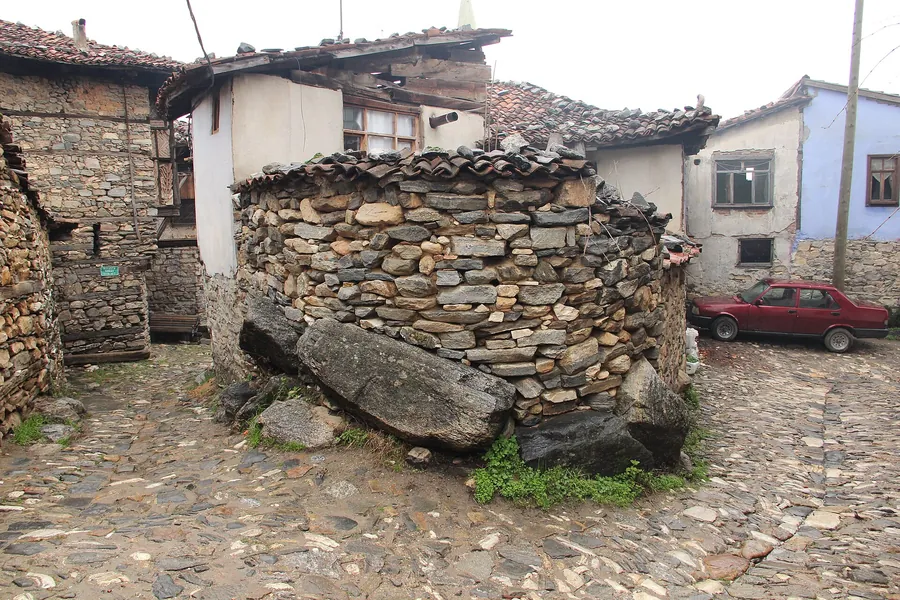
- Rubble stone first, then timber and mud brick. Most houses have three storeys and a roof of curved tiles with deep eaves.
- Windows
- Upper floors have lattice windows or bay windows (cumba). From the street the inside cannot be seen.
- Colours
- The timber is mostly left unpainted; the walls are limewashed yellow, white, purple and blue.
- Doors
- Double doors, usually of walnut, bound with forged iron bands and large-headed nails.
Culture Portal, checked 03.11.2026
The name Cumalıkızık has a story. The Ottomans called the villages squeezed between the steep foothills and the valleys north of Uludağ kızık.
- KızıkThe villages in the steep country north of Uludağ.
- Derekızık, FidyekızıkThe one near the stream (dere), and the one that paid a ransom (fidye).
- CumalıkızıkThe village whose people went together to the Friday prayer (cuma = Friday).
In the village
A mosque, a museum and a market
- Mosque
- In the village square, from the 17th century, with a timber porch.
- Museum
- The Cumalıkızık Etnografya Müzesi (ethnography museum), by the plane trees at the entrance, shows farm tools and household goods.
- Today
- Some houses are guesthouses, restaurants and gift shops; local products are sold at the square’s market and on street stalls.
- Getting there
- Buses from the centre go to the village; minibuses run on the Ankara road.
Culture Portal, checked 03.11.2026
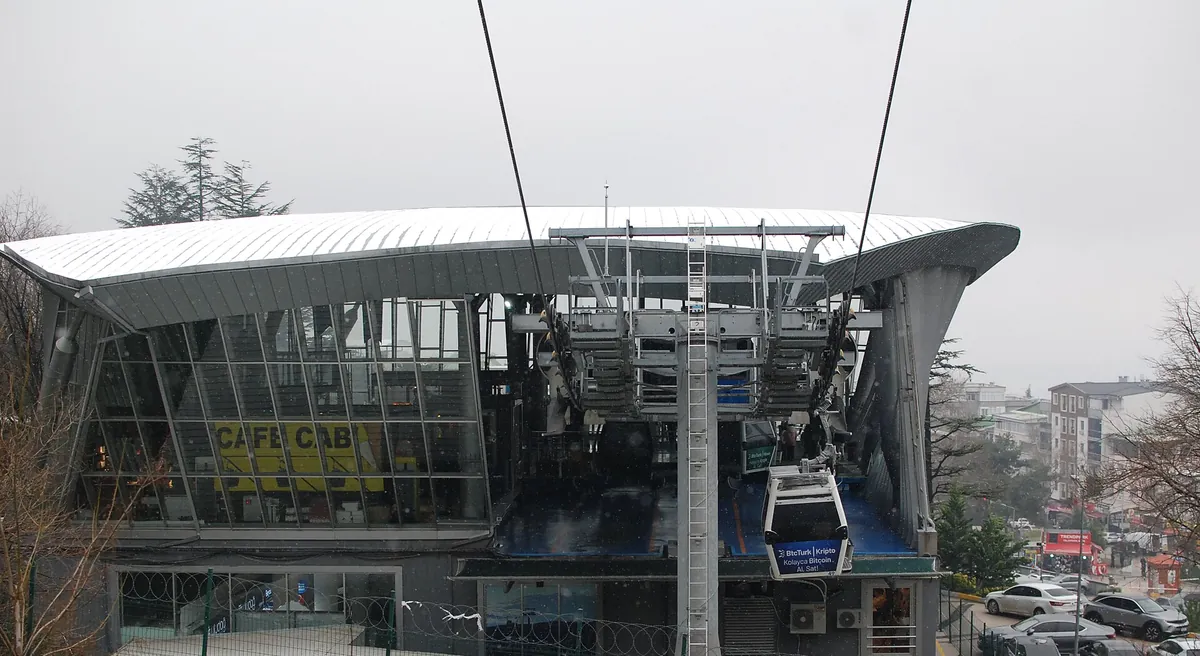
Uludağ and the cable car: from the plain to the mountain
Uludağ rises to 2,543 m at its summit, Uludağ Tepe, 36 km south of the city. It became a national park in 1961 and has been a skiing place since 1933. The cable car, the Teleferik, climbs its flank from the district of Teferrüç.
- TeferrüçThe lower station, in the city. Buses from the centre go to Teferrüç.
- Kadıyayla · 1,231 mA station at 1,231 m (yayla = high summer pasture).
- Sarıalan · 1,635 mBy road it is 36 km and more than 300 bends away; by cable car the page gives 12 minutes.
- Oteller · 1,810 mThe station of the second hotel zone (oteller = hotels).
Bursa Teleferik · the cable car
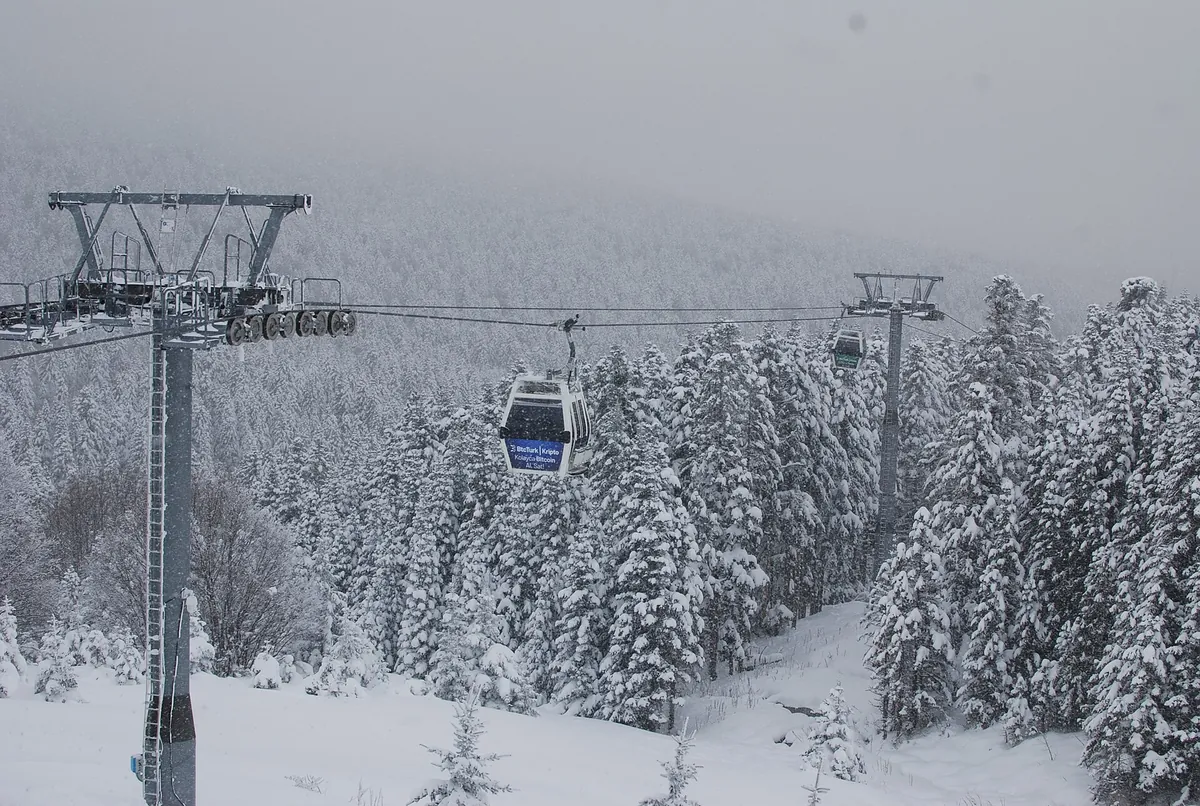
Türkiye’s first cable car, rebuilt
- Opened
- 29 October 1963; the same technology ran until 2012. Technology, infrastructure and stations were renewed and the line reopened on 7 June 2014.
- Cabins
- 144 cabins of 8 seats, one every 20 seconds, 1,500 people an hour.
- Address
- Piremir Mahallesi (neighbourhood), Teleferik Caddesi No. 88, Yıldırım.
- Getting there
- Buses from the centre to Teferrüç, then the cable car to Kadıyayla, Sarıalan and the Oteller zone.
Culture Portal, text by Bursa Teleferik A.Ş. (the operator), checked 03.11.2026
Not given here
The cable car’s opening hours and fares. The Culture Portal’s page prints neither, and the operator’s own page could not be read for this page. The Culture Portal names the operator as Bursa Teleferik A.Ş. and its site as bursateleferik.com.tr (checked 03.11.2026).
Uludağ National Park
A national park of 12,762 hectares
- Land
- 71% forest and 28% pasture and rock.
- Skiing
- Skiing has taken place on Uludağ since 1933.
- Ice age
- The Culture Portal writes that Türkiye’s first ice-age traces are seen on Uludağ, with glacial lakes on the high ground.
- By road
- Minibuses and taxis to Uludağ leave from the Tophane district in the centre.
Culture Portal, checked 03.11.2026
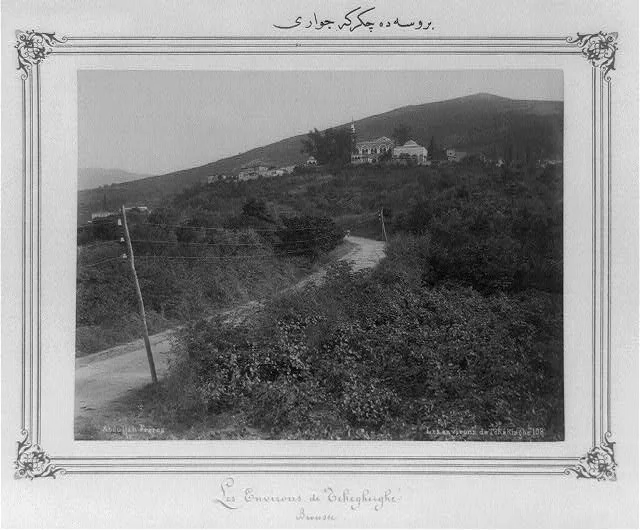
Çekirge: the baths district
Çekirge lies west of the centre. In Byzantine times it was a separate place called Pythia, and the TDV calls it the well-known baths district. A kaplıca is a bath built at a hot spring and a hamam the bath house itself. For how the springs work, see Thermal Springs in Turkey; for what happens inside, A Day at a Turkish Hammam.
Eski Kaplıca
Also called Armutlu Hamamı. Various sources say a Byzantine bath stood here. Bayezid II added the cooling room (soğukluk) in 1511. The hot room’s dome rests on eight columns round a pool 7 m across; the columns, capitals and the lion-mouth tap are Byzantine. The roof was tiled in 1612.
Yeni Kaplıca
Built in 1552 by Rüstem Paşa, son-in-law of Süleyman I, on the site of a small bath. The water in the entrance room arrives unmixed and is very hot.
Kükürtlü Kaplıcaları
Seven springs between the centre and Çekirge, behind the Kükürtlü garden. The water is sulphurous, between 54 and 84 °C. The men’s part was built for Murad I, the women’s part for Bayezid II; more was added under Süleyman I.
Getting there: dolmuş (shared minibuses) and buses go to Çekirge, says the Culture Portal.
Karagöz and Hacivat: the shadow play and its Bursa legend
Karagöz is a shadow play. Figures (tasvir) cut from camel or buffalo hide are fixed to sticks and moved against a white screen (perde) with a light behind it. The player is the hayali. UNESCO put Karagöz on its Representative List of the Intangible Cultural Heritage of Humanity in 2009, the Culture Portal writes.
- The figuresHuman, animal and object shapes cut from hide, fixed to sticks.
- The screenWhite cloth with a light behind it; the figures move against it.
- The playerThe hayali creates the play and changes scenes and subject to suit the audience.
- The two heroesKaragöz is unschooled, brave and quick to anger; Hacivat is educated, well spoken and keeps his own interest first.
A legend, not a record
The legend says Karagöz and Hacivat were a blacksmith and a mason building the mosque of Orhan Gazi in Bursa. Their talk held up the other workers, so Orhan punished them. The people and the workers were saddened, and Şeyh Küşteri, seeing the ruler’s grief, acted out their talk behind a screen with his shoes. Since then their talk and their leather figures have been played on a screen. The Culture Portal tells it from a 2011 study in the folk-culture archive of the Bursa provincial directorate.
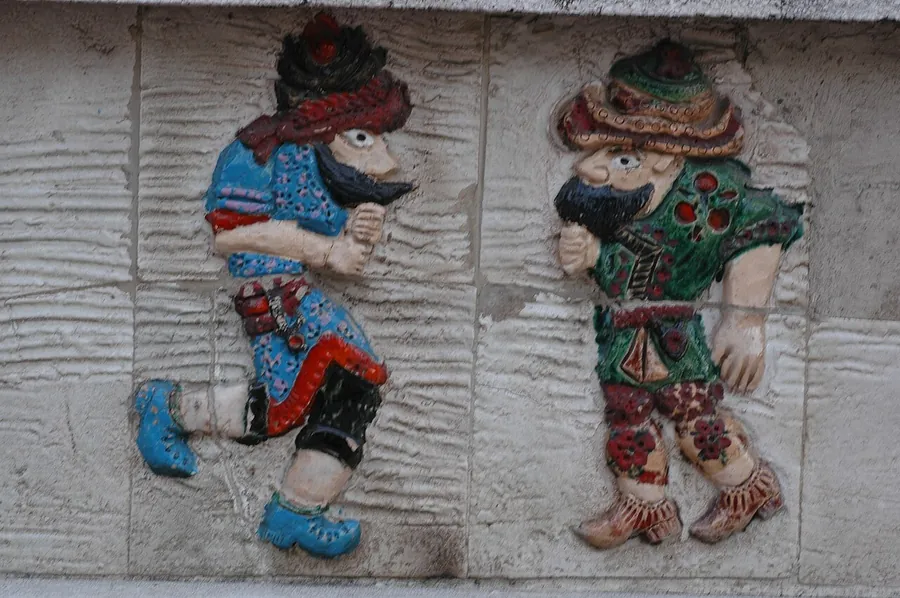
Çekirge Caddesi · the monument
A concrete screen with tile figures
- What
- A symbolic screen of concrete with ceramic relief figures of Karagöz and Hacivat; three symbolic gravestones stand behind it.
- Origin
- The Culture Portal says it was made in 1950 from a tomb thought to lie in the Yoğurtlu Baba dervish lodge, the oldest cemetery in Bursa.
- Getting there
- The monument is on Çekirge Caddesi; dolmuş and buses go to Çekirge.
Culture Portal, checked 03.11.2026
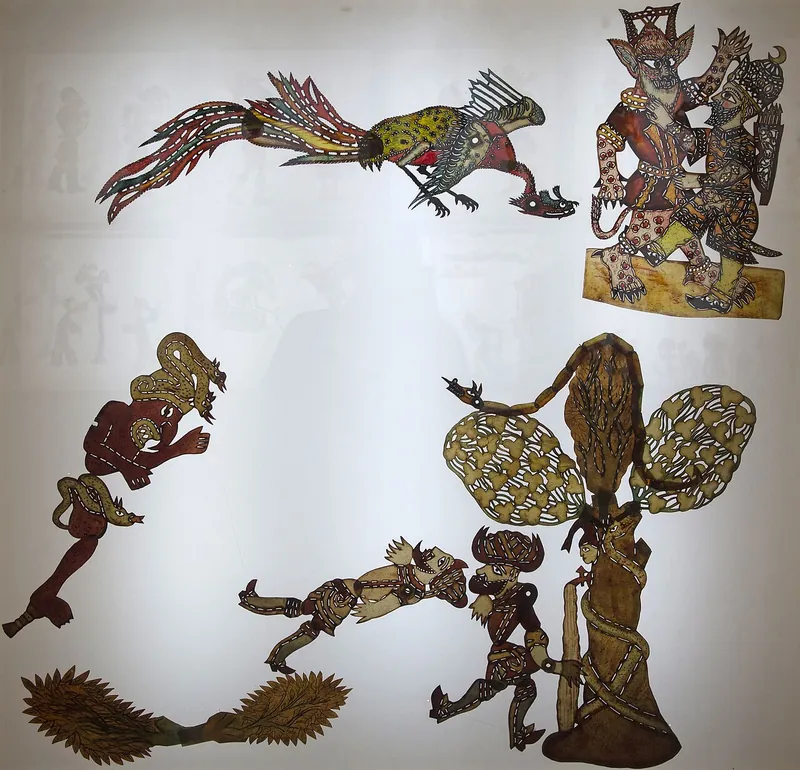
Karagöz Evi Müzesi · the Karagöz House Museum
Opposite the monument
- Opened
- 1997. Karagöz shows are held regularly. The Culture Portal calls it Türkiye’s only Karagöz museum.
- Collection
- Karagöz figures from the private collection of Şinasi Çelikkol, puppets and shadow figures from several countries, and items from Turkmen and Yörük villages.
- Today
- The tradition is kept alive here and young hayali are trained.
Culture Portal, checked 03.11.2026
Getting there and around: by bus, rail and cable car
For most places the Culture Portal gives the way as a bus or minibus from the centre; none of the pages read names a stop or a timetable. Burulaş is the city’s transport company; its pages list buses, the BursaRay rail, the Bursakart card, a sea-bus service and the timetables of the rail lines.
How do I get to…?
Tap a place.
The sights in the city
- Ulu Cami
- In the centre on Atatürk Caddesi, opposite the PTT (post office).
- Yeşil Cami and Türbe
- Buses from the centre to the Yeşil district.
- Muradiye
- Buses to the Muradiye district.
- Çekirge and Karagöz
- Dolmuş and buses to Çekirge.
Culture Portal, checked 03.11.2026. No route numbers are printed.
Uludağ
- Cable car
- Buses from the centre to Teferrüç, then the cable car.
- By road
- Minibuses and taxis from the Tophane district. To Sarıalan it is 36 km with more than 300 bends.
Culture Portal, checked 03.11.2026.
Cumalıkızık
- Bus
- Buses from the centre that go to the village.
- Minibus
- Minibuses on the Ankara road.
Culture Portal, checked 03.11.2026.
BursaRay
- What
- A rail system joining the city’s east, west and north. BurTram is the tram, line T1.
- Timetables
- Each line has a page for departure times, route and rules on the Burulaş site.
Burulaş, checked 03.11.2026.
Yenişehir airport
- Distance
- 50 km from the city centre.
- Ways
- Burulaş municipal buses from Kent Meydanı, commercial taxis or a private car. Car hire is available at the airport.
- Bus times
- On the Bursakart page bursakart.com.tr/howtogo.
- The airport
- In service since 2000, civil and military, domestic and international; code YEI; terminal 12,716 m².
DHMİ (Devlet Hava Meydanları İşletmesi, the State Airports Authority), checked 03.11.2026.
BUDO, the sea-bus service, is listed among the Burulaş services.
Words to say: ask the way, the bus, the hours
Nine lines with the meaning beside each. Copy puts a line on the phone’s clipboard.
| Word | Plain meaning |
|---|---|
| cami | mosque |
| türbe | tomb |
| külliye | a complex built round a mosque, with school, bath, kitchen and tombs |
| han | a merchants’ inn round a courtyard |
| çarşı | a market street |
| kaplıca, hamam | a bath at a hot spring; a bath house |
| teleferik | cable car |
| köy | village |
| vakıf | an endowment whose income pays for a mosque, school or similar charity |
| hayali | the player of the Karagöz shadow play |
| perde | the screen of the shadow play |
| dolmuş | a shared minibus |
Quick answers
Which parts of Bursa are World Heritage?
Six parts: the Hans area with the complex of Orhan Gazi, the Hüdavendigâr, Yıldırım, Yeşil and Muradiye complexes, and the village of Cumalıkızık. UNESCO listed them in 2014 (Culture Portal).
How do I get to Cumalıkızık?
By the buses from the centre that go to the village, or by minibus on the Ankara road (Culture Portal).
How do I reach Uludağ?
By bus from the centre to Teferrüç and then the cable car, or by minibus or taxi from the Tophane district (Culture Portal).
Where does the cable car go?
From the Teferrüç station in the city up to Kadıyayla (1,231 m), Sarıalan (1,635 m) and the Oteller (hotels) zone (1,810 m) (Culture Portal).
When is the Turkish and Islamic Art Museum open?
Every day. From 1 April to 1 October 08:00–19:00; from 1 October to 1 April 08:00–17:00; the ticket office closes half an hour earlier (18:30 and 16:30). The sheet asks visitors to check the website (muze.gov.tr, checked 03.11.2026).
Sources
The photos come from Wikimedia Commons with author, date and licence in each caption; they are cropped and resized, nothing else.
- Bursa and Cumalıkızık: The Birth of the Ottoman Empire — Culture Portal, Ministry of Culture and Tourism, checked 03.11.2026
- Bursa — TDV İslâm Ansiklopedisi, checked 03.11.2026
- Bursa Ulu Cami — Culture Portal, checked 03.11.2026
- Yeşil Cami — Culture Portal, checked 03.11.2026
- Yeşil Türbe — Culture Portal, checked 03.11.2026
- Muradiye Külliyesi — Culture Portal, checked 03.11.2026
- Cumalıkızık Köyü — Culture Portal, checked 03.11.2026
- Uludağ Milli Parkı — Culture Portal, checked 03.11.2026
- Bursa Teleferik — Culture Portal, checked 03.11.2026
- Bursa Eski Kaplıca — Culture Portal, checked 03.11.2026
- Yeni Kaplıca Erkekler Hamamı — Culture Portal, checked 03.11.2026
- Kükürtlü Kaplıcaları — Culture Portal, checked 03.11.2026
- Karagöz ve Hacivat — Culture Portal, checked 03.11.2026
- Karagöz Evi Müzesi — Culture Portal, checked 03.11.2026
- Bursa İli Genel Bilgiler — Bursa İl Kültür ve Turizm Müdürlüğü, checked 03.11.2026
- Bursa Türk-İslam Eserleri Müzesi, visitor sheet — Ministry of Culture and Tourism, muze.gov.tr, checked 03.11.2026
- Bursa Yenişehir Havalimanı: Genel Bilgiler — DHMİ, checked 03.11.2026
- Bursa Yenişehir Havalimanı: Ulaşım — DHMİ, checked 03.11.2026
- BursaRay — Burulaş, checked 03.11.2026