Istanbul Public Transport Guide: 2026 Prices, Maps & Survival Tips
Table of Contents
Istanbul doesn’t just have traffic; it has a logistical state of emergency that lasts 24 hours a day. With 16 million people fighting for space on two continents, moving through this city is a contact sport. If you try to wing it, you won’t end up by the Bosphorusyou’ll end up stuck on a bridge, watching your vacation dissolve into exhaust fumes.
The good news? The public transport network is actually world classefficient, massive, and arguably cleaner than many European counterparts. The bad news? It’s unforgiving to the unprepared. Forget your outdated guidebooks. This is the practitioner’s guide to navigating Istanbul in late 2025 and heading into 2026, featuring the hard numbers and the street smarts you actually need.
The Master Key: Istanbulkart
Cash is useless here. You cannot pay the bus driver with lira notes, and trying will only earn you an earful of Turkish slang. You need the Istanbulkart, a rechargeable RFID card that works on everything: metros, buses, ferries, and even the city’s public restrooms.
Pro Tip: Skip the physical machines whenever possible. Download the Istanbulkart App to top up via NFC on your phone. If you must buy a physical card, avoid the chaotic station machines where scammers often lurk. Instead, buy one calmly at a kiosk or a major supermarket chain like Migros.
Verified Prices (December 2025)
Following the aggressive UKOME adjustments in September 2025, these are the current rates. Inflation has hit hard, so don’t be surprised if these numbers shift again by mid-2026.
| Ticket Type | Price (TL) | The Reality |
|---|---|---|
| Standard Electronic Ticket | 35.00 ₺ | Base fare for most single rides |
| Student (Öğrenci) | 17.08 ₺ | Requires a registered resident ID |
| Social / Teacher | 25.06 ₺ | Discounted rate |
| Marmaray (Full Track) | 59.76 ₺ | The maximum deducted upfront |
| Marmaray (Short Trip) | 27.00 ₺ | 1-7 Stations (Refund required!) |
| Metrobus (Max Distance) | 51.96 ₺ | 34+ Stations |
Living here? If you’ve managed to navigate the rental market in Istanbul and have a residency permit, apply for the Mavi Kart (Blue Card). It offers unlimited rides for a flat monthly fee, currently 2,748.00 TL.
The Arsenal: What to Use (and What to Avoid)
1. Metro & Marmaray: The Lifesavers
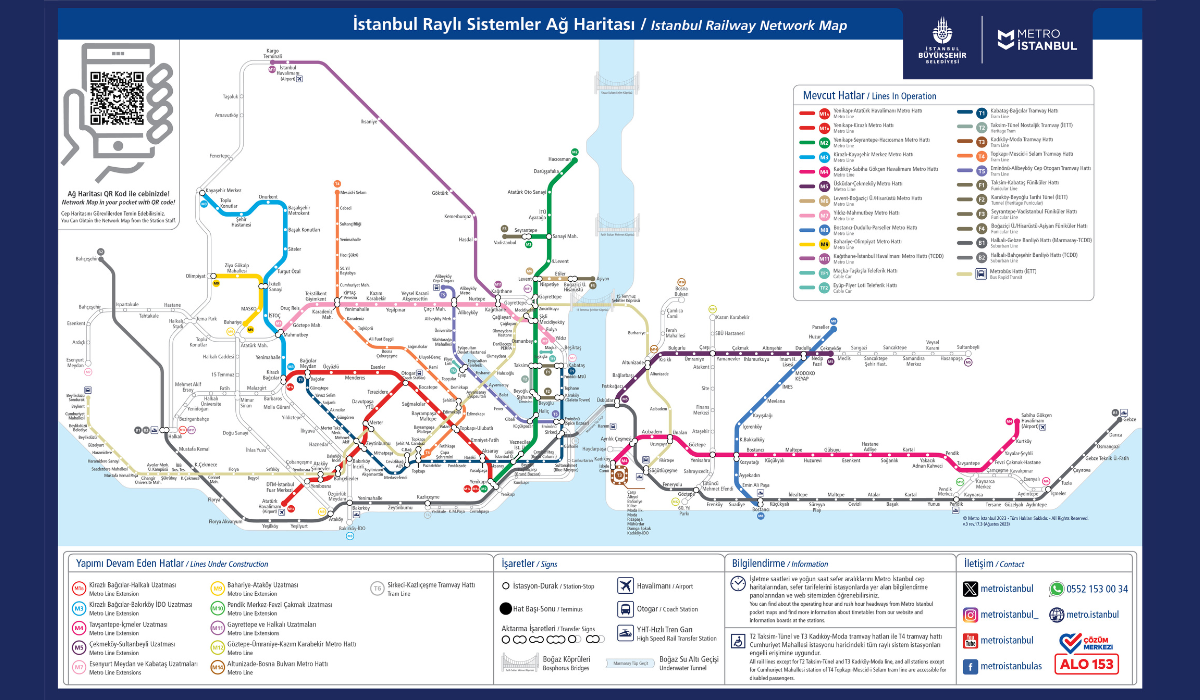
The metro is the only thing in this city immune to traffic jams. The network is expanding aggressively, making it the backbone of any smart itinerary.
- Marmaray: This engineering marvel connects Europe and Asia via a tunnel under the Bosphorus. It is fast, efficient, and notoriously crowded. Crucial Warning: The system deducts the maximum fare (59.76 TL) when you enter. If you travel less than the full distance, you MUST tap your card at the “Refund Machines” (labeled İade) upon exiting to get your money back. If you forget, the city keeps your change.
- M11 (Airport Line): Finally fully operational from Gayrettepe to IST. It’s a game changer. The extension to Halkalı is slated for Q1 2026, which will connect the western suburbs directly to the world.
- M2 (Yenikapı Hacıosman): The tourist artery. It hits all the heavy hitters: Taksim, Şişhane, and the business district of Levent.
2. The Metrobüs: Efficient but Brutal
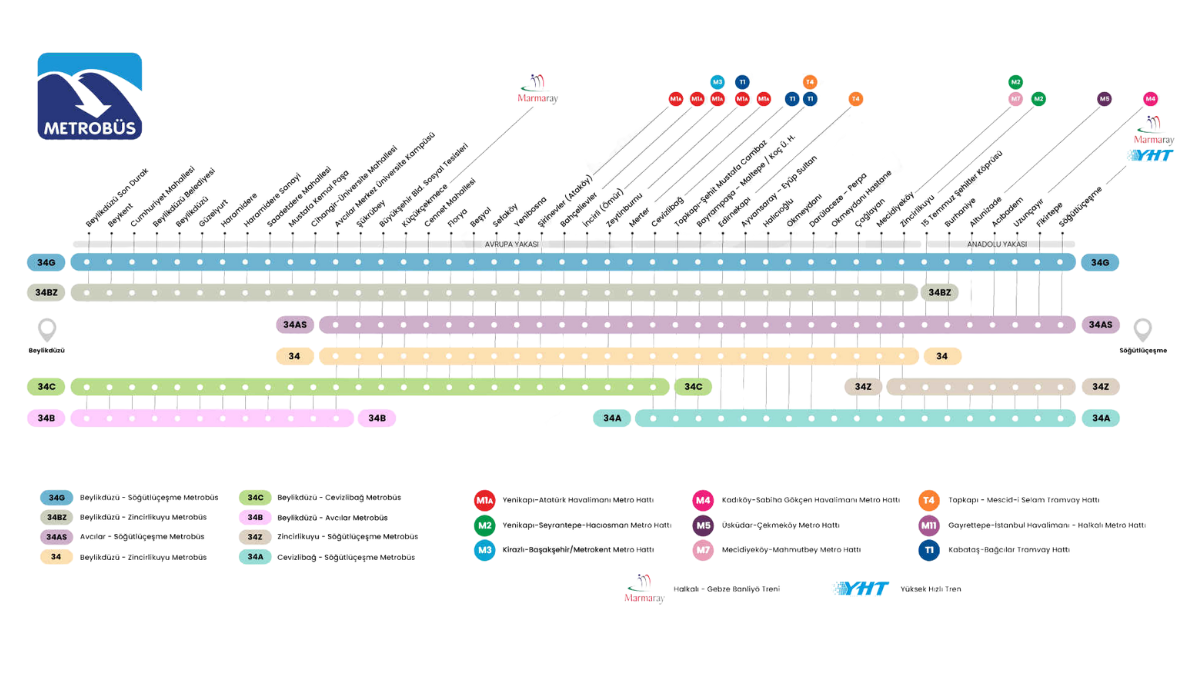
Imagine a bus that thinks it’s a train. The Metrobüs has its own dedicated lane down the middle of the E-5 highway. It never gets stuck in traffic, but it is notoriously packed. This is not for the claustrophobic or those with heavy luggage. If you must use it, avoid the combat zones of 07:30-09:30 and 17:00-19:30.
2025 Pricing Structure: Like the Marmaray, you pay by distance.
1 Station: 25.06 TL
4-9 Stations: 40.01 TL
34+ Stations: 51.96 TL.
3. Ferries & Sea Taxis: The Scenic Route
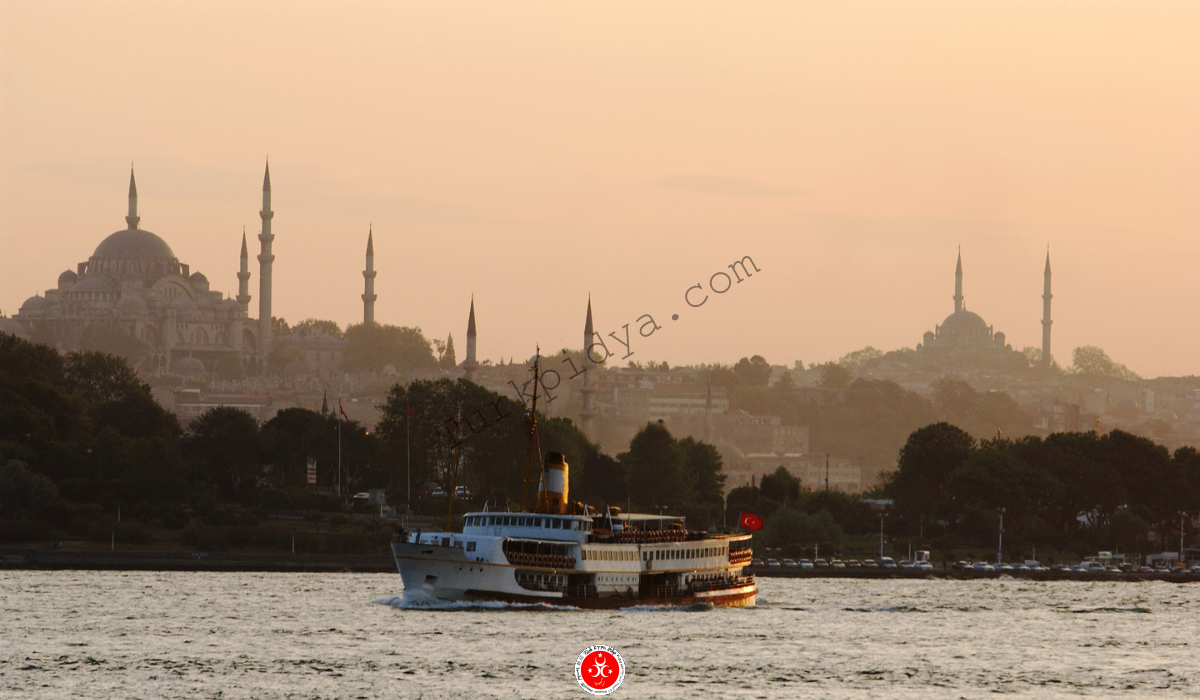
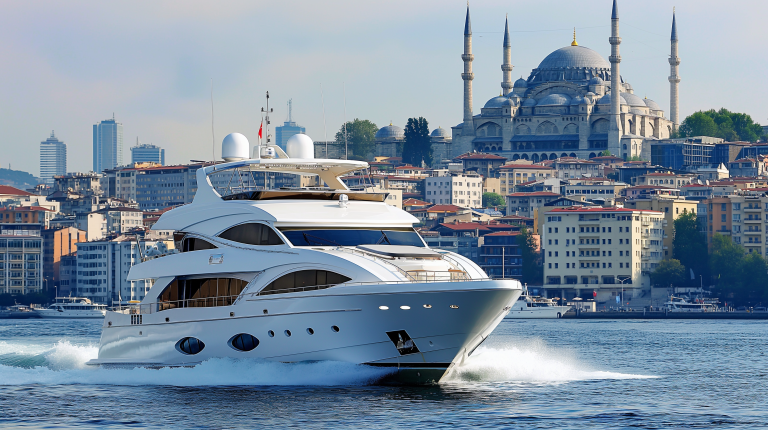
Why sit in a tunnel when you can sip tea and watch dolphins? The public ferries (Vapur) are the soul of the city. For those who want the speed of a private boat without the full cost of renting a private yacht, the IBB Sea Taxis are a fantastic middle ground.
Sea Taxi Update (Late 2025): The confusing tiered pricing is gone. It’s now simple math:
Flag Drop: 500 TL
Per Mile: 750 TL (Fixed).
You can only book these via the “İBB Deniz Taksi” app. Split between 8-10 people, it’s barely more expensive than a standard taxi, but infinitely cooler.
4. Taxis: The Wild West
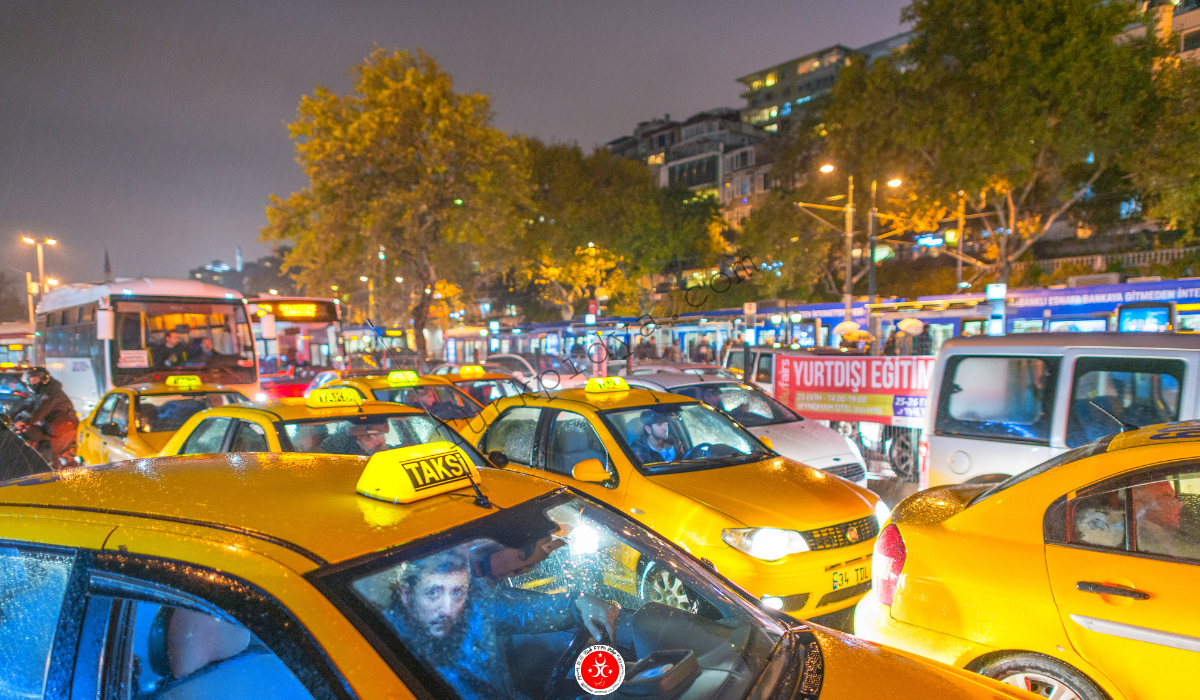
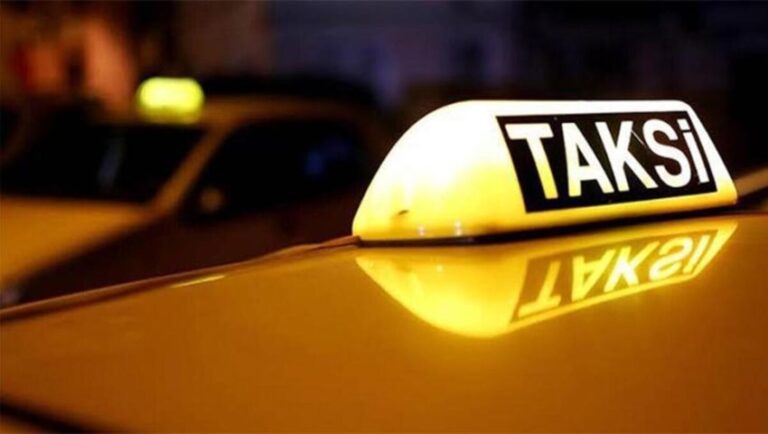
Let’s be blunt: Taking a random taxi on the street is a gamble. Drivers often refuse short distances or try to hustle tourists with “fixed prices.” If you don’t know the Turkish address format or local routes, you are an easy target.
Official Tariffs (Dec 2025):
Start Fee (Açılış): 54.50 TL
Minimum Fare (İndi Bindi): 175.00 TL (This means even if the meter says 60 TL, you owe 175 TL!)
Per Km: 36.30 TL
Survival Tip: Never hail a cab off the street if you can avoid it. Use BiTaksi or Uber (which hails yellow cabs) to lock in the route and create a digital paper trail. If a driver refuses to turn on the meter, get out immediately.
5. Dolmuş & Minibus: Controlled Chaos
These are shared minibuses that stop on demand. They are fast, aggressive, and historically cash only, though the digital transition is underway.
Minibus: Starts at 32.50 TL for short hops.
Dolmuş (Yellow): Slightly more premium, seated passengers only, starting around 30-35 TL.
Airport Logistics: IST & SAW
Istanbul Airport (IST) – European Side
The main hub is massive, but connection is finally seamless.
- The Smart Way: Metro M11. Take the M2 to Gayrettepe and transfer. It’s fast, cheap, and immune to traffic.
- The Comfort Way: Havaist Shuttles. Expect to pay between 265 TL and 355 TL depending on your drop off (e. g., Taksim). Card payment only.
Sabiha Gökçen (SAW) – Asian Side
- The Smart Way: Metro M4. Connects the airport directly to Kadıköy ferry terminal.
- The Backup: Havabus shuttles run to Taksim and Kadıköy reliably, though they are subject to bridge traffic.
The 3 Golden Rules of Istanbul Transport
- Respect the Rush Hour: Between 17:00 and 19:30, surface traffic is a parking lot. Be underground (Metro) or on the water (Ferry). Do not try to cross the bridge in a car during these times.
- Check Your Balance: Top up your Istanbulkart before you are at the turnstile. Nothing enrages a queue of commuters faster than a “Insufficient Funds” beep during rush hour.
- Trust the Right Apps: Google Maps is okay, but Mobiett (official bus data) and Citymapper are often more accurate for real-time Istanbul schedules.
Istanbul is loud, intense, and wonderful. By mastering the transport system, you save not just time, but your sanityleaving you with more energy to hunt for comfortable walking shoes or enjoy a sunset dinner on the Bosphorus.