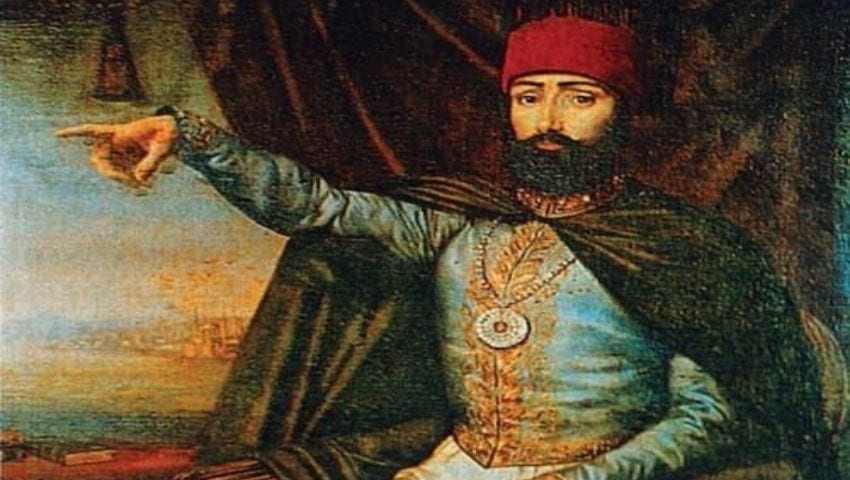
Sultan Mahmud II: The Ottoman Reformer Who Destroyed His Own Army
Table of Contents
Imagine a leader so desperate for progress that he orders artillery fire on his own capital to liquidate his elite defense force. This isn’t a scene from a dystopian novel—it was the reality of Sultan Mahmud II. He remains one of the most fascinating, tragic, and pivotal figures in Ottoman history.
Often referred to as the “Peter the Great of Turkey,” Mahmud II inherited an empire on life support. His diagnosis? The system itself was the disease. His remedy? Radical, sometimes brutal, surgery. He tore down centuries old institutions, swapped the traditional turban for the fez, and replaced medieval mercenaries with a modern fighting force. Yet, his legacy is a complex paradox: while he laid the concrete foundations for the modern Turkish state, he also presided over the dramatic fragmentation of the empire’s map—losing territories from Greece to Egypt.
The Bloody Accession: Surviving the “Golden Cage”
Born on July 20, 1785, during the holy month of Ramadan, Prince Mahmud was the son of Sultan Abdülhamid I and Nakşidil Sultan. But being born a prince was no guarantee of survival. After his father’s death, Mahmud spent his youth in the infamous Kafes (The Cage)—a luxurious prison within the Topkapi Palace designed to keep potential heirs isolated and harmless.
The year 1808 was his trial by fire. His half brother, the reigning Sultan Mustafa IV, ordered the execution of all male relatives to make himself the sole incontestable heir. While his cousin Selim III was murdered, Mahmud narrowly escaped by fleeing across the palace rooftops. Aided by rebels who demanded reform, Mustafa IV was overthrown, and the 23-year old Mahmud ascended the throne as the sole survivor of the Ottoman bloodline.

The “Auspicious Incident”: Crushing the Janissaries
The greatest threat to Mahmud’s life and vision wasn’t a foreign army—it was his own elite guard: the Janissaries. Once the pride of the Ottoman war machine, they had degenerated into a corrupt “deep state” mafia that responded to any talk of modernization with overturned soup cauldrons and bloody mutinies.
Mahmud II played the long game, waiting 18 years for the perfect moment to strike. In 1826, he announced the formation of a new, European style army. Predictably, the Janissaries revolted on June 15, 1826, marching on the palace.
But the Sultan was ready. He unfurled the Holy Standard of the Prophet to rally the public against the rebels and turned his new artillery corps on the Janissary barracks. Thousands were incinerated in the ensuing firestorm or executed in the aftermath. This brutal purge went down in history as the Vaka i Hayriye (The Auspicious Incident). It was a massacre, but in Mahmud’s eyes, it was a necessary amputation to save the dying patient.

The Reformer: Engineering a New Identity
With the Janissary obstacle removed, Mahmud II unleashed a wave of reforms that touched almost every aspect of public life, essentially creating the prototype for the future Turkish Republic. This wasn’t just administrative tweaking; it was a total system reboot.
Military Industrialization
- Prussian Expertise: Mahmud understood he couldn’t do it alone. He invited foreign experts, including the legendary Prussian officer Helmuth von Moltke, to drill his new troops. This tradition of industrial military cooperation laid the groundwork for sectors that thrive today, such as Turkey’s modern iron casting and artillery manufacturing capabilities.
- The Mahmudiye: In 1829, he commissioned the construction of one of the largest sailing warships ever built. The Mahmudiye boasted 128 cannons across three decksa floating fortress that symbolized the empire’s naval ambition. This legacy of naval engineering continues in the top Turkish shipyards of the 21st century.
- Modern Education: He founded a medical military academy and a war college to train officers who could think like Western strategists.

Dress Code as Policy
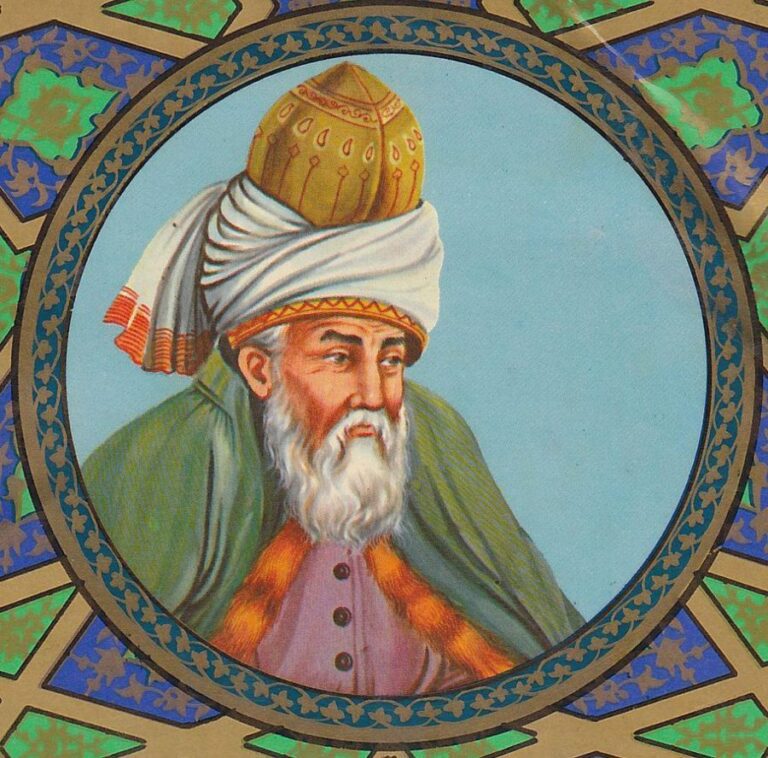
Mahmud grasped the psychology of power: to be modern, one must look modern. He banned the turban for civil servants, replacing it with the Fez, alongside Western trousers and frock coats. What seems traditional to us today was a shocking violation of norms at the time. He was effectively forcing his officials to shed the visual identity of medieval viziers and adopt the look of European bureaucrats.
Education and Bureaucracy
He introduced compulsory primary education (though implementation was a struggle) and sent the first wave of Ottoman students to Europe to study medicine, diplomacy, and engineering. This generation would later become the architects of the Tanzimat reforms, navigating a bureaucratic landscape that was slowly shifting from imperial decree to modern administration.
Great Losses: The Price of Weakness
Despite his Herculean efforts, Mahmud inherited a military that was decades behind its rivals. His reign was scarred by painful territorial amputations that redrew the map of the Middle East.
The Greek War of Independence
In 1821, Greece rose in rebellion against Ottoman rule. Mahmud called upon his powerful Egyptian governor, Muhammad Ali Pasha, for support. While they initially suppressed the uprising, the intervention of European superpowers changed the equation. At the Battle of Navarino (1827), the combined Ottoman Egyptian fleet was annihilated by Allied ships. By 1830, the Empire was forced to recognize Greek independence.
The Betrayal of Muhammad Ali Pasha
The bitterest irony of Mahmud’s rule was that his own vassal, Muhammad Ali Pasha of Egypt, grew stronger than the Sultan himself. When Mahmud refused to grant him governance over Syria, the Egyptian army marched deep into Anatolia. Mahmud was forced into the humiliation of asking Russia for help to save his throne. Just before his death, his army suffered another catastrophic defeat against the Egyptians at the Battle of Nezib in 1839.

Death and Legacy
Sultan Mahmud II passed away on July 1, 1839, at the age of 53, succumbing to tuberculosis. Historians often suggest that the immense stress of governing a crumbling empire accelerated his demise. He died without knowing the full extent of the defeat at Nezib, perhaps sparing him one final heartbreak.
His son, Abdülmecid I, succeeded him and immediately proclaimed the Tanzimat Edict—the very reform program Mahmud had meticulously prepared. Although Mahmud II lost vast territories, he achieved something far more critical: he ensured the survival of the state mechanism itself, transforming it from a medieval relic into a power capable of navigating the modern world.
Family and Lineage
The Ottoman dynasty placed immense importance on pedigree. Mahmud’s lineage traces back through a direct line to Osman I and the legendary Ertuğrul Gazi.
Sultan Mahmud II, son of Abdülhamid I, son of Ahmed III, son of Mehmed IV. tracing back to Osman, son of Ertuğrul Gazi.
As was custom in the Imperial Harem, the Sultan had multiple consorts. Some of the most notable include:
- Bezmiâlem Sultan: Mother of Sultan Abdülmecid I.
- Pertevniyal Sultan: Mother of Sultan Abdülaziz.
- Aşubcan Kadın
- Hoşyar Kadın
Mahmud II’s life serves as a stark reminder that true change is often painful and requires sacrificea lesson that echoes throughout the history of Turkey.