History of Eskişehir: From Ancient Ruins to Modern Cool
Table of Contents
Eskişehir feels like a glitch in the Anatolian matrix. If you walk along the Porsuk River today, with its gondolas and bustling cafes, you might think you’ve stumbled into a localized version of Amsterdam or Venice. But the city’s name gives the game away: literally translated, it means “Old City.” This clash between a youthful, European energy and ancient roots isn’t accidentalit is the result of a 4,000-year struggle for survival at one of history’s most critical crossroads.
The history of Eskişehir isn’t just a dry timeline of kings and conquests. It is a masterclass in resiliencea city that has been burned down and rebuilt more times than most, transforming from a Phrygian stronghold to a modern republican powerhouse.

The Ancient Roots: Dorylaeum (BC Era)
Long before the students and the coffee shops arrived, this location was known as Dorylaeum. While human settlement here dates back roughly 4,000 years, the city really began to take shape under the Phrygians in the 8th century BC. If you are exploring the wider region, similar historical depth can be found in the valleys of Cappadocia, but Eskişehir was always more commercial than geological.
Location was everything. Dorylaeum wasn’t a sleepy village; it was a logistics hub famous for its thermal springs and strategic position on trade routes. Archaeological digs at Şarhöyük confirm that even the Hittites were active here around 1460 BC. Later, both the Romans and Byzantines used the city as a critical military supply basea role it would play repeatedly throughout history.

Sultanönü: The Turkish Transition
The arrival of the Seljuks in the late 11th century (circa 1074 AD) marked a total shift in the region’s identity. Renamed Sultanönü, the city became more than just an administrative center; it became a spiritual incubator.
This era gave birth to the region’s soul. The legendary folk poet Yunus Emre, whose tomb lies nearby in Mihalıçcık, revolutionized Turkish culture here. Unlike the elite court poetry of the time, he wrote in the spoken Turkish of the people, focusing on humanism and divine love. His influence on the Turkish language is comparable to Shakespeare’s influence on English.

The Forgotten Cradle of the Ottoman Empire
Most history books focus on Bursa or Istanbul, but Eskişehir played a pivotal role in the founding of the Ottoman Empire. In 1288, Osman Gazi captured the Byzantine fortress of Karacahisar, located just southwest of the modern city. This wasn’t a minor skirmish; it was the victory that established the Ottomans as a legitimate state power rather than just a nomadic tribe.
There is a fascinating contrast here: While Osman Gazi was laying the groundwork for an empire that would eventually rule lands as far away as the Middle East, Eskişehir itself remained a relatively quiet provincial town for centuries. It wasn’t until the Industrial Revolution that the city woke up again.

The Turning Point: The Iron Horse
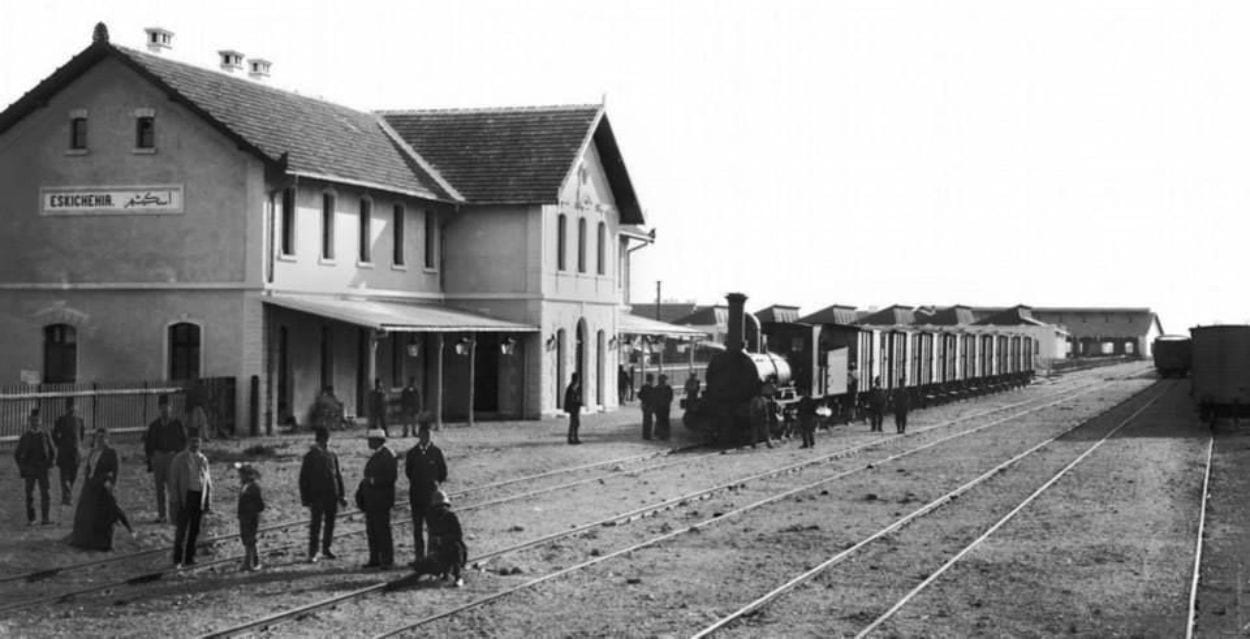
The modern Eskişehir we know today wasn’t born on a battlefieldit was born on the tracks. In the late 19th century, the city became a central hub for the Anatolian Railway, part of the ambitious Berlin Baghdad project. This single infrastructure investment transformed an agrarian town into an industrial heartbeat.
The establishment of massive repair workshops (now Tülomsaş) drew in engineers, traders, and a diverse workforce. Following the Ottoman Russian War (1877-1878), waves of immigrants from the Balkans and the Caucasus settled here, creating a cosmopolitan demographic that still defines the city’s open minded character today. If you are navigating the city today to find these historic districts, make sure you understand the Turkish address format, as neighborhood names often reflect this heritage.

1922: Destruction and Rebirth
The Turkish War of Independence (1919-1923) was the city’s darkest hour. Because of its vital railway junction, Eskişehir was a primary target. It fell under Greek occupation in July 1921, and the liberation on September 2, 1922, came at a staggering cost.
Retreating forces left a trail of scorched earth. Historical records indicate that over 10,000 buildings were destroyed. The city was practically leveled. This destruction explains why Eskişehir looks so planned and modern compared to other Anatolian citiesit had to be rebuilt almost from scratch. It shares this spirit of rugged endurance with the Lycian Way, a trail that also winds through the remnants of civilizations that refused to disappear.

The Republic Era: Capital of Youth
When the Republic was declared in 1923, Eskişehir didn’t just rebuild; it reinvented. Leveraging its industrial railway heritage, it pivoted toward education and aviation. Today, it is arguably Turkey’s most significant university town outside of Istanbul.
With Anadolu University and Osmangazi University anchoring the economy, the city hosts hundreds of thousands of students. This huge youth population drives the liberal, artistic atmosphere that surprises so many visitors. Beyond academia, the city is famous for its craftsmanship, particularly Meerschaum (Lületaşı). This porous white stone, mined locally for centuries, is carved into intricate pipes and jewelry that are prized worldwide.
Eskişehir proves that history isn’t just about preserving ruins. From the Phrygian highlands to the high-speed train station connecting it to Istanbul, the city is a living testament to the ability to adapt, survive, and thrive.