Legalization of Foreign Documents in Turkey: Complete Guide
Table of Contents
You can rent an apartment, open a bank account, and even negotiate a salary in Turkey without much trouble. But the moment you’re asked for a diploma, birth certificate, or marriage record, everything stops. Suddenly, three words matter more than anything else: apostille, legalization, translation.
This guide explains how foreign documents are legalized in Turkey today, using current procedures that still apply in 2026. No guesswork, no outdated prices, just what actually works when you’re standing in front of a notary or government desk.
The Great Document Divide: Apostille vs. Consular Legalization
Everything starts with one question: Is your document from an Apostille Convention country? Turkey treats documents very differently depending on the answer.
- Apostille countries – More than 125 countries, including the US, UK, most of the EU, Australia, and Japan.
- Non‑Apostille countries – Countries like Egypt, Canada, and several Middle Eastern and African states.
You can always check the official and current list on the Hague Conference website: https://www.hcch.net/en/instruments/conventions/status-table/?cid=41
If your country is on that list, your process is shorter and cheaper. If it isn’t, expect extra steps.
If Your Document Comes From an Apostille Country
This is where many people go wrong: apostilles are never issued in Turkey for foreign documents. If your diploma, birth certificate, or court record was issued abroad, it must be apostilled in that same country.
The correct order looks like this:
- Get the apostille in the issuing country – For example, in the US this is done by a state Secretary of State.
- Bring the apostilled document to Turkey.
- Translate it into Turkish using a sworn translator (yeminli tercüman).
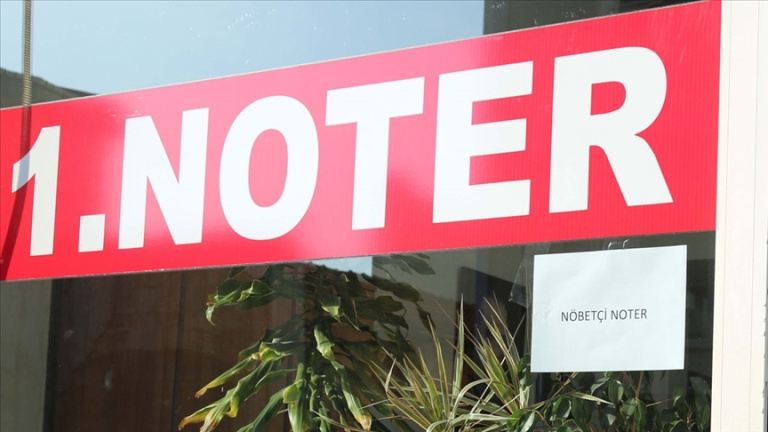
- Notarize the translation at a Turkish notary.
Once the apostille is attached, Turkish authorities will not send you to the Ministry of Foreign Affairs. Translation and notarization are enough.

If Your Document Is From a Non‑Apostille Country
Without an apostille, Turkey requires a chain of official confirmations. You can complete most of this either before you travel or after you arrive.
Method 1: Finish Everything Before You Travel
- Complete internal approvals in your home country.
- Authenticate the document at your country’s Ministry of Foreign Affairs.
- Legalize it at the Turkish embassy or consulate in that country.
- Translate and certify the translation at the same Turkish consulate (recommended).
Documents completed this way usually don’t need further approval once you arrive in Turkey.
Method 2: Complete the Process in Turkey
This option is common if you’re already in Turkey or couldn’t visit a Turkish consulate abroad.
- Authenticate the document at your home country’s Ministry of Foreign Affairs.
- Bring it to Turkey.
- Get certification from your country’s embassy or consulate in Turkey (if offered).
- Translate the document with a sworn translator.
- Notarize the translation.
- Apply to the Turkish Ministry of Foreign Affairs or the local Governor’s Office for final legalization.
This route involves more appointments and waiting time, but it’s sometimes the only practical choice.
Translation and Notary Costs: What to Expect
As of 2026, translation and notary fees in Turkey are still regulated but updated annually. There is no officially published nationwide notary price list confirming fixed figures, so you should always confirm costs locally.
- Sworn translations are typically charged per 1,000 characters and vary by language.
- Notary certification fees depend on document length and number of pages.
Insider tip: translators often work with specific notaries. Using their recommendation can save time and prevent repeat visits.
The Digital Reality: E‑Apostille in Turkey
Turkey’s e‑apostille system is active, but only for Turkish documents going abroad. Foreign documents entering Turkey still require physical apostilles or consular legalization.
Appointments at the Ministry of Foreign Affairs
If your process includes the Turkish Ministry of Foreign Affairs, appointments are mandatory. Walk‑ins are not accepted.
- https://tasdik.mfa.gov.tr
- https://disisleritasdik.mfa.gov.tr
Appointments are handled on weekdays during business hours, and demand can be high.
Important Warning About Apostilled Documents
If your document already has an apostille, do not take it to the Turkish Ministry of Foreign Affairs. Apostilled documents are considered final and cannot be re‑certified.
Common Mistakes That Cause Delays
- Trying to apostille documents in Turkey instead of the issuing country.
- Using non‑sworn translators.
- Assuming every embassy in Turkey offers document authentication.
- Skipping confirmation with the institution requesting the document.
Final Advice Before You Start
Before booking flights or appointments, confirm three things: your country’s apostille status, the exact document required, and whether the receiving institution has extra rules.
Handled step by step, document legalization in Turkey is manageable. Rushed or done in the wrong order, it becomes expensive and slow. A little preparation saves weeks.