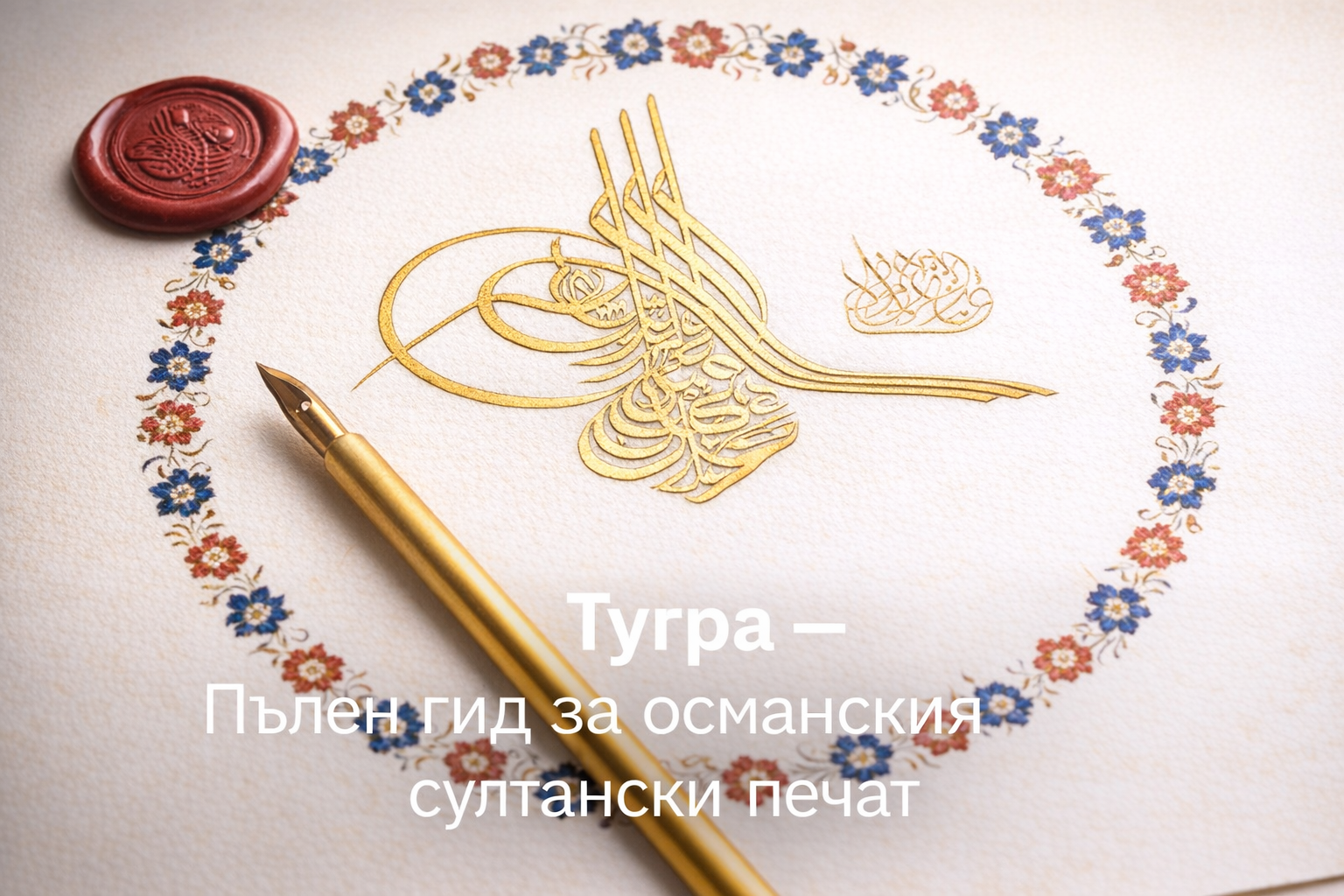
Тугра – Пълен гид за османския султански печат
Table of Contents
That elegant swirl of calligraphy you’ve spotted on Ottoman coins, mosque walls, or gold pendants? That’s a tuğra (тугра) – the royal signature that commanded an empire for over six centuries. But here’s what most people get wrong: it’s not just decorative art. It was the Ottoman equivalent of a presidential seal, nuclear launch codes, and royal stamp all rolled into one.
What Exactly Is a Tuğra?
A tuğra is the official calligraphic monogram and seal of Ottoman sultans, used to authenticate state documents, decrees, coins, and architectural inscriptions. Think of it as the sultan’s unforgeable signature – except infinitely more elaborate.
The oldest surviving Ottoman tuğra belongs to Orhan Gazi, dated March 1324. From that point forward, every sultan had their own unique tuğra created upon ascending the throne.
The Anatomy of a Tuğra
Every tuğra contains three essential elements:
- Sere – the rounded base containing the sultan’s name and title
- Beyze – the oval loops extending to the left
- Tuğ – the vertical strokes shooting upward (representing authority and power)
Tuğra Jewelry and Modern Replicas: What You’ll Pay
Walk through Istanbul’s Grand Bazaar or browse Turkish jewelry shops, and you’ll find tuğra designs everywhere – pendants, rings, brooches, and decorative plaques. Here’s what the market looks like right now:
Current Gold Prices (January 2026)
- 24K gold: approximately 6,200–6,450 TRY per gram
- Finished tuğra pendant price formula: gold weight × current gold price + craftsmanship premium (typically 15-40% extra)
Quick math: A 5-gram 24K gold tuğra pendant runs about 31,000–45,000 TRY before any gemstone additions.
Exchange Rates for Foreign Buyers
- USD/TRY: ≈ 43.03 TRY
- EUR/TRY: ≈ 50.2–50.4 TRY
Pro tip: Gold prices in Turkey often run slightly higher than international spot prices due to import duties. Shop around, and always verify the gram weight yourself.
The Legal Reality: What You Can and Can’t Buy
Here’s where things get serious. Ottoman-era tuğra artifacts are legally classified as movable cultural property in Türkiye. This isn’t a suggestion – it’s law.
What the Law Says (Law No. 2863)
- Export, sale, excavation, or trade of authentic Ottoman tuğra documents requires Ministry of Culture & Tourism authorization
- Authentic historical pieces are either museum-controlled or sold through licensed auction houses only
- Private online sales without documented provenance may violate Turkish cultural-property law
Bottom line: That “authentic Ottoman tuğra document” someone’s selling on Instagram? Either it’s a replica (legal and fine), or you’re looking at a potential legal nightmare. Stick to reputable dealers who provide proper documentation.
What’s Actually Available to Buy
Modern tuğra items on the market fall into three categories:
- Replica jewelry – Gold or silver pieces featuring tuğra designs (completely legal, widely available)
- Calligraphy artworks – Contemporary artists creating new tuğra-style pieces
- Decorative items – Plaques, frames, and ornamental pieces for home décor
Buying Smart: Insider Tips
Before you hand over your lira:
- Verify gold purity – Ask for hallmarks and don’t shy away from requesting a test
- Get a receipt – Proper invoices protect you at customs and for insurance
- Know your sultan – Süleyman the Magnificent’s tuğra is the most popular design; rarer sultans command premium prices
- Size matters – Intricate detail work costs more, regardless of gold weight
Why the Tuğra Still Matters
The tuğra represents more than Ottoman nostalgia. It’s a masterclass in calligraphic art, a symbol of Turkish heritage, and – when crafted in gold – a wearable piece of history that actually holds its value. Just make sure you’re buying the right kind.