Ottoman Egypt: History, Architecture & The Legacy That Shaped Cairo (1517-1914)
Table of Contents
Ottoman Egypt (historically known as Eyalet Egypt) is perhaps the most misunderstood chapter in Middle Eastern history. Walk through Cairo today, and you will see tourists staring up at majestic domes, utterly confused. Is it Mamluk? Is it Ottoman? And frankly, does the difference even matter?
Here is the reality: When Sultan Selim I conquered Egypt in 1517, the story of the Mamluks didn’t endit just went underground. For nearly 400 years (1517-1914), Egypt became the stage for a unique power struggle between the Ottoman Pashas sent from Istanbul and the entrenched local Mamluk elite. This tension forged everything you see today: from the bureaucratic chaos to the social traditions of the hammam and the introduction of coffeehouses that revolutionized Cairo’s nightlife.
This article cuts through the noise. We are skipping the rote memorization of dates to focus on what actually matters: How the Ottomans re engineered Egypt, why their architecture looks radically different, and how figures like Muhammad Ali Pasha eventually catapulted the country into the modern age.
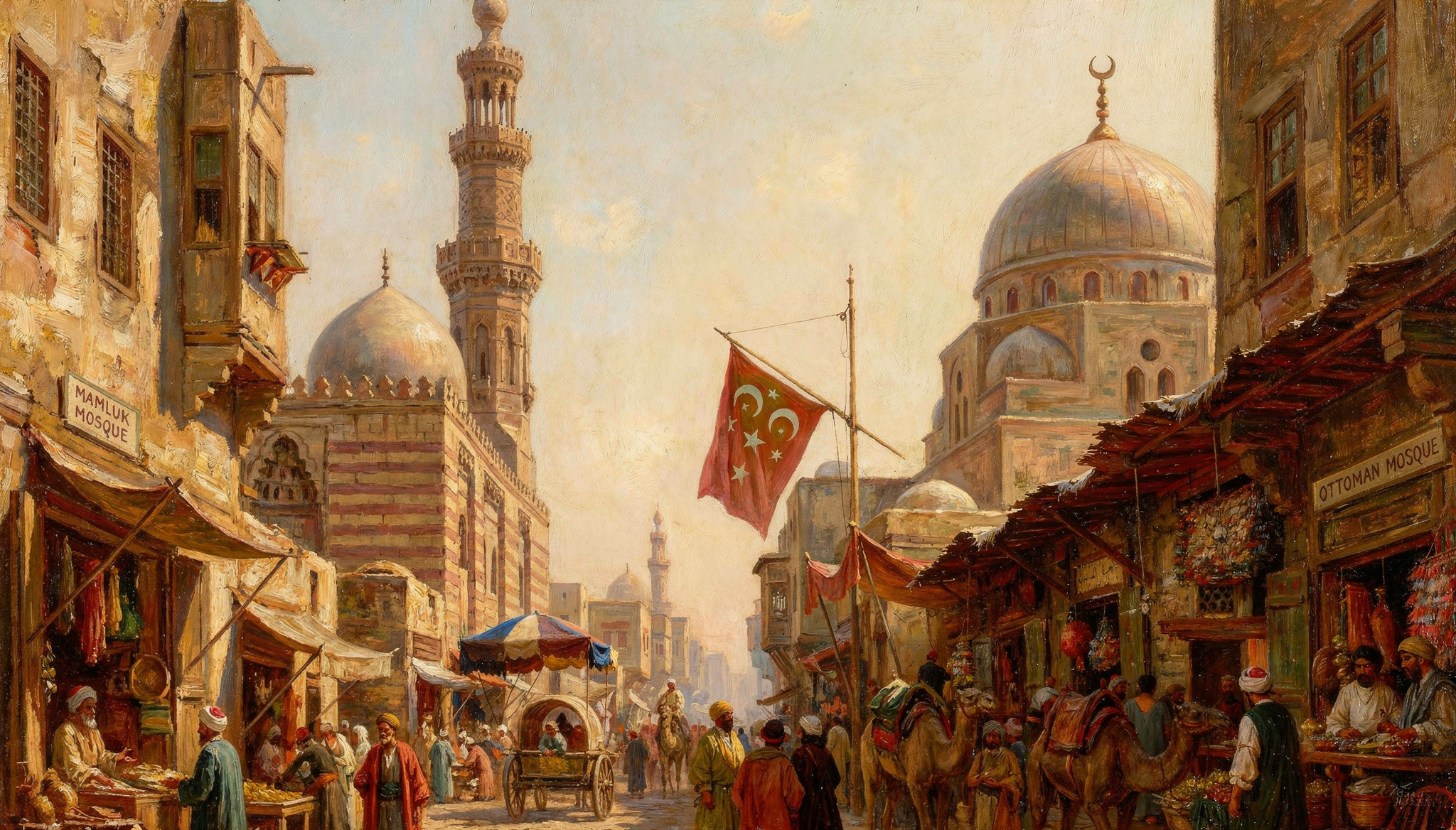
The Turning Point: The Conquest of 1517
It all started with a single battle that sealed the fate of the Middle East. On January 22, 1517, the forces of the Ottoman Sultan Selim I (known as “The Grim”) clashed with the Mamluk army at Ridaniya, just outside Cairo. It was a collision of eras: the traditional, heavy cavalry of the Mamluks versus the modern Ottoman artillery and Janissaries armed with muskets.
The result was decisive. Ottoman firepower obliterated the Mamluk ranks, and the last Mamluk Sultan, Tuman Bay II, was eventually hanged at the Bab Zuweila gate in Cairo. With this victory, Egypt fell to the Ottoman Empire, and Cairo surrendered its status as the center of the Caliphate to Istanbul.
The Connector Lens: This wasn’t just a military win; it was a geopolitical shift. Egypt became the breadbasket of the Ottoman Empire and the guardian of the pilgrimage routes to Mecca and Medina. The reverberations of this shift were felt across the region, much like the cultural echoes found in Yunus Emre’s timeless poetry, which bridged the spiritual gap between Anatolia and the Arab world during these turbulent times.
Architecture: The “Pencil” vs. The Dome
One of the most common mistakes in travel guidebooks is confusing Mamluk and Ottoman architecture. Let’s set the record straight. The Mamluks built like they fought: massive, fortress like structures with heavy stone facades and intricate geometric patterns (think of the Sultan Hassan Mosque, which predates the Ottomans).
The Ottomans imported a completely different aesthetic to Cairo, focused on verticality and central space:
- The “Pencil” Minarets: Slender, needle like minarets that pierce the skya direct stylistic import from Istanbul.
- Central Domes: Instead of the open air courtyards favored by the Mamluks, the Ottomans prioritized large, enclosed prayer halls under massive central domes.
- The Sabil Kuttab: While these structures (a combination of a public fountain and a Quranic school) existed before, the Ottomans perfected them as a primary vehicle for urban charity and influence.
Here are the real Ottoman landmarks you need to hunt for (and what is often falsely categorized):
1. The Mosque of Muhammad Ali (The Alabaster Mosque)
This is the poster child of Ottoman Egypt. Built in the 19th century inside the Citadel of Cairo, it is a deliberate replica of the imperial mosques of Istanbul (like the Blue Mosque). It dominates Cairo’s skyline and serves as the ultimate symbol of Ottoman power projection.
2. The Sulayman Pasha Mosque (1528)
Hidden away in the Citadel, this is the first mosque in Egypt built in the Ottoman style. It is small, intimate, and a perfect example of early Ottoman provincial architecture. The attention to detail here mirrors the craftsmanship found in the modern Turkish tile industry, where design meets durability.
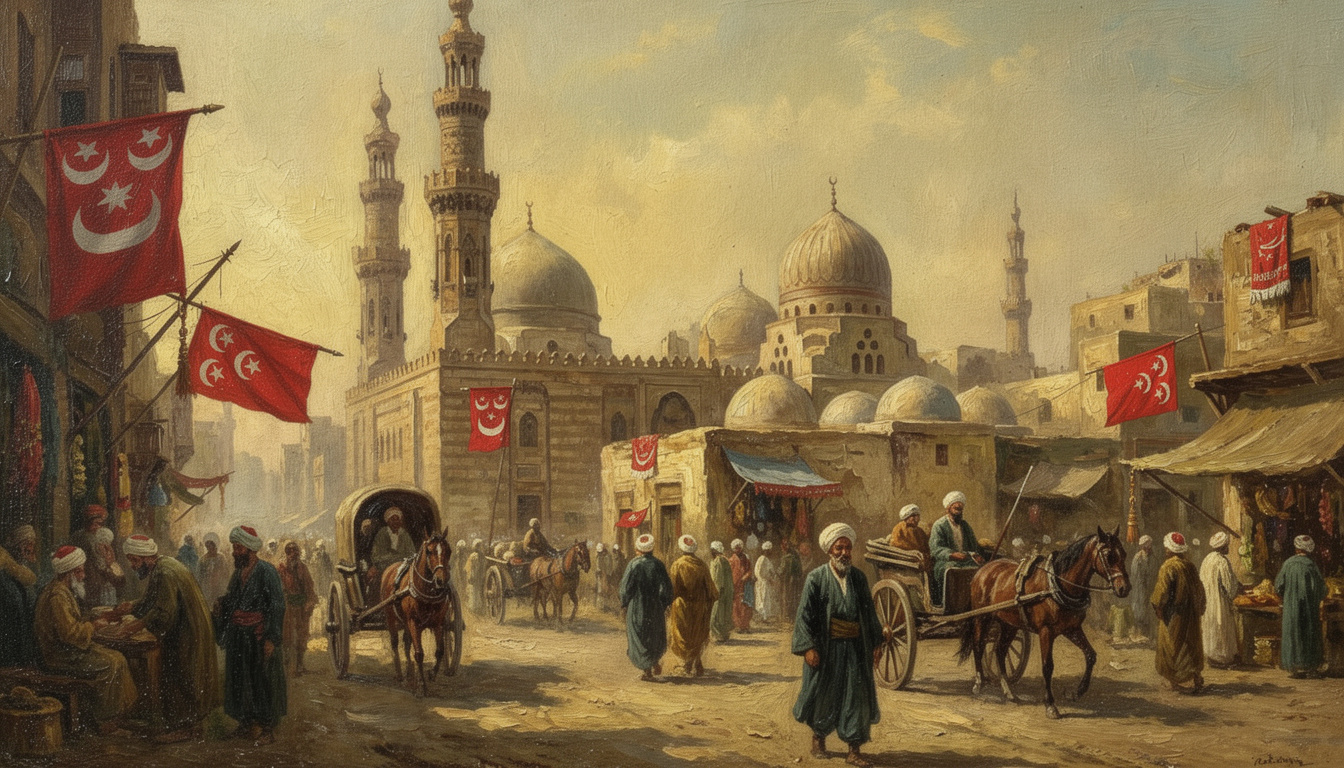
3. Bayt al Suhaymi
A masterpiece of domestic architecture. Bayt al Suhaymi (expanded in 1648) offers a rare glimpse into how the wealthy elite lived in Ottoman Cairo. With its screened mashrabiya windows and naturally cooled courtyards, it is a masterclass in functional designa must visit for anyone interested in historical interiors.
Correction: What is NOT Ottoman
Many sources incorrectly label the Sultan Hassan Mosque and the Sabil Kuttab of Sultan Qaitbay as Ottoman. This is historically inaccurate. These are masterpieces of the Mamluk Era (14th and 15th centuries). While the Ottomans admired these structuresSultan Selim I even considered transporting Mamluk architects to Istanbulthey represent a completely different architectural lineage.
The Cultural Shift: Coffee, Tobacco, and Society
Ottoman rule brought more than just soldiers; it brought a lifestyle revolution. In the 16th century, coffee from Yemen entered Egypt via Ottoman trade routes. The coffeehouse (Kahvehane) emerged as the new social hub where men gathered to trade news, strike deals, andby the 17th centurysmoke tobacco.
This “coffeehouse culture” remains the beating heart of Egyptian social life today. It was a space where religion, business, and leisure intersected in a way that was previously unimaginable.
The 19th Century: The Rise of Muhammad Ali Pasha
No discussion of Ottoman Egypt is complete without Muhammad Ali Pasha. He arrived as an Albanian commander of an Ottoman unit sent to drive out the French (under Napoleon), but he stayed to rule.
Often called the “Founder of Modern Egypt,” Muhammad Ali’s reforms were nothing short of radical:
- Military: He built a modern army modeled after European forces.
- Economy: He introduced large scale cotton cultivation, integrating Egypt into the global market.
- Politics: In a brutal but effective move, he invited the remaining Mamluk Beys to the Citadel in 1811 and massacred them, ending centuries of internal feuding in a single afternoon.
Although technically an Ottoman Viceroy, he acted with total independence, even waging war against the Sultan himself. His dynasty would rule Egypt until the revolution of 1952.
The Decline: From Debt to Occupation
The end of Ottoman Egypt didn’t happen overnight. It was a slow burn, fueled by immense national debt (largely due to the construction of the Suez Canal) and political fragility. In 1882, the British used a local uprising as a pretext to militarily occupy Egypt. Officially, Egypt remained part of the Ottoman Empire until 1914, but real power had shifted to the British Consul General.
Verdict: A Lasting Legacy
Ottoman Egypt was not an era of stagnation, as colonial historians often claimed. It was a period of deep integration into a global empire, the introduction of defining cultural staples (like coffee!), and finally, the painful but transformative leap into modernity under Muhammad Ali.
When you walk through the alleys of “Islamic Cairo” today, you aren’t just looking at stones. You are witnessing the result of 400 years of cultural exchange, political drama, and architectural innovation. It is a story that goes far beyond simple dates on a timeline.