How Mustafa Became Atatürk: The True Story Behind the Name
Table of Contents
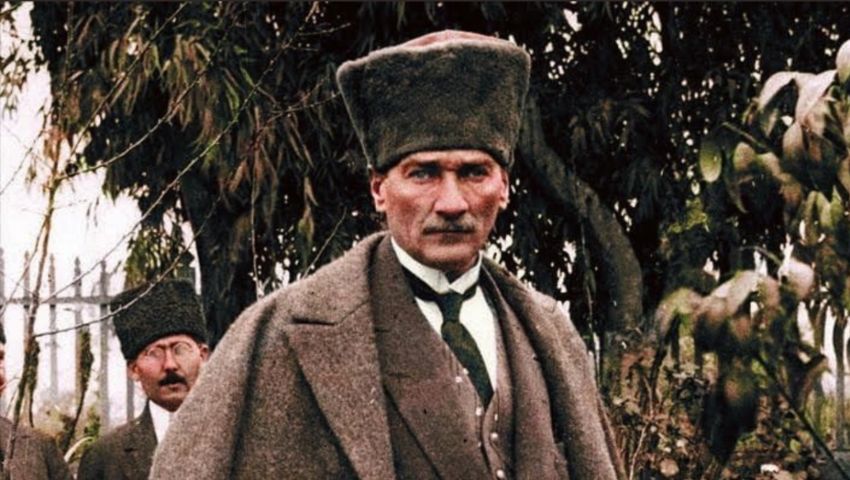
Names are rarely accidental. In the case of Mustafa Kemal Atatürk, his name acts as a timeline for the entire Turkish nation.
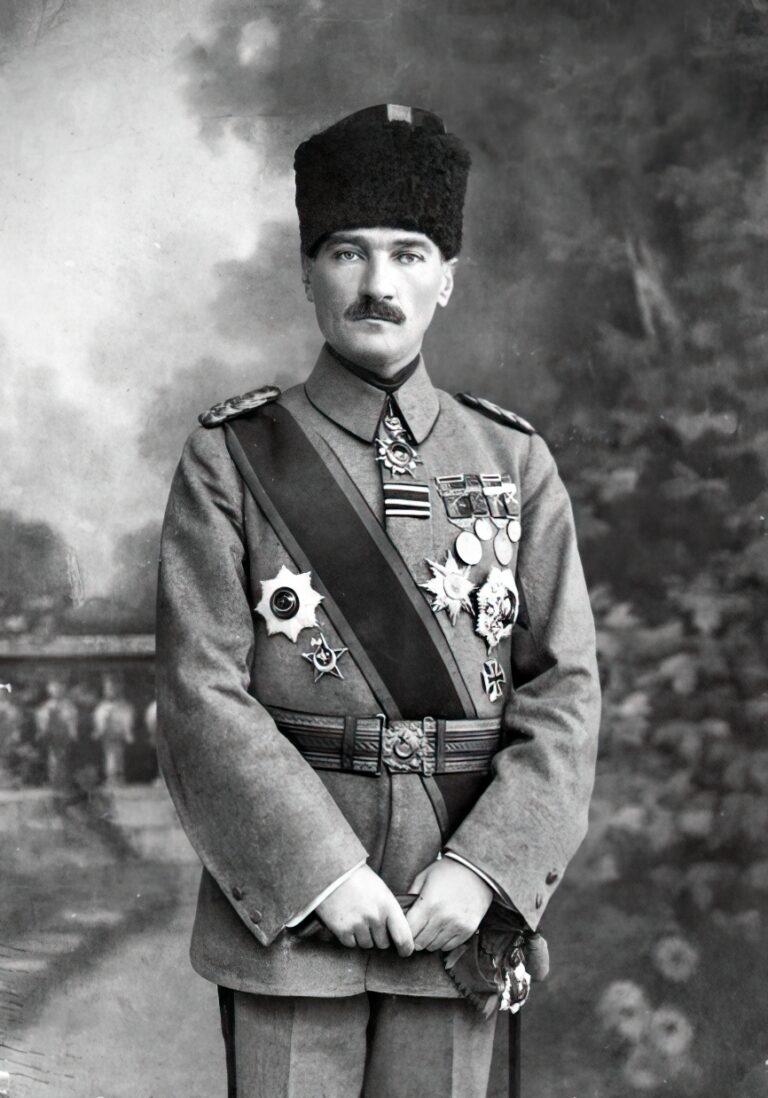
He is the undisputed founding father of modern Turkey, a visionary commander, and a radical reformer. Yet, the man the world reveres as Atatürk was not born with that title. His identity shifted in tandem with the fate of his country: evolving from an Ottoman cadet to the “Father of the Turks.”
This begs the question: What do these names actually mean? And how did a classroom nickname in 1893 lead to a parliamentary decree in 1934? To understand the man, we must look at the three distinct chapters of his identity.
The Breakdown: Anatomy of a Name
The full name entered into history books is composed of three powerful distinct parts, each marking a different era of his life and the region’s history:
- Mustafa: His birth name. Of Arabic origin, it translates to “the Chosen One” or “the Purified.” It is traditionally one of the epithets of the Prophet Muhammad.
- Kemal: The name he earned. It signifies “Perfection,” “Maturity,” or “Highest Value.” It represents the pursuit of excellence that defined his military and political career.
- Atatürk: The title bestowed by the nation. Literally translating to “Father of the Turks” (Ata = Father/Ancestor), it cemented his role as the patriarch of the Republic.
1893: How Mustafa Became “Mustafa Kemal”
He was born in 1881 in Saloniki (modern day Thessaloniki) simply as Mustafa. His parents, Ali Rıza Efendi and Zübeyde Hanım, chose this traditional name. However, it quickly became apparent that young Mustafa was no ordinary student.
Defying his mother’s wish for him to attend a religious school, he secretly enrolled in the Military Junior High School (Selanik Askerî Rüştiyesi). It was here that he thrived. He displayed a supernatural aptitude for mathematics, solving problems intended for much older cadets.
History tells us that one day in 1893, his mathematics teacheralso named Captain Mustafa Efendicalled him aside:
“My son, your name is Mustafa and my name is Mustafa. This causes confusion. There must be a distinction between us. From now on, you shall be called Mustafa Kemal.”
The teacher granted him the surname Kemal as a nod to his academic maturity and perfection. The young cadet adopted it with pride. From that moment until the proclamation of the Republic, he was known as Mustafa Kemalthe brilliant officer who would navigate the collapse of an empire. His drive for precision would later influence everything from military strategy to the modern Turkish address format.
1934: The Birth of “Atatürk”
It is difficult to imagine today, but until 1934, Turkey had no official surnames. People were identified by their father’s name (e. g., Ali son of Riza) or local nicknames. This caused massive bureaucratic friction. As President, Mustafa Kemal launched the Surname Law to standardize identity, a move as significant as the civil code reforms that changed the process of getting married in Turkey.
On November 24, 1934, the Grand National Assembly of Turkey passed a historic law granting their founder a unique surname. He did not choose it for himself; the Parliament offered it to him in recognition of his role in rebuilding the nation from the ashes of war.
Legal Protection of the Name
The name Atatürk is legally protected unlike any other in the country. Two specific laws were enacted to ensure its sanctity:
Law No. 2587 (Nov 24, 1934):
This decree officially assigned the surname ATATÜRK to President Gazi Mustafa Kemal.
Law No. 2622 (Dec 17, 1934):
To preserve its uniqueness, this law forbade any other person from adopting the surname Atatürk, or even using it in combination with other words. The title was to remain exclusive to the man who defined the modern Turkish identity.
Today, whether you are starting a company in Turkey or simply visiting for a holiday, you will see this name on every street corner. It remains not just a historical reference, but a living symbol of independence.