Scuba Diving in Turkey: Rules, Depth Limits, Protected Areas
Which card opens which depth, why visitors dive with a guide, and where diving is closed. Lower the sounding line to test a dive site.
Table of Contents
Yes, a visitor can scuba dive in Türkiye, with a dive card or a discovery dive (a first dive beside an instructor, no card needed), a licensed dive centre and a guide diver. The rules also fix how deep you may go and where diving is closed.
In short · checked 25.10.2026
Dive with a card, a licensed centre and a guide diver.
- Your card sets your depth. The star cards of the Turkish Underwater Sports Federation (TSSF) stop at 18, 30 and 40 m; so do those of PADI and SSI, two international diver-training organisations.
- The regulation says 30 m for sport diving, 42 m on training dives, and no dive may need decompression stops, pauses on the way up.
- Foreign divers go with a Turkish guide diver, a certified diver who guides and watches over divers.
- Some seabed is closed: military forbidden zones, and underwater protection zones except where a dive area was opened.
- Try it below: pick a card and a site, then copy a Turkish message with seven questions for the centre.
The sounding line
Lower the line to a dive site
A sounding line is a rope with a lead weight that sailors lower to measure the depth of the water. Pick your card, then a site: the hatched water is deeper than your card reaches. Every depth is dated 25.10.2026.
- No card: discovery dive, 5 m
- TSSF: 1★ 18 m · 2★ 30 m · 3★ 30 m · deep-diving speciality 40 m
- PADI: Open Water 18 m · Advanced 30 m · Deep Diver 40 m
- SSI: Open Water 18 m · Advanced 30 m · Deep 40 m
Gallipoli (Gelibolu)
- 1SS Milo · Anzac Cove5–7 minside your card
- 2HMS Louis · Suvla13 minside your card
- 3HMS Majestic · Seddülbahir18–23 mshallow part only
- 4Lundy · Suvla27 mbelow your card
- 5Küçükkemikli Barç · barge30 mbelow your card
- 6HMS Triumph · Kabatepe72 mdeeper than any card here
Depths: the Gallipoli park’s dive site, run by the Gallipoli Historical Site Directorate · checked 25.10.2026.
Kaş
- 7Dimitri · wreck, «the Canyon», aground 196820 mbelow your card
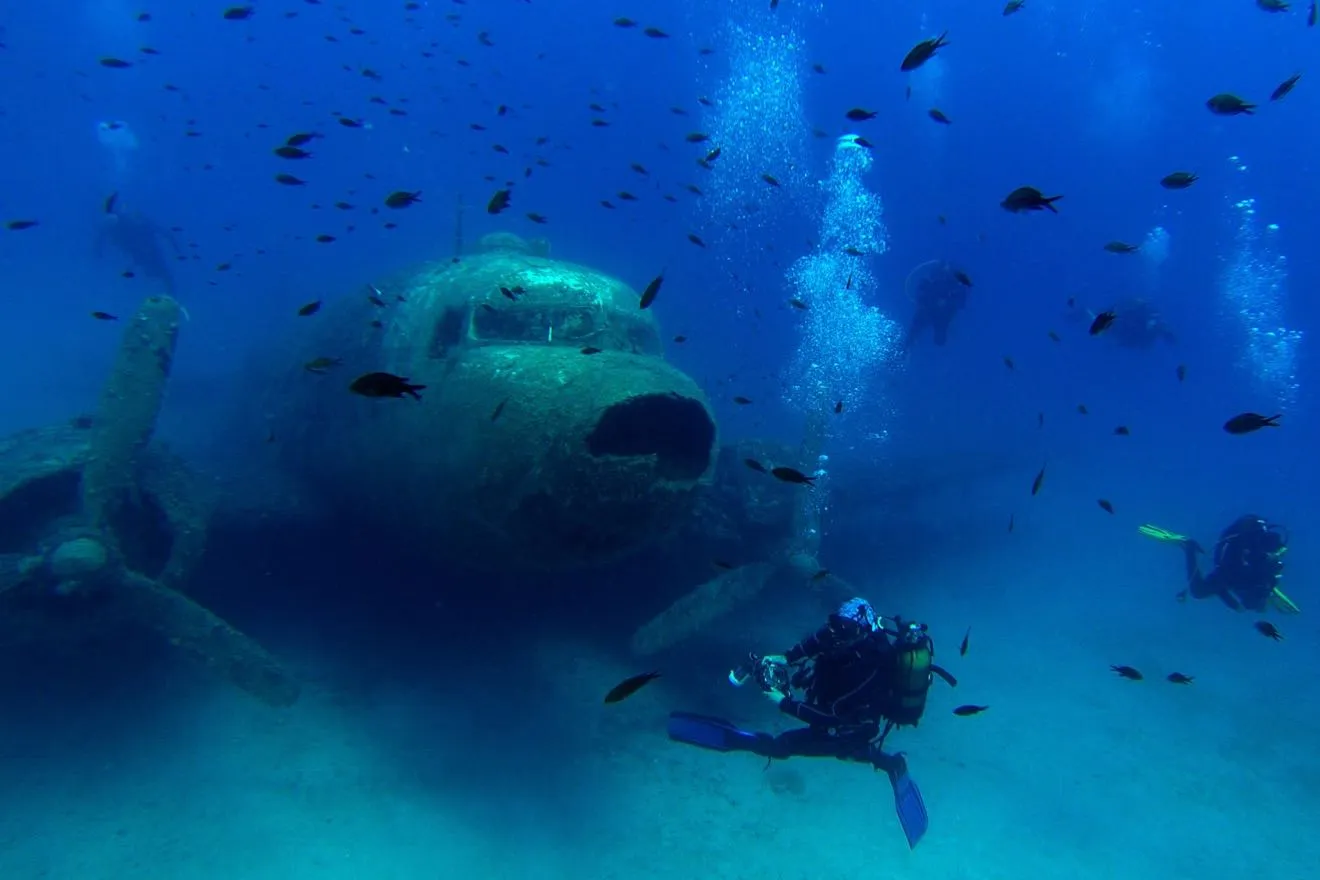
- 8Dakota C-47 · sunk 2009, artificial reef22 mbelow your card
- 9Heybeli Island · near Kalkanabout 24 mbelow your card
- 10TCSG 119 · scuttled 201115–40 mshallow part only
Depths: the tourism portal GoTürkiye, Mediterranean diving page · checked 25.10.2026.
Alanya
- 11Aquarium · near Alanya harbour4–25 mshallow part only
- 12Pirate Cave · wreck at 25 m10–32 mshallow part only
- 13Lovers Cave · the depth of an ancient anchor21 mbelow your card
- 14Amphora · ancient amphora shardsup to 29 mbelow your card
Depths: the tourism portal GoTürkiye, Mediterranean diving page · checked 25.10.2026.
TSSF 1★ reaches 18 m. Dakota C-47 lies at 22 m, 4 m deeper.
- This card
- A discovery dive needs no card: a briefing first, one diver to one instructor, 5 m at most. Under 12, no scuba at all.Down to 18 m, with a 3★ diver or an instructor beside you; no night dives. You start at age 14 (a parent’s consent under 18) and must swim.Down to 30 m, with a partner of at least 2★; training dives down to 42 m with an instructor; night dives allowed. Under 18: 24 m, with a 3★ diver or an instructor.Down to 30 m, and a 3★ diver may lead a dive; training dives down to 42 m, as an assistant.The deep-diving speciality: down to 40 m.Open Water: 18 m.Advanced Open Water: 30 m.The Deep Diver speciality: 40 m.Open Water: a maximum training depth of 18 m; the minimum age is 10.Advanced Open Water: 30 m.The Deep Diving speciality: between 18 and 40 m.
- The regulation
- The 1990 regulation: sport dives down to 30 m (training dives down to 42 m), always without decompression stops.The 1990 regulation sets 30 m for sport diving. Beyond 30 m, medical staff and equipment must be present.The 1990 regulation sets 30 m for sport diving and 42 m for training dives.
Card: TSSF diving instruction, current to 25.07.2025TSSF diving instruction, current to 25.07.2025PADI blog, updated 30.05.2024SSI course pages · checked 25.10.2026.
Ask the centre
A message to copy, in Turkish
It follows the card and the site chosen in the sounding line, and asks the seven questions of the checklist below. Nothing you choose is stored or sent.
Merhaba. Belgem: TSSF 1★ (en fazla 18 m). Dalmak istediğim yer: Dakota C-47 (22 m).
- Dalış merkeziniz bu yıl için geçerli bir TSSF yetki belgesine sahip mi?
- Her dalışta bir rehber dalıcı bizimle olacak mı?
- Teknede oksijen seti ve ilk yardım çantası var mı?
- Tüplerin test tarihi beş yıldan eski değil mi?
- Yabancı dalıcı izni için benden ne gerekiyor?
- Fiyata neler dahil?
- Dalış yapacağım yer bir koruma alanının içinde mi? Orada nelere izin veriliyor?
Teşekkür ederim.
Hello. My card: TSSF 1★ (at most 18 m). The place I want to dive: Dakota C-47 (22 m).
- Does your dive centre hold a valid TSSF authority certificate for this year?
- Will a guide diver be with us on every dive?
- Are an oxygen set and a first-aid bag on the boat?
- Are the cylinders’ test dates no older than five years?
- What do you need from me for the foreign-diver permit?
- What does the price include?
- Is the place I will dive inside a protected area? What is allowed there?
Thank you.
Your card and your depth
Your dive card sets your depth. A dive card is the certificate that shows which course you passed. The rules require one to dive with a cylinder: the TSSF card, or a certificate from a body that trains to international standards.
A foreign diver also needs a certificate from the authorised body of their own country, or membership of the international underwater sports federation. No diver may go beyond the limits written on the certificate.
TSSF stars: 18, 30, 30 and 40 m
TSSF is the Turkish Underwater Sports Federation. Its 1★ card reaches 18 m, with a 3★ diver or an instructor beside you. The 2★ and 3★ cards reach 30 m, and a 3★ diver may lead. The deep-diving speciality reaches 40 m.
PADI: 18, 30 and 40 m
PADI is an international diver-training organisation. Open Water reaches 18 m, Advanced Open Water 30 m and the Deep Diver speciality 40 m.
SSI: 18, 30 and 40 m
SSI is another international diver-training organisation. Open Water has a maximum training depth of 18 m, Advanced Open Water reaches 30 m, and the Deep Diving speciality lies between 18 and 40 m.
The limit of the regulation
30 m for sport diving, 42 m for training.
The 1990 regulation on recreational scuba diving in Turkish waters (03.03.1990) sets 30 m for dives with air-filled cylinders and 42 m during training. Beyond 30 m, medical staff and equipment must be present.
Every dive must be without decompression stops: pauses on the way up. A dive without them lets you rise straight to the surface.
TSSF courses: who may start
- Young diver
- Age 12, with a parent’s consent; you can swim.
- 1★
- Age 14, with a parent’s consent under 18; you can swim.
- 2★
- Age 15, with a parent’s consent under 18; a 1★ card or an equivalent one that TSSF has approved; 20 logged dives after it.
- 3★
- Age 18; a 2★ card or an equivalent; 50 logged dives after it; the first-aid, navigation and deep-diving specialities.
The book of your dives
A logbook is the book of detailed dives, approved by the dive organisation or its instructor. TSSF counts logged dives: 20 after 1★ for 2★, and 50 after 2★ for 3★.
A first dive with no card
A briefing first, then one diver to one instructor, 5 m at most. Under 12 no scuba is allowed at all, discovery dives included.
A dive in a course
A dive made in a course under an instructor. The regulation allows 42 m on a training dive instead of 30 m; a 2★ diver trains down to 42 m with an instructor.
Fill it in before a course
The instructor explains a health form and you sign it; a guardian co-signs under 18. If you declare an illness, the centre sends you to a specialist or an underwater (hyperbaric) physician for a report.
A licensed centre, a guide and a partner
A dive centre needs its own licence, and a guide diver comes with you. Eight things on the boat show it.
Look at the boat
Eight things a licensed dive boat shows
Pick a number to see what stands behind it: the thing, why it is there and where the rule comes from. The rules are TSSF’s diving instruction (current to 25.07.2025) and the 1990 and 2011 regulations.
1The federation flag
A federation flag hangs on the dive boat.
TSSF gives a dive centre two certificates and two federation flags with its yearly authority certificate. One flag goes on the dive boat; one stays with the centre.
The centre’s own equipment list names at least two federation flags.
Source: TSSF diving instruction, current to 25.07.2025 · checked 25.10.2026
2The authority certificate
The certificate hangs in view, at the centre and on the boats.
It is valid from 1 January to 31 December. A centre without it may not run any scuba activity; the coast guard, police, gendarmerie (the armed rural police) and TSSF may stop the activity.
Not hanging it, or the flag, is a reason for a warning.
Source: TSSF diving instruction, current to 25.07.2025 · checked 25.10.2026
3The guide diver
A guide diver is present at every dive, in the boat or in the water.
A guide diver is a certified diver who guides and watches over local and foreign divers and protects the underwater natural and cultural values. Foreign divers dive with a Turkish guide diver.
The guide answers for the divers’ safety and the heritage, but not for a diver’s own faults before the dive or for broken rules.
Source: the 1990 regulation · TSSF diving instruction, current to 25.07.2025 · checked 25.10.2026
4Oxygen
An oxygen cylinder of at least 10 litres, with its regulator and at least two reservoir masks.
It belongs to the first-aid materials a centre must have at any dive activity. A reservoir mask is a mask with a bag that fills with oxygen.
All equipment must be ready to use at any moment.
Source: TSSF diving instruction, current to 25.07.2025 · checked 25.10.2026
5The first-aid bag
At least one first-aid bag: a waterproof yellow, orange or red box marked with the first-aid symbol.
Its contents are listed: ten sterile gauze pads, a wound cleaner, two bandages, scissors, a torch, a whistle, a CPR mask, two sterile gloves, burn cream, twenty plasters, an aluminium blanket, an elastic bandage and a tourniquet.
The 1990 regulation also requires first aid on boats and at dive sites.
Source: TSSF diving instruction, current to 25.07.2025 · the 1990 regulation · checked 25.10.2026
6The dive flag and the marker buoy
At least one dive buoy and one dive flag.
Divers go in pairs, and a marker buoy with a flag marks the pair on the water. A dive flag tells boats that divers are below.
Both are on the list of equipment a dive centre must hold.
Source: the 1990 regulation · TSSF diving instruction, current to 25.07.2025 · checked 25.10.2026
7The cylinders
A test date no older than five years, or papers of regular tests.
A cylinder is the steel or aluminium tank that holds the air. Without a test date within five years or such papers, the centre risks a fine or a suspension.
The test date is stamped on the cylinder.
Source: TSSF diving instruction, current to 25.07.2025 · checked 25.10.2026
8The insurance
A third-party liability insurance policy.
A copy of the policy is needed to get the authority certificate. For a tourism business’s permit, accident insurance and liability insurance for staff and tourists are conditions too.
Ask which cover applies to your dive.
Source: TSSF diving instruction, current to 25.07.2025 · the 2011 regulation · checked 25.10.2026
What stands behind the licence?
- What
- The document TSSF gives a dive centre so that it may run diving. A dive centre is a company or a person who sells dives.
- Why
- No scuba activity may be run without it. The coast guard, police, gendarmerie (the armed rural police) and TSSF may inspect a centre and stop an activity.
- Who
- Every dive centre. To get it, a centre keeps at least a 2★ instructor and a guide diver under contract and shows a liability insurance policy.
- When
- From 1 January to 31 December of the year. TSSF may inspect with or without notice.
- Where
- It hangs in view at the centre and on its boats; a federation flag hangs on the dive boat.
Source: TSSF diving instruction, current to 25.07.2025 · checked 25.10.2026.
- What
- A certified diver who guides and watches over local and foreign divers, to introduce and protect the underwater natural and cultural values of the country.
- Why
- Foreign divers dive with a Turkish guide diver. The guide answers for protecting the heritage and the divers’ safety, but not for problems that come from a diver’s own faults before the dive or from broken rules.
- Who
- A Turkish citizen with a 3★ card for at least 6 months, 50 logged dives and a pass in TSSF’s exam. A Turkish diver does not have to take a guide.
- When
- At every dive, in the boat or in the water.
Source: the 1990 regulation · TSSF diving instruction, current to 25.07.2025 · checked 25.10.2026.
- What
- A permit from the provincial tourism directorate or a body it authorises. Its copy is shown on checks.
- Who
- Foreign divers. A single foreign diver may dive if every rule is kept, the permit and the guide included.
- When
- Group dives are announced beforehand to the coast guard.
Source: the 1990 regulation · checked 25.10.2026.
- What
- A buddy is your diving partner. Dives are made in pairs, and a marker buoy with a flag marks the pair.
- Who
- A 1★ diver dives with a 3★ diver or an instructor beside them; a 2★ diver with a partner of at least 2★.
Source: the 1990 regulation · TSSF diving instruction, current to 25.07.2025 · checked 25.10.2026.
- What
- A governor’s permit for each sport a tourism business sells, for 1 to 5 years. At sea, the sea-tourism vessel certificate stands in for it.
- Conditions
- The equipment, licensed staff, accident insurance and liability insurance for staff and tourists, and first-aid equipment.
- How
- Tourism dives at sea follow the 1990 regulation.
Source: the 2011 regulation on sports for tourism (23.02.2011) · checked 25.10.2026.
Where diving is closed, and where it was opened
Some seabed is closed to every diver, and some is opened by a decision. The 2020 regulation on dive areas in underwater protection zones (20.03.2020) sets how.
Military forbidden zones
All diving is banned there, except for science. A dive area in a military or security zone can come before the protection commission only with the favourable opinion of the Ministry of National Defence.
Underwater protection zones
Sea areas with cultural or natural assets that need protection. All diving is banned in them, except for science, unless the Underwater Protection Commission has decided a dive area there.
Dive areas
A governorate declares a dive area with its coordinates and borders: an artificial reef, a sunk aircraft, helicopter or ship, an amphora site or an underwater park, a protected stretch of sea where wrecks are opened to divers.
Special environmental protection areas
A region of land and sea whose nature the Environment ministry protects. Its list holds 19, among them Belek, Foça, Gökova and Saros Bay. Ask the centre whether your dive site lies inside one.
How a dive area is opened inside a protection zone
- An applicationSomeone applies for a dive area in the zone.
- A surveyA team of the General Directorate of Cultural Heritage and Museums surveys the seabed within 100 m around the area.
- A decisionThe Underwater Protection Commission decides. It has seven members, among them the director of the Bodrum Museum of Underwater Archaeology and a member from the Navy.
- An announcementThe Ministry of Culture and Tourism announces the decision on its website.
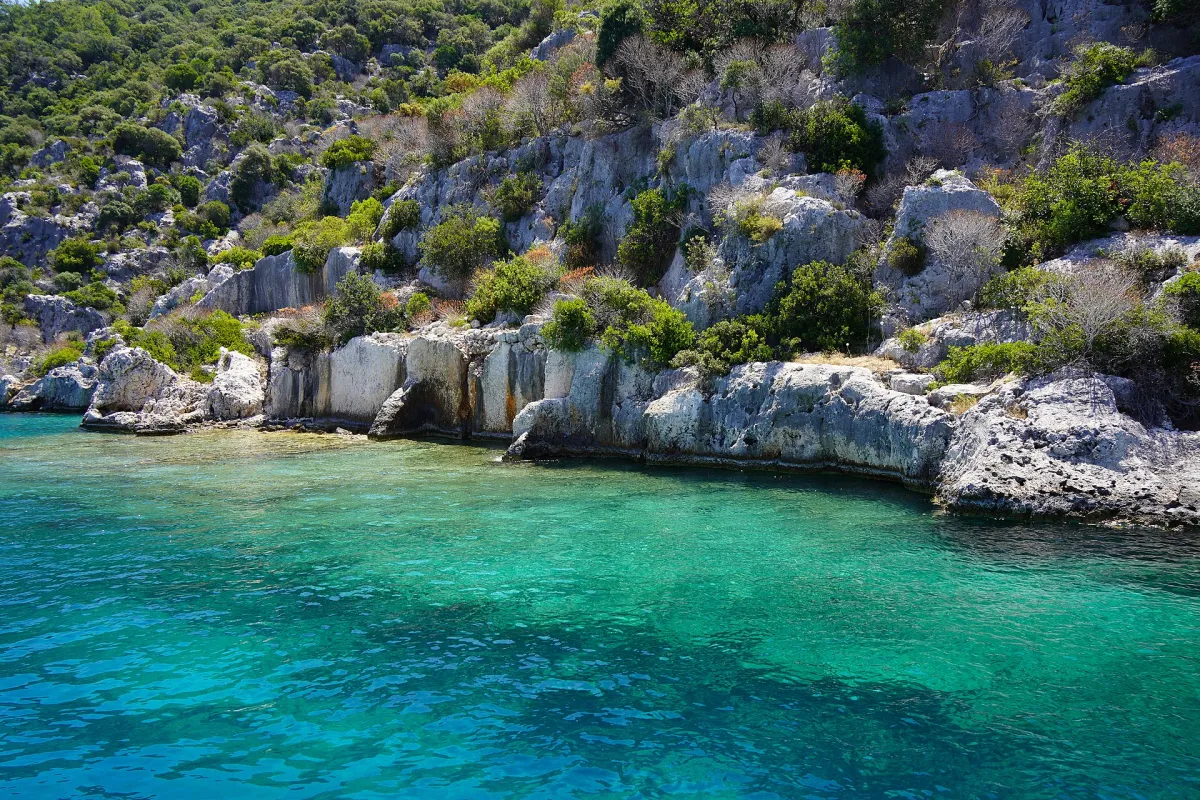
On every dive, anywhere
- Do not touch, move or lift anything on the seabed or a wreck.
- Do not use a lift bag. It is an inflatable bag for lifting heavy things.
- Do not take a spear gun on a scuba dive.
- Do not fish for trade. Commercial fishing is banned.
- Do not go deeper than your card allows, and do not make a dive that needs decompression stops.
- Report what you find: tell the authorities about any wreck or ancient object you see.
Two rule texts, two answers
The 1990 regulation sets 30 m for sport diving, while TSSF’s instruction lets a deep-diving speciality card reach 40 m. At night the 1990 text allows only training dives under instructors, with permission, while TSSF lets a 2★ diver dive at night. The centre can tell you which limit it applies on the dive you book.
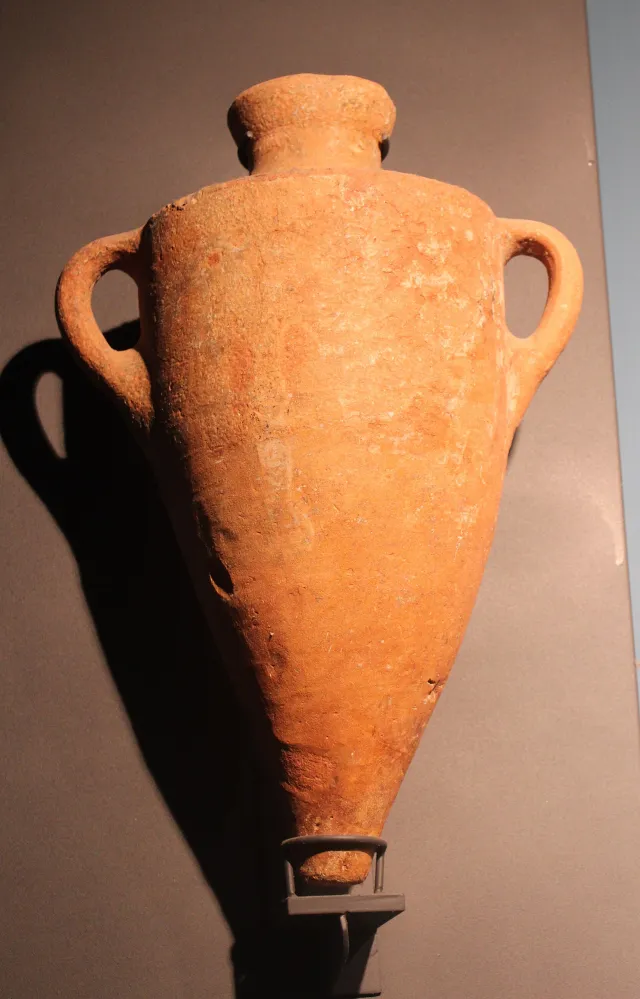
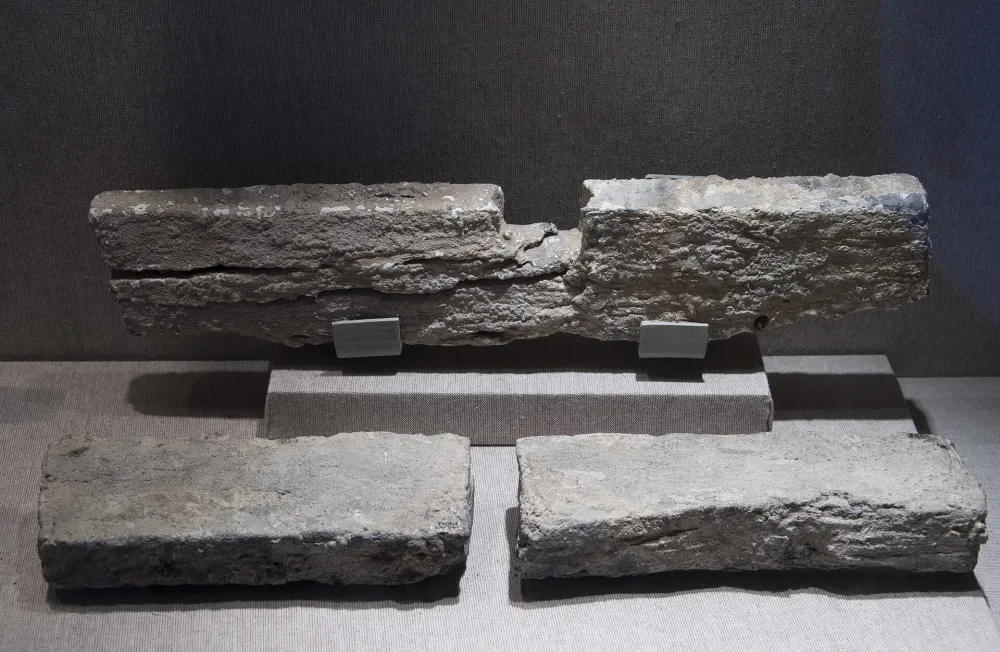
Three coasts and their depths
Each site below has a depth and a date. Pick your card in the sounding line to see which of them it reaches.
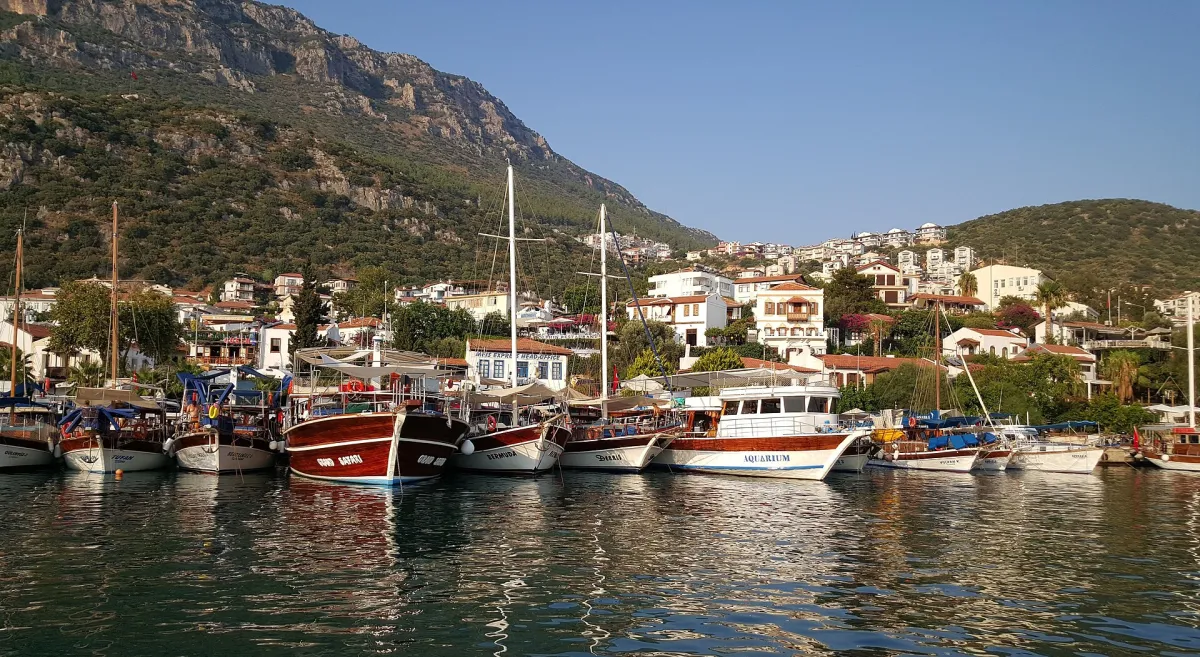
Kaş and Kalkan
- Dimitri wreck, 20 m
- A cargo vessel that ran aground on the islet of Kovan in 1968; the dive goes down a narrow crevice, the Canyon.
- Dakota C-47, 22 m
- A military transport aircraft sunk in 2009 to make an artificial reef.
- Heybeli Island, about 24 m
- Near Kalkan: two small islands with a rocky seabed.
- TCSG 119, 40 m
- Scuttled in 2011 as an artificial reef: the reef begins at about 15 m, the deck lies at about 35 m.
Source: GoTürkiye, Mediterranean diving · checked 25.10.2026.
Alanya
- Aquarium, 4–25 m
- The site closest to Alanya harbour, a 5-minute sail; mainly for educational diving.
- Amphora site, up to 29 m
- Named for the many shards of ancient amphoras found there.
- Pirate Cave, 10–32 m
- An open, large cave, with a wreck at 25 m.
- Lovers Cave, anchor at 21 m
- 15 minutes by boat from the harbour; a rocky seabed and an ancient anchor.
A range such as 4–25 m runs from the shallowest to the deepest part; «up to 29 m» is the deepest point. Source: GoTürkiye, Mediterranean diving · checked 25.10.2026. On land: beaches in Antalya.
Gallipoli (Gelibolu) has a historical underwater park: First World War wrecks that the Gallipoli Historical Site Directorate, set up in 2014, has worked since 2017 to find, protect and open to visits. Its dive site lists 25 sites, from SS Milo at 5–7 m to SS Carthage at 85 m.
Which depths?
- SS Milo
- 5–7 m · Anzac Cove
- Massena and Saghalien
- 7 m · Ertuğrul Cove
- Maria Delle Vittorie and Vincenzo Florio
- 7 m · Tekke Bay
- Tuzla Steamboat
- 10 m
- Mesudiye Battleship
- 12 m · Çanakkale
- HMS Louis
- 13 m · Suvla
- Arıburnu Layter
- 18 m · Arıburnu · layter: a lighter, a flat cargo boat
- HMS Majestic
- 18–23 m · Seddülbahir
- Helles Barçları
- 25 m · Seddülbahir · barç: a barge
- Lundy
- 27 m · Suvla
- Arıburnu Barç
- 29 m · Arıburnu · a barge
- Küçükkemikli Barç
- 30 m · Little Bone · a barge
- Submarine Mania Network
- 30 m · Akbaş Cove, Nara Point, Bigalı Castle
- Çamburnu (Amfora Batığı)
- 32 m · Çamburnu · the amphora wreck
- Resif Dalış Alanı (Köpekbalığı Taşları)
- 38 m · Arıburnu · reef dive area; Shark Rocks
- Bebek Kayalıkları
- 44 m · Büyük Kemikli · Baby Rocks
- Franco
- 44 m · Havuzlar
- Ters Barç
- 54 m · Arıburnu, Suvla · an upturned barge
- Minesweeper
- 58 m · Twin Cove
- HMS Triumph
- 72 m · Kabatepe
- HMAS AE2
- 73 m · Karaburun
- HMS Hythe
- 74 m · Aegean Sea
- SMS Breslau (Midilli)
- 76 m · Gökçeada
- Atılay submarine
- 80 m · Aegean
- SS Carthage
- 85 m · Seddülbahir
Deeper than any card here.
At Gallipoli · from the park’s dive site, checked 25.10.2026
In an emergency call 112. The site lists one hyperbaric oxygen therapy centre: the Çanakkale 18 Mart University Health Practice and Research Hospital. It is a pressure chamber, where a patient breathes oxygen at raised pressure.
For the water it advises a 3–5 mm wetsuit from April to October and a 7 mm, semi-dry or dry suit from November to March.
The seas through the year
The Aegean is cooler than the Mediterranean in every month, by 1.8 to 3.8 °C. The figures are monthly mean sea-water temperatures for 1970–2025 from MGM, the Turkish State Meteorological Service.
| Month | Aegean | Mediterranean | Aegean cooler by |
|---|---|---|---|
| January | 13.9 | 16.7 | 2.8 |
| February | 13.3 | 16.0 | 2.7 |
| March | 14.0 | 16.6 | 2.6 |
| April | 15.9 | 18.1 | 2.2 |
| May | 18.8 | 20.8 | 2.0 |
| June | 22.1 | 23.9 | 1.8 |
| July | 24.2 | 26.7 | 2.5 |
| August | 24.6 | 28.1 | 3.5 |
| September | 23.3 | 27.0 | 3.7 |
| October | 20.8 | 24.6 | 3.8 |
| November | 18.0 | 21.4 | 3.4 |
| December | 15.6 | 18.5 | 2.9 |
| Mean, 1970–2025 | 18.8 | 21.5 | 2.7 |
| Mean, 2014–2025 | 19.8 | 22.3 | 2.5 |
Where to read more
- The Mediterranean by month. The same figures are in the guide to beaches in Antalya.
- What swims in these seas. The guide to fish in Turkey.
Sources: MGM Aegean, MGM Mediterranean · checked 25.10.2026.
A dive day, step by step
A dive day follows one order: the centre, your card, your guide, the boat, the dive, the logbook.
- Choose a licensed centreLook for its authority certificate on the wall and the federation flag on its boat. Dalış merkeziniz bu yıl için geçerli bir TSSF yetki belgesine sahip mi?Does your dive centre hold a valid TSSF authority certificate for this year?
- Show your cardShow your dive card and your logbook. A foreign diver also needs the permit. Yabancı dalıcı izni için benden ne gerekiyor?What do you need from me for the foreign-diver permit?
- Meet your guide diver and your partnerA guide diver is in the boat or in the water at every dive. You dive in a pair, marked by a buoy with a flag. Her dalışta bir rehber dalıcı bizimle olacak mı?Will a guide diver be with us on every dive?
- Look at the boatCheck for the oxygen set, the first-aid bag, the dive flag and the marker buoy. Teknede oksijen seti ve ilk yardım çantası var mı?Are an oxygen set and a first-aid bag on the boat?
- Dive inside your cardStay within the depth of your card, make no decompression stop, and touch nothing on the seabed.
- Write it in your logbookThe dive goes into the logbook, which the next card counts: TSSF asks for 20 dives after 1★ and 50 after 2★.
Before you book, seven things to ask
Seven questions, each from a rule. The message above asks all seven in Turkish.
The seven questions
All seven asked.
Ticks stay on this device, in your browser, and are not sent anywhere.
Sources, checked 25.10.2026
Limits are maxima, not a plan: the dive centre’s guide sets the dive.
Show the sources
- Regulation on recreational scuba diving in Turkish waters, 03.03.1990 — Ministry of Culture and Tourism, Inspection Board, checked 25.10.2026
- Regulation on sports for tourism, 23.02.2011 (text to the 2018 amendment) — Ministry of Culture and Tourism, Inspection Board, checked 25.10.2026
- Regulation on dive areas in underwater protection zones, 20.03.2020 — Ministry of Culture and Tourism, Inspection Board, checked 25.10.2026
- TSSF diving instruction (Donanımlı Dalış Talimatı), current to 25.07.2025 — Turkish Underwater Sports Federation, checked 25.10.2026
- dive sites, HMS Majestic, SS Milo, emergency — Gallipoli Historical Site Directorate, dive site, checked 25.10.2026
- Diving in the Mediterranean: Kaş and Alanya — GoTürkiye, checked 25.10.2026
- How deep can Open Water and Advanced divers go? — PADI blog, updated 30.05.2024, checked 25.10.2026
- Open Water Diver, Advanced Open Water Diver — SSI, checked 25.10.2026
- Aegean, Mediterranean — MGM, Turkish State Meteorological Service, sea-water temperature 1970–2025, checked 25.10.2026
- Special environmental protection areas — Environment ministry, checked 25.10.2026