Atatürk’s Early Life: From Selanik to the First World War
Mustafa Kemal’s life from his birth in Selanik in 1881 to 1918: family, schools, first postings, Trablusgarp, the Balkan Wars and Çanakkale.
Table of Contents
Mustafa Kemal was born in 1881 in Selanik, the Ottoman port that is now Thessaloniki, in northern Greece. His life to the end of the First World War in 1918, in order: his family, his schools with their towns and years, his first postings, the war in Trablusgarp (today Libya), the Balkan Wars, Çanakkale in 1915 and the last years of the war. He took the surname Atatürk in 1934, so before that he is Mustafa Kemal.
In short · checked 30.10.2026
From Selanik in 1881, to the end of the war in 1918.
- Born: 1881 in Selanik, the fourth of six children of Ali Rıza Efendi and Zübeyde Hanım. The register wrote only the year, so no day is on it.
- Schools: primary school and a military middle school in Selanik, a military high school in Manastır (today Bitola, North Macedonia), then the military academy and the staff college in İstanbul. He finished the staff college on 11.01.1905.
- Postings and wars: Şam (Damascus), Selanik, Trablusgarp, the Balkan Wars, Sofya (Sofia) and Çanakkale in 1915. He became a general (mirliva) on 01.04.1916.
- Where entries differ: the Atatürk Encyclopedia of ATAM, the state’s Atatürk Research Center, shows two dates in a few places: his father’s death, the end of the military academy and the day he joined the Committee of Union and Progress. Both dates are shown, each with its entry.
Where was he?
Pick a stop, or a year.
Sixteen pins on a map of the lands he served in. The red thread runs from pin to pin in the order he was there. Each slip shows the year, the place, the post and the rank.
Stop 1 of 16
1881
Selanik today Thessaloniki, Greece
- What
- Born in Selanik, the fourth child of Ali Rıza Efendi and Zübeyde Hanım.
- Rank
- None yet.
- Note
- The register wrote only the Rumi year, 1296, and no day.
Stop 2 of 16
1887
Selanik today Thessaloniki, Greece
- What
- Primary school: a short time at the neighbourhood school, then Şemsi Efendi Mektebi.
- Rank
- Pupil.
- Note
- He began school in June 1887. Şemsi Efendi had opened his school in 1872.
Stop 3 of 16
1894
Selanik today Thessaloniki, Greece
- What
- Selanik Askerî Rüştiyesi, the military middle school. He joined its third class, of four, in July–August 1894.
- Rank
- Pupil.
- Note
- He finished at the end of 1895 or in January 1896, fourth in his class. A maths teacher gave him the name Kemal here.
Stop 4 of 16
1896
Manastır today Bitola, North Macedonia
- What
- Manastır Askerî İdadisi, the military high school, a boarding school. He began in March 1896 and finished in November 1898.
- Rank
- Pupil.
- Note
- He finished second in his class.
Stop 5 of 16
1899
İstanbul Istanbul, Türkiye
- What
- Mekteb-i Harbiye, the military academy, from 13.03.1899. Then the staff college (Harp Akademisi) from 1902 to 11.01.1905.
- Rank
- Cadet; lieutenant (teğmen) from 1902.
- Note
- He finished the academy in 1902 as an infantry lieutenant.
Stop 6 of 16
1905
Şam today Damascus, Syria
- What
- Posted to the Fifth Army, the army of Syria, with the 30th Cavalry Regiment.
- Rank
- Staff captain (kurmay yüzbaşı) from 11.01.1905.
- Note
- He had finished the staff college on 11.01.1905.
Stop 7 of 16
1907
Selanik today Thessaloniki, Greece
- What
- Posted to the headquarters of the Third Army in Selanik on 30.09.1907.
- Rank
- Staff captain.
- Note
- In 1907–08 he joined the Committee of Union and Progress, a political society. ATAM’s entry gives both 27.09.1907 and February 1908.
Stop 8 of 16
1908
Trablus today Tripoli, Libya
- What
- Sent to Trablusgarp after the constitution was proclaimed in July 1908. The garrison of Trablus took the oath to the constitution on 19.10.1908.
- Rank
- Staff captain.
- Note
- In November 1908 he studied the situation on the Bosnian border.
Stop 9 of 16
1909
İstanbul Istanbul, Türkiye
- What
- Chief of staff of a reserve division in the Hareket Ordusu, the Action Army. It marched from Selanik to İstanbul after the revolt that began on the night of 12.04.1909.
- Rank
- Staff captain.
- Note
- The revolt is known as the 31 Mart event, after its date in the Rumi calendar.
Stop 10 of 16
1911
Derne today Derna, Libya
- What
- The east-wing command at Derne from December 1911. Derne commander from 05.03.1912.
- Rank
- Major (binbaşı) from 27.11.1911.
- Note
- Italy had declared war on 29.09.1911. He left İstanbul on 15.10.1911 and reached Benghazi on 18.12.1911.
Stop 11 of 16
1912
Bolayır on the narrow neck of the Gelibolu peninsula, Türkiye
- What
- From 25.11.1912, head of the operations branch of the force that guarded the Çanakkale Strait and the Gelibolu peninsula.
- Rank
- Major.
- Note
- The first Balkan War had begun on 09.10.1912.
Stop 12 of 16
1913
Sofya today Sofia, Bulgaria
- What
- Military attaché from 20.11.1913: an officer posted to an embassy to follow the army of the country.
- Rank
- Major; lieutenant colonel (yarbay) from 01.03.1914.
- Note
- In January 1914 he was also given the attaché posts at Bükreş (Bucharest), Belgrad (Belgrade) and Çetine (Cetinje).
Stop 13 of 16
1915
Çanakkale the strait and the town, Türkiye
- What
- Commander of the 19th Division (tümen: a unit of several regiments) from 20.01.1915, then of the Anafartalar Group of six divisions from 09.08.1915.
- Rank
- Lieutenant colonel; colonel (albay) from 01.06.1915.
- Note
- He left the front for İstanbul on 10.12.1915.
Stop 14 of 16
1916
Diyarbakır Diyarbakır, Türkiye
- What
- Commander of the XVI Corps (kolordu: a unit of several divisions) in the east. He reached Diyarbakır on 27.03.1916. His headquarters were at Silvan.
- Rank
- General (mirliva) from 01.04.1916.
- Note
- From 25.11.1916 he led the Second Army; he was appointed its commander on 07.03.1917.
Stop 15 of 16
1918
Halep today Aleppo, Syria
- What
- Commander of the Seventh Army in Syria. He reached Halep on 26.08.1918. The army’s headquarters were at Nablus, in Palestine.
- Rank
- General.
- Note
- On 05.10.1918 he withdrew to Halep.
Stop 16 of 16
13.11.1918
İstanbul Istanbul, Türkiye
- What
- Back in İstanbul after the Mondros armistice of 30.10.1918. He reached Haydarpaşa on 13.11.1918.
- Rank
- General.
- Note
- On 31.10.1918 he was named head of the Yıldırım Army Group. It was dissolved on 10.11.1918.
Selanik, 1881
Selanik was an Ottoman port in Rumeli, the empire’s lands in Europe. Today it is Thessaloniki, in northern Greece. Efendi and Hanım are courtesy titles, for a man and for a woman.
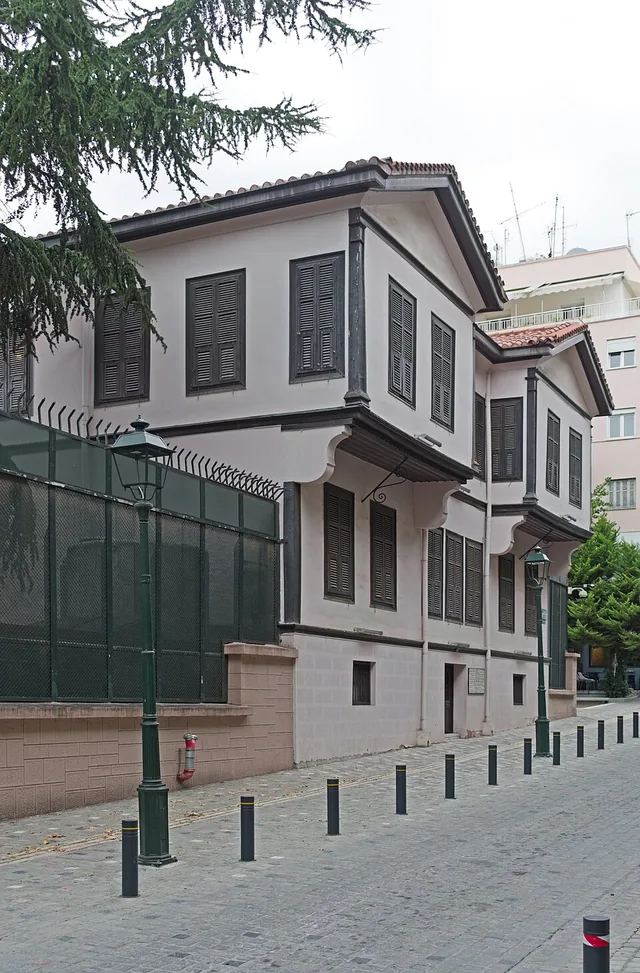
The family
- Born
- 1881, in Selanik.
- Father
- Ali Rıza Efendi, born in Selanik in 1841. A customs clerk from 03.05.1870 to 12.12.1880, then in the timber trade and later the salt trade.
- Mother
- Zübeyde Hanım, born at Langaza, near Selanik.
- Children
- Six. Mustafa was the fourth. His three older siblings died in childhood, of diphtheria.
- Home
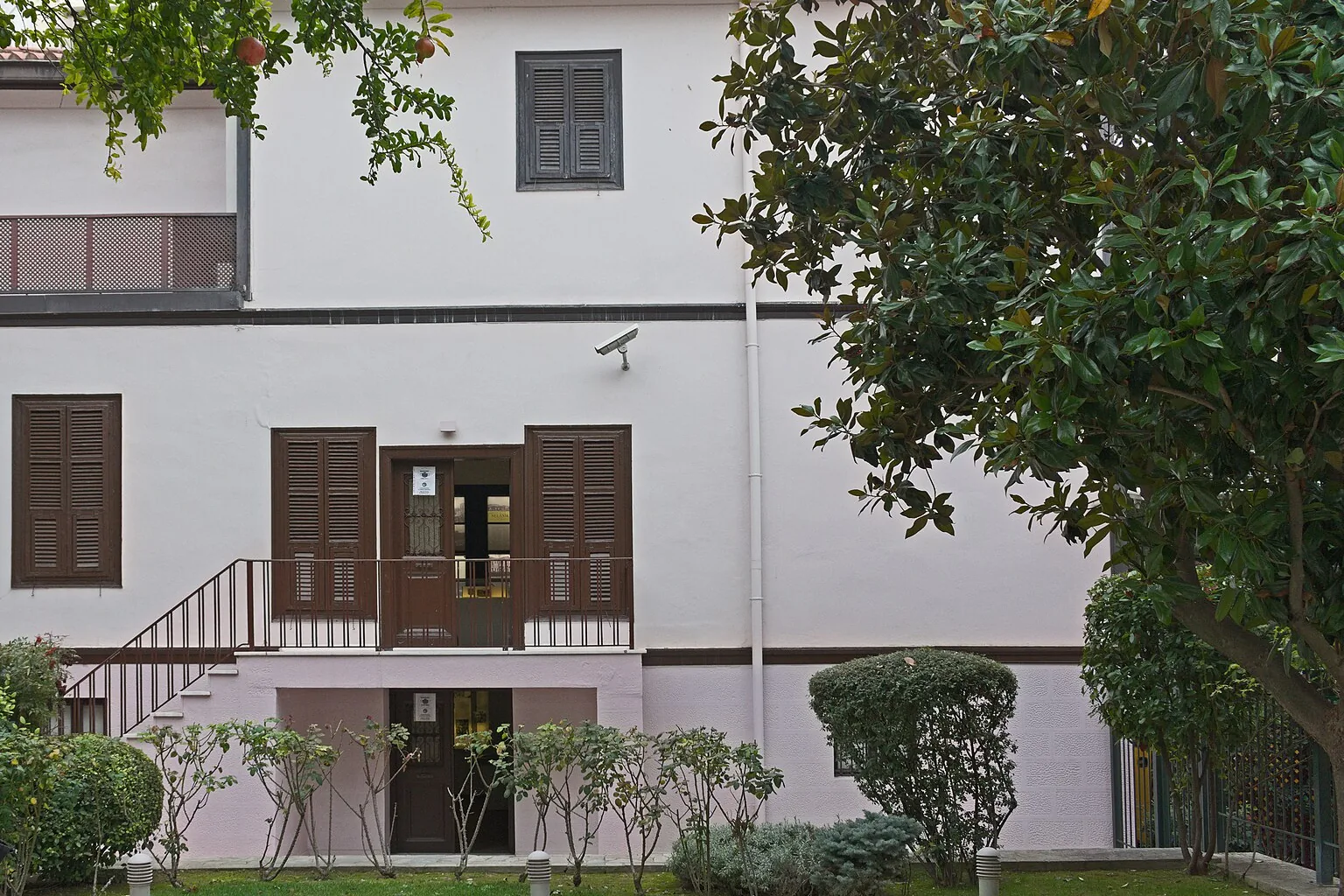
- The pink house in the Koca Kasım Paşa quarter, on Islahane Street, in the Turkish part of the city.
No day on the register
A year in the Rumi calendar
The register wrote only the year 1296 of the Rumi calendar, the Ottoman state calendar. Its year 1296 ran from 13.03.1880 to 12.03.1881. After the move to the Gregorian calendar, the one in use today, the year was first shown as 1880, then changed to 1881, and 19 May was accepted as the day.
Which house was he born in?
The pink house in the Koca Kasım Paşa quarter, the one that is now a museum. ATAM’s house entry names four houses linked to the family. Some memoirs place his birth in the first of them, the house his father inherited in the Ahmet Subaşı quarter. ATAM’s house entry also holds that the latest research confirms the pink house.
The Greek state took the property in 1917. A plaque went on the wall on 04.11.1933, and the house was bought on 02.12.1936 for 650,000 drachma. It opened as a museum on 10.11.1953. After the earthquakes of 1978 it reopened in 1981, and the last restoration ran from 12.06.2012 to mid-May 2013.
When did his father die?
ATAM’s entry on Ali Rıza Efendi gives 23.05.1886, from the pension record. Two other ATAM entries give 1887–88 and 1893.
The house in Turkish
Atatürk’ün Selanik’teki EviAtatürk’s House in SelanikThe first schools, in Selanik
In Selanik came four schools and a stay on a farm: a neighbourhood school, a private primary school, the farm, a civil middle school and the military middle school.
- 1887. The mahalle mektebi, “neighbourhood school”: a small school of the quarter, here the Fatma Molla Kadın Mektebi in the Koca Kasım Paşa quarter. He left it after a short time.
- June 1887. Şemsi Efendi Mektebi, a private primary school that Şemsi Efendi had opened in 1872. It taught by usûl-i cedide, “the new method”: the newer ways of teaching tried in the empire in those years. In 1890 it joined the Fevziye Mektebi to form an eight-year school.
- Later. Four and a half to five months on the farm of his uncle Hüseyin Ağa at Langaza, near Selanik.
- Then. The Mülkiye Rüştiyesi, a civil middle school. A rüştiye is a middle school, between primary school and high school. A quarrel with a teacher ended his time there, and his grandmother took him out of the school.
- July–August 1894. The Selanik Askerî Rüştiyesi, the military middle school. He passed its entrance examination without telling his mother and joined the third class of its four years. He finished at the end of 1895 or in January 1896, fourth in his class.
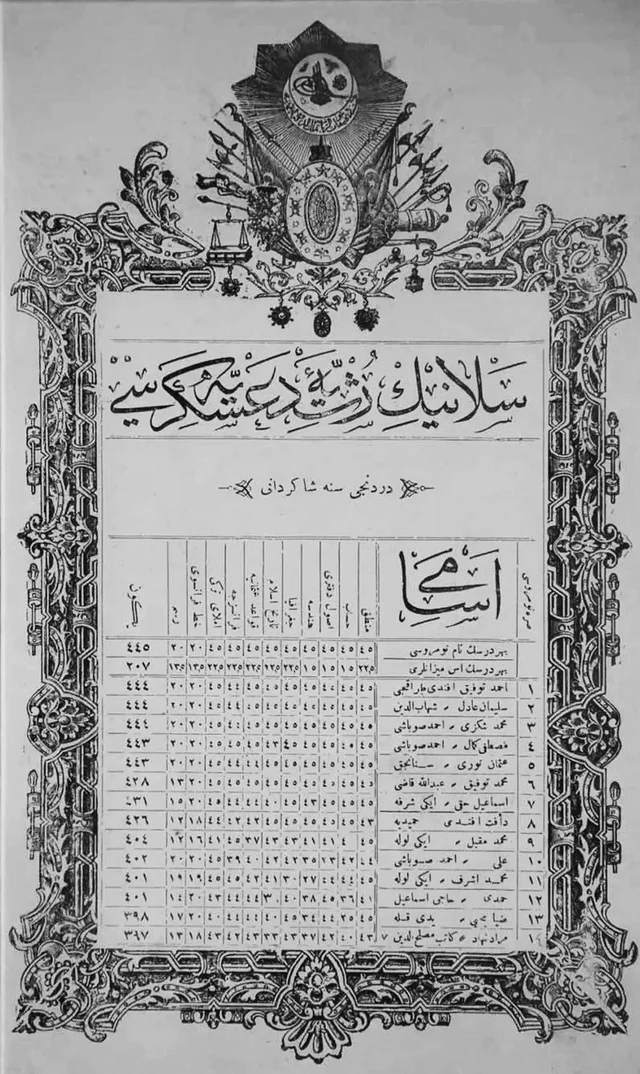
The military middle school
A school he chose himself
He learned maths and French, and also history, economics, philosophy and geography. His maths teacher, also named Mustafa, gave him a second name, Kemal, for his success in maths. The name follows the poet Namık Kemal.
The surname Atatürk came in 1934: How Mustafa Kemal became Atatürk.
The officer schools, Manastır and İstanbul
After the military middle school the way led through Manastır to İstanbul. These are all his schools, in order.
| School | What it was | Town | Years |
|---|---|---|---|
| Fatma Molla Kadın Mektebi | A neighbourhood school (mahalle mektebi) | Selanik | 1887, a short time |
| Şemsi Efendi Mektebi | A private primary school | Selanik | From June 1887 |
| Mülkiye Rüştiyesi | A civil middle school | Selanik | A short time, before July 1894 |
| Selanik Askerî Rüştiyesi | A military middle school | Selanik | 1894 to the end of 1895 or January 1896 |
| Manastır Askerî İdadisi | A military high school (idadi), a boarding school | Manastır, today Bitola, North Macedonia | March 1896 to November 1898 |
| Mekteb-i Harbiye | The military academy, known as the Harbiye: it trains officers | İstanbul | 13.03.1899 to 1902 |
| Erkân-ı Harbiye Mektebi | The staff college, also named the Harp Akademisi: it trains staff officers, who plan and run the work of an army | İstanbul | 1902 to 11.01.1905 |
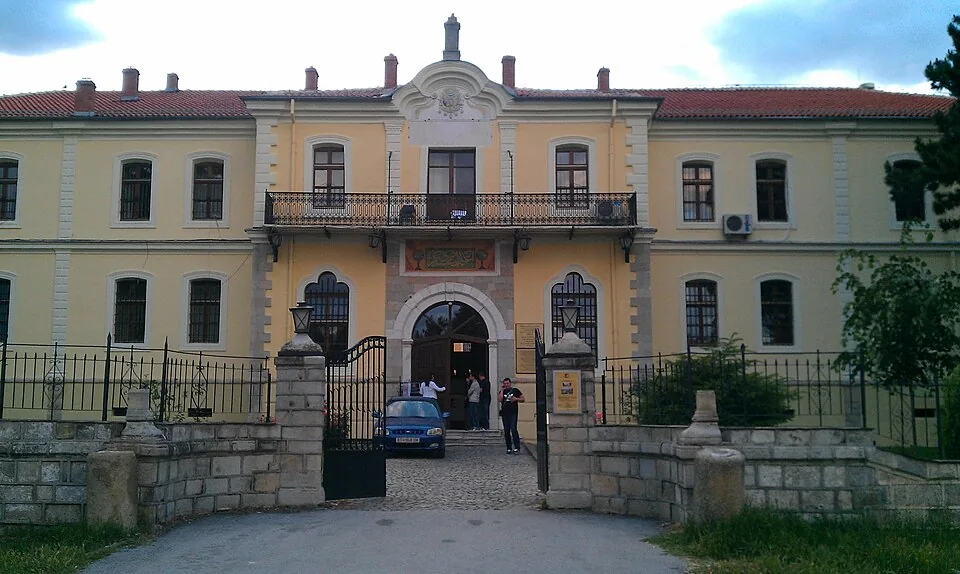
Manastır
The military high school
Manastır is the Ottoman name of Bitola, in North Macedonia today. The school was a boarding school. The decision to build it was taken in 1845, and it ran until the end of 1909.
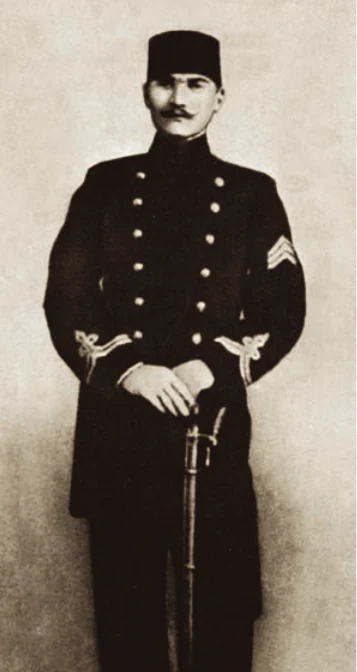
İstanbul
The Harbiye and the staff college
He entered the Harbiye on 13.03.1899 and finished it in 1902 as an infantry lieutenant. The staff college came next. He took the oath there as a staff captain on 21.10.1904 and finished on 11.01.1905.
The ranks, in order, with the date of each:
| Rank | In plain words | Date |
|---|---|---|
| teğmen | Lieutenant | 10.02.1902 (another ATAM entry gives 10.01.1902) |
| üsteğmen | First lieutenant | 1903 |
| kurmay yüzbaşı | Staff captain: a captain of the General Staff | 11.01.1905 |
| binbaşı | Major | 27.11.1911 |
| yarbay | Lieutenant colonel | 01.03.1914 |
| albay | Colonel | 01.06.1915 |
| mirliva | General of the lowest grade. A general also carries the title paşa. | 01.04.1916 |
First postings, 1905–1911
After the staff college he served in Syria, in Selanik and in İstanbul. An ordu is an army: a force of several corps.
- 11.01.1905. Posted to the Fifth Army, the army of Syria, with the 30th Cavalry Regiment (alay: a regiment) at Şam, today Damascus.
- 30.09.1907. Posted to the headquarters of the Third Army in Selanik. In 1907–08 he joined the Committee of Union and Progress (İttihat ve Terakki Cemiyeti), a political society. ATAM’s entry gives both 27.09.1907 and February 1908 for it.
- 19.10.1908. After the constitution was proclaimed in July 1908 he was sent to Trablusgarp to settle unrest. On this day the garrison of Trablus took the oath to the constitution. In November 1908 he studied the Bosnian border.
- April 1909. A revolt began in İstanbul on the night of 12.04.1909. It is known as the 31 Mart event, after its date in the Rumi calendar. A force marched from Selanik, and he was chief of staff of a reserve division in it. The force took the name Hareket Ordusu, “Action Army”. He was back in Selanik at the end of May 1909.
- 1909–1910. Third Army staff in Selanik, then head of its training ground. In summer 1910 he followed the French army manoeuvres in Picardie and then travelled through Switzerland, Belgium and Holland.
- 1911. On 15.01.1911 he joined the headquarters of the Fifth Corps, and on 13.09.1911 the General Staff in İstanbul.
Trablusgarp, 1911–1912
Trablusgarp is the Ottoman province of Tripolitania, on the coast of today’s Libya. Italy declared war on the empire on 29.09.1911.
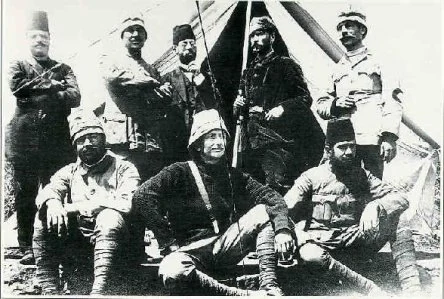
At Derne
- Place
- Derne is Derna, a coastal town in eastern Libya.
- Posts
- East-wing command from December 1911. Derne commander from 05.03.1912.
- Rank
- Major (binbaşı) from 27.11.1911.
- Base
- His headquarters were at Ayn-ı Mansur.
- 15.10.1911. He leaves İstanbul on a Russian ship with friends, travelling as a journalist named Şerif.
- 30.10.1911. Alexandria. A fall from a horse and 15 days of treatment delay him; he sets out again by train on 17.11.1911.
- 27.11.1911. Promoted to major.
- 18.12.1911. He reaches Benghazi and takes the east-wing command of the Derne front.
- 05.03.1912. Appointed Derne commander.
- Mid-October 1912. The treaty of Ouchy (Uşi) ends the war and leaves Trablusgarp under Italian rule.
- 24.10.1912. He leaves Derne. He travels by Alexandria and Trieste to Vienna for treatment of his eyes, and is back in İstanbul at the end of November 1912.
The Balkan Wars and Sofya
The Balkan Wars were two wars in 1912 and 1913. In the first, Montenegro began on 09.10.1912, and Bulgaria, Serbia and Greece joined five days later, against the empire. The second began on 29–30.06.1913.
- 25.11.1912. Head of the operations branch of the force that guarded the Çanakkale Strait and the Gelibolu peninsula, at Bolayır, the narrow neck of the peninsula. The force later took the name Bolayır Corps.
- 08.02.1913. The Bolayır force attacked at dawn, while a landing at Şarköy that was meant to go with it did not take place in time. It drew back behind its lines with heavy loss.
- 26.03.1913. Edirne, besieged, surrendered to the Bulgarian army.
- 30.05.1913. The treaty of London ended the first war.
- 13.07.1913. As chief of staff of the Bolayır Corps he joins the advance in eastern Thrace. On 22.07.1913 the corps went into Edirne.
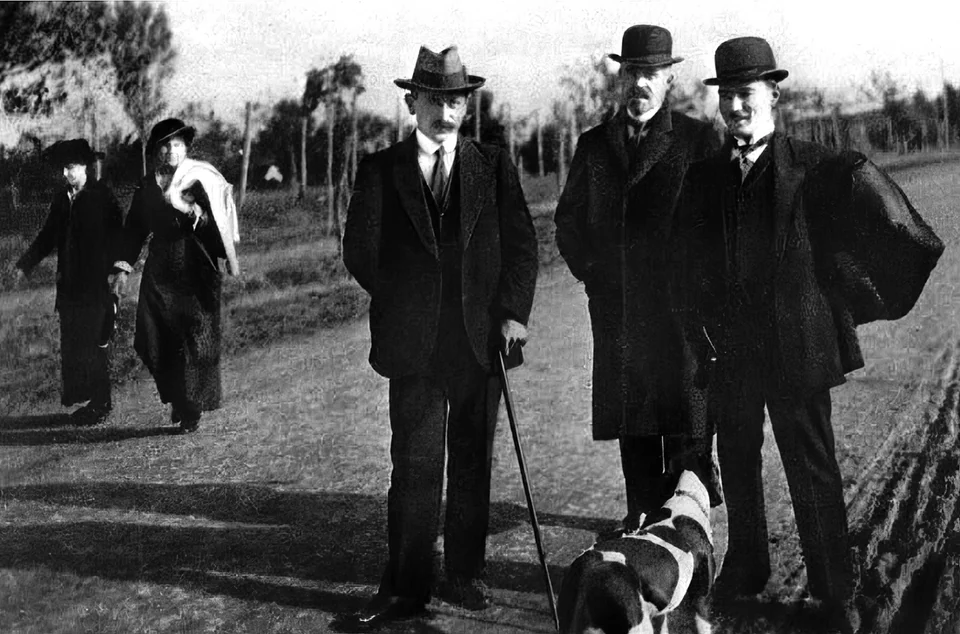
Sofya, 1913–1914
A military attaché
An ataşemiliter is a military attaché: an officer posted to an embassy to follow the army of the country. He accepted the post on 27.10.1913 and began on 20.11.1913. In early January 1914 he was also given the attaché posts at Bükreş (Bucharest), Belgrad (Belgrade) and Çetine (Cetinje). On 01.03.1914 he became a lieutenant colonel.
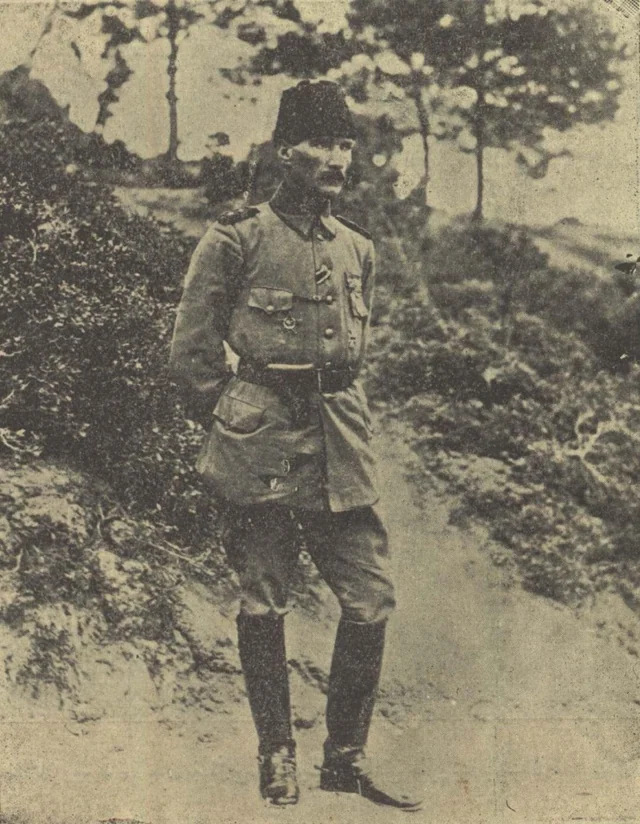
Çanakkale, 1915
Çanakkale is the town and the strait on the sea way to İstanbul, also called the Dardanelles. The Gelibolu peninsula, Gallipoli in English, lies along its northern shore.
Çanakkale, 1915
Four dates in one year.
20.01.1915. Commander of the new 19th Division, at Tekirdağ.
25.04.1915. The Allied landing at Arıburnu. He moves the 57th Regiment toward the Conkbayırı hill without waiting for an order.
09.08.1915. Commander of the Anafartalar Group of six divisions.
10.12.1915. He leaves the front for İstanbul.
Four words
- tümen
- A division: a unit of several regiments.
- alay
- A regiment.
- kolordu
- A corps: a unit of several divisions.
- Anafartalar
- The area of the villages Anafartalar, north of Arıburnu on the peninsula. The Anafartalar Group took its name from it.
- 03.11.1914. The Çanakkale front opens.
- 20.01.1915. He is named commander of the new 19th Division, which was forming at Tekirdağ, as a lieutenant colonel. It has the 57th, 58th and 59th regiments.
- Late February 1915. He moves to Eceabat (Maydos) with the 57th Regiment, on the southern part of the peninsula.
- 18.03.1915. The Allied fleet attacks the strait and is turned back.
- 25.04.1915. Allied troops land at Arıburnu. He moves the 57th Regiment toward Conkbayırı without waiting for an order.
- 01.06.1915. Promoted to colonel.
- 09.08.1915. Commander of the Anafartalar Group, after the Allied landing at Suvla on 06.08.1915. Fighting at Conkbayırı on 10.08.1915 and at Kireçtepe on 16.08.1915.
- 29.08.1915. Also commander of the XVI Corps. He resigns the group command on 27.09.1915.
- 10.12.1915. He leaves the front for İstanbul.
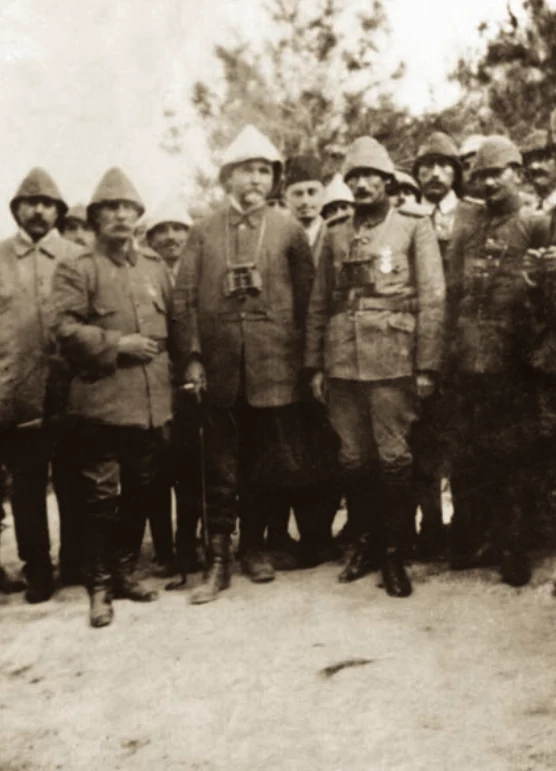
The end of the campaign
The Allied withdrawal
The Allied troops left Arıburnu and Anafartalar on the night of 19/20.12.1915, and Seddülbahir on the night of 08/09.01.1916.
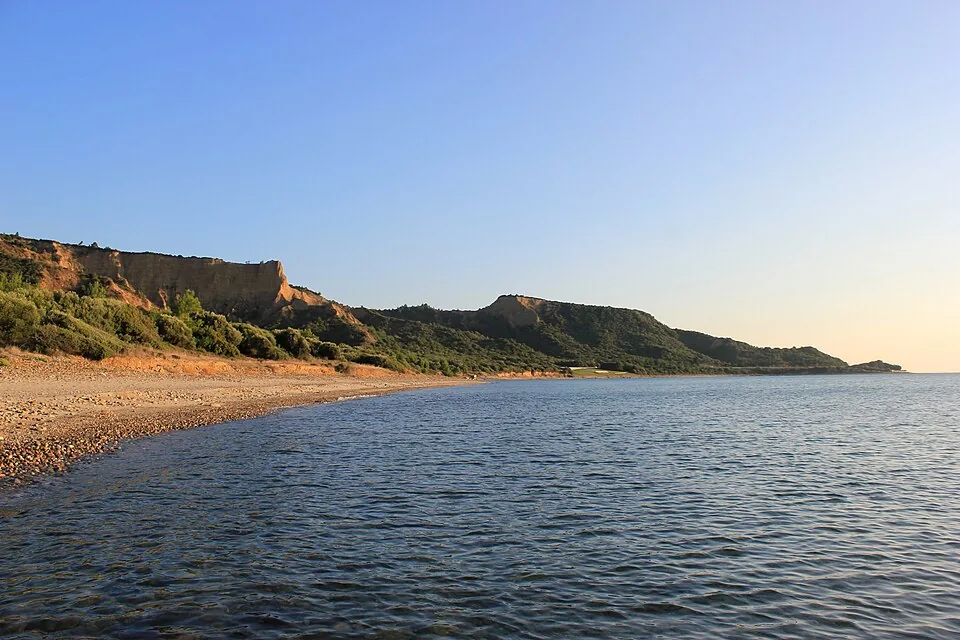
The ground
Arıburnu
Arıburnu is the cape on the Aegean coast of the peninsula where the Allied troops landed on 25.04.1915. They advanced from there toward the Conkbayırı hill, and the 57th Regiment met them on the way.
To the armistice, 1916–1918
From 1916 he served in the east and then in Syria. An armistice is an agreement to stop fighting: the Mondros armistice ended the war for the Ottoman Empire.
- 27.03.1916. He reaches Diyarbakır, having left Edirne on 11.03.1916 with orders for the XVI Corps in the east. His headquarters are at Silvan. Muş and Bitlis are taken back from the Russian army.
- 01.04.1916. Promoted to general (mirliva).
- 25.11.1916. Acting commander of the Second Army, and its commander from 07.03.1917. On 07.10.1917 he resigns and returns to İstanbul.
- 15.12.1917. He travels to Germany with the crown prince Vahdettin until 04.01.1918. Vahdettin became sultan on 03.07.1918 (Mehmed VI Vahdeddin).
- 25.05.1918. Treatment in Vienna, then in Karlsbad from 01.07.1918 to 27.07.1918. He was back in İstanbul on 04.08.1918.
- 26.08.1918. He reaches Halep as commander of the Seventh Army. The army’s headquarters are at Nablus, in Palestine. On 05.10.1918 he withdraws to Halep.
- 30.10.1918. The Mondros armistice. On 31.10.1918 he is named head of the Yıldırım Army Group (Yıldırım means “lightning”).
- 13.11.1918. The British entered İskenderun on 09.11.1918, and the army group and the Seventh Army were dissolved on 10.11.1918. He reaches Haydarpaşa in İstanbul.
What came next
One pointer
On 16.05.1919 he left İstanbul on the ship Bandırma, and on 19.05.1919 he landed at Samsun. Atatürk’s tomb, Anıtkabir, is in Ankara: see Things to do in Ankara.
Sources and where next
Dates, places, schools and ranks come from these state pages. Where two ATAM entries differ, both values are shown.
- Atatürk, Gazi Mustafa Kemal (1881-10 Kasım 1938) — Şerafettin Turan, Atatürk Ansiklopedisi (Atatürk Araştırma Merkezi), updated 09.10.2026, checked 30.10.2026
- Atatürk’ün Eğitim ve Öğretim Gördüğü Kurumlar — Ali Güler, Atatürk Ansiklopedisi (Atatürk Araştırma Merkezi), updated 09.10.2026, checked 30.10.2026
- Atatürk’ün Selanik’teki Evi — Veysi Akın, Atatürk Ansiklopedisi (Atatürk Araştırma Merkezi), updated 08.10.2026, checked 30.10.2026
- Ali Rıza Efendi (1841-1886) — Ali Güler, Atatürk Ansiklopedisi (Atatürk Araştırma Merkezi), updated 09.10.2026, checked 30.10.2026
- Zübeyde Hanım (1857-1923) — Mehmet Emin Elmacı, Atatürk Ansiklopedisi (Atatürk Araştırma Merkezi), updated 08.10.2026, checked 30.10.2026
- Şemsi Efendi Mektebi — Volkan Aksoy, Atatürk Ansiklopedisi (Atatürk Araştırma Merkezi), updated 08.10.2026, checked 30.10.2026
- Selanik Askerî Rüştiyesi — Volkan Aksoy, Atatürk Ansiklopedisi (Atatürk Araştırma Merkezi), updated 08.10.2026, checked 30.10.2026
- Manastır Askeri İdadisi — Volkan Aksoy, Atatürk Ansiklopedisi (Atatürk Araştırma Merkezi), updated 08.10.2026, checked 30.10.2026
- Erkân-ı Harbiye Mektebi — Hüsnü Özlü, Atatürk Ansiklopedisi (Atatürk Araştırma Merkezi), updated 08.10.2026, checked 30.10.2026
- Hareket Ordusu ve Kurmay Yüzbaşı Mustafa Kemal — Zekeriya Türkmen, Atatürk Ansiklopedisi (Atatürk Araştırma Merkezi), updated 08.10.2026, checked 30.10.2026
- 31 Mart Vakası — Nâsır Yüceer, Atatürk Ansiklopedisi (Atatürk Araştırma Merkezi), updated 08.10.2026, checked 30.10.2026
- Trablusgarp Savaşı’nda Atatürk — Hasan Taner Kerimoğlu, Atatürk Ansiklopedisi (Atatürk Araştırma Merkezi), updated 08.10.2026, checked 30.10.2026
- Balkan Savaşı’nda Atatürk — İsmet Görgülü, Atatürk Ansiklopedisi (Atatürk Araştırma Merkezi), updated 09.10.2026, checked 30.10.2026
- Mustafa Kemal’in Sofya Ataşemiliterliği — Zekeriya Türkmen, Atatürk Ansiklopedisi (Atatürk Araştırma Merkezi), updated 09.10.2026, checked 30.10.2026
- Çanakkale Cephesi’nde Mustafa Kemal (Atatürk) — Murat Karataş, Atatürk Ansiklopedisi (Atatürk Araştırma Merkezi), updated 08.10.2026, checked 30.10.2026
- Birinci Dünya Savaşı’nda Mustafa Kemal (Atatürk) — Serpil Sürmeli, Atatürk Ansiklopedisi (Atatürk Araştırma Merkezi), updated 08.10.2026, checked 30.10.2026
- Anıtkabir — T.C. Milli Savunma Bakanlığı / Genelkurmay Başkanlığı, checked 30.10.2026
The photographs are from Wikimedia Commons; the author and the licence are under each one. The land of the map is from Natural Earth, public domain.
More on Turkpidya: How Mustafa Kemal became Atatürk, Mehmed VI Vahdeddin and Things to do in Ankara.